Atour Lifestyle (ATAT)

Search documents
亚朵集团发布新品牌并上调全年收入指引
Jing Ji Guan Cha Wang· 2026-02-12 21:20
Core Insights - Atour Group recently launched a new brand and raised its full-year revenue guidance, marking a strategic shift towards a lifestyle brand ecosystem with the introduction of "Atour Jianye" as part of its "China Experience, Brand Leadership" three-year strategy [1] - The company has achieved a milestone of 2,000 stores and holds the leading position in terms of scale and market share in the domestic mid-to-high-end chain hotel sector, according to Frost & Sullivan data [1] Performance Overview - In Q3 2025, Atour reported a year-on-year revenue growth of 38.4%, with retail business GMV increasing by 75.5%, and has raised its full-year revenue guidance to a projected 35% year-on-year growth [2] - The company distributed approximately $108 million in dividends in 2025, with the second dividend payment made in December 2025 [2]
春节假期有酒店房价涨价近5倍!有人宁愿损失手续费也要取消订单!
新浪财经· 2026-02-11 11:07
Core Viewpoint - The article highlights the significant increase in hotel prices in Shantou during the upcoming Spring Festival, with some hotels charging rates higher than those in Shanghai's Bund area, leading to concerns among travelers about affordability [2][4][11]. Group 1: Hotel Price Increases - Shantou has seen a booking increase of 186% during the Spring Festival, with hotels experiencing price surges, some exceeding 6000 yuan per night [2][6]. - Specific examples include the Atour Hotel in Shantou, which raised its price to 4221 yuan per night during the holiday, a nearly fivefold increase from its regular rate of 720 yuan [8][18]. - Other hotels in the area, such as the Queen Hotel and Sheraton, have also raised prices to around 3000 yuan, reflecting a broader trend of price hikes across various hotel chains [6][15]. Group 2: Market Dynamics and Responses - The local hotel industry attributes the price increases to higher operational costs during the holiday season, including staffing and supply expenses, which can rise by 30% to 50% compared to regular periods [18][19]. - The Shantou market supervision authority has stated that hotel pricing is subject to market regulation, and while they can remind operators to set reasonable prices, there are currently no formal policies to cap price increases [16][19]. - Travelers have reported changing their plans due to the high costs, with some opting for alternative destinations rather than facing the financial burden of staying in Shantou [11][15].

蓝媒热评丨亚朵涨至4200元/晚还被订满 不必闻“涨”色变!
Xin Lang Cai Jing· 2026-02-11 07:00
Core Viewpoint - The hotel prices in Shantou have surged significantly ahead of the Spring Festival, with some hotels charging rates higher than those in Shanghai's Bund, indicating a strong demand-supply imbalance in the hospitality market [1][7]. Price Surge Details - Certain hotel prices in Shantou have reached as high as 4221 yuan per night during the Spring Festival, nearly five times the regular price, while some scenic area hotels have exceeded 6000 yuan [1][7]. - The increase in hotel prices is attributed to higher operational costs during the holiday season, including tripled wages for staff, increased laundry costs, and the need for additional personnel [3][9]. Consumer Perspectives - Public opinion is divided on the price hikes, with some consumers expressing outrage and labeling it as price gouging, while others understand it as a normal market response to increased demand during the holiday season [3][9]. - A common misconception among consumers is equating price with quality, particularly questioning why a mid-range brand like Atour can charge luxury prices [3][9]. Market Dynamics - The supply-demand dynamics in Shantou show a significant gap, with approximately 25,000 hotel rooms available and potential daily tourist numbers exceeding 100,000 during the Spring Festival, leading to a "one room hard to find" situation in prime areas [3][9]. - The high prices are expected to stimulate more investment in the hotel industry in Shantou, potentially leading to more options and lower prices in the future [10]. Economic Principles - The article emphasizes that as long as hotels transparently price their services without engaging in illegal practices, their pricing freedom should be respected [12]. - It argues that a healthy market economy requires both the prevention of market failures and the avoidance of emotional interventions that distort price signals [12].

春节假期旅游出行前瞻报告:春运期间多次出游占比提高,超长假期激发消费活力
Shenwan Hongyuan Securities· 2026-02-11 06:47
Investment Rating - The industry investment rating is "Overweight" indicating a positive outlook for the sector [3]. Core Insights - The 2026 Spring Festival will feature a "9-day no work adjustment" policy, leading to a high public satisfaction rate of 92.9%. This extended holiday is expected to significantly boost travel and consumption during the Spring Festival period [7][8]. - The aviation sector anticipates a record passenger volume of 95 million during the 40-day Spring Festival travel period, representing a year-on-year increase of 5.3%. The number of flights planned by domestic airlines is expected to reach 657,000, also up by 5% [8]. - The domestic tourism market is experiencing diverse growth, with family travel becoming increasingly popular. The proportion of family travelers is expected to reach 39%, while the elderly demographic (aged 60 and above) will account for 19% of travelers [18][20]. - There is a notable increase in outbound travel demand, with booking volumes rising nearly 40% year-on-year. Southeast Asia is dominating international travel routes, capturing nearly 50% of outbound flights, while flights to Japan have decreased significantly [31][40]. Summary by Sections 1. Expansion of Aviation and Railway Capacity - The Spring Festival travel period will see a significant increase in passenger flow, with the aviation sector expecting 95 million passengers, and the railway sector projecting 539 million passengers, both reflecting a 5% increase year-on-year [8][16]. 2. Emergence of Diverse Customer Groups - Family travel is on the rise, with a notable increase in the average booking price for family accommodations, which is 9% higher than other types. The demand for larger, more private accommodations is also increasing, with a 77% year-on-year growth in bookings for standalone villas during the winter holiday [18][20]. 3. Restructuring of Destination Patterns - Outbound travel is seeing a shift, with Thailand regaining its position as the top destination. The demand for long-haul and differentiated travel experiences is becoming mainstream, with a significant increase in interest for destinations like Turkey and New Zealand [31][42]. 4. Investment Analysis Recommendations - The report suggests focusing on companies that can leverage the benefits of the extended holiday and the growth in inbound and long-haul outbound travel. Recommended sectors include tourism attractions, exhibition and sports events, human resources, hotels, and duty-free retail [43].


大行评级丨花旗:预期农历新年休闲旅游需求将持续强劲,利好中国中免、亚朵及华住
Ge Long Hui· 2026-02-11 06:04
Group 1 - The core viewpoint of the report is that Citi remains optimistic about the structural growth of experiential consumption in China, particularly during the Lunar New Year holiday [1] - The demand for leisure travel is expected to remain strong, positively impacting Hainan duty-free sales by China Duty Free Group, as well as room revenue for Atour and Huazhu Group [1] - The trend of outbound tourism in China is anticipated to diversify, with demand for travel to Japan shifting to other Asian regions and domestic travel [1] - The domestic travel momentum is viewed positively, with expectations for it to continue during the Lunar New Year holiday period [1] - Citi reiterates Atour as one of the preferred stocks in the Chinese consumer sector [1]

中国旅游:乐山乐水,业畅其流
2026-02-11 05:57
Summary of Key Points from the Conference Call Industry Overview - **Industry**: Chinese Tourism - **Context**: The tourism sector is rapidly becoming a key focus for enhancing the quality of life in China, aligning with government policies aimed at boosting service consumption, expanding employment, and further opening up to the outside world [1][4] Core Insights and Arguments - **Projected Revenue Growth**: - Total tourism revenue in China is expected to reach approximately RMB 12 trillion by 2030, with a compound annual growth rate (CAGR) of 11% [1][13] - Domestic tourism spending is projected to account for 18% of per capita consumption by 2030, up from 13% in 2023 [1][14] - The contribution of tourism to GDP is anticipated to rise from 4.8% in 2024 to 6.7% by 2030 [1][11] - **Domestic Tourism Growth**: - Domestic tourism is expected to grow at a CAGR of 9.7% over the next five years [1][14] - In 2025, domestic travel volume is projected to reach 6.5 billion trips, a 16% increase year-on-year [1][17] - **Inbound and Outbound Tourism**: - Inbound tourism is expected to contribute 16% to total tourism revenue by 2030, up from 12% in 2025 [1][15] - The appreciation of the RMB is expected to boost outbound tourism, which is crucial for the revenue of Chinese airlines [1][31] Driving Forces Behind Tourism Demand - **Macroeconomic Rebalancing**: Emphasis on service consumption and enhancing quality of life [1][25] - **Global Engagement**: Continued openness to international visitors [1][25] - **Currency Strength**: The appreciation of the RMB is favorable for outbound tourism [1][29] - **Policy Support**: Initiatives aimed at stimulating travel demand among younger and older demographics [1][25] - **Technological Innovation**: Enhanced travel experiences through technology [1][38] Structural Improvements and Monetization - **Visitor Demographics**: Improvement in visitor structure, with an increase in the proportion of non-domestic and business travelers [2][9] - **Supply Constraints**: Airlines are facing low capacity growth due to global supply chain issues, while hotel supply growth has slowed significantly [2][9] Key Investment Opportunities - **Recommended Stocks**: - Air China H-shares, Spring Airlines, Huazhu, Atour, and Trip.com are highlighted as key investment opportunities to capitalize on the strong growth in tourism demand [2][41] - **Airlines**: - Airlines are expected to see improved pricing power and valuation as they recover from deflationary pressures [9][41] - **Hotels**: - The hotel sector is witnessing a positive trend in revenue per available room (RevPAR), with expectations of continued growth [9][42] - **Online Travel Agencies (OTAs)**: - OTAs are expected to benefit from strong tourism demand, but regulatory uncertainties should be monitored [9][43] Additional Important Insights - **Entertainment and Events**: The rise in large-scale entertainment events is significantly contributing to tourism growth, with a notable increase in attendance [1][21] - **Visa Policies**: The introduction of new visa-free policies is driving inbound tourism growth, with a 50% increase in visa-free visitors [1][23][22] This summary encapsulates the key points from the conference call regarding the Chinese tourism industry, highlighting growth projections, driving factors, investment opportunities, and additional insights that may be overlooked.



亚朵汕头春节一晚4200元冲上热搜 当地多次警告违法加价
Nan Fang Du Shi Bao· 2026-02-11 05:24
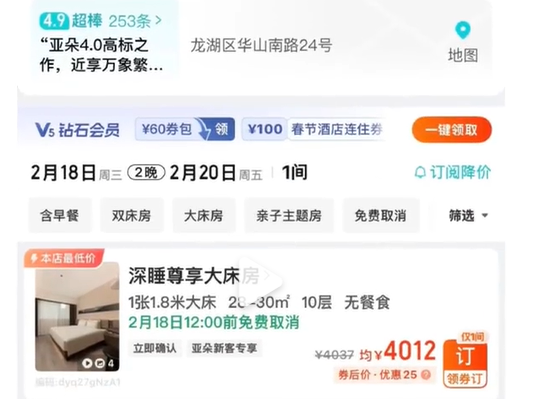
Core Viewpoint - The hotel prices in Shantou have surged significantly during the Spring Festival, with some prices increasing four to six times compared to regular rates, leading to public outcry and discussions about market regulation [1][4][5]. Price Surge Details - The price of a "Deep Sleep Deluxe King Room" at the Atour Hotel reached 4200 yuan for one night during the Spring Festival, up from a regular price of over 900 yuan, marking a fourfold increase [1]. - Other budget hotel chains like Hanting, 7 Days, Jinjiang Inn, and Home Inn also saw their prices exceed 1000 yuan, with some prices increasing to 3-6 times their usual rates [1][4]. - For instance, Hanting's basic room price rose from 264 yuan to 1384 yuan, a fivefold increase, while Jinjiang Inn's price jumped from under 200 yuan to 1044 yuan [1]. Market Dynamics - The surge in hotel prices is attributed to a significant increase in demand due to returning travelers and limited accommodation capacity, with Shantou's hotel room supply around 25,000 and potential daily visitors exceeding 100,000 during the holiday [4][5]. - The local government has indicated that hotel pricing is subject to market regulation, but excessive price increases can be reported by consumers [1][5]. Regulatory Response - Local authorities have issued reminders to hotel operators to adhere to fair pricing practices and avoid price gouging, with specific guidelines against misleading discounts and arbitrary price increases [6][7]. - A meeting was held by the Shantou Cultural, Radio, Television, Tourism, and Sports Bureau to promote price stability and service quality among hotels and accommodations [7].

酒店业下半场:亚朵用“见野”上场,情感价值能否成为新的效率指标?
Di Yi Cai Jing· 2026-02-10 09:23
Core Insights - At a time when the hotel industry is focused on "efficiency above all," Atour has taken a seemingly counterintuitive step by independently launching its mature product line "Jianye" as a new brand, aiming to explore whether emotional value generated by "inner peace" can become a quantifiable and sustainable business value [1][2][4] Group 1: Brand Evolution and Strategy - The independent launch of "Jianye" represents a fundamental shift in Atour's growth logic, moving from physical replication of space to a focus on the mental and emotional needs of users [1][3] - Atour's new three-year strategy, "Chinese Experience, Brand Leadership," aims to respond to the deeper needs of consumers as the experience economy matures, marking a significant evolution in the service industry [1][2][3] Group 2: Market Position and Consumer Demand - The mid-to-high-end hotel segment has maintained double-digit growth for five consecutive years, with over 70% of new openings in this category, highlighting the importance of this market segment [3] - Atour's founder believes that the mid-to-high-end price range is crucial, but there is a challenge in meeting the demands of consumers seeking more personalized experiences [3][4] Group 3: Experience Design and Emotional Value - "Jianye" aims to redefine high-end experiences by focusing on creating a unique emotional state rather than just providing better hardware and services [6][7] - The brand emphasizes "scene economics," offering not just a comfortable sleeping space but a carefully designed experience that resonates with the core value of "inner peace" [7][8] Group 4: Business Model and Financial Viability - The "Jianye" model has undergone market validation, with 50 locations opened across 30 cities since its inception, indicating a positive market reception [11][12] - The average RevPAR for locations operating for over three months is approximately 500 yuan, with over 60% of user reviews highlighting aspects like "quietness" and "relaxation" [12][13] - Consumers are willing to pay a 6% premium for the emotional value offered by "Jianye," demonstrating a clear market trust in the brand's emotional narrative [13] Group 5: Future Implications and Industry Impact - "Jianye" serves as a case study for the broader service industry, suggesting that true differentiation may stem from addressing deep human needs and providing a sanctuary for modern individuals [15] - The brand's approach to emotional investment returns could redefine competitive advantages in a highly homogeneous service market, emphasizing the importance of personalized and measurable emotional experiences [15]
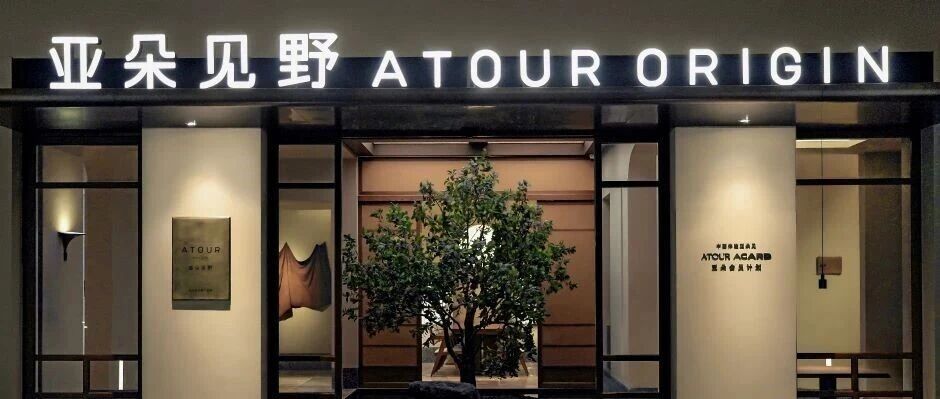
酒店业下半场:亚朵用“见野”上场,情感价值能否成为新的效率指标?
第一财经· 2026-02-10 09:15
Core Viewpoint - The article discusses how Atour is shifting its growth logic from physical replication to addressing the emotional needs of users, marking a fundamental change in its brand strategy with the launch of the new brand "Atour Jianye" [1][5]. Group 1: Brand Evolution and Strategy - Atour has chosen to independently brand its mature product line "Atour Hotel 4.0" as "Atour Jianye," which signifies a strategic shift towards creating emotional value in a market focused on efficiency [1][5]. - The new brand aims to respond to the deeper needs of consumers, moving from merely meeting demands to defining them, thus representing a natural evolution of Atour's brand philosophy [5][16]. - The launch of "Atour Jianye" coincides with the opening of the 2000th store, symbolizing a significant milestone in Atour's growth and brand recognition [3][5]. Group 2: Market Position and Consumer Insights - The mid-to-high-end hotel market has seen double-digit growth for five consecutive years, with new openings accounting for over 70% of the market, indicating a robust demand for differentiated experiences [4]. - Atour's founder believes that the mid-to-high-end price segment is crucial, and the challenge lies in catering to niche markets seeking unique and personalized experiences [4][5]. - The brand's focus on creating a unique emotional experience aims to attract high-net-worth individuals who seek both relaxation and cultural immersion [8][11]. Group 3: Experience Design and Implementation - "Atour Jianye" emphasizes creating a unique mental state rather than just providing high-end hardware and services, aiming to develop a comprehensive "experience engineering" approach [7][8]. - The design philosophy incorporates local cultural elements to create a sense of tranquility and connection to nature, enhancing the emotional experience for guests [9][10]. - The brand aims to transform sleep from a basic function into a meaningful emotional experience, addressing modern concerns about sleep disorders and emotional anxiety [10][14]. Group 4: Financial Viability and Market Acceptance - The initial market response to "Atour Jianye" has been positive, with an average RevPAR of approximately 500 yuan for stores operating for over three months, indicating strong consumer acceptance [13][14]. - Members are willing to pay a 6% premium for the emotional value offered by "Atour Jianye," reflecting a clear market trust in the brand's emotional narrative [14]. - The investment model suggests a return period of less than 3.5 years, positioning "Atour Jianye" as an attractive financial product driven by emotional value [14][15]. Group 5: Broader Implications for the Industry - The launch of "Atour Jianye" represents a significant shift in the hotel industry, suggesting that long-term competitiveness may lie in providing a tranquil refuge for modern consumers [16]. - The brand's approach serves as a commercial experiment, highlighting that true differentiation in a saturated market may stem from addressing the deeper emotional needs of consumers [16].
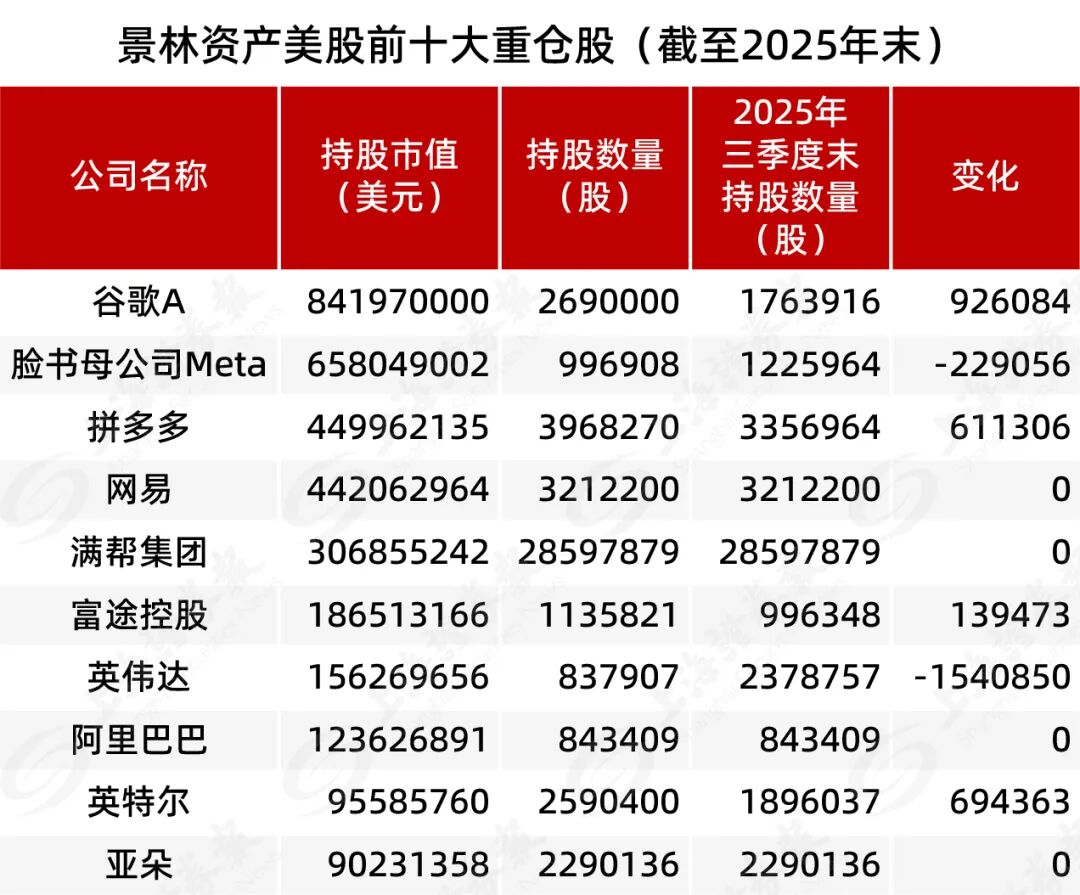
千亿级景林密集调仓换股
Shang Hai Zheng Quan Bao· 2026-02-10 04:56
Core Viewpoint - Jinglin Asset has made significant adjustments to its stock holdings in the fourth quarter of 2025, increasing its positions in key technology stocks while reducing exposure to others, reflecting a strategic focus on sectors like AI and new energy [1][6][9]. Group 1: Stock Holdings and Changes - As of the end of 2025, Jinglin Asset held stocks in 28 companies in the US market, with a total market value exceeding $4 billion [1]. - The top ten holdings include Google A, Meta, Pinduoduo, NetEase, Manbang Group, Futu Holdings, NVIDIA, Alibaba, Intel, and Atour, with Chinese stocks still dominating the portfolio [1][10]. - The largest holding shifted from Meta to Google A, with Google A valued at approximately $841.97 million, reflecting an increase of 926,084 shares from the previous quarter [2][3][10]. Group 2: Investment Strategy and Focus Areas - Jinglin Asset is focusing on sectors such as AI, new energy, smart driving, and humanoid robots, believing these areas will continue to see rapid growth and investment from both China and the US [1][9]. - The firm emphasizes a balanced global investment strategy, selecting companies with strong valuations and cash flows to mitigate risks while capitalizing on growth opportunities [9]. - The CEO highlighted the importance of major AI application platforms like Google, Apple, ByteDance, Tencent, and OpenAI, predicting that 2026 could be a pivotal year for AI agents [9]. Group 3: Recent Trading Activity - In Q4 2025, Jinglin Asset increased its holdings in Intel by 694,363 shares and in Futu Holdings by 139,473 shares, while also initiating a position in Broadcom [6]. - The firm significantly reduced its holdings in NVIDIA by 1.54 million shares and in Meta by 229,056 shares, alongside partial reductions in other stocks like TSMC and UnitedHealth [6].