Bank of America(BAC)

Search documents
华尔街对白银后市看法
Sou Hu Cai Jing· 2026-01-16 08:57
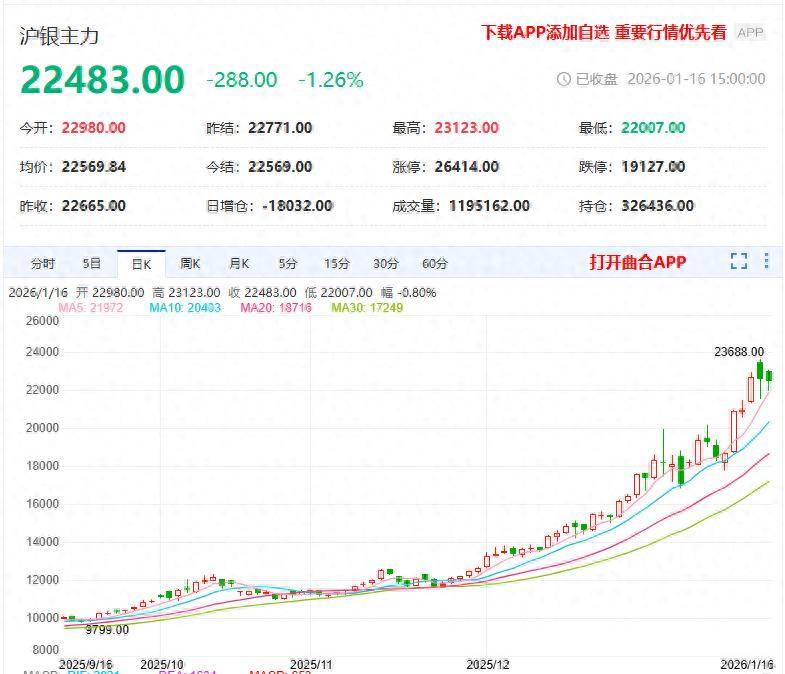
Group 1 - Citigroup has significantly raised its silver price target for the next 0-3 months from $62/oz to $100/oz, while also bullish on gold at $5000/oz, driven by escalating geopolitical risks, persistent physical market shortages, and expectations of easing monetary policy due to doubts about the Federal Reserve's independence [1] - UBS predicts that silver may outperform gold by 2026, driven by industrial demand growth in sectors like renewable energy and AI, with a forecast of reaching $100/oz in the first half of the year, but potentially falling to around $75/oz by year-end due to the nearing end of the Fed's easing cycle [1] - Goldman Sachs emphasizes that silver is more sensitive to capital flows due to the lack of central bank reserve demand, predicting continued price increases but with significantly higher volatility and uncertainty compared to gold [1] Group 2 - JPMorgan maintains a cautious outlook, projecting an average silver price of $40.1/oz for 2026, acknowledging that geopolitical risks and global debt issues will support silver prices, but the pace of increase may be slower [2] - Bank of America provides a wide price range forecast for silver, suggesting it could peak between $135 and $309/oz, based on the expectation that gold reaching $5000/oz will drive silver's rise, alongside supply-demand gaps and industrial demand growth, though no specific timeline is given [2] Group 3 - GF Futures notes that bullish funds are significantly increasing their positions in silver through ETFs and physical delivery, driving prices higher, while global inventory tightness has not truly eased, potentially suppressing industrial demand [5] - The firm warns that the current high price levels may lead to a correction due to irrational price movements driven by short-term capital sentiment, suggesting a cautious approach with light long positions above $70/oz [5]


Trump’s Market Mayhem: A Daily Dose of Volatility, Served Fresh
Stock Market News· 2026-01-16 06:00
Financial Sector - The financial sector experienced a significant downturn following President Trump's announcement of a one-year cap of 10% on credit card interest rates, effective January 20, 2026, aimed at protecting consumers from high rates averaging around 20% [2][3] - Major financial institutions like JPMorgan Chase, Bank of America, Citigroup, and Wells Fargo saw their stock prices drop significantly, with JPMorgan's shares falling 4.2% to $310.90 despite better-than-expected earnings [3][4] - Consumer finance firms specializing in credit cards faced even steeper declines, with drops between 8% and 11% for companies like Synchrony Financial and Capital One, while Visa and Mastercard also saw declines of over 2% [4] Semiconductor Industry - A trade deal between the U.S. and Taiwan resulted in a reduction of tariffs on Taiwanese goods from 20% to 15%, in exchange for Taiwan's commitment to invest $250 billion in U.S. semiconductor and AI sectors [6][7] - Taiwan Semiconductor Manufacturing Co. reported a 35% year-over-year increase in fourth-quarter profit, leading to a 4.5% surge in its U.S.-listed shares, with trading volume increasing by 159% [7] - Despite a new 25% tariff on specific high-end AI chips, Nvidia's stock rebounded by around 3% due to positive earnings from TSMC and exemptions for companies investing in America [8][9] Healthcare Sector - President Trump introduced "The Great Healthcare Plan" aimed at lowering prescription drug prices and insurance premiums, but the lack of details and the need for Congressional approval left the market skeptical [10] - Some healthcare stocks like UnitedHealth Group and Cigna saw modest gains, but the overall market impact was minimal due to concerns over rising premium costs for millions of Americans [10] Geopolitical Developments - President Trump's announcement of a "Board of Peace" in Gaza and withdrawal from 66 global organizations had little immediate market impact, overshadowed by economic news [11] - Oil prices dropped approximately 5% following Trump's de-escalation of military threats against Iran, indicating a positive market reaction to reduced geopolitical tensions [11] Market Volatility - The week illustrated the unpredictable nature of the market under Trump's administration, characterized by sudden policy announcements and immediate market reactions, creating a challenging environment for investors [12]



原油,大跌!刚刚,白银、黄金跳水
Zhong Guo Ji Jin Bao· 2026-01-16 00:28
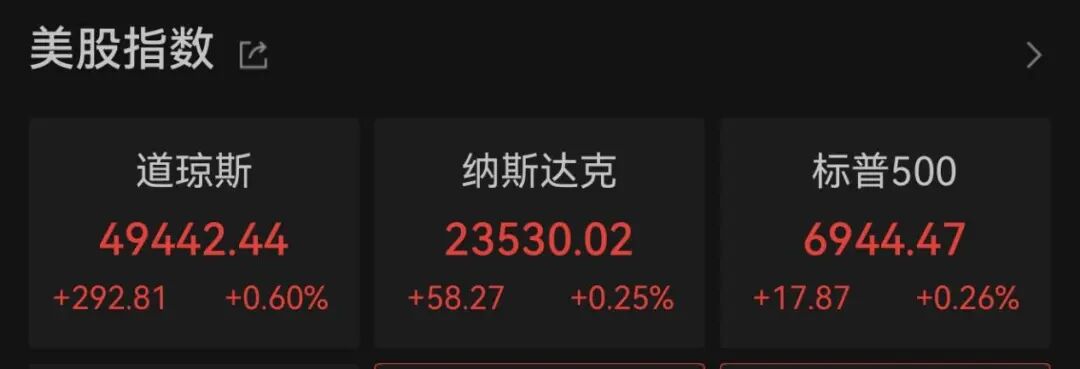
Market Overview - US stock market closed higher, led by gains in bank and chip stocks, with the Dow Jones up 292.81 points (0.60%) at 49,442.44, Nasdaq up 58.27 points (0.25%) at 23,530.02, and S&P 500 up 17.87 points (0.26%) at 6,944.47 [1] Chip Sector - The semiconductor sector saw a broad increase following TSMC's earnings report, with the Philadelphia Semiconductor Index rising 1.76% to a new historical high [4] - The White House announced a 25% import tariff on certain semiconductors and related equipment starting January 15, affecting products like Nvidia's H200 chip and AMD's MI325X AI accelerator chip, while excluding semiconductors for data centers and R&D [4] - TSMC reported a 35% increase in net profit for Q4 2025, reaching approximately $16 billion, marking a record high and exceeding expectations [5] Technology Sector - Major tech stocks showed mixed performance, with Nvidia up over 2%, Facebook up 0.86%, and Amazon up 0.65%, while Google down nearly 1%, Apple down 0.67%, and Microsoft down 0.59% [6] - Apple announced an expansion of Apple Pay's cross-border payment support for users of specific Chinese banks [7] Banking Sector - Bank stocks generally rose, with JPMorgan up 0.48%, Goldman Sachs up over 4%, Citigroup up over 4%, Morgan Stanley up nearly 6%, and Bank of America up 0.16%, while Wells Fargo fell 0.34% [8] - Goldman Sachs and Morgan Stanley reported record high revenues in their trading divisions, with Goldman planning to issue $16 billion in investment-grade bonds, the largest such issuance in Wall Street history [9] Commodity Market - Brent crude oil futures fell by $2.76 (4.15%), and WTI crude oil futures dropped by $2.83 (4.56%) [10] - Gold and silver prices experienced significant declines, with silver down over 1.5% [10]




两大利好突袭 美股全线大涨!
Zheng Quan Shi Bao Wang· 2026-01-15 23:36
Group 1: Market Performance - The U.S. stock market saw a strong performance with all three major indices rising, driven by better-than-expected earnings reports from Morgan Stanley and Goldman Sachs, leading to significant gains in financial stocks [1][2] - Morgan Stanley's stock surged over 6%, while Goldman Sachs rose over 4%, both reaching historical highs [1][2] - The Nasdaq index experienced a peak increase of over 1% during trading, reflecting renewed investor enthusiasm for technology stocks, particularly in the semiconductor sector [1] Group 2: Financial Sector Earnings - Morgan Stanley reported Q4 2025 revenues of $17.89 billion, a 10.3% year-over-year increase, surpassing market expectations of $17.77 billion, with earnings per share of $2.68, exceeding the forecast of $2.44 [2] - Goldman Sachs disclosed Q4 revenues of $13.45 billion, a slight decline of 3% year-over-year, but its Non-GAAP earnings per share reached $14.01, significantly above the expected $11.76 [2] Group 3: Semiconductor Sector Insights - TSMC's Q4 earnings report showed a gross margin exceeding 60% for the first time, with a net profit of $16 billion, a substantial 35% increase year-over-year, exceeding analyst expectations [3] - TSMC plans to significantly increase its capital expenditure to $56 billion in 2026, a 37% rise from the $40.9 billion spent in 2025, indicating a strong commitment to capitalize on AI opportunities [3] - The positive earnings from TSMC led to a 4.4% increase in its stock price, contributing to a broader rally in semiconductor stocks, with the Philadelphia Semiconductor Index rising by 1.76% [3] Group 4: Federal Reserve Policy Signals - Recent labor market data indicated a decrease in initial jobless claims to 198,000, significantly below the expected 215,000, alleviating concerns about a weakening labor market [4][5] - Several Federal Reserve officials suggested a pause in interest rate cuts, citing a stable labor market and ongoing inflation pressures [5] - The comments from Fed officials indicate a preference for maintaining a moderately restrictive monetary policy to address persistent inflation concerns [5]

Bank of America's (NYSE:BAC) Financial Outlook and Performance Review
Financial Modeling Prep· 2026-01-15 19:04
Core Viewpoint - Bank of America (BAC) is positioned for growth with a positive outlook supported by strong fourth-quarter results and a favorable price target from Truist Financial, indicating a potential price increase. Financial Performance - Bank of America reported strong fourth-quarter results for 2025, exceeding expectations in both revenue and earnings per share, particularly in consumer banking and wealth management divisions [2][5] - The bank's credit quality remains resilient, with provisions for credit losses significantly lower than anticipated, indicating a positive sign for investors [3] Growth Projections - Management forecasts a 6% growth in net interest income for 2026, driven by the repricing of fixed-rate assets and steady loan growth, aligning with the optimistic price target set by Truist Financial [3][5] Stock Performance - Currently, BAC's stock price is $52.48, reflecting a decrease of 3.78% or $2.06, with fluctuations between a low of $51.66 and a high of $53.48 on the day [4] - Over the past year, BAC has reached a high of $57.55 and a low of $33.07, with a market capitalization of approximately $383.24 billion [4]

Wall Street Powers Nation's Biggest Banks to Record Year
WSJ· 2026-01-15 18:20
Core Insights - Revenues increased across leading financial firms, indicating strong performance in trading, banking, and lending sectors [1] Group 1: Revenue Performance - Trading activities saw significant growth, contributing to the overall revenue increase [1] - Banking services experienced heightened demand, reflecting a robust market environment [1] - Lending operations were also busy, further supporting the revenue growth across the firms [1]

Big Banks Are Already Flashing Glaring Warning Signs About Trump's 10% Credit Card Cap
Yahoo Finance· 2026-01-15 18:16
Core Insights - The earnings season commenced with the four largest U.S. banks reporting mixed results, leading to a decline in their stock prices by 5% to 7% due to concerns over a proposed political measure [1][2][8] Group 1: Earnings Performance - JPMorgan Chase and Bank of America exceeded both revenue and earnings estimates, while Citigroup and Wells Fargo surpassed earnings but fell short on revenue [2] - Despite some business lines underperforming, the diversified nature of these banks allowed strengths in other areas to offset weaknesses [2] Group 2: Political Proposals Impacting the Industry - A significant concern for the banks is President Trump's proposal to impose a 10% cap on credit card interest rates for one year, which would require legislative action [3] - The Credit Card Competition Act (CCCA) was reintroduced, mandating that large banks provide merchants with a choice of at least two payment networks, potentially lowering prices by 1% to 2% and saving consumers $150 monthly [4][5] Group 3: Financial Implications - The proposed cap on credit card interest rates could result in a substantial financial impact on banks, reducing interest income from loans and affecting revenue from swipe fees [6] - An analysis indicated that a 10% cap could save consumers $100 billion annually in interest payments, directly affecting banks like JPMorgan Chase, which generated approximately $28 billion from card services in 2025 [7]

10 largest mortgage lenders in the U.S.
Yahoo Finance· 2026-01-15 17:41
Core Insights - United Wholesale Mortgage retained the top position in mortgage origination volume for 2024, continuing its lead over Rocket Mortgage from the previous year [1] - The top 10 mortgage lenders accounted for over 21% of all U.S. home loans originated and nearly 26% of the total dollar volume of loans for the year [2] Top 10 Mortgage Lenders - The top 10 lenders by loan origination volume in 2024 are as follows: 1. United Wholesale Mortgage: 366,078 loans, $139.7 billion [5] 2. Rocket Mortgage: 361,071 loans, $97.6 billion [9] 3. CrossCountry Mortgage: 101,894 loans, $39.4 billion [10] 4. Bank of America: 83,143 loans, $29.5 billion [11] 5. Navy Federal Credit Union: 82,019 loans, $17.7 billion [14] 6. LoanDepot: Data not provided 7. Chase: Data not provided 8. Guild Mortgage: Data not provided 9. Fairway Independent Mortgage: Data not provided 10. U.S. Bank: Data not provided [3] Customer Satisfaction Ratings - Bank of America received a high customer satisfaction rating for mortgage servicing and an above-average rating for mortgage origination according to J.D. Power in 2025 [9] - Navy Federal Credit Union achieved high customer satisfaction ratings for both mortgage origination and servicing, although it is not eligible for official rankings [14]



Bank Of America Q4 Earnings: Commendable Results, Series HH Priced Attractively (NYSE:BAC)
Seeking Alpha· 2026-01-15 15:37
Pearl Gray is a proprietary investment fund and independent market research firm. We primarily focus on Fixed-Income and Capital Flows. However, our Seeking Alpha readers can expect a cross-asset blend, extending to analysis of equity REITs (including Preferred Shares), Investment Fund Appraisal, and Bank Risk Analysis.Kindly note that our published content is dispensed as Independent Analysis and Doesn't Constitute Financial Advice. For any content-related concerns, contact Steve Booyens, CFA or leave a me ...
Bank Of America Q4 Earnings: Commendable Results, Series HH Priced Attractively
Seeking Alpha· 2026-01-15 15:37
Core Insights - Pearl Gray operates as a proprietary investment fund and independent market research firm, focusing primarily on Fixed-Income and Capital Flows [1] - The firm also provides analysis on equity REITs, Investment Fund Appraisal, and Bank Risk Analysis, catering to a diverse range of investment interests [1] Investment Focus - The primary focus areas include Fixed-Income and Capital Flows, indicating a strategic emphasis on these financial instruments [1] - The analysis extends to various asset classes, including equity REITs and preferred shares, showcasing a comprehensive approach to investment research [1] Research Approach - The content produced by Pearl Gray is characterized as Independent Analysis, which does not constitute financial advice, encouraging readers to engage in discussions rather than relying solely on the published material [1][3] - The firm emphasizes the importance of consulting registered financial advisors before making investment decisions, highlighting a commitment to responsible investment practices [3]