Global Partners LP(GLP)

Search documents
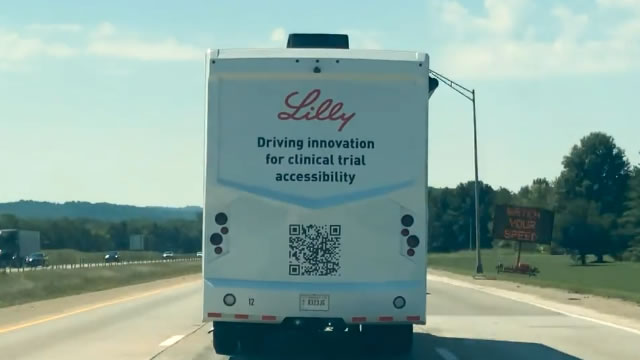
Could Eli Lilly Turn Today's GLP‑1 Obesity Boom Into Multi‑Decade, Millionaire‑Maker Gains?
The Motley Fool· 2026-02-10 08:50
Core Insights - Eli Lilly has achieved significant success in the GLP-1 drug market, with a stock price increase of 200% over the past three years and a leadership position in the U.S. market, holding over 60% market share [1][6][10] - The obesity drug market is projected to reach nearly $100 billion by the end of the decade, indicating potential for continued growth for Eli Lilly [7] Company Performance - Eli Lilly's revenue has shown double-digit growth, with Mounjaro and Zepbound generating over $11 billion in revenue during the recent quarter, both experiencing triple-digit revenue gains [1][6] - The company's gross margin stands at 85.40%, and it has a market capitalization of $988 billion [9] Product Overview - GLP-1 drugs, including Eli Lilly's tirzepatide (Mounjaro and Zepbound), help manage blood sugar levels and appetite, contributing to their popularity [4][5] - Eli Lilly is also developing orforglipron, an oral weight loss candidate currently under regulatory review, which could further enhance its market position [5][9] Competitive Landscape - While Novo Nordisk was the first to market with GLP-1 drugs, Eli Lilly has been gaining market share and has outperformed competitors in clinical trials [6][9] - Other companies, such as Pfizer and Viking Therapeutics, are looking to enter the market, but Eli Lilly's established brand strength and product efficacy are expected to sustain its revenue growth [10]



Novo Nordisk Stock Whipsawed by GLP-1 Pill Fears: Relief Ahead?
ZACKS· 2026-02-09 15:56
Core Insights - Novo Nordisk's shares faced significant pressure due to a disappointing 2026 outlook, overshadowing a strong fourth-quarter performance [1] - Hims & Hers Health's announcement to launch a compounded oral semaglutide pill intensified competition in the weight-loss market, posing a threat to Novo Nordisk's flagship product, Wegovy [2][3] - The FDA's intervention against non-FDA-approved compounded GLP-1 drugs provided a temporary relief for Novo Nordisk's stock, which rebounded sharply [6] Company Performance - Novo Nordisk's stock has declined by 4.5% over the past six months, underperforming the industry growth of 34.5% [11] - The company's shares are trading at a price/earnings ratio of 14.31, lower than the industry average of 18.76 and significantly below its five-year mean of 29.25 [14] Market Dynamics - The obesity treatment market is becoming increasingly competitive, with Eli Lilly also advancing its GLP-1-based drugs and seeking approval for an oral GLP-1 pill [8] - The introduction of lower-priced alternatives, such as Hims' $49 compounded pill, raises concerns about pricing power and demand for Novo Nordisk's products [4][9] Regulatory Environment - The FDA has issued warnings against misleading marketing of compounded GLP-1 drugs, which could impact companies like Hims & Hers Health [6] - Novo Nordisk has indicated potential legal actions to protect its intellectual property and patient safety in response to the competitive threat [5] Earnings Estimates - Earnings estimates for Novo Nordisk have declined, with 2026 estimates dropping from $3.55 to $3.32 per share and 2027 estimates from $3.65 to $3.39 [17]

PharmaZee GLP-1 Prescription Information Updated as Novo Nordisk Raises Compounding Concerns and Consumer Interest in Telehealth Semaglutide Access Grows in 2026
Globenewswire· 2026-02-06 00:53
Core Insights - The article discusses the growing consumer interest in telehealth platforms for prescription weight management treatments, particularly through PharmaZee, which connects patients with licensed clinicians for evaluations and prescriptions [5][9][21]. Group 1: Company Overview - PharmaZee operates as a telehealth platform that facilitates access to prescription weight management medications through evaluations by U.S.-licensed physicians [4][21]. - The platform provides compounded semaglutide formulations, which are prepared by licensed pharmacies and are not FDA-approved finished products [22][24]. - PharmaZee emphasizes that it is not a healthcare provider but a technology platform that connects patients with medical professionals [23]. Group 2: Market Context - Novo Nordisk raised concerns about "illegal mass compounding" and "deceptive advertising" in the GLP-1 telehealth market, highlighting issues consumers face when researching compounded GLP-1 access [7][8]. - There is an increasing trend of consumers researching telehealth-based weight management medications, indicating a shift in how individuals approach weight management options [5][9]. Group 3: Consumer Considerations - Consumers evaluating GLP-1 telehealth platforms consider factors such as clinician licensing, prescription approval clarity, and whether the platform provides FDA-approved medications or compounded formulations [16][20]. - Transparency regarding contraindications, ongoing medical supervision, and pharmacy sourcing standards are critical factors for consumers when choosing a telehealth service [18][19]. Group 4: Regulatory and Clinical Insights - GLP-1 receptor agonist medications, such as semaglutide and tirzepatide, require physician evaluation and ongoing medical supervision, with specific contraindications outlined by the FDA [12][27][28]. - The distinction between FDA-approved medications and compounded formulations is crucial for consumers to understand, as compounded medications are not subject to the same regulatory scrutiny [24][25].

Edible Garden to Participate in ECRM's Total Wellness: GLP-1, Weight Management, Nutrition & Vitamin Session, February 10–12, 2026
Globenewswire· 2026-02-05 13:09
Core Insights - Edible Garden AG Incorporated will participate in ECRM's Total Wellness: GLP-1, Weight Management, Nutrition & Vitamin Session from February 10–12, 2026, in Chicago, Illinois, to showcase its products and engage with retail partners [1][2][3] Company Overview - Edible Garden is a leader in controlled environment agriculture (CEA), providing sustainable, locally grown organic produce through its Zero-Waste Inspired® farming model, available in over 5,000 retail locations across the U.S., Caribbean, and South America [5][7] - The company operates advanced vertically integrated greenhouses and processing facilities, including locations in Grand Rapids, Michigan, Webster City, Iowa, and Belvidere, New Jersey [5] Product Offerings - The company will showcase its Kick Sports Nutrition line, clean labeled sports nutrition, weight management, and GLP-1 support products, along with plant and whey protein powders under the Vitamin Way® and Vitamin Whey® brands at the ECRM event [3][4] - Edible Garden also develops a range of nutrition and specialty food products, including fresh condiments and fermented items [7] Strategic Focus - The participation in the ECRM session aligns with the company's strategy to leverage direct retail engagement for distribution growth, new product introductions, and expanded shelf presence in better-for-you nutrition categories [3][4] - The CEO emphasized the growing consumer interest in GLP-1 support and clean nutrition, indicating a strong market demand for differentiated solutions [4]


Eli Lilly Is Dominating the GLP-1 Wars as Novo Nordisk Sales Tank
247Wallst· 2026-02-04 19:39
Core Insights - The competition in the GLP-1 market has intensified between Eli Lilly and Novo Nordisk following their recent fourth-quarter earnings reports [1] Eli Lilly's Performance - Eli Lilly has gained market leadership with its tirzepatide drugs, Mounjaro and Zepbound, which show superior weight loss efficacy of around 20% compared to semaglutide's 14% [2] - In the fourth quarter, Eli Lilly's revenue increased by 43% to $19.3 billion, surpassing consensus estimates of $17.9 billion, driven by a 46% volume growth despite a 5% decline in realized prices [7] - Mounjaro sales surged 110% to $7.4 billion, exceeding the forecast of $6.7 billion, while Zepbound revenue increased by 123% to $4.3 billion [8] - For 2026, Eli Lilly projects revenue growth of 27% to between $80 billion and $83 billion, above the consensus of $77.6 billion, with adjusted earnings expected to be between $33.50 and $35.00 per share [8] Novo Nordisk's Challenges - Novo Nordisk initially dominated the GLP-1 market but is now facing challenges, including a projected sales decline of 5% to 13% in 2026 at constant exchange rates, marking its first sales drop since 2017 [3][5] - The company reported 10% sales growth for 2025 at constant exchange rates, totaling 309 billion Danish kroner, which fell short of analysts' expectations of 347 billion kroner [4] - The fourth quarter showed an 8% revenue decline, although it slightly beat expectations, while earnings per share missed forecasts [4] - CEO Mike Doustdar cited U.S. pricing discounts, upcoming patent expirations for semaglutide, and competition from Lilly's Zepbound as reasons for the shortfall [5] Market Dynamics - Both companies face common challenges such as pricing pressures, competition, and patent risks, but their trajectories are diverging significantly [9] - Eli Lilly's pipeline, including the anticipated approval of orforglipron in Q2, positions it for sustained strength in the market [10] - Novo Nordisk is attempting to counteract pricing pressures with the launch of an oral version of Wegovy, which has shown early signs of success [6]
LIR Life Sciences Reports Positive Interim Preclinical Results from Comparative Animal Study of Novel CPP-Enabled Transdermal Delivery of GLP/GIP-Based Therapies
Accessnewswire· 2026-01-29 23:00
Core Viewpoint - LIR Life Sciences Corp. announced positive interim results from a comparative mouse study on a novel semaglutide/CPP topical formulation, indicating its potential effectiveness in reducing blood glucose levels [1] Group 1: Study Results - The interim analysis showed that animals treated with the semaglutide/CPP formulation had reduced blood glucose levels following an oral glucose challenge compared to untreated controls, suggesting pharmacologically meaningful activity [1]

Fractyl Health Announces Compelling 6-Month Randomized REMAIN-1 Midpoint Data Showing Durable Weight Maintenance with Revita® After GLP-1 Discontinuation
Globenewswire· 2026-01-29 12:00
Core Insights - Fractyl Health, Inc. announced positive six-month results from the REMAIN-1 Midpoint Cohort study, indicating that Revita® effectively supports weight maintenance after GLP-1 drug discontinuation [2][3] - Revita-treated patients showed a significant reduction in weight regain compared to the sham group, with a 70% relative reduction in post-GLP-1 weight regain for those with above median GLP-1-associated weight loss [1][8] - The company is preparing for a potential FDA filing in H2 2026 and has requested feedback on reclassifying Revita under the De Novo pathway [1][10] Study Results - The REMAIN-1 Midpoint Cohort demonstrated a 4.5% weight regain in Revita-treated patients versus 7.5% in the sham group at six months, with a p-value of 0.07 [4][8] - An exploratory analysis revealed that Revita-treated participants experienced 4.2% weight regain compared to 13.3% in the sham group, with a statistically significant p-value of 0.004 [8] - Improvements in cardiometabolic parameters were noted, including a 15.5 mg/dL increase in HDL cholesterol and a reduction in the triglyceride-to-HDL ratio [8] Safety and Tolerability - Revita demonstrated excellent safety and tolerability, with no serious adverse events related to the device or procedure reported through six months [15] - No new adverse events were observed between the 3- and 6-month follow-up periods [15] Regulatory Strategy - The company is engaging with the FDA regarding the potential for using the De Novo pathway, which may streamline the regulatory review process for Revita [10] - Feedback from the FDA is anticipated in Q2 2026, which will inform the regulatory strategy moving forward [10] Future Milestones - Fractyl Health is on track for several key clinical and regulatory milestones in 2026, including the completion of randomizations in the REMAIN-1 Pivotal Cohort and the release of one-year data from the REVEAL-1 Cohort [16] - The company plans to host an investor call and webcast to discuss these developments [11]


Genentech Announces Positive Phase II Results for Its Dual GLP-1/GIP Receptor Agonist CT-388 in People Living With Obesity
Businesswire· 2026-01-27 06:10
Core Insights - Genentech announced positive topline results from a Phase II clinical trial of CT-388, a dual GLP-1/GIP receptor agonist for obesity treatment, showing significant weight loss without reaching a plateau at 48 weeks [1][2][3] Company Overview - Genentech, a member of the Roche Group, is a leading biotechnology company focused on discovering, developing, manufacturing, and commercializing medicines for serious medical conditions [8] Clinical Trial Results - The Phase II trial (CT388-103) involved 469 participants and demonstrated a placebo-adjusted weight loss of 22.5% for the efficacy estimand and 18.3% for the treatment-regimen estimand at the 24 mg dose [1][6] - At week 48, 95.7% of participants treated with CT-388 achieved at least a 5% weight loss, with 87% achieving 10%, 47.8% achieving 20%, and 26.1% achieving 30% [1] - Among pre-diabetic participants, 73% achieved normal blood glucose levels compared to 7.5% in the placebo group [1] Safety and Tolerability - The treatment was well-tolerated, with mild-to-moderate gastrointestinal-related adverse events and a low discontinuation rate due to adverse events (5.9% in CT-388 arms vs. 1.3% in placebo) [2] Future Development - Genentech has fast-tracked CT-388 and is advancing to Phase III trials, with additional studies evaluating its efficacy in participants with obesity and type 2 diabetes [5] - The Phase III clinical trial program (Enith1 and Enith2) is expected to start this quarter [5] Industry Context - Obesity is a significant global health risk, with projections indicating over four billion people will be living with excess weight or obesity by 2035, increasing the burden on healthcare systems [4]

Ascletis Selects a Next-Generation Once-Monthly Subcutaneously Administered GLP-1R/GIPR/GCGR Triple Peptide Agonist, ASC37, for Clinical Development
Prnewswire· 2026-01-20 09:00
Core Insights - Ascletis Pharma Inc. has selected ASC37 injection, a next-generation GLP-1R/GIPR/GCGR triple peptide agonist, for clinical development, with an Investigational New Drug Application (IND) submission to the FDA expected in Q2 2026 [2][5]. Group 1: Product Development - ASC37 has an average observed half-life of approximately 17 days in non-human primate studies, which is 7-fold longer than retatrutide, supporting once-monthly subcutaneous dosing [1][4]. - The in vitro activity of ASC37 is approximately 5-fold, 4-fold, and 4-fold more potent than retatrutide for GLP-1R, GIPR, and GCGR, respectively [1][3]. - ASC37 is engineered for a longer half-life compared to retatrutide, allowing for a subcutaneous injection volume of one milliliter or less, which also provides manufacturing scalability advantages [3][4]. Group 2: Clinical Strategy - The company plans to initiate a Phase I study for ASC37 in the second half of 2026, as part of its strategy to enhance treatment options for obesity [5]. - ASC37 is being developed both as a monotherapy and in combination with ASC36, another peptide agonist, to address cardio-metabolic diseases including obesity and diabetes [5]. Group 3: Technological Innovation - Ascletis utilizes its proprietary Artificial Intelligence-assisted Structure-Based Drug Discovery (AISBDD) and Ultra-Long-Acting Platform (ULAP) technologies to design and optimize multiple once-monthly subcutaneous ultra-long-acting peptides [6][8]. - The ULAP technology allows for precise control over the release of peptides, improving clinical outcomes by reducing peak-to-trough ratios [6].

LIR Life Sciences Launches Comparative Animal Study to Advance Transdermal Delivery of Second Generation GLP/GIP-based Obesity Therapies
Accessnewswire· 2026-01-15 23:00
Core Viewpoint - LIR Life Sciences Corp. has launched a controlled comparative animal study to evaluate a needle-free transdermal delivery system for second generation GLP/GIP-based obesity therapies, marking a significant advancement in its transdermal platform from design to functional testing [1] Group 1 - The study focuses on cell-penetrating peptide (CPP) mediated delivery methods [1] - This in vivo study will utilize a small animal model for functional testing [1] - The initiative represents an important step in the development of obesity therapies [1]