
J&J(JNJ)

Search documents
J&J(JNJ) - 2025 Q4 - Annual Report
2026-02-11 21:06
Business Segments - The company operates in two business segments: Innovative Medicine and MedTech[22] - Key products in the Innovative Medicine segment include CARVYKTI, DARZALEX, and ERLEADA, focusing on oncology and immunology[23] - The MedTech segment develops a broad portfolio of products for cardiovascular, orthopaedics, surgery, and vision, supporting a wide range of acute and elective procedures[25] Revenue Contributions - The Innovative Medicine segment is expected to contribute significantly to revenue, with a focus on therapeutic areas such as oncology and immunology[23] - Sales of the Company's largest product, DARZALEX and DARZALEX FASPRO, accounted for approximately 15.0% of total revenues for fiscal 2025, with royalty amounts to Genmab of approximately $2.4 billion for fiscal 2025[32] - Sales of the Company's second largest product, STELARA, accounted for approximately 6.5% of total revenues for fiscal 2025, with expected continued launches of biosimilar versions negatively impacting sales[33] - Sales of the Company's third largest product, TREMFYA, accounted for approximately 5.5% of total revenues for fiscal 2025, with a composition patent projected to expire in the United States in 2031[34] Growth Strategies - The company anticipates continued growth driven by new product launches and market expansion strategies[9] - Future growth strategies include potential acquisitions and collaborations to enhance product offerings and market reach[14] - The Company plans to separate its Orthopaedics business with a targeted completion within 18 to 24 months after the initial announcement[26] Challenges and Risks - The company is facing challenges related to patent expirations and increased competition from generic products[13] - The Company faces higher risks in international investments due to financial instability and restrictive economic policies[29] - The Company is subject to increasingly stringent regulations, which may materially affect its financial condition and business operations[40] - The Company is subject to potential changes in applicable laws and regulations that could affect operations, including product approvals and pricing for healthcare products[1] - The Company faces pricing pressures due to trends toward healthcare cost containment and increased scrutiny from government agencies[1] Regulatory Environment - The impact of regulatory changes and compliance requirements is a key consideration for the company's operations[16] - The federal Inflation Reduction Act of 2022 allows the government to establish prices for certain high-spend drugs starting in 2026, impacting products like XARELTO and STELARA[47] - The Company expects penalties for non-compliance with the Inflation Reduction Act provisions, which may include civil monetary penalties[48] - Janssen Pharmaceuticals filed litigation against the U.S. Department of Health and Human Services, challenging the constitutionality of the IRA's Medicare Drug Price Negotiation Program, claiming it violates their First and Fifth Amendment rights[49] - The Company is actively monitoring pending legislation that could impact drug pricing in Medicare and Medicaid programs, creating uncertainty in market conditions[51] Employee and Workforce Management - The Company reported a workforce of approximately 140,800 employees as of December 28, 2025, an increase from 139,800 in 2024, with full-time equivalent positions at 138,200[55] - The voluntary turnover rate for the Company in 2025 was 5.8%, indicating a focus on employee retention and development[61] - The Company emphasizes a culture of innovation and well-being, with 95% of global employees participating in the Our Credo Survey in 2025[60] - The Company has a human capital management strategy focused on attracting, developing, and retaining top talent to support its long-term success[57] - The Company emphasizes the importance of employee health and well-being, investing in programs that promote physical, mental, emotional, and financial health[64] Supply Chain Management - The company is focused on maintaining strong supply chain management to mitigate risks associated with global operations[19] - The Company relies on complex global supply chains that are increasingly subject to regulatory requirements, potentially affecting sourcing and pricing of materials[54] - The Company relies on global supply chains that are complex and subject to increasing regulatory requirements, which may adversely affect supply and pricing of materials[19] Innovation and R&D - The company is committed to innovation, with ongoing research and development in new therapies and technologies[13] - The Company has made substantial investments in research and development to remain competitive in the pharmaceutical market[38] - The Company has made a practice of obtaining patent protection on its products, facing challenges from third parties seeking to market generic versions of key pharmaceutical products[31] Economic Factors - The impact of inflation, interest rate fluctuations, and currency exchange rates may affect revenues, expenses, and resulting margins[1] - The Company is subject to increased regulatory scrutiny, particularly regarding data privacy and cybersecurity compliance, which may affect operations[41]

NIH Stops Johnson & Johnson's Blood Thinner Drug Arm In Stroke Trial After Safety Review
Benzinga· 2026-02-11 19:23
Core Insights - The National Institutes of Health (NIH) has discontinued the low-dose rivaroxaban arm of the Phase 3 CAPTIVA stroke prevention trial due to safety concerns and lack of demonstrated benefit [1][2][3] Group 1: Trial Overview - The primary goal of the CAPTIVA trial is to assess whether rivaroxaban or ticagrelor, or both, are more effective than clopidogrel in reducing the 1-year rate of ischemic stroke, intracerebral hemorrhage, or vascular death [1][5] - The trial involves up to 1,683 participants across more than 100 sites over four years, as part of NIH's StrokeNet network [5] Group 2: Safety Review and Decision - An independent safety review by the Data Safety and Monitoring Board led to the decision to halt the rivaroxaban group due to increased safety events and a pre-specified futility threshold [2][3] - NIH emphasized that participant safety remains the top priority, and study sites have been instructed to stop administering the drug to participants in the discontinued arm [4] Group 3: Implications for Stroke Prevention - Rivaroxaban is an FDA-approved anticoagulant used for treating or preventing blood clots, and the discontinuation of this arm may impact future treatment strategies for stroke prevention [4][5] - The trial aims to generate additional safety and efficacy data while determining if either of the newer therapies offers an advantage over the current standard treatment [5]


中国医疗科技:2025 年四季度行业联动 -多家全球企业对 2026 年中国前景持谨慎态度-China Medtech_ Q425 read-across_ many global firms maintain a cautious view on 2026 China outlook
2026-02-11 15:40
Summary of China Medtech Q425 Conference Call Industry Overview - **Industry**: Medical Technology (Medtech) in China - **Context**: The conference call discusses the performance of various global medtech companies in China during Q425, highlighting ongoing challenges and opportunities in the market for 2026. Key Points 1. Overall Market Sentiment - Many large-cap global medtech companies reported a year-over-year (YoY) decline in China revenue for Q425, particularly in the diagnostics (Dx) sector. Companies expect policy headwinds to persist into 2026, albeit at a reduced impact level [2][4] 2. Equipment Sector Performance - **GE Healthcare**: Reported an 11% YoY revenue decline in China for Q425, with flat revenue quarter-over-quarter (QoQ). The company noted improved VBP (Volume-Based Procurement) win rates and a stronger imaging funnel but still anticipates a decline in 2026 revenue guidance for the China business [3][4] - **Siemens Healthineers**: Experienced a 5% YoY decline in China revenue for Q425, with imaging and precision therapy segments remaining flat. The Dx revenue sharply fell due to VBP and reimbursement cuts, with expectations of a flat volume development for the non-Dx business in FY26 [3][4] - **Intuitive Surgical**: Reported a drop in placements in China from 20 to 17 in Q425, citing intensified competition from local suppliers and lower pricing in provincial tenders [3] 3. Diagnostics Sector Challenges - **Roche**: The China Dx segment faced a 12% YoY revenue decline in Q425, with core lab oncology reagents down approximately 50% in 2025. The company expects continued but diminishing headwinds in 2026 [4] - **Abbott**: Estimated a US$400 million headwind from VBPs, indicating that most of its Dx sales in China have already been affected by these reforms [4] - **Danaher**: Reported a low single-digit decline in core revenue in China for Q425, with Dx segment under pressure from policy headwinds. The company anticipates a moderation of VBP impacts in 2026 [4] 4. Consumables Sector Growth - **Boston Scientific**: Achieved double-digit revenue growth in China for Q425, driven by electrophysiology (EP) and interventional cardiology therapies. The company expects this momentum to continue into 2026, supported by recent NMPA approvals [5] - **Johnson & Johnson**: Continues to face negative impacts from VBPs across its surgery and orthopaedics portfolio, with expectations of additional rounds of VBPs in 2026 [5] Additional Insights - The medtech industry in China faces several risks, including larger-than-expected price reductions from VBP programs, weaker demand from equipment renewal programs, and geopolitical issues affecting supply chains [8] - The overall sentiment indicates a cautious outlook for 2026, with companies adapting to ongoing policy changes and competitive pressures in the Chinese market [2][4][5]


2025年全球TOP10药企财报解读! (附PPT下载)
Xin Lang Cai Jing· 2026-02-11 10:16
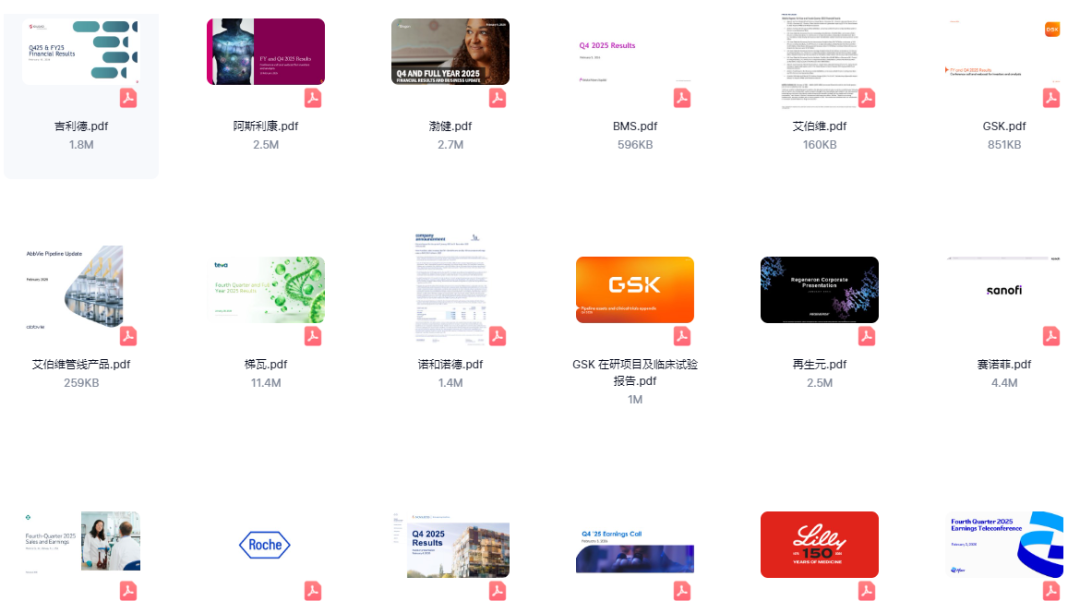
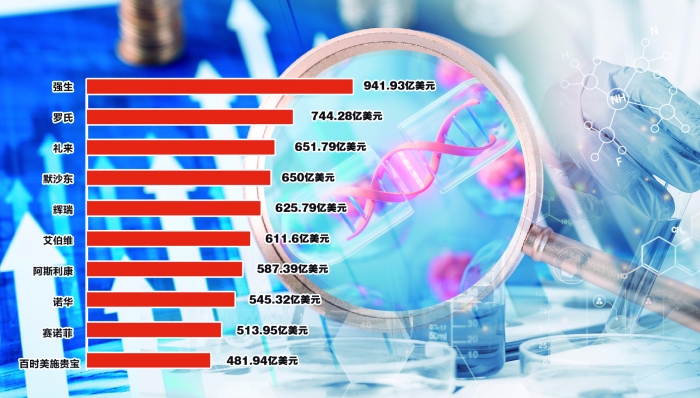
Core Insights - The global pharmaceutical industry has seen a reshuffling in the top 10 rankings for 2025, with Johnson & Johnson and Roche maintaining their positions at the top, while Eli Lilly has surged into the top three, driven by a 44% revenue increase from its weight-loss drug [3][12]. Group 1: Global Revenue Rankings - The top 10 pharmaceutical companies for 2025 include Johnson & Johnson with $94.19 billion, Roche with $74.43 billion, and Eli Lilly with $65.18 billion, marking a significant increase from previous years [4][13]. - Eli Lilly's revenue growth of 44% is the highest among the top companies, allowing it to surpass Merck, which has seen only a 1% increase [3][12]. Group 2: Billion-Dollar Drug Sales - Eli Lilly's Tirzepatide generated $36.5 billion in sales, making it the leading drug, followed closely by Novo Nordisk's Semaglutide at $35.5 billion [6][17]. - The emergence of GLP-1 drugs is reshaping the pharmaceutical landscape, with Eli Lilly's Tirzepatide overtaking Merck's Keytruda, which generated $31.68 billion [17]. Group 3: Performance in China - AstraZeneca leads the Chinese market with a revenue of $6.65 billion in 2025, reflecting a 4% year-over-year growth [8][20]. - Other notable performances in China include Novartis with $4.2 billion and Sanofi with $2.97 billion, while Merck's revenue has drastically declined by 66% [20]. Group 4: Future Outlook - AstraZeneca plans to invest $15 billion in China by 2030 to expand its manufacturing and R&D capabilities, highlighting the country's importance as a strategic market [20]. - The competition between GLP-1 and oncology drugs is expected to intensify, with China playing a crucial role in shaping the future of the pharmaceutical industry [21].


Is Johnson & Johnson a Buy, Sell, or Hold in 2026?
The Motley Fool· 2026-02-11 02:45
Core Viewpoint - Johnson & Johnson is positioned as a stable investment option amidst the volatility of high-growth AI stocks, with a notable 53% increase in share price over the past year, suggesting strong performance and potential for long-term income seekers [2][9]. Financial Performance - Johnson & Johnson's market capitalization stands at $575 billion, with a current share price of $238.32 and a dividend yield of 2.15% [7][5]. - The company has maintained a gross margin of 75.27%, indicating robust profitability [7]. Challenges and Risks - The company faces challenges such as government-led drug price negotiations affecting sales, particularly for certain medicines [4]. - Patent cliffs pose a risk, with the loss of exclusivity for the immunology drug Stelara leading to competition from biosimilars [4]. - Johnson & Johnson is also dealing with ongoing lawsuits related to its talc-based products, which could impact its reputation and financial standing [5]. Business Resilience - Johnson & Johnson's diverse portfolio across various therapeutic areas helps mitigate risks from competition and declining sales in specific products [7]. - The company is close to launching a robotic-assisted surgery device, which is expected to create additional growth opportunities [8]. - A strong balance sheet with the highest credit rating available positions the company well to navigate legal challenges and market fluctuations [8]. Dividend History - Johnson & Johnson is recognized as a "Dividend King," having increased its dividends for 63 consecutive years, making it an attractive option for income-focused investors [9].
当AI进入医院,“手术失误、错认器官”等风险也随之而来
Hua Er Jie Jian Wen· 2026-02-11 01:54
Core Viewpoint - The integration of AI into surgical and diagnostic devices by medical device companies is presenting growth opportunities, but it also introduces new fault patterns and liability risks, as evidenced by a rise in injury and malfunction reports to regulatory bodies like the FDA [1][2]. Group 1: AI Integration and Incident Reports - The introduction of machine learning algorithms into the TruDi Navigation System by Acclarent has led to a significant increase in malfunction reports, with at least 100 reports received post-AI integration compared to only 7 prior [2]. - Reports indicate that at least 10 patients were injured between late 2021 and November 2025, primarily due to the system's incorrect positioning guidance [2]. - The FDA has received a total of 1,401 reports related to 1,357 AI-enabled products from 2021 to October 2025, with at least 115 reports citing software or algorithm issues [3]. Group 2: Recall Rates and Regulatory Concerns - AI-enabled devices have a recall rate that is twice that of overall medical device recalls, with 43% of recalls occurring within the first year of approval [5]. - A study highlighted that 60 AI medical devices were associated with 182 recalls, indicating a concerning trend in post-market safety [5]. Group 3: Regulatory Challenges and Workforce Issues - The FDA's traditional regulatory framework is being challenged by the rapid influx of AI-enabled devices, many of which do not require patient trials for approval [6]. - The number of FDA-authorized AI medical devices has doubled since 2022, but staffing reductions have led to increased workloads for remaining evaluators, raising concerns about oversight [7]. - Key teams within the FDA have faced significant cuts, with reports suggesting that the reduction in staff has made it more difficult to identify potential issues in AI devices [7].

强生蝉联第一 跨国药企2025年“成绩单”揭晓
Shang Hai Zheng Quan Bao· 2026-02-10 18:09
Core Insights - Major multinational pharmaceutical companies are showing robust revenue growth and increased sales of core products as they release their 2025 performance results [1][2] - Johnson & Johnson leads with nearly $94.2 billion in revenue, while Eli Lilly's weight loss drug, tirzepatide, shows a remarkable 45% year-over-year growth [1][2] Group 1: Revenue Performance - Johnson & Johnson reported total revenue of $94.193 billion for 2025, marking a 6% increase year-over-year [2] - Roche follows with revenue of $74.428 billion, while Eli Lilly, Merck, Pfizer, and AbbVie each exceeded $60 billion in revenue [2] - Eli Lilly's revenue reached $65.179 billion, a 44.7% increase, driven by strong sales of tirzepatide, which generated $36.5 billion [6] Group 2: Product Performance - Johnson & Johnson's innovative pharmaceuticals and medical technology segments both achieved revenue growth, with $60.401 billion and $33.792 billion respectively, both up by approximately 6% [2] - The CAR-T therapy, ciltacabtagene autoleucel, contributed significantly to Johnson & Johnson's growth, with revenue of $1.887 billion, a 95.9% increase [2] - Eli Lilly's tirzepatide sales reached $36.5 billion, with the weight loss version generating $13.542 billion, a 175% increase [6] Group 3: Market Trends and Challenges - The pharmaceutical industry faces a looming "patent cliff," with an estimated $236 billion in revenue at risk from patent expirations between 2025 and 2030 [8] - Companies are increasingly engaging in business development transactions to replenish their R&D pipelines, with Chinese innovative pharmaceutical companies gaining prominence [8][9] - In 2025, Chinese companies achieved record-breaking business development deals, totaling $135.655 billion, with significant collaborations involving major multinational firms [9]
全球在研新药月报-20260210
摩熵咨询· 2026-02-10 14:24
Investment Rating - The report does not explicitly provide an investment rating for the industry. Core Insights - The report highlights significant advancements in the pharmaceutical industry, particularly in the development and approval of innovative drugs, with a focus on oncology and immunotherapy [5][6][10]. Summary by Sections 1. Latest Policy Updates - The National Medical Products Administration (NMPA) has issued several key announcements, including guidelines to strengthen the supervision of entrusted drug production and the release of the 2025 Clinical Application Guidelines for Antitumor Drugs [10][15][18]. - New regulations aim to support the development of innovative drugs and ensure the quality and safety of pharmaceuticals through enhanced management practices [11][12][14]. 2. Domestic New Drug Approvals - In January 2026, a total of 172 new drugs were approved for clinical trials, a decrease of 55 from the previous month. Among these, 78 were chemical drugs, 88 were biological products, and 6 were traditional Chinese medicines [22][23]. - The majority of new drug approvals were in the fields of oncology and immune modulation, accounting for 53% of the total [22]. 3. Global Innovative Drug Development - The report lists several drugs that have shown positive clinical results, including Neumora Therapeutics' NMRA-511 and GSK's new hepatitis B drug, which achieved success in phase 3 studies [6][10]. - Notable approvals include the BCL-2 inhibitor from BeiGene, which received dual indications for chronic lymphocytic leukemia and mantle cell lymphoma [40][41]. 4. New Drug Listings - The report details new drug listings, including the approval of the combination drug for ADHD treatment by Aikobai, which has shown significant efficacy in clinical trials [41][43]. - The approval of Merck's drug for pulmonary arterial hypertension represents a new treatment option that addresses the underlying causes of the disease rather than just symptomatic relief [40].



针对无法手术的晚期肺癌患者,强生尝试优化治疗方案;丹诺医药二次递表港交所,创新药投资真降温了?|掘金创新药
Mei Ri Jing Ji Xin Wen· 2026-02-10 13:48
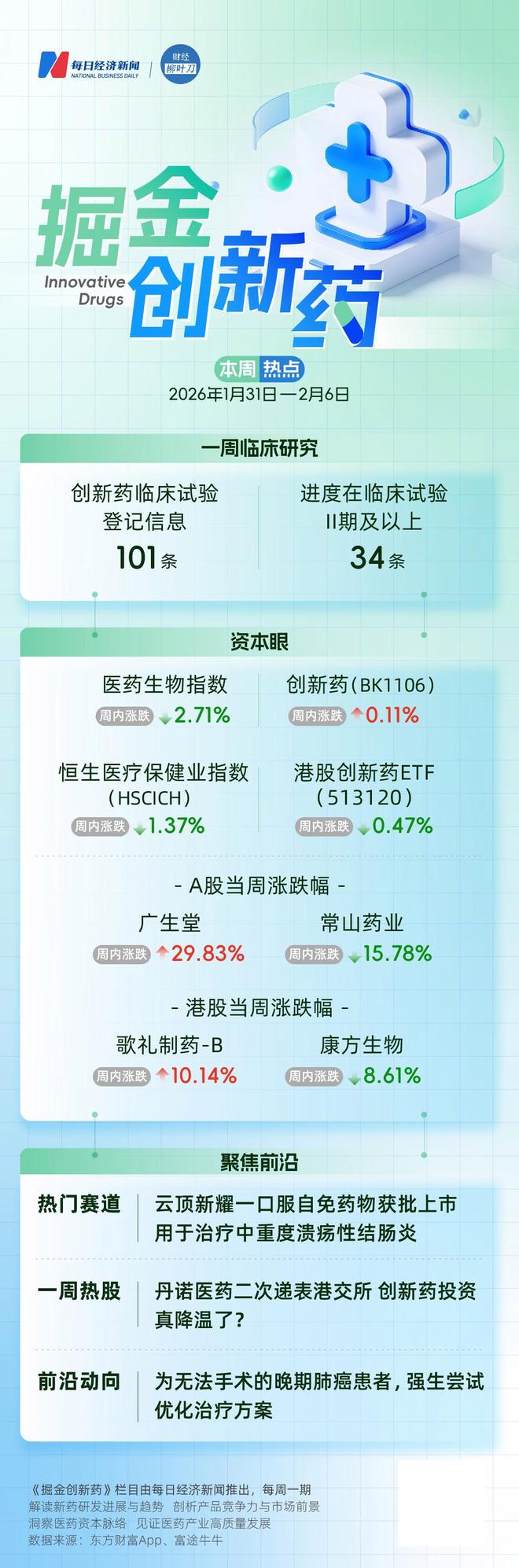
Market Overview - The pharmaceutical and biotechnology index decreased by 2.71%, underperforming the Shanghai Composite Index by 1.44 percentage points [4] - The innovative drug index (BK1106) saw a slight increase of 0.11%, while the Hang Seng Healthcare Index (HSCICH) fell by 1.37% [4] - The Hong Kong innovative drug ETF (513120) also experienced a decline of 0.47% [4] Sector Performance - The overall pharmaceutical sector weakened, lagging behind the Shanghai Composite Index, but the innovative drug sector showed relative resilience [5] - Specific stocks like Guangshentang surged due to the completion of Phase III clinical trials for hepatitis B treatments, while Changshan Pharmaceutical faced significant declines due to credit risks and expected losses [5] - In the Hong Kong market, Gilead Sciences-B received substantial investment from GIC, boosting its stock price, while Kangfang Biologics saw a notable drop due to stricter FDA approval standards [5] New Drug Developments - Danno Pharmaceuticals submitted a second listing application to the Hong Kong Stock Exchange, indicating a more rational investment environment focused on clinical viability and cash flow health [6][7] - The company has seven products in development, with TNP-2198 being the most advanced, expected to be approved in China by 2026 [6] - Three innovative drugs were approved during the week, including a treatment for type 2 diabetes and a drug for moderate to severe ulcerative colitis [12][13] Clinical Trials - From January 31 to February 6, 101 clinical trial registrations were disclosed, with 34 being in Phase II or above [8] - Notable trials include those for treatments targeting conditions such as obstructive sleep apnea and systemic lupus erythematosus [10][11] Emerging Trends - The investment landscape for innovative drugs is shifting towards a focus on clinical outcomes and commercial viability rather than merely the number of drug candidates [7] - The demand for effective treatments for ulcerative colitis is rising, with a significant increase in patient numbers expected by 2031 [14][15]
1月销售额同比飙升36.8%,台积电涨超3%;谷歌母公司拟发行百年债券;思科发布全新AI网络芯片,挑战博通和英伟达【美股盘前】
Mei Ri Jing Ji Xin Wen· 2026-02-10 11:29
Group 1 - Dow futures rose by 0.09%, S&P 500 futures increased by 0.10%, and Nasdaq futures gained 0.07% [1] - Philips reported Q4 2025 earnings with a 1% year-over-year sales increase to €5.1 billion and an adjusted EBITA of €770 million, exceeding market expectations, leading to a 6.89% stock increase [2] - Cisco launched a new AI network chip, "Silicon One G300," expected to enhance AI computing task speeds by 28%, utilizing TSMC's 3nm process technology [2] Group 2 - Alphabet, Google's parent company, initiated its first issuance of Swiss franc bonds and British pound bonds, with maturities ranging from 3 to 100 years [2] - TSMC reported January sales of NT$401.26 billion, a 36.8% year-over-year increase and a 19.8% month-over-month rise, leading to a 3.09% stock increase [2] - BP's Q4 earnings showed a benchmark replacement cost profit of $1.54 billion, aligning with analyst expectations, but the full-year net profit of $7.49 billion fell short of the $7.58 billion forecast, resulting in a 4.9% stock decline [2] Group 3 - AstraZeneca's 2025 total revenue reached $58.739 billion, an 8% year-over-year increase, with growth in biopharmaceuticals, oncology, and rare diseases, and plans for significant investment in China [3] - AppLovin's stock rose by 3.5% after a short-seller retracted allegations against a major shareholder, ensuring the protection of legal rights [3] Group 4 - Eli Lilly announced a $2.4 billion acquisition of Orna Therapeutics to gain CAR-T therapy technology, aiming to produce cells in vivo rather than in the lab [4] Group 5 - Optical communication stocks saw a pre-market surge, with Redo Technology up over 17%, Astera Labs rising over 5%, and Corning increasing by over 1% [5]



