L'Oreal(LRLCY)

Search documents
欧莱雅告别高增长
Bei Jing Shang Bao· 2026-02-24 13:45
欧莱雅正在告别曾经的高增长模式。近日,欧莱雅发布的2025年财报显示,集团销售额增长呈现放缓趋势,净利润则出现下滑。业绩增速逐渐放缓的背后, 除了欧莱雅自身多年发展导致市场趋于饱和外,多品牌的竞争也在影响着欧莱雅的发展。尤其是在中国市场,欧莱雅面临着市场竞争加剧、多品牌蚕食市场 的危机。于未来的欧莱雅而言,高增长将不再是一件容易的事情。 增长放缓 2025年,欧莱雅销售额为440.5亿欧元,同比增长1.3%;净利润61.3亿欧元,同比下降4.4%。关于业绩表现,欧莱雅方面给出的解释为,"受汇率波动和法国 为整顿公共财政而对大型企业征收的特殊附加税的影响"。 从多年业绩数据来看,欧莱雅的增长正在逐渐放缓。根据财报,2024年,欧莱雅销售额为434.8亿欧元,同比增长5.1%;营业利润获得86.88亿欧元,同比增 长6.7%。2023年,销售额达411.8亿欧元,同比增长11%,营业利润同比增长19.8%至81.4亿欧元。 不过,欧莱雅更愿意用"复苏"一词强调过去一年的发展。"2025年对欧莱雅来说是决定性的一年:无论在什么情况下,我们都取得了强劲的业绩,同时也深 刻地改变了集团。尤其是在北美市场以及中国市场,欧 ...


L'Oréal (OTC:LRLCY) Stock Upgrade and Financial Performance
Financial Modeling Prep· 2026-02-17 15:11
Core Viewpoint - L'Oréal is a leading global cosmetics company facing competition but has received a positive stock upgrade from HSBC, indicating a favorable outlook for future performance [1][6] Company Performance - L'Oréal reported total sales of $52.29 billion last year, reflecting a 1.3% increase on a like-for-like basis, supporting an optimistic outlook for 2026 [4][6] - The current stock price is $89.06, which represents a 2.70% increase, with a trading range between $88.16 and $89.43 [4] Market Position - L'Oréal's market capitalization is approximately $237.69 billion, highlighting its significant presence in the cosmetics industry [5] - The stock has shown volatility over the past year, with a high of $95.10 and a low of $69.35, indicating potential for momentum investing [5] Investment Sentiment - Despite recent challenges, L'Oréal is viewed as a strong candidate for momentum investors, holding a Momentum Style Score of B, suggesting it is well-positioned for those looking to capitalize on stock trends [3][6] - The company has faced a decline in stock value due to weaker-than-expected performance at the end of the previous year, impacting investor sentiment [2]
L'Oréal S.A. 2025 Q4 - Results - Earnings Call Presentation (NEOE:LOR:CA) 2026-02-16
Seeking Alpha· 2026-02-16 23:02
Group 1 - The article does not provide any relevant content regarding the company or industry [1]

欧莱雅、雅诗兰黛中国销量复苏,高端消费者又回来了?
2 1 Shi Ji Jing Ji Bao Dao· 2026-02-15 10:56
Core Insights - L'Oréal reported a sales revenue of €44.05 billion (approximately ¥360 billion) for 2025, marking a 4% year-on-year growth, with the North Asia region, including China, showing signs of recovery after two years of decline [1] - Estee Lauder also demonstrated strong performance, with a 6% increase in sales to $4.229 billion for the second fiscal quarter of 2026, and a significant turnaround in net profit from a loss of $590 million to a profit of $162 million [1][2] - The recovery in the beauty industry reflects not only a cyclical rebound but also the resilience and potential of the Chinese consumer market [1] Company Performance - L'Oréal's professional hair products segment led with a comparable growth of 7.5%, surpassing €5 billion, while the skincare segment grew by 5.5% to €7.2 billion [2] - Estee Lauder's net sales for the first half of the 2026 fiscal year reached $7.71 billion, a 5% increase, with a net profit turnaround from a loss of $746 million to a profit of $209 million [2] - Both companies attribute their recovery to improved consumer confidence and proactive adjustments in product structure and channel efficiency [1][2] Market Trends - The high-end beauty segment is showing signs of recovery, with L'Oréal's sales in China increasing from 1% growth in the first half to 5% in the second half of 2025 [3] - The overall Chinese cosmetics market reached a total transaction value of ¥1.104245 trillion in 2025, growing by 2.83%, solidifying its position as the largest cosmetics market globally [7] - Domestic brands have increased their market share to 57.37%, indicating a shift in consumer preferences towards local products [7] Strategic Adjustments - Estee Lauder has restructured its organization to treat the Chinese market as a strategic core, reporting a full-year sales figure of $2.741 billion (approximately ¥19.6 billion) for mainland China [6][7] - L'Oréal is focusing on enhancing its digital and direct-to-consumer (D2C) strategies, with e-commerce sales surpassing 30% of total revenue for the first time in 2025 [7] - The competitive landscape is shifting, with international brands needing to solidify their high-end offerings while adapting to local consumer demands [8]

欧莱雅、雅诗兰黛中国销量复苏,高端消费者又回来了?丨美妆变局
2 1 Shi Ji Jing Ji Bao Dao· 2026-02-15 10:38
Core Insights - The high-end beauty market is showing signs of recovery, with L'Oréal and Estée Lauder reporting positive sales growth and improved profitability in their recent financial results [1][2][4] Group 1: Financial Performance - L'Oréal achieved sales of €44.05 billion (approximately ¥360 billion) in 2025, marking a 4% year-on-year increase, with the North Asia region, including China, showing a 0.5% growth after two years of decline [1] - Estée Lauder reported a 6% increase in sales to $4.229 billion for the second fiscal quarter of 2026, significantly improving its net profit to $162 million from a loss of $590 million in the previous year [1][3] - L'Oréal's professional hair products segment led the growth with a 7.5% comparable increase, surpassing €5 billion, while the skincare segment grew by 5.5% to €7.2 billion [3] Group 2: Market Dynamics - The recovery in the beauty sector is attributed to restored consumer confidence and proactive adjustments in product structure and channel efficiency by major brands [2][4] - Both L'Oréal and Estée Lauder's recovery signals a cyclical turnaround in the beauty industry and reflect the resilience and potential of the Chinese consumer market [2][4] Group 3: Strategic Adjustments - Estée Lauder has restructured its organization to treat the Chinese market as a strategic core, reporting a full-year sales figure of $2.741 billion (approximately ¥19.6 billion) for the mainland China market, which accounts for nearly 20% of the company's overall sales [6][7] - L'Oréal emphasized its leading position in the Chinese market, with e-commerce sales surpassing 30% of total sales for the first time in 2025, highlighting the importance of digital channels [7] Group 4: Consumer Trends - The demand for high-end and ultra-high-end skincare products is stabilizing, driven by higher frequency of use and emotional value associated with these products [4][6] - The overall cosmetics market in China reached a transaction value of ¥1.104245 trillion in 2025, with a year-on-year growth of 2.83%, solidifying its position as the largest cosmetics market globally [7]
高端美妆又行了,上海柜姐:每天“一车车”发货|新春走基层
Xin Lang Cai Jing· 2026-02-15 02:08
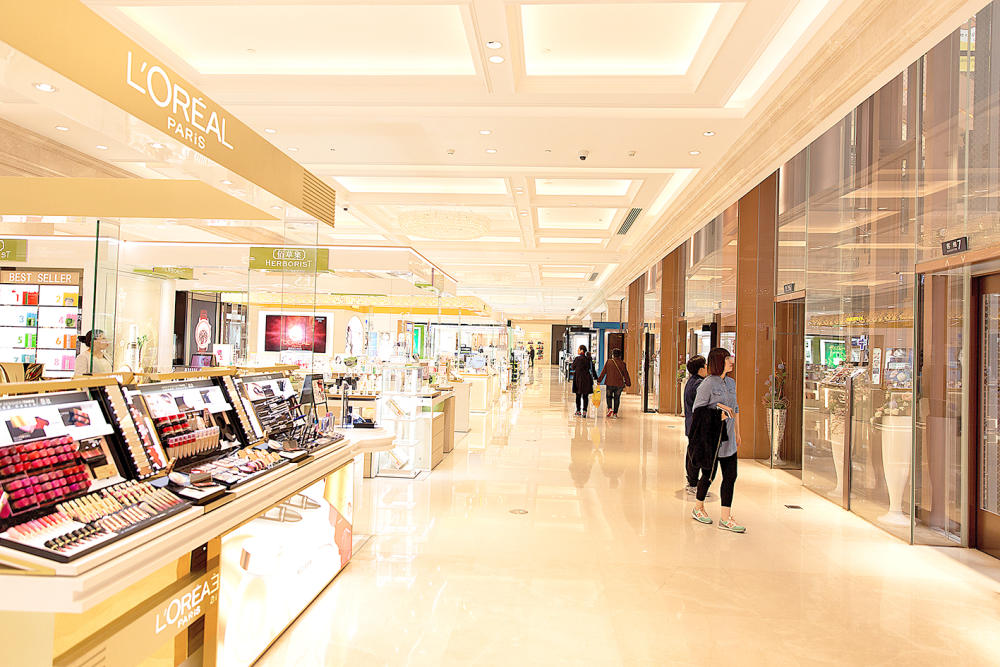
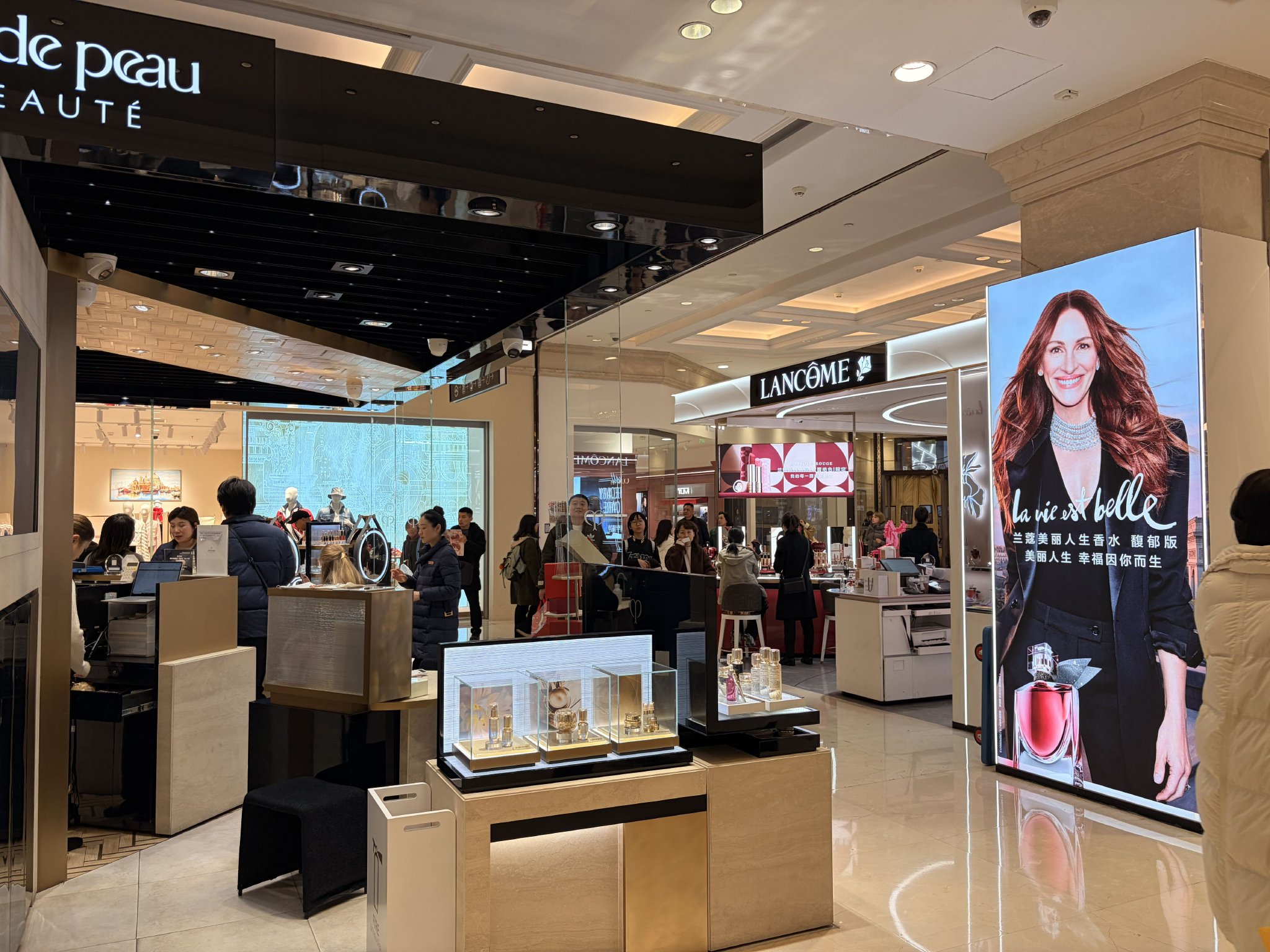
Core Viewpoint - The financial reports from major beauty groups indicate a recovery trend in China's high-end beauty market in the second half of 2025 [1] Group 1: Financial Performance and Market Trends - L'Oréal's sales growth in mainland China is projected to be 1% in the first half and 5% in the second half of 2025, contributing to growth in the North Asia region [2] - Estée Lauder and Shiseido have adjusted their financial reporting, with Estée Lauder separating mainland China from the Asia-Pacific market starting in Q2 2025, and Shiseido merging its China and travel retail businesses [2] - Estée Lauder's revenue growth in mainland China for Q2 to Q4 of 2025 is expected to be -2%, 9%, and 13% respectively, while Shiseido's comparable sales growth is projected at -14%, -7%, 8%, and 2% for the same quarters [2] - Bain & Company's report indicates that the beauty and personal care category will be the first to recover positive growth in 2025, while other luxury categories are still in a phase of decline [2] Group 2: Consumer Behavior and Market Dynamics - Increased consumer traffic in beauty sections of malls, particularly during the pre-Spring Festival period, indicates a rise in purchasing activity [3][4] - The beauty market is expected to rebound in 2025 after a slight decline in 2024, with a projected growth rate of 5.1% [7] - High-end brands are adjusting prices and inventory to facilitate recovery, with a notable shift of consumers from high-end to mass brands due to improved offerings and competitive pricing [11][17] Group 3: Product Innovation and Market Strategy - Major beauty brands are focusing on localized research and innovation in China, with L'Oréal, Estée Lauder, and Shiseido establishing R&D centers in Shanghai [19] - New product launches and collaborations, such as L'Oréal's partnership with Huashan Hospital and Shiseido's introduction of a new medical beauty brand, reflect a trend towards localized product development [20] - The market is shifting towards more specialized segments, such as scalp care and lip care, indicating a move from basic skincare to more refined personal care [12][13] Group 4: Long-term Market Outlook - The sustainability of current growth drivers, such as price reductions and niche market expansions, remains uncertain [14] - The beauty market is entering a phase of stock competition, with brands needing to enhance core competitiveness and adapt to changing consumer preferences [18] - The demand for high-end beauty products persists, but consumers are increasingly discerning, leading to a need for brands to align pricing with product value [17]
【环球财经】欧莱雅去年营收增1.3% 净利润下降4.4%
Xin Hua Cai Jing· 2026-02-14 00:44
Core Insights - L'Oréal's financial report indicates a revenue increase for 2025, but a decline in net profit due to currency fluctuations and a special tax imposed on large enterprises in France [1] Financial Performance - For the fiscal year 2025, L'Oréal reported revenues of €44.05 billion, a year-on-year increase of 1.3%, while net profit decreased to €6.13 billion, down 4.4% [1] - The gross margin and operating margin for 2025 improved to 74.3% and 20.2%, respectively [1] - Total cash flow decreased by 2.2%, but net cash flow increased by 7.8% [1] Regional Performance - In the North Asia region, revenues reached €10.08 billion, showing a reported decline of 2.2%, but a comparable growth of 0.5% [1] - The growth in North Asia was primarily driven by strong performance in the mainland China market, with growth rates improving from low single digits to mid-single digits by the end of the period [1] - In Europe, revenues grew by 4.6% to €14.86 billion, while North American revenues decreased by 0.7% to €11.71 billion [1] Market Position - L'Oréal reinforced its position as the leading beauty brand in the Chinese market during the previous year [1]
L’Oréal CEO Talks Skin Care, Travel Retail China and E-Commerce
Yahoo Finance· 2026-02-13 20:31
Core Insights - L'Oréal is focusing on innovation in skin care and aims to bridge health and beauty, with a strong emphasis on longevity science as a growth opportunity [1][6][20] - The company's skin care segment, despite being its largest category at 16.4 billion euros, showed minimal growth of 0.4% year-on-year, contrasting with stronger growth in makeup and hair care [2][5] - E-commerce has become a significant growth driver for L'Oréal, with sales reaching 13 billion euros, accounting for over 30% of total group sales, marking a substantial increase from previous years [9][11] Skin Care Performance - Skin care sales were flat in 2025, which is a concern for L'Oréal as it represents a major category [2] - The company is adjusting its strategies to enhance performance in skin care, particularly through innovation and media engagement [1][5] Regional Performance - North Asia's sales declined by 5% on a reported basis, despite a slight gain in like-for-like terms [4] - The travel retail market in Asia has been soft, particularly in Korea and mainland China, impacting overall sales [3][5] Strategic Partnerships and Acquisitions - L'Oréal announced a strategic partnership with Kering, acquiring the House of Creed and gaining exclusive licenses for Gucci, Bottega Veneta, and Balenciaga, valued at 4 billion euros [12][13] - The acquisition of a larger stake in Galderma will enhance L'Oréal's involvement in dermatology and aesthetics, allowing for better integration of strategies [18][19] Future Growth Opportunities - The company sees significant potential in the longevity market, with plans to introduce supplements and advanced beauty protocols [7][20] - L'Oréal aims to reach 2 billion consumers in the next decade, driven by trends in emerging markets and changing consumer behaviors [21]
超3600亿元,欧莱雅业绩创新高
3 6 Ke· 2026-02-13 13:01
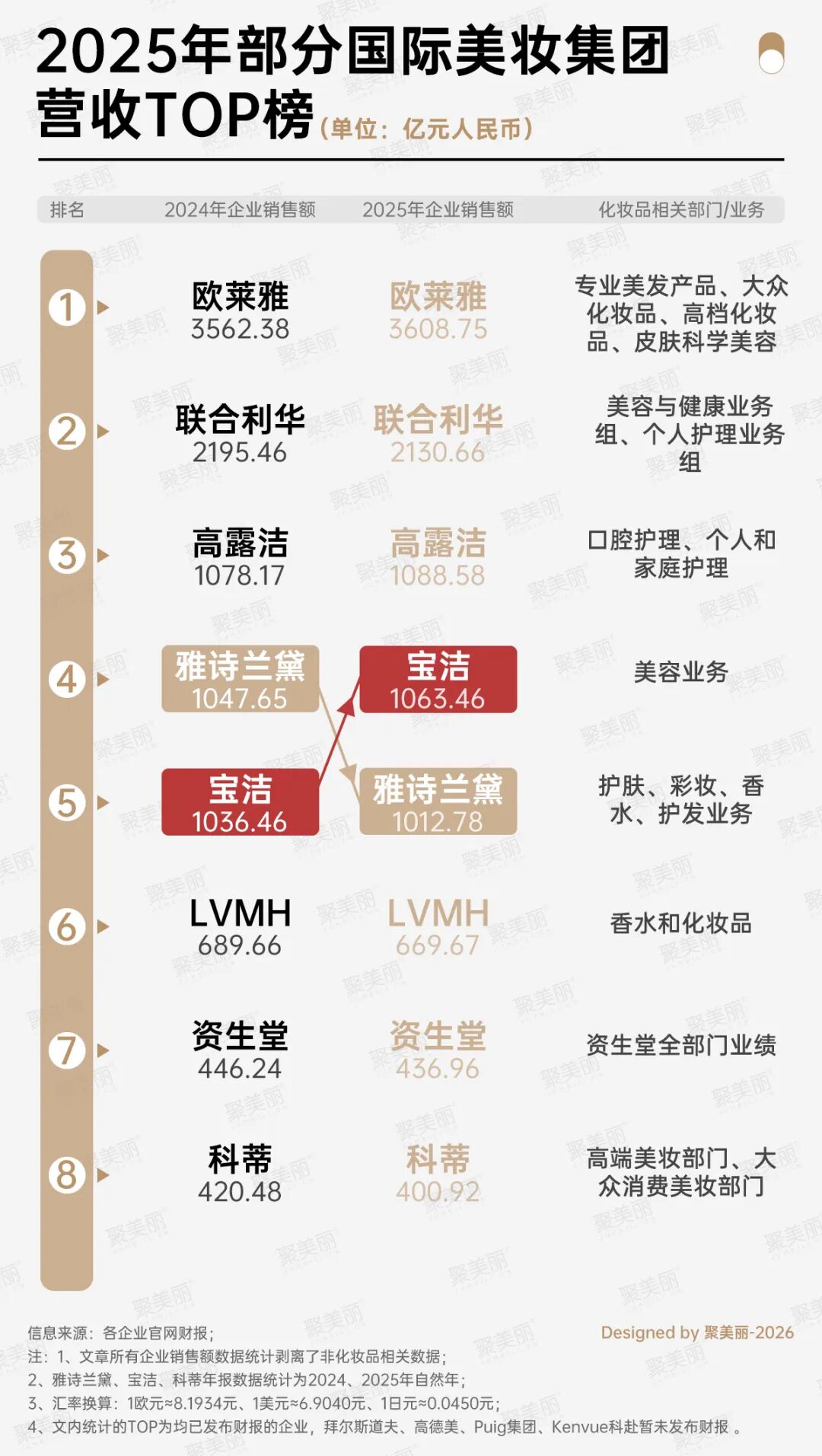
Core Insights - L'Oréal remains the top player in the global beauty market, with stable rankings among major beauty groups, while only Estée Lauder and Procter & Gamble have seen changes in their positions [1] Financial Performance - In 2025, L'Oréal reported total sales of €44.05 billion (approximately ¥360.88 billion), reflecting a year-on-year growth of 4% and a consolidated growth of 1.3% [4] - Operating profit reached €8.89 billion (approximately ¥728.97 billion), marking a 2.4% increase from the previous year [4] - The North Asia region, which includes China, generated €10.08 billion (approximately ¥825.96 billion) in revenue, showing a 0.5% year-on-year growth despite a consolidated decline of 2.2% [4][14] Regional Performance - North Asia experienced a revenue decline, with the overall market environment remaining challenging, particularly in travel retail [14] - Europe remains L'Oréal's largest market, with sales of €14.86 billion (approximately ¥121.80 billion) and a consolidated growth of 4.6% [18] - North America and Latin America both saw a consolidated decline of 0.7%, with North America generating €11.72 billion (approximately ¥960.18 billion) in sales [20] - The SAPMENA-SSA market recorded the highest growth rate at 10.9%, with sales of €4.11 billion (approximately ¥337.02 billion) [23] Departmental Performance - The Professional Products division achieved sales of €5.16 billion (approximately ¥423.02 billion), with a growth rate of 5.7% [29] - The Consumer Products division reported sales of €16.09 billion (approximately ¥1318.31 billion), with a slight growth of 0.7% [31] - The Dermatological Beauty division's sales reached €7.20 billion (approximately ¥590.25 billion), with significant contributions from brands like La Roche-Posay [34] - The Luxury division, while experiencing the slowest growth, still maintained a strong operating profit of €3.49 billion (approximately ¥285.78 billion) [27] Market Trends - L'Oréal's growth has slowed, with a 1.3% increase in 2025 being the lowest in five years, indicating a shift to single-digit growth [5][7] - The company has noted a recovery in its two largest markets, the U.S. and China, with ongoing expansion in emerging markets [6] - The high-end cosmetics sector has seen continuous growth challenges, while the professional hair care segment led with a 5.7% growth [5][27] Strategic Focus - L'Oréal emphasizes the importance of the Chinese market in its global strategy, indicating a recovery phase with a return to growth [44] - The company faces challenges from local brands and changing consumer preferences, necessitating a focus on innovation and market adaptation [46][47]
整个社会都在喊没钱了,为什么这些公司反而年赚百亿?
创业家· 2026-02-13 10:10
Core Insights - The article discusses how certain industries are thriving despite a general perception of economic downturn, highlighting eight key sectors that present significant business opportunities in a low-desire society [3][4]. Group 1: Key Industries - **Second-Hand Economy**: The second-hand luxury market in Japan, represented by companies like Daikokuya, has seen a surge in revenue. In China, platforms like Hongbulin and Panghu are experiencing similar growth, indicating a shift in consumer spending towards second-hand goods [6][7][8][9]. - **Pet Economy**: With a decline in birth rates, young consumers are increasingly spending on pets, leading to significant growth in pet food and healthcare products. Companies like Inaba in Japan and Guobao in China are capitalizing on this trend [12][13][15][16]. - **Adult Care Products**: The adult diaper market in Japan has surpassed $10 billion, showcasing the potential of the aging population as a lucrative market segment [17][18][19]. - **Health Food and Beverages**: Changing demographics and rising health awareness have led to the growth of sugar-free beverages and functional foods in both Japan and China, with brands like Suntory and Dongpeng gaining traction [21][22]. - **Beauty and Aesthetic Products**: The demand for beauty products, including collagen supplements and at-home beauty devices, remains strong, indicating that consumers prioritize personal care even in economic downturns [23][24][26]. - **Outdoor Recreation**: Companies in the outdoor equipment sector, such as Snow Peak in Japan and various Chinese brands, are benefiting from increased interest in outdoor activities as a form of stress relief [29][31][32]. - **Convenience Economy**: The rise of frozen foods and smart home appliances reflects a shift towards convenience, with brands like Anjijia and Kewell seeing steady growth as consumers seek time-saving solutions [39][40][42]. - **Lazy Economy**: The trend of reduced cooking time among younger generations has led to a preference for ready-to-eat meals and smart appliances that automate household tasks, indicating a shift in consumer priorities [39][40][42]. Group 2: Market Dynamics - The article emphasizes that even in a low-desire economy, there are significant opportunities for those willing to invest in counter-cyclical sectors. Companies that can identify and act on these opportunities are likely to emerge as winners [44].