
Southwest Airlines(LUV)

Search documents
特朗普利率突袭冲击金融股,华尔街高管财报季遭质询
智通财经网· 2026-01-16 12:48
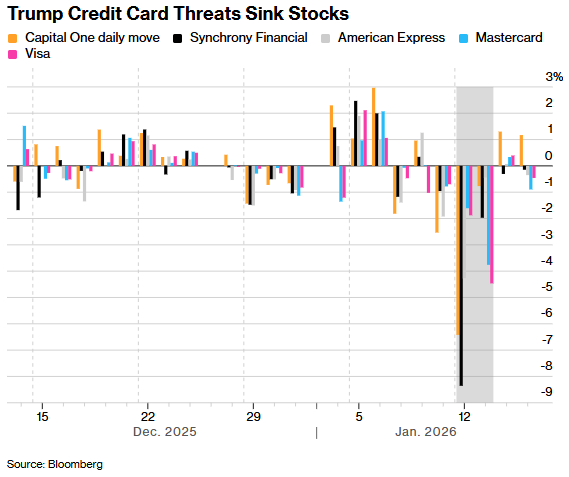
Core Viewpoint - President Trump's unexpected request for credit card companies to set a cap on interest rates at 10% could significantly impact the profitability of the financial sector, leading to a decline in financial stocks and raising concerns among bank executives during earnings calls [1][4]. Financial Sector Impact - The proposed interest rate cap is half of the current average rate on outstanding balances, potentially erasing billions in profits for credit card issuers [1]. - Major banks such as Capital One (COF.US), JPMorgan Chase (JPM.US), and American Express (AXP.US) experienced significant stock declines following the announcement [1]. - Analysts from KBW indicated that if the policy is implemented, it would severely weaken the profitability of credit card issuers and could trigger economic repercussions [4]. Legislative Developments - Trump has called for Congressional support for the Credit Card Competition Act, which targets the nearly $200 billion in swipe fees charged by banks and payment companies, negatively affecting stocks of Visa (V.US) and Mastercard (MA.US) [4]. - Some analysts doubt the feasibility of the interest rate cap, suggesting that the probability of it being enacted is less than 20% due to the lack of legislative support [4]. Broader Economic Effects - Bank executives have warned that the interest rate cap could lead to a significant economic slowdown and push consumers towards unregulated lending sources [5]. - The proposed changes are expected to have ripple effects beyond the financial sector, impacting industries such as airlines and retail, which rely on partnerships with credit card companies for substantial revenue [7]. - Airlines like Delta (DAL.US) and United Airlines (UAL.US) saw stock declines, as did retailers like Macy's (M.US) and Kohl's (KSS.US), due to concerns over the potential impact of the proposed legislation [7].







Bridging Desert and Ocean: STARLUX Airlines Links the U.S. Southwest to Asia with New Phoenix-Taipei Route--its Fifth U.S. Destination and First in the Southwest
Businesswire· 2026-01-16 05:40
Core Insights - STARLUX Airlines has launched a new nonstop service between Taipei and Phoenix, marking it as the airline's fifth U.S. destination and its first in the American Southwest [1][3]. Company Overview - STARLUX Airlines is a Taiwan-based luxury carrier that aims to provide a high level of comfort and service, operating a total of 31 destinations across various countries including the U.S., Japan, and Southeast Asia [8]. - The airline has received multiple accolades, including Skytrax 5-Star Airline status and a 7-Star PLUS Safety Rating from AirlineRatings, emphasizing its commitment to safety and service excellence [8]. Route Significance - The new Phoenix-Taipei route is expected to enhance tourism and business opportunities, strengthening economic ties between the U.S. Southwest and Taiwan [3][6]. - The route operates three times weekly on Tuesdays, Thursdays, and Sundays, utilizing Airbus A350-900 aircraft [6]. Partnership and Connectivity - STARLUX has partnered with American Airlines to provide connections from over 40 U.S. cities via Phoenix to Taipei and onward to 26 Asian destinations, enhancing transpacific travel options [4]. Inaugural Celebration - The launch of the new route was celebrated with an inaugural ceremony at Phoenix Sky Harbor International Airport, featuring a ribbon-cutting and a commemorative aircraft model exchange [5].

Airlines to save big money on fuel as new weight-loss pills gain popularity, Wall Street says
CNBC· 2026-01-14 16:12
Core Viewpoint - The introduction of GLP-1 weight-loss drugs in pill form is expected to benefit airlines by potentially lowering fuel costs, which are their largest expense, and enhancing earnings for the carriers [1][2]. Group 1: Impact of Weight Reduction on Airlines - A 10% reduction in average passenger weight could lead to approximately 2% total aircraft weight savings, resulting in up to 1.5% lower fuel costs and a potential 4% increase in earnings per share [2]. - Jefferies estimates that the four largest U.S. airlines—American Airlines, Delta Air Lines, United Airlines, and Southwest Airlines—will collectively consume about 16 billion gallons of fuel in 2026, with a combined fuel bill nearing $39 billion, representing nearly 19% of total operating expenses [4]. - A 1% reduction in aircraft weight is estimated to improve fuel efficiency by 0.75%, translating to a potential 4% increase in earnings per share across the group, with specific EPS gains projected as 2.8% for Delta, 3.5% for United, 4.2% for Southwest, and up to 11.7% for American [5]. Group 2: Weight and Fuel Efficiency - Weight is a critical factor influencing fuel efficiency, as emphasized by aircraft manufacturers like Boeing. The operating empty weight of an aircraft determines how much fuel, passengers, baggage, and cargo can be carried [6]. - For example, the Boeing 737 MAX 8 has an operating empty weight of about 99,000 pounds, with a maximum takeoff weight that allows for a specific distribution of fuel and payload [7]. - A 10% decline in average passenger weight could reduce total passenger weight by approximately 3,200 pounds, equating to about 2% of maximum takeoff weight, which would yield significant fuel savings over numerous flights [8].



Southwest Airlines: The Kind of LUV Investors Should Avoid
Benzinga· 2026-01-14 13:59
Core Viewpoint - Southwest Airlines is in the final stage of its Adhishthana cycle, and despite a recent rally, the overall outlook remains uninspiring, suggesting that investors should avoid chasing the stock [1]. Group 1: Triad Formation and Market Dynamics - The stock's triad formation, consisting of Phases 14, 15, and 16, is critical in determining the potential for a Nirvana move, which signifies the peak of the cycle [2]. - For a Nirvana move to occur, the triads must demonstrate Satoguna, characterized by strong momentum and institutional participation; without this, a significant breakout is unlikely [3]. - In the case of Southwest Airlines, the triad formation has not shown sustained bullish momentum, leading to a lack of probability for a powerful late-stage breakout [5]. Group 2: Recent Rally Analysis - The recent short-term upside in LUV is occurring within the upper boundary of a broader consolidation range, lacking the structural support necessary for a lasting trend [6]. - The weak foundation of the triad indicates that the stock does not possess the internal strength to break higher convincingly, often resulting in range-bound trading or false breakouts [7]. Group 3: Investor Outlook - Given the unfavorable triad formation, Southwest Airlines does not currently offer a compelling opportunity for bullish investors, and chasing the recent rally carries significant risk [8]. - Long-term investors are advised to reconsider the stock only after a complete cycle reset and if a new structure begins to favor bullish development [8]. - For traders, the current environment may be more suitable for range-bound strategies rather than pursuing directional momentum [9].
What Airline Earnings Could Say About Travel Trends in 2026
Investopedia· 2026-01-12 18:41
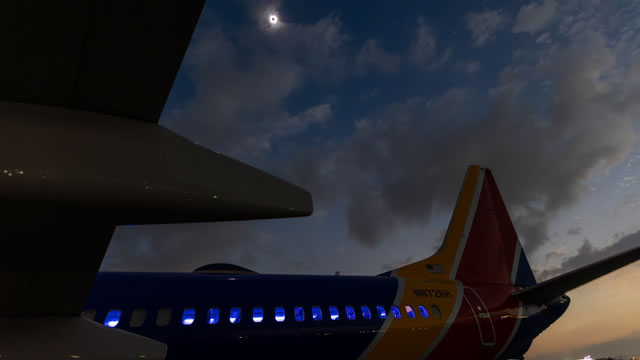
Group 1 - Major airlines are beginning to report earnings, starting with Delta Air Lines on Tuesday, followed by United Airlines, Alaska Airlines, and Southwest Airlines later in the month [1][5] - Investors are expected to focus more on forecasts for 2026 rather than fourth-quarter results, which were affected by a U.S. government shutdown and severe winter weather [2][5] - Airlines may provide optimistic outlooks for 2026 due to lower fuel prices and a potential recovery in demand following the end of the shutdown [2][3] Group 2 - Analysts and investors are looking for signs of improving travel demand heading into 2026, especially after a resilient holiday season despite previous economic uncertainties [3][4] - Financial pressures on many Americans have impacted travel demand, although higher-income consumers continue to spend, leading to growth in premium airline products [4] - "K-shaped" spending trends may persist, with higher-income consumers driving sales as premium revenue outpaces basic cabin growth [4]

JPMorgan Upgrades Southwest Airlines, Shares Gain 4%
Financial Modeling Prep· 2026-01-09 22:12
Core Viewpoint - Southwest Airlines has been upgraded to Overweight from Neutral by JPMorgan, with a new price target set at $60, significantly higher than the previous target of $36, leading to a 4% increase in shares intraday following the rating change [1] Group 1: Earnings Guidance - There is a meaningful probability that Southwest could issue earnings guidance of $5 per share, which would exceed the current 2026 consensus estimate of $2.98 and all existing individual forecasts [2] - JPMorgan noted that the market may initially be skeptical of such guidance due to Southwest's uneven track record, which has influenced the airline's decision to adopt a more streamlined EPS-based guidance framework [2] Group 2: Stock Valuation - Acceptance of guidance below $5, along with unchanged valuation assumptions, could still push the stock above $50 in the near term, paving the way for a potential valuation of $60 [3] - JPMorgan's analysis led to a double upgrade of the stock to Overweight and the establishment of a new Street-high price target of $60 for December 2026 [3] Group 3: Positive Catalyst Watch - JPMorgan placed Southwest on Positive Catalyst Watch ahead of the upcoming earnings report and 2026 guidance update scheduled for January 29, indicating that the updated financial model supports the revised outlook [4]
Southwest Airlines (NYSE:LUV) Stock Update: Analyst Ratings and Market Performance
Financial Modeling Prep· 2026-01-09 21:00
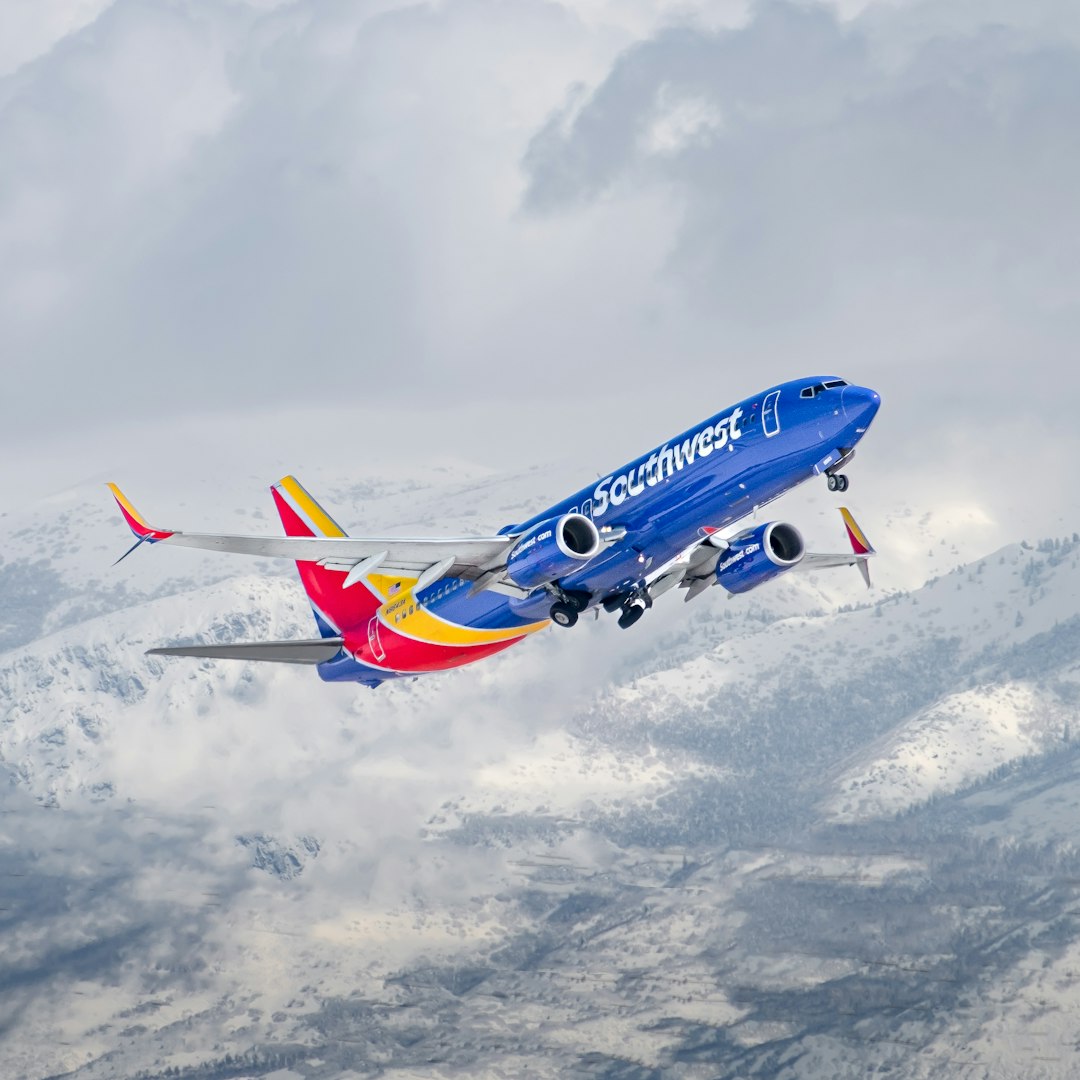
Core Insights - Southwest Airlines (NYSE:LUV) is recognized for its low-cost fares and extensive domestic network, competing with major carriers like Delta and American Airlines [1] - Recent adjustments in ratings from financial analysts indicate a mixed outlook, with Susquehanna maintaining a Neutral rating and raising the price target from $35 to $45, while JPMorgan upgraded its rating, citing an "attractively profitable" outlook [2][5] Stock Performance - The current stock price of LUV is $44.18, reflecting an increase of approximately 2.92% with a change of $1.26, and it has fluctuated between a low of $43.87 and a high of $45.02 today [3] - Over the past year, LUV has experienced significant volatility, reaching a high of $45 and a low of $23.82 [5] Market Capitalization and Trading Activity - Southwest Airlines has a market capitalization of approximately $22.85 billion, indicating its size and influence in the airline industry [4] - The trading volume for the day is 4,628,003 shares on the NYSE, reflecting active investor interest aligned with recent upgrades and positive outlooks from analysts [4]
Southwest Airlines shares jump as JPMorgan double-upgrades, sees $5 EPS by 2026
Invezz· 2026-01-09 16:46
Core Viewpoint - Southwest Airlines shares increased by over 4% following a rare double upgrade from JP Morgan, indicating a growing confidence in the airline's stronger earnings outlook and its potential to reshape investor expectations [1] Group 1 - JP Morgan's double upgrade reflects an optimistic view on Southwest Airlines' earnings potential [1] - The upgrade is seen as a significant endorsement of the airline's financial health and future performance [1] - The market's positive reaction, with a share price increase of over 4%, suggests investor enthusiasm for the airline's prospects [1]
Southwest Airlines Stock Hits 3-Year Highs on Double-Upgrade
Schaeffers Investment Research· 2026-01-09 16:25
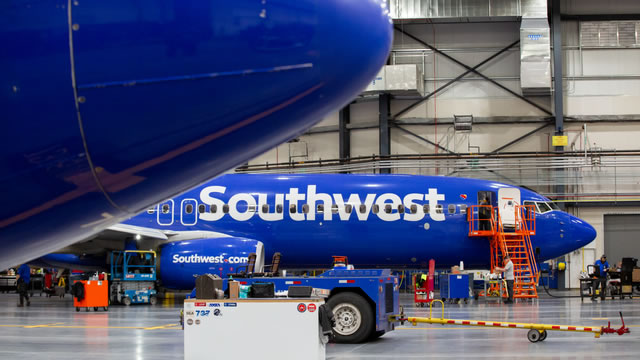
Core Viewpoint - Southwest Airlines Co (NYSE:LUV) has experienced a significant stock increase, reaching a three-year high after a double-upgrade from J.P. Morgan Securities, which raised its price target to $60 from $36, reflecting optimism about the company's earnings prospects for 2026 [1]. Stock Performance - LUV shares have risen 2.8% to $44.15, marking a sharp upswing since early December and breaking above the $43 resistance level [2]. - The stock is on track for its fifth consecutive gain, with a 7% increase since the start of 2026 and a 34% increase year over year [2]. Short Interest and Analyst Ratings - Short interest in LUV has decreased by 19.6% over the last two weeks, but still represents 5% of the stock's available float, indicating potential buying power [3]. - Among analysts, 18 out of 26 still hold a "hold" or worse rating on Southwest Airlines, with a 12-month consensus price target of $40.45, which is approximately 9% below current levels [3]. Options Market Sentiment - The options market shows a high put/call volume ratio, with a 10-day ratio of 2.50 and a 50-day ratio of 2.19, indicating a higher level of pessimism among options traders compared to the past year [4]. - The Schaeffer's Volatility Index (SVI) for LUV is at 36%, which is in the low 12th percentile of its annual range, suggesting that options traders are anticipating low volatility [5].
航空股走强 西南航空(LUV.US)涨超3.4%
Zhi Tong Cai Jing· 2026-01-09 15:02
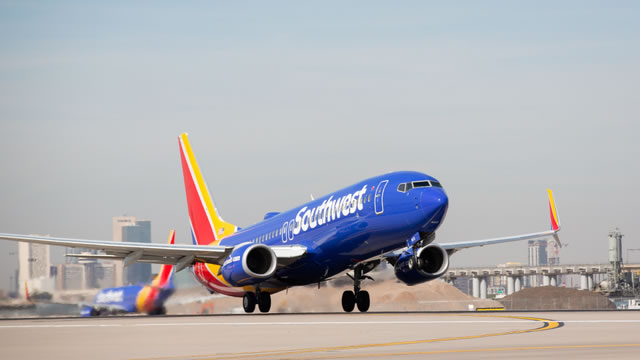
Core Viewpoint - U.S. airline stocks strengthened on Friday, with Southwest Airlines receiving a significant upgrade from Morgan Stanley, which raised its rating from "Underweight" to "Overweight" and increased the target price from $36 to $60 [1] Group 1: Stock Performance - Southwest Airlines (LUV.US) rose over 3.4% [1] - American Airlines (AAL.US) and Alaska Airlines (ALK.US) increased by more than 2% [1] - JetBlue Airways (JBLU.US), United Airlines (UAL.US), and Delta Air Lines (DAL.US) saw gains of over 1% [1] Group 2: Analyst Actions - Morgan Stanley upgraded Southwest Airlines' rating from "Underweight" to "Overweight" [1] - The target price for Southwest Airlines was raised from $36 to $60 [1]