NIKE(NKE)

Search documents
Can These 2025 Stock Market Losers Turn It Around?
The Motley Fool· 2026-01-06 03:49
Core Insights - The podcast discusses three companies that underperformed in 2025: Super Micro Computer, Lululemon, and Nike, and evaluates their potential for recovery in 2026 [3][12]. Super Micro Computer - Super Micro Computer has faced significant challenges, including a loss of confidence from auditors Ernst & Young, which stated they were "unwilling to be associated with the financial statements prepared by management" [3][4]. - The company has taken on $4.4 billion in debt and increased inventory by $3.3 billion, which could pose risks if they cannot sell the inventory at favorable prices [3][4]. - Despite a backlog of $36 billion in expected revenue for fiscal 2026, concerns remain about the company's ability to execute and the potential slowdown in AI demand [7][4]. Lululemon - Lululemon's stock has underperformed the market by approximately 60% year-to-date, attributed to inventory issues and a 5% decline in same-store sales in Q3 2025 [8][9]. - The brand faces competition from emerging brands like HOKA and On, which are gaining popularity among consumers [8][10]. - While Lululemon's price-to-earnings ratio appears attractive, concerns about its long-term brand momentum and potential value trap for investors are raised [10][11]. Nike - Nike has underperformed the market by about 25% year-to-date, facing revenue declines and increased competition from brands like HOKA and On [12][13]. - The company's strategy to withdraw from wholesale customers has not yielded the expected results, leading to difficulties in regaining shelf space with retailers [12][13]. - Analysts express skepticism about Nike's ability to recover in 2026, citing a challenging market environment and a shift in consumer behavior towards direct-to-consumer brands [13][14].



2026开年,跑鞋市场要“分道扬镳”?
3 6 Ke· 2026-01-05 23:52
Core Insights - The running shoe market is showing a divergence in preferences between elite athletes and the general consumer, with a notable discussion around the use of traditional thin-soled racing shoes versus thick-soled shoes favored by most runners [1][9] Group 1: Elite Athletes and Performance - At the 102nd Hakone Ekiden, a significant choice was made by runner Asahi Kuroda from Aoyama Gakuin University, who wore the Adidas Takumi Sen 11 thin-soled racing shoe, winning a challenging segment and breaking the record for that section [3][4] - Despite the standout performance of the thin-soled shoe, the overall trend in the competition favored thick-soled carbon plate shoes, with 9 out of 10 segment champions wearing thick-soled models, indicating a continued dominance of this design in elite racing [3][4] - The choice of thin-soled shoes in specific challenging segments highlights the importance of direct power transfer and lightweight design in certain racing conditions, suggesting a nuanced approach to shoe selection among elite runners [4][5] Group 2: General Consumer Preferences - The majority of everyday runners prefer thick-soled shoes for their comfort and protective qualities, as evidenced by Strava's report indicating that the most worn shoe globally is the Asics Novablast, which features a midsole thickness of 40.5 mm [4][6] - The thick-soled shoe trend has been driven by brands like HOKA, which popularized the idea that thicker soles equate to better cushioning and protection, leading to a market where thick-soled shoes are prevalent [5][6] - The market is witnessing a shift where the needs of elite athletes and general consumers are diverging, with the former focusing on specific performance advantages and the latter seeking versatile, comfortable options for everyday use [5][9] Group 3: Market Dynamics and Future Trends - The competition in the running shoe market is evolving, with a clear distinction emerging between shoes designed for elite performance and those aimed at the general public, indicating a potential bifurcation in product offerings [7][9] - Brands are now challenged to cater to both segments effectively, with elite runners requiring specialized footwear for specific conditions, while general consumers prioritize comfort and versatility [8][9] - The future of the running shoe market may hinge on brands' ability to balance these diverging needs, ensuring they can provide both high-performance options for competitive athletes and comfortable, practical choices for everyday runners [9]



Will Nike Sell Converse? One Analyst Thinks So.
Yahoo Finance· 2026-01-05 19:19
Core Viewpoint - Speculation arises regarding Nike's potential sale of the Converse brand due to its precarious underlying health, as indicated by recent financial challenges [1]. Financial Performance - Converse experienced a 28 percent decline in revenues in Q1, followed by a further 31 percent drop in Q2, resulting in negative EBIT for the second quarter [2]. - The gross margin for Converse deteriorated from a decline of 620 basis points in Q1 to 700 basis points in Q2, attributed to lower average selling prices and higher product costs [3]. Demand and Marketing - Demand creation expenses for Converse declined by 44 percent year-over-year, a significant drop compared to a 6 percent decline in Q1, raising concerns about the brand's market presence [3][4]. - The reduction in demand creation suggests that Nike may be evaluating strategic alternatives for Converse, including a potential divestiture [4]. Strategic Implications - A divestiture of Converse would mark the completion of Nike's divestiture of all acquired brands, highlighting the challenges associated with brand acquisitions [4]. - The potential sale could represent a 3 percent headwind to Nike's top line for fiscal year 2027, although the exact implications are difficult to quantify due to dis-synergies [4]. Earnings Outlook - The expectation for Converse to achieve $3 in earnings per share by fiscal 2028 appears increasingly unlikely, reflecting ongoing challenges within the brand [5].
NIKE's Stock Looks Expensive: Is Patience the Better Strategy Now?
ZACKS· 2026-01-05 18:55
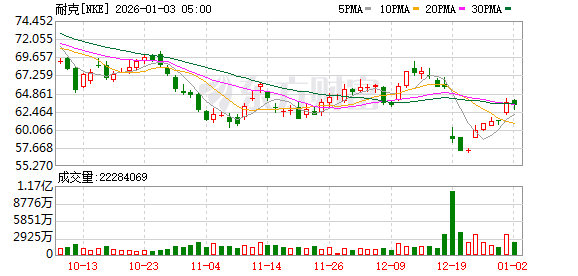
Core Insights - NIKE Inc. (NKE) shows fundamental strength but faces valuation concerns with a forward 12-month P/E ratio of 30.34X, higher than the industry average of 27.16X, indicating the stock may be relatively expensive [1][3] - The company's elevated price-to-sales (P/S) ratio of 1.95X also raises caution among investors, exceeding the industry's 1.79X, and its Value Score of D suggests it may not be a compelling value opportunity despite strong fundamentals [2][3] Valuation Comparison - NIKE's P/E ratio of 30.34X is significantly higher than competitors like adidas AG (16.2X), Steven Madden (19.9X), and Wolverine World Wide (13.37X), indicating a premium valuation that may not align with its growth trajectory [3][4] - The elevated valuation reflects high growth expectations from investors, but NIKE appears vulnerable as market sentiment shifts towards caution regarding overpriced Consumer Discretionary stocks [4] Stock Performance - NIKE shares have declined by 17.3% over the past six months, underperforming the broader industry decline of 15.4% and the Consumer Discretionary sector's decline of 7.6% [5][8] - The current stock price of $63.28 is 23.2% below its 52-week high of $82.44 and 21% above its 52-week low of $52.28, indicating bearish sentiment as it trades below its 50 and 200-day moving averages [12][13] Operational Challenges - NIKE faces near-term pressures from uneven demand, wholesale softness, and heavy promotions that are negatively impacting margins [7][16] - Elevated promotional activity and markdowns to clear aged inventory, particularly in lifestyle footwear, have weighed on gross margin performance, with management indicating that promotional pressure will persist [17][18] Long-Term Fundamentals - Despite near-term challenges, NIKE's long-term fundamentals remain intact, with management expressing confidence in the brand's global strength and connection with consumers [19][22] - The company is focusing on sport-led innovation and performance franchises, with ongoing investments in product innovation and marketing, which are expected to support future growth [21][22] Investor Outlook - NIKE is recognized as a fundamentally strong franchise with unmatched brand equity and global scale, but near-term headwinds and margin pressures continue to affect performance [23] - A neutral stance is suggested for investors, with existing shareholders encouraged to hold for long-term gains, while prospective investors may consider waiting for a more attractive entry point [24]
On Holding: The Swiss Upstart Taking On NIKE And adidas
Seeking Alpha· 2026-01-05 13:56
Core Insights - The ability to raise prices without losing customers indicates a strong business model [1] Group 1 - Companies that can increase prices by 10 percent without significant customer loss demonstrate robust market power [1]


CEO Elliott Hill Is Buying Nike Stock. Should You?
Yahoo Finance· 2026-01-05 13:49
Core Viewpoint - Nike has faced significant challenges in maintaining investor confidence, with stock prices declining substantially over the past three years, yet there is optimism for recovery based on brand strength and management focus [1][3]. Company Performance - Nike's stock has fallen 14% over the past 52 weeks and nearly 50% over the last three years due to slowing demand in China and tariff-related issues [1][3]. - The company's market capitalization is approximately $93.5 billion, with shares dropping 17% in the last six months and 15% in the last three months [5]. Insider Transactions - Tim Cook, CEO of Apple and a Nike director, purchased about 50,000 shares, increasing his stake by approximately 90% [2]. - Board member Robert Holmes Swan bought around 8,700 shares, raising his position by 24% [2]. - Nike CEO Elliott Hill acquired nearly 16,400 shares in a $1 million transaction, increasing his stake by over 7% [2]. Valuation Metrics - Nike's stock trades at 40.5 times forward adjusted earnings and 2 times sales, both exceeding industry averages, indicating a premium valuation [6]. - The company has consistently rewarded shareholders, increasing its dividend for 24 consecutive years, currently paying $1.64 annually, yielding 2.57% [6].
从露露乐蒙到追思史密斯,运动服饰品牌迎来关键转折点
Xin Lang Cai Jing· 2026-01-05 12:07
Core Insights - The sports apparel industry is expected to experience a pivotal turning point in 2026, with emerging brands poised for growth opportunities [2][4] Group 1: Challenges Facing Major Brands - Nike, the global leader in sports apparel by sales, is currently undergoing a transformation phase, facing a significant decline in demand for key products like the Jordan series and Air Force One [3][13] - In the three months ending in November, Nike's North American sales rebounded with a 9% year-over-year increase after repairing relationships with wholesale retailers [3][13] - Under pressure from management changes, Lululemon's stock plummeted by 44% in 2025 due to internal power struggles and declining demand for its signature yoga pants [4][6][15] Group 2: Emerging Competitors - New brands such as Bandit, Satisfy, and Tracksmith are filling the market void left by Lululemon, gaining recognition among consumers despite their smaller sales figures compared to Lululemon's $10 billion [7][16] - Under Armour, once seen as a potential leader in the industry, is now struggling with operational challenges and may become a target for acquisition, with its stock price falling below $5 and a market cap of approximately $2 billion [5][14] Group 3: Market Trends and Predictions - The demand for comfortable clothing surged during the pandemic, but as companies push for a return to office work, the market for tight-fitting yoga pants has cooled, leading to a resurgence of loose denim styles [6][15] - The sports memorabilia and apparel market is becoming increasingly competitive, with major sports organizations collaborating with brands like Abercrombie & Fitch and Lululemon to expand their customer base creatively [8][17] - 2026 is anticipated to be a significant year for Fanatics, which has expanded into sports betting and is expected to pursue an IPO, driven by investor demand for asset diversification [8][17]

耐克中国自救 从给在华高管加速放权开始
2 1 Shi Ji Jing Ji Bao Dao· 2026-01-04 23:12
Core Viewpoint - Nike is facing significant market pressure in China and is restructuring its management to enhance operational flexibility and respond to challenges in the market [2][4][15] Group 1: Management Changes - Nike has promoted regional leaders, including Dong Wei, CEO of Greater China, to the senior leadership team, reporting directly to the global CEO to accelerate the Win Now plan [2] - Dong Wei has a long history with Nike, having joined in 2005 and held various leadership roles, indicating a strategy to leverage experienced leadership in a challenging market [3] Group 2: Market Performance - Nike's sales in China have declined by 16% year-on-year to $1.423 billion, with EBIT dropping by 49% in the latest fiscal quarter ending November 2025 [5] - Direct sales decreased by 18%, with digital sales down 36% and store sales down 5%, while wholesale business fell by 15% [5] - The brand is perceived as a discount brand, affecting its high-end market positioning, leading to increased discount sales and higher return rates [5] Group 3: Competitive Landscape - The Chinese sports market is becoming increasingly competitive, with a decline in consumer spending as indicated by a drop in the percentage of consumers willing to spend more [6] - Domestic brands are gaining market share, with Anta's market share increasing from 9.8% to 10.5%, while Nike's share fell from 18.1% to 16.2% [8] Group 4: Strategic Initiatives - Nike is working to reshape its brand image in China by reducing discount rates and focusing on maintaining its premium positioning, as seen during the recent Double Eleven shopping festival [9][11] - The company is upgrading key stores, with sales in upgraded locations seeing a 25% year-on-year increase, and plans to expand this model [12] - Nike is also reducing spring product distribution and cutting summer product purchases to improve sales rates and full-price sales [13] Group 5: Marketing and Innovation - Nike continues to leverage its marketing strengths by collaborating with local sports stars and integrating into the Chinese market, as demonstrated during the National Games [14] - The establishment of the "ICON. Shanghai" creative center and a sports research lab in Shanghai reflects Nike's commitment to investing in the Chinese market [13][14]
IKEA、亚马逊等大货主组团买绿色运力!
Sou Hu Cai Jing· 2026-01-04 01:05
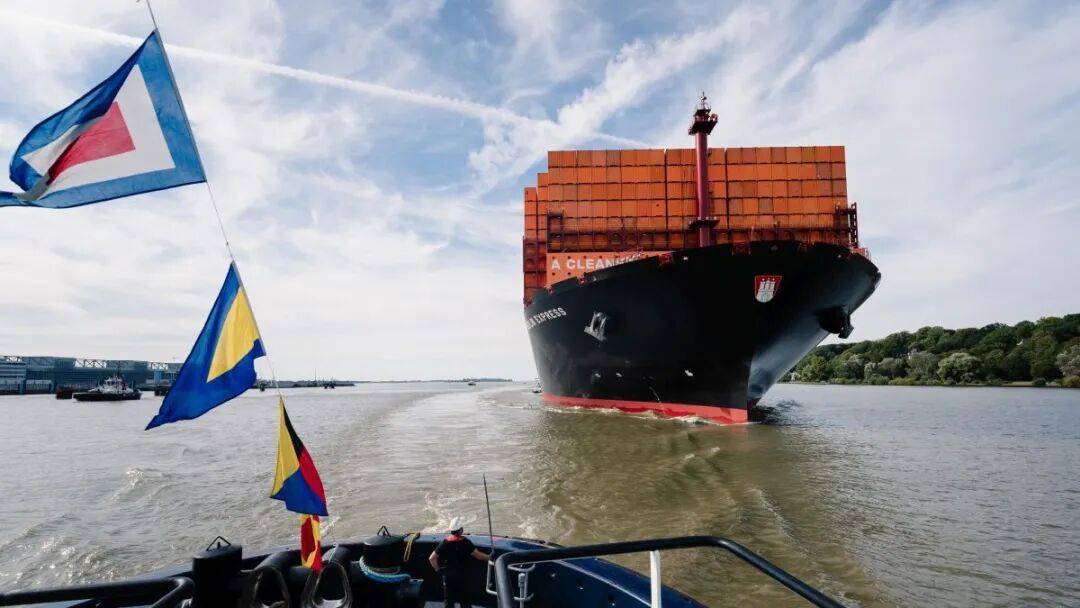
Core Insights - The ZEMBA alliance, comprising major brands like Amazon and IKEA, is pushing for a market-driven approach to establish a commercial framework for hydrogen-based e-fuels in the shipping industry [1][4][10] Group 1: ZEMBA Alliance and Its Objectives - ZEMBA aims to create a replicable commercial loop for e-fuels by aggregating orders from cargo owners and facilitating the deployment of ships and fuel supply [1][4] - The second round of e-fuels bidding has resulted in Hapag-Lloyd and North Sea Container Line being awarded contracts to deploy e-methanol and e-ammonia fuels starting in 2027 [3][5] Group 2: Bidding Results and Environmental Impact - The second round of bidding will support the deployment of e-fuels in approximately 200 billion tons of shipping over three years, with a potential reduction of 120,000 tons of greenhouse gas emissions starting in 2027 [5][6] - Hapag-Lloyd will utilize about 70,000 tons of e-methanol for five large container ships, while NCL will use 25,000 tons of e-ammonia for one small container ship [5][6] Group 3: Fuel Pathways and Market Development - The strategy involves deploying two types of scalable hydrogen-based e-fuels to maintain flexibility in technology and supply chain evolution [6][10] - Hapag-Lloyd will deploy e-methanol on a transoceanic route, while NCL will operate the world's first e-ammonia-powered container ship on a Nordic trade route [6][7] Group 4: Emission Reduction Standards - ZEMBA requires that both fuels achieve at least a 90% reduction in lifecycle carbon intensity compared to traditional high-emission fuels, ensuring rigorous assessment and compliance [8][10] Group 5: Market Dynamics and Future Outlook - The second round of bidding is seen as a market development initiative rather than just a reduction project, aiming to establish a sustainable pricing and demand discovery mechanism for the next generation of fuels [10] - ZEMBA's approach allows for immediate procurement to stimulate supply-side investment and infrastructure development, bypassing regulatory delays [10][11]

Apple CEO Tim Cook Just Loaded Up on Nike Stock. Should You?
The Motley Fool· 2026-01-03 20:18
Core Viewpoint - Nike is currently facing challenges despite a notable insider purchase by Apple CEO Tim Cook, which has raised questions about the company's potential turnaround [1][2]. Group 1: Insider Purchase - Tim Cook purchased 50,000 shares of Nike for nearly $3 million, nearly doubling his stake in the company, which was interpreted positively by the market [4]. - The purchase was made in the open market, indicating a personal investment rather than part of a compensation plan, which adds weight to the significance of the transaction [4]. - As a director, Cook's motivations may include aligning with shareholders and reinforcing confidence during a challenging period for Nike [6]. Group 2: Business Performance - Nike's revenue for Q2 of fiscal 2026 increased by only 1% year-over-year, with wholesale revenue rising by 8% but Nike Direct revenue declining by 8% [8][9]. - The company's gross margin fell by 300 basis points to 40.6%, and net income decreased by 32% to $792 million, indicating profitability issues [9]. - Nike is in the midst of a strategic turnaround, focusing on strengthening partner relationships and rebalancing its portfolio, but faces intense competition in the athleisure market [10]. Group 3: Valuation and Market Position - Nike's current price-to-earnings ratio stands at 37, with a forward price-to-earnings ratio of 40, suggesting that analysts expect continued pressure on earnings [11][12]. - Despite a solid dividend yield of 2.6% and a strong balance sheet, the lack of significant sales growth and declining profitability make the stock appear overvalued [11]. - The competitive landscape in athleisure, along with challenges in the direct-to-consumer channel and margin pressures, contribute to a cautious outlook for Nike [13].