
Rivian Automotive(RIVN)

Search documents
Rivian Unveils Plans For Autonomous Driving
Youtube· 2025-12-11 17:32
Core Insights - Rivian is advancing its autonomous vehicle technology with a focus on in-house developed hardware and software, aiming for significant improvements in vehicle autonomy capabilities [2][4][36] Group 1: Vehicle Development and Technology - Rivian launched its first vehicles at the end of 2021 and has since been designing an autonomy platform that integrates across business sets [2] - The Gen two fleet represents a tenfold improvement in compute capabilities, enhancing the camera platform and establishing a data flywheel for training [2][3] - The upcoming Gen three architecture will feature an in-house processor, improved camera systems, and LiDAR integration, significantly enhancing compute capabilities [4][10] Group 2: Autonomous Features and Updates - Rivian plans to expand hands-free driving capabilities from 150,000 miles to over 3.5 million miles in North America through an over-the-air update [8] - By 2026, Rivian aims to introduce point-to-point navigation, allowing vehicles to drive autonomously to specified addresses with supervision [9] - Future developments include "Eyes Off" driving capabilities on highways by 2027, leading to personal level four autonomy where vehicles can operate without anyone in the driver's seat [12][13] Group 3: Cost Management and Economic Strategy - The cost of LiDAR sensors has significantly decreased, making them a smaller percentage of vehicle production costs, while in-house custom silicon is expected to provide cost savings and performance improvements [21][22] - Rivian's strategy involves vertically integrating its software and electronics to enhance product differentiation and reduce costs, which is essential for scaling production beyond 50,000 vehicles annually [34][36] - The company has established a strong relationship with TSMC to support its semiconductor needs, which is crucial for its high-volume product strategy [30][22] Group 4: Market Position and Future Outlook - Rivian's self-driving technology is distinct from its joint ventures, focusing on proprietary capabilities that may eventually be licensed to other OEMs [37][39] - The pricing strategy for Rivian's autonomy features is competitive, with options for subscription or upfront payment, reflecting the company's commitment to R&D in self-driving technology [40][43] - Rivian's focus on self-driving technology is central to its business model, with significant investments aimed at building a robust infrastructure for future growth [44][45]


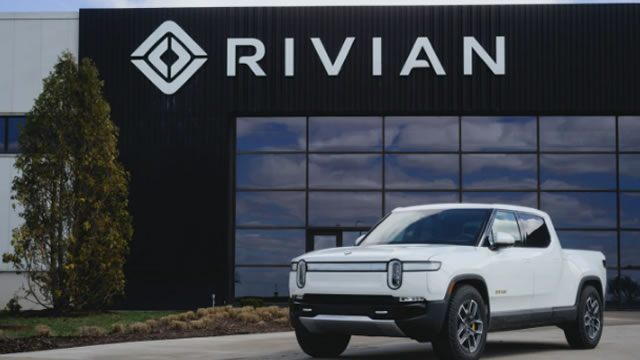
X @TechCrunch
TechCrunch· 2025-12-11 17:23
Rivian goes big on autonomy, with custom silicon, lidar, and a hint at robotaxis https://t.co/KBbc4GQd89 ...
Rivian debuts custom self-driving chip, $2,500 driver-assistance package
Reuters· 2025-12-11 17:23
Core Insights - Rivian Automotive has introduced its first custom computer chip designed for self-driving capabilities, marking a significant step in its technological advancement in the electric vehicle sector [1] - The company also launched a new paid driver-assistance package named Autonomy+, which aims to enhance the driving experience and leverage artificial intelligence [1] Company Developments - The introduction of the custom chip is expected to improve Rivian's self-driving technology, positioning the company competitively within the electric vehicle market [1] - The Autonomy+ package represents Rivian's commitment to integrating advanced driver-assistance systems, potentially increasing revenue through subscription services [1]
Rivian announces new AI tech, in-house chip and robotaxi ambitions
CNBC· 2025-12-11 17:21
Core Insights - Rivian Automotive has introduced new technology aimed at enhancing self-driving capabilities, including a custom chip, car computer, and AI models during its first "Autonomy and AI Day" in Palo Alto, California [1] Group 1: Technology Development - The company has developed a custom chip and car computer to support self-driving features in upcoming vehicles [1] - Rivian plans to implement lidar and radar sensors in its vehicles to achieve "level 4" fully automated driving, differentiating itself from competitors like Tesla [3] Group 2: Subscription Model - Rivian will launch an Autonomy+ subscription service in early 2026, offering continuously expanding capabilities for $2,500 upfront or $49.99 per month [2] - This pricing strategy positions Rivian competitively against Tesla's premium FSD option, which costs $8,000 upfront or $99 per month [2] Group 3: Future Applications - The company aims to enable hands-free driving on over 3.5 million miles of roads in North America, covering most marked roads in the US [3] - Rivian's CEO indicated that the self-driving vehicles will allow the company to explore opportunities in the rideshare and robotaxi markets [4]
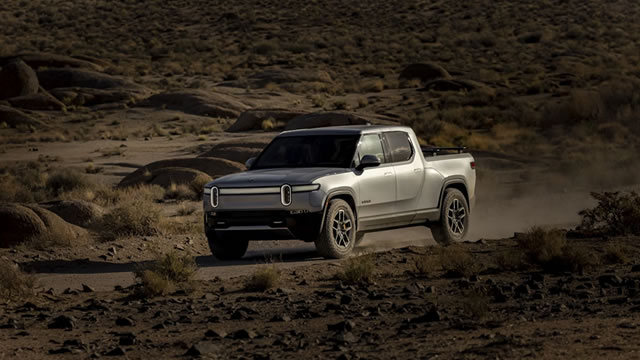
Here are 4 ways Rivian just stepped deeper into Tesla's turf
Business Insider· 2025-12-11 17:20
Core Insights - Rivian is intensifying its focus on autonomous driving, unveiling a roadmap for developing self-driving capabilities for its upcoming R2 vehicle, Rivian's most affordable model to date [1][4] Group 1: Autonomous Driving Development - Rivian plans to introduce a new in-house silicon chip to power its next-generation autonomous driving hardware, expected to ship with the R2 by the end of 2026 [2][5] - The company aims to achieve Level 4 autonomy, similar to Alphabet's Waymo, where driver supervision is not required [8][10] - Rivian's "Gen 3 Autonomy" hardware is currently under validation and is set to be integrated into the R2 vehicle [7] Group 2: Competitive Landscape - Rivian's announcement heightens competition with Tesla, as both companies aim for fully autonomous driving and software licensing opportunities [4] - Rivian's partnership with Volkswagen is a strategic move towards its licensing ambitions, contrasting with Tesla's reluctance to license its Full Self-Driving (FSD) technology [4] Group 3: Technology and Features - Rivian plans to incorporate lidar technology into the R2 vehicle, which is positioned above the windshield, enhancing safety and redundancy in self-driving capabilities [10] - The company will update its advanced driver assistance system (ADAS) to include hands-free assisted driving, operational on over 3.5 million miles of roads in the USA and Canada [11] Group 4: Subscription Model and AI Integration - Rivian is adopting a subscription model for its autonomous driving software, named "Autonomy+," priced at $49.99 per month or $2,500 for a one-time purchase, launching in early 2026 [12][13] - An AI voice assistant, "Rivian Assistant," will be introduced, allowing drivers to control vehicle features through voice commands and integrate with third-party apps like Google Calendar [14][15]

Rivian goes big on autonomy, with custom silicon, lidar, and a hint at robotaxis
TechCrunch· 2025-12-11 17:20
Core Insights - Rivian is advancing its electric vehicles towards greater autonomy, incorporating new hardware such as lidar and custom silicon, with aspirations to enter the self-driving ride-hail market [1][2] Technology Development - The company's first "Autonomy & AI Day" event revealed its technology advancements, aiming to produce the more affordable R2 SUV by the first half of 2026 [2] - Rivian plans to expand its hands-free driver-assistance software to over 3.5 million miles of roads in the USA and Canada, with a feature called "Universal Hands-Free" launching in early 2026 [3] Driver Assistance Features - The point-to-point navigation feature allows users to input a destination, enabling the vehicle to drive autonomously [4] - Future enhancements will allow drivers to take their eyes off the road, with plans to achieve "personal L4" autonomy, meaning no human intervention is required in specific areas [4] Market Competition - Rivian aims to compete with companies like Waymo, initially focusing on personally owned vehicles while also exploring opportunities in the rideshare market [5] Hardware Innovations - The company is developing a "large driving model" and a custom 5nm processor in collaboration with Arm and TSMC, moving away from Tesla's rules-based framework for autonomous vehicle development [7] - The new "autonomy computer" (ACM3) can process 5 billion pixels per second and will be featured in the upcoming R2 SUV [8][9] - The ACM3 will be paired with a lidar sensor to enhance real-time detection and spatial data processing, contributing to the vehicle's autonomy capabilities [9]
Rivian Unveils Custom Silicon, Next-Gen Autonomy Platform, and Deep AI Integration at Inaugural Autonomy & AI Day
Businesswire· 2025-12-11 17:20
Core Insights - Rivian announced significant advancements in automotive technology during its first Autonomy & AI Day, focusing on proprietary silicon, next-generation vehicle autonomy, and AI-driven software architecture [1][2][3] Technology Developments - The company introduced its in-house 1600 sparse TOPS inference chip, which is expected to enhance self-driving capabilities and aims for Level 4 (L4) autonomy, significantly improving the ownership experience [2][3] - Rivian's technology roadmap includes the Rivian Autonomy Processor (RAP1), a custom 5nm processor that integrates processing and memory, ensuring high efficiency and compliance with automotive safety standards [3][4] - The third-generation Autonomy computer, Autonomy Compute Module 3 (ACM3), will be integrated with LiDAR in future R2 models to enhance real-time detection and spatial data processing [4][5] Software Innovations - Rivian's software-first approach is exemplified by the Rivian Autonomy Platform, which utilizes a Large Driving Model (LDM) trained on extensive datasets to optimize driving strategies [6][8] - Upcoming software enhancements for the second-generation R1 vehicles include Universal Hands-Free (UHF) capabilities, allowing for extended hands-free driving [7] Subscription and Business Model - The company plans to launch an autonomy subscription service, Autonomy+, in early 2026, priced at $2,500 for a one-time fee or $49.99 per month, aimed at improving road safety and meeting customer demand [8] AI Integration - Rivian is leveraging AI through the Rivian Unified Intelligence (RUI), which enhances diagnostics and service infrastructure, and will soon power the Rivian Assistant, a voice interface for vehicles [9][11][12] - The RUI will facilitate predictive maintenance and improve self-service diagnostics for customers [12] Strategic Vision - Rivian's vertically integrated strategy allows for rapid evolution of the vehicle experience, combining user-facing features with foundational technology to drive growth [13][14]

Rivian Automotive (NasdaqGS:RIVN) Earnings Call Presentation
2025-12-11 17:00
Rivian Autonomy & AI Day Overview - Rivian held its Autonomy & AI Day in 2025 to discuss their next-generation vehicle autonomy systems, hardware, and software architecture[2] - The presentation included forward-looking statements subject to risks and uncertainties[2, 3] Autonomy System Components - Rivian is developing a Large Driving Model (LDM) and Autonomy Data Recorder[9, 10] - The company is working on Universal Hands-Free driving capabilities, aiming for point-to-point functionality[21, 23, 25, 26] - Rivian is creating Rivian Unified Intelligence, integrating various AI agents[29, 222, 224, 228] Hardware and Software - The Gen 3 Autonomy Computer has a neural engine capable of 800 TOPS (Sparse, INT8) and can process 5 billion pixels per second[15] - The Gen 3 Autonomy Computer has 4x peak performance of Gen 2 computer with 2.5x improvement in power efficiency[61] - The Rivian Autonomy Processor (RAP1) is a multi-chip module using TSMC 5nm Automotive node, with 800 TOPS neural compute[64, 65, 72, 74, 77, 81] - Integrated Memory Technology provides 205 GB/sec bandwidth[68] Data and Learning - Rivian uses a data flywheel approach, incorporating onboard data recording, cloud processing, and software updates[8, 106, 215] - The Autonomy Data Recorder captures and collates data, which is then anonymized and auto-labeled[10, 138, 164] - Rivian leverages over 3.5 million miles of driving data for training[211] Sensors - R2 vehicles will feature 11 cameras (65MP), 5 radars, and 1 LiDAR[51]
Where Will Rivian Automotive Stock Be in 1 Year?
The Motley Fool· 2025-12-11 17:00
Core Insights - Rivian, once a leading electric vehicle (EV) IPO in 2021, has seen its stock price decline significantly from a peak market capitalization of $153.3 billion to approximately $21.5 billion today, reflecting a drastic reduction in valuation from 92 times its 2022 revenue to just three times its expected 2026 revenue [2][6] Production and Deliveries - Rivian produces three types of EVs: the R1T pickup truck, the R1S SUV, and custom electric delivery vans (EDVs) for Amazon and other companies [4] - In 2022, Rivian produced only 24,337 vehicles due to supply chain issues and competition, falling short of its initial goal of 50,000 vehicles [6] - In 2023, production increased to 57,232 vehicles, but the company faced another slowdown in 2024 and 2025, with expected production of 49,476 and 31,310 vehicles respectively [7] Financial Performance - Rivian's revenue grew from $1.66 billion in 2022 to $4.43 billion in 2023, with projections of $4.97 billion in 2024 and $4.10 billion in the first nine months of 2025 [7] - The company is expected to narrow its net loss from $6.75 billion in 2024 to $3.82 billion in 2025, driven by increased sales and regulatory credits [8] Future Projections - Analysts predict Rivian's revenue will rise to $6.87 billion in 2026, with a net loss of $3.66 billion, contingent on the successful launch of the R2 SUV [9] - By 2027, revenue could surge to $11.37 billion, assuming successful scaling of R2 production and increased EDV deliveries [9] Stock Outlook - Rivian has approximately $7.7 billion in liquidity, which it believes is sufficient to support the R2 production ramp-up [10] - If the R2 launch is successful and meets revenue targets, Rivian's stock could potentially rise by over 160% in the next 12 months [10]
首届AI日开幕在即,Rivian(RIVN.US)迎来复刻特斯拉的“Model Y时刻”?
Zhi Tong Cai Jing· 2025-12-11 13:19
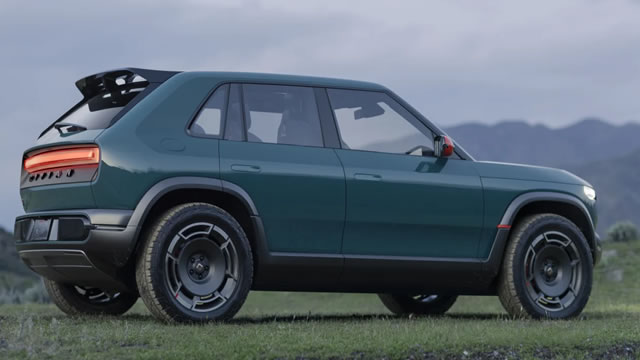
美国电动汽车制造商Rivian Automotive(RIVN.US)将于周四举办其首届"自动驾驶与人工智能日"。在整 个电动汽车行业增长放缓的背景下,该公司正转向人工智能技术以助力其增长前景。 根据Rivian首席执行官Robert Scaringe的说法,公司未来的差异化将建立在"以人工智能为中心的端到端 方法"之上。这与特斯拉FSD v12版本所采用的"端到端神经网络"技术路线高度重合。Rivian试图向资本 市场证明,它同样拥有构建"数据飞轮"的能力——即通过现有车队收集数据,训练AI,再通过OTA升级 反哺车队,形成技术壁垒。 Rivian的"Model Y时刻" 这家电动汽车制造商还准备在明年上半年推出更经济实惠的中型电动SUV R2。其首席财务官克莱尔.麦 克多诺近期重申,R2车型和Rivian的技术路线图将对公司的增长和盈利能力产生"真正的变革性"影响。 对于Rivian而言,计划于明年上半年推出的R2中型SUV就是它的"Model Y时刻"。 但摩根士丹利上周日的语气则更为谨慎,认为"普及速度放缓、7500美元税收抵免的取消以及消费者持 续的担忧(里程焦虑、充电基础设施、残值、电池技术、可负 ...