Rivian Automotive(RIVN)

Search documents
Trump’s Market Whiplash: A Rollercoaster for Your Portfolio (and Sanity)
Stock Market News· 2025-12-04 18:00
Market Volatility and Policy Changes - The stock market is experiencing significant volatility driven by recent policy announcements from the Trump administration, affecting various sectors and investor sentiment [1][2] - The rollback of the Biden-era Corporate Average Fuel Economy (CAFE) standards to a target of 34.5 miles per gallon by 2031 has been welcomed by traditional automakers, leading to stock price increases for companies like Ford, Stellantis, and General Motors [3][4] - Conversely, electric vehicle manufacturers such as Tesla and Rivian may face challenges due to the rollback of the CAFE credit trading program, potentially impacting their revenue streams [5] Trade Relations and Tariffs - The Trump administration is threatening to withdraw from the United States-Mexico-Canada Agreement (USMCA) and impose new tariffs on goods from China, Mexico, and Canada, creating uncertainty for companies in the North American supply chain [7][10] - The Canadian Dollar showed only mild weakness in response to these threats, indicating a level of market fatigue regarding trade uncertainties [8] - Analysts predict that the effective tariff rate could approach 20%, leading to higher inflation and increased market volatility, with companies likely passing on 70% of tariff costs to consumers [11][10] Impact on Specific Companies - Costco is proactively suing the U.S. government for refunds on duties already paid, highlighting the financial impact of tariffs on corporate bottom lines [12][13] - The pharmaceutical sector is reacting to Trump's plans to negotiate lower prices for GLP-1 weight-loss drugs, with shares of major manufacturers like Eli Lilly and Novo Nordisk experiencing declines [14][15] - Analysts are concerned about the long-term implications for these companies' revenues, particularly for Novo Nordisk, which holds a significant market share in the GLP-1 drug market [15] Broader Market Implications - The unpredictability of the Trump administration continues to create a complex environment for investors, necessitating a diversified portfolio and vigilance in response to ongoing policy shifts [16][17] - The market is characterized by a mix of deregulation and protectionism, with the potential for significant impacts on corporate margins and stock valuations [17][18]



How is Rivian Addressing Its Delivery Van Seat Belt Issue?
ZACKS· 2025-12-04 16:16
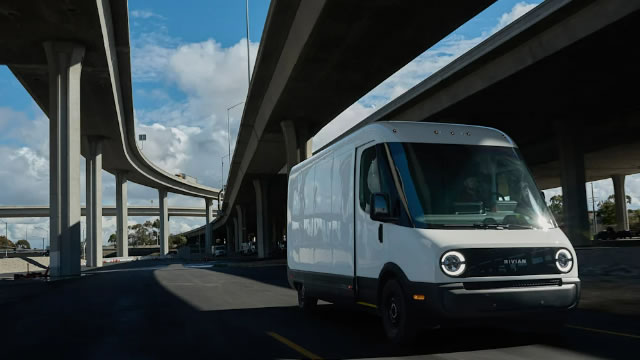
Core Insights - Rivian Automotive, Inc. is recalling 34,824 electric delivery vans in the U.S. due to a defect in the seat belt system that may fail to properly restrain drivers, increasing injury risk in crashes [1][7] - The National Highway Traffic Safety Administration (NHTSA) initiated an investigation into 17,198 Rivian delivery vans after reports of fraying and breaking seat belt cables [2] - Rivian is implementing an over-the-air software update to detect improper seat belt use and will inspect and replace the driver's seat belt pretensioner assembly at no cost [3][7] Company Performance - Rivian's stock has outperformed the Zacks Automotive-Domestic industry year to date, with shares gaining 31.8% compared to the industry's growth of 14.2% [6] - From a valuation perspective, Rivian appears undervalued, trading at a forward price/sales ratio of 3.25, slightly lower than the industry's 3.36 [8] Earnings Estimates - The Zacks Consensus Estimate for Rivian's EPS for 2025 and 2026 has narrowed by 13 cents and 6 cents, respectively, over the past 30 days [10]

Rivian Stock Could Double On Affordable R2 SUV Launch
Forbes· 2025-12-04 14:31
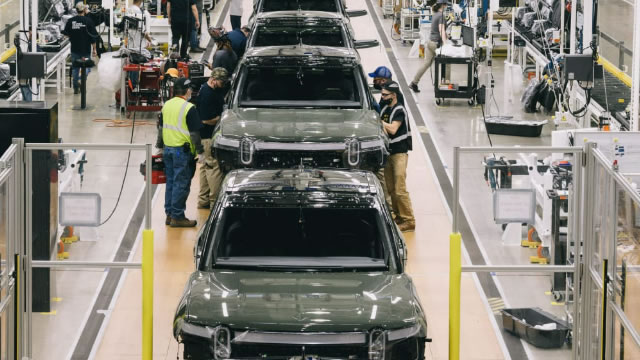
Core Insights - Rivian's upcoming R2 SUV is positioned as a potential catalyst to significantly increase the company's stock value, similar to how Tesla's Model 3 transformed its market presence [3][4] - The R2, priced at $45,000, aims to penetrate the mass market, moving Rivian from a niche luxury brand to competing with mainstream vehicles like the Toyota RAV4 and Honda CR-V [8][9] - Rivian's strategy includes learning from Tesla's manufacturing challenges to avoid pitfalls and enhance production efficiency [5][9] Market Positioning - Rivian's current offerings, the R1T and R1S, are high-priced vehicles, limiting market reach; the R2 is crucial for expanding its customer base [3][4] - The R2's design focuses on ruggedness and simplicity, differentiating it from competitors like the Tesla Model Y, which has design limitations [8][9] Manufacturing Strategy - Rivian has opted to produce the R2 in its existing Illinois facility instead of building a new factory in Georgia, saving $2.25 billion and reducing risk [9] - The R2 utilizes "Zonal Architecture" to simplify production, reducing costs and assembly time [9] Financial Projections - Revenue growth is projected at 28% for the upcoming year, with potential to reach $13 billion by 2028 if annual growth hits 35% [9] - Rivian aims for a Bill of Materials (BOM) of $32,000 per R2 vehicle, which, along with cost reductions, could lead to a 10% net margin by 2028, translating to $1.3 billion in net income [9] Valuation Outlook - A conservative P/E multiple of 30x applied to projected earnings suggests a market cap of $40 billion, indicating a potential 2x upside from current stock levels [9]

Trump’s Market Mayhem: A Rollercoaster Ride for the Ages
Stock Market News· 2025-12-04 06:00
Fuel Economy Regulations - Former President Trump announced plans to roll back Biden-era fuel efficiency standards from approximately 50 miles per gallon (mpg) to 34.5 mpg by 2031, along with the elimination of the Corporate Average Fuel Economy (CAFE) credit trading program by 2028 [2][3] - The rationale for this rollback is centered around "affordability" and "consumer choice," with claims that it will save American families an average of $1,000 on car prices and a total of $109 billion over the next five years [3] Automotive Industry Reaction - The automotive industry, particularly the Detroit Three (Ford, General Motors, and Stellantis), expressed strong support for the rollback, viewing it as a victory for common sense and market alignment [4] - Following the announcement, traditional automakers saw stock price increases, with Stellantis surging 7.64%, Ford and General Motors both gaining less than 2% [5] Impact on Electric Vehicle Manufacturers - The elimination of the CAFE credit trading program is expected to create a regulatory advantage for traditional automakers while potentially harming electric vehicle manufacturers like Tesla and Rivian [6] - Despite this, Tesla's stock rose by 4.08% following the announcement, indicating that market reactions can be unpredictable [6] Trade and Tariff Developments - President Trump has renewed threats of tariffs on China, which has historically affected the soybean market, with soybean futures showing slight increases amid ongoing trade tensions [8] - Costco is suing the U.S. government for refunds on tariffs, with $90 billion in tariffs collected, reflecting broader concerns about tariff legality and market implications [9] Market Volatility and Reactions - The market has shown predictable volatility in response to Trump's tariff announcements, with significant drops in major indices following threats of increased tariffs [10] - The "Trump effect" on stock markets illustrates a cycle of immediate reactions to policy changes and trade rhetoric, with markets adapting to this volatility [14]
Rivian recalls 35K delivery vans over defective seat belts that could fail in crashes
New York Post· 2025-12-03 18:38
Core Viewpoint - Rivian has announced a recall of 34,824 electric delivery vans due to a safety defect that may prevent the driver's seat belt from properly restraining occupants during a crash [1][3]. Group 1: Recall Details - The recall affects electric delivery van models primarily used in Amazon's delivery fleet, produced between December 10, 2021, and November 8, 2023 [1][8]. - The defect is linked to damage in the driver-side seat belt cable, which can occur if operators sit on a buckled belt repeatedly, weakening the cable [3][4]. - Rivian has stated that no injuries or crashes have been reported related to this defect [3]. Group 2: Regulatory Actions - The National Highway Traffic Safety Administration (NHTSA) initiated a preliminary evaluation in September regarding potential seat belt anchorage failures in these vans [4][11]. - A separate investigation by the NHTSA looked into issues affecting approximately 17,000 vans, specifically concerning frayed or broken cables [4]. Group 3: Mitigation Measures - Rivian has implemented a software update as of December 3, which detects seat belt misuse and alerts drivers [5]. - The company will inspect the seat belt systems and replace any damaged parts at no cost to the owners, with repairs expected to take less than an hour [5][8]. - Vehicles produced after November 8, 2023, come equipped with the new detection feature [5]. Group 4: Communication and Warranty - Owners are expected to receive notifications about the recall by mid-January, and Rivian will reimburse those who incurred out-of-pocket expenses for related repairs [8]. - The recall specifically pertains to the electric delivery van line and does not affect Rivian's R1S SUV or R1T pickup models [8]. - The company emphasized that the recall is precautionary and that the software and revised parts represent a permanent design change to prevent future issues [8].
Lucid Motors Is Now Cheaper Than Rivian, But Is LCID Stock a Better Buy for 2026?
Yahoo Finance· 2025-12-03 16:26
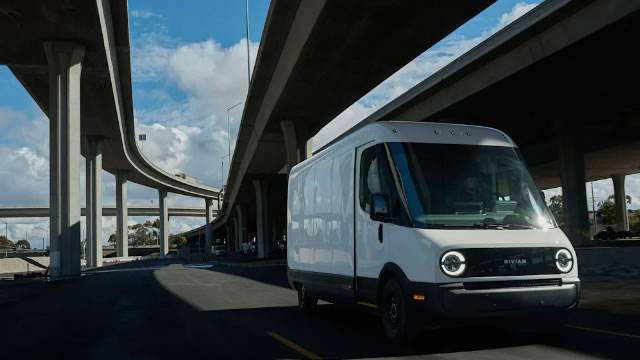
Core Viewpoint - U.S. electric vehicle (EV) companies, particularly Lucid Motors, are expected to end 2025 poorly, continuing a downward trend since the peak in 2021 [1] Company Performance - Lucid Motors has seen its shares decline by 57% year-to-date and has fallen every year since its 2021 listing [1][2] - Lucid now trades at a slight discount compared to Rivian, with a forward enterprise value-to-sales multiple of 3.01x, while Rivian stands at 3.16x [2] Industry Challenges - Both Rivian and Lucid are facing similar challenges, including lower-than-expected demand for EVs and the phasing out of the EV tax credit, which previously reduced acquisition costs by up to $7,500 [4] - The EV market is experiencing a price war due to a mismatch in demand and supply, with companies lowering prices to increase shipments [5] - Legacy automakers can absorb losses from EV ventures due to strong earnings from their internal combustion engine (ICE) businesses, unlike startup EV companies [5] Financial Health - Both Rivian and Lucid are struggling with ongoing losses and cash burn, requiring frequent capital raises that dilute existing shareholders [6] - Rivian has demonstrated better performance in profitability and capital management compared to Lucid [6]

美股异动 | 新能源车股多数走低 特斯拉(TSLA.US)涨超2.8%
智通财经网· 2025-12-03 15:41
智通财经APP获悉,周三,新能源车股多数走低,截至发稿,小鹏汽车(XPEV.US)、理想汽车(LI.US)跌 超3%,蔚来(NIO.US)跌超4%,Rivian Automotive(RIVN.US)跌0.41%;特斯拉(TSLA.US)涨超2.8%。 ...


Rivian Automotive (NASDAQ: RIVN) Stock Price Prediction for 2025: Where Will It Be in 1 Year (Dec 3)
247Wallst· 2025-12-03 13:05
Core Insights - Rivian Automotive Inc. shares have increased by 10.5% over the past week despite facing challenges such as a recall of nearly 35,000 vehicles due to a seatbelt issue and another round of layoffs [1] Company Summary - Rivian Automotive Inc. is currently experiencing a significant recall involving approximately 35,000 vehicles related to a seatbelt problem [1] - The company is also undergoing another round of layoffs, indicating ongoing operational adjustments [1] - Despite these challenges, the stock price has risen by 10.5% in the last week, suggesting market resilience or investor confidence [1]
Rivian to recall nearly 35,000 US vehicles over seatbelt issue, says NHTSA
Reuters· 2025-12-03 08:21
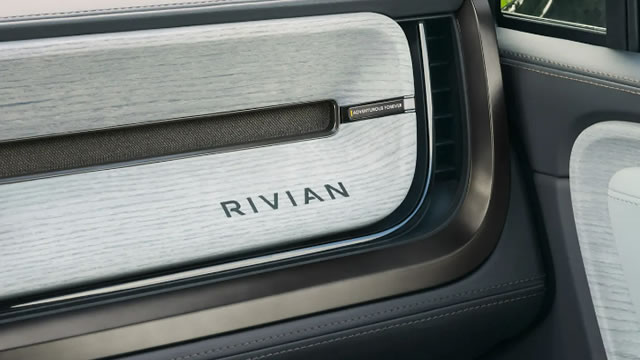
Core Viewpoint - Rivian Automotive is recalling 34,824 vehicles in the U.S. due to a potential failure of the seat belt pretension cable, which may increase the risk of injury in crashes [1] Group 1 - The recall affects a total of 34,824 vehicles [1] - The issue involves a damaged seat belt pretension cable that may not properly restrain the driver's seat belt [1] - The recall is initiated following a report from the U.S. National Highway Traffic Safety Administration (NHTSA) [1]
Should You Buy Rivian While It's Below $18?
The Motley Fool· 2025-12-02 15:07
Core Viewpoint - Rivian Automotive is facing significant challenges in the electric vehicle market, with its stock down 90% from all-time highs, but it has achieved key milestones that could support its future growth [1][2][4]. Company Achievements - Rivian has successfully produced award-winning trucks and achieved production at scale, turning a gross profit by earning more from car sales than the costs of production [4]. - The company has established partnerships with Amazon and Volkswagen, which have provided essential revenue and capital support [5][6]. Market Position and Competition - The electric vehicle market has become increasingly competitive, with major car manufacturers and numerous startups entering the space, leading to a more cautious investor sentiment towards Rivian [3][2]. - Rivian's upcoming R2 model, a lower-cost mass-market truck expected to begin production in 2026, is seen as a critical test for the company's future in the competitive auto industry [7][8]. Financial Overview - Rivian's current market capitalization stands at $21 billion, with a recent stock price of $17.23, and it had approximately $7.5 billion in cash and short-term investments at the end of Q2 2025 [7]. - The gross margin is currently negative at -159.38%, indicating challenges in achieving sustainable profitability [7]. Investment Considerations - The success of the R2 model will be pivotal for Rivian's future, and investors are advised to consider the risks associated with the stock, especially given the competitive landscape [8][9].