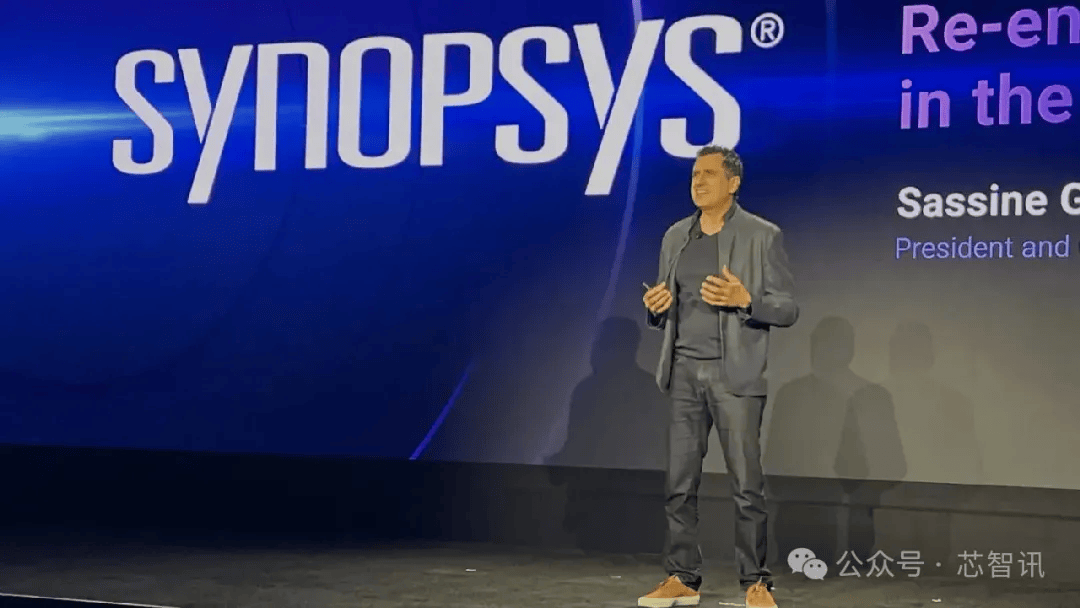
Synopsys(SNPS)

Search documents
美国应用软件 EDA 业绩预告:盈利期或现波动,建议逢低布局-US Application Software EDA Earnings Preview Expect Volatility Heading into Earnings Accumulate on Weakness
2026-02-11 05:57
Summary of EDA Industry and Company Insights Industry Overview - **Industry**: Electronic Design Automation (EDA) - **Key Players**: Cadence Design Systems (CDNS) and Synopsys (SNPS) - **Market Dynamics**: The EDA industry is expected to experience volatility due to AI-driven disruptions, but high switching costs and ecosystem lock-in are likely to limit risks to incumbents [1][10][31] Cadence Design Systems (CDNS) - **Earnings Expectations**: CDNS is set to report December-quarter results on February 17, with expectations of upside driven by robust IP growth and a record backlog exceeding $7 billion [11][17] - **Revenue Guidance**: Anticipated revenue growth for 2026 is slightly above the consensus estimate of 12% YoY, supported by the Hexagon acquisition and strong IP sales, which account for 14% of revenue [2][13] - **Operating Margin Risks**: The Hexagon acquisition may pose downside risks to the operating margin estimates for 2026, which are expected to expand by 100 basis points [2][18] - **Valuation**: CDNS is currently trading at a 60% premium to the S&P 500, with a price target of $385, reflecting a valuation multiple of 40x C27 EPS [5][71] Synopsys (SNPS) - **Earnings Expectations**: SNPS will report January-quarter results on February 25, with expectations of muted guidance for F2Q26 due to seasonality and the sale of its Processor IP Business to GlobalFoundries, estimated at $70 million [3][21] - **Revenue Guidance**: The company is expected to reiterate its F26 revenue outlook, with potential upside to EPS due to lower interest expenses [25][29] - **Valuation**: SNPS is trading at a 32% premium to the S&P 500, with a price target of $580, reflecting a valuation multiple of 32x C27 EPS [6][79] Key Insights - **High Switching Costs**: The EDA market's high switching costs, driven by foundry-certified workflows, limit the impact of AI disruptions on incumbents like CDNS and SNPS [4][41] - **Market Position**: CDNS and SNPS together command 65-70% of the EDA market, benefiting from significant operating leverage and R&D investments [52] - **Growth Drivers**: The semiconductor industry's record profitability supports the EDA industry's ability to sustain low-double-digit revenue growth, with R&D spending increasing as a percentage of semiconductor revenue [34][35][38] - **Risks**: Potential risks include geopolitical tensions affecting export restrictions, rising competition from emerging EDA providers, and macroeconomic downturns leading to R&D budget cuts [72][81] Conclusion - **Investment Strategy**: Both CDNS and SNPS are rated as Buy, with expectations of sustained revenue growth driven by strong demand in the semiconductor sector and strategic acquisitions enhancing their market positions [6][70][78]


台积电EDA名单更新:Ansys退出,国产仅1席
是说芯语· 2026-02-10 08:18
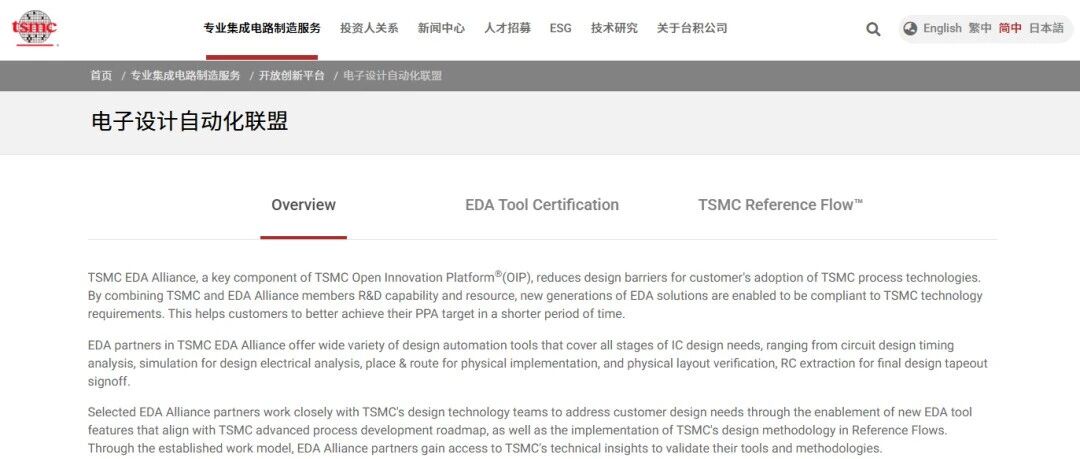
Core Viewpoint - TSMC's latest EDA alliance list, announced on February 6, includes 12 member companies, reflecting the industry's structural adjustments and the importance of EDA in semiconductor development [1][3]. Group 1: EDA Alliance Composition - The EDA alliance remains stable, with major players like Synopsys, Cadence, and Siemens EDA maintaining their dominant positions, while Primarius is the only domestic EDA company included [1][3]. - Ansys has exited the alliance due to its acquisition by Synopsys, which enhances Synopsys's influence within TSMC's EDA ecosystem [3]. - The remaining 11 members of the alliance have not changed, indicating a stable ecosystem [3]. Group 2: Domestic EDA Industry - Primarius's continued presence as the sole Chinese EDA firm highlights its technical recognition and the current state of the domestic EDA industry [4]. - Primarius focuses on core EDA areas such as modeling, simulation, and circuit verification, serving mid-to-high-end analog and mixed-signal circuit design, demonstrating strong technical capabilities [4]. - The exit of Empyrean from the alliance, following significant changes, underscores the challenges faced by domestic EDA firms in maintaining their positions in global ecosystems [7][8]. Group 3: Industry Dynamics - The TSMC EDA alliance is part of its Open Innovation Platform (OIP), aimed at collaborating with global EDA vendors for tool adaptation and methodology optimization [7]. - The stability and minor adjustments in the alliance reflect the ongoing dominance of international EDA giants in the advanced EDA field, while domestic firms still face significant technological gaps [10]. - Domestic EDA companies like Primarius are gradually overcoming technical barriers and integrating into the global semiconductor manufacturing ecosystem through focused R&D and collaboration with foundries [10].




千亿级景林密集调仓换股
Shang Hai Zheng Quan Bao· 2026-02-10 04:56
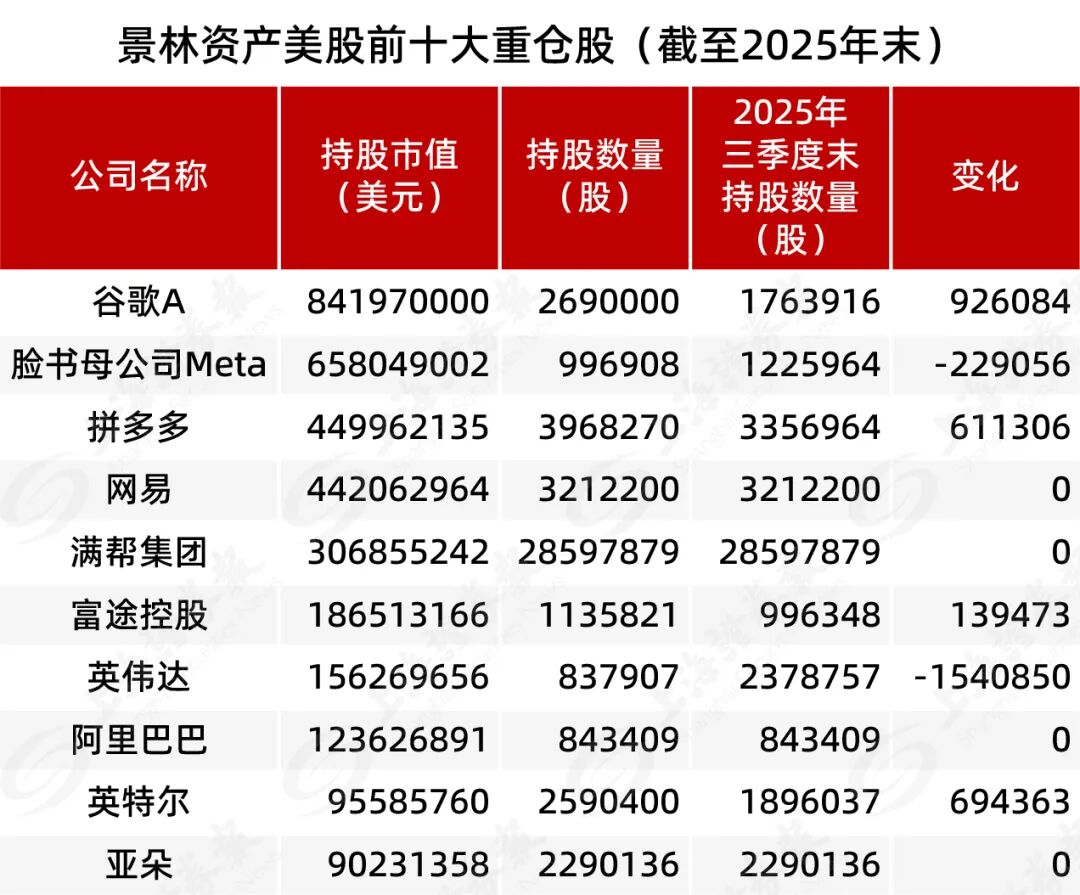
Core Viewpoint - Jinglin Asset has made significant adjustments to its stock holdings in the fourth quarter of 2025, increasing its positions in key technology stocks while reducing exposure to others, reflecting a strategic focus on sectors like AI and new energy [1][6][9]. Group 1: Stock Holdings and Changes - As of the end of 2025, Jinglin Asset held stocks in 28 companies in the US market, with a total market value exceeding $4 billion [1]. - The top ten holdings include Google A, Meta, Pinduoduo, NetEase, Manbang Group, Futu Holdings, NVIDIA, Alibaba, Intel, and Atour, with Chinese stocks still dominating the portfolio [1][10]. - The largest holding shifted from Meta to Google A, with Google A valued at approximately $841.97 million, reflecting an increase of 926,084 shares from the previous quarter [2][3][10]. Group 2: Investment Strategy and Focus Areas - Jinglin Asset is focusing on sectors such as AI, new energy, smart driving, and humanoid robots, believing these areas will continue to see rapid growth and investment from both China and the US [1][9]. - The firm emphasizes a balanced global investment strategy, selecting companies with strong valuations and cash flows to mitigate risks while capitalizing on growth opportunities [9]. - The CEO highlighted the importance of major AI application platforms like Google, Apple, ByteDance, Tencent, and OpenAI, predicting that 2026 could be a pivotal year for AI agents [9]. Group 3: Recent Trading Activity - In Q4 2025, Jinglin Asset increased its holdings in Intel by 694,363 shares and in Futu Holdings by 139,473 shares, while also initiating a position in Broadcom [6]. - The firm significantly reduced its holdings in NVIDIA by 1.54 million shares and in Meta by 229,056 shares, alongside partial reductions in other stocks like TSMC and UnitedHealth [6].



突发!新思科技中国区董事长离职
Sou Hu Cai Jing· 2026-02-09 12:16
根据内部信,葛群经过深思熟虑后决定离开新思科技,休息一段时间照顾家人、陪伴家人。 在新思科技近二十年的职业生涯中,葛群一直是新思科技中国战略的奠基人之一。他明确了发展方向,并将其转化为严谨的市 场推广策略,同时协调跨部门团队执行,推动业务增长,成功应对了复杂的地缘政治环境。 葛群的稳健领导在调动团队和合作伙伴,最终促成了对Ansys收购的成功完成。他还提升了新思科技中国品牌形象,塑造了清晰 的品牌故事,在业内积累了良好的声誉,并在市场上树立了统一的声音。 姚尧自2017年加入新思科技以来,在中国销售部门一路晋升,担任过多个职位,近期担任中国区销售副总裁。他在客户管理和 知识产权运营方面拥有深厚的专业知识,并在建立高效的客户关系和在重点客户中超额完成收入目标方面业绩出色。 芯东西(公众号:aichip001) 作者 | ZeR0 编辑 | 漠影 芯东西2月9日报道,全球EDA巨头新思科技发内部信宣布,新思科技全球资深副总裁、中国区董事长兼总裁葛群即将离职,姚 尧将担任新思科技中国区临时销售负责人,并将加入新思科技市场拓展团队。 ...

突发!新思科技葛群官宣离职
是说芯语· 2026-02-09 10:39
新思科技中国区人事变动 据悉,姚尧2017年加入新思科技,在国内销售部门逐步晋升,近期担任中国区销售副总裁,在客户管 理、知识产权运营方面经验深厚,擅长搭建高效客户关系并超额完成重点客户收入目标。2023年时,姚 尧曾任新思科技中国区副总裁,负责华东地区销售业务及战略项目,主导与华东地区重点芯片、手机、 新能源车企及云计算系统公司的战略合作。加入新思科技前,他曾任职于ARM、三星电子总部等企业, 在集成电路、移动无线等多个领域拥有超20年行业经验。 转自:芯榜 声明:本文仅为信息交流之用,不构成任何投资建议,股市有风险,投资需谨慎。 本文转自媒体报道或网络平台,系 作者个人立场或观点。我方转载仅为分享,不代表我方赞成或认同。若来源标注错误或侵犯了您的合法权益,请及时 联系客服,我们作为中立的平台服务者将及时更正、删除或依法处理。 加入"中国IC独角兽联盟",请点击进入 新思科技在致销售的内部信中宣布,全球资深副总裁、中国董事长兼总裁葛群即将离职。 内部信称,葛群经深思熟虑后决定离职,以便休息并陪伴照顾家人。在新思科技近二十年职业生涯中, 葛群是公司中国战略的奠基人之一,明确发展方向并落地市场推广策略,协调跨部 ...

2纳米被疯抢的原因
半导体行业观察· 2026-02-05 01:08
Core Insights - The introduction of 2nm and more advanced process nodes will require new power consumption and thermal management methods, while also providing greater design flexibility and more options for performance enhancement and cost optimization [2] - The semiconductor market is evolving, with a shift from traditional low-power chips for mobile devices and high-performance chips for servers to more specialized applications driven by artificial intelligence [2][3] - The transition to multi-die components allows for prioritization of different processors and functionalities, simplifying emergency plans during component shortages [2][3] Group 1: Design and Manufacturing Challenges - The complexity of integrating various components in chipsets is significant, as designing and manufacturing chipsets is easier than integrating them [4] - A hybrid design approach allows for the combination of different standard cells, enhancing flexibility and performance while managing power consumption [5] - The interconnect technology between chips has improved, allowing for the mixing of different process nodes, which helps mitigate cost and yield challenges [6] Group 2: Performance and Power Management - The performance and power advantages of new nodes are not absolute; the real value lies in how close the system can approach the physical limits of silicon [7] - The economic benefits of 2nm technology depend on intelligent management of the power band, as excessive power bands can lead to wasted investments [7] - The trend of increasing power density with each new node presents challenges in thermal management, necessitating advanced cooling solutions [11][12] Group 3: Market Dynamics and Future Directions - The reasons for upgrading to higher process nodes are no longer based on a single factor but vary by market segment and workload [15] - The integration of multiple nodes in a single design is becoming more common, with new PPA/C trade-offs to balance priorities in large systems [15] - The semiconductor industry is at a turning point, requiring continuous management of correctness rather than assuming everything is normal at acceptance [10]


Synopsys, Inc. (SNPS): A Bull Case Theory
Yahoo Finance· 2026-02-03 02:51
Core Thesis - Synopsys, Inc. is viewed as a compelling investment opportunity due to its strong financial performance and strategic positioning in the electronic design automation market [1][2]. Financial Performance - As of January 29th, Synopsys's share price was $480.00, with trailing and forward P/E ratios of 63.36 and 35.59 respectively [1]. - The company reported gross margins of 82% and EBITDA margins of 28%, driven by a richer software mix and a 149% year-over-year increase in maintenance and services revenue [2]. - Recurring revenue now constitutes 81% of total revenue, with remaining performance obligations (RPO) reaching $11.4 billion, reflecting over a 40% increase [3]. - For FY26, revenue is projected to be near $9.6 billion, with operating margins approaching 40.5% and EPS expected in the mid-14s, indicating significant margin expansion potential [3]. Strategic Developments - The combination with Ansys broadens Synopsys's long-term growth opportunities, particularly in multi-physics solutions and advanced packaging markets [4]. - A strategic partnership with NVIDIA worth $2 billion enhances Synopsys's position in AI-driven engineering, focusing on agentic design and tighter hardware-software integration [4]. - Despite facing near-term pressures from weaknesses in China and IP challenges, the company's leadership has provided a de-risked guidance, reflecting a realistic market outlook [4]. Cash Flow and Debt Management - Free cash flow for FY25 is projected at $1.35 billion, with FY26 expected to reach nearly $1.9 billion, supporting aggressive debt repayment plans [5]. - The remaining debt of $2.55 billion is anticipated to be cleared by mid-2026 [5]. Investment Outlook - The company is well-positioned for upside potential due to operational leverage and strategic catalysts, as the engineering ecosystem increasingly shifts towards complex, AI-enabled design solutions [6].
Synopsys: Powering The AI Engine
Seeking Alpha· 2026-02-02 20:40
Core Insights - The article discusses the evolution of an investor's strategy over time, emphasizing the importance of understanding the underlying motivations for investing [1] Investment Strategy - The investor initially engaged in quick trades and arbitrage but found the experience to be inconsistent and stressful, leading to a reevaluation of their approach [1] - A focus on long-term investments is highlighted, with a commitment to hold stocks for at least 3 to 5 years unless there is a fundamental change in the company [1] Research and Learning - The investor has researched the teachings of renowned investors such as Warren Buffett and Peter Lynch, integrating their insights into a personalized investment strategy [1] - Continuous research is emphasized as a critical component of developing and refining investment strategies, including evaluating current holdings and exploring new investment techniques [1]

4 Software Stocks Set to Pull Off a Beat This Earnings Season
ZACKS· 2026-02-02 14:41
Industry Overview - Software stocks are experiencing strong demand driven by digital transformation and the rapid adoption of artificial intelligence (AI), including generative AI and Agentic AI moving into real business applications [1] - Key growth drivers include software-as-a-service models, cloud migration, hybrid work models, and increased usage of online payment platforms [1] Factors Favoring Software Stocks - The proliferation of AI-powered applications in various sectors such as voice recognition, telemedicine, and business management software is benefiting industry players [2] - The adoption of cloud-based services, IoT, AR/VR devices, and accelerated 5G deployment are enhancing software stock performance [3] - Rising cyberattacks are prompting enterprises to invest more in cloud-based security solutions, shifting preference towards software-defined models for agility [4] Customer-Centric Trends - A customer-centric approach allows users to perform actions with minimal provider intervention, while pay-as-you-go models enable scalability for different user needs [5] - Subscription-based business models ensure recurring revenues, with the affordability of SaaS models particularly benefiting small and medium-sized businesses [5] Company Highlights Snowflake - Expected to report fourth-quarter fiscal 2026 results on February 25, with a Zacks Rank 3 and an Earnings ESP of +8.08% [8] - Consensus estimate for revenues is $1.25 billion, reflecting a year-over-year increase of 26.9%, while earnings are expected to be 27 cents per share, down 10% from the previous year [9] - Strong customer growth driven by AI capabilities and partnerships with industry leaders like SAP and Google Cloud [10][11] Match Group - Scheduled to report fourth-quarter 2025 results on February 3, with a Zacks Rank 3 and an Earnings ESP of +3.38% [12] - Revenue consensus is $871.6 million, indicating a year-over-year increase of 1.3%, with earnings expected at $1.01 per share, up 23.2% [12] - Benefits from a first-mover advantage in online dating, with Tinder as a key growth driver supported by innovative features and international expansion [13] Synopsys - Set to report first-quarter fiscal 2026 results on February 25, with a Zacks Rank 3 and an Earnings ESP of +0.38% [14] - Revenue consensus is $2.39 billion, reflecting a year-over-year increase of 64.3%, with earnings expected at $3.57 per share, up 17.8% [14] - Growth driven by demand for advanced technology and design solutions, with strong traction for its Fusion Compiler product [15] Cloudflare - Expected to report fourth-quarter 2025 results on February 10, with an Earnings ESP of +0.20% and a Zacks Rank 3 [16] - Revenue consensus is $590.17 million, indicating a year-over-year growth of 28.3%, with earnings per share expected at 27 cents, suggesting a 42.1% increase [16] - Benefits from a growing customer base and robust security solutions, with a dollar-based net retention rate of 119% in Q3 2025 [17]



新思科技CEO:存储芯片供应紧缺将持续至2027年
Sou Hu Cai Jing· 2026-01-28 01:55
Group 1 - The CEO of Synopsys, Sassine Ghazi, indicated that the price increase and shortage of memory chips are likely to persist until 2027, driven by the demand from AI infrastructure [2] - The surge in demand for memory chips is attributed to the ongoing investment of billions of dollars into data center infrastructure, leading to unprecedented price increases in semiconductors, which are expected to continue this year [2] - Major memory chip manufacturers like Samsung, SK Hynix, and Micron are working to expand production, but it will take at least two years to achieve increased output, contributing to the ongoing supply constraints [2] Group 2 - The rising prices of memory chips may force consumer electronics companies to consider raising prices for end products, with Xiaomi predicting an increase in smartphone prices by 2026 [3] - Lenovo's CFO, Winston Cheng, expressed confidence that the company can pass on the rising costs due to strong demand for memory chips, supported by a diversified global supply chain [3] - Cheng noted that the consumer electronics sector is experiencing some impact on price demand, particularly affecting low-end products, while users are still upgrading to Windows 11 [3]