Toyota(TM)

Search documents
Insight: How activist investors turned a Toyota buyout into a battleground
Reuters· 2026-01-29 04:51
Core Insights - Toyota's plan to take Toyota Industries (TICO) private has sparked a significant conflict between activist investors and the company, highlighting the demand for a higher acquisition price [1] Group 1: Company Strategy - The initial perception of Toyota's bid for TICO was that it was unremarkable, but it has since escalated into a contentious situation [1] - Activist investors are pushing for a better deal, indicating a strong interest in maximizing shareholder value [1] Group 2: Market Reaction - The battle over the acquisition reflects broader trends in corporate governance and investor activism within Japan [1] - The situation may influence future corporate strategies and investor relations in the Japanese market [1]


丰田2025年全球销量同比增长4.6%
Xin Lang Cai Jing· 2026-01-29 04:49
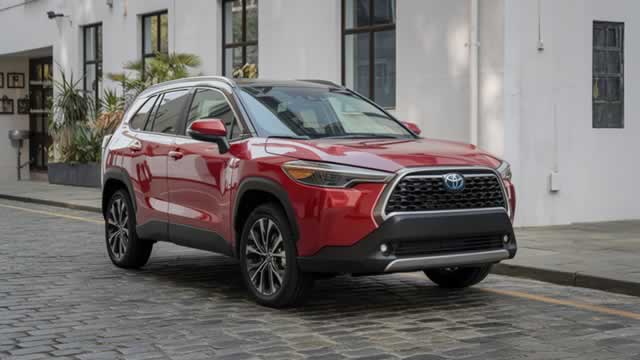
1月29日,丰田汽车公司宣布,包括子公司大发汽车和日野汽车在内,2025年全年销量为11322575辆, 同比增长4.6%;全球产量为11221960辆,同比增长5.7%。 1月29日,丰田汽车公司宣布,包括子公司大发汽车和日野汽车在内,2025年全年销量为11322575辆, 同比增长4.6%;全球产量为11221960辆,同比增长5.7%。 ...
Toyota retains top auto crown in 2025 with record sales
Reuters· 2026-01-29 04:32
Group 1 - Toyota Motor sold a record 11.3 million vehicles globally in 2025 [1] - The company retained its position as the world's top-selling automaker for the sixth consecutive year [1]
全球大公司要闻 | 科技巨头财报亮相,阿斯麦订单量炸裂
Wind万得· 2026-01-29 00:09
// 热点头条 // 1. 特斯拉: 2025 年第四季度营收 249.01 亿美元,每股收益 0.5 美元超预期,毛利润率 20.1% ,运营 利润 14.1 亿美元。计划一季度发布 Optimus 第三代量产版本, 2026 年底前开始生产,最终产能每年 100 万台机器人。 2. 工业富联:预计 2025 年第四季度净利润同比上升 56%-63% , AI 服务器营业收入环比增长超 50% ,受益于全球 AI 算力需求激增,公司在高端制造领域的技术优势进一步凸显。 3. 但斌旗下东方港湾海外基金 ORIENTAL HARBOR INVESTMENT FUND : 2025 年四季度末持仓总 市值约 13.16 亿美元,折合人民币超 90 亿元,大笔加仓谷歌,第一大重仓股由英伟达变为谷歌,反映 出对 AI 应用端长期价值的看好。 4. 阿斯麦: 2025 年四季度净销售额 97 亿欧元创纪录,订单额 132 亿欧元超预期两倍,上调 2026 年 销售额指引至 340-390 亿欧元,毛利率 51%-53% ,称极紫外光刻机需求为增长主因,同时计划在荷 兰和美国裁员约 1700 人以优化成本结构。 5. 希 ...





日本汽车生死时刻,丰田社长开出“七张药方”
汽车商业评论· 2026-01-28 23:06
Core Viewpoint - The Japanese automotive industry is at a critical juncture, facing systemic challenges that require a strategic response to maintain competitiveness and productivity [4][10][13]. Group 1: Strategic Challenges - The new president of JAMA, Sato Akira, is tasked with leading the development of a crucial action plan for 2026 to address the industry's challenges [6][11]. - Seven key issues have been identified, focusing on enhancing productivity and international competitiveness [15][16]. Group 2: Key Issues - **Ensuring Stable Procurement of Key Resources and Components**: Japan's reliance on imports for essential materials like rare earth elements and lithium poses a risk to supply chain resilience [18]. - **Implementing Diverse Carbon Neutrality Paths**: Japanese automakers are exploring multiple technology routes, including hybrid systems, to adapt to fluctuating electric vehicle demand [19][20]. - **Building a Circular Economy**: A complex network for data interconnectivity and component traceability is needed to create a sustainable manufacturing ecosystem [21]. - **Strengthening Human Resource Foundations**: The industry faces challenges in cultivating local talent for software and chip development, which are critical for future growth [22][23]. - **Creating Integrated Autonomous Driving Systems**: Japan is cautious in commercializing fully autonomous driving, lagging behind competitors like China and Silicon Valley [24][25]. - **Reforming Automotive Taxation**: The complex tax system hinders domestic sales, with JAMA prioritizing tax burden reduction to stimulate the local market [26][28]. - **Enhancing Supply Chain Competitiveness**: Standardization and modular design are essential for cost reduction, especially highlighted by recent chip shortages [29][30]. Group 3: Urgency and Collaboration - Sato Akira emphasized the immediate need to address the procurement of key resources as the most pressing challenge [33]. - Industry leaders recognize the necessity of collaboration to achieve scale and improve competitiveness, particularly in semiconductor standardization [35][36]. - JAMA is actively developing a chip database to enhance supply chain transparency and mitigate shortages [40]. Group 4: Economic Impact - The automotive industry accounts for approximately 10% of Japan's GDP and 20% of manufacturing GDP, with a trade surplus of about 20 trillion yen [44]. - The sector directly supports around 5.5 million jobs, expanding to 8.5 million when including related industries, highlighting its significant economic influence [45].
Toyota: Up Almost 10% With Plenty Of Road Left Ahead
Seeking Alpha· 2026-01-28 19:28
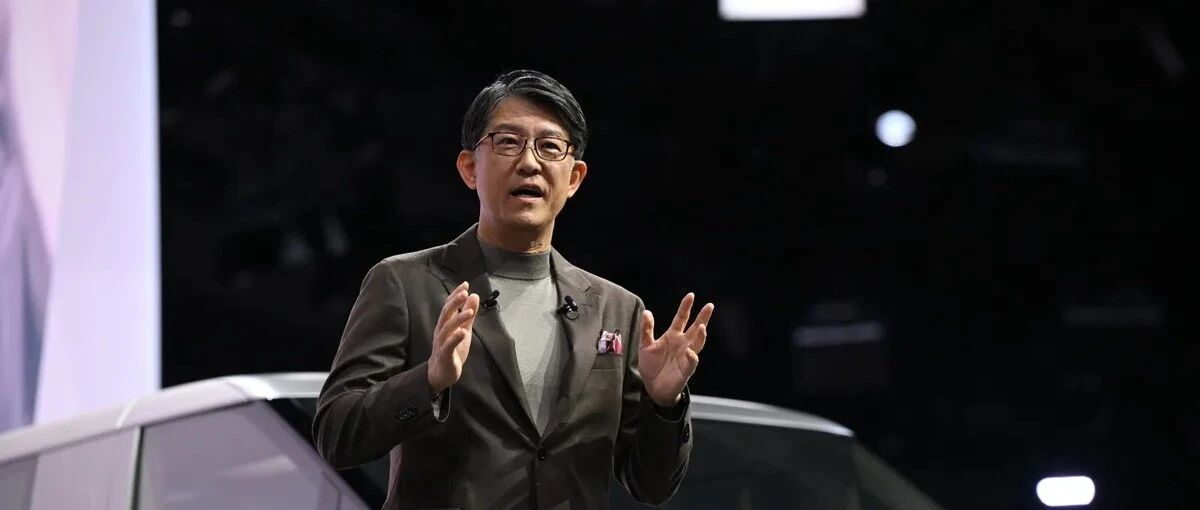
Core Viewpoint - Toyota Motor Corporation is transitioning from its historical reputation for producing reliable but unexciting commuter cars and hybrids to a more dynamic and innovative image in the automotive industry [1]. Group 1: Company Overview - Toyota is known for its reliability in vehicle production, particularly in the commuter and hybrid segments [1]. - The company has moved away from its past models, such as the MKIV Supra, which were iconic in the 1990s [1]. Group 2: Analyst Perspective - The article reflects a personal investment stance, indicating a beneficial long position in Toyota shares, suggesting confidence in the company's future performance [2]. - The analysis aims to provide insights for everyday investors, focusing on demystifying the stock market [1].
Japan's Nikkei rises as yen weakens, chip-related shares advance
The Economic Times· 2026-01-27 09:21
Market Performance - The Nikkei rose 0.85% to close at 53,333.54, while the broader Topix ended 0.31% higher at 3,563.59, driven by technology stocks [1][7] - Advantest jumped 5.85% and Tokyo Electron rose 2.53%, contributing to the overall market gains [3][7] - Tokyo Electric Power fell 7.925%, becoming the worst percentage loser on the Nikkei after announcing plans to cut about 3.1 trillion yen ($20 billion) in costs over 10 years [7] Currency and Economic Context - The yen had spiked against the U.S. dollar, reaching a more than two-month high, but weakened towards the end of the session, which supported the market [1][2] - Speculation grew over coordinated currency intervention by U.S. authorities following remarks from Japan's prime minister and a leading currency diplomat [2][7] - The current level of the yen is viewed as negative for exporters but positive for the election campaign, as stated by Hiroyuki Ueno, chief strategist at Sumitomo Mitsui Trust Asset Management [6][7] Political Developments - Japanese political parties began an election campaign on Tuesday after Prime Minister Sanae Takaichi called for a national election on February 8 [6][7] - A stronger yen is seen as positive for Takaichi, who supports loose monetary policy, while a weaker yen raises import costs and drives inflation, putting pressure on the central bank [6][7]



【快讯】每日快讯(2026年1月27日)
乘联分会· 2026-01-27 09:00
Domestic News - The Ministry of Commerce aims to cultivate new growth points in service consumption, focusing on transportation services, housekeeping services, automotive aftermarket services, and more to meet the evolving demands of consumers [4] - In 2025, the number of vehicle transfer registrations is expected to reach 41.11 million, with 38.41 million being automotive transfers, marking a continuous six-year trend of second-hand vehicle transactions surpassing new car registrations [5] - Guangdong province plans to strengthen emerging industries such as new energy, smart connected vehicles, intelligent robotics, and aerospace, aiming to build a more robust modern industrial system [6] - Nanjing is promoting a recycling program for key categories like home appliances and automobiles to support green product consumption [7] - Li Xiang, CEO of Li Auto, predicts that Level 4 autonomous driving will be realized by 2028 at the latest, emphasizing the urgency for companies to adopt AI technologies [9] - NIO has opened its first national dealership in Hungary, marking a significant step in its expansion into the Central European market [10] - XPeng has launched 1,000 mobile charging stations for its X9 model, strategically placed along major highways to assist drivers during peak travel seasons [11] - Lantu has surpassed 100 smart charging stations within a year, providing access to over 1.5 million charging resources nationwide [12] International News - In 2025, European electric vehicle sales are projected to exceed 2.885 million units, a 32.6% increase year-on-year, with a penetration rate of 29.0%, reflecting a significant shift in the automotive market [13] - Toyota has launched its first electric SUV specifically for the Indian market, named Urban Cruiser Ebella, as part of its long-term electrification strategy [14] - Jaguar plans to release its first mass-produced electric vehicle, the Type 00, in the first quarter of 2026, marking a pivotal moment in its transition away from fuel-powered vehicles [15] - Hyundai has no current plans to establish a new manufacturing plant in Canada but is exploring potential collaborations in the hydrogen sector [16] Commercial Vehicles - A new innovation center for power control systems in new energy commercial vehicles has been approved in Jiangsu province, aiming to enhance technological capabilities and international competitiveness [17] - The Zero Mi light truck will be launched in Shandong province, targeting individual entrepreneurs and small logistics companies for urban distribution [18] - The Ministry of Transport has implemented new regulations for online freight platforms, encouraging the use of advanced technologies to optimize transportation efficiency [19] - Hunan province is promoting the application of electric and hydrogen-powered heavy-duty trucks to support low-carbon transportation initiatives [20]



汽车早餐 | 2025年全国机动车保有量4.69亿辆;印奇出任阶跃星辰董事长;印度拟大幅下调欧盟汽车关税
Zhong Guo Qi Che Bao Wang· 2026-01-27 01:15
Domestic News - The Ministry of Public Security projects that by 2025, the total number of motor vehicles in China will reach 469 million, with 366 million being cars, and the number of motor vehicle drivers will be 559 million, including 525 million car drivers [2] - In 2025, the number of new registered motor vehicles is expected to be 35.35 million, with 26.19 million being new cars. By the end of 2025, the number of new energy vehicles is projected to reach 43.97 million, accounting for 12.01% of the total number of cars [2] - The Ministry of Public Security reported that in 2025, there will be 41.11 million motor vehicle transfer registrations, with 38.41 million being car transfers, which constitutes 93.44% of the total. Since 2020, the volume of second-hand car transactions has exceeded new car registrations for six consecutive years [3] - Guangdong Province aims to strengthen emerging industries such as new energy, smart connected vehicles, and aerospace, focusing on building a robust modern industrial system by 2026 [4] - Nanjing is promoting a consumption boost initiative, implementing a policy for replacing old appliances and vehicles with new ones, supporting green product consumption [5] International News - Volkswagen Group's CEO stated that the company may cancel plans for an Audi factory in the U.S. unless tariffs are reduced, as the initial motivation for establishing a manufacturing base was influenced by subsidy policies [6][7] - India plans to significantly reduce import tariffs on cars from the EU from 110% to 40%, with potential further reductions to 10% in the future as part of a free trade agreement [8] - Toyota has incurred an additional cost of 5.1 trillion yen (approximately 230 billion RMB) due to rising prices of energy, raw materials, logistics, and labor, warning that further increases in parts prices may lead to higher vehicle prices [9] - Eaton is exploring strategic options for its automotive business, including potential sale or spin-off, with an estimated valuation of up to 5 billion USD [10] Corporate News - Porsche China plans to reduce its dealer network by 30% by 2026, with no current plans for local production, focusing instead on cost-saving measures and investment in market and future R&D [11] - XPeng Motors announced the launch of 1,000 X9 super-range mobile charging stations, aimed at providing charging support during the Spring Festival travel season [12] - The autonomous shuttle Robobus by WeRide has commenced commercial operations in Leuven, Belgium, marking the first deployment of autonomous vehicles in a complex urban traffic environment in Europe [14] - Youjia Innovation has secured a significant smart driving project with a well-known automaker, with a total order value exceeding 1.3 billion RMB, expected to start mass production by mid-2026 [15] - The flagship model Huajing S, developed through a strategic partnership between SAIC-GM-Wuling and Huawei, has officially rolled off the production line, entering user experience testing and preparation for mass production [16]

“开不坏”的丰田汽车,正遭遇阵痛
阿尔法工场研究院· 2026-01-27 00:06
Core Viewpoint - Toyota is facing significant challenges in adapting to the new era of smart and electric vehicles, as evidenced by recent recalls and a reliance on traditional fuel vehicles for growth [4][12][15]. Group 1: Recalls and Quality Issues - Toyota has announced a recall of 10,922 RAV4 vehicles and 5,056 Venza vehicles due to issues with multimedia screens potentially going black during startup, affecting driver controls [5][7]. - This marks the second major recall in a short period, highlighting a shift from traditional mechanical issues to problems with electronic components [9][10]. - The frequency of recalls is eroding consumer trust in Toyota, which was once synonymous with reliability and durability [8][11]. Group 2: Sales Performance and Market Position - Despite the recalls, Toyota reported a sales increase in China, projecting over 1.78 million units sold in 2025, claiming to be the only foreign automaker to achieve growth in the market [11][12]. - However, this growth is primarily driven by traditional fuel vehicles, while the market is rapidly shifting towards electric vehicles, with nearly 48% penetration in 2025 [13][14]. - Toyota's electric vehicle presence is weak, with only 9% of GAC Toyota's sales coming from pure electric models, and the bZ series struggling with monthly sales below 2,000 units [14][15]. Group 3: Strategic Challenges and Future Outlook - Toyota is experiencing a "split" in its strategy, heavily invested in the declining fuel vehicle market while struggling to establish a foothold in the electric vehicle sector [15][16]. - The company faces systemic challenges in balancing the profitability of fuel vehicles with the urgent need to develop competitive electric vehicles [17]. - Despite having strong brand equity and manufacturing capabilities, Toyota must transform its traditional strengths into new competencies for the future [17][18].