Toyota(TM)

Search documents
Made by Toyota: Joby Aviation Targeting 4 Aircraft Per Month
Yahoo Finance· 2026-02-17 20:33
Core Insights - Joby Aviation's stock has declined approximately 25% since the beginning of the year, trading near $9.88 as of mid-February, causing concern among retail investors [2][3] - A significant announcement on February 17 indicates Joby is transitioning from a research startup to a serious industrial manufacturer, with plans to double its manufacturing capacity and target a production rate of four aircraft per month by 2027 [3][4] Manufacturing Capacity and Strategy - Joby aims to achieve its production goals by deploying nearly 200 engineers from Toyota to oversee the expansion, indicating a shift in focus from flight capability to manufacturing efficiency [5][6] - The partnership with Toyota, which has invested nearly $900 million, is evolving from a financial lifeline to active management, with Toyota engineers implementing the Toyota Production System (TPS) at Joby's facilities [6][7] Operational Developments - The deployment of Toyota engineers to Joby's pilot production line in California and future facility in Ohio represents a significant transfer of intellectual property aimed at improving manufacturing efficiency [7][8] - Joby has secured capital to fund operations through the certification phase and support the expansion of its production capabilities, marking a clear path toward commercial passenger flights in the near future [8]


Toyota's All-Electric Lineup Gains Rugged, Powerful New bZ Woodland SUV
Prnewswire· 2026-02-17 15:00
CONTACTPaul Hogard [[email protected]] 469-429-4524SOURCE Toyota Motor North America## 21%[more press release views with Request a Demo]## Also from this source### El mejor estilo se une a la potencia de vanguardia en la nueva generación Highlander 2027 de Toyota[Estilo llamativo, versatilidad para el dÃa a dÃa y eficiencia eléctrica de la baterÃa: asà es el nuevo modelo Highlander 2027. Con un impresionante...]### Elevated Style Meets Modern Power in the Next Generation 2027 Toyota Highlander[Striking styl ...


丰田新社长近健太:人情味十足的守护者
日经中文网· 2026-02-16 00:33
Core Viewpoint - The article discusses the leadership transition at Toyota, focusing on the new president, Kenta Nishikawa, and his relationship with the outgoing president, Akio Toyoda, highlighting Nishikawa's approach to stakeholder engagement and corporate governance [2][4]. Group 1 - Kenta Nishikawa has been a long-time secretary to Akio Toyoda and continues to accompany him on visits to racetracks, indicating a close working relationship [2]. - Nishikawa is characterized as a supportive figure who takes on the role of a "guardian" for those around him, earning strong backing from financial institutions [4]. - One of Nishikawa's significant projects is the privatization of Toyota Industries Corporation, which is approaching its 100th anniversary in 2026, and has a long-standing shareholder base [4]. Group 2 - During a stakeholder event in 2025, Nishikawa demonstrated his approachable nature by removing his tie in solidarity with a guest who had forgotten to wear one, reflecting his informal leadership style [4]. - The decision to privatize Toyota Industries Corporation was met with sadness from shareholders, prompting Nishikawa to reflect on the relationship between companies and their shareholders [4].

比亚迪第5、吉利第8!中国车企再度杀进全球前10!
电动车公社· 2026-02-13 16:04
Core Insights - The global automotive sales rankings for 2025 have been released, showing significant changes in positions among the top manufacturers, although no new entrants have appeared in the top 10 [1][2][3] Group 1: Toyota Motor Corporation - Toyota has retained its position as the global sales champion for the sixth consecutive year, achieving a 4.6% year-on-year growth in group sales [4] - In 2025, Toyota's global sales reached approximately 10.54 million vehicles, with North America contributing about 2.93 million vehicles (up 7.3% year-on-year) and China contributing around 1.78 million vehicles (up 0.2%) [6][7] - Despite challenges from U.S. tariffs and the rise of new energy vehicles in China, Toyota has shown resilience, although its electric vehicle sales remain low at only 1.9% of total sales [8][11] Group 2: Volkswagen Group - Volkswagen remains the second-largest automaker globally, with a slight decline of 0.5% in total sales to 8.98 million vehicles in 2025 [12][13] - The European market saw a 4.5% increase in sales, while the Chinese market experienced an 8% decline [13] - Volkswagen's electric vehicle sales grew significantly, with 983,100 units sold (up 32% year-on-year), increasing its share to 10.9% of total sales [15][16] Group 3: Hyundai Motor Group - Hyundai maintained its third position globally with a slight increase of 0.6% in sales, totaling 7.27 million vehicles [23] - The U.S. market is crucial for Hyundai, contributing 40% of its revenue, and the company plans to expand its production of hybrid models in the U.S. [27][29] - Hyundai aims for a sales target of 7.51 million vehicles in 2026, with more electric models planned [30] Group 4: Stellantis - Stellantis ranked fourth with stable sales of 5.42 million vehicles, but faced significant financial losses due to its electric vehicle transition [31][33] - The company is attempting to adjust its strategy, including partnerships with other manufacturers [35] Group 5: BYD - BYD's sales increased to 4.6 million vehicles in 2025, with overseas sales surpassing 1 million units (up 145% year-on-year) [37][38] - The company is seen as a strong contender in the global market, although it still has a long way to go to catch up with established giants like Toyota and Volkswagen [42][43] Group 6: General Motors - General Motors sold 4.51 million vehicles in 2025, with North America being its largest market, contributing 2.85 million vehicles [46][49] - The company is under pressure from its electric vehicle transition and reported significant financial losses [49][50] Group 7: Ford - Ford's sales reached 4.4 million vehicles, with strong performance in the U.S. market, where it sold over 2.2 million vehicles [51][54] - The company plans to launch multiple electric models to enhance its competitive edge [56] Group 8: Geely Holding Group - Geely moved up to the eighth position globally with a sales increase of 26% to over 4 million vehicles [58][60] - The group includes various brands and has a significant share of electric vehicle sales, indicating strong growth potential [66][67] Group 9: Honda - Honda's sales declined to 3.52 million vehicles, continuing a downward trend from the previous year [68][70] - The company faces challenges in the Chinese market, which has significantly impacted its overall performance [71][72] Group 10: Nissan - Nissan's sales fell to 3.1 million vehicles, with a notable decline in the Chinese market [73][75] - The company is focusing on the Americas for growth, as it navigates the challenges of the electric vehicle transition [75] Conclusion - The gap between the top four automakers and the rest is widening, indicating stronger competitive advantages for leading companies [76] - The automotive landscape is evolving, with potential shifts in rankings as newer players like BYD and Geely continue to grow [78][80]


日本七大车企因美国关税影响利润下降三成
Sou Hu Cai Jing· 2026-02-13 09:10
Group 1 - The overall performance of Japan's automotive industry has significantly weakened, with combined operating profit of seven major manufacturers declining by approximately 28% to 4.3 trillion yen (about 215 billion RMB) due to increased U.S. tariffs, electric vehicle investment impairments, and weakened global demand [1] - The U.S. tariffs alone have caused a negative impact of about 2.1 trillion yen (approximately 105 billion RMB), leading to a nearly 30% drop in operating profit [1] - Despite efforts by companies like Toyota to reduce costs, the burden of tariffs continues to exert heavy pressure on their performance [1] Group 2 - Nissan has projected a net loss of approximately 650 billion yen (about 32.5 billion RMB) for the fiscal year ending March 2026, marking its second consecutive year of losses [3] - For the period from April to December 2025, Nissan's sales are expected to be around 8.58 trillion yen (approximately 429 billion RMB) with a net loss of about 250 billion yen (around 12.5 billion RMB), alongside a global workforce reduction of about 20,000 employees and the closure of seven factories [3] Group 3 - Mazda reported an operating loss of approximately 231 billion yen (about 11.6 billion RMB), with tariff impacts accounting for about 119.2 billion yen (approximately 5.96 billion RMB) [5] - Honda's sales revenue for the period from April to December 2025 is projected to be 15.98 trillion yen (approximately 799 billion RMB), a year-on-year decline of 2%, with a net profit of 465.4 billion yen (about 23.3 billion RMB), down 42% [5] - Honda's four-wheeled vehicle business has reported an operating loss of 166.4 billion yen (approximately 8.3 billion RMB), marking its first loss in 14 years [5] Group 4 - Toyota has raised its full-year operating profit forecast to 4.9 trillion yen (approximately 245 billion RMB) while simultaneously lowering its annual sales target to 9.45 million vehicles [5][7] - The company has recently announced a change in its top management, promoting its CFO to CEO, emphasizing a business strategy focused on financial efficiency and capital returns [7] - The reliance on the U.S. market as a major profit source poses challenges for Japanese automakers, especially amid high interest rates, tariff fluctuations, and declining electric vehicle demand [7]
丰田自我诊断:两大经营课题浮现,百年车企如何避免刻板化?
Zhong Guo Jing Ying Bao· 2026-02-13 07:47
Core Viewpoint - Toyota aims for a global sales target of 11.3 million vehicles by 2025, marking a 4.6% increase year-on-year, while facing profitability challenges with a significant drop in net profit [2][4]. Sales Performance - Toyota's global sales for the period from April to December 2025 reached 7.302 million vehicles, a 4.3% increase year-on-year [4]. - The company reported an operating revenue of 38.09 trillion yen, up 6.8% year-on-year, but net profit fell to 3.03 trillion yen, down 26.1% [4]. Organizational Changes - To address profitability issues, Toyota announced a restructuring of its management team, with Kenta Kon set to replace Koji Sato as CEO starting April 1, 2026 [2][5]. - The restructuring aims to better tackle two main challenges: enhancing profitability and improving product connectivity [3][5]. Market Performance - In key markets, Toyota saw sales growth: a 7.3% increase in the U.S. and a 4.1% increase in Japan [3]. - In China, Toyota achieved a slight sales increase of 0.2%, marking its first growth in the market amid the shift towards electrification and smart technology [3]. Financial Strategy - The company plans to shift its focus from merely increasing production to improving financial quality and efficiency [4][5]. - Kenta Kon emphasized the importance of enhancing production efficiency and maintaining quality to meet customer demand while ensuring stable profitability [5]. Leadership Transition - The leadership change is seen as a necessary step for Toyota's future, with both Kenta Kon and Koji Sato discussing the need for a collaborative approach to improve operations and innovation [6][7]. - Sato highlighted the importance of avoiding reliance on past success formulas and fostering a culture of innovation within the company [7].
埃利奥特狙击丰田(TM.US)350亿美元私有化案,要约期延长博弈加码
智通财经网· 2026-02-12 07:31
Group 1 - Toyota Group has extended the acceptance deadline for its key subsidiary's privatization offer to March 2, indicating the need for more shareholder support amid pressure from activist investor Elliott Management [1] - The privatization proposal has been controversial since its inception, with an initial offer of 16,300 JPY per share, which was criticized as a "floor price" to force shareholders out. The offer was later raised to 18,800 JPY per share, valuing Toyota Industries at 6.1 trillion JPY, still below its current market value [1][2] - The total cost for this privatization scheme is projected to reach 5.4 trillion JPY, with 4.3 trillion JPY allocated specifically for acquiring Toyota Industries [1] Group 2 - Elliott Management has proposed an independent plan advocating for the dissolution of cross-shareholdings, business integration, optimized capital allocation, and governance reforms, suggesting that Toyota Industries could achieve a valuation of over 40,000 JPY per share by 2028 [2] - Toyota Industries is one of the largest forklift manufacturers globally, originally founded by Sakichi Toyoda to commercialize his invention of the automatic loom. The company has evolved significantly, with Akio Toyoda recently stepping down as CEO after 14 years to become chairman [2] - The Japanese government has been urging companies to eliminate complex cross-shareholding arrangements to enhance corporate governance, increase transparency, and improve shareholder returns [2]
CFO升任CEO 丰田汽车转向调整
Zhong Guo Qi Che Bao Wang· 2026-02-12 06:50
Core Viewpoint - Toyota Motor Corporation is undergoing a leadership change, with CFO Kenta Nishikata set to replace Akio Toyoda as President and CEO on April 1, 2026, amid significant shifts in the global automotive market [1][10]. Group 1: Leadership Transition - Kenta Nishikata will take over as President and CEO from Akio Toyoda, who served for three years [1]. - Nishikata's background in finance and experience in restructuring will be crucial as Toyota aims to improve its profitability and adapt to market changes [10]. Group 2: Performance Under Current Leadership - During Akio Toyoda's tenure, Toyota achieved a 4.6% increase in sales in 2023, reversing a previous decline [2]. - The company reported record operating profits exceeding 5 trillion yen and a net profit of 4.9 trillion yen, marking a more than doubling of net profit [2]. - Revenue grew by 21% year-on-year, reaching 45 trillion yen [2]. Group 3: Market Challenges - Despite being the global sales leader for six consecutive years, Toyota's market share in China has dropped from 23.1% in 2020 to 9.7% [5]. - The rise of electric vehicles (EVs) and domestic brands in China has put pressure on Toyota, which has been slow to adapt to the electrification trend [5]. Group 4: Financial Challenges - Toyota's gross profit growth has shown signs of fatigue since Q2 2025, with net profit experiencing significant fluctuations [9]. - The company has invested heavily in fuel cell and solid-state battery research, with 1.24 trillion yen spent in 2022 alone, representing 3.3% of revenue [9]. - The anticipated investment of 1.5 trillion yen by 2030 for battery development highlights the financial strain associated with these projects [9]. Group 5: Strategic Focus - The leadership change reflects Toyota's strategy to prioritize financial stability and profitability while navigating technological transitions [10]. - Nishikata's appointment as CEO marks a significant shift, as it is the first time a CFO has taken on this role, raising concerns about the potential impact on innovation [11][13]. - The company aims to balance financial health with the need for technological advancement to avoid falling behind competitors like BYD and Tesla [13].
全新纯电丰田汉兰达亮相 将于年底投产
Zhong Guo Zhi Liang Xin Wen Wang· 2026-02-12 05:57
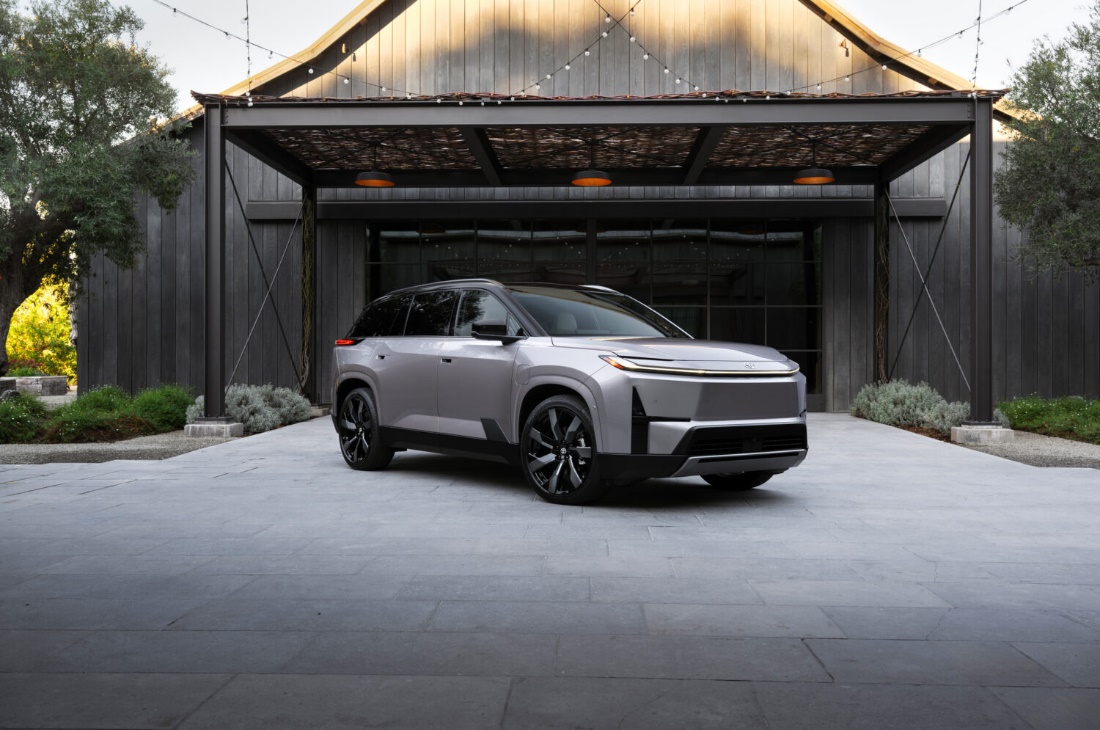
Group 1 - The all-new pure electric Toyota Highlander was unveiled on February 11, marking the first electric version of the Highlander model, built on an improved TNGA-K platform, with production expected to start by the end of the year [1] - The exterior design features wide wheel arches and smooth door panels, creating a robust body feel, along with semi-hidden door handles and a distinctive贯穿式 tail light [3] - The vehicle adopts Toyota's latest design language, resembling the current "bZ" series models, with a closed hammerhead shark front and integrated daytime running lights [4] Group 2 - The interior is spacious and comfortable, equipped with a 12.3-inch full LCD instrument panel and a 14-inch touchscreen central control screen, along with a panoramic sunroof [6] - The new model offers a 3-row layout with 6 or 7 seats, featuring a foldable third row, with standard heated front seats and optional heated second-row seats [8] - The chassis features a front MacPherson and rear multi-link layout, with underbody shields to improve airflow, and sound-absorbing materials installed in various areas to reduce noise and vibration [9] Group 3 - The powertrain options include front-wheel drive or all-wheel drive configurations, with maximum power outputs of 221 horsepower and 338 horsepower respectively, and all-wheel drive models equipped with terrain selection and crawl control features [9] - The front-wheel drive model comes standard with a 77 kWh battery, while the all-wheel drive model can be equipped with either a 77 kWh or a 95.8 kWh battery [9] - All models are equipped with Toyota Safety Sense 4.0 (TSS 4.0) and feature V2L external discharge technology [9]
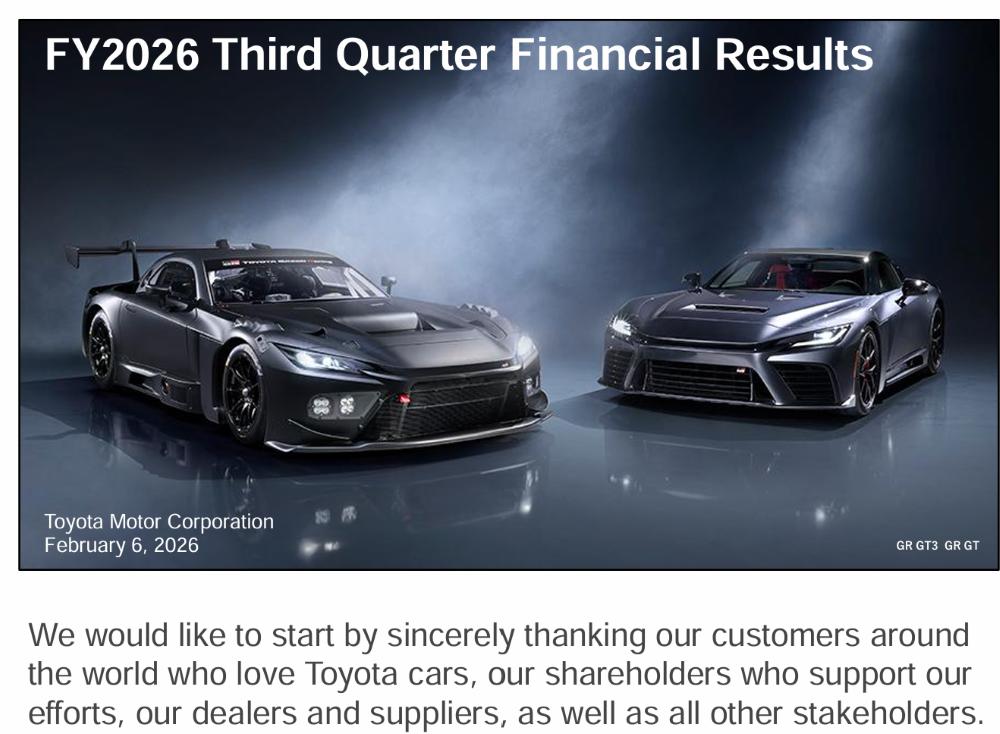
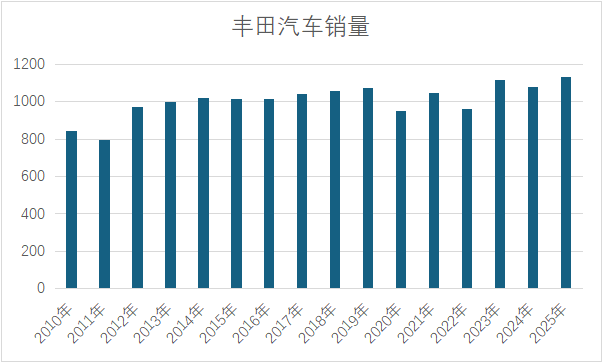
狂跌420亿元,丰田利润大跳水
3 6 Ke· 2026-02-12 01:30
Core Viewpoint - Toyota, the world's largest automaker, reported a significant decline in net profit for the third quarter and the first three quarters of the 2026 fiscal year, despite revenue growth, indicating challenges faced by the company in the current market environment [1][20]. Financial Performance - For the third quarter of the 2026 fiscal year (October-December 2025), Toyota's net profit was 1.26 trillion yen (approximately 57 billion RMB), a decrease of 0.93 trillion yen (approximately 42 billion RMB) or 43% compared to the same period in the previous fiscal year [3][9]. - In the first three quarters of the 2026 fiscal year (April-December 2025), the net profit was 3.03 trillion yen (approximately 140 billion RMB), down by 1.07 trillion yen (approximately 50 billion RMB) or 26.1% year-on-year [10][13]. - Revenue for the third quarter was 13.46 trillion yen (approximately 610 billion RMB), an increase of 1.07 trillion yen (approximately 48 billion RMB) or 8.6% year-on-year [6][8]. Strategic Initiatives - In response to the profit decline, Toyota has initiated a company-wide action to optimize breakeven sales volumes, focusing on reducing fixed costs and enhancing variable cost efficiency, while avoiding a one-size-fits-all approach to cost-cutting [3][20]. - A significant management reshuffle was announced, with current CFO Koji Sato set to become President and CEO, while the current President and CEO Akio Toyoda will transition to Vice Chairman and Chief Industry Officer [3][20]. Market Performance - Toyota's vehicle sales reached 7.302 million units in the first three quarters of the 2026 fiscal year, reflecting a year-on-year increase of 4.3%, while sales of Toyota and Lexus vehicles grew by 3.4% to 8.02 million units [17][19]. - In China, the retail sales of Toyota and Lexus vehicles were 1.393 million units, a slight decline of 0.6% compared to the previous fiscal year [19][20]. - The operating profit from Toyota's financial services segment increased by 366 billion yen (approximately 16.53 billion RMB) or 7.1% year-on-year, attributed to an increase in loan balances [17][20].