Toyota(TM)

Search documents
固态电池系列1:全球政策与各国发展路径全景对比:政策风起,产业破晓
Haitong Securities International· 2025-11-28 10:05
Investment Rating - The report assigns an "Outperform" rating to several companies in the new energy sector, including 阳光电源 (Sunlight Power), 天合光能 (Trina Solar), TCL 中环 (TCL Zhonghuan), 大金重工 (Daikin Heavy Industries), and others, with target prices ranging from 8.54 to 129.78 [1]. Core Insights - Solid-state batteries are emerging as a solution to the dual challenges of energy density and safety, with energy density potentially reaching 500 Wh/kg, significantly higher than traditional lithium-ion batteries [4][21]. - The global market for solid-state batteries is expected to grow rapidly, with shipments projected to reach 36 GWh in 2025 and over 600 GWh by 2030, indicating a significant increase in market penetration from approximately 0.2% in 2024 to an expected 10% by 2030 [38][39]. - China is positioned as a leader in the solid-state battery industry, supported by a comprehensive policy framework and significant market demand, with major companies like 宁德时代 (CATL) and 比亚迪 (BYD) making substantial advancements in production timelines [5][39][50]. Summary by Sections 1. Solid-State Battery Development - Traditional lithium-ion batteries face limitations in energy density and safety, with energy density nearing theoretical limits and safety concerns due to flammable electrolytes [13][19]. - Solid-state batteries utilize solid electrolytes, eliminating flammability risks and enhancing energy density, thus addressing key industry concerns [22][25]. 2. Global Policy Landscape - The development of solid-state batteries has become a strategic priority for major economies, with diverse approaches: Japan focuses on technological leadership, China on rapid commercialization, South Korea on industry integration, and the U.S. on capital-driven innovation [32][33]. - Various countries are implementing supportive policies to foster the growth of the solid-state battery sector, with significant investments in research and development [68]. 3. China’s Market Position - China dominates the global lithium battery market, accounting for 59% of the total installed capacity in 2024, with a strong focus on solid-state battery technology as a key growth area [39][42]. - The Chinese government has elevated solid-state battery research to a strategic level, aiming to secure technological leadership in the next generation of power batteries [50][49]. 4. U.S. Market Dynamics - The U.S. solid-state battery sector is characterized by a focus on startup companies and significant capital investment, with policies aimed at reducing reliance on foreign supply chains and fostering domestic innovation [62][68]. - Major players like QuantumScape and Solid Power are leading the charge in technology validation and partnerships with automotive manufacturers [69][78]. 5. Japan and South Korea’s Strategies - Japan is leveraging its material innovation capabilities to regain leadership in the battery sector, with a focus on solid-state technology as a critical component of its national strategy [83]. - South Korea is enhancing its production capabilities through collaboration among major companies like Samsung SDI and LGES, aiming for accelerated commercialization of solid-state batteries [83].





北美强劲需求力扛中国、日本下滑 丰田(TM.US)销量创10月单月历史新高
Zhi Tong Cai Jing· 2025-11-27 06:07
Core Viewpoint - Toyota Motor Corporation (TM.US) reported an increase in October sales, driven by strong demand in the U.S. market, which offset declines in China and Japan [1] Group 1: Sales Performance - Global sales for the Toyota group, including Daihatsu and Hino, rose by 3% year-on-year, reaching 1 million units, marking a record high for October [1] - Sales of Toyota and Lexus brands in the U.S. increased by 12%, while sales in China decreased by 6.6% and in Japan by 4.2% [1] Group 2: Market Dynamics - Despite facing tariff pressures from U.S. President Trump's import duties on vehicles and parts, Toyota is increasingly relying on the North American market [1] - Geopolitical tensions, particularly between China and Japan, may reshape Toyota's global sales landscape [1] Group 3: Financial Outlook - Toyota raised its full-year operating profit forecast to 3.4 trillion yen, despite estimating a loss of 1.4 trillion yen due to a 15% tariff policy [1] - This adjustment follows a downward revision of expectations in August [1] Group 4: Electric Vehicle Sales - Global sales of Toyota's pure electric vehicles surged by 74% year-on-year, reaching 18,322 units [1]
X @Bloomberg
Bloomberg· 2025-11-27 04:46
Sales Performance - Toyota Motor's sales advanced in October [1] Market Dynamics - US demand helped make up for a downturn in China and Japan [1]
Toyota October output grows for fifth straight month on strong US demand
Reuters· 2025-11-27 04:30
Core Insights - Toyota Motor reported a fifth consecutive month of global production increase in October, driven by strong demand for hybrid vehicles in the U.S. market, which compensated for weaker sales in Japan and China [1] Production Performance - Global production rose for the fifth month in a row in October [1] - The increase in production was primarily attributed to robust U.S. demand for hybrid vehicles [1] Market Dynamics - Strong U.S. demand for hybrid vehicles helped offset weaker sales in Japan and China [1]
合资燃油车集体“开窍”,杀回“智能化”牌桌
Tai Mei Ti A P P· 2025-11-26 04:16
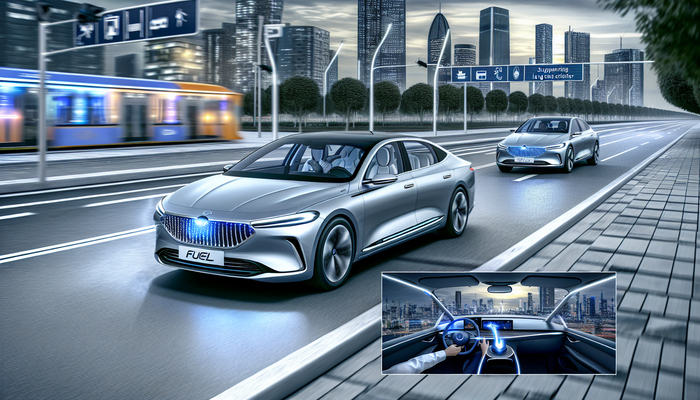
Core Insights - Traditional fuel vehicles are shedding the label of being "non-intelligent" as they integrate advanced driving technologies, indicating a shift in the market dynamics towards smarter fuel vehicles [2][4][5] - Despite the rise of electric vehicles, fuel cars still hold a significant market share, with 49.9% in China and over 70% globally, suggesting that the competition for smart features is not exclusive to electric vehicles [4][5][6] Group 1: Market Trends - In the first ten months of this year, domestic sales of traditional fuel vehicles in China saw a 0.6% year-on-year increase, totaling 11.143 million units, indicating a stable demand amidst fierce competition [2] - Major automakers are launching high-level intelligent driving features in fuel vehicles, with models like Dongfeng Nissan's Teana and GAC Toyota's new-generation RAV4 priced around 150,000 yuan [2][6] Group 2: Technological Challenges - The complexity of traditional fuel vehicle architectures poses significant challenges for achieving smart capabilities, as their distributed electronic systems hinder efficient data processing and real-time communication [3][9] - The power supply and heat dissipation requirements for intelligent driving systems exceed the capabilities of traditional low-voltage platforms, creating additional barriers to integration [3][9] Group 3: Innovations and Strategies - Automakers are innovating their electronic architectures to support advanced driving features, with models like Audi A5L and GAC Toyota's new RAV4 adopting centralized domain control systems to enhance performance [4][6] - The trend of reducing prices for intelligent fuel vehicles is evident, with models like Audi A5L starting at 286,800 yuan, significantly lower than comparable electric vehicles, reflecting cost optimization strategies [6][7] Group 4: Industry Collaboration - Partnerships with local tech firms are accelerating the smart transformation of fuel vehicles, as seen with Audi's collaboration with Huawei for the A5L and SAIC Volkswagen's work with Zhuoyue Technology [8][9] - Toyota's approach focuses on in-house development of intelligent systems, exemplified by the launch of the TSS 4.0 system in the new RAV4, enhancing its capabilities with increased sensor performance [9] Group 5: Future Outlook - The industry consensus is shifting towards the feasibility of smart features in fuel vehicles, with predictions that by 2026, fuel vehicles will widely adopt mid-level intelligent driving technologies [5][6] - The automotive market is expected to evolve beyond a binary oil-electric competition, with the focus on addressing user pain points and maintaining competitive advantages in both fuel and electric vehicle segments [9]

月销2-3辆 丰田亚洲狮陷入困境
Xi Niu Cai Jing· 2025-11-26 04:09
Core Insights - The Toyota Asia Lion has faced a dramatic decline in sales, with only 3 units sold in September and 2 in October, indicating a survival crisis for the model [2] - Initially launched in April 2021 with a price range of 142,800 to 179,800 yuan, the Asia Lion aimed to fill a gap in the A+ market but has struggled to maintain momentum after an initial peak of 6,807 units sold in June 2021 [2] - Despite significant discounts, including a 40,000 yuan reduction bringing the starting price down to 101,800 yuan, the model has failed to recover its sales performance [2] Product Issues - The Asia Lion's dimensions (4720mm length, 1780mm width, 1435mm height, and 2750mm wheelbase) are no longer competitive in a market where larger sizes are preferred [2] - The width of the Asia Lion is comparable to the Corolla, while competitors like the Civic and Lavida exceed 1.8 meters, leading to a lack of differentiation in space and comfort [2][4] - The entry-level model lacks essential features such as a rearview camera and sunroof, and uses inferior materials, which do not meet consumer expectations for an A+ class vehicle [3] Pricing Strategy - The pricing strategy has been a significant misstep, with the Asia Lion priced nearly double that of competitors like the Lavida and Sylphy, which have starting prices below 70,000 yuan [3] - Consumers can opt for B-class vehicles like the Passat and Camry at similar price points, making the Asia Lion less appealing [3] Competitive Landscape - Consumers are increasingly rational in their purchasing decisions, favoring models that offer better features and value for money [4] - The Asia Lion's inability to stand out in terms of size, pricing, design, and configuration has led to its declining sales, despite the brand's reputation [4] - For Toyota to regain consumer interest in the Asia Lion, significant changes are necessary to address the current downward trend [4]

透视全球车企三季报 东升西降趋势不改
2 1 Shi Ji Jing Ji Bao Dao· 2025-11-24 08:25
Core Insights - The global automotive industry is experiencing a divergence in performance, with domestic Chinese automakers showing stronger growth compared to established overseas giants [4][9]. Sales Performance - Toyota and Volkswagen reported modest sales growth of 6% and 1% respectively, while several major overseas companies like Stellantis, General Motors, Honda, Mercedes-Benz, and Tesla experienced negative sales growth [3][4]. - In contrast, domestic companies such as BYD, SAIC, Geely, Changan, and Chery achieved significant sales increases, with BYD's sales reaching 3.26 million units, marking a 19% year-on-year growth [2][4]. Revenue Trends - Revenue growth for domestic automakers was robust, with BYD, Geely, and Chery all achieving double-digit revenue increases, while most overseas companies reported only single-digit growth or negative revenue changes [4][8]. - The revenue figures for major overseas companies were as follows: Toyota at 167.24 billion, Volkswagen at 195.51 billion, and Ford at 100.24 billion, with only slight increases or declines [1]. Profitability Analysis - Overseas automakers faced significant profit declines, with companies like Mercedes-Benz and Volkswagen seeing profit drops exceeding 50%, while Toyota's profit fell by 16% [5][6]. - In contrast, domestic companies like BYD and Chery maintained strong profitability, with both achieving net profits exceeding 10 billion [4][9]. R&D Investment - Domestic automakers are increasing their R&D investments, with BYD's R&D spending reaching 43.7 billion, a 31% increase year-on-year [8]. - Conversely, some overseas companies, such as Volkswagen and BMW, have reduced their R&D expenditures due to profit pressures, with declines of 9% and 15% respectively [8]. Strategic Outlook - The shift towards electrification and intelligent technology in the automotive industry presents a strategic opportunity for Chinese automakers to close the gap with their overseas counterparts [9].



车展观察|从放权到调价,合资品牌在中国“量身”造车
Bei Ke Cai Jing· 2025-11-24 04:29
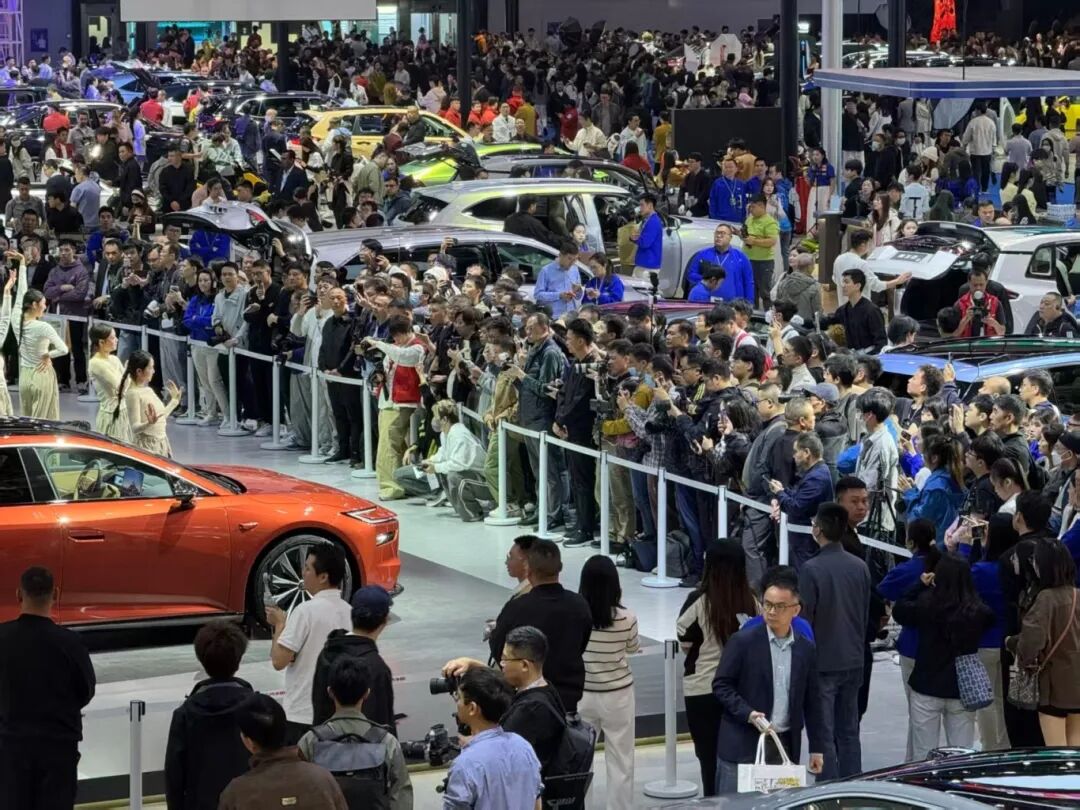
Core Insights - The Guangzhou Auto Show showcases a significant shift in the automotive industry, with 629 out of 1,085 vehicles being new energy models, indicating a strong focus on electric and hybrid vehicles [1] - Joint ventures and luxury brands are adapting to the Chinese market by localizing their research and development efforts, as evidenced by their increased market share and penetration rates in the new energy vehicle sector [2][3] Group 1: Market Trends - Domestic brands hold a 65% retail market share and a 46.7% penetration rate in new energy vehicles, prompting foreign brands to localize their strategies [2][3] - The shift from a global product strategy to a localized approach is evident, as companies recognize the need to actively engage with the Chinese market [3][16] Group 2: Strategic Changes - Companies like Dongfeng Nissan are investing over 10 billion yuan in R&D and expanding their local teams to enhance decision-making capabilities [3][5] - Toyota has implemented a "Chief Engineer in China" system, allowing local teams to make decisions without extensive approval from Japan, reflecting a commitment to local market needs [5] Group 3: Product Development - New models such as Dongfeng Nissan's N6 and Toyota's RAV4 are results of localized development, showcasing the importance of understanding local consumer preferences [3][5] - The introduction of new energy vehicles and hybrid models at the auto show highlights the industry's response to changing consumer demands [1][6] Group 4: Technological Advancements - The integration of smart technology in vehicles is becoming a key focus, with companies like SAIC Volkswagen and Dongfeng Nissan showcasing advanced features tailored to Chinese consumers [8][11] - The use of local dialect recognition and adaptive driving systems indicates a significant step towards enhancing user experience in the Chinese market [8][11] Group 5: Pricing Strategies - Many brands are adopting strategies that involve increasing product features while lowering prices to better compete with domestic brands [12][14] - The introduction of competitively priced models with enhanced features, such as the new electric CLA from Beijing Benz, signifies a shift towards more consumer-friendly pricing [14][15] Group 6: Competitive Landscape - The transformation in the automotive sector is driven by the rise of domestic brands, which has created pressure on foreign companies to innovate and adapt [16]

小马智行持股企业成立智能科技新公司
Zheng Quan Shi Bao Wang· 2025-11-24 01:46
Core Insights - A new company named Zhuangfeng Intelligent Technology (Beijing) Co., Ltd. has been established with a registered capital of 68 million yuan [1] - The company is involved in the manufacturing and sales of intelligent instruments and equipment, as well as artificial intelligence resources and technology platforms [1] - Zhuangfeng Intelligent Technology (Beijing) is wholly owned by Zhuangfeng Intelligent Technology (Guangzhou) Co., Ltd., which has shareholders including companies related to Pony.ai, Toyota Motor (China) Investment Co., Ltd., and GAC Toyota Motor Co., Ltd. [1]

合资卖电车,再也不谈品牌溢价
3 6 Ke· 2025-11-24 00:14
Core Viewpoint - The article discusses the evolving landscape of the Chinese automotive market, particularly focusing on the challenges and strategies of joint venture (JV) car manufacturers in the context of increasing competition from domestic brands and the shift towards electric vehicles (EVs) [1][11]. Group 1: Market Dynamics - The upcoming Guangzhou Auto Show is set against a backdrop of local purchase subsidies and confirmed tax exemptions for vehicle purchases, raising concerns about the future of the car market [1]. - Joint venture car manufacturers, once dominant, are now facing significant pressure as they adapt to the rapidly changing market, particularly in the electric vehicle sector [3][11]. - The competitive landscape is characterized by a price war and a shift in consumer expectations, with a growing demand for vehicles that meet local needs rather than relying on brand prestige [8][9]. Group 2: Joint Venture Strategies - Joint ventures are increasingly adopting a more humble approach, learning from local consumer preferences to enhance their product offerings [3][4]. - The launch of models like the GAC Toyota's Platinum 3X and Nissan's N7 signifies a renewed commitment to align with Chinese consumer demands, showcasing a shift in strategy [6][11]. - The need for deep localization in production, R&D, and decision-making processes is emphasized as essential for joint ventures to remain competitive in the Chinese market [11][13]. Group 3: Future Outlook - The article predicts that by 2026, joint ventures will need to abandon the notion of brand premium and focus on product quality and local relevance to survive [8][13]. - The integration of local technology partners, such as Huawei and CATL, is seen as a crucial step for joint ventures to enhance their technological capabilities and meet market demands [11][13]. - The overall message is that joint ventures must embrace a strategy of "in China, for China" to rebuild their competitive edge in the evolving automotive landscape [11][13].