
Wells Fargo(WFC)

Search documents
中概股全线走低、美股全线大跌,有色金属、半导体芯片、苹果重挫
Sou Hu Cai Jing· 2026-02-14 04:30
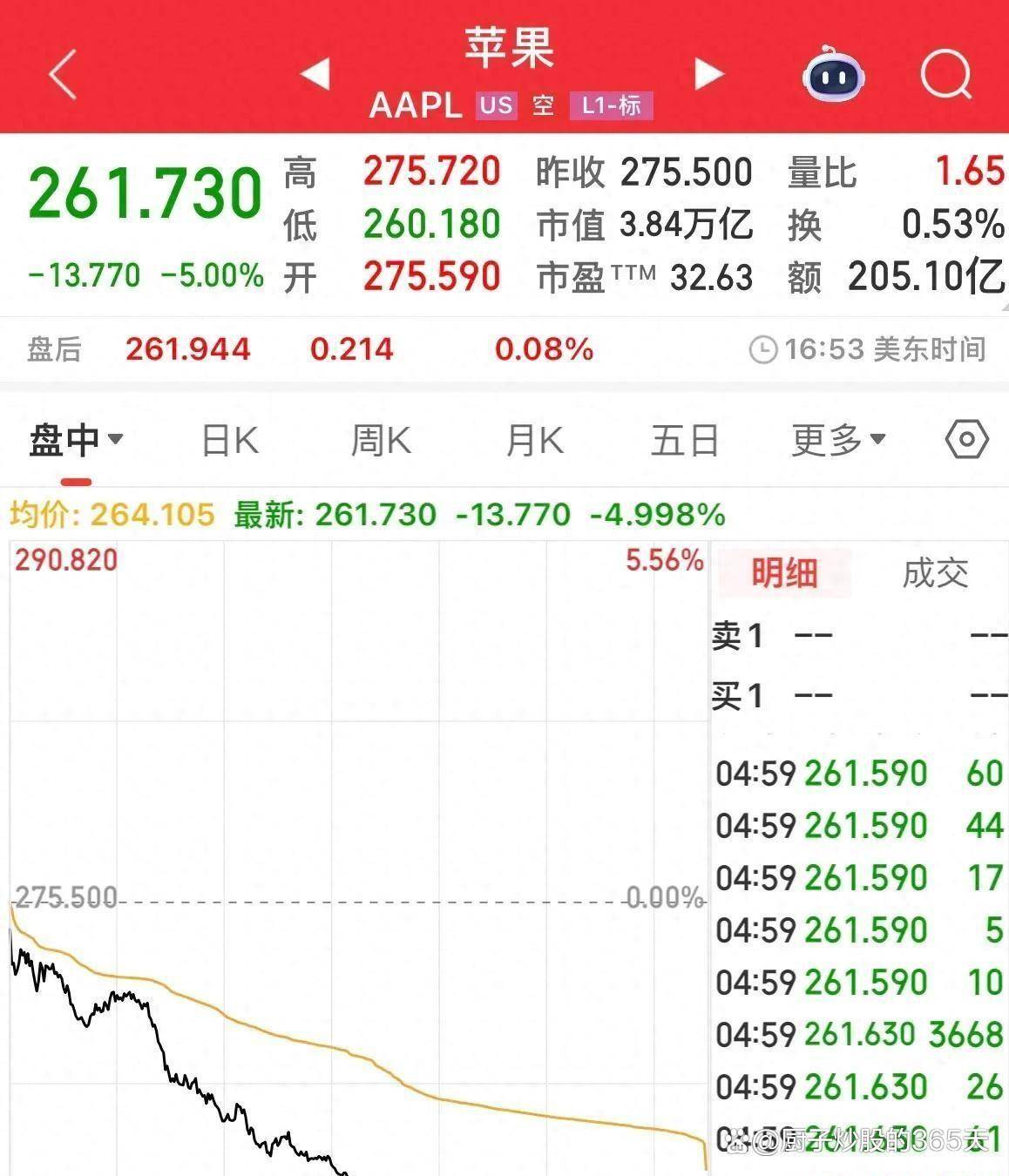
Market Overview - The US stock market experienced a significant decline, with the Dow Jones Industrial Average dropping 669.42 points (1.34%) to close at 49,451.98 points, the Nasdaq Composite falling 469.32 points (2.03%) to 22,597.15 points, and the S&P 500 decreasing by 108.71 points (1.57%) to 6,832.76 points [1][2][3] Market Sentiment - Over 4,100 stocks declined, indicating widespread market panic as investors rushed to sell assets, particularly in the tech and growth sectors. The VIX index surged, reflecting heightened risk aversion [2][3] Sector Performance - The sell-off affected nearly all sectors, with notable declines in precious metals and semiconductor stocks. The precious metals sector saw significant drops, with gold futures down 3.08% and silver futures plummeting 10.62% [4][5][6][8] - The Philadelphia Semiconductor Index fell by 2.5%, with individual stocks like AEHR Test Systems down 17.58% and Intel down over 3% [8][10] Major Companies - Apple Inc. experienced a substantial drop of 5.00%, resulting in a market cap loss of over $120 billion, attributed partly to regulatory concerns [12] - Other major tech companies also faced declines, with Tesla down 1.62%, Amazon down 2.20%, and Meta Platforms down nearly 3% [12] Financial Sector - Bank stocks fell across the board, with JPMorgan Chase down over 2%, Goldman Sachs down over 4%, and Citigroup down over 5%, driven by concerns over AI disrupting traditional wealth management [13][14] Economic Indicators - Recent economic data, including a drop in initial jobless claims and lower-than-expected existing home sales, contributed to market anxiety about potential economic overheating and prolonged high interest rates [24][25][26] Global Market Impact - The sell-off in the US markets had a ripple effect on global markets, with European indices also closing lower after initially opening higher, indicating a widespread sentiment of fear [18][19][20] AI Concerns - The market's decline was exacerbated by fears regarding the disruptive impact of AI technologies on various industries, leading to significant stock price drops in sectors perceived to be at risk [21][22][30] Storage Chip Sector - In contrast to the overall market trend, storage chip stocks saw gains, with companies like SanDisk and Seagate Technology rising significantly, reflecting a belief that AI's growth will increase demand for data storage [29]


Why Is Wells Fargo (WFC) Down 3% Since Last Earnings Report?
ZACKS· 2026-02-13 17:30
Core Viewpoint - Wells Fargo's recent earnings report shows mixed results, with adjusted earnings per share surpassing estimates but revenues falling short, indicating potential challenges ahead for the company [2][4]. Financial Performance - Fourth-quarter 2025 adjusted earnings per share were $1.76, exceeding the Zacks Consensus Estimate of $1.66, and up from $1.42 in the prior-year quarter [2]. - Net income on a GAAP basis was $5.36 billion, a 6% increase from the prior-year quarter, while total revenues were $21.29 billion, missing estimates and increasing 4.5% year over year [3][4]. - For 2025, total revenues reached $83.69 billion, which also missed estimates but represented a 2% year-over-year increase [4]. Income and Expenses - Net interest income (NII) was $12.33 billion, up 4% year over year, driven by higher loan and investment securities balances [5]. - Non-interest income grew 5% year over year to $8.96 billion, benefiting from higher asset-based fees and the absence of prior losses [6]. - Non-interest expenses decreased by 1% year over year to $13.72 billion, reflecting cost-cutting measures and efficiency initiatives [7]. Loan and Deposit Growth - Total average loans were $955.8 billion, a 3% sequential increase, while total average deposits rose to $1.37 trillion, also up 3% sequentially [8]. Credit Quality - The provision for credit losses was $1.04 billion, down 5% from the prior-year quarter, with net loan charge-offs at 0.43% of average loans, down from 0.53% [10]. - Non-performing assets increased by 7.1% year over year to $8.5 billion, indicating some deterioration in credit quality [10]. Capital and Profitability Ratios - The Tier 1 common equity ratio was 10.6%, down from 11.1% in the previous year [11]. - Return on assets was 1.02%, slightly down from 1.05% a year ago, while return on equity increased to 12.3% from 11.7% [12]. Future Outlook - For 2026, Wells Fargo expects NII to be approximately $50 billion, supported by balance-sheet growth and favorable loan and deposit mix [13]. - Non-interest expenses for 2026 are projected to be around $55.7 billion, influenced by higher compensation and technology investments [13]. - Recent estimates for the stock have shown an upward trend, with a Zacks Rank of 3 (Hold), suggesting an in-line return expected in the coming months [14][16].

Will Crypto ETFs Have Lasting Appeal? (BTC-USD)
Seeking Alpha· 2026-02-13 04:10
Core Insights - Bitcoin's price decline has not deterred the launch of new ETFs aimed at capitalizing on a potential rebound in the cryptocurrency market [2] - Regulatory changes, including the SEC's new generic listings standards (GLS) and the upcoming CLARITY Act, are expected to enhance investor interest in crypto ETFs, which raised $47.2 billion last year despite $5 billion in withdrawals in Q4 [3][4] Regulatory Developments - The GLS simplifies the listing process for crypto ETFs, allowing exchanges to list qualifying assets within five days without SEC approval, significantly reducing previous delays [8] - Under GLS, a crypto asset must be traded as a futures asset for at least six months, have a 12-month average liquidity of $700 million, and be part of the Intermarket Surveillance Group to gain approval [9] - The CLARITY Act, currently in Congress, aims to classify digital assets as "Digital Commodities," easing regulatory burdens for banks and encouraging institutional investment in crypto ETFs [15][16] Institutional Adoption - Major U.S. banks and asset managers are increasingly advising clients to include crypto in diversified portfolios, with Bank of America allowing its advisors to recommend spot Bitcoin ETFs [12] - Morgan Stanley has launched a Solana ETF with staking rewards, reflecting a trend where ETF issuers are incorporating proof-of-stake rewards to enhance fund attractiveness [13] - Analysts predict that ETF inflows could double by 2026 as more institutions enter the crypto space [4][19] Market Trends - The derivatives market is also showing growth, with CME Group expanding its crypto derivatives offerings, indicating a robust interest in crypto products [5] - Despite a reported bear market for Bitcoin, with significant holdings reductions in Q4 2025, some analysts remain optimistic about institutional interest and potential price recovery [20][21][22]



富国银行2025年财报发布,营收增长但未达预期
Jing Ji Guan Cha Wang· 2026-02-12 19:39
Financial Performance - Wells Fargo reported Q4 2025 revenue of $21.29 billion, a 4% year-over-year increase, slightly below market expectations; non-GAAP EPS was $1.76, exceeding expectations [2] - For the full year 2025, net profit reached $21.3 billion, an 8.2% increase year-over-year, but fell short of analyst expectations due to increased severance costs and lower net interest income [2] - Average loan and deposit amounts grew quarter-over-quarter, indicating a trend of credit expansion [2] Business Developments - Wells Fargo climbed to 8th place in the 2025 global M&A rankings, up from 17th in 2024, marking its first return to the top ten since 1995; this improvement is attributed to the expansion of its investment banking business and increased market share, potentially enhancing fee income capabilities [3] Regulatory Policies - In June 2025, the Federal Reserve lifted asset cap restrictions imposed due to the fake accounts scandal, allowing Wells Fargo to expand its balance sheet, which is expected to drive growth in loans and deposits [4] - Management anticipates that this will enhance net interest income and diversify fee-based businesses, such as wealth management and investment banking [4] Financial Condition - The company is optimizing operations through digital reforms, aiming for $15 billion in gross expense savings; as of Q3 2025, the liquidity coverage ratio was 121%, indicating strong capital adequacy [5] - Wells Fargo maintains its dividend growth and stock buyback program, with $34.7 billion in buyback authorization as of September 2025 [5] - On December 12, 2025, the company announced the early redemption of subordinated debt maturing in 2027, which removes restrictions on preferred stock buybacks and may enhance capital flexibility [5] Stock Performance - As of February 3, 2026, Wells Fargo's stock price was $92.31, with a trading volume of $1.667 billion; the stock has seen a slight decline of 0.95% year-to-date [6] - Citigroup assigned a "neutral" rating on January 5, 2026, with a target price of $90, projecting a revenue growth of about 5% for 2026, but indicating limited upside potential [6] - The 2025 financial report highlighted credit expansion as a primary growth driver, although concerns about asset quality have emerged, particularly regarding rising credit card loan risks [6]
How to Approach Wells Fargo Stocks as It Gains 14.2% in 6 Months?
ZACKS· 2026-02-12 18:16
Core Insights - Wells Fargo's shares have increased by 14.2% over the past six months, outperforming the industry growth of 11.3% [1]. - The bank's peers, Citigroup and Bank of America, have seen their shares rise by 24% and 14%, respectively, during the same period [1]. Performance and Growth Drivers - The removal of the asset cap by the Federal Reserve in June 2025 allows Wells Fargo to expand its balance sheet, grow deposits, and increase loan balances, which is expected to drive loan growth in 2026 [4][5]. - Wells Fargo anticipates a net interest income (NII) of $50 billion in 2026, supported by balance-sheet growth and changes in loan mix [10][5]. - The bank's net interest income has shown a four-year compounded annual growth rate (CAGR) of 7.5% as of 2025 [8]. Strategic Initiatives - Wells Fargo is focusing on cost-cutting measures, including a 5.9% reduction in headcount and refurbishing 700 branches to enhance efficiency [5][16]. - The bank is also advancing its operational transformation through a phased rollout of artificial intelligence (AI) tools, which is expected to improve productivity and customer service [17]. - The company is pursuing a multi-year simplification plan to exit non-core businesses, aiming to cut costs by up to $10 billion annually and reallocate capital to higher-return areas [21][25]. Capital Management - Wells Fargo has raised its common stock dividend by 12.5% to 45 cents per share and has a robust share repurchase program with an additional $40 billion authorized [26][27]. - The bank's liquidity coverage ratio stands at 119%, exceeding the regulatory minimum, with liquid assets totaling $174.2 billion as of December 31, 2025 [28][29]. Valuation and Earnings Outlook - The Zacks Consensus Estimate indicates earnings growth of 9.9% and 12.8% for 2026 and 2027, respectively, although estimates have been revised downward recently [30]. - Wells Fargo's current price-to-earnings (P/E) ratio is 12.71X, lower than the industry average of 14.29X, suggesting the stock is reasonably priced [32]. Conclusion - The removal of the asset cap and improved balance-sheet flexibility mark a significant turning point for Wells Fargo, enhancing its long-term outlook [35]. - Despite recent positive momentum, there are concerns regarding elevated expenses and downward revisions to earnings estimates, leading to a balanced risk-reward profile for investors [36][37].

The $40 million club: Big-bank CEO pay hits new heights
American Banker· 2026-02-11 22:06
Core Insights - The compensation packages for CEOs of four major U.S. banks reached $40 million or more in 2025, driven by competitive dynamics and strong financial performance [4][6] - Year-over-year increases in CEO compensation ranged from 10% to 28%, with Wells Fargo's Charlie Scharf receiving the highest increase at 28% [5][8] Compensation Overview - **Charlie Scharf, Wells Fargo**: Total compensation of $40 million in 2025, up 28.2% from $31.2 million in 2024. The package included a base salary of $2.5 million and variable compensation of $37.5 million [11][12][14] - **David Solomon, Goldman Sachs**: Total compensation of $47 million in 2025, a 20.51% increase from $39 million in 2024. The package included a base salary of $2 million and a cash bonus of $10.1 million [17][18][20] - **Richard Fairbank, Capital One**: Total compensation of $40 million in 2025, a 19.4% increase from $33.5 million in 2024. The package was largely performance-based, with $24.8 million in performance shares [22][23][25] - **Jamie Dimon, JPMorganChase**: Total compensation of $43 million in 2025, a 10.26% increase from $39 million in 2024. The package included a base salary of $1.5 million and a cash bonus of $5 million [28][30][31] Market Dynamics - The increase in CEO pay is attributed to strong financial outcomes, stock price increases, and competitive pressures on boards to offer attractive compensation packages [6][7] - Other major banks, including Bank of America, Citi, and Morgan Stanley, are expected to disclose similar CEO pay information soon [7]



Wells Fargo Bets on Credit Cards & Auto Loans to Drive 2026 Growth
ZACKS· 2026-02-11 17:00
Core Insights - Wells Fargo & Company (WFC) anticipates loan growth to accelerate in 2026, primarily driven by credit cards and auto lending [1][5] - The bank's credit card portfolio has been a significant growth driver, with plans for new product launches targeting wealth-management clients [2] - Auto lending is gaining momentum through partnerships with major car manufacturers like Volkswagen and Audi, while the mortgage segment is expected to remain flat due to high interest rates [3][4] Loan Growth Outlook - Management expects mid-single digit loan growth in 2026, supported by solid consumer spending and credit quality [4][5] - The removal of the Federal Reserve's asset cap provides Wells Fargo with more flexibility for organic growth after years of regulatory constraints [4] Peer Comparison - Bank of America (BAC) reported net loans and leases of $1.17 trillion as of December 31, 2025, reflecting an 8.3% increase from the previous year [6] - PNC Financial has experienced a 5.5% CAGR in loans over the past six years and expects average loans to rise by 5% in 2026 [8][9] Price Performance and Valuation - Wells Fargo's shares have increased by 15.6% over the past six months, outperforming the industry growth of 6.9% [10] - The bank's current price-to-earnings (P/E) ratio is 13.14X, which is below the industry average of 14.64X [14] - Earnings estimates for 2026 and 2027 indicate year-over-year growth of 9.9% and 12.8%, respectively [17]
富国银行2025年财报出炉,营收净利双增
Jing Ji Guan Cha Wang· 2026-02-11 16:28
Core Viewpoint - Wells Fargo is projected to achieve a revenue of $83.7 billion in 2025, reflecting a year-on-year growth of 1.7%, and a net profit of $21.3 billion, with an 8.2% increase compared to the previous year, driven primarily by credit scale expansion and resilient net interest margins [1][2]. Performance Overview - In 2025, Wells Fargo's revenue is expected to reach $83.7 billion, marking a 1.7% increase year-on-year, while net profit is anticipated to be $21.3 billion, representing an 8.2% growth. The main growth drivers are the expansion of credit scale and the resilience of net interest margins, although concerns regarding asset quality have emerged [2]. Regulatory Policies - The Federal Reserve announced in February 2026 that it will maintain capital requirements for large banks until 2027, which may impact Wells Fargo's capital allocation strategy and liquidity management. Additionally, the removal of asset caps has expanded the business growth potential for the bank [3]. Business Development - Wells Fargo has significantly improved its ranking in the mergers and acquisitions sector, entering the global top ten for the first time in 2025. The company plans to continue expanding its investment banking talent pool with the goal of breaking into the top five global investment banks, which could drive an increase in fee income [4]. Capital Movements - The company is returning value to shareholders through increased dividends and stock buyback programs, with a 12.5% increase in dividends to $0.45 per share in the third quarter of 2025. As of September 30, 2025, there remains an unused stock buyback authorization of $34.7 billion [5]. Company Status - Management anticipates achieving a reduction of $15 billion in gross expenses through digital transformation initiatives to enhance profitability efficiency. As of the third quarter of 2025, the liquidity coverage ratio stands at 121%, exceeding regulatory requirements [6].
No Rally? Coca-Cola’s Results Still Look Like a Sweet Deal
Investing· 2026-02-11 13:05
Group 1 - The article provides a market analysis of Coca-Cola Co., highlighting its performance and investment potential in the beverage industry [1] - Key financial metrics indicate that Coca-Cola has shown resilience in sales growth, with a reported increase in revenue by 10% year-over-year [1] - The company's strategic initiatives, including product diversification and expansion into emerging markets, are expected to drive future growth [1] Group 2 - The competitive landscape of the beverage industry is discussed, noting that Coca-Cola faces challenges from both established competitors and new entrants [1] - Consumer trends towards healthier options are influencing Coca-Cola's product offerings, leading to an increase in low-calorie and functional beverages [1] - The analysis emphasizes the importance of brand loyalty and marketing strategies in maintaining Coca-Cola's market position [1]


Banks sharpen stance on stablecoin rules during White House clash as key crypto bill remains on ice
Yahoo Finance· 2026-02-11 12:30
Group 1 - The US banking industry is advocating for a prohibition on companies paying interest on stablecoin balances, which is causing delays in the legislative process for the Clarity Act in Congress [1][2][4] - A meeting hosted by the White House's crypto council included representatives from major banks and crypto trade associations, highlighting the industry's unified stance against interest payments on stablecoins [3] - The document shared among banks emphasizes limited exemptions to the prohibition and warns that allowing interest payments could lead to deposit flight, negatively impacting local lending [6][7] Group 2 - The American Bankers Association and other banking organizations issued a joint statement advocating for policies that support financial innovation while ensuring the safety of bank deposits [8]

