ExxonMobil(XOM)

Search documents
ExxonMobil Stock Surged 17% in January -- Here's What Drove the Rally (and What You Really Need to Focus On)
The Motley Fool· 2026-02-22 15:05
Core Viewpoint - ExxonMobil's stock has risen significantly due to increasing oil and natural gas prices, but the company's long-term growth is driven by its two-pronged growth strategy [1][2]. Group 1: Stock Performance and Market Conditions - ExxonMobil's stock price increased by 17% in January, correlating with a 17% rise in Brent Crude prices [2]. - The company's current market capitalization stands at $614 billion, with a current stock price of $147.28 [6][7]. Group 2: Earnings and Production Growth - Despite a year-over-year decline in earnings primarily due to weaker oil and gas prices, ExxonMobil increased its production by approximately 9% in 2025 [5]. - In 2025, advantaged production accounted for 59% of Exxon's total production, an increase of seven percentage points from 2024 [7]. Group 3: Long-term Strategy and Dividend Outlook - ExxonMobil is focusing on profitable oil opportunities and investing in its business to enhance future growth [8]. - The company has a strong history of annual dividend increases, with a current dividend yield of 2.7%, indicating potential for future dividend growth [9].


A Friendlier Regulatory Environment May Be on the Horizon for These 2 Energy Stocks as the Trump Administration Rolls Back Greenhouse Gas Regulation
The Motley Fool· 2026-02-22 06:15
Core Viewpoint - The U.S. government's softening stance on greenhouse gases is a positive development for major energy companies like ExxonMobil and Chevron, although the long-term shift towards cleaner energy sources remains a challenge for the sector [2][11]. Company Overview - ExxonMobil and Chevron are globally diversified integrated energy companies, involved in the entire energy value chain, including oil and natural gas production, transportation, and processing into refined products [3]. - Both companies have strong financial positions, characterized by the lowest debt-to-equity ratios among their peers, which helps mitigate the volatility of the energy sector [5]. Financial Performance - ExxonMobil has a market capitalization of $614 billion, with a current price of $147.07 and a dividend yield of 2.74% [7][8]. - Chevron has a market capitalization of $370 billion, with a current price of $183.72 and a dividend yield of 3.76% [10]. Dividend History - Both Exxon and Chevron have a history of increasing their dividends annually for over three decades, demonstrating financial resilience during industry downturns [6]. Regulatory Environment - The easing of greenhouse gas regulations is beneficial for Exxon and Chevron, but there is a risk that future administrations may reinstate stricter regulations [11]. - The diversified business models of these companies position them well to handle potential regulatory changes in the future [11]. Investment Strategy - Given the inherent volatility of the energy sector, investing in reliable dividend payers like Exxon and Chevron is advisable, allowing investors to benefit from their above-market dividend yields while navigating regulatory changes [12].


Great News: ExxonMobil's Dividend Looks Safer Than Ever
The Motley Fool· 2026-02-21 15:30
Why ExxonMobil could be the steady dividend powerhouse that protects your portfolio in the next downturn.ExxonMobil (XOM 2.58%) is proving that scale, discipline, and cash flow still matter. With $52 billion in operating cash flow, rising production from Guyana and Brazil, and 43 straight years of dividend growth, this energy titan may offer stability amid volatile markets. The upside may not be explosive, but the durability could be powerful.Stock prices used were the market prices of Feb. 13, 2026. The vi ...

SCOTUS Kills the Tariff, So Trump Invents a New One: A Market Love Story
Stock Market News· 2026-02-21 06:00
Nothing says “Friday afternoon in Washington” quite like a constitutional crisis followed by a spontaneous tax on every single thing you own. On February 20, 2026, the U.S. Supreme Court decided to remind the executive branch that the International Emergency Economic Powers Act (IEEPA) isn’t actually a “do whatever you want” card. In a 6-3 ruling that left the White House fuming and trade lawyers salivating, the Court struck down President Donald Trump’s sweeping reciprocal tariffs as unlawful. Naturally, t ...



All It Takes Is $10,000 in ExxonMobil to Generate Hundreds in Annual Passive Income
The Motley Fool· 2026-02-21 01:45
Core Viewpoint - ExxonMobil has a strong history of increasing its annual dividend payouts, having done so for 43 consecutive years, positioning itself as a reliable option for passive income investors [1] Group 1: Dividend and Investment Appeal - The current dividend yield of ExxonMobil is 2.7%, meaning an investment of $10,000 would yield $273 in annual dividends [2] - The company is well-positioned to continue delivering dividends due to its efficient operations and strategic investments [9] Group 2: Business Operations and Efficiency - ExxonMobil operates an integrated business model that includes both upstream (exploration and drilling) and downstream (refining and production of fuels and petrochemicals) operations [3] - The company is shifting its portfolio towards advantaged assets, which are expected to make up 65% of its upstream production by 2030, up from 59% in 2025 [4] - ExxonMobil employs advanced technology, such as cube development in the Permian Basin, to enhance recovery and efficiency, with plans to increase the use of proprietary proppant technology from 25% to 50% of its wells by late 2026 [6] Group 3: Production and Future Outlook - Production in the Permian Basin reached a record of 1.6 million oil-equivalent barrels per day, with projections to exceed 2.5 million by 2030 due to improved drilling productivity and recovery efficiency [8] - The company has achieved $15.1 billion in cumulative structural cost savings since 2019, allowing it to maintain lower costs and higher returns compared to competitors [7]

Here's How XOM Is Scaling Up Its CCS Footprint to Reduce Emissions
ZACKS· 2026-02-20 18:06
Core Insights - Exxon Mobil Corporation (XOM) is expanding its investments in carbon capture and storage (CCS) projects in response to rising carbon emissions and the global shift towards lower-carbon fuels [1][2]. Group 1: CCS Initiatives - ExxonMobil has initiated the NG3 project in Louisiana, capturing carbon dioxide (CO2) from a natural gas project and storing it underground, marking its second fully operational CCS site in the state [2][8]. - The company began handling and storing CO2 from its first operational CCS site at CF Industries' Donaldsonville Complex in July 2025, contributing to low-carbon ammonia production [3]. - ExxonMobil plans to develop two additional CCS projects by 2026 to further enhance its lower-carbon footprint [3][8]. Group 2: Industry Comparisons - Other energy giants, such as Shell plc (SHEL) and Equinor ASA (EQNR), are also investing in CCS, with SHEL operating in various countries and EQNR having projects across Norway, Denmark, and the United States [4]. Group 3: Financial Performance - ExxonMobil's shares have increased by 36.4% over the past year, outperforming the industry composite stocks, which improved by 24.8% [5]. - The company's trailing 12-month enterprise value to EBITDA (EV/EBITDA) is 9.74X, significantly higher than the industry average of 5.90X [7].
Exxon working to determine gas resource at Stabroek Block, Guyana minister says
Reuters· 2026-02-19 17:28
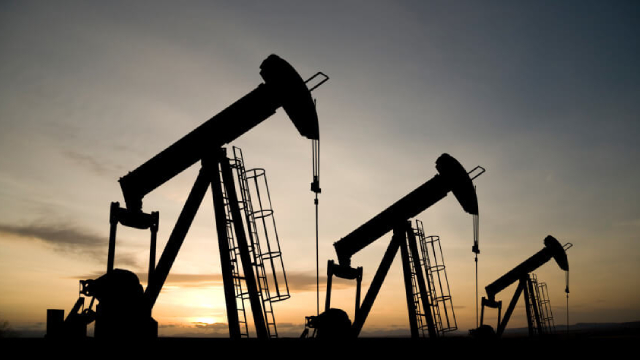
Core Viewpoint - Exxon Mobil is actively working to assess the total natural gas resources at the Stabroek Block in Guyana, with the government emphasizing the need for further evaluation to understand the resource split between crude oil and gas [1]. Group 1: Company Actions - Exxon Mobil is leading the consortium operating the Stabroek Block and is in the process of estimating the resources available, which includes both crude oil and associated and non-associated gas [1]. - The last update from Exxon on the total resource estimate for the Stabroek Block was in 2022, reporting approximately 11 billion barrels of oil equivalent [1]. Group 2: Government Priorities - The Guyanese government, represented by the Minister of Natural Resources, Vickram Bharrat, is focused on developing onshore industrial projects that utilize gas, such as data centers and fertilizer plants [1]. - The government plans to explore export opportunities only after confirming that there is excess gas beyond domestic needs [1].
黄金、原油飙涨!美以或将对伊朗发动联合袭击,“美军已做好最早本周末发动攻击准备”
Hua Xia Shi Bao· 2026-02-19 01:23
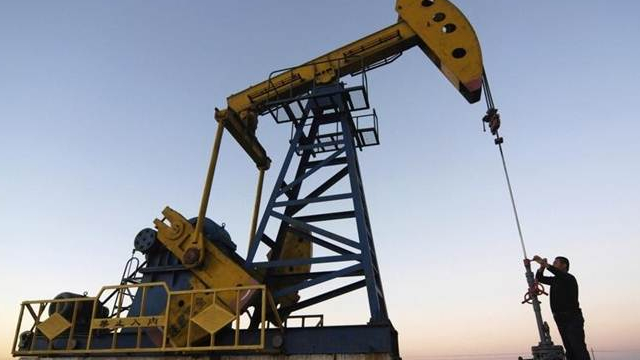
Group 1 - The U.S. military is preparing for potential military action against Iran, with indications that an attack could occur as early as the upcoming weekend, although President Trump has not made a final decision [1] - The U.S. has significantly increased its military presence in the Middle East, deploying an aircraft carrier strike group and over 150 military transport flights to move weapons and ammunition [2] - Analysts suggest that a potential military operation against Iran could be a large-scale action lasting several weeks, posing a significant threat to Iran and having profound implications for the region [1] Group 2 - The Israeli government is preparing for the possibility of a breakdown in negotiations between the U.S. and Iran, as they perceive the talks to be at a critical stage with clear divisions between the two parties [2] - U.S. stock indices experienced gains, with the Nasdaq rising by 0.78%, the S&P 500 by 0.56%, and the Dow Jones by 0.26%, amid the backdrop of military developments [2] - The oil and petrochemical sectors saw strong performance, with ExxonMobil up 3.04%, Shell up 2.48%, and Chevron up 1.8%, as international crude oil futures surged over 4% [2]


ExxonMobil(XOM) - 2025 Q4 - Annual Report
2026-02-18 21:06
Business Operations - ExxonMobil's principal business involves exploration and production of crude oil and natural gas, along with manufacturing and selling petroleum products and pursuing lower-emission business opportunities[13]. - The company held over 8,000 active patents worldwide at the end of 2025, indicating a strong commitment to proprietary technology development[16]. - The number of regular employees was 62,000, 61,000, and 58,000 at the end of 2023, 2024, and 2025, respectively, reflecting a stable workforce[20]. - ExxonMobil's operations and earnings are significantly affected by changes in oil, gas, and petrochemical prices, which are influenced by local, regional, and global supply and demand conditions[25]. - The company is expanding investments in lower-emission energy and emission-reduction technologies, which depend on market growth and supportive government policies[25]. - Economic downturns and geopolitical volatility can adversely impact energy demand and the company's financial results[25]. - The company faces risks from government regulations, including potential increases in taxes and environmental compliance costs, which could affect capital expenditures and earnings[21]. - Changes in technology and consumer preferences, such as increased demand for alternative energy sources, may impact the demand for ExxonMobil's products[26]. - ExxonMobil's business results are exposed to market factors like interest rates, inflation, and currency exchange rates, which can indirectly affect energy demand[28]. - The company is subject to political and regulatory developments that may restrict its operations or access to resources, impacting its competitive position[29]. Environmental Goals and Emission Reduction - The company aims to achieve net-zero emissions for Scope 1 and 2 from operated assets, contingent on technology development and government policy support[38]. - The company has established a Low Carbon Solutions (LCS) business unit to advance technologies such as carbon capture and storage (CCS), hydrogen, and lower-emission fuels[40]. - Government actions to reduce greenhouse gas emissions may include cap and trade regimes, carbon taxes, and mandates for electric vehicle sales, which could impact investment returns and operational costs[39]. - The company recognizes the need for stable and supportive government policies to successfully develop and deploy new energy technologies at a commercial scale[41]. - The Corporation aims to achieve net-zero Scope 1 and 2 greenhouse gas emissions in its operated assets by 2050, with specific plans for the Permian Basin to reach net-zero by 2035[205]. - Emission-reduction plans include a 20-30% reduction in corporate-wide greenhouse gas intensity and a 70-80% reduction in corporate-wide methane intensity by 2030[209]. - The Corporation is pursuing growth opportunities in lower-emission investments, including carbon capture and storage, hydrogen, and lithium for electric vehicle markets[208]. Financial Performance - Total sales and other operating revenue for 2025 decreased to $323,905 million from $339,247 million in 2024, reflecting a decline of approximately 4.0%[146]. - Net income attributable to ExxonMobil for 2025 was $28,844 million, down from $33,680 million in 2024, representing a decrease of about 14.0%[146]. - Earnings per common share for 2025 was $6.70, compared to $7.84 in 2024, indicating a decline of approximately 14.5%[146]. - Cash flow from operations and asset sales for 2025 was $55,128 million, down from $60,009 million in 2024, reflecting a decrease of about 8.5%[149]. - The Corporation's cash capital expenditures for 2025 totaled $28.99 billion, an increase from $25.65 billion in 2024[144]. - The upstream segment in the United States reported earnings of $5.06 billion in 2025, down from $6.43 billion in 2024[144]. - Non-U.S. upstream earnings were $16.29 billion in 2025, compared to $18.96 billion in 2024[144]. - The Corporation's chemical products segment reported a total income of $800 million in 2025, down from $2.58 billion in 2024[144]. Production and Reserves - As of year-end 2025, ExxonMobil's total proved reserves are reported at 19.3 billion oil-equivalent barrels (GOEB), with 7.0 GOEB classified as proved undeveloped reserves, representing 36% of total proved reserves[73]. - In 2025, ExxonMobil invested $19.0 billion to develop reported proved undeveloped reserves, including $18.8 billion specifically for oil and gas producing activities[74]. - The company transferred approximately 1.4 GOEB from proved undeveloped to proved developed reserves during the year, with significant contributions from development activities in the United States, Guyana, Kazakhstan, the UAE, Qatar, and Canada[73]. - Extensions and discoveries in 2025 added approximately 2.0 GOEB of proved undeveloped reserves, primarily in the United States and Guyana[73]. - Total crude oil and natural gas liquids production for 2025 is projected at 2,262 thousand barrels daily, an increase from 2,068 thousand barrels daily in 2024 and 1,682 thousand barrels daily in 2023, representing a growth of 9.4% year-over-year[78]. - Natural gas production available for sale in 2025 is expected to reach 8,442 million cubic feet daily, up from 8,078 million cubic feet daily in 2024 and 7,734 million cubic feet daily in 2023, indicating a growth of 4.5% year-over-year[78]. - Total oil-equivalent production for 2025 is projected at 4,736 thousand barrels daily, an increase from 4,333 thousand barrels daily in 2024, reflecting a growth of 9.3%[78]. Research and Development - The company is committed to continuous research and development to adapt to changing market and regulatory environments, including advancements in hydraulic fracturing technology[47]. - Research and development costs increased to $1,228 million in 2025 from $987 million in 2024, representing a rise of approximately 24.4%[146]. Shareholder Actions - ExxonMobil declared a dividend of $1.03 per common share on January 29, 2026, payable on March 10, 2026[118]. - The Corporation completed share repurchases of $20 billion in 2025 and expects to continue with another $20 billion in 2026, assuming reasonable market conditions[119]. - The total number of shares purchased as part of publicly announced plans in October, November, and December 2025 were 16,203,068, 13,025,924, and 14,908,290 respectively[119]. Market Outlook - ExxonMobil's long-term business planning is based on a deep understanding of market fundamentals, projecting global energy demand to rise by over 10% from 2024 to 2050, driven primarily by developing countries[180]. - By 2050, global electricity demand is expected to increase by more than 70%, with developing countries accounting for approximately 80% of this increase[182]. - Global demand for liquid fuels is projected to grow to nearly 115 million oil-equivalent barrels per day by 2050, an increase of about 10% from 2024[187]. - Natural gas demand is expected to rise nearly 20% from 2024 to 2050, with approximately 70% of that increase coming from the Asia Pacific region[188]. - Oil demand is projected to remain above 100 million barrels per day until 2050, even under aggressive decarbonization scenarios, with a minimum demand of 65 million barrels per day expected[198]. - The Corporation anticipates significant investments will be required to develop and supply resources to meet global oil and gas demand through 2050, driven by technology advancements[200].
Tariffs, Tickers, and Truth Social: The New Art of the Market Deal
Stock Market News· 2026-02-18 06:00
Group 1: Market Reactions to Tariff Announcements - The announcement of a $550 billion investment package from Japan, which includes a 15% baseline tariff on Japanese imports, has significantly impacted the energy and infrastructure sectors, particularly benefiting companies like XOM (+2.4%) and LNG (+3.1%) [2][3] - The introduction of a 100% tariff on foreign-produced films led to a sharp decline in media stocks, with NFLX dropping 4.2% and DIS down 2.1%, raising concerns about the sustainability of the streaming model [4][5] - The S&P 500 index remains volatile, currently at 6,120, as market participants react to unpredictable policy changes and social media announcements [11] Group 2: Sector-Specific Developments - The energy sector is experiencing a surge due to new projects, including a major natural gas plant in Portsmouth, Ohio, which has positively influenced local utility and construction stocks [3] - The entertainment industry is facing challenges due to proposed tariffs, which could fundamentally disrupt the streaming business model, as highlighted by analysts at JPMorgan [5] - The logistics sector is under pressure as trade tensions create uncertainty in supply chains, with companies like FDX and UPS experiencing increased volatility [10] Group 3: Broader Economic Implications - The recent trade deal with India, promising reciprocal tariff rate decreases, has provided a modest boost to emerging market ETFs, although the S&P 500 showed little reaction [9] - The presence of major financial institutions at a crypto forum hosted by the Trump family indicates a shift in Wall Street's approach to decentralized finance, with COIN seeing a 5.7% increase [6][8] - The overall market sentiment reflects a need for diversification into sectors favored by the administration, such as oil, gas, and crypto, while reducing exposure to sectors impacted by tariffs [12]