亿航智能

Search documents
飞行汽车产业发展全景解析:应用、技术与支撑保障
Xin Lang Cai Jing· 2026-02-24 11:05
Industry Application - The application scenarios of flying cars are characterized by the parallel advancement of professional and popular applications, which together strengthen the industry's essential foundation and expand market space [1][25] - Professional applications focus on public safety and industry efficiency, gradually expanding from essential scenarios to value-added industry applications, with pilot implementations in emergency rescue, firefighting, power inspection, and medical transport [1][25] - Popular applications aim to optimize travel experiences and supplement transportation systems, integrating into urban transportation networks, with cities like Shenzhen and Guangzhou planning to launch commuting routes by 2026 [3][27] Industry Development - The flying car industry is transitioning from research and validation to engineering, with a need for a comprehensive commercial system [4][28] - The industry chain now covers materials, key components, complete manufacturing, and demonstration operations, with a complete R&D-approval-manufacturing-operation loop being accelerated [4][28] - Leading companies such as XPeng Heavens, Volocopter, and Joby Aviation are driving the industry structure towards improvement, with significant capital market interest reflected in the rising market values of several companies [5][29] Technical Challenges - Flying cars face three major technical challenges: payload range, airworthiness safety, and intelligent driving, which must be overcome for practical and widespread development [10][35] - The payload range is limited by the performance of power systems, with current lithium-ion batteries having energy densities significantly lower than traditional aviation fuels, impacting the effective range and payload capacity [10][35] - Airworthiness safety is a core constraint for commercial viability, requiring flying cars to meet high reliability and redundancy standards, with ongoing efforts to achieve airworthiness certification [11][36] Infrastructure Development - The development of flying car infrastructure is constrained by land, funding, and regulatory challenges, necessitating government guidance and industry collaboration to address these systemic issues [18][20] - Initial infrastructure development should focus on repurposing existing resources, such as airports and parking lots, to quickly alleviate shortages [20][21] - Future infrastructure will evolve into a "three-dimensional smart network" that integrates with urban development and ground transportation, supporting the regular operation of flying cars [22][23]




亿航智能华东总部落户合肥,股价波动显著,机构观点分化
Jing Ji Guan Cha Wang· 2026-02-13 22:39
经济观察网 近期亿航智能业务动态频繁,成为市场关注热点。2026年2月9日,公司华东区域总部正式 落户合肥,深化低空经济全产业链布局,涉及技术研发、生产制造和商业化运营合作。此外,2026年1 月公司受邀亮相美国硅谷变革性垂直飞行大会,展示技术成果并拓展全球化合作。商业化方面, EH216-S载人航空器于2025年10月成为全球首个集齐型号合格证、生产许可证等全适航证书的机型,标 志正式迈入商业化运营阶段。 股票近期走势 近7天(截至2026年2月13日)亿航智能股价波动显著。2月12日单日下跌4.34%至11.46美元,2月13日最 新收盘价报11.56美元,较前日上涨0.87%,区间振幅达8.56%。成交额相对较低,近5日累计约2762万美 元,低流动性放大波动,同期纳斯达克指数下跌2.03%,反映市场对短期业绩兑现能力的担忧。 财报分析 公司2025年第三季度财务表现承压,营收同比下滑27.7%至9250万元人民币,交付量环比下降38.2%至 42架,主要因部分客户付款延迟导致30架订单收入未能确认。净亏损同比扩大70.7%,管理层维持全年 营收5亿元人民币的预期,但四季度集中交付的可行性受市场质疑。 ...
亿航智能股价回调,商业化突破与短期业绩承压并存
Jing Ji Guan Cha Wang· 2026-02-12 22:55
经济观察网 亿航智能(EH.OQ)近期股价呈现"利好下跌"态势,即尽管公司释放积极业务动态,但股 价仍出现回调。这一现象主要源于市场对短期业绩兑现与长期价值的综合反应。 业务进展情况 机构观点 摩根大通于2025年11月下调亿航智能评级至"持有",目标价降至13美元,提示短期业绩风险。但赛迪研 究院2026年2月报告指出,低空经济已进入规模化发展关键阶段,长期成长逻辑未改。 财务承压与交付延迟:尽管业务前景积极,公司2025年第三季度营收同比下滑27.7%至9250万元人民 币,交付量环比下降38.2%至42架,主要因部分客户付款延迟导致30架订单收入未能确认。管理层维持 全年营收5亿元人民币的预期,但市场对四季度集中交付的兑现能力存疑。 股票近期走势 2026年2月6日至12日,亿航智能股价区间振幅达9.32%,其中2月12日单日下跌4.34%至11.46美元,同期 纳斯达克指数下跌2.03%。下跌可能反映以下因素:短期业绩压力:三季度营收与交付量双降,叠加净 亏损同比扩大70.7%,削弱投资者信心;流动性制约:近5日成交额仅2762万美元,低流动性放大股价 波动;板块情绪传导:低空经济板块虽获政策支持,但 ...
敏实集团:汽零全球化标杆,电池盒放量高增,迈向机器人+液冷星辰大海-20260212
ZHONGTAI SECURITIES· 2026-02-12 04:20
Investment Rating - The report assigns a "Buy" rating for the company, marking the first coverage of the stock [3]. Core Insights - The company is a leading player in the automotive exterior and structural components sector, expanding into new areas such as robotics and liquid cooling. The battery box segment has shown the fastest growth, with revenue share increasing from 1.8% in 2021 to 21.8% in 2024 [5][10]. - The company has a strong focus on R&D, maintaining a research and development expense ratio above 6% since 2020, significantly ahead of peers [5][24]. - The company has established a global localized operation strategy, with 77 factories and offices across 14 countries, serving over 80 automotive brands [5][31]. Financial Performance - Revenue is projected to grow from 20,524 million in 2023 to 35,752 million in 2027, with a CAGR of approximately 16.7% from 2020 to 2024 [3][10]. - Net profit is expected to rise from 1,903 million in 2023 to 3,729 million in 2027, reflecting a growth rate of 15% to 18% year-on-year [3][10]. - The company’s capital expenditure is expected to decrease significantly in 2024, dropping to 19.38 billion, a 41% reduction from the previous year [15]. Product Structure and Market Position - The company's main products include plastic parts, metal trims, copper and aluminum forgings, and battery boxes, with battery boxes being the fastest-growing segment [5][10]. - The company has seen a significant increase in overseas revenue, with a CAGR of 28.5% from 2020 to 2024, and overseas revenue accounting for nearly 65% of total revenue in 2025 [12][13]. Growth Opportunities - The global battery box market is projected to reach 1,081.8 billion by 2027, with a CAGR of approximately 25% from 2023 to 2027 [5][42]. - The company is diversifying into robotics and liquid cooling, leveraging its existing capabilities in aluminum processing and plastic manufacturing [5][59]. Customer Base and Expansion - The customer base has evolved from primarily Japanese clients to a more diversified portfolio including European and American brands, with European clients expected to account for 26.6% of revenue by 2024 [5][13][33]. - The company has secured over 130 billion in orders for battery boxes, indicating strong future revenue potential [5][55].
亿航智能华东总部落户合肥 低空经济布局深化
Jing Ji Guan Cha Wang· 2026-02-11 18:28
Group 1 - EHang Intelligent has established its East China regional headquarters in Hefei on February 9, 2026, and signed cooperation agreements with local enterprises to enhance collaboration in key aviation technologies, promoting the large-scale development of the low-altitude economy [1] - The cooperation involves the entire chain of technology research and development, production, and commercial operation, strengthening the company's positioning in the low-altitude economy sector [1] Group 2 - EHang Intelligent's stock price has shown volatility over the past week, with a 5.77% increase on February 6, 2026, but a decline of 1.56% on February 11, 2026, closing at $11.95, resulting in a cumulative increase of 0.76% and a trading volume of approximately $29.46 million [2] - The current market capitalization of EHang Intelligent is approximately $860 million, with a negative price-to-earnings ratio (TTM) [2] Group 3 - The low-altitude economy is gaining attention from institutions, with a report from CCID Research Institute on February 6, 2026, indicating that China's low-altitude economy will enter a critical phase of large-scale development in 2026, and the eVTOL market's commercialization is accelerating [3] - NexLead's investment guide on February 8, 2026, highlights the low-altitude economy as a key industry with policy support and commercialization potential, mentioning that companies like EHang Intelligent will benefit from the development of the industry chain [3]
敏实集团:拟成立美国机器人合资公司-20260211
HTSC· 2026-02-10 13:30
Investment Rating - The investment rating for the company is maintained as "Buy" [6][5]. Core Views - The company is establishing a joint venture in the U.S. with Harmonic Drive to develop humanoid robot joint modules, marking a significant step in its global robotics business expansion. This follows a strategic partnership in Europe for manufacturing and supplying components [1][2]. - The company's traditional business is expected to maintain steady growth, with the battery box business accelerating globally. New strategic initiatives in robotics, AI, liquid cooling, and low-altitude economy are anticipated to enhance long-term growth potential [1][2]. - The battery box business is entering a harvest phase, with revenue of 3.582 billion RMB in the first half of 2025, reflecting a year-on-year increase of 49.8%. The gross margin for this segment is 23.0%, up by 2.4 percentage points [4]. - The company has secured significant orders in the liquid cooling sector and is strategically positioning itself in the low-altitude economy, including eVTOL systems [3]. - The company has set revenue forecasts of 27.774 billion RMB for 2025, 32.033 billion RMB for 2026, and 36.851 billion RMB for 2027, with net profits projected at 2.847 billion RMB, 3.430 billion RMB, and 4.070 billion RMB respectively [5][9]. Summary by Sections Joint Ventures and Strategic Partnerships - The company signed a framework agreement with Harmonic Drive to establish a joint venture in the U.S. for humanoid robot joint modules, with a 60% ownership stake and an investment of 10 million USD. This complements a previous partnership in Europe for manufacturing and distribution [1][2]. New Business Developments - The company is diversifying into multiple new business areas, including liquid cooling and low-altitude economy sectors, with strategic partnerships and orders already in place. A stock incentive plan has been implemented to support key personnel in these new ventures [3]. Financial Performance and Projections - The battery box business is experiencing significant growth, with a revenue increase of 49.8% year-on-year in the first half of 2025. The company is also benefiting from the rising penetration of new energy vehicles in Europe [4]. - The financial forecasts indicate a steady increase in revenue and net profit over the next few years, with a target price set at 49.71 HKD for 2026, corresponding to a PE ratio of 15.2 [5][9].

敏实集团(00425):拟成立美国机器人合资公司
HTSC· 2026-02-10 10:47
Investment Rating - The report maintains a "Buy" rating for the company [6][5]. Core Views - The company is establishing a joint venture in the U.S. with Harmonic Drive to develop humanoid robot joint modules, marking a significant step in its global robotics business expansion [1][2]. - The traditional business is expected to maintain steady growth, with the battery box business accelerating globally, and new strategic initiatives in robotics, AI, liquid cooling, and low-altitude economy potentially enhancing long-term growth prospects [1][3]. - The battery box business is entering a harvest phase, with revenue of 3.582 billion RMB in the first half of 2025, reflecting a year-on-year increase of 49.8% and a gross margin of 23.0% [4]. Summary by Sections Joint Venture and Global Expansion - On February 9, 2026, the company signed a framework agreement with Harmonic Drive to establish a joint venture in the U.S., with a 60% stake for the company and a 40% stake for Harmonic Drive, involving an investment of 10 million USD [2]. - The company has previously signed a strategic cooperation agreement with a leading robotics company for the European market, focusing on the production and distribution of general embodied intelligent robots [2]. New Business Developments - The company is diversifying into liquid cooling and low-altitude economy sectors, with significant orders from a global semiconductor company for liquid cooling cabinets and systems [3]. - A strategic partnership with EHang for eVTOL aircraft and rotor systems has been established, with intentions for mass production orders [3]. - The company has issued 2.4 million shares as part of a zero-cost equity incentive plan, targeting core R&D personnel in new strategic areas [3]. Financial Performance and Projections - The company expects revenues of 27.774 billion RMB in 2025, 32.033 billion RMB in 2026, and 36.851 billion RMB in 2027, with net profits projected at 2.847 billion RMB, 3.430 billion RMB, and 4.070 billion RMB respectively [9][5]. - The target price is set at 49.71 HKD for 2026, corresponding to a PE ratio of 15.2 times, and a target price of 127.13 USD for the U.S. market [5][6].
十部门发文加速低空经济标准体系建设,一批上市公司已参与布局
2 1 Shi Ji Jing Ji Bao Dao· 2026-02-03 12:57
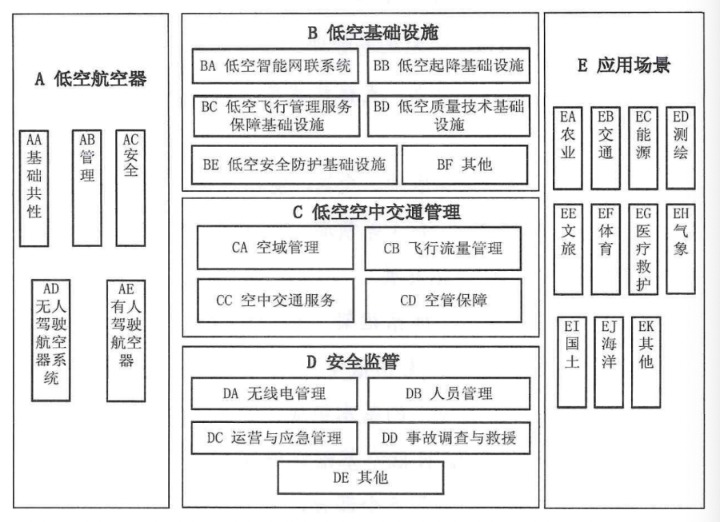
Core Insights - The "Guideline" aims to establish a comprehensive standard system for the low-altitude economy in China by 2027, with over 300 standards expected by 2030 to support safe and healthy development [1][2] Group 1: Standard System Overview - The standard system encompasses five core areas: low-altitude aircraft, low-altitude infrastructure, low-altitude air traffic management, safety regulation, and application scenarios [2] - Current standards focus primarily on safety management, particularly for unmanned aerial vehicles (UAVs), with several mandatory national standards already implemented or set to be implemented by 2027 [1][5] Group 2: Low-Altitude Aircraft Standards - The low-altitude aircraft standards cover aspects such as design, manufacturing, operation, and maintenance, providing technical bases and compliance guidelines [4] - Key focus areas for standard development include safety standards and UAV system standards, emphasizing perception and obstacle avoidance, data link network security, and flight control system data recording [5] Group 3: Infrastructure and Management - Low-altitude infrastructure standards include intelligent network systems, takeoff and landing facilities, and safety protection infrastructure, aimed at ensuring safe and efficient low-altitude economic activities [5] - Air traffic management standards address airspace management, flight flow management, and air traffic services, facilitating efficient resource utilization and safe flight operations [5] Group 4: Safety Regulation - Safety regulation standards encompass radio management, personnel management, operational and emergency management, and accident investigation, supporting a multi-layered safety oversight system for low-altitude activities [5] Group 5: Application Scenarios - Application scenarios focus on various sectors such as agriculture, transportation, energy, surveying, tourism, sports, medical rescue, meteorology, land, and marine, promoting standardized and scalable development of low-altitude technologies [5] Group 6: Industry Participation - Several listed companies are actively involved in the formulation of low-altitude economic standards, including EHang Intelligent (EH.O), CITIC Offshore Helicopter (000099.SZ), and Meituan (03690.HK), among others [6][7] - The "Guideline" encourages collaboration among local governments, enterprises, universities, and research institutions in standard development, fostering a standardized innovation ecosystem [6]
万亿级市场!低空经济,迈向场景化应用元年
Xin Lang Cai Jing· 2026-01-29 03:47
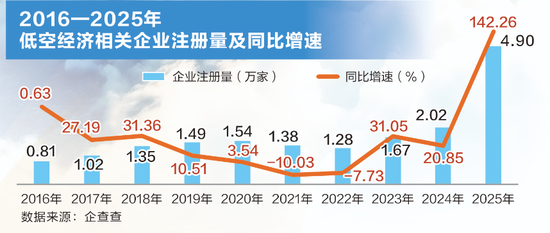
Core Insights - The low-altitude economy is projected to reach a market size of 1.5 trillion yuan by 2025 and 3.5 trillion yuan by 2035, becoming a core track for cultivating new productive forces and emerging industries [4][26] - The year 2026 is seen as a pivotal year for the low-altitude economy, marking the transition from concept validation to scenario application [2][24] - The Chinese government has elevated the low-altitude economy to a strategic emerging industry, with multiple policies and frameworks established to support its development [6][28] Market Potential - The low-altitude economy market in China surpassed 500 billion yuan in 2023, reaching 505.95 billion yuan, with a projected growth of 32.5% to 670.25 billion yuan in 2024 [4][26] - The number of registered low-altitude economy-related enterprises increased significantly, with a forecast of 49,000 registrations by 2025, marking a year-on-year growth of 142.26% [2][24] Policy Support - The low-altitude economy was included in national planning for the first time in February 2021, and it has been recognized as a strategic emerging industry in subsequent government reports [6][28] - The establishment of the Low Altitude Economy Development Department by the National Development and Reform Commission aims to coordinate the advancement of the low-altitude economy [6][28] Industry Structure - The low-altitude economy industry is concentrated in three major economic zones: the Greater Bay Area, Yangtze River Delta, and Beijing-Tianjin-Hebei, which together form the leading tier of development [7][29] - As of January 2023, there were approximately 163,000 active low-altitude economy-related enterprises in China, with significant concentrations in East and South China [7][29] Technological Advancements - The low-altitude economy has developed a complete industrial chain encompassing low-altitude manufacturing, operation, infrastructure, and information services [10][32] - China leads globally in drone research and design, with over 77,000 drone R&D companies, including major players like DJI [10][32] Investment Trends - Investment in the low-altitude economy is on the rise, with 143 financing events recorded in the first half of 2025, a 120% increase year-on-year [15][37] - The stock market has seen significant interest, with 17 concept stocks doubling in price since 2024, indicating strong investor confidence [15][37] Application Scenarios - The low-altitude logistics market is expected to grow rapidly, with projections of reaching 120 to 150 billion yuan by 2025 and 450 to 605 billion yuan by 2035 [11][33] - Companies like WanFeng Aviation are developing comprehensive applications for fixed-wing aircraft, eVTOL, and drones, covering various transportation scenarios [12][34] Challenges Ahead - The low-altitude economy faces challenges in infrastructure development, regulatory frameworks, and technological breakthroughs, which are essential for scaling operations [40][41] - Key issues include the reliance on imported components, high operational costs, and the need for a stable business model to ensure sustainable growth [40][41]
广货蝶变照见开放中国的发展钥匙
2 1 Shi Ji Jing Ji Bao Dao· 2026-01-26 22:23
Core Viewpoint - The evolution of "Guangdong goods" reflects China's modernization process and serves as a mirror of the country's open development journey, showcasing the transformation from traditional manufacturing to intelligent manufacturing and standard output [1][4][6] Group 1: Historical Context - In 1978, Guangdong began its journey with "processing with supplied materials," marking the start of its manufacturing industry and the rise of "Guangdong goods" [1] - Guangdong leveraged its geographical advantages and foreign investment to become a pioneer in China's reform and opening-up, establishing a foundation for its manufacturing brands [3] - The period from China's WTO accession in 2001 to the global financial crisis was a golden era for international trade, during which Guangdong capitalized on external opportunities for significant growth [3] Group 2: Transformation and Upgrading - Entering the new century, Guangdong shifted from "scale expansion" to a "quality revolution," exemplified by companies like Huawei and Dongguan's industrial upgrades [4] - The evolution of Guangdong goods is characterized by an ascent in the value chain, gaining more control over the industrial chain [4] - Guangdong is currently undergoing a transformation from "manufacturing" to "intelligent manufacturing," with significant advancements in smart technologies and automation [4][5] Group 3: Innovation and Competitiveness - The Guangdong-Hong Kong-Macao Greater Bay Area has fostered a robust innovation ecosystem, integrating research, technology, and commercialization [5] - Increased R&D investment has led to the emergence of globally competitive enterprises in sectors like 5G, new energy vehicles, and drones, laying a solid foundation for standard output [5] - Guangdong's manufacturing ecosystem, characterized by a dual advantage of "digital intelligence + mechanical engineering," enables it to meet diverse global demands [5] Group 4: Future Outlook - The story of Guangdong goods is a narrative of innovation, openness, and practical efforts, with the potential for continued growth and adaptation in the global market [6] - As "Guangdong goods" evolve into "new national goods," they symbolize the synchronization of Guangdong's growth with national development [6]