国际金融公司

Search documents
金融科技公司Maya计划于2026年在美国和菲律宾双重上市
Sou Hu Cai Jing· 2026-02-26 13:54
据菲律宾《商业世界》2月26日报道,菲金融科技公司Maya计划2026年下半年在美国和菲律宾双重上 市。公司董事长潘基里南表示,此举旨在筹集新资金并允许现有投资者退出,同时PLDT和First Pacific 将维持39.6%的持股比例。双重上市既能吸引国际资本,也能让本地投资者参与。Maya现有股东包括 KKR、腾讯控股和国际金融公司等。分析师认为,双重上市有助于提升股价发现和簿记建档效率。 ...
“云吞债”飘香
Shang Hai Zheng Quan Bao· 2026-01-25 18:54
"云吞债"飘香 ◎记者 黄冰玉 2026年1月,亚洲基础设施投资银行(简称"亚投行")再度发行了规模达40亿港元的公募债券,让云吞 债(境外发行人在香港市场发行、以港元计价的债券)这一小众债券品种吸引了市场目光。 去年以来,云吞债发行持续升温,发行规模与数量均大幅增长。业内人士普遍认为,这得益于港元低利 率优势、本地机构资产配置和融资多元化需求等因素驱动。云吞债与点心债形成互补,有望进一步提升 香港债市的深度与广度。 公开发行持续升温 在全球债券市场,常有"地域文化符号+债券类型"的命名传统,如点心债、熊猫债等。云吞债则是境外 发行人在香港发行、以港元计价的债券品种。与同样在港发行且已被市场所熟知的点心债相比,二者核 心区别在计价货币,点心债是离岸人民币债券,而云吞债是港元债券。 去年以来,云吞债发行规模及频率持续提升。据彭博数据,2025年云吞债总发行规模达814.4亿港元, 发行笔数共计105笔,较上年分别大幅增长216.6%、98.1%,市场发行热度大幅提升。 多因素推动云吞债发行升温 业内人士看来,多重因素推动了云吞债发行升温,二级市场活跃度有望进一步提升。 当前,港元流动性充裕形成显著的低利率比较优 ...
再加码!南银法巴消金注册资本增至60亿,跻身行业第四
Nan Fang Du Shi Bao· 2025-12-16 12:03
Group 1 - The core point of the article is that Nanyin Fabai Consumer Finance Co., Ltd. has increased its registered capital from 5.215 billion to 6 billion yuan, ranking fourth among 31 licensed consumer finance companies in China [4][5][6] - The capital increase is attributed to a decision by Nanjing Bank, which contributed approximately 589.3 million yuan, maintaining its 64.16% shareholding [4][5] - This is the second capital increase for Nanyin Fabai within a year, following an increase from 5 billion to 5.215 billion yuan in September 2024, funded by a new shareholder, the International Finance Corporation [4][5] Group 2 - The increase in capital has directly improved the company's industry ranking, surpassing Industrial Bank Consumer Finance, which has a registered capital of 5.32 billion yuan [5][6] - Nanyin Fabai's management team has recently expanded with the appointment of two new deputy general managers, enhancing the company's leadership [7][9] - The company reported a significant increase in revenue and net profit for the first half of 2025, with revenue reaching 2.74 billion yuan, a 33.75% increase year-on-year, and net profit of 143 million yuan, nearly doubling from the previous year [10] Group 3 - The consumer finance industry is experiencing a capital increase trend due to regulatory changes that have raised the minimum registered capital requirement from 300 million to 1 billion yuan [11][12] - Many consumer finance companies are increasing their capital to comply with new regulations, with some institutions still falling short of the new minimum capital requirements [12] - The overall sentiment in the industry remains positive, with institutions recognizing the importance of compliance and the potential for sustainable growth in the consumer finance sector [12]


南银法巴消费金融增资至60亿元人民币
Jing Ji Guan Cha Wang· 2025-12-16 07:32
Group 1 - The core point of the article is that Nanyin FaBa Consumer Finance has increased its registered capital from 5.215 billion RMB to 6 billion RMB, representing an approximate increase of 15% [1] - The company was established in May 2015 and is legally represented by Zhang Weinian [1] - Shareholders of the company include Nanjing Bank, BNP Paribas, the International Finance Corporation, and BNP Paribas Personal Finance [1]

尼泊尔央行与世行国际金融公司签署气候融资谅解备忘录
Shang Wu Bu Wang Zhan· 2025-12-16 06:23
Core Viewpoint - The Nepal Rastra Bank (NRB) and the International Finance Corporation (IFC) have signed a memorandum of understanding focused on climate financing, aiming to enhance Nepal's climate financing strategy and implementation framework [1] Group 1: Agreement Details - The memorandum was signed at the NRB headquarters by NRB Executive Director Pankaj and IFC South Asia Country Manager for Advisory Services, Smith [1] - The agreement includes technical support from IFC to NRB for developing a climate financing strategy and implementation roadmap [1] Group 2: Project Implementation - The project will establish a phased execution framework for the climate financing strategy, with a focus on training and capacity building for the central bank and the broader financial sector [1] - The implementation period for the project is set to last until September 2028 [1] Group 3: Expected Outcomes - The initiative is expected to help address financial risks related to climate change and mobilize financial resources for climate adaptation in Nepal [1] - NRB Deputy Governor Mishra stated that the new agreement will significantly advance the development and implementation of Nepal's climate financing policies [1] - Smith expressed optimism about achieving substantial results in the formulation and practical application of the climate financing strategy through collaboration with the central bank [1]
南银法巴消金增资至60亿元,增幅约15%
Xin Lang Cai Jing· 2025-12-16 02:42
Core Viewpoint - On December 12, 2023, Nanyin Fabre Consumer Finance Co., Ltd. increased its registered capital from 5.215 billion RMB to 6 billion RMB, marking an approximate 15% increase, alongside changes in several senior management positions [1][2]. Company Overview - Nanyin Fabre Consumer Finance Co., Ltd. was established in May 2015 and is legally represented by Zhang Weinian. The company's business scope includes issuing personal consumer loans, accepting deposits from domestic subsidiaries and shareholders, and borrowing from domestic financial institutions [3][4]. - The company is jointly owned by Nanjing Bank Co., Ltd., BNP Paribas, the International Finance Corporation, and BNP Paribas Personal Finance [3][5]. Shareholder Information - Nanjing Bank Co., Ltd. holds a 64.16% stake in the company, while BNP Paribas owns 30.22%. The International Finance Corporation holds 4.12%, and the remaining 1.5% is held by other entities [5].
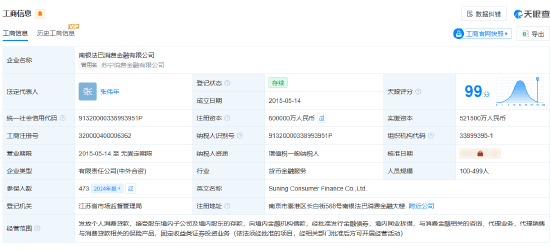
南银法巴消费金融公司增资至60亿元,增幅约15%
Sou Hu Cai Jing· 2025-12-16 02:39
该公司成立于2015年5月,法定代表人为张伟年,经营范围包括发放个人消费贷款、接受股东境内子公 司及境内股东的存款、向境内金融机构借款等,由南京银行股份有限公司、法国巴黎银行(BNP PARIBAS)、国际金融公司、法国巴黎银行个人金融集团(BNP PARIBAS PERSONAL FINANCE)共 同持股。 天眼查App显示,12月12日,南银法巴消费金融有限公司发生工商变更,注册资本由52.15亿人民币增至 60亿人民币,增幅约15%,同时,多位高管发生变更。 ...
去年外资保险机构在华业务增长18%!
Zheng Quan Ri Bao· 2025-11-21 00:21
Core Insights - The report indicates that the Chinese insurance industry is experiencing significant growth, particularly from foreign investment, with foreign insurance institutions in China seeing an 18% business growth, surpassing the national average of 14.5% [1] - The report highlights a 45% increase in claims expenditure from foreign insurance companies, which is 25.6 percentage points higher than the national average [1] Group 1: Foreign Investment Trends - Foreign investment in China's insurance sector is driven by the ongoing high-level opening-up of the financial market, the immense market potential, and long-term value recognition by foreign investors [1][3] - Various strategies are being employed by foreign entities to enter the Chinese insurance market, including establishing new insurance institutions and increasing registered capital [1][2] - In 2024, four new insurance institutions have received licenses, with foreign participation in companies like Beijing La Banque Postale Tianxing Property Insurance Co., Ltd. and Prudential Insurance Asset Management Co., Ltd. [1] Group 2: Capital Increases and Strategic Partnerships - National Financial Regulatory Administration has approved capital increases for several insurance companies, including a strategic investment by Allianz Global Investors in Guomin Pension Insurance Co., Ltd. [2] - Other foreign financial institutions, such as the International Finance Corporation and the Asian Development Bank, have also participated in capital increases for various insurance companies [2] Group 3: Performance of Foreign-Invested Insurance Companies - Foreign-invested insurance companies have shown strong performance in net profit and investment returns, with five out of the top ten non-listed life insurance companies having foreign backgrounds [4] - These companies benefit from mature governance structures and efficient risk management, allowing them to achieve higher investment returns even in low-interest environments [4] - The focus on high-end clients and long-term savings products contributes to their profitability, with lower surrender rates enhancing their overall performance compared to industry averages [4] Group 4: Market Impact and Future Outlook - The entry of foreign capital is expected to invigorate the domestic insurance market, shifting competition from price wars to service and quality [5] - This influx of foreign expertise may enhance the industry by introducing advanced practices in areas like pension and health management, ultimately benefiting consumers with more quality choices [5]
熊猫债、点心债,这些“萌萌哒”名字怎么来的?
3 6 Ke· 2025-10-30 04:35
Core Insights - The popularity of Panda bonds and Dim Sum bonds has been rising, with Dim Sum bonds becoming a favored option for domestic tech companies seeking overseas financing [1] Group 1: Panda Bonds - Panda bonds are defined as bonds issued by foreign entities in China, denominated in RMB, and are categorized as foreign bonds [2] - The name "Panda bond" was established in 2005 when the International Finance Corporation and the Asian Development Bank were approved to issue RMB bonds in China, symbolizing China's national treasure [3] - The issuance of Panda bonds has surged, with 44 entities issuing 109 Panda bonds in 2024, totaling a scale of 194.8 billion RMB, representing a year-on-year growth of 26.1% [7] - The total issuance of Panda bonds in 2023 reached 156.85 billion RMB, with total outstanding bonds increasing by 26.84% to 400.33 billion RMB [7] - The growth of Panda bonds is attributed to China's ongoing opening-up policy, a large market, and the internationalization of the RMB, alongside favorable financing costs compared to USD [7][8] Group 2: Dim Sum Bonds - Dim Sum bonds refer to RMB-denominated offshore bonds issued in Hong Kong, initially named for their small scale, akin to dim sum [5][6] - The market for Dim Sum bonds has expanded significantly over the past decade, with a notable increase in issuance and diversity of issuers, including local governments and multinational corporations [6][9] - By 2025, the issuance of Dim Sum bonds is expected to be dominated by central banks, sovereigns, and government entities, with significant contributions from the TMT sector [8] - The global issuance of Dim Sum bonds has diversified, with 45 countries and supranational organizations participating, enhancing the global acceptance of RMB-denominated assets [9]

国研视点丨陈宁:俄、印、巴、南四国货币国际化的历程和启示
Sou Hu Cai Jing· 2025-10-17 05:11
Core Viewpoint - The 2008 international financial crisis revealed inherent flaws and potential risks in the US dollar-dominated international monetary system, prompting emerging economies represented by BRICS nations to seek systemic reforms, including currency internationalization, to mitigate various risks. However, due to differences in economic structure, openness, and financial systems, Russia, India, Brazil, and South Africa exhibit varying degrees of enthusiasm and methods for currency internationalization. This article analyzes the processes and characteristics of these countries' currency internationalization to provide insights for advancing the internationalization of the Renminbi [1][3]. Group 1: Russia's Ruble Internationalization - Russia has strategically prioritized the internationalization of the ruble to enhance the global competitiveness of its financial system, especially in the context of the Ukraine conflict, linking it to sanctions mitigation and economic independence [4][6]. - The ruble's internationalization process can be divided into four phases, starting from the post-Soviet era, where Russia aimed to restore the ruble's international status through reforms and establishing a market-based exchange rate system [4][5]. - Following the 2008 financial crisis, Russia actively promoted the ruble's international use through regional and bilateral agreements, with a focus on the Eurasian Economic Union and increasing ruble trade settlements [6][7]. Group 2: India's Rupee Internationalization - India's approach to rupee internationalization has been cautious, evolving through two main phases, with a focus on promoting foreign trade and better integration into international markets [8][9]. - Initially, India adopted a gradual and cautious strategy, emphasizing bilateral invoicing and settlements in rupees, while only fully liberalizing international investments in 2014 [9][10]. - Post-Ukraine conflict, India has become more proactive in promoting rupee internationalization, establishing direct settlement mechanisms and engaging in regional cooperation frameworks to enhance the rupee's global acceptance [10]. Group 3: Brazil's Real Internationalization - Brazil's strategy for the internationalization of the real is characterized by a lack of a defined timeline, focusing instead on enhancing international and regional trade shares [11][12]. - Brazil implemented earlier reforms in exchange rate policy and capital account liberalization, transitioning to a floating exchange rate system in 1999 and promoting capital account openness [11][12]. - The internationalization of the real is facilitated through regional cooperation, particularly within the Southern Common Market, promoting trade settlements in local currencies and exploring the possibility of a unified currency among member states [12]. Group 4: South Africa's Rand Internationalization - South Africa has not set explicit goals or timelines for rand internationalization, but emphasizes the currency's stability and convertibility as crucial for economic support [13][14]. - The rand's internationalization has been primarily focused on regional usage, leveraging South Africa's influence in Africa to expand the currency's reach [13][14]. - Following the end of apartheid, South Africa's economic policies shifted towards market liberalization, enhancing the rand's trading volume and market activity [13]. Group 5: Insights and Implications - The currency internationalization efforts of these countries have shown some success, with increases in global foreign exchange trading shares for the rupee, real, and rand from 2010 to 2022 [15]. - Economic strength and stability are foundational for currency internationalization, with challenges such as inflation and political instability affecting the global acceptance of these currencies [16]. - The process of currency internationalization is also a de-dollarization effort, with a focus on regional expansion as a strategic approach to reduce reliance on the US dollar [18].