iRobot Corporation

Search documents
追觅俞浩再怼马斯克:喜欢PUA,去火星太扯淡
Sou Hu Cai Jing· 2026-02-06 06:10
Group 1 - The core viewpoint expressed is that enhancing human productivity and wealth on Earth by 100 times is more practical and beneficial for human happiness than exploring Mars [2] - The individual criticizes Elon Musk's Mars colonization plan, labeling it as a form of manipulation and questioning the environmental claims associated with Musk's business practices [2] - The individual emphasizes a commitment to improving Earth's productivity and wealth, contrasting this with the desire of some to pursue life on Mars [2] Group 2 - A prediction is made that in 20 years, Tesla will face significant financial difficulties, potentially leading to losses and exit from the electric vehicle market, similar to the fate of iRobot [3] - The individual suggests that Musk will not acknowledge these challenges, instead framing any exit as a voluntary decision [3] - A comparison is drawn between Musk's individualistic approach and a preference for collaborative team growth [4]

盘点第一波人形机器人倒闭潮,谁能活过2026年
阿尔法工场研究院· 2026-01-28 09:07
Core Viewpoint - The humanoid robot industry in 2025 is experiencing a severe dichotomy, with significant funding and successful companies on one side, while many startups face collapse due to financial and operational challenges [4][5][9]. Industry Overview - In 2025, the humanoid robot sector saw 610 financing events, nearly tripling from the previous year, with total funding exceeding 57 billion yuan [15]. - Over 100 humanoid robot companies in China have differentiated significantly, with leading firms securing billion-level orders and preparing for IPOs, while others struggle to survive [4][5]. Company Failures - Notable failures include K-Scale Labs, which collapsed just before mass production due to cash flow issues, revealing the challenges faced by many startups lacking a complete local supply chain [5][6]. - Rethink Robotics, a pioneer in collaborative robots, faced its second closure in 2025 after failing to meet market expectations, highlighting the risks of rushed product launches [7][9]. - iRobot, the maker of Roomba, filed for bankruptcy in December 2025, attributed to prolonged financial struggles and competition from lower-priced Chinese products [8][9]. Market Dynamics - The industry is shifting from a focus on academic institutions to industrial enterprises, with increased orders from automotive manufacturers, indicating a demand for reliability and economic viability [15][16]. - The competition has intensified, with many companies producing similar products, leading to a "race to the bottom" in pricing and innovation [10][11]. Technological Challenges - The primary bottleneck in humanoid robots is the AI module, which is crucial for their functionality, yet many companies invest little in this area, relying on larger tech firms for support [11][12]. - The rapid pace of technological evolution means that today's leaders can quickly become laggards if they fail to innovate [12][13]. Survival Strategies - Companies must establish differentiation, create genuine commercial loops, maintain financing capabilities, and leverage data to enhance AI models [16]. - The industry is expected to see further consolidation and a clearer divide between successful firms and those unable to adapt to market demands [15][16].

第一波人形机器人倒闭潮,来了
3 6 Ke· 2026-01-27 05:55
Core Insights - The humanoid robot industry in 2025 faced a dual challenge of significant investment and numerous company failures, highlighting a stark divide between leading and struggling firms [1] - The industry is undergoing a brutal elimination process, with many once-prominent companies collapsing as the gap between technological enthusiasm and commercial viability becomes evident [1] Industry Overview - In 2025, the humanoid robot sector saw 610 financing events, nearly tripling from the previous year, with total funding exceeding 57 billion yuan [9] - The industry is experiencing deep differentiation, with leading companies receiving continuous capital support while struggling firms face accelerated elimination [10] Company Failures - K-Scale Labs, a notable startup, collapsed just before mass production due to cash flow issues, revealing the lack of a complete local supply chain for many U.S. startups [2] - Rethink Robotics, once a pioneer in collaborative robots, faced its second bankruptcy in 2025 after failing to meet market demands and losing investor support [3] - The closure of Embodied, which produced a social robot for children, exemplified the vulnerabilities of cloud-dependent products [4] - iRobot, the maker of Roomba, filed for bankruptcy in December 2025, suffering from prolonged financial struggles and competition from lower-priced Chinese products [4] Challenges Faced by Companies - Many humanoid robot companies are hindered by financing shortages, with K-Scale Labs having only $400,000 left at the time of its closure [6] - Over 50% of humanoid robot "commercial" orders are primarily for public relations and data collection rather than genuine productivity replacement [7] - Product homogeneity has led to a competitive landscape where many companies are engaged in a war of attrition, focusing on low-barrier applications [7] - Insufficient technological reserves have left companies like Rethink Robotics and iRobot unable to compete effectively against more advanced competitors [8] Future Outlook - The survival of companies in the humanoid robot sector will depend on securing ongoing financing and achieving repeat orders in industrial applications [10] - The customer base is shifting from academic institutions to industrial enterprises, which demand higher reliability and economic viability [10] - Companies must differentiate themselves, establish genuine commercial cycles, and leverage data to enhance AI models for future success [11] - The industry is expected to see a significant increase in humanoid robot shipments in 2026, with estimates ranging from 30,000 to over 50,000 units, contingent on technological advancements [10]

CES还是消费电子展吗?中企给出正确答案
Guan Cha Zhe Wang· 2026-01-17 01:40
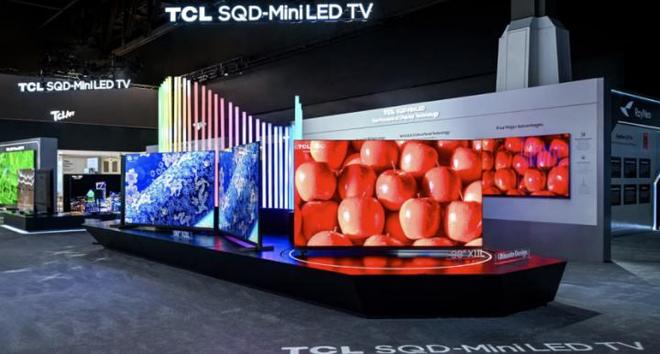
Core Insights - The CES 2026 has shifted from a consumer electronics showcase to a platform dominated by discussions on data centers and AI, primarily led by American tech giants like Nvidia and AMD, while Chinese companies focus on consumer-oriented products [1][2][13] - Nvidia's data center revenue reached $51.25 billion in Q3 2025, a 66% year-over-year increase, highlighting a structural imbalance in focus away from consumer needs [1][15] - Chinese companies like TCL and Hisense showcased tangible consumer products, emphasizing practical applications and user-friendly technology, contrasting with the abstract discussions of their American counterparts [3][4][6][15] Group 1: Industry Trends - The trend of "edge computing" is emphasized by Chinese firms, focusing on local processing power rather than cloud dependency, reflecting a deep understanding of consumer needs [13][14] - The evolution of product forms is evident, with innovations like the Honor ROBOT PHONE and the Stone G-Rover, which address real-life consumer challenges [13][14] - Chinese companies are showcasing products that are ready for mass production and purchase, unlike many Western firms that present conceptual prototypes [14][15] Group 2: Consumer Focus - Chinese enterprises are prioritizing consumer needs, as seen in TCL's and Hisense's product offerings that are accessible and understandable to the average user [3][4][6] - The consumer response to AI PCs has been lukewarm, with many users expressing confusion rather than excitement, indicating a disconnect between tech advancements and consumer expectations [2][12] - The success of products like the Stone G-Rover and the Lenovo Qira demonstrates a shift towards practical, user-friendly technology that resonates with everyday consumers [8][12][15] Group 3: Competitive Landscape - The disparity in focus between American and Chinese companies is evident, with the former leaning towards high-performance computing and the latter addressing everyday consumer problems [1][15] - The CES 2026 highlighted a potential future where American tech firms continue to dominate technical discussions while Chinese companies redefine consumer electronics with practical products [16][17] - The ongoing competition suggests that understanding consumer needs will be crucial for success in the evolving tech landscape, with Chinese firms currently leading in this regard [16][17]




“扫遍”东南亚,中国品牌靠什么拿下八成市场?
Guan Cha Zhe Wang· 2026-01-14 00:48
Core Viewpoint - The Southeast Asian market is emerging as a new opportunity for Chinese smart cleaning device brands, despite previous doubts about its consumer spending power, especially following the bankruptcy of iRobot, which once dominated the global market with nearly 80% share [1][3]. Market Dynamics - Chinese brands have rapidly gained market share in Southeast Asia, capturing 80% of the local robotic vacuum market, driven by technological innovation and localized strategies [4]. - The Southeast Asian e-commerce market is projected to reach $128.4 billion in 2024, with double-digit GMV growth and a young population enhancing online purchasing power [4][9]. Competitive Strategy - Companies like Roborock, Ecovacs, and others are leveraging localized product strategies to adapt to the unique living environments and climates of Southeast Asia, focusing on features such as extended battery life and odor control [4]. - The "online + offline" collaborative model is being employed to enhance brand recognition and consumer trust, with over 100 experience stores established in Vietnam alone [5]. E-commerce Ecosystem - Alibaba's international business group is crucial in supporting Chinese brands' expansion into Southeast Asia, providing a comprehensive service system that facilitates market entry [6]. - Lazada, as a key platform, offers a "one-click light export" project that simplifies the process for merchants, allowing them to synchronize product and marketing information without additional investment [6][8]. Future Outlook - The digital economy in Southeast Asia is expected to drive continued growth for smart cleaning products, with e-commerce transactions projected to reach $186 billion by 2025 [9]. - The outflow model of Chinese brands is evolving from simple product exports to deep localization, with a focus on understanding local consumer preferences and building localized teams [9][10]. - Innovations in platform operations are lowering barriers for market entry, as demonstrated by Lazada's significant sales growth during major shopping events [10].


技术定制+资本整合 中国智造双线发力重塑全球产业格局
Yang Shi Wang· 2026-01-10 07:59
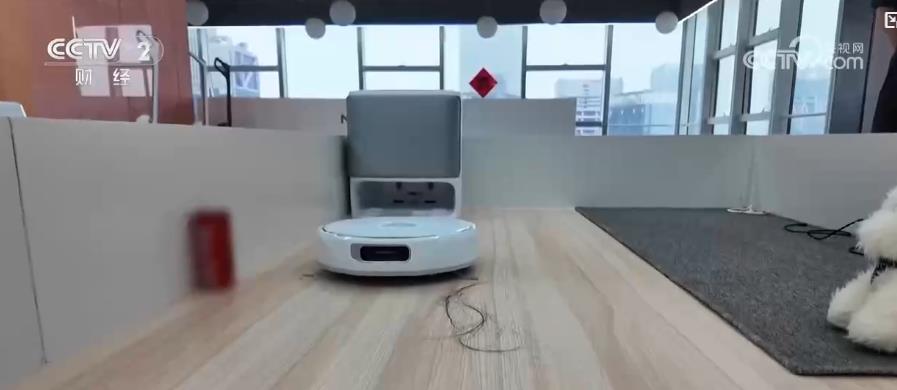
Core Insights - Chinese robotic vacuum companies are accelerating the launch of customized products to address consumer pain points in different overseas markets through technological innovation [1][3] Group 1: Product Innovation - Engineers in Shenzhen are conducting tests with a "zero-tangle conical brush" robot designed to quickly absorb pet hair, targeting the needs of pet-owning families in Europe and the U.S. [3] - Companies are modifying products for various international markets, such as enhancing obstacle avoidance precision for larger homes and incorporating smart height adjustment features for mopping to avoid carpets [3] Group 2: Market Dynamics - iRobot, a pioneer in the industry, has filed for bankruptcy restructuring after experiencing continuous losses and falling out of the global top five in shipment volume [4][6] - The financial difficulties faced by iRobot are attributed to rapid technological advancements by Chinese and other global competitors, as well as increased sales costs due to tariff policies [6] - iRobot has reached a restructuring support agreement with its secured lenders and major contract manufacturers, with plans for the restructuring process to be completed by February 2026 [6] Group 3: Strategic Implications - Following the acquisition, there will be a need to reorganize and integrate teams to effectively penetrate the high-end markets in Europe and the U.S., emphasizing the importance of local market understanding [8]
西方营销模式正在失效,中国市场进入“本土规则”时代
Sou Hu Cai Jing· 2026-01-09 15:40
Core Insights - The global floor cleaning robot industry is witnessing a significant shift, with the acquisition of iRobot by its Chinese manufacturing partner, marking the end of an era for the former industry leader [2] - Local brands in China are rapidly gaining market share, forcing international brands like Starbucks, Nike, and Adidas to adapt or face decline [2] - A survey indicates that 85.79% of consumers prefer domestic trendy brands, highlighting the rise of local brands in various consumer sectors [2] Industry Trends - The traditional Western marketing models are becoming ineffective in the Chinese market, as local brands redefine the rules of engagement [4][7] - The previous reliance on mass advertising and standardized marketing strategies is being replaced by personalized and emotionally resonant approaches [9][10] - The emergence of new consumer behaviors emphasizes the importance of emotional connections and personalized experiences over traditional functional marketing [10][11] Brand Strategies - Successful local brands like Qingdao White Beer are leveraging cultural symbols and emotional narratives to resonate with consumers [19][21] - Qingdao White Beer has effectively created immersive experiences that connect with local culture, enhancing brand visibility and consumer engagement [21][22] - The focus has shifted from merely selling products to creating emotional experiences that align with consumers' lifestyles and values [22]




从CES看2026智能家电新品趋势
2026-01-08 02:07
Summary of Key Points from the Conference Call Industry Overview - The conference discusses trends in the smart home appliance industry, particularly focusing on the CES 2026 event where the number of Chinese companies participating significantly decreased from 1,100 in 2024 to 837 in 2026, indicating a shift in the overseas ecosystem [2][1]. - Major listed companies continue to participate due to strong cash flow and overseas market shares, showcasing a variety of products [1][2]. Core Insights and Arguments - **Product Diversification**: Companies like Ecovacs and XGIMI are accelerating their expansion into multiple product categories, such as companion robots and AI glasses, leveraging their technological advantages to find new growth avenues [1][3][4]. - **Market Dynamics**: The robotic vacuum cleaner market has seen nearly a decade of iteration, with a focus on embodied functionalities. The lawn mower robot segment is converging on RTK and laser radar navigation technologies, with anti-dumping measures potentially reshaping market dynamics [1][6][7]. - **Regional Focus**: The lawn mower robot market is primarily targeting Europe, while the U.S. market presents more complex challenges due to varied yard environments, leading to increased attention from companies to enhance their product offerings in the U.S. [8][1]. Emerging Trends - **New Product Categories**: AI glasses and 3D printing are in the early stages of market penetration, with no unified technical solutions yet. The demand is being stimulated by innovative designs, necessitating continuous tracking of potential mainstream technologies and capable companies [11][1]. - **Competitive Landscape**: The overseas robotic vacuum market remains stable, with iRobot's market share declining. Leading companies maintain their shares through differentiated strategies. The competition in the floor washing machine market is intensifying, with companies like Roborock increasing their presence [18][3]. Company-Specific Developments - **Ecovacs**: Focused on expanding its overseas presence with products like the rolling washing machine and pool cleaning robots, while also addressing domestic sales uncertainties due to subsidy policies [15][12]. - **Roborock**: Showcased a wheeled robotic vacuum at CES 2026, emphasizing its commitment to quality in a single product category. The company plans to maintain a limited number of washing machine models overseas while optimizing its cleaning solutions [13][16]. - **Ninebot**: Launched a significant number of lawn mower robots at CES 2026, incorporating advanced technologies like RTK and laser radar to meet diverse consumer needs [21][1]. - **XGIMI**: Introduced a high-end projector and several AI glasses, leveraging its existing market channels for rapid product promotion [23][1]. Additional Insights - **Market Evolution**: The lawn mower robot industry is transitioning from a single product focus to a multi-SKU cost control and channel management competition phase, similar to the early stages of the robotic vacuum cleaner market [10][9]. - **Investment Recommendations**: Large domestic appliance companies like Midea and Haier are recommended for their stability and diversified strategies. Companies with clear overseas trends, such as Ninebot and Roborock, are also favored. In emerging categories, 3D printing is highlighted as a promising direction [25][26].


黄仁勋到处赶场站台,中国军团角逐AI明日终端
Tai Mei Ti A P P· 2026-01-04 10:13
Group 1 - The CES 2026 will take place from January 6 to January 9, focusing on AI as it transitions into practical applications, marking the year as the beginning of AI technology integration and industrialization [2][9] - A total of 4,112 companies will participate in CES 2026, with major players like AMD, Lenovo, Hisense, and TCL showcasing innovations across various sectors, including chips, hardware, and vertical applications [2][3] - The event will highlight the integration of AI in various industries, including automotive and supply chains, demonstrating deep connections and applications across the entire industry chain [2][6] Group 2 - NVIDIA's CEO Jensen Huang will not deliver a keynote this year but will participate in discussions about AI's impact on consumer electronics and infrastructure [3][7] - AMD is expected to unveil its next-generation mobile processor, the Ryzen AI 400 series, featuring 12 Zen 5 cores and enhanced NPU capabilities [6][4] - Siemens' CEO will present advancements in industrial AI, showcasing how AI, digital twins, and automation are transforming manufacturing and infrastructure [6][9] Group 3 - The home appliance sector will see significant AI integration, with major companies like Hisense and TCL leading the charge in redefining the future of home electronics [10][11] - Hisense will introduce the world's first display technology upgraded to a "four-core architecture," along with a humanoid robot capable of multi-language interaction [10][11] - The cleaning appliance market, particularly robotic vacuums, is dominated by Chinese brands, while iRobot faces bankruptcy, highlighting a shift in market leadership [13][19] Group 4 - The CES 2026 will feature a strong presence of embodied intelligence products, with over 50% of exhibitors being Chinese companies, showcasing advancements in humanoid robots and smart assistants [20][22] - New AI-native devices, including AI glasses and AI headphones, will be introduced, indicating a shift towards AI as the next generation of consumer electronics [24][26] - The event will also host discussions on the future of technology, including topics like AI's role in industrial transformation and the commercialization of embodied intelligence [30][28]


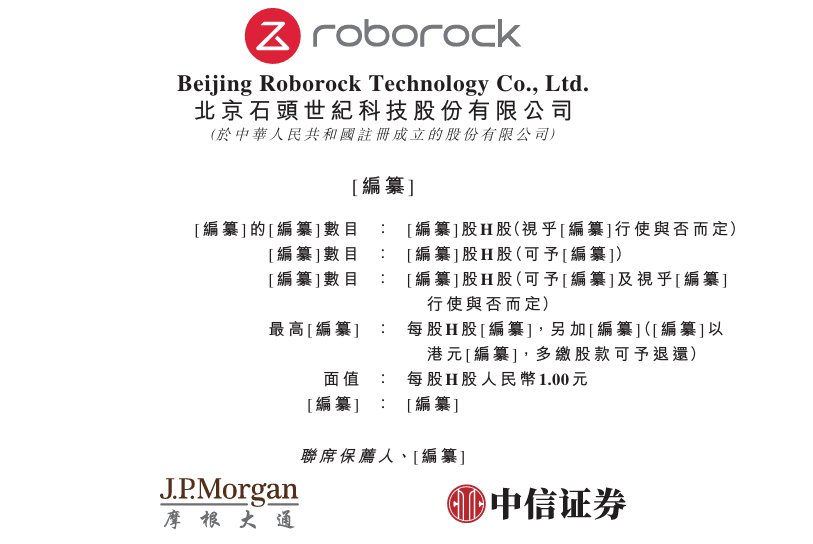
新股消息 | 石头科技(688169.SH)递表港交所 已销售约2000万台智能扫地机器人
智通财经网· 2026-01-02 03:45
Company Overview - Roborock Technology (688169.SH) is a global leader in the smart vacuum cleaner sector, with approximately 90% of its revenue derived from the sales of smart vacuum cleaners. The company is expanding into new product categories, including floor washers and wash-dry machines [3] - The global sales of Roborock's smart vacuum cleaners are projected to grow from approximately 2,246,000 units in 2022 to about 3,449,000 units in 2024, representing a compound annual growth rate (CAGR) of 23.9%. From 2016 to 2024, the total sales are expected to reach around 20 million units [3] - According to data from Zhaoshang Consulting, Roborock is the number one brand in terms of gross merchandise value (GMV) and sales volume in the global smart vacuum cleaner market in 2024, with a market share of 23.4% by GMV [3][11] Financial Performance - The company reported revenues of approximately RMB 6.61 billion, RMB 8.64 billion, RMB 11.92 billion, and RMB 12.06 billion for the years 2022, 2023, 2024, and the nine months ending September 30, 2025, respectively [5] - The net profit for the same periods was approximately RMB 1.18 billion, RMB 2.05 billion, RMB 1.98 billion, and RMB 1.04 billion [6] Market Insights - The global smart vacuum cleaner market is expected to grow from USD 4.4 billion in 2020 to USD 9.3 billion in 2024, with a CAGR of 20.6%. By 2029, the market is projected to reach USD 25.2 billion, with a CAGR of 22.0% from 2024 to 2029 [8] - The smart vacuum cleaner segment is the largest within the smart home cleaning products category, indicating strong growth potential [8] - The top five markets for smart vacuum cleaners in 2024 are projected to be Mainland China, the United States, Japan, South Korea, and Germany [10] Competitive Landscape - The global smart vacuum cleaner market is relatively concentrated, with the top five brands accounting for 73.1% of the market by GMV and 61.5% by sales volume in 2024. Roborock holds the leading position with a market share of 23.4% by GMV and 16.7% by sales volume [11][12]