
政务

Search documents
张掖甘州数智为笔绘就营商环境新画卷
Xin Lang Cai Jing· 2026-01-21 04:05
Core Viewpoint - Ganzu District is committed to optimizing the business environment as a "lifeline" for high-quality development, integrating smart governance, smart administration, and smart services to create a favorable ecosystem for businesses and attract investment [1] Group 1: Smart Governance - Investment of 12 million yuan has led to the establishment of the Ganzu Smart City Management Platform, which integrates various departmental systems and nearly 1,100 video resources to enhance urban management and decision-making [2] - The district has implemented a "grid + digital" governance model, focusing on 98 categories of events, enabling real-time data collection and comprehensive management through mobile terminals [2] Group 2: Ecological Protection - A comprehensive ecological monitoring network has been established, achieving continuous compliance with national air quality standards for eight years and ranking high in water quality assessments [3] - The urban green coverage rate is 44.32%, with a total green area of 1,833.04 hectares, contributing to a sustainable urban environment [3] Group 3: Smart Administration - The introduction of a "one-stop" government service platform has streamlined business processes, reducing the time for business registration to under three hours and speeding up construction permit approvals by 60% [4] - A credit-based regulatory system has been developed, allowing for differentiated supervision based on company credit ratings, significantly reducing the frequency of inspections for high-credit enterprises [4] Group 4: Smart Services - The "Gankai Ban" platform has been upgraded to provide comprehensive services for businesses, including financing and operational support, with a total of 273 investment projects implemented since 2025 [7] - The integration of financial data has facilitated the generation of credit reports for businesses, leading to 202.81 billion yuan in loans issued, addressing financing challenges for small and medium-sized enterprises [7] Group 5: Legal Framework - A "Smart Legal" platform has been established to provide online legal services, enhancing the efficiency of legal processes for businesses and ensuring a fair business environment [8] - Emergency response mechanisms have been put in place, with significant achievements in executing legal decisions and addressing enforcement challenges [8]
辽宁大连召开优化营商环境大会 全力营造一流营商环境
Xin Lang Cai Jing· 2026-01-20 11:42
Core Viewpoint - Dalian City in Liaoning Province has launched the "2026 Business Environment Quality Improvement Action Plan" to create a first-class market-oriented, law-based, and international business environment, aligning with World Bank standards [1][2]. Group 1: Innovation in Business Environment - The plan includes 50 measures focusing on innovative reforms in the business environment, such as city-wide branch registration and "enjoying without application" for real estate registration [1]. - It aims to optimize utility access approvals and enhance cross-border trade clearance efficiency, with a target to reduce enterprise tax inspections by over 20% annually [1]. Group 2: Precision in Policies for Enterprises - The plan emphasizes the establishment of a mechanism for policy formulation, interpretation, and evaluation, alongside the acceleration of legislative processes for local regulations [2]. - It aims to optimize the enterprise service cloud platform for quick policy dissemination and implementation, promoting services like "Smart Tax Link" [2]. Group 3: Fair Market Environment - The initiative seeks to eliminate entry barriers, rectify irregular charges related to enterprises, and foster the development of high-quality individual businesses [2]. - It focuses on enhancing financial and talent supply, reducing logistics costs, and unleashing data-driven potential [2]. Group 4: Intelligent Services for Enterprises - The plan promotes the "Efficient Completion of One Matter" reform and explores the integration of artificial intelligence in government services [2]. - It encourages pilot programs in parks to create distinctive business brands [2]. Group 5: Legal Environment Standardization - The plan introduces a "comprehensive inspection once" enforcement model and promotes flexible law enforcement and non-site supervision [2]. - It aims to expedite the execution of enterprise-related cases and strengthen collaborative protection of intellectual property [2]. Group 6: Inclusive Cultural Environment - The initiative includes the establishment of over five concept verification centers in the artificial intelligence sector and aims to enhance foreign services at airports and healthcare for the elderly [2]. - It seeks to stimulate nighttime consumption and integrate cultural, sports, and tourism activities [2]. Group 7: Implementation and Accountability - Each region and department is required to develop specific implementation plans and ensure accountability, with oversight from disciplinary inspection and supervision agencies [2]. - The promotion of successful experiences is emphasized to optimize Dalian's overall business environment and establish it as a benchmark city [2].
广东汕头:基本实现办事标准和服务质效与珠三角接轨
Zhong Guo Fa Zhan Wang· 2026-01-05 17:16
Core Viewpoint - The Shantou municipal government emphasizes the importance of optimizing the business environment as a key measure to enhance economic vitality and achieve the goal of becoming an industrial and strong city during the 14th Five-Year Plan period [1] Group 1: Government Initiatives - Shantou has designated 2025 as the "Year of Business Environment Improvement," focusing on enhancing government service levels, increasing resource supply capabilities, and optimizing government-business relationships [1] - The city has ranked first in the provincial business environment evaluation for four consecutive years among cities in the eastern and western Guangdong region, with the 2025 provincial report recognizing Shantou's efforts in aligning service standards with the Pearl River Delta [1] Group 2: Administrative Efficiency - Shantou has implemented a principle of "cancel what can be canceled, delegate what can be delegated, online what can be done online, and instant approval where possible," leading to significant reforms in the comprehensive approval system [2] - The city has created three batches of exemption lists covering 211 administrative service items and 290 required documents, and has achieved full online processing for 275 high-frequency services [2] - The introduction of 119 "instant reporting" and 40 "instant approval" services has significantly improved administrative efficiency, with a 100% on-time resolution rate for enterprise-related inquiries through the 12345 hotline [2] Group 3: Market Environment - Shantou has focused on reducing operational costs for businesses, with the average interest rate on new loans decreasing by 0.69 percentage points year-on-year, saving enterprises 402 million yuan in interest costs [2] - The "Shan Jin Hui Qi Tong" platform facilitated financing of 19.72 billion yuan, with an insurance coverage amount of 2.663 billion yuan [2] - The city has implemented a negative list system for market access and received an "excellent" rating in the 2024 provincial efficiency assessment [2] Group 4: Political Ecology - Shantou has adopted a "zero tolerance" approach to rectify behaviors that harm the business environment, aiming to create a fair and just development atmosphere [2] - The establishment of a "business environment exposure platform" serves as a strong deterrent against misconduct, while special enforcement actions target profit-driven law enforcement practices [2] - The city promotes a "friendly" and "clean" relationship between government and business, ensuring that enterprises can operate with dignity and entrepreneurs can earn respectably [2]
一刻钟,“圈”出美好生活
Xin Lang Cai Jing· 2026-01-03 19:18
Core Viewpoint - The construction of the "quarter-hour convenient living circle" in the Thirteenth Division of Xin Xing City aims to enhance the quality of life for residents by integrating various public services and improving accessibility to essential amenities [1][2]. Group 1: Community Services - The Thirteenth Division has achieved full coverage of convenient service centers, which integrate various government services such as household registration, traffic management, civil affairs, and social security, implementing innovative measures like "one-window completion" to address residents' pain points [1]. - Residents express satisfaction with the new service model, highlighting the convenience of completing multiple tasks in one visit to the service center, significantly reducing the need to travel to different locations [1]. Group 2: Elderly and Childcare Services - The "Five-Linked Integration" elderly service system has been established, featuring nine community day care centers that provide one-stop services including meal assistance, medical support, and cleaning services, along with emergency response features [2]. - Childcare services have been expanded to achieve full coverage of public kindergartens, introducing programs like "Gongwa School" and "6:30 Classroom" to alleviate challenges faced by dual-income families in childcare [2]. Group 3: Commercial and Cultural Development - The initiative has also improved the development of commercial services and cultural, sports, and medical sectors, addressing residents' concerns about access to fresh produce and shopping [2]. - Projects such as the construction of the Yimin Farmers' Market and the expansion of supermarkets aim to create a "one-stop" shopping experience, while the integration of cultural and recreational resources enhances community engagement and well-being [2]. Group 4: Future Plans - The local government plans to continue deepening the integration of convenience services with commercial and cultural sectors, aiming to transform the "quarter-hour convenient living circle" into a hub of happiness and community cohesion, thereby enhancing residents' sense of gain, happiness, and security [2].
这一年,粤港澳大湾区建设不断向纵深推进——同心同行,共建一流湾区
Ren Min Ri Bao Hai Wai Ban· 2025-12-26 03:29
Core Viewpoint - The successful hosting of the 15th National Games in Guangdong symbolizes the deepening integration and collaborative development of the Guangdong-Hong Kong-Macao Greater Bay Area, showcasing its vitality and international competitiveness [2]. Group 1: Infrastructure Connectivity - The Greater Bay Area's infrastructure connectivity serves as a solid foundation for collaborative development, with over 2,800 kilometers of railway and more than 1,500 kilometers of urban rail transit operational [3]. - The traffic volume across five major cross-river and cross-sea channels reached 137 million vehicle trips from January to October, a year-on-year increase of 10.52%, indicating strong demand for connectivity [5]. - The region's airports are expanding, with significant upgrades at major airports, leading to an expected demand of 387 million passengers and 20 million tons of cargo by 2030 [5]. Group 2: Regulatory Mechanisms - The successful organization of the first cross-border cycling event during the National Games highlights the innovative breakthroughs in regulatory alignment among the three regions, allowing seamless passage without delays [7]. - The Greater Bay Area has released 262 "Bay Area Standards" and issued 270 "Bay Area Certification" certificates, enhancing market integration and service efficiency [7]. - Collaborative efforts in the tech sector have led to the establishment of nine major scientific infrastructures and the opening of funding channels exceeding 600 million yuan to Hong Kong and Macao [8]. Group 3: Community Integration - The National Games have sparked a sports enthusiasm that extends beyond professional arenas, fostering community engagement and friendship among residents of the Greater Bay Area [9]. - Over 200,000 residents from Hong Kong and Macao are working in Guangdong, with significant participation in social insurance programs, reflecting a growing consensus on collaborative development [10]. - Cross-border consumption is thriving, with over 240 million entries and exits recorded at Shenzhen's border, indicating a vibrant economic interaction within the Greater Bay Area [10].

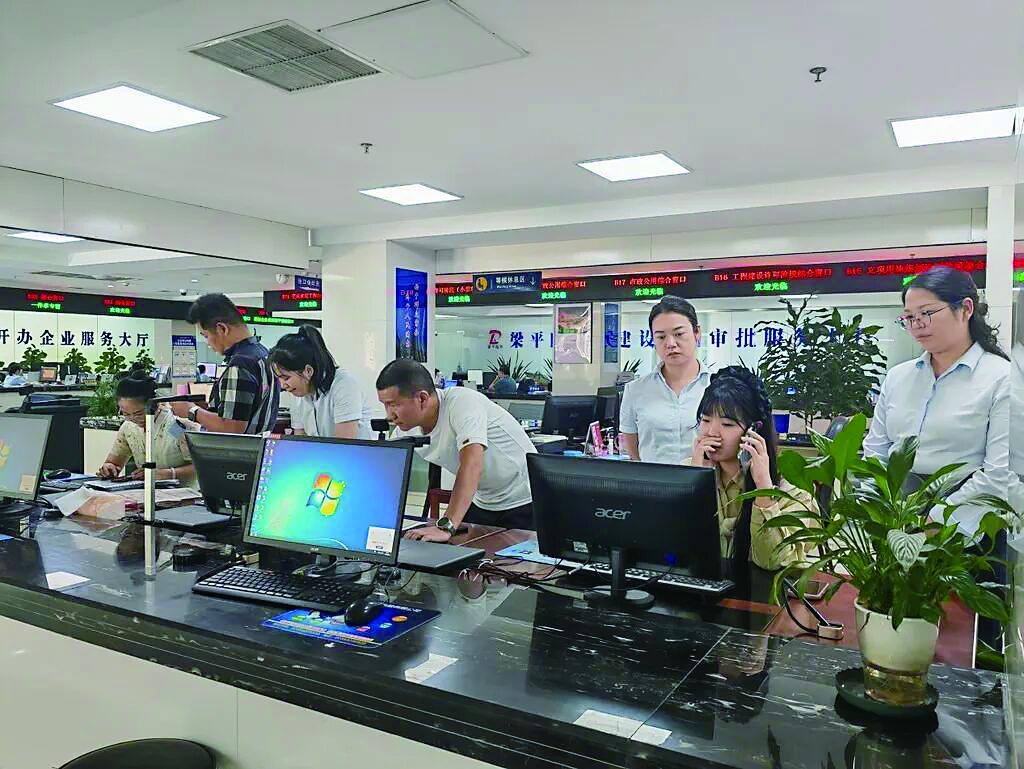
“诉求一键提交,这服务太香了”
Xin Lang Cai Jing· 2025-12-23 17:02
Core Insights - Liangping District has introduced an innovative "Four Lists and One Book" service mechanism to improve communication between government and enterprises, addressing issues such as slow response times and inconsistent service standards [1][2] Group 1: Service Mechanism - The "Four Lists and One Book" service mechanism allows for a streamlined process where enterprise requests can be submitted with a single click, achieving a 100% completion rate for processed requests [2] - The service categorizes enterprise needs into five major categories, generating a dynamic "service list" and "policy list" that are automatically converted into task orders for relevant departments [1] Group 2: Digital Platform - A digital platform and WeChat mini-program named "Liangqi Tong" have been launched, integrating over 1,000 services from 12 departments, enabling enterprises to submit requests with one click and ensuring timely processing [2] - Since the platform's launch, it has processed 313 enterprise matters with a 100% completion rate, and 22 enterprises have quickly received rewards totaling 1.65 million yuan [2] Group 3: Supervision and Transparency - The platform includes real-time monitoring and transparency features to enhance service efficiency and mitigate corruption risks, creating a robust "data + supervision" framework [3] - The "Liangjia Service" mini-program focuses on six key areas to improve the business environment, including a one-stop service mechanism and comprehensive policy support [3] - As of now, the platform has covered 518 enterprises, collected 313 requests, and achieved a 100% completion rate for all requests [3]
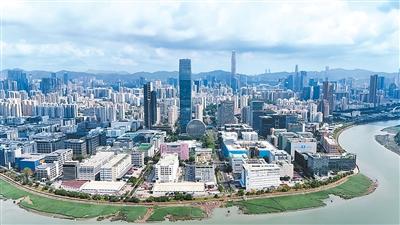
江门:从“硬联通”到“软对接” 打造大湾区西翼枢纽门户
2 1 Shi Ji Jing Ji Bao Dao· 2025-12-09 14:23
Core Viewpoint - Since the "14th Five-Year Plan," Jiangmen has actively implemented various decisions from central, provincial, and municipal levels, leveraging its unique geographical position as the "Western Wing Hub of the Greater Bay Area" to enhance regional collaborative development [1] Infrastructure Development - Jiangmen has continuously strengthened infrastructure connectivity, with the opening of direct high-speed rail services to Hong Kong, accelerating its integration into the "Railway of the Greater Bay Area" [1] Policy Initiatives - The city has made significant progress in "soft connectivity," with three initiatives, including a special reform pilot for facilitating investment from overseas Chinese, receiving recognition from the National Development and Reform Commission [1] - Two cases, namely cross-border enterprise credit rating recognition and cross-border government service facilitation with Hong Kong and Macau, have been selected as typical examples in the first batch of the Greater Bay Area regulatory alignment mechanism [1]
兰州打造“最讲诚信的城市” 营商环境指标进阶“西部领先”
Zhong Guo Xin Wen Wang· 2025-11-25 06:17
Core Viewpoint - Lanzhou has been recognized for three consecutive years as a national innovative city for business environment and has ranked first in Gansu Province for four years in a row, with 54% of its business environment indicators performing well nationally and 81% leading in the western region [1] Group 1: Business Environment Optimization - Lanzhou has achieved significant recognition in the national social credit system construction, winning first place in the preliminary round and being named an "Innovative Unit" in the finals among 77 participating cities, marking the best performance for Gansu Province since the event began in 2017 [1] - The city has established an integrated credit information platform that collects 740 million pieces of public credit information, including data on utilities and taxes, to create precise "credit profiles" for 430,000 market entities [2] - Lanzhou has implemented a "credit代证" reform, allowing a single credit report to replace 50 different compliance certificates, and has expanded over 50 "credit ease" application scenarios, with some recognized as national excellent cases [2] Group 2: Financial Services and Regulatory Framework - The city has developed over 90 specialized financial products, such as "Beef Noodle Industry Loan" and "Lily Loan," helping more than 5,700 enterprises secure loans totaling 97.8 billion yuan through the "Gansu Credit Ease Loan" platform [2] - Lanzhou has adopted a "notification commitment + deferred acceptance" model, processing over 21,000 "credit + commitment" matters, and has implemented graded regulatory measures across 118 sectors, ensuring that trustworthy entities face minimal disruptions while untrustworthy ones face strict penalties [2] - In terms of government services, Lanzhou has streamlined 70,700 items to be processed online, transforming 35 processes from multi-departmental interactions to efficient single-process handling, and has achieved zero-cost instant business registration, adding 163,000 new market entities in the past three years [3]
宏观深度报告20251111:服务业IP的兴起及其深层次原因
Soochow Securities· 2025-11-11 02:35
Group 1: Service Industry IP Emergence - The rise of "service industry IP" reflects a profound transformation in China's consumption structure, gradually replacing "product IP" as a media and online focus[11] - In 2024, the proportion of per capita service consumption expenditure reached 46.1%, an increase of approximately 6.4 percentage points since 2013[10] - The domestic tourism market saw 5.615 billion trips in 2024, a year-on-year increase of 14.8%, with total spending reaching 5.75 trillion yuan, up 17.1%[32] Group 2: Factors Driving Service Industry IP - Intensified local competition has led to a demand for service industry IP, as traditional economic drivers like real estate enter a downturn, increasing fiscal pressure on local governments[2] - The K-shaped consumption differentiation indicates that some consumers are willing to pay a premium for unique experiences, while others prioritize cost-effectiveness, creating a conducive environment for service industry IP development[5] - The emergence of grassroots service IP, such as "粥饼伦" and "鸡排哥," highlights the emotional value provided to consumers, enhancing their overall experience[41] Group 3: Government Support Measures - Local governments have implemented supportive measures for service industry IP, such as relocating popular vendors and promoting them as cultural ambassadors[42] - Initiatives like customized tourism lines and free access to local attractions for ticket holders have been introduced to enhance consumer experience and engagement[42] - The government's role is crucial in maintaining the long-term appeal of service industry IP, ensuring that these initiatives are sustainable and beneficial for local economies[43] Group 4: Risks and Challenges - Potential risks include inadequate support policies for service consumption development and the exacerbation of economic impacts from the real estate downturn[44] - A slowdown in resident income growth may also affect consumer spending and support for service industry IP[44]
聚焦22类重点领域,国办最新部署
Guan Cha Zhe Wang· 2025-11-07 13:31
Core Insights - The State Council issued an implementation opinion to accelerate the cultivation and large-scale application of new scenarios, focusing on creating new application scenarios in various fields and promoting industrial transformation and upgrading [1][27]. Group 1: New Fields and New Tracks - The digital economy sector aims to explore applications of technologies like the metaverse, virtual reality, and robotics, enhancing the integration of the digital and real economies [2][30]. - In the artificial intelligence sector, there is a push for the cultivation and opening of high-value application scenarios to meet diverse development needs across technology, industry, and governance [3][30]. - The development of a comprehensive unmanned system across land, sea, and air is encouraged, with applications in tourism, logistics, and public services [4][30]. - The biotechnology sector is set to expand applications in new materials, energy, and environmental protection, focusing on bio-based materials and low-carbon transformations [5][30]. - Clean energy applications are to be promoted in various transportation sectors, aiming for a collaborative development of the clean energy industry chain [6][31]. - The marine development sector will focus on deep-sea exploration and biotechnology applications [7][31]. Group 2: Industrial Transformation and Upgrading - The manufacturing sector will innovate in smart and green manufacturing, supporting the development of intelligent factories and zero-carbon parks [8][32]. - The transportation sector will implement new technologies for smart traffic management and optimize urban transport structures [11][32]. - The logistics sector will accelerate the development of smart logistics hubs and explore new models integrating technology and logistics [12][32]. - Modern agriculture will enhance digital applications in breeding and farming, promoting digital transformation in livestock and aquaculture [13][33]. Group 3: Industry-Specific Application Scenarios - The emergency management sector will focus on digital scenarios for disaster response, enhancing capabilities in monitoring and rescue operations [15][34]. - The mining safety sector will integrate technologies for intelligent decision-making and automation to improve safety standards [16][34]. - The water conservancy sector will promote integrated monitoring and management applications to enhance flood prevention and water resource management [17][34]. - The construction safety sector will implement intelligent risk monitoring and autonomous inspections to improve safety management [18][35]. - The forestry sector will utilize remote sensing technologies for ecological monitoring and disaster prevention [19][35]. Group 4: Social Governance and Public Services - The government services sector will enhance smart services through intelligent appointment and identity verification systems [20][36]. - The smart city sector will focus on urban infrastructure and digital transformation to improve community services [21][36]. - The rural construction sector will promote digital village initiatives to enhance governance and service standards [22][36]. Group 5: Enriching Livelihood Application Scenarios - The healthcare sector will integrate new technologies for innovative medical applications, including remote healthcare services [23][37]. - The elderly care and childcare sectors will innovate service delivery through smart devices and remote systems [24][37]. - The cultural and tourism sector will accelerate the application of digital technologies to enhance visitor experiences [25][37]. - The cross-industry consumption sector will promote the integration of various sectors to create new consumer experiences [26][37].