
服装加工

Search documents
跨境电商的持续爆单,你的服装工厂跟上了吗?
Sou Hu Cai Jing· 2026-02-25 08:44
在当前服装行业竞争日益激烈的环境下,不少服装厂家、工艺厂和面辅料供应商都面临一个共同困境:明明有设备、有技术、有产能,却始终找不到稳定、 靠谱的订单来源。是市场真的没需求了吗?还是我们找订单的方式已经落后于时代? 传统路径如熟人介绍、线下展会、批发市场蹲点,固然曾是主流,但如今效率低、成本高、信息滞后,难以支撑企业持续发展。而与此同时,跨境电商、直 播电商、小批量快返等新需求正在快速增长——只是,这些订单你"看得见",却未必"接得到"。 理想的对接模式,应基于智能算法,根据工厂的擅长品类、日产能、最小起订量、是否支持来料加工等维度,自动推送匹配度高的订单。例如,擅长针织小 单快反的工厂,就不该被推大货外贸单;而具备出口验厂资质的工厂,则可优先对接TEMU、SHEIN等跨境资源。 这种流程既能避免无效沟通,又能提升转化效率——让工厂把时间花在生产上,而不是海投报价上。 那么,寻求服装加工订单的办法,究竟该从何入手? 很多工厂老板抱怨:"网上订单都是假的。"其实问题不在平台,而在缺乏有效的筛选机制。真正有价值的订单往往来自品牌方、电商卖家、跨境平台或大型 批发商,但他们不会在公开论坛随意发布,而是通过有审核、有背 ...


五百个商铺从闲置到抢手
Xin Lang Cai Jing· 2026-02-23 22:47
转机始于2023年。当年,玉秀街道成立乡镇平台公司——普定玉成农业发展有限公司,全面管理社区商 铺,随即打出"基建完善+精准招商+市场帮扶"组合拳,投入50万元完善基础设施,改善经营环境;精 准谋划项目、靶向招商,引入多元业态;主动为经营主体跑市场、拓渠道,助力企业发展。 杨纳奎回忆,他们曾赴普定周边区、县招商,其间,结识一位在外从事电商的普定老乡,在政策红利和 服务保障吸引下,选择返乡创业。不久,集聚效应明显增强,如今社区已集聚8家电商基地、6家服装工 厂,形成"服装加工+电商带货+生活服务"的多元业态矩阵。 围绕经营主体需求,玉秀街道牵头摸排全县纺织服装企业,组建行业交流群,推动信息互通、订单共 享、抱团发展。为电商基地精准对接货源,不少本地农特产品借助平台成功"出圈",成为热销"爆款"。 随着企业扎堆入驻,餐饮、物流等配套产业加快集聚,人气持续攀升,如今的搬迁社区,商铺活了,人 气旺了,产业链也建好了。 转自:贵州日报 本报讯(记者 周强)"以前这里冷清得很,现在想找个铺面都难。"近日,提及安顺市普定县玉秀街道 玉兔社区的变化,普定玉成农业发展有限公司经理杨纳奎难掩喜悦。该社区542个商铺中,曾有503 ...
把显性和隐性优势都用好(纵横)
Ren Min Ri Bao· 2026-01-13 23:02
Core Viewpoint - The emphasis is on leveraging local advantages such as resources, policies, ecology, and location to develop pillar industries that reflect the unique characteristics of Guangxi [1][2]. Group 1: Utilizing Advantages - Utilizing advantages requires innovative approaches and a forward-looking perspective, focusing on long-term planning and execution [1]. - Regions with advantages must avoid underutilization and instead find the right direction to capitalize on their strengths for growth [1][2]. - The textile industry in Yulin exemplifies how enhancing garment processing capabilities can transform a region into a significant production center for jeans [1]. Group 2: Industry Development - The silk industry in Hechi has successfully navigated challenges by leveraging ecological advantages and seizing opportunities to become a core area for silk production [1]. - Industries and regions that effectively utilize their advantages can achieve high-quality and sustainable development by identifying and expanding new comparative advantages [2]. - Continuous utilization of advantages can lead to the emergence of new business models and practices [3].
创新盘活“三闲”资产 湖南涟源“小车间”撬动乡村就业大民生
Xin Lang Cai Jing· 2025-12-26 14:58
Core Viewpoint - The rural workshops in Lianyuan City, Hunan Province, are effectively addressing employment challenges and revitalizing rural areas by utilizing local resources and innovative employment models [3][4][6]. Group 1: Employment Initiatives - Lianyuan City has established 31 rural workshops that cater to various labor-intensive industries, including carpet manufacturing, garment processing, daily goods production, handicrafts, and electronic assembly, matching local labor demands [3][6]. - The "home-based order-taking" initiative allows villagers to work from home, enabling them to balance family responsibilities while earning income, with 653 individuals benefiting from this model [3][4]. Group 2: Economic Development Strategies - The city employs a "government guidance + market operation + benefit linkage" mechanism to attract skilled entrepreneurs back to their hometowns, fostering the development of unique local industries [4][6]. - As of now, Lianyuan has built 135 rural workshops, directly employing 3,778 individuals, including 1,188 from impoverished backgrounds, with an average annual income increase of over 16,000 yuan [6][7]. Group 3: Policy Support and Financial Mechanisms - Lianyuan City has optimized approval processes, created labor supply-demand matching platforms, and introduced specialized "workshop loans" to support small enterprises [6][7]. - In 2025, the city plans to recognize 34 new rural workshops and provide 1.55 million yuan in "workshop loans" and 17 million yuan in subsidy funds, enhancing the sustainability and growth of these workshops [6][7].
河南省方城县:“小微”企业遍地开花 激活乡村振兴动能
Zhong Guo Jing Ji Wang· 2025-12-15 11:50
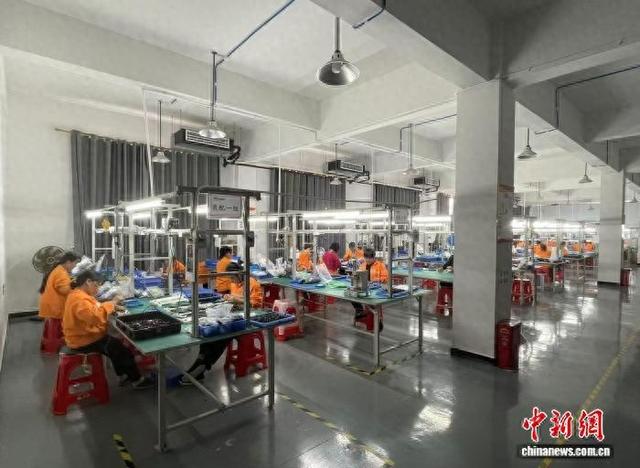
Core Viewpoint - The article highlights the successful integration of poverty alleviation efforts with rural revitalization in Zhaohe Town, Henan Province, through the development of labor-intensive industries and the establishment of small and micro enterprises, which have significantly boosted local employment and economic growth [1][2]. Group 1: Employment and Economic Development - Zhaohe Town has introduced a combination of strategies including attracting projects, talent, and technology to foster the growth of labor-intensive industries, resulting in numerous small enterprises flourishing in the area [1]. - The local company, Lishang Clothing Co., has expanded its production scale and currently employs over 300 workers, with orders extending into April of the following year [1]. - The Chuangmei Toy Factory has developed eight branches and employs over 300 workers, contributing to local job creation [1]. Group 2: Community Impact - Approximately 70 enterprises in Zhaohe Town can provide employment for over 30 individuals each, collectively facilitating job opportunities for more than 5,000 local residents [2]. - The local government emphasizes a model where government leads, enterprises take the initiative, and farmers benefit, aiming to enhance the service system and promote entrepreneurship for rural revitalization [2].
河南方城:“小车间” 撬动乡村“大振兴”
Zhong Guo Jing Ji Wang· 2025-12-01 12:32
Core Insights - The company, Fangcheng Rongfu Garment Co., Ltd., is significantly contributing to rural revitalization by processing over 7 million women's underwear annually, with a focus on both domestic and international markets, including Russia [1] - The company has expanded its production capacity from 1 production line to 10, creating approximately 260 jobs and planning to add 300 to 400 more jobs with the establishment of a new workshop dedicated to foreign trade orders [1] - The local community is benefiting from stable employment opportunities, with workers earning competitive wages comparable to larger cities, thus promoting local economic growth and reducing rural labor migration [1] Company Development - The company plans to establish a fourth workshop in Fangcheng City by June next year, aiming to accommodate around 300 additional jobs and increase annual production capacity to 30 million pieces [2] - The strategy focuses on strengthening the underwear industry in Fangcheng County, with a long-term goal of creating a large-scale production facility employing up to 1,000 workers [2]
专家解读:“十五五”如何发展各具特色的县域经济
Di Yi Cai Jing· 2025-11-10 02:24
Core Viewpoint - The development of county-level economies is a microcosmic practice of Chinese-style modernization, emphasizing the importance of these economies in national stability and growth [1][5]. Group 1: Strategic Importance of County Economies - County economies contribute approximately 40% to the national economic total, serving as fundamental units for economic development and social stability [1]. - The strategic value of county economies is highlighted in three dimensions: national strategic support, as seen in the leading role of 62 "billion-dollar counties"; as industrial transfer hubs; and as the foundation for food security [2][5]. - The integration of county economies into the national strategic framework positions them as key players in the dual circulation economic model, enhancing their role from peripheral to central [1][2]. Group 2: Development Strategies - The focus should be on leveraging local resource endowments to explore differentiated development paths, fostering specialized industrial clusters and enhancing innovation ecosystems [2][4]. - Counties should adopt a "one county, one policy" approach to develop unique industrial maps, promoting cluster and brand development [5]. - The integration of agriculture with e-commerce and tourism is essential for revitalizing rural economies and enhancing the value chain of agricultural products [4][5]. Group 3: Technological Integration and Modernization - The digital transformation of county economies is crucial, with the application of IoT, big data, and AI to enhance production efficiency and supply chain management [4][6]. - Counties are encouraged to create scenarios that deeply integrate digital and real economies, exemplified by the smart transformation of the electronic information industry in Kunshan [4]. - The adoption of new technologies is vital for upgrading traditional industries and developing green and emerging sectors [6]. Group 4: Future Outlook - The future of county economies lies in precise policy implementation and the establishment of long-term development tracks through mechanism design and platform building [5]. - As counties implement tailored strategies and deepen collaborative efforts, they are expected to exhibit greater resilience and vitality, contributing significantly to urban-rural integration and domestic demand [5].

厦门电商平台服装加工
Sou Hu Cai Jing· 2025-10-23 23:37
Core Insights - Xiamen has developed a complete industrial chain in the e-commerce apparel processing sector, supported by numerous small and medium-sized garment factories that provide comprehensive services from fabric procurement to finished product manufacturing [1] Group 1: Supply Chain Advantages - Xiamen is surrounded by multiple textile fabric markets, facilitating quick procurement of common fabrics such as cotton, linen, and chemical fibers for processing factories [3] - The local logistics system is mature, enabling rapid delivery of finished products to major e-commerce warehouses nationwide [3] - Some factories adopt a "small order quick response" model, completing small batch production of fewer than 500 pieces within 3-5 days, catering to e-commerce platforms' needs for testing products [3] Group 2: Common Cooperation Models - **Processing with Supplied Materials**: E-commerce platforms provide design drafts and fabrics, while factories handle cutting and sewing, charging processing fees ranging from 5 to 15 yuan per piece [4] - **Turnkey Production**: Factories autonomously procure materials based on client needs, with quotes typically including material costs and processing fees, suitable for small sellers with weaker supply chain control [4] - **ODM Cooperation**: Factories offer ready-made samples for clients to select, allowing for quick modifications and direct mass production, thus shortening the new product launch cycle [5] Group 3: Cost Structure Example - For a standard cotton T-shirt, the cost breakdown is as follows: - Fabric cost: approximately 8-12 yuan - Cutting and sewing labor cost: 3-5 yuan - Accessories (buttons/labels, etc.): 1-2 yuan - Packaging and transportation cost: 2-3 yuan - The total cost typically ranges from 15 to 25 yuan, depending on the complexity of the craftsmanship, with some factories requiring a minimum order quantity of 300 pieces [6][8][10] Group 4: Quality Control Points - E-commerce apparel processing generally employs QC inspection processes, with formal factories maintaining quality inspection records, while some small workshops may lack a complete system [10] Group 5: Industry Development Trends - Recent trends include specialization in certain segments: - Factories focusing on knitted products have introduced computerized flat knitting machines to enhance efficiency [10] - Some enterprises are transitioning to flexible supply chains, supporting minimum orders of 100 pieces [10] - Quality control steps include: - Pre-production confirmation of sample sizes and processes - Inspection of fabric defects during cutting - Random checks of semi-finished products during sewing - Full inspection of finished products for details like color differences and loose threads [10] - Factories are collaborating with design studios to develop proprietary pattern libraries [10] - There is a notable disparity in capabilities among processing factories in Xiamen, with larger factories having complete equipment but higher order thresholds, while smaller workshops are more flexible but may have unstable quality control [11] - Overall, Xiamen's e-commerce apparel processing industry has formed a regional agglomeration effect, capable of meeting diverse demands from low-end volume to mid-range quality [11]

苏豪时尚:拟出售所持部分南京聚隆A股股票
Mei Ri Jing Ji Xin Wen· 2025-10-10 12:19
Core Viewpoint - Suhao Fashion announced plans to optimize its asset structure by selling part of its stock holdings in Nanjing Julong, with a maximum of 5.5 million shares to be sold within 12 months from the board's approval date [1] Group 1: Company Actions - The board of Suhao Fashion unanimously approved the proposal to sell part of its stock assets to focus on core business development [1] - The management is authorized to determine the specific timing, trading method, quantity, and price of the sale based on market conditions [1] Group 2: Financial Performance - For the first half of 2025, Suhao Fashion's revenue composition was as follows: 91.44% from merchandise circulation, 6.23% from clothing processing, 1.55% from other businesses, and 0.77% from chemical warehousing [1] - As of the report date, Suhao Fashion's market capitalization stood at 2.5 billion yuan [1]


“归雁经济”升温:湖北凭什么让人“往回走”?
2 1 Shi Ji Jing Ji Bao Dao· 2025-09-05 07:37
Core Viewpoint - The article highlights a significant trend of returning workers in Hubei province, transitioning from labor export to local entrepreneurship and employment, driven by favorable policies, industry foundations, and emotional ties to their hometowns [1][2][6]. Group 1: Employment and Entrepreneurship Trends - Hubei province is experiencing a "returning swan" trend, with many former migrant workers returning to start businesses or find jobs in local industries such as manufacturing, agriculture, and modern services [2][6]. - In 2024, Yichang is expected to see an increase of 15,400 returning workers, a 20.3% year-on-year growth, while Tianmen has attracted over 100,000 people to return for employment and entrepreneurship in the past three years [1][2]. - By mid-2025, Hubei is projected to have over 12,000 new returning entrepreneurial entities, directly creating 83,000 jobs, with a 23% year-on-year growth in revenue from these projects [1][5]. Group 2: Industry-Specific Developments - The textile and clothing industry in Tianmen has seen a resurgence, with many returning workers leveraging their experience from coastal regions to establish businesses, contributing to local economic growth [3][5]. - The small-scale aquaculture industry, particularly in Puyang, has created diverse job opportunities, with annual incomes for workers in shrimp farming exceeding 100,000 yuan, and seasonal work in processing yielding around 40,000 yuan [5][8]. - In Suizhou, the mushroom cultivation sector has become a vital source of employment, with monthly incomes ranging from 2,000 to 20,000 yuan depending on the role [5][8]. Group 3: Policy Support and Infrastructure - Hubei has introduced a comprehensive "six subsidies and one benefit" policy package to support returning entrepreneurs, including rent, loans, social security, and tax incentives [6][9]. - Local governments are actively promoting entrepreneurship through various initiatives, such as job fairs and skill training programs, to ensure returning workers can find suitable employment [7][8]. - The establishment of "home employment" service stations and the provision of substantial entrepreneurial loans are part of the efforts to facilitate local job creation and support returning workers [8][9].