
Tsingtao Brewery(00168)

Search documents
青岛啤酒:青岛啤酒产品长期出口欧洲市场,在当地主要通过合资公司面向当地经销商开展产品销售业务
Zheng Quan Ri Bao Zhi Sheng· 2026-02-12 13:40
Core Viewpoint - Qingdao Beer is recognized as the most well-known Chinese brand in the international market, focusing on high quality, high price, and high visibility in its branding strategy [1] Group 1: Brand Strategy - The company emphasizes internationalization and interactive brand promotion to enhance its global market presence [1] - Qingdao Beer continues to innovate in distribution channels to expand its overseas market coverage [1] Group 2: Sales and Market Presence - The proportion of overseas export products in total sales remains relatively small for the company [1] - Qingdao Beer has a long-standing presence in the European market, primarily selling products through joint ventures with local distributors [1]

爱上超级工厂游
Xin Lang Cai Jing· 2026-02-11 18:46
Core Viewpoint - Industrial tourism is emerging as a new trend in China, attracting visitors to factories and industrial sites, transforming them from "closed production" to "open reception" spaces, and providing unique experiences that blend technology and culture [4][7][10]. Group 1: Industrial Tourism Appeal - Visitors are increasingly interested in industrial tourism, with attractions ranging from car manufacturing to beer production, allowing them to witness advanced technologies and production processes firsthand [4][5]. - The Xiaomi automobile factory exemplifies this trend, featuring advanced robotics and a high-tech environment that captivates visitors, making it a popular destination for industrial tourism [5][8]. - The immersive experiences offered, such as interactive activities in museums, enhance visitor engagement and provide educational value, appealing particularly to younger generations [6][10]. Group 2: Economic Impact and Growth Potential - Industrial tourism is filling a market gap by showcasing modern industrial capabilities, with significant visitor numbers reported, such as nearly 200,000 at Xiaomi and over 15 million at the Qingdao Beer Museum [8][10]. - The industrial tourism sector in China is projected to grow at an annual rate of 18%, with the market size expected to exceed 300 billion yuan by 2029 [10][12]. - The integration of industrial heritage and modern tourism is supported by government policies aimed at promoting industrial culture and tourism development [10][12]. Group 3: Challenges and Future Directions - Despite its growth, industrial tourism in China faces challenges, including the need for deeper engagement and personalized experiences, as many offerings remain superficial [12][13]. - Safety concerns in production environments necessitate a balance between operational safety and visitor experience, which is crucial for sustainable development [13]. - The future of industrial tourism may involve diversification of experiences, incorporating advanced technologies like VR and AR to enhance visitor interaction and immersion [13].



年货怎么选?从青岛啤酒马年新品看春节消费新动向
Xin Lang Cai Jing· 2026-02-10 01:36
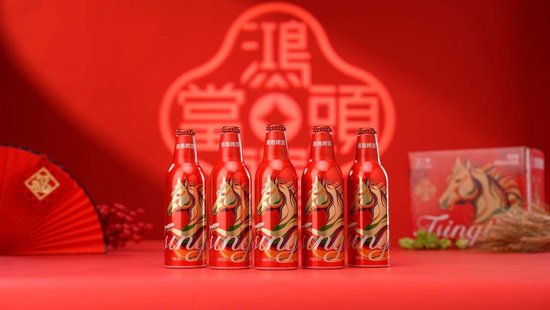
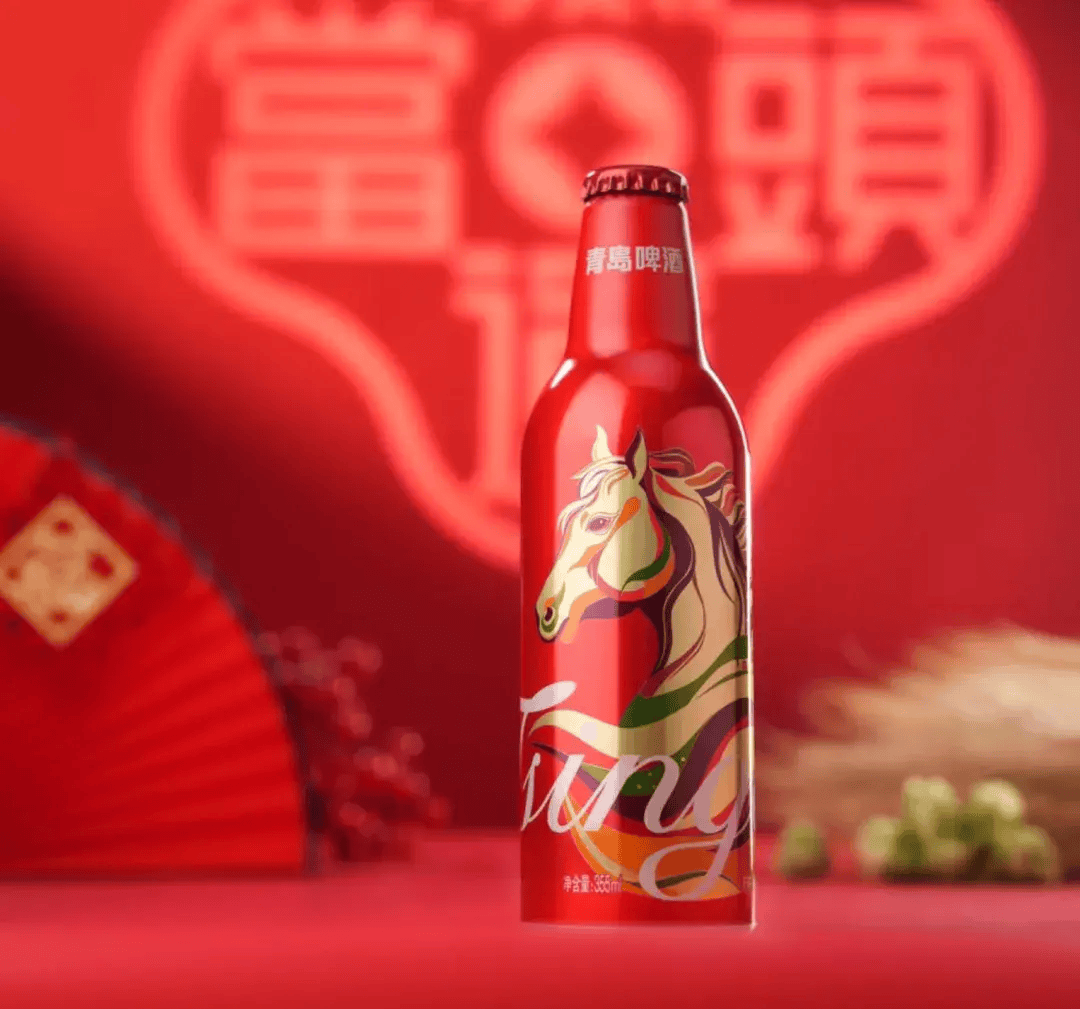
Core Insights - Qingdao Beer is launching a series of new products for the upcoming Year of the Horse in 2026, including zodiac-themed items, festive packaging, and cultural gift boxes, reflecting changes in consumer behavior regarding New Year purchases [1][17] - The Year of the Horse is culturally significant in China, symbolizing strength and hope, and Qingdao Beer has been creating zodiac-themed products since 2014, marking 2026 as the start of a new cycle for their zodiac series [2][18] Product Offerings - The new product line includes the "Hongyun Dangtou" zodiac edition as a high-end festive representation, a New Year packaging series for popular products, and cultural gift boxes that combine beer with artistic elements [4][20] - The overseas version of the Year of the Horse products incorporates local aesthetic elements, enhancing cultural exchange through beer [4][20] Market Trends - Current consumer behavior shows a shift towards rational purchasing, with a focus on quality and practicality, while also balancing emotional value during the festive season [6][22] - Social media's influence has transformed the way younger consumers approach New Year purchases, making it more of a festive experience rather than just a family obligation [6][22] Packaging and Experience - The "Hua Cong Xian Rui" cultural gift box combines drinking experience with collectible attributes, enhancing emotional value in New Year purchases [8][24] - Qingdao Beer has been exploring gift packaging as a significant direction, offering high-value multi-flavor options for various social settings [8][24] Health Trends - There is a growing trend towards health-conscious drinking, with consumers increasingly aware of calorie, sugar, and alcohol intake during traditional festive drinking occasions [11][27] - Qingdao Beer has recognized this trend, launching the first non-alcoholic beer flavor drink in China in 2012 and achieving breakthroughs in various brewing technologies [13][29] Consumer Behavior Changes - The evolution of New Year purchases reflects a broader transformation in consumer expectations, moving from functional consumption to a more integrated expression of emotions, culture, and lifestyle [16][32] - Qingdao Beer's new product series serves as a case study for how established brands can adapt to changing consumer demands through cultural expression and product innovation [16][32]
2026年1月飞瓜快手直播电商月报
Fei Gua Shu Ju· 2026-02-09 09:05
Investment Rating - The report does not explicitly provide an investment rating for the industry Core Insights - The January e-commerce data shows a significant increase in sales and promotional heat, driven by the successful New Year shopping festival, which has injected strong momentum into the market [5][58] - Various product categories, particularly in food and beverages, have experienced high growth rates, indicating a robust consumer demand during the festive season [14][27] Summary by Sections January E-commerce Data Review - The sales heat increased by 1.87% and promotional heat by 0.91% compared to December [5] - The New Year shopping festival, starting on January 15, successfully stimulated consumer purchasing behavior, leading to multiple sales peaks throughout the month [5] Industry Marketing Situation - The food and beverage sector saw a surge in consumer interest, with gift box products becoming a market focal point [14] - Key high-growth categories included snacks, beverages, and alcoholic drinks, with specific products like nuts and chocolates leading the sales [10][25][29] January Category Sales Overview - The sales heat for nuts and snacks grew by 286.58%, with promotional heat increasing by 32.96% [20] - The beverage category saw substantial growth, particularly in fruit juices and carbonated drinks, with some segments experiencing over 600% growth [27] February E-commerce Trend Forecast - Key marketing dates for February include Valentine's Day and the Spring Festival, with brands encouraged to launch themed products and promotions [41][45] - The report highlights the importance of targeting family gatherings and gifting needs during the festive season to drive sales [48] Monthly Rankings - The report includes a sales ranking of brands across various categories, with notable mentions in jewelry, clothing, and food products, indicating strong market competition [62][64][66]




1月酒水销售,区域名酒站起来了!
Sou Hu Cai Jing· 2026-02-09 08:48
Core Insights - The article highlights the ongoing adjustments in the liquor industry, emphasizing the need for companies to accurately grasp market trends to navigate the increasingly competitive landscape [1] Group 1: White Liquor Market - The white liquor market in January 2026 is experiencing a significant adjustment, with high inventory and low profit margins leading to a situation where channel profits for high-end liquor are compressed to 30-50 yuan per bottle [3] - Despite cautious inventory levels and thin channel profits, the online sales data from Kuaishou indicates a shift in consumer behavior, with regional brands gaining traction in a more accessible and flexible manner [2][4] - The sales proportions for mid-range price segments (100-300 yuan, 300-500 yuan, and 500-800 yuan) have all increased compared to 2025, indicating a shift towards more affordable options [4][5] - The top-selling SKUs in the high-end segment now include regional brands, suggesting consumers are seeking distinctive alternatives beyond traditional high-end products [6] Group 2: Beer Market - The beer market is showing a clear trend of consumption upgrading, with the 100-300 yuan price segment accounting for 74.75% of sales in January 2026, a significant increase from 51.54% in 2025 [8][9] - Qingdao Beer has emerged as a dominant player in the mid-range segment, successfully linking its products to the festive consumption needs of the Chinese New Year [9][11] - The marketing strategies employed by beer brands, such as festive themes and emotional connections, have transformed beer into a social currency during the holiday season [11] Group 3: Wine Market - The wine market is witnessing a shift, with consumer spending moving towards the mid-price range, particularly the 300-500 yuan segment, which saw a substantial increase from 9.28% in 2025 to 21.76% in January 2026 [12][14] - The high-end segment is experiencing a decline, while the mid-range is gaining traction, indicating a potential shift in consumer preferences towards value-oriented options [12][14] - The rise of domestic brands and unique offerings in the wine market suggests a growing consumer interest in quality and storytelling, moving away from solely international brands [16]


复苏态势明朗,板块预期乐观
KAIYUAN SECURITIES· 2026-02-08 04:11
Investment Rating - The industry investment rating is "Positive" (maintained) [1] Core Viewpoints - The food and beverage sector is experiencing a strong upward trend, driven by multiple factors including policy support, trading dynamics, fundamental improvements, and external catalysts, indicating clear investment value [3][9] - The food and beverage index increased by 4.3% from February 2 to February 6, outperforming the CSI 300 by approximately 5.6 percentage points, with sub-sectors like liquor, soft drinks, and beer leading the performance [9][11] - The liquor industry is entering a new development cycle, with Guizhou Moutai's market-oriented reforms marking a significant phase, and the pricing system gradually returning to a supply-demand driven model [10] Summary by Sections Market Performance - The food and beverage index rose by 4.3%, ranking first among 28 sectors, with liquor (+5.3%), soft drinks (+4.7%), and beer (+4.5%) showing relative strength [11][12] - Individual stocks such as Huangtai Liquor, Hai Xin Food, and Ri Chen Co. saw significant gains, while *ST Yedao, *ST Chuntian, and Li Ziyuan experienced declines [11][14] Upstream Data - Some upstream raw material prices are declining, with the price of whole milk powder at $3,614 per ton, down 13.3% year-on-year, and fresh milk prices at 3.04 yuan per kilogram, down 2.9% year-on-year [15][31] - The price of pork is down 20.1% year-on-year, with live pig prices at 12.2 yuan per kilogram, reflecting a broader trend of price adjustments in the sector [21][24] Liquor Industry News - Some distributors of Moutai have sold out their first batch of flying Moutai quotas for March, indicating strong demand during the Spring Festival [36] - The Qingdao Beer production base has commenced operations, aiming to produce high-end products and achieve an annual output value of approximately 1 billion yuan [36] Investment Recommendations - Focus on leading liquor stocks such as Guizhou Moutai, Wuliangye, Luzhou Laojiao, and Shanxi Fenjiu, as well as elastic stocks like Shede Liquor and benefiting stocks like Jiu Gui Liquor [10] - In the consumer goods sector, three main lines are suggested: the snack sector, dairy products, and the restaurant supply chain, with specific companies highlighted for potential growth [10][43]


青岛啤酒股份遭摩根大通增持约128.54万股 每股作价约50.51港元
Xin Lang Cai Jing· 2026-02-05 23:40
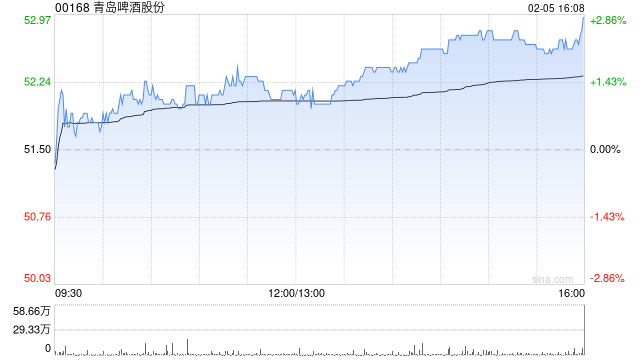
Group 1 - Morgan Stanley increased its stake in Qingdao Beer (00168) by 1,285,412 shares at a price of HKD 50.5129 per share, totaling approximately HKD 64.9299 million [1][3] - After the increase, the total number of shares held by Morgan Stanley is approximately 33,171,000, representing a stake of 5.06% [1][3]
摩根大通增持青岛啤酒股份(00168)约128.54万股 每股作价约50.51港元
智通财经网· 2026-02-05 11:54
Group 1 - Morgan Stanley increased its stake in Qingdao Beer (00168) by 128,541.2 shares at a price of HKD 50.5129 per share, totaling approximately HKD 64.9299 million [1] - After the increase, the total number of shares held by Morgan Stanley is approximately 33.171 million, representing a holding percentage of 5.06% [1]
摩根大通增持青岛啤酒股份约128.54万股 每股作价约50.51港元
Zhi Tong Cai Jing· 2026-02-05 11:54
Core Viewpoint - Morgan Stanley has increased its stake in Qingdao Beer (600600) by acquiring 128,541.2 shares at a price of HKD 50.5129 per share, totaling approximately HKD 64.9299 million, resulting in a new holding of about 33.171 million shares, representing 5.06% of the company [1] Group 1 - Morgan Stanley's acquisition of shares indicates a positive outlook on Qingdao Beer, reflecting confidence in the company's future performance [1] - The total investment made by Morgan Stanley amounts to approximately HKD 64.9299 million, showcasing significant financial commitment [1] - Following the purchase, Morgan Stanley's total shareholding in Qingdao Beer has reached approximately 33.171 million shares [1]

中国必选消费26年2月投资策略:震荡市场方显消费价值
Haitong Securities International· 2026-02-03 12:57
Investment Focus - The report highlights the value of consumer stocks in a volatile market, recommending a focus on companies like Guizhou Moutai, Eastroc Beverage, and Yili Group, all rated as "Outperform" [1]. Industry Overview - In January 2026, four out of eight tracked essential consumer sectors showed positive growth, including condiments, frozen foods, soft drinks, and dining, while four sectors, such as mid-to-high-end baijiu, dairy products, and beer, experienced declines [3][9]. - The overall consumer industry is characterized by a recovery in basic demand while hedonic consumption remains under pressure, indicating a shift in consumer spending towards essential goods [9]. Revenue and Growth Analysis - The revenue for the mid-to-high-end baijiu sector in January was 470 billion yuan, down 14.0% year-on-year, while the revenue for the mass-market baijiu sector was 229 billion yuan, down 3.0% year-on-year [10][11]. - The soft drink sector reported a revenue of 962 billion yuan in January, with a year-on-year growth of 1.1%, indicating a cautious recovery in demand [17]. - The frozen food sector saw a revenue of 150 billion yuan, with a year-on-year increase of 8.0%, driven by pre-Spring Festival stocking and low temperatures [16]. Price Trends - The report notes that the wholesale prices of major baijiu brands like Guizhou Moutai remained stable, while some brands faced downward price pressures due to high inventory levels [4][21]. - The average discount rates for liquid milk and condiments increased compared to the previous month, reflecting intensified market competition [35][37]. Market Dynamics - The report identifies four favorable funding factors for the essential consumer sector, including significant volatility in global capital markets, declining risk-free interest rates, increased foreign capital allocation to China, and low institutional allocation levels [6]. - The report suggests focusing on companies that align with both domestic and foreign institutional preferences, as well as those showing improvements in fundamentals and dividend yields [6].
