FOTON(600166)

Search documents
商用车板块1月9日涨0.41%,江淮汽车领涨,主力资金净流出8050.68万元
Zheng Xing Xing Ye Ri Bao· 2026-01-09 08:54
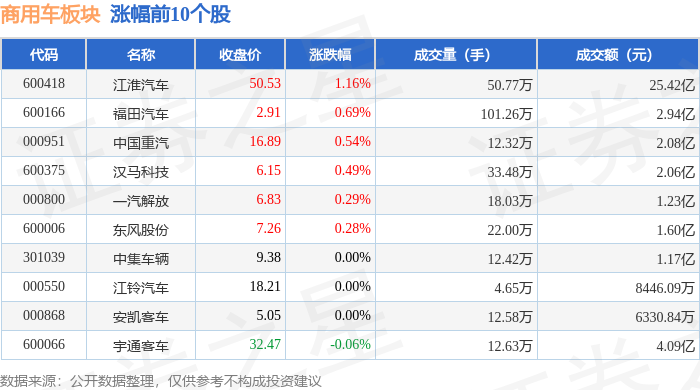
Core Viewpoint - The commercial vehicle sector experienced a slight increase of 0.41% on January 9, with Jianghuai Automobile leading the gains. The Shanghai Composite Index rose by 0.92%, while the Shenzhen Component Index increased by 1.15% [1]. Group 1: Market Performance - Jianghuai Automobile closed at 50.53, up by 1.16% with a trading volume of 507,700 shares [1]. - Foton Motor and China National Heavy Duty Truck both saw increases of 0.69% and 0.54%, closing at 2.91 and 16.89 respectively [1]. - The overall trading volume for the commercial vehicle sector was significant, with Foton Motor achieving a transaction value of 294 million [1]. Group 2: Fund Flow Analysis - The commercial vehicle sector saw a net outflow of 80.51 million from institutional investors, while retail investors contributed a net inflow of 31.18 million [2]. - Among individual stocks, Zhongshun Vehicle had a net inflow of 12.14 million from institutional investors, while it faced a net outflow of 1.44 million from speculative funds [3]. - China National Heavy Duty Truck experienced a net inflow of 2.94 million from speculative funds, despite a net outflow of 3.27 million from retail investors [3].


销量暴涨只是表象,看福田欧辉如何用智能巴士重构客车生态?
第一商用车网· 2026-01-09 07:04
近日,"福田欧辉销量'现象级'爆涨"的新闻在客车圈内被热议。说的是福田欧辉客车10月 份销量大增179%、新能源猛增 289%、出口劲增 158%,三大核心指标均远超行业平均 水平。"2025年,欧辉客车全年销量预计达到1.1万辆,同比增长100%,跃居行业前 五。"福田欧辉新能源客车总裁韩冬在12月18日举行的福田汽车2026商务年会上这样表 示。 显然,福田欧辉在销量上的猛增并非偶然,更不是突然一次的"冒头",而是一步一个脚印 的长期积累。而销量方面的"爆发",或许只是欧辉客车精准把握市场脉搏、预判趋势变 化,进行系统能力提升的具象化表现之一。 为什么这么说?我们把视线拉回到到福田欧辉在2026商务年会上发布的智能巴士,看看福 田欧辉在下怎样一步大棋。 L4级,福田欧辉6米智能巴士从科幻走进现实 对于乘客而言,智能巴士提供的是安全、高效、舒适、智能的出行体验,而对当前的转型中 客车行业而言,福田欧辉则提供了一个把技术、场景、生态融合的成功样本。 融合技术+场景+生态,构建从感知决策到云端调度的闭环体系 福田欧辉智能巴士是如何融合技术、场景、生态的? 作为国内新能源客车的先行者与领航者,欧辉客车自2003年 ...

四川明确脑机接口医疗服务价格,置入费最高6583元/次|首席资讯日报
首席商业评论· 2026-01-09 04:51
Group 1 - Sichuan has set a maximum price of 6,583 yuan per session for brain-computer interface medical services, effective from April 30 this year, which is expected to promote industry standardization and prevent speculation [2] - WeChat has clarified that normal social behaviors will not be restricted under the new rules, ensuring users' accounts will not be penalized for typical usage patterns [3] - Aima Technology has denied rumors of a workforce reduction exceeding 50%, stating that personnel optimization is a normal adjustment for business development [4] Group 2 - Ant Group and Meituan Longzhu have invested in Shenzhen Guangzhi Shikong Technology Co., a developer of AI interactive devices, increasing its registered capital from approximately 1.6435 million yuan to about 2.1062 million yuan [5] - The film "The Legend of the Condor Heroes" has surpassed 200 million yuan in box office revenue within 9 days of its release [6][7] - IKEA announced the closure of 7 stores, including one in Shanghai, as part of its strategy to optimize business operations and focus on consumer-centric channels [8][13] Group 3 - Bawang Tea has responded to rumors of a potential IPO in Hong Kong, stating that there are currently no plans for such an initiative [9] - Lin Yunfeng, head of NetEase's DreamWorks division, has left the company, with the DreamWorks mobile game team being integrated into the Sea God division [10] - Chinese automotive brands are performing well in Ecuador, with BYD's sales expected to grow by 243.1% in 2025, and overall new car sales projected to increase by 15% [11] Group 4 - JD.com has established a "Chameleon Business Unit" to focus on the development and commercialization of core AI products [12] - JD.com is reportedly considering the issuance of dim sum bonds to raise approximately 10 billion yuan, although the company has stated there are no current plans for such an issuance [14]




从“卖全球”到“链全球”:谁将赢得下一个十年?
Xin Lang Cai Jing· 2026-01-09 01:21
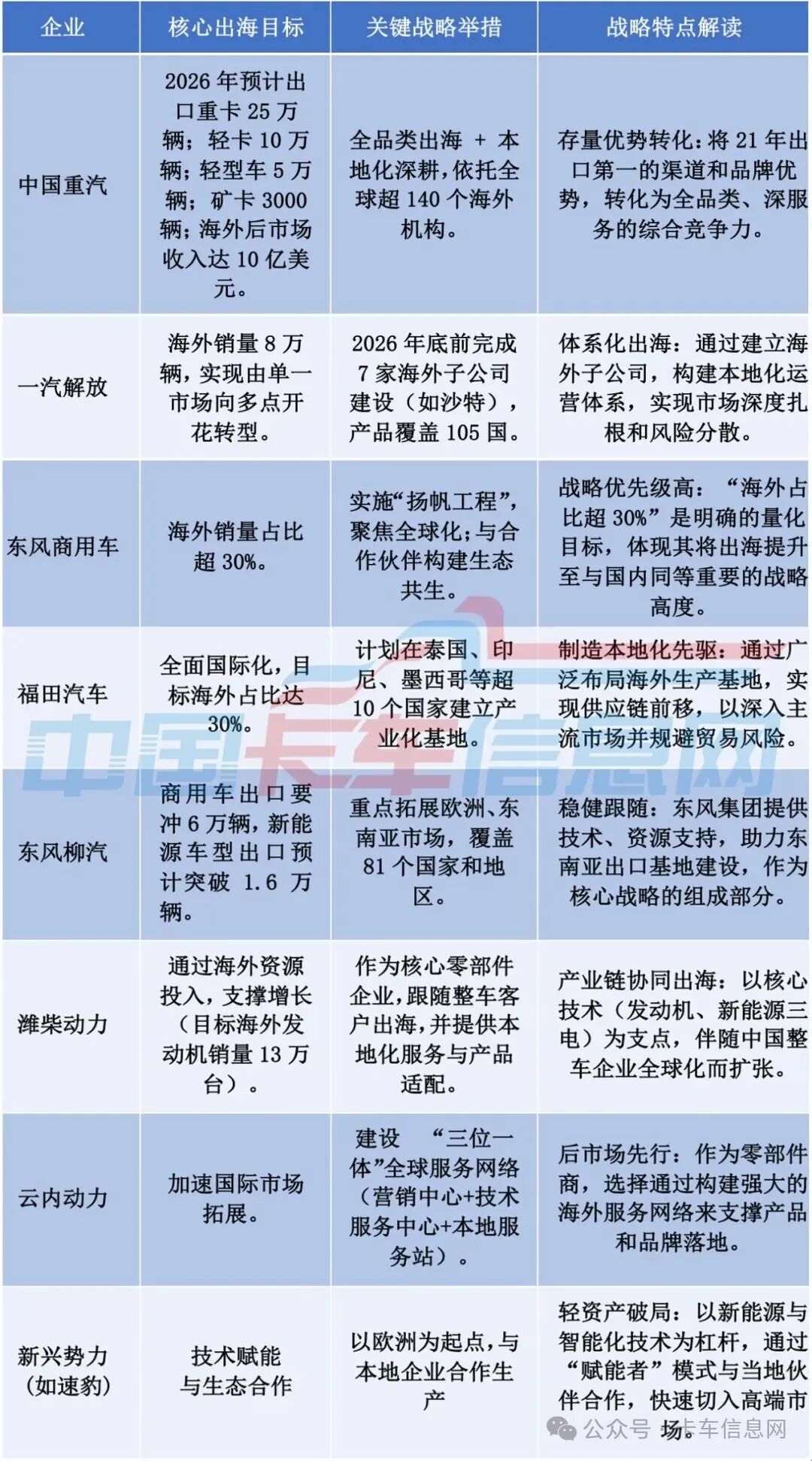
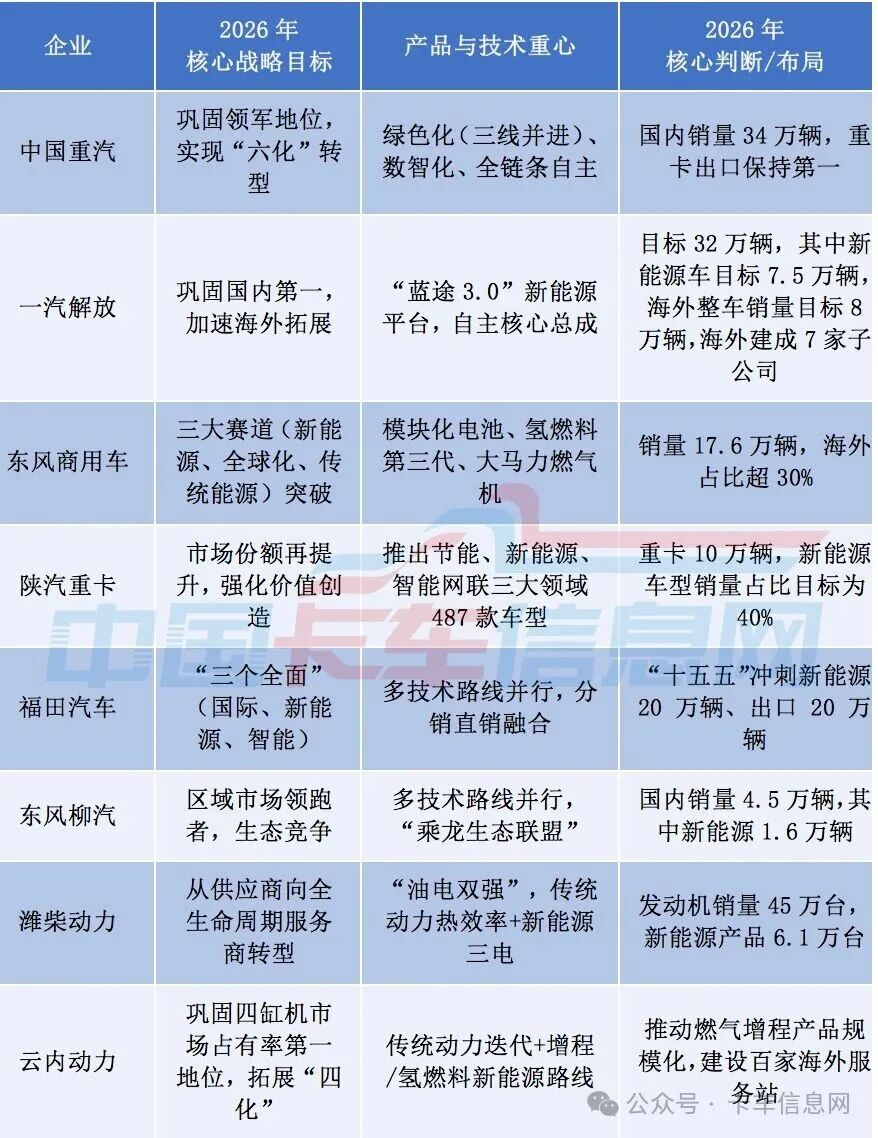
Core Insights - The evolution of Chinese truck exports has transitioned from "product trade" to "ecosystem layout," marking a significant shift towards global operations and local value chain integration [1][16][17] Group 1: Evolution of Export Strategies - Chinese truck exports have progressed through three stages: 1.0 Product output era focused on cost-effectiveness and trade with developing countries [18] 2.0 Market deepening era with established distribution networks and brand awareness while maintaining centralized decision-making [19] 3.0 Chain-rooted era by 2026, emphasizing local integration of R&D, manufacturing, supply chain, finance, and services [19][20] Group 2: Diverse Strategic Paths for 2026 - China National Heavy Duty Truck Corporation aims to export 250,000 heavy trucks and achieve $1 billion in overseas market revenue by leveraging its extensive global network [20] - FAW Jiefang plans to sell 80,000 units overseas and establish seven subsidiaries to diversify its market presence [20] - Dongfeng Commercial Vehicle targets over 30% of its sales from overseas, focusing on building an ecosystem through partnerships [20] - Foton Motor's strategy includes establishing production bases in over 10 countries to enhance local manufacturing and mitigate trade risks [20] - Weichai Power aims for 130,000 overseas engine sales, supporting mainstream vehicle manufacturers with diverse energy solutions [20][27] Group 3: Strategic Models - China National Heavy Duty Truck and FAW Jiefang are replicating successful domestic systems internationally, focusing on comprehensive operational frameworks [22][23] - Foton Motor adopts a "anchor" model with aggressive global production layout to ensure local integration [24] - Dongfeng Commercial Vehicle emphasizes an "integrator" model, shifting from transactional relationships to ecosystem collaboration [25] - Weichai Power and Yunnei Power are pursuing a "guardian" model, enhancing supply chain collaboration to support vehicle manufacturers [26][28] Group 4: Necessity of Localization by 2026 - Companies are increasingly localizing production to overcome traditional tariff and non-tariff barriers, ensuring sustainable market access [29] - Local operations allow firms to capture lifecycle value through financial services, data, and after-sales support, enhancing profitability [30] Group 5: Challenges Ahead - The path to global integration is fraught with complexities, including compliance costs and political risks associated with deep localization [31] - Effective management of overseas subsidiaries and diverse teams poses significant challenges for Chinese companies [32] - Large-scale investments in overseas facilities require substantial capital and a skilled workforce familiar with international operations [33] Group 6: Future Competitive Landscape - The competition in the global truck market by 2026 will hinge on the robustness of localized value chains and ecosystem-building capabilities [34] - Companies that can leverage China's technological advantages in new energy and smart solutions will be better positioned against global competitors [34][35]


中国汽车品牌在厄瓜多尔市场表现亮眼
Xin Hua She· 2026-01-08 04:21
Core Insights - The report from the Ecuadorian Automotive Industry Association indicates that new car sales in Ecuador are projected to reach 124,500 units in 2025, representing a 15% increase from the previous year [1] - Chinese brands are experiencing rapid growth in the Ecuadorian market, with BYD expected to sell 2,916 vehicles in 2025, marking a significant increase of 243.1% compared to 2024, making it the fastest-growing automotive brand [1] - Other Chinese brands such as Great Wall, Dongfeng, Foton, and China National Heavy Duty Truck are also seeing sales growth exceeding 60% [1] Electric and Hybrid Vehicle Market - The report forecasts that electric vehicle sales in Ecuador will reach 4,276 units in 2025, reflecting a remarkable growth of 202% year-on-year [1] - Chinese brands are also performing well in the hybrid vehicle segment, with significant sales increases for Dongfeng Xiaokang, BYD, Dongfeng, and Great Wall in 2025 [1] Market Drivers - The recovery of the Ecuadorian automotive market in 2025 is closely linked to improvements in the political and economic environment, increased liquidity in the financial system, and an expansion of credit [1] - The competitive advantages of Chinese brands in terms of cost-effectiveness and technological features are making them the preferred choice for both businesses and individual consumers in Ecuador [1]


福田汽车跌2.02%,成交额2.80亿元,主力资金净流出2458.46万元
Xin Lang Cai Jing· 2026-01-07 06:09
Core Viewpoint - Foton Motor's stock has experienced fluctuations, with a recent decline of 2.02% and a total market capitalization of 23.04 billion yuan, indicating a mixed performance in the market [1]. Group 1: Stock Performance - As of January 7, Foton Motor's stock price was 2.91 yuan per share, with a trading volume of 280 million yuan and a turnover rate of 1.20% [1]. - Year-to-date, the stock price has decreased by 0.34%, but it has shown a slight increase of 0.69% over the last five trading days, 3.19% over the last twenty days, and 7.38% over the last sixty days [1]. Group 2: Financial Performance - For the period from January to September 2025, Foton Motor achieved a revenue of 45.449 billion yuan, representing a year-on-year growth of 27.09%, and a net profit attributable to shareholders of 1.113 billion yuan, which is a significant increase of 157.45% compared to the previous year [2]. Group 3: Shareholder Information - As of November 20, Foton Motor had 120,100 shareholders, with an average of 65,908 circulating shares per shareholder, showing no change from the previous period [2]. - The company has distributed a total of 2.441 billion yuan in dividends since its A-share listing, but there have been no dividends distributed in the last three years [3]. - As of September 30, 2025, the top ten circulating shareholders included Hong Kong Central Clearing Limited, holding 160 million shares, which is a decrease of 41.501 million shares from the previous period [3].
地通工业:20 亿加码车谷!武汉新能源汽车零部件基地签约落地
Zhong Guo Qi Che Bao Wang· 2026-01-07 02:52
Group 1 - The core viewpoint of the news is the collaboration between Wuhan Economic Development Zone and DITONG Industrial Holdings to establish an automotive parts production and R&D base, focusing on lightweight components for new energy vehicles [1][2] - DITONG Industrial is a leading player in the domestic passenger vehicle parts sector, specializing in stamping, welding, and mold development, with a robust R&D capability and a comprehensive supply chain [1] - The total investment for the DITONG Wuhan base project is approximately 2 billion yuan, located in the intelligent connected and electric vehicle industrial park, aiming to produce key components such as body covers and battery boxes for new energy vehicles [1] Group 2 - The project will adopt a flexible model of "leasing first, then self-building, and phased production" to quickly respond to market demands, with the welding production line already operational through leased facilities [2] - Once fully operational, the project is expected to achieve an annual output value of 1.2 billion yuan, addressing critical gaps in the local automotive supply chain for lightweight body and chassis modules [2] - The Wuhan Economic Development Zone has improved its automotive industry collaboration, with the local automotive supply ratio increasing from 0.68:1 to 0.8:1, highlighting the ongoing synergy in the industry [3]

2026头部企业,要在这三个战场“定”胜负!
Xin Lang Cai Jing· 2026-01-07 01:29
Core Insights - The industry consensus indicates a shift from an incremental expansion phase to a new cycle focused on deepening the value of existing assets, with competition evolving from price-based to providing comprehensive lifecycle value (TCO) [1][9] Industry Consensus: Three Deterministic Trends - The market is expected to enter a phase of "high-level consolidation and structural differentiation," with the medium and heavy truck market projected to remain stable at 1.1 to 1.25 million units, similar to 2025, as the driving force shifts from policy stimulus to optimizing existing resources [2][10] - Three major trends have emerged as strategic anchors for all companies: 1. Accelerated penetration of new energy vehicles (NEVs), with a consensus that the penetration rate will exceed 30% and potentially reach 35% or higher by 2026, driven by market demand rather than policy [3][11] 2. Value competition is replacing price wars, with a focus on service and ecosystem as key differentiators, emphasizing the importance of a comprehensive ecosystem that includes finance, used vehicles, and connectivity [3][11] 3. Globalization is becoming a core growth driver, with exports viewed as a crucial growth engine, as companies shift from simple trade to a more integrated approach involving products, technology, services, and finance [3][11] Strategic Differentiation: Paths of Eight Major Companies - Companies are adopting different strategic focuses based on their resources and capabilities: - China National Heavy Duty Truck Corporation aims to consolidate its leading position through a comprehensive transformation strategy [4][13] - FAW Jiefang focuses on accelerating overseas expansion and enhancing its core components [4][13] - Dongfeng Commercial Vehicle targets breakthroughs in new energy, globalization, and traditional energy markets [4][13] - Shaanxi Heavy Duty Truck emphasizes value creation through a diversified product lineup [4][13] - Foton Motor is pursuing a multi-faceted strategy focusing on internationalization and new energy [4][13] - Dongfeng Liuzhou Motor is leading in regional markets through ecosystem competition [4][13] - Weichai Power and Yunnei Power are adopting a pragmatic approach by diversifying their energy technology routes [6][14] Technology Routes: Diverse Approaches Based on Application Scenarios - The commercial vehicle power technology landscape is expected to be diverse, with choices heavily influenced by application scenarios: - Traditional power is evolving towards high-end and specialized applications, focusing on improving thermal efficiency and reducing fuel consumption [7][15] - Pure electric technology is becoming the preferred choice for short-distance fixed routes, with competition centered on battery energy density and lifecycle costs [7][15] - Hybrid and range-extended technologies are seen as key solutions for long-distance logistics, with significant R&D efforts underway [7][15] - Hydrogen fuel technology is being explored as a future strategic reserve, with ongoing commercial exploration [7][15] Ecosystem Construction: From Chain Leaders to Symbiosis - Leading companies are actively reshaping the industry ecosystem, moving beyond simple supplier relationships to create a community that shares risks and values: - China National Heavy Duty Truck Corporation leverages its capabilities for strong collaboration [8][16] - Dongfeng Liuzhou Motor is integrating upstream and downstream through the "Chenglong Ecosystem Alliance" [8][16] - Weichai Power is collaborating with multiple strategic partners to create a comprehensive service system [8][16] Observations: Coexistence of Consensus and Differentiation - The 2026 Chinese commercial vehicle market is characterized by both consensus on the shift to value-based competition and differentiation in strategic paths chosen by companies [9][17] - The upcoming competition will focus on technological depth, ecosystem breadth, and precision in user operations, with companies that effectively reduce operational costs and enhance efficiency poised to lead in this transformative phase [9][17]
过程磕磕绊绊 北汽队客场艰难战胜宁波队
Bei Jing Ri Bao Ke Hu Duan· 2026-01-06 14:26
转自:北京日报客户端 1月6日,在CBA常规赛第11轮比赛中,北京北汽队在客场以88比83战胜宁波队。北汽队打得磕磕绊 绊,好在赢下了胜利。 宁波队参加CBA的历史并不长,球队成绩一直处于联盟的末流。在此前参加的4个赛季中,宁波队单赛 季胜场数从没有超过10场,最佳排名也只有第17位。本赛季,宁波队在精神面貌和成绩上都有了很大的 提升,在开赛前10轮,他们取得了6胜4负的战绩,排名挤进前八,其中还有一波四连胜。北汽队与宁波 队颇有渊源,刚刚离队的奥莫特和现在队中的马帝昂都是从宁波队转会而来,宁波队阵中也有北汽队的 旧将刘晓宇,主教练哈里斯曾在北汽队担任过助教。 赵睿连续第二场轮休,北汽队延续了上一场的首发阵容。开场后,双方都是内外结合,打法多样。打了 半节时间,北汽队先发5人都有了得分。当双方派上轮换阵容后,宁波队的表现更胜一筹,北汽队首节 以22比25落后。周琦连续在内线造成对手犯规,北汽队趁势反超,但领先优势并不大。半场结束,两队 战成45平。 通过打成几次转换进攻,北汽队取得领先。但雷蒙、周琦都吃到了四次犯规,只能被换下场。两队的失 误都偏多,进攻效率不高,在略显混乱的局面下,北汽队以67比65结束第三 ...

2025年全球冷藏车行业区域市场分析 北美市场占比最高【组图】
Qian Zhan Wang· 2026-01-06 08:13
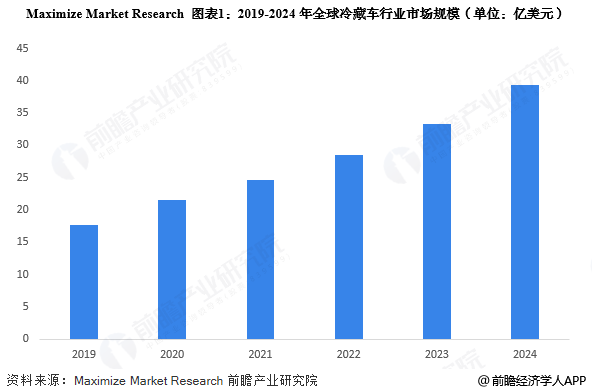
Group 1 - The global refrigerated truck market is projected to grow steadily, reaching a size of $3.93 billion by 2024, with a year-on-year increase of 17.66% from previous years [1] - North America is the largest market for refrigerated trucks, accounting for approximately 40% of the global market share in 2024, followed by the Asia-Pacific region at 26.5% [3] - The light truck segment dominates the global refrigerated truck market, making up nearly 40% of the market share in 2024, while heavy trucks account for 31.7% and medium trucks for 29.2% [5] Group 2 - In 2024, global sales of new energy refrigerated transport vehicles are expected to reach 37,000 units, with Asia leading the market at approximately 25,000 units, representing 68% of the total [7] - The global refrigerated truck industry has a promising development outlook, with emerging markets in the Asia-Pacific region (especially China and India), Latin America, and the Middle East driving demand for fresh food and pharmaceutical cold chains, projected to reach $5.7 billion by 2030 [9]