JCET(600584)

Search documents
两融余额较上一日增加127.86亿元 电子行业获融资净买入额居首
Sou Hu Cai Jing· 2026-01-19 01:41
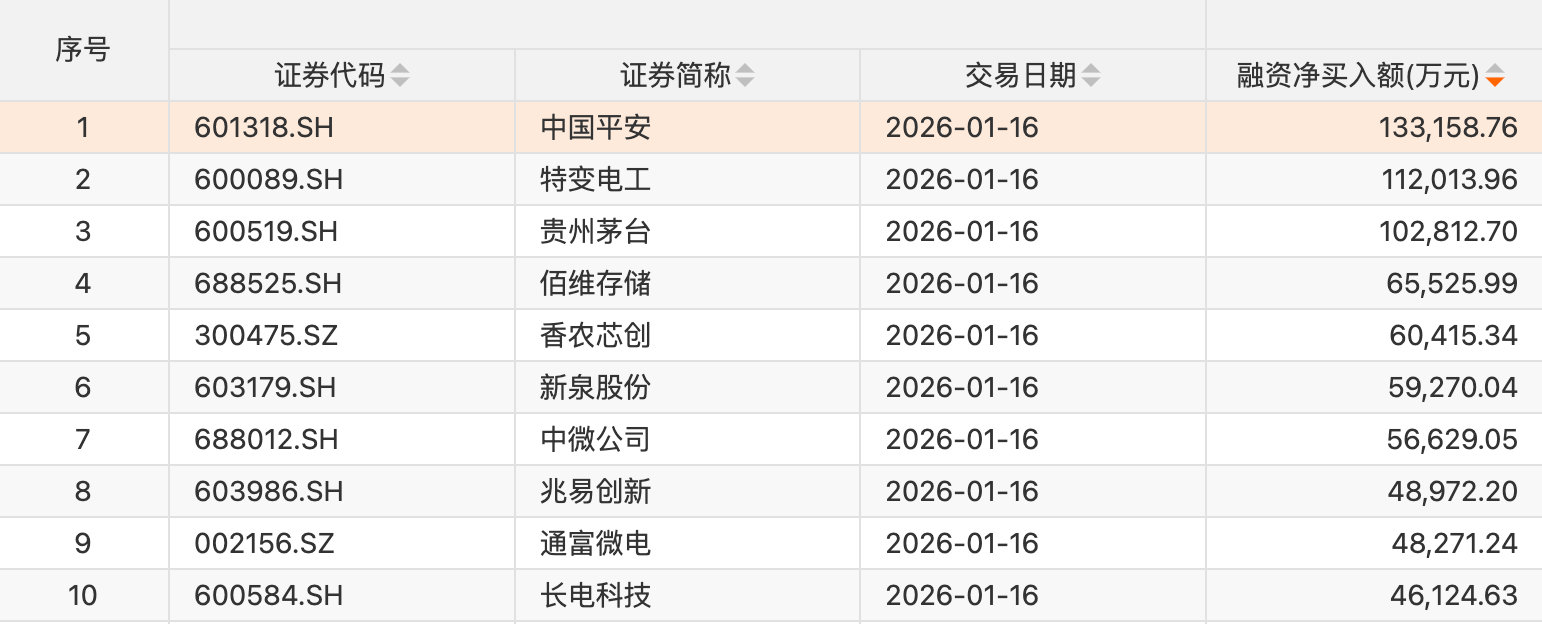
Group 1 - As of January 16, the margin trading balance in A-shares reached 27,315.37 billion yuan, an increase of 127.86 billion yuan from the previous trading day, accounting for 1.65% of the A-share circulating market value [1] - The trading volume for margin transactions on the same day was 3,364.9 billion yuan, which is an increase of 184.47 billion yuan from the previous trading day, representing 10.99% of the total A-share trading volume [1] - Among the 31 primary industries, 20 experienced net financing inflows, with the electronics sector leading at a net inflow of 10.279 billion yuan [1] Group 2 - The top individual stocks with net financing inflows exceeding 1 billion yuan included China Ping An, which had a net inflow of 1.332 billion yuan, followed by TBEA, Kweichow Moutai, and others [1] - The report from Huawei indicates that by 2035, the total computing power in society is expected to grow by up to 100,000 times, suggesting a significant upward trend in the semiconductor cycle driven by artificial intelligence [2] - The research from Huajin Securities recommends focusing on the entire semiconductor industry chain, from design and manufacturing to packaging testing and upstream equipment materials [2]






品牌工程指数 上周涨0.6%
Zhong Guo Zheng Quan Bao· 2026-01-18 21:37
Core Viewpoint - The market experienced fluctuations last week, but the overall trend remains positive with a low probability of systemic risks in 2026, driven by favorable macro policies and industry factors [1][4]. Market Performance - The China National Brand Index rose by 0.60% to 2059.78 points last week, while the Shanghai Composite Index fell by 0.45% and the Shenzhen Component Index increased by 1.14% [2]. - Notable performers included Changdian Technology, which surged by 17.51%, and Huazhong Microelectronics, which rose by 17.36% [2]. Year-to-Date Performance - Year-to-date, Anji Technology has increased by 38.85%, leading the gains, followed by Zhongwei Company at 38.29% and Changdian Technology at over 30% [3]. - Other significant gainers include Huazhong Microelectronics and Keda Xunfei, which rose by 29.02% and 26.67%, respectively [3]. Investment Strategy - Market sentiment has shown considerable volatility, but the impact on liquidity is minimal, primarily affecting short-term emotions [4]. - As annual performance forecasts begin to be disclosed, sectors with strong earnings support are expected to attract more attention from investors [4]. - The investment strategy emphasizes structural selection as key, with expectations of more industries entering a performance realization phase due to domestic policy support [4].



品牌工程指数上周涨0.6%
Zhong Guo Zheng Quan Bao· 2026-01-18 20:45
Group 1 - The core index of the National Brand Engineering Index rose by 0.60% last week, closing at 2059.78 points, with strong performances from stocks like Changdian Technology, China Resources Microelectronics, and Glodon [1][2] - The market experienced fluctuations, with the Shanghai Composite Index down by 0.45%, while the Shenzhen Component Index and the ChiNext Index rose by 1.14% and 1.00% respectively [1] - Year-to-date, stocks such as Anji Technology and Zhongwei Company have shown significant gains, with Anji Technology up by 38.85% and Zhongwei Company up by 38.29% [2] Group 2 - Market sentiment has been volatile, with regulatory policies leading to a decrease in speculative trading, but the actual impact on market liquidity is minimal [2] - Starstone Investment indicates that there are still many opportunities in the market, particularly as domestic policies drive supply-demand balance and price recovery, leading to more industries entering the performance realization phase [3] - Looking ahead to 2026, the overall market is expected to trend upwards due to positive macroeconomic policies and industry factors, although increased volatility and operational challenges are anticipated [3]
行业点评报告:先进封装龙头积极抢滩布局,产业进入“扩产+提价”新阶段
KAIYUAN SECURITIES· 2026-01-18 07:43
Investment Rating - The industry investment rating is "Overweight" [1] Core Insights - The semiconductor industry is expected to experience significant growth driven by advancements in AI and high-end packaging technologies. TSMC has raised its capital expenditure guidance for 2026 to between $52 billion and $56 billion, a substantial increase of up to 36.9% from 2025, with a focus on advanced packaging and testing [3][4] - Major companies are actively expanding capacity to meet the rising demand for advanced packaging, with investments in new facilities and technologies across various sectors, including automotive and AI [4] - Price increases in packaging services are anticipated due to strong structural demand and rising raw material costs, with some companies already implementing price hikes of up to 30% [5] Summary by Sections Capital Expenditure and Growth - TSMC's capital expenditure for 2026 is projected to be between $52 billion and $56 billion, with advanced packaging investments expected to contribute over 10% of revenue by 2026 [3] - The revenue contribution from advanced packaging is expected to grow from approximately 8% in 2025 to slightly above 10% in 2026, indicating a higher growth rate than the overall company growth [3] Capacity Expansion - Major players like Changdian Technology and Jinglong Technology are investing heavily in new facilities to enhance their testing capabilities for high-end semiconductors, with investments reaching billions [4] - Companies such as Tongfu Microelectronics and Nexperia are also planning significant investments to boost their packaging capacities, indicating a trend of expansion in response to market demand [4] Price Trends in Packaging - The packaging industry is experiencing price increases driven by high demand for AI and memory chips, with companies like ASE and others in Taiwan raising prices by 5-20% and up to 30% respectively [5] - The increase in raw material costs, including metals like gold and copper, is contributing to the overall rise in packaging costs, which may lead to improved profitability for packaging companies [5] Investment Recommendations - Investors are advised to focus on domestic companies actively engaged in high-end advanced packaging, such as Changdian Technology and Tongfu Microelectronics, as well as those benefiting from the sector's growth like Yongxi Electronics and Huada Technology [6]


先进封装,全速扩产
半导体行业观察· 2026-01-18 03:32
Core Viewpoint - The article discusses the significant investment and strategic shifts in the semiconductor packaging industry, particularly focusing on advanced packaging technologies driven by the AI wave and the structural changes in the storage industry [1][2]. Group 1: Investment and Market Trends - SK Hynix announced a 19 trillion KRW (approximately 12.9 billion USD) investment to build an advanced chip packaging factory in Cheongju, South Korea, reflecting the structural changes in the storage industry due to AI [1]. - The global advanced chip packaging market is projected to grow from 50.38 billion USD in 2025 to 79.85 billion USD by 2032, with a compound annual growth rate (CAGR) of 6.8% [2]. - By early 2026, leading packaging and testing companies are expected to ramp up advanced packaging capacity, indicating a competitive landscape focused on advanced packaging capabilities [2]. Group 2: TSMC's Dominance - TSMC is recognized as the leader in advanced packaging, holding over 60% market share in semiconductor manufacturing and establishing significant competitive barriers in advanced packaging technologies [2][3]. - TSMC has developed three branches of CoWoS technology: CoWoS-S for medium-sized chips, CoWoS-R for greater design flexibility, and CoWoS-L for large AI chips [3]. - TSMC's SoIC technology, based on CoWoS and wafer-on-wafer stacking, offers higher interconnect density and improved performance compared to traditional 2.5D packaging [3]. Group 3: Capacity Expansion and Technological Advancements - TSMC's CoWoS capacity is projected to increase 6-8 times from 2023 to 2026, with a CAGR exceeding 60% [5]. - TSMC's new advanced packaging facilities, including the flagship AP6 plant in Zhunan, are designed for full automation and are expected to handle significant orders from major clients like NVIDIA and AMD [5][6]. - TSMC is also expanding its advanced packaging capabilities in the U.S. with plans for two new facilities in Arizona, focusing on SoIC and CoPoS technologies [6]. Group 4: Competitors' Strategies - ASE, as the largest packaging and testing foundry, is benefiting from the advanced packaging trend, with over 60% of its ATM business expected to come from advanced packaging by 2025 [9]. - ASE is developing its own 2.5D packaging platform, FOCoS, and is expanding its production capacity across multiple sites, including a new K28 plant aimed at meeting the demand for AI and GPU chips [10][11]. - Amkor is enhancing its market position through partnerships, such as its collaboration with Intel on EMIB technology, and expanding its facilities in the U.S. to meet advanced packaging demands [15][16]. Group 5: Mainland China's Participation - Mainland Chinese companies are actively investing in advanced packaging technologies and capacity, with firms like Yongxi Electronics and Changjiang Electronics focusing on high-density packaging and automotive electronics [20][22]. - Yongxi Electronics is establishing a new production base in Malaysia to enhance its overseas strategy, while Changjiang Electronics is expanding its automotive electronics packaging capabilities [21][22]. - Tongfu Microelectronics is also increasing its advanced packaging capacity, particularly in automotive and high-performance computing sectors, to meet growing market demands [23][24]. Group 6: Future Outlook - The article concludes that while TSMC's dominance in advanced packaging is unlikely to be challenged in the short term, other specialized packaging firms are seeking to differentiate themselves through flexible capacity and innovative technologies [25][27]. - The collective expansion of packaging firms represents a significant industry bet on the demand for AI-driven computing power, with the potential for winners to emerge as the market stabilizes and technology paths clarify [27].

AI算力破局关键!先进封装板块暴涨,风口来了?
格隆汇APP· 2026-01-17 11:23
Core Insights - The article discusses the critical role of advanced packaging and SiC technology in addressing the surging demand for AI computing power, highlighting the industry's shift towards these innovations as a solution to existing limitations in traditional chip packaging [5][7][24]. Industry Overview - The demand for computing power is expected to grow exponentially, with China's intelligent computing scale projected to reach 1037.3 EFLOPS by 2025, increasing by 40% in 2026 [7]. - Traditional packaging methods are unable to cope with the power limits, as chip performance improvements lead to a threefold increase in power consumption for every doubling of performance [7][9]. Advanced Packaging Technology - Advanced packaging techniques, including 2.5D/3D stacking and the use of SiC as an intermediary layer, are essential for overcoming thermal management challenges and enhancing chip interconnect density by over 10 times [9][11]. - The global advanced packaging market is forecasted to exceed $79 billion by 2030, with 2.5D/3D packaging experiencing a growth rate of 37% [9]. SiC Technology - SiC is identified as the optimal solution for intermediary layers due to its superior thermal conductivity (490 W/m·K), hardness (Mohs hardness of 9.5), and ability to support high aspect ratio through-hole designs, improving wiring density and transmission speed by 20% [11][13]. - By 2027, SiC intermediary layer mass production is anticipated, with a projected need for over 2.3 million 12-inch SiC substrates by 2030, indicating a significant supply gap [14]. Market Dynamics - The advanced packaging boom is characterized by a collective resonance across the entire supply chain, including equipment, materials, and OSAT (Outsourced Semiconductor Assembly and Test) sectors [16]. - Key players in the OSAT space include Changdian Technology and Tongfu Microelectronics, both of which are positioned to benefit from the domestic substitution trend and the growing demand for advanced packaging solutions [16][21]. Investment Opportunities - Four key investment directions are highlighted: SiC materials and equipment, advanced packaging OSAT, critical materials, and mixed bonding/3D packaging technologies [19][20][21][22]. - Companies such as Tianyue Advanced and Sanan Optoelectronics are noted for their advancements in 12-inch SiC substrate production, while equipment manufacturers like Jing Sheng and Huahai Qingke are breaking through overseas monopolies [20][18]. Conclusion - The advanced packaging industry is evolving from a semiconductor backend process to a core component of computing power, essential for AI, data centers, and smart driving applications [24]. - The industry is on the brink of a significant growth phase, driven by the upcoming mass production of SiC intermediary layers and breakthroughs in domestic supply chains [24].

A股成交额重回3万亿元电网设备板块多股涨停
Shang Hai Zheng Quan Bao· 2026-01-16 18:34
Group 1 - A-share market trading volume has returned to over 30 trillion yuan, with the Shanghai Composite Index closing at 4101.91 points, down 0.26% [1] - The semiconductor industry chain remains active, with stocks like Tianyue Advanced and Yongxi Electronics hitting the daily limit of 20% [1] - The electric grid equipment sector saw significant gains, with multiple stocks including Electric Power Research Institute and Senyuan Electric reaching their daily limit [1][2] Group 2 - The electric grid equipment sector is driven by supply-demand dynamics, with the State Grid Corporation announcing a planned investment of 4 trillion yuan during the 14th Five-Year Plan, a 40% increase from the previous plan [2] - The overseas market for electric grid investments is expected to accelerate, with supply shortages leading to extended delivery times for transformers and high-voltage cables [2] - The storage chip sector is experiencing strong performance, with companies like Baiwei Storage and Jibang Long hitting daily limits, driven by increased demand from AI and server capacity [4] Group 3 - Research indicates that the storage market is surpassing historical highs, with prices expected to rise by 40% to 50% in Q1 2026 and an additional 20% in Q2 [4] - The A-share market is anticipated to maintain a steady upward trend, supported by factors such as improved profitability and capital market reforms [5] - Investment strategies for 2026 suggest a balanced approach, focusing on high-yield opportunities, technology growth driven by AI, and cyclical recovery investments [6]



半导体大涨,下周A股怎么走?
Guo Ji Jin Rong Bao· 2026-01-16 15:54
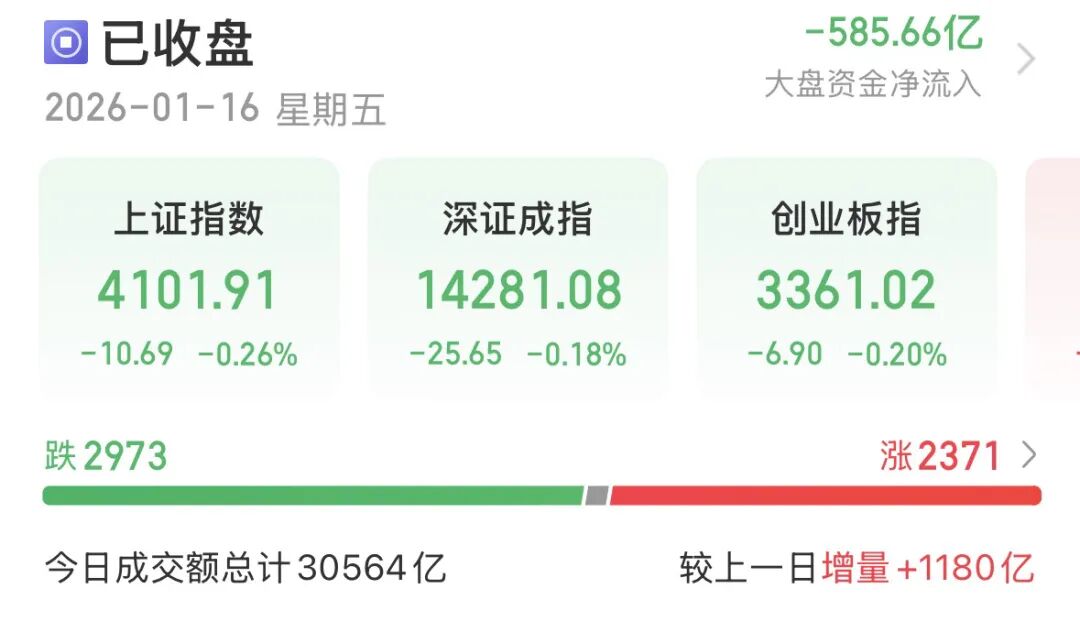
Core Viewpoint - The A-share market experienced moderate fluctuations with a total trading volume returning to over 3 trillion yuan, indicating a shift in capital from popular sectors like AI applications and communications to storage chips, automotive chips, and robotics actuators [1][4][6]. Market Performance - The Shanghai Composite Index fell by 0.26% to 4101.91 points, while the ChiNext Index decreased by 0.2% to 3361.02 points, and the Shenzhen Component Index dropped by 0.18% [6]. - The total trading volume across the three markets reached 3.06 trillion yuan, with margin trading balances increasing to 2.72 trillion yuan as of January 15 [6][16]. Sector Performance - The storage chip sector rose by 5.54%, third-generation semiconductors by 3.88%, automotive chips by 4.94%, and robotics actuators by 4.26% [8]. - In contrast, sectors such as media and computing saw significant declines, with media down by 4.84% and computing by 2.23% [9]. Capital Flow and Investment Strategy - Capital is being reallocated due to regulatory measures aimed at risk prevention and monetary policies supporting liquidity, leading to a diversified market structure [4][16]. - Investment strategies should focus on policy guidance, performance support, and valuation matching, particularly in sectors benefiting from domestic substitution and global chip technology breakthroughs [4][22]. Future Market Outlook - The market is expected to continue its oscillation around the 4100-point mark, with potential for structural opportunities in policy-supported sectors and high-performing stocks [19][20]. - Analysts suggest maintaining a neutral position while avoiding high-volatility stocks and focusing on sectors with strong fundamentals [19][22].


长电科技:当前公司生产经营正常
Zheng Quan Ri Bao Wang· 2026-01-16 15:10
证券日报网讯1月16日,长电科技(600584)在互动平台回答投资者提问时表示,股价波动受多重因素 影响,当前公司生产经营正常。 ...
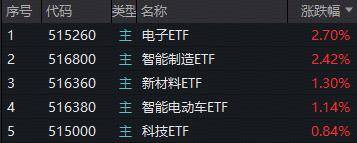
ETF复盘资讯|沪指险守4100点!半导体逆市狂飙,电子ETF翘尾收涨2.7%!AI应用概念股全线回调,159363回踩5日线
Sou Hu Cai Jing· 2026-01-16 13:53
Core Viewpoint - The A-share market experienced a slight pullback on January 16, with the Shanghai Composite Index barely holding above the 4100-point mark, while the electronic sector showed resilience, leading gains in the market [1][4]. Market Performance - The Shanghai Composite Index closed down 0.26% at 4101.91 points, the Shenzhen Component Index fell 0.18%, and the ChiNext Index decreased by 0.20% [1]. - The total trading volume in the Shanghai, Shenzhen, and Beijing markets reached 30,568 billion yuan, an increase of 1,180 billion yuan compared to the previous day [1]. Sector Highlights - The electronic sector was the standout performer, with the electronic ETF (515260) rising by 2.7%, and the smart manufacturing ETF (516800) increasing by 2.42% [1][2]. - The new materials and new energy sectors also saw some individual stocks perform well, with the new materials ETF (516360) and the smart electric vehicle ETF (516380) both gaining over 1% [1]. Downward Trends - The AI medical concept continued to cool off, with the largest medical ETF (512170) dropping by 2.6% [1]. - AI application stocks experienced a broad pullback, with the ChiNext AI ETF (159363) declining by 1.81% [1]. Capital Inflows - The electronic sector attracted a net inflow of 30.511 billion yuan, leading all 31 first-level industries in terms of capital absorption [8]. - Key stocks within the electronic ETF, such as Zhaoyi Innovation and Changdian Technology, attracted significant capital inflows of 4.538 billion yuan and 3.181 billion yuan, respectively [8][9]. Policy Support - The central bank implemented a series of measures to support high-quality economic development, including a 0.25 percentage point reduction in re-lending and rediscount rates, and an increase in the re-lending quota for small and medium-sized enterprises by 500 billion yuan [2][3]. Future Outlook - Analysts predict that A-shares may see considerable incremental capital by 2026, potentially sustaining a slow bull market [3]. - The focus is expected to shift towards verifying economic conditions and performance, with active funds reinforcing a dual-line strategy of "technology + resource products" [3].