CHINA MOBILE(600941)

Search documents
“碳硅”融合激活发展潜能 内蒙古加速构建数字产业“新生态”
Zhong Guo Jin Rong Xin Xi Wang· 2026-01-29 00:19
Core Insights - The conference titled "Carbon-Silicon Symbiosis AI Together - 2026 China Mobile Inner Mongolia Company Partner Conference" was held in Hohhot, showcasing how Inner Mongolia leverages "AI + computing power" for industrial upgrades [1] - China Mobile Inner Mongolia Company (referred to as "Inner Mongolia Mobile") unveiled a new computing power strategy and ecosystem plan, highlighting its role as a key builder of regional digital infrastructure and its market influence as an industry leader [1] Infrastructure Upgrade: From "Energy Export" to "Computing Power Hub" - Inner Mongolia, rich in wind and solar resources, is transitioning from being an energy exporter to a computing power hub, focusing on efficiently converting "watts" into "bits" [4] - Inner Mongolia Mobile launched the "Integrated Computing Network: AIDC" strategy, marking a transformation of the region's network infrastructure from a "communication channel" to an "intelligent computing hub" [4] - This strategic layout aligns with the market demand for "East Data West Computing," providing a solid physical foundation for Inner Mongolia to undertake nationwide computing power scheduling [4] Technology Scene Implementation: AI Empowerment and Industry Innovation - The conference demonstrated how advanced technologies interact with Inner Mongolia's unique geographical and industrial contexts [5] - Inner Mongolia Mobile showcased its technological capabilities in vertical industries, exemplified by the successful deployment of a 5G-A network and AI edge computing at the Hulunbuir International Low-Altitude Equipment Cold Weather Testing Center [5] - The company provided a replicable "digital toolbox" for local enterprises, enabling them to achieve intelligent transformation at lower costs and faster speeds [5] Business Ecosystem Reconstruction: Three Alliances for Collaboration and Benefits - Inner Mongolia Mobile initiated three industry alliances: "Digital Inner Mongolia Alliance," "Intelligent Computing Engine for Future Services," and "Data Integration for Smart Enterprises," signaling its transition from a service provider to an open ecosystem builder [6] - The launch of the "Mobile Smart Enterprise" brand and a new rights and interests cooperation model allows Inner Mongolia Mobile to share its channel touchpoints, traffic resources, and technological capabilities with partners [8] - This initiative aims to address the challenges faced by small and medium-sized enterprises in digital transformation, fostering a green, intelligent, and diverse industrial ecosystem in Inner Mongolia [8]



公募顶流四季报揭秘:科技冲锋与价值深蹲下的业绩分野
2 1 Shi Ji Jing Ji Bao Dao· 2026-01-28 12:31
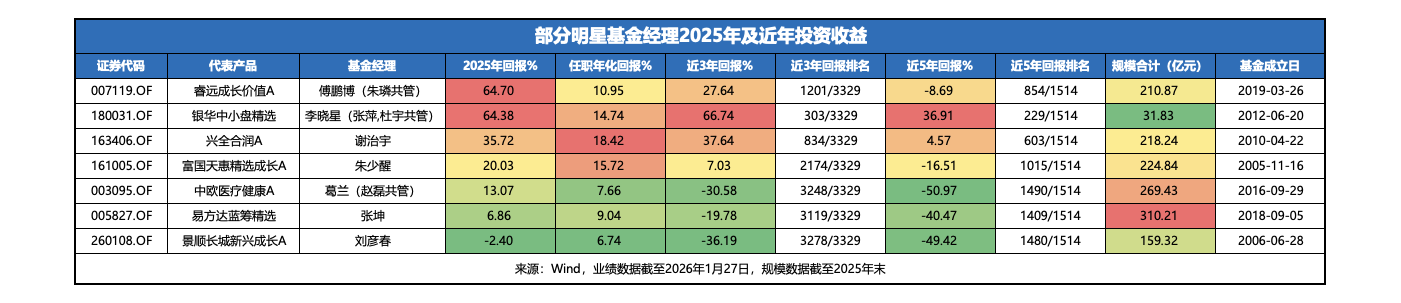
Core Viewpoint - The market experienced increased volatility in Q4 2025, with A-shares and Hong Kong stocks showing mixed performance, while sectors like AI computing and semiconductors thrived, contrasting with weaker performances in real estate and pharmaceuticals [1] Group 1: Market Performance - The Shanghai Composite Index rose by 2.22% in Q4 2025, while the Hang Seng Index fell by 4.56% [1] - The technology growth sector, particularly AI computing and semiconductors, showed significant gains, while industries such as real estate and pharmaceuticals faced challenges [1] Group 2: Fund Manager Performance - Star fund managers like Fu Pengbo and Li Xiaoxing achieved over 60% returns in 2025, focusing on AI computing and semiconductors [2] - Balanced allocation funds, such as Zhu Shaoxing's, demonstrated stability with a 20% annual return, benefiting from diversified investments across various sectors [3][14] Group 3: Investment Strategies - Fu Pengbo's fund increased its allocation to data center cooling and computing-related companies, with a top ten stock concentration of 70.38% [5] - Li Xiaoxing emphasized AI hardware innovation and semiconductor investments, with a focus on domestic advancements in the semiconductor industry [6] Group 4: Traditional Value Investments - Fund managers like Zhang Kun and Liu Yanhun maintained positions in traditional sectors like consumer goods and pharmaceuticals, despite facing net value pressures [8][12] - Liu Yanhun's fund experienced a 5.85% decline in Q4, reflecting the challenges faced by traditional value sectors [12] Group 5: Policy and Market Outlook - Fund managers noted the impact of "anti-involution" policies on corporate fundamentals, suggesting a shift towards supply-side optimization [17] - Despite market rebounds, equity assets are still viewed as attractive, with a focus on high-quality listed companies as scarce income-generating assets [18]





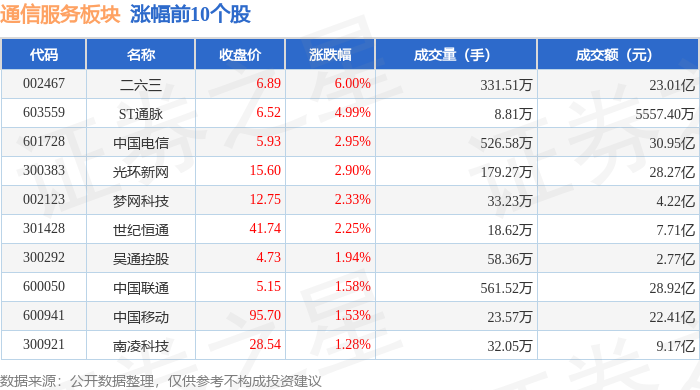
通信服务板块1月28日涨1.5%,二六三领涨,主力资金净流入15.68亿元
Zheng Xing Xing Ye Ri Bao· 2026-01-28 09:04
Core Viewpoint - The communication services sector experienced a 1.5% increase on January 28, with the stock of Erli San leading the gains [1] Group 1: Market Performance - The Shanghai Composite Index closed at 4151.24, up 0.27% [1] - The Shenzhen Component Index closed at 14342.9, up 0.09% [1] - Erli San's stock price rose by 6.00% to 6.89, with a trading volume of 3.3151 million shares and a transaction value of 2.301 billion [1] Group 2: Individual Stock Performance - The top gainers in the communication services sector included: - Erli San (6.00% increase) [1] - ST Tongmai (4.99% increase) [1] - China Telecom (2.95% increase) [1] - Other notable gainers included Guanghuan Xinwang (2.90% increase) and Mengwang Technology (2.33% increase) [1] Group 3: Capital Flow - The communication services sector saw a net inflow of 1.568 billion in main funds, while retail investors experienced a net outflow of 1.503 billion [2] - Major stocks with significant capital inflows included: - China Telecom with a net inflow of 6.98 billion [3] - China Unicom with a net inflow of 6.82 billion [3] - Erli San with a net inflow of 4.51 billion [3]



通信行业月报:光模块上游关键物料供应持续紧张,AWS规模部署空芯光纤-20260128
Zhongyuan Securities· 2026-01-28 08:29
Investment Rating - The report maintains an "Outperform" investment rating for the communication industry [2][9]. Core Insights - The communication industry index outperformed the Shanghai Composite Index in December 2025, rising by 12.82% compared to +2.06% for the Shanghai Composite Index and +2.28% for the CSI 300 Index [8][14]. - Key material supply for optical modules remains tight, with major players like Longfei and Hengtong winning bids for China Unicom's hollow-core fiber cable procurement [8][9]. - The retail sales of communication equipment in China increased by 20.9% year-on-year in December 2025, driven by the demand for smartphones [8][41]. - The global smartphone shipment is projected to grow by 2% year-on-year in 2025, reaching 1.25 billion units, with AI smartphones expected to penetrate 34% of the market [8][29]. - The export value of optical modules from China decreased by 15.6% year-on-year in 2025, while Thailand's communication equipment exports surged by 152.1% [8][9]. Summary by Sections Market Review - The communication industry index rose by 12.82% in December 2025, outperforming major indices [14]. - Sub-sectors such as cables and network equipment saw significant gains, with increases of 22.05% and 19.44% respectively [15][19]. Industry Tracking - The capital expenditure of major cloud providers in North America reached $112.43 billion in Q3 2025, a 76.9% increase year-on-year [25][28]. - AI applications are driving cloud business growth, with major companies like Amazon, Microsoft, Google, and Meta significantly increasing their capital expenditures [25][29]. - The Chinese ICT market is expected to grow to approximately $889.43 billion by 2029, with a CAGR of 7.0% [39][40]. Domestic Telecom Industry - Telecom business revenue in China reached 1.6096 trillion yuan from January to November 2025, a year-on-year increase of 0.9% [48]. - The number of 5G mobile phone users reached 1.193 billion by November 2025, accounting for 65.3% of total mobile phone users [49]. - The number of fixed broadband users with gigabit access reached 239 million, representing 34.3% of total users [52].





中央企业“AI+”专项行动取得积极进展
Xin Hua She· 2026-01-28 08:22
Core Viewpoint - The State-owned Assets Supervision and Administration Commission (SASAC) is actively promoting the "AI+" initiative among central enterprises, achieving significant progress in key areas such as application, computing power, data, and models [1][2] Group 1: Achievements in AI+ Initiative - Central enterprises have created over 1,000 application scenarios focusing on key industries like energy, manufacturing, and communications [1] - Examples include the State Grid and Southern Power Grid utilizing AI for intelligent management in power dispatch and fault prediction [1] - Central enterprises are integrating into the national computing power layout, with three major telecom operators establishing four "ten thousand card clusters" to support large model training [1] Group 2: Support for AI Development - General models like "Jiutian" from China Mobile and "Xingchen" from China Telecom have empowered over 200 external units, accelerating applications in energy and industrial manufacturing [1] - The "Huanxin Community" initiated by SASAC provides over 2,000 domestic intelligent computing chips for free, gathering over 4,000 models and 800 datasets to promote the widespread application of AI technology [1] Group 3: Future Directions - Central enterprises will intensify efforts in the "AI+" initiative, focusing on enhancing investment traction, deepening scenario cultivation, and optimizing data supply [2] - The goal is to become a key provider of intelligent computing infrastructure, a significant enabler of AI across various industries, and an organizer of systematic industrial layout [2]
高股息爆发,港股通红利ETF广发(520900)放量大涨3.37%,十大重仓股全部上涨,机构称红利资产迎配置窗口期
Xin Lang Ji Jin· 2026-01-28 07:45
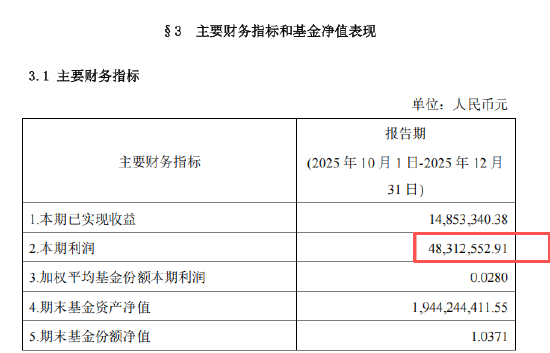
Core Viewpoint - The Hong Kong Stock Connect Dividend ETF (520900) has shown significant performance, with a notable increase in both share volume and profits, indicating strong investor interest in high-dividend assets amid a favorable economic environment [1][2][6]. Financial Performance - In Q4 2025, the Hong Kong Stock Connect Dividend ETF (520900) reported a profit of 48.31 million yuan, contributing to an annual profit of 228 million yuan for the year [2][4]. - The fund's share volume increased from 1.592 billion to 1.875 billion, marking a growth rate of 17.78% [2][4]. Market Trends - The demand for high-dividend assets is bolstered by the stable and continuous dividend policies of state-owned enterprises (SOEs), which are now key performance indicators for state-owned enterprises [6][13]. - The index tracking the ETF focuses on SOEs with stable dividend levels and high dividend yields, primarily in sectors like energy and telecommunications [7][9]. Sector Analysis - The top five sectors in the index include Oil & Petrochemicals (28.63%), Telecommunications (21.75%), Coal (11.80%), Transportation (10.47%), and Public Utilities (7.94%) [7]. - The top ten constituent stocks account for 66.88% of the index, featuring major players in the energy and telecommunications sectors [9][10]. Historical Performance - Since its inception, the index has achieved a cumulative return of 120.79%, outperforming the Hang Seng Index and the CSI Dividend Index [11][12]. - The dividend yield has increased significantly from 3%-4% in 2015 to 5%-9% in 2023-2025, reflecting the enhanced dividend capacity of SOEs [12]. Investment Outlook - Analysts suggest that the current market conditions may present a favorable window for investing in high-dividend assets, particularly through the Hong Kong Stock Connect Dividend ETF [13][14]. - The ETF provides a convenient entry point for investors looking to capitalize on stable returns and long-term value in the Hong Kong market [14].




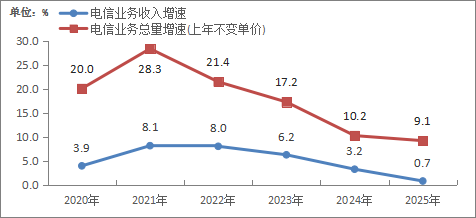
2025年我国通信业实现平稳增长,电信业务收入同比增长0.7%
Bei Jing Ri Bao Ke Hu Duan· 2026-01-28 07:02
来源:央视新闻客户端 作者: 朱江 孙蓟潍 工业和信息化部今天(1月28日)发布的《2025年通信业统计公报》显示,我国通信业产业结构持续优 化,5G、千兆等新型信息基础设施建设加快部署。 经初步核算,2025年电信业务收入累计完成1.75万亿元,比上年增长0.7%。云计算、大数据、数据中心 等新兴业务收入达到4508亿元,比上年增长4.7%。截至2025年底,5G移动电话用户超过12亿户,占移 动电话用户总数的65.9%。中国电信、中国移动和中国联通三家基础电信企业的固定宽带用户总数达 6.91亿户。其中,1000Mbps及以上接入速率的用户占总用户数的34.5%,固定互联网宽带接入服务持续 在农村地区加快普及,截至2025年底,全国农村宽带用户总数达2.04亿户。 ...
2025年我国通信业实现平稳增长 电信业务收入同比增长0.7%
Jing Ji Guan Cha Wang· 2026-01-28 06:38
经济观察网 据央视新闻客户端消息,工业和信息化部今天(1月28日)发布的《2025年通信业统计公 报》显示,我国通信业产业结构持续优化,5G、千兆等新型信息基础设施建设加快部署。 经初步核算,2025年电信业务收入累计完成1.75万亿元,比上年增长0.7%。云计算、大数据、数据中心 等新兴业务收入达到4508亿元,比上年增长4.7%。截至2025年底,5G移动电话用户超过12亿户,占移 动电话用户总数的65.9%。中国电信(601728)、中国移动(600941)和中国联通三家基础电信企业的 固定宽带用户总数达6.91亿户。其中,1000Mbps及以上接入速率的用户占总用户数的34.5%,固定互联 网宽带接入服务持续在农村地区加快普及,截至2025年底,全国农村宽带用户总数达2.04亿户。 ...
工信部:2025年我国电信业务收入累计完成1.75万亿元 比上年增长0.7%
智通财经网· 2026-01-28 06:36
Industry Overview - In 2025, China's telecommunications business revenue reached 1.75 trillion yuan, a year-on-year increase of 0.7%. The total telecommunications business volume, calculated at last year's prices, grew by 9.1% year-on-year [4][5][7]. Fixed Internet Broadband Access - Fixed internet broadband access revenue in 2025 was 289.6 billion yuan, up 5.9% from the previous year, increasing its share of total telecommunications revenue from 15.9% to 16.5%, contributing 0.9 percentage points to overall revenue growth [5][6]. Mobile Data Traffic - Mobile data traffic revenue in 2025 was 609.7 billion yuan, a decline of 3.1% compared to the previous year, with its share of total telecommunications revenue decreasing from 36.2% to 34.8% [7]. Emerging Business Growth - Revenue from emerging businesses, including cloud computing, big data, mobile IoT, and data centers, reached 450.8 billion yuan in 2025, growing by 4.7% year-on-year. This segment's share of total telecommunications revenue increased from 25% to 25.7%, contributing 1.2 percentage points to overall revenue growth. Specific growth rates included cloud computing at 2.9%, big data at 7.8%, and mobile IoT at 4.9% [8][9]. Voice Business Revenue - Revenue from fixed and mobile voice services was 16.09 billion yuan and 109.2 billion yuan, respectively, with fixed voice revenue increasing by 2.3% and mobile voice revenue decreasing by 1.7%. Together, these services accounted for 7.2% of total telecommunications revenue, a decrease of 0.1 percentage points from the previous year [12]. User Development - By the end of 2025, the total number of telephone users in China reached 1.987 billion, with a net increase of 30.91 million users. Mobile phone users totaled 1.827 billion, with a net increase of 37.25 million users, achieving a penetration rate of 130 per 100 people, an increase of 2.9 per 100 people from the previous year. The number of 5G mobile phone users reached 1.204 billion, accounting for 65.9% of mobile phone users, an increase of 9.2 percentage points [13][18]. Fixed Broadband Access Users - By the end of 2025, the total number of fixed internet broadband access users reached 691 million, with a net increase of 20.99 million users. Users with access speeds of 100 Mbps and above totaled 659 million, with a net increase of 22.99 million users, representing 95.3% of total users [18][20]. Mobile IoT User Growth - By the end of 2025, the number of mobile IoT terminal users reached 2.888 billion, with a net increase of 232 million users, surpassing the number of mobile phone users [21]. Internet TV User Growth - By the end of 2025, the total number of internet TV (IPTV, OTT) users reached 408 million, with a net increase of 590,000 users [22]. Mobile Internet Traffic Growth - In 2025, mobile internet access traffic reached 3.958 trillion GB, a year-on-year increase of 17.3%. The average monthly data usage per mobile internet user was 20.74 GB, up 14.1% from the previous year [23][26]. Network Infrastructure Development - In 2025, the total length of optical cable lines reached 74.99 million kilometers, with 2.113 million kilometers of new lines built. The number of fixed internet broadband access ports reached 1.251 billion, with a net increase of 48.77 million ports [30][31]. 5G Network Expansion - By the end of 2025, the total number of mobile phone base stations reached 12.87 million, with 4.838 million being 5G base stations, accounting for 37.6% of all mobile phone base stations, an increase of 4 percentage points from the previous year [31]. Regional Development - In 2025, the telecommunications business revenue shares for the eastern, central, western, and northeastern regions were 50.9%, 19.7%, 24.3%, and 5.1%, respectively. The telecommunications revenue shares for the Beijing-Tianjin-Hebei and Yangtze River Delta regions were 9.1% and 23.2% [35].

工信部:2025年底三大运营商对外提供服务数据中心机架数量93.8万个 较上年增加10.8万个
Jin Rong Jie· 2026-01-28 06:23
Core Insights - The Ministry of Industry and Information Technology (MIIT) released the 2025 telecommunications industry statistical bulletin, highlighting the strategic shift of major telecom companies in China towards computing power integration [1] Group 1: Industry Overview - By the end of 2025, the number of data center racks provided externally is projected to reach 938,000, an increase of 108,000 from the previous year [1] - The focus of development is shifting from "broad coverage" to "deep integration," emphasizing the need for resource integration and intelligent scheduling capabilities [1] Group 2: Company Strategies - Major telecom companies, including China Telecom, China Mobile, and China Unicom, are transitioning from providing basic cloud resources to offering intelligent, green, and diversified computing power services [1]