
BAOFENG ENERGY(600989)

Search documents
宝丰能源:固本兴新,实业报国
Zhong Guo Hua Gong Bao· 2025-12-31 03:07
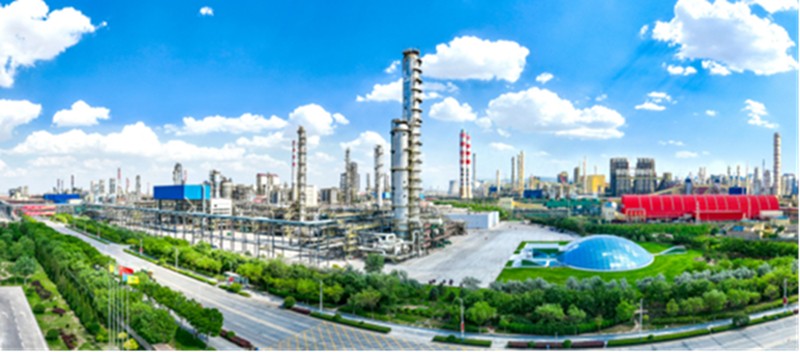
Core Viewpoint - The development of modern coal chemical industry in China during the "14th Five-Year Plan" period has undergone significant industry reshuffling and value reassessment, marking the beginning of a new high-quality development cycle characterized by core technological breakthroughs, green low-carbon transformation, and comprehensive efficiency improvements [1] Group 1: Company Overview - Baofeng Energy Group has established the largest, most complete, and technologically advanced modern coal chemical industry cluster in China during the "14th Five-Year Plan" period, laying a solid foundation for the upcoming "15th Five-Year Plan" [1][5] - The company has successfully transitioned from a follower to a leader in the industry by focusing on its core business and continuous innovation [1] Group 2: Industry Impact - Baofeng Energy's annual production of 3 million tons of olefins in Inner Mongolia is a highlight, achieving five global and three national scale records, which significantly contributes to national energy security by replacing nearly 10 million tons of crude oil imports [4][5] - The coal chemical industry is becoming a cornerstone for ensuring China's energy security, food security, and supply chain stability amid various external pressures [5] Group 3: Technological Advancements - The company has adopted a domestic innovation strategy to overcome "bottleneck" technologies, collaborating with top research institutions and equipment manufacturers to achieve breakthroughs in key equipment and technologies [10][11] - Baofeng Energy has achieved significant milestones in the methanol-to-olefins process, including the world's first industrial application of the new DMTO-III technology at a million-ton scale, enhancing economic viability and competitiveness [11] Group 4: Green Transformation - The company is actively pursuing a dual-driven development path of "AI empowerment + green innovation," integrating renewable energy sources like solar and green hydrogen into its production processes [15][18] - Baofeng Energy's green hydrogen production capacity is projected to reach 3.1 billion standard cubic meters annually, significantly reducing carbon emissions and supporting the transition to a low-carbon economy [18] Group 5: Social Responsibility - Baofeng Energy has created over 7,000 new jobs during the "14th Five-Year Plan" period, contributing to local employment and talent optimization [22] - The company has established the Ningxia Yanbao Charity Foundation, providing substantial educational support to students in need, with cumulative donations exceeding 5.038 billion yuan [22][23]


宝丰能源:固本兴新,实业报国
Zhong Guo Hua Gong Bao· 2025-12-31 03:04
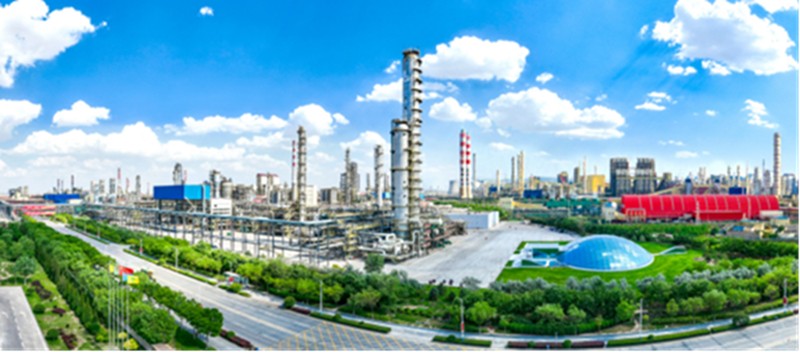
Core Viewpoint - The development of modern coal chemical industry in China during the "14th Five-Year Plan" period has undergone significant industry reshuffling and value reassessment, marking the beginning of a new high-quality development cycle characterized by core technological breakthroughs, green low-carbon transformation, and comprehensive efficiency improvements [1][4]. Group 1: Company Overview - Baofeng Energy Group has established the largest, most complete, and technologically advanced modern coal chemical industry cluster in China during the "14th Five-Year Plan" period, laying a solid foundation for the upcoming "15th Five-Year Plan" [1][5]. - The company focuses on "coal-to-oil" and green upgrades, producing high-end chemical materials such as polyethylene and polypropylene, transforming "black" coal into "white" materials through technological innovation [5][6]. Group 2: Industry Impact - Baofeng Energy's annual production of 3 million tons of olefins in Inner Mongolia can replace nearly 10 million tons of crude oil imports, enhancing national energy security and addressing the "bottleneck" in high-end materials [4][7]. - The coal chemical industry is becoming a crucial pillar for ensuring China's energy security, food security, and supply chain stability amid global economic slowdowns and increasing geopolitical tensions [4][5]. Group 3: Technological Innovation - The company has adopted a domestic innovation strategy, collaborating with top research institutions and equipment manufacturers to overcome key technological barriers and achieve industrialization of core equipment [10][11]. - Baofeng Energy has achieved significant breakthroughs in methanol-to-olefins technology, with the world's first million-ton industrial application of the new DMTO-III technology, enhancing project economics and competitiveness [11][12]. Group 4: Green Transformation - The company is actively pursuing a dual-driven development path of "AI empowerment + green innovation," integrating renewable energy sources such as solar and green hydrogen into its production processes [15][17]. - Baofeng Energy's green hydrogen production capacity is planned to reach 3.1 billion standard cubic meters annually, significantly reducing carbon emissions and supporting the transition to a low-carbon economy [17][18]. Group 5: Social Responsibility - Baofeng Energy has created over 7,000 new jobs during the "14th Five-Year Plan" period, contributing to local employment and talent optimization [21][22]. - The company has established the Ningxia Yanbao Charity Foundation, providing substantial educational support to students in need, with cumulative donations exceeding 5.038 billion yuan [21][22].
石油化工行业研究:油价围绕地缘风险带来的供应预期波动博弈
SINOLINK SECURITIES· 2025-12-27 15:36
Investment Rating - The report indicates a positive outlook for the petrochemical sector, with various indices showing significant weekly gains, particularly the polyester index which increased by 8.52% [9]. Core Insights - Oil prices experienced fluctuations due to geopolitical tensions and supply concerns, with WTI closing at $56.74 and Brent at $63.73 as of December 26, reflecting a week-on-week increase of $0.59 and $2.30 respectively [15][17]. - The report highlights that the U.S. is focusing on economic measures against Venezuela's oil exports, while tensions in the Gulf region, particularly with Saudi airstrikes in Yemen, contribute to market volatility [17]. - The report notes that the overall oil market remains influenced by geopolitical factors and supply-demand dynamics, with expectations of a potential peace agreement impacting market sentiment [17]. Summary by Sections Market Review - The petrochemical sector outperformed the Shanghai Composite Index, with a weekly increase of 3.18% [9]. - The oil and gas resource index rose by 3.35%, while the refining and chemical index saw a 4.16% increase [9]. Petrochemical Subsector Overview - **Oil**: The report indicates a mixed outlook with oil prices fluctuating due to geopolitical tensions and supply concerns. U.S. crude oil production is reported at 13.84 million barrels per day, with a decrease in net imports [15]. - **Refining**: The average refining margin for major refineries was reported at 663.63 yuan/ton, showing an increase of 49.75 yuan/ton from the previous period [15]. - **Polyester**: The report notes that polyester production is facing challenges with profitability, as the average profit for polyester POY150D was reported at -135.19 yuan/ton [15]. - **Olefins**: Ethylene prices remained stable at 6172 yuan/ton, while propylene prices decreased by 240 yuan/ton to 5715 yuan/ton [15]. Price Tracking - The report provides detailed tracking of various petrochemical product prices, indicating significant fluctuations in margins and costs across different segments [12][14].




研判2025!中国塑料家具行业发展历程、市场规模、进出口情况、竞争格局及未来展望:塑料家具出口持续增长,行业呈现良好发展态势[图]
Chan Ye Xin Xi Wang· 2025-12-24 01:26
Industry Overview - The plastic furniture industry is gaining popularity due to its vibrant colors, diverse shapes, lightweight, durability, and ease of maintenance, especially among urban small households and those frequently relocating [1][11] - The market size of China's plastic furniture industry is projected to reach 10.855 billion yuan in 2024, with a year-on-year growth of 3.09%, and is expected to reach 11.31 billion yuan in 2025 [1][12] Industry Development History - The plastic furniture industry has undergone four stages: the initial stage (1950s-60s), development stage (1970s-80s), rapid development stage (1990s-early 2000s), and transformation and upgrading stage (early 2000s-present) [5][6] - The industry has shifted focus towards technological innovation, brand building, and green, intelligent development to adapt to market changes [6] Industry Supply Chain - The upstream of the plastic furniture industry includes raw materials and equipment such as polyethylene, polypropylene, synthetic resins, and processing equipment [8] - The midstream involves the production and manufacturing of plastic furniture, while the downstream encompasses sales channels including e-commerce platforms and retail stores [8] Market Export and Import Trends - In 2024, China's plastic furniture export volume is expected to reach 11.831 million pieces, with a year-on-year increase of 13.95%, and export value to achieve 2.035 billion USD, up 14.41% [12][13] - The import volume of plastic furniture is projected to decline, with 2024 figures showing only 17.03 thousand pieces imported, a decrease of 29.25% [13] Competitive Landscape - The industry features a clear competitive structure with leading international brands like Lock & Lock and Tupperware in the first tier, domestic brands like Chahua and Miaojie in the second tier, and numerous regional or emerging brands in the third tier [14] - Chahua Modern Household Products Co., Ltd. reported a revenue of 180 million yuan in the first half of 2025, a decrease of 11.77% year-on-year [15] Future Development Trends - Future plastic furniture will integrate functionality and experience, incorporating smart systems and adaptive structures for dynamic interaction with users [17] - The industry will emphasize a full lifecycle approach to sustainability, focusing on recyclable materials and creating a closed-loop system for product lifecycle management [18] - Design aesthetics will evolve, moving towards artistic and emotional expressions, utilizing innovative shapes and advanced surface treatments to enhance visual and tactile experiences [19]




基础化工周报:万华化学宣布上调部分地区MDI、TDI价格-20251221
Soochow Securities· 2025-12-21 14:29
Investment Rating - The industry investment rating is "Overweight," indicating an expected outperformance of the industry index relative to the benchmark by more than 5% over the next six months [67]. Core Insights - The report highlights that Wanhua Chemical has announced price increases for MDI and TDI in certain regions, reflecting a positive trend in pricing within the polyurethane sector [1]. - The average prices for pure MDI, polymer MDI, and TDI are reported at 19,186, 14,721, and 14,693 CNY/ton respectively, with changes of -293, +93, and +234 CNY/ton compared to the previous week [3]. - The report provides detailed insights into various segments of the chemical industry, including polyurethane, oil and gas, and coal chemical sectors, with specific price movements and profit margins outlined for each segment [3][13]. Summary by Sections Polyurethane Sector - The average prices for pure MDI, polymer MDI, and TDI are 19,186, 14,721, and 14,693 CNY/ton, with respective profit margins of 6,149, 2,684, and 2,769 CNY/ton [3][17][19]. Oil and Gas Sector - The average prices for ethane, propane, and coal are 1,324, 4,166, and 522 CNY/ton, with changes of -102, -122, and -8 CNY/ton respectively [3][23][28]. - The average price for polyethylene is reported at 6,933 CNY/ton, with a decrease of 113 CNY/ton from the previous week [3][31]. Coal Chemical Sector - The average prices for synthetic ammonia, urea, DMF, and acetic acid are 2,346, 1,702, 3,739, and 2,422 CNY/ton, with respective profit margins of 331, 33, -396, and 225 CNY/ton [3][37][45][46]. Animal Nutrition Sector - The average prices for VA and VE are reported at 62.5 and 55.5 CNY/kg, with VE showing a 30% increase [3][53][59].



石油化工行业研究:俄乌和谈推进而美委局势紧张,原油延续地缘博弈
SINOLINK SECURITIES· 2025-12-20 11:18
Investment Rating - The report indicates a positive outlook for the petrochemical sector, with the overall performance of the sector outperforming the Shanghai Composite Index by 1.57% this week [9]. Core Insights - Oil prices have remained volatile, influenced by geopolitical developments, particularly the progress in Russia-Ukraine negotiations and the fluctuating situation in Venezuela, which has led to a widening discount on Venezuelan oil [14]. - The average operating rate of domestic refineries is stable at 75.11%, while the average refining profit for major refineries is reported at 613.88 CNY/ton, showing a decrease from the previous period [3]. - The polyester sector is experiencing weak demand as the year-end approaches, with expectations of reduced operating rates for weaving machines [3]. - The ethylene market remains stable, with domestic prices holding steady, while propylene prices have seen a slight decline due to ample supply [3]. Summary by Sections Market Overview - The petrochemical sector has outperformed the Shanghai Composite Index, with various indices showing mixed performance, such as the polyester index increasing by 4.65% [9][10]. Oil and Gas Sector - As of December 18, WTI crude oil is priced at 56.15 USD, down by 1.45 USD, while Brent crude is at 61.43 USD, down by 0.95 USD. The U.S. commercial crude oil inventory decreased by 1.274 million barrels [14]. - The U.S. active oil rig count increased by 1 to 414 rigs, indicating a slight uptick in exploration activity [14]. Refining Sector - The average refining profit for major refineries is reported at 613.88 CNY/ton, a decrease of 31.59 CNY/ton from the previous period [3]. - The average operating rate for major refineries is stable at 75.11% [3]. Polyester Sector - The average profit for polyester products shows a decline, with POY150D at 38.35 CNY/ton, down by 71.09 CNY/ton, and FDY150D at -166.66 CNY/ton, down by 81.13 CNY/ton [3]. - PTA processing fees have slightly decreased to 156.51 CNY/ton, indicating ongoing challenges in profitability within the sector [3]. Olefins Sector - Ethylene prices remain stable at 6172 CNY/ton, while propylene prices in Shandong have decreased to 5955 CNY/ton, reflecting a 2.22% decline [3].
宝丰能源:公司具备茂金属聚乙烯、钛系聚乙烯和铬系聚乙烯等产品的生产能力
Mei Ri Jing Ji Xin Wen· 2025-12-19 08:23
Core Viewpoint - The company has confirmed its production capabilities for metallocene polyethylene and other products, indicating a positive outlook for production and sales in the current year [1] Group 1: Production Capabilities - The company has the production capacity for metallocene polyethylene, titanium-based polyethylene, and chromium-based polyethylene [1] - The polyethylene product HD55110 produced at the company's olefin plant is specifically labeled as "titanium-based bimodal high-density polyethylene" (Bimodal HDPE) [1] - The production process for this product utilizes Chevron Phillips Chemical Company LLC (CPCHEM) technology, which results in a unique molecular weight distribution structure [1] Group 2: Product Performance - The HD55110 product combines excellent physical properties from high molecular weight components with good processing performance from low molecular weight components [1] - The sales performance of this product has been consistently strong [1]
化工行业2026年策略报告:行业有望底部回暖,供需格局或迎积极变化-20251218
Dongxing Securities· 2025-12-18 08:43
Group 1 - The core view of the report indicates that the chemical industry in China is expected to see a bottoming out and improvement in supply-demand dynamics, with a marginal recovery in industry prosperity anticipated for 2026 [4][5][45] - In 2025, the chemical price index is projected to decline slightly, remaining in a low prosperity phase, but global energy costs have retreated from their highs, leading to positive changes in supply, demand, and inventory [4][15][45] - The report highlights that supply-side investment growth in the chemical industry is slowing, driven by anti-competitive policies and the exit of outdated overseas production capacities, which alleviates supply-side pressure [4][30][37] Group 2 - The report identifies three key investment directions for 2026: sub-industries with improving supply-demand dynamics, leading companies driven by capital expenditure and R&D, and high-end chemical new materials benefiting from increased demand or domestic substitution [5][46][57] - Sub-industries expected to see recovery include titanium dioxide, certain pesticide varieties, chemical fibers, and refrigerants, as traditional demand stabilizes and new industries emerge [5][49][57] - Leading companies are expected to concentrate capital expenditure on capacity expansion and high-value downstream products, with significant capital expenditures noted for companies like China Petroleum and Wanhua Chemical [6][51][52] Group 3 - The report emphasizes the ongoing domestic substitution in high-end chemical new materials, particularly in electronic chemical materials and ceramics, driven by the growth of emerging industries such as AI and biomedical applications [7][54][56] - The demand for electronic chemical materials is anticipated to increase as domestic companies make technological advancements and penetrate supply chains for semiconductor and display panel materials [55] - The ceramic materials market is expected to grow significantly due to new applications in biomedical fields, providing a new growth engine for high-end ceramic materials [56]


石油化工行业 2026 年度投资策略:自上而下,否极泰来
Changjiang Securities· 2025-12-17 11:03
Group 1 - The report forecasts that the Brent crude oil price will fluctuate around $60-65 per barrel in 2026, with potential short-term increases due to geopolitical factors [3][6][7] - The midstream and downstream sectors are expected to improve, driven by a global economic resonance from the Federal Reserve's interest rate cuts and supply-side contractions due to anti-involution policies [3][7] - Investment opportunities are highlighted in cyclical growth stocks, coal chemical equipment investments, and high-dividend sectors [3][8] Group 2 - In 2025, oil prices are projected to oscillate between $60-70 per barrel, with a slight recovery in midstream and downstream sectors [6][7] - The report outlines a three-phase oil price trend in 2025, characterized by initial declines, a subsequent recovery, and a final drop influenced by geopolitical tensions and OPEC's production decisions [6][27] - Natural gas prices are expected to decrease due to increased LNG supply, with the JKM and TTF gas prices showing a downward trend compared to the previous year [6][30] Group 3 - The chemical industry is experiencing a weak recovery, with structural improvements in end-consumer demand, particularly in the textile sector, although domestic consumption remains under pressure [7][56] - The report anticipates an upward trend in industry prosperity as global interest rate cuts stimulate economic activity [7][8] - Key investment themes include cyclical opportunities, growth stocks, and companies benefiting from the coal chemical investment cycle [8][9] Group 4 - The report emphasizes the importance of high-quality growth stocks, particularly in the coal chemical sector and energy companies with stable cash flows and high dividend yields [8][9] - Specific companies highlighted for potential investment include Satellite Chemical, Baofeng Energy, and high-dividend firms like CNOOC, PetroChina, and Sinopec [8][9] - The report also notes the expected benefits for companies involved in high-end material imports and coal chemical equipment investments as the domestic coal chemical investment cycle unfolds [8][9]

供应端扩产高峰已过,“反内卷”助力景气度回升
Bank of China Securities· 2025-12-16 07:16
Investment Rating - The report assigns a "Strong Buy" rating for the chemical industry, indicating a positive outlook for investment opportunities [2]. Core Insights - The chemical industry is currently at the bottom of the cycle, with the "anti-involution" trend expected to accelerate the optimization of the competitive landscape, driving an upward trend in industry prosperity. Leading companies are likely to see improvements in both profitability and valuation, with recommendations for companies such as Wanhua Chemical, Hualu Hengsheng, China Petroleum, Baofeng Energy, and New Hope Liuhe [3]. - The report highlights the importance of self-discipline in production cuts within sub-industries like polyester filament, agrochemicals, fluorochemicals, and organosilicon, recommending companies such as Tongkun Co., New Fengming, Lier Chemical, and others [3]. - The refining industry, currently at a cyclical low, is expected to benefit from the elimination of backward production capacity, leading to a rapid recovery in prosperity, with recommendations for China Petroleum, Hengli Petrochemical, and others [3]. Summary by Sections Supply Side - The peak of capacity expansion has passed, with fixed asset investment in the chemical raw materials and chemical products manufacturing industry showing a negative year-on-year growth for the first time in nearly five years as of June 2025. The total fixed assets of listed companies in the basic chemical industry reached 14,628.58 billion yuan, a year-on-year increase of 15.56% [14][46]. - The construction of new projects has also seen a downturn, with the amount of ongoing projects decreasing by 15.11% year-on-year as of Q3 2025 [46]. Demand Side - Domestic demand is expected to be boosted by stimulus policies, while exports of chemical products continue to grow. The demand from downstream industries such as real estate, automotive, and textiles is showing positive trends [3][14]. - The resilience of chemical product exports is highlighted, with the export quantity index for the chemical raw materials and chemical products manufacturing industry reaching 122.40 as of September 2025 [3]. Global Industry Landscape - The report notes a shift in the global industrial landscape, with Chinese chemical companies enhancing their competitiveness. In 2023, China's chemical sales reached 2,238.1 billion euros, accounting for 43.1% of the global market [3][14]. - The report emphasizes the ongoing adjustments in the global chemical industry, with many overseas chemical production capacities exiting the market due to high costs and aging facilities, thereby strengthening the competitive position of domestic companies [3]. Policy and Industry Self-Regulation - The "anti-involution" actions initiated in 2024, including self-regulation and production cuts by industry associations and leading companies, are expected to help restore product prices and profits [3]. - The report discusses various policies aimed at energy conservation and carbon reduction, which are likely to optimize supply and improve product structures in the petrochemical industry [3].