
PICC(601319)

Search documents
保险板块短线拉升,中国人保涨超2%
Mei Ri Jing Ji Xin Wen· 2026-01-13 02:12
每经AI快讯,1月13日,保险板块短线拉升,中国人保、新华保险、中国人寿、中国平安均涨超2%。 每日经济新闻 ...



香港 & 中国保险 -2026 展望:回归有效估值框架-Hong KongChina Insurance-2026 Outlook - Returning to an Effective Valuation Framework
2026-01-13 02:11
Summary of the Conference Call on Hong Kong/China Insurance Industry Industry Overview - The insurance industry in Asia Pacific, particularly in China, is viewed as Attractive, with expectations for continued re-rating driven by strong sales growth, improved quality, and a favorable investment environment [1][7] - Concerns regarding interest rate spread loss risks are anticipated to ease further, supporting the positive outlook for insurers [1][2] Core Insights - The insurance segment outperformed the market in 2024-25, primarily due to asset-side catalysts and stabilized interest rates since the second half of 2025 [2] - For 2026, a dual boost is expected from both asset and liability sides, with strong Value of New Business (VNB) growth anticipated, improved product mix, channel margins, and productivity [2] - The market sentiment remains healthy, contributing to expectations of improved underlying earnings and enterprise value (EV) for China insurers [2] Investment Trends - In 2025, insurers increased their stock market allocations significantly, with over Rmb1 trillion of new inflows estimated [3] - A similar trend is expected in 2026, with regulatory modifications potentially allowing for further relaxation of equity investment capital consumption [3] Stock Preferences - The preference order for stocks is: Ping An (Top Pick), followed by China Life, CPIC, AIA, and PICC P&C [4] - Ping An is highlighted for its strong performance potential, while China Life H and CPIC H are also expected to benefit from industry-wide tailwinds [4] Risks - Identified downside risks include lower interest rates, a sluggish stock market, and unexpected regulatory tightening [5] Performance Metrics - The insurance sector saw a broad-based re-rating in 2025, with notable stock performance: New China Life (+130%), China Life (+87%), Prudential (+93%), and PICC Group (+74%) [13] - H-shares outperformed broader benchmarks, with significant gains compared to the Hang Seng Index (HSI) and the Hang Seng China Enterprises Index (HSCEI) [13] Valuation Insights - Valuation upside is anticipated through Price-to-Book (P/B), Price-to-Enterprise Value (P/EV), and Price-to-Earnings (P/E) ratios, with expectations for mid-teens return on equity (ROE) and double-digit VNB growth [2][52] - The current P/B for H-share life names is around 1.0-1.3x, with potential to rise to 1.3-1.5x [53] Regulatory Environment - The regulatory environment is seen as supportive, with favorable policies emerging since late 2023 to mitigate risks and encourage long-term investments in the stock market [61] - Upcoming modifications to solvency rules are expected, which could impact capital levels and investment strategies [67][69] Key Drivers of Demand - The expansion of household financial assets in China is a significant multi-year demand tailwind, projected to grow to Rmb440 trillion by 2030 [19] - Increasing demand for senior care and healthcare services is expected to drive insurance product appeal and retention [20] Conclusion - The outlook for the Hong Kong/China insurance industry remains positive, with strong growth potential driven by favorable market conditions, regulatory support, and evolving consumer needs in financial and healthcare services [1][2][61]


保险股集体走强,中国人寿涨超4%
Ge Long Hui· 2026-01-13 02:10
Core Viewpoint - The A-share market saw a collective rise in insurance stocks on January 13, with notable increases in major companies' stock prices [1] Group 1: Company Performance - China Life Insurance experienced a stock price increase of over 4% [1] - New China Life Insurance and China Pacific Insurance both saw stock price rises of over 3% [1] - China Insurance and Ping An Insurance recorded stock price increases of nearly 3% [1]

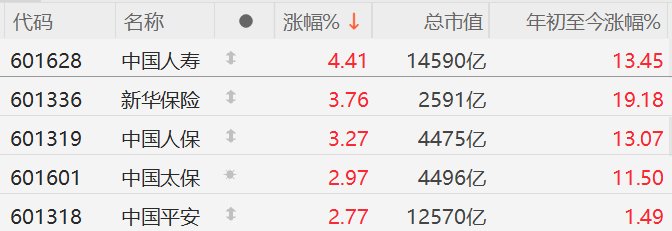
A股保险股集体走强,中国人寿涨超4%
Ge Long Hui A P P· 2026-01-13 02:05
格隆汇1月13日|A股市场保险股集体走强,其中,中国人寿涨超4%,新华保险、中国人保涨超3%,中 国太保、中国平安涨近3%。 MACD金叉信号形成,这些股涨势不错! | 代码 | 名称 | . | 涨幅%↓ | 总市值 | 年初至今涨幅% | | --- | --- | --- | --- | --- | --- | | 601628 | 中国人寿 | 1 | 4.41 | 14590亿 | 13.45 | | 601336 | 新华保险 | + | 3.76 | 2591亿 | 19.18 | | 601319 | 中国人保 | 1 | 3.27 | 4475亿 | 13.07 | | 601601 | 中国太保 | 安 | 2.97 | 4496亿 | 11.50 | | 601318 | 中国平安 | 1 | 2.77 | 12570亿 | 1.49 | ...
保险板块短线拉升,中国人保等股涨超2%
Xin Lang Cai Jing· 2026-01-13 01:53
1月13日金融一线消息,保险板块短线拉升,中国人保、新华保险、中国人寿、中国平安均涨超2%。 责任编辑:王馨茹 1月13日金融一线消息,保险板块短线拉升,中国人保、新华保险、中国人寿、中国平安均涨超2%。 责任编辑:王馨茹 ...
报行合一”重塑财险半壁江山 五千亿非车险告别“野蛮生长
2 1 Shi Ji Jing Ji Bao Dao· 2026-01-13 00:52
Core Viewpoint - The rapid growth of China's non-auto insurance sector, with an average annual growth rate exceeding 10% over the past decade, has led to high costs and irrational competition, prompting regulatory measures to reshape the market dynamics towards risk pricing and service capability [2][3][12]. Group 1: Industry Growth and Challenges - Non-auto insurance premiums accounted for over 50% of total premiums, with a significant increase in the average annual growth rate of 14.4% from 2014 to 2024, compared to 5.2% for auto insurance [3][12]. - Major insurance companies, including PICC, Ping An, and Taiping, have reported that their average non-auto insurance comprehensive cost ratio has remained above 100% since 2019, indicating underwriting losses primarily offset by auto insurance profits [4][12]. - The industry faces challenges such as high expense levels, inadequate premium sufficiency, persistent underwriting losses, and high accounts receivable [2][3]. Group 2: Regulatory Measures - The China Banking and Insurance Regulatory Commission (CBIRC) has issued several notifications and guidelines to address irrational competition and high costs in the non-auto insurance sector, including the recent "Questions and Answers on Comprehensive Governance of Non-Auto Insurance" [2][4][12]. - The new regulations emphasize the principle of "reporting and operating in unison," requiring insurance companies to strictly adhere to approved insurance terms and rates, thereby enhancing market behavior regulation [4][11]. - The regulations aim to reduce the emphasis on premium scale and growth, shifting the focus towards compliance, quality, and consumer rights protection [6][12]. Group 3: Company Responses - Leading insurers like PICC, Ping An, and Taiping have proactively initiated product term filings and cost governance in response to regulatory changes, indicating a strong commitment to compliance [6][7]. - Companies are restructuring their business models to transition from cost competition to risk pricing and service capability, with a focus on enhancing internal management and product innovation [7][8]. - Smaller insurers are encouraged to focus on niche markets and specialized products to differentiate themselves and build competitive advantages [15][16]. Group 4: Market Dynamics and Future Outlook - The implementation of the "reporting and operating in unison" policy is expected to compress some business operations in the short term but will ultimately lead to a more sustainable competitive environment based on risk identification and service quality [10][12]. - The regulatory framework aims to clarify responsibilities and streamline processes, pushing the market towards a more structured and compliant operational model [10][11]. - The anticipated market concentration will favor larger, well-managed companies, while smaller firms may need to adapt by focusing on specialized areas to survive [15][16].

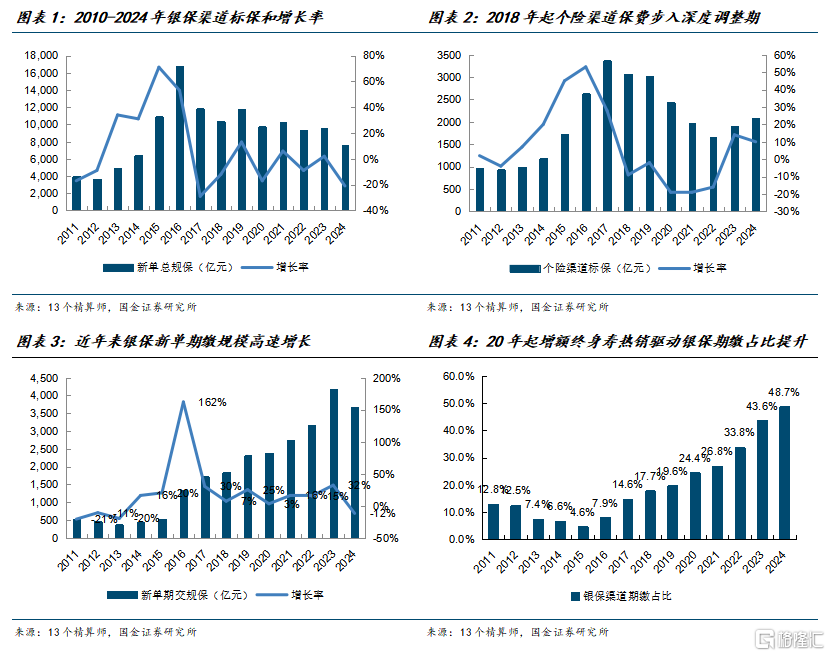
银保渠道锁定26年新单增长主阵地
Ge Long Hui· 2026-01-13 00:08
Investment Logic - The core view is that new individual insurance premiums for listed insurance companies are expected to achieve double-digit growth by 2026, primarily driven by the bancassurance channel [1][18] - The individual insurance channel is anticipated to maintain steady growth, while the bancassurance channel will benefit from the migration of deposits, leading to an increase in market share for large insurance companies [1][18] - The growth in the bancassurance channel is expected to dilute fixed costs, significantly enhancing overall profitability [1][18] Bancassurance Channel - Since 2020, leading insurance companies have refocused on the bancassurance channel, transitioning from scale compensation to value pursuit, resulting in a rise in market share [2][8] - The bancassurance channel has seen a compound annual growth rate (CAGR) of 16.2% from 2019 to 2023, while individual insurance premiums have declined [9] - The "reporting and banking integration" policy implemented in August 2023 has significantly reduced costs, enhancing the value rate of the bancassurance channel [14][9] Customer Deposit Analysis - A survey of 88 frontline bank wealth managers indicates that a significant portion of residents' deposits will mature in 2026, with expectations of low renewal rates due to the withdrawal of high-yield time deposits [3][25] - The majority of maturing depositors are aged 45 and above, indicating a lower risk appetite, with insurance products being the second choice for reallocating maturing deposits [4][30] - Wealth managers believe that bank wealth management products will be the most accepted option for maturing deposits, followed by insurance products [30][27] Sales Logic for Insurance Products - Wealth managers prioritize customer returns and the brand of insurance companies when recommending insurance products [5][33] - The core advantages of participating in dividend insurance sales include stable returns, capital safety, and alignment with long-term financial planning [36][40] - Challenges in selling dividend insurance include uncertainty in returns and the long duration of products, which may deter potential customers [40][36] Market Forecast - The insurance industry is projected to see new single premium growth exceeding 25% in 2026, driven by the bancassurance channel [42][44] - The expected influx of maturing deposits into insurance products will be significant, with estimates of new funds in the bancassurance channel reaching 11,150 billion by the end of 2026 [44][44] - The concentration trend among leading insurance companies is expected to continue, with larger firms benefiting from improved profitability in the bancassurance channel [47][48]
2025上半年财险公司“13精”综合竞争力排名榜:平安、人保、太保均为AAA!(2026年第一期 总第六十六期)
13个精算师· 2026-01-12 14:21
Core Viewpoint - Analyzing an insurance company requires a comprehensive approach that considers multiple indicators such as risk, profitability, development, and scale, rather than focusing solely on premiums or profits [1]. Group 1: Comprehensive Strength of Insurance Companies - The "13精" comprehensive competitiveness ranking has been published for six consecutive years, evaluating companies based on six key indicators [1][4]. - The ranking aims to guide insurance companies to prioritize consumer rights protection by adjusting the evaluation system to include service capability [1]. Group 2: Top Competitors in 2025 - In the first half of 2025, the top 30 companies in the "13精" comprehensive competitiveness ranking included five AAA-rated companies: Ping An Property & Casualty, PICC Property & Casualty, Taiping Property & Casualty, China Life Property, and Yingda Property [5][6][14]. - The ranking reflects the ongoing "Matthew Effect" in the insurance industry, where leading companies maintain their competitive edge [14]. Group 3: Financial Performance and Trends - In the first half of 2025, the net profit of 84 property insurance companies reached 52.5 billion, marking a continuous growth for five years and nearing the total net profit of 60.5 billion for 2024 [11]. - The profitability of property insurance companies has improved due to better underwriting capabilities and a favorable investment environment, with many companies experiencing significant year-on-year profit increases [12][19]. Group 4: Individual Company Analysis - Ping An Property & Casualty demonstrated strong growth in both scale and profitability, with a double-digit growth rate in non-auto insurance premiums [16][19]. - PICC Property & Casualty achieved a comprehensive cost ratio of 94.72%, down 0.81 percentage points from the previous year, with a return on equity (ROE) exceeding 9% [20][22]. - Taiping Property & Casualty improved its net asset return to 8.9%, benefiting from a reduction in comprehensive cost ratios [24]. Group 5: Industry Dynamics and Challenges - The transition towards non-auto insurance has led to increased differentiation among insurance companies, with some small and medium-sized firms improving profitability while others struggle [12][28]. - The industry continues to experience a "Matthew Effect," where larger firms outperform smaller ones in both scale and profitability, despite overall improvements in cost ratios across the sector [25][28]. Group 6: Industry Metrics and Comparisons - The average premium growth rate in the industry was 4.04%, with an average ROE of 6.86% and a comprehensive solvency adequacy ratio of 239.30% [30]. - The ranking system has been refined over time to better reflect the industry's focus on high-quality development, including adjustments to the scoring of premium growth and the introduction of service capability metrics [52][54].

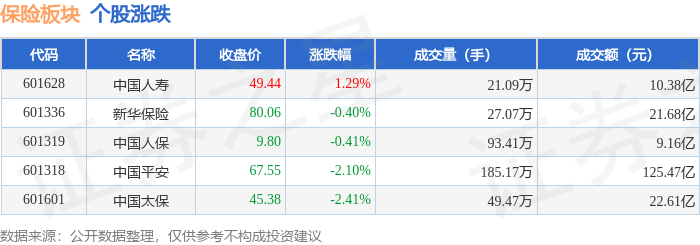
保险板块1月12日跌0.47%,中国太保领跌,主力资金净流出26.61亿元
Zheng Xing Xing Ye Ri Bao· 2026-01-12 09:04
Group 1 - The insurance sector experienced a decline of 0.47% on January 12, with China Pacific Insurance leading the drop [1] - The Shanghai Composite Index closed at 4165.29, up 1.09%, while the Shenzhen Component Index closed at 14366.91, up 1.75% [1] - Key individual stock performances included China Life Insurance up 1.29% to 49.44, while China Pacific Insurance fell 2.41% to 45.38 [1] Group 2 - The insurance sector saw a net outflow of 2.661 billion yuan from institutional investors, while retail investors had a net inflow of 1.387 billion yuan [1] - Specific stock fund flows indicated that China Life Insurance had a net outflow of 89.416 million yuan from institutional investors [2] - China Pacific Insurance experienced a net outflow of 114 million yuan from institutional investors, with a retail net inflow of 107 million yuan [2]
存款搬家与市占率提升双重加持,银保渠道锁定26年新单增长主阵地
SINOLINK SECURITIES· 2026-01-12 05:16
Investment Rating - The report maintains a positive investment rating, recommending continued active investment in the insurance sector due to expected double-digit growth in new premiums driven by the bancassurance channel [5]. Core Insights - The insurance industry is projected to achieve double-digit growth in new premiums by 2026, primarily driven by the bancassurance channel, which benefits from the migration of deposits and the competitive advantages of large insurance companies [1][26]. - The bancassurance channel has seen a significant increase in market share, with the "old seven" insurance companies' new premium market share rising from 8.2% in 2019 to 23.8% in 2023, and expected to reach 26.0% in 2024 [2][22]. - A survey of 88 frontline bank wealth managers indicates that a substantial portion of household deposits will mature in 2026, with expectations that many will not be renewed, leading to a shift towards insurance products [3][35]. - The demographic of clients with maturing deposits is predominantly older, with a lower risk appetite, making insurance products a preferred option for reallocating funds [4][40]. - The report highlights that the bancassurance channel's growth will significantly enhance the overall profitability of large insurance companies by spreading fixed costs over a larger premium base [1][26]. Summary by Sections Bancassurance Channel - The bancassurance channel is identified as the main driver of value growth in the insurance industry for 2026, with a compound annual growth rate of 16.2% from 2019 to 2023 [12]. - The report notes that the shift in focus from individual insurance channels to bancassurance began in 2020, driven by the need to compensate for declining individual premium growth [2][12]. Bank Wealth Manager Survey Analysis - The survey indicates that a significant portion of maturing deposits will not be renewed, with expectations that 50% of clients will have deposits maturing in the 10%-30% and 30%-50% ranges [3][35]. - Wealth managers believe that the most acceptable financial products for clients will be bank wealth management and insurance, with insurance ranking second [4][40]. Projections for 2026 - The report estimates that the new premium growth rate for the bancassurance channel will exceed 25% in 2026, with expected incremental funds of 3,057 billion in January, 5,094 billion in Q1, and 11,150 billion for the entire year [5][62]. - The anticipated growth is attributed to the large volume of maturing deposits and the expected shift towards insurance products due to lower renewal rates for traditional bank deposits [60].