GWMOTOR(601633)

Search documents
汽车与零部件行业周报:中汽协预计2026年中国汽车总销量同比+1%,长城汽车发布归元平台-20260120
Shanghai Securities· 2026-01-20 15:03
Investment Rating - The industry investment rating is "Hold" [2] Core Views - In 2025, the automotive production and sales reached 34.53 million and 34.40 million units respectively, marking a historical high and maintaining the position as the world's largest market for 17 consecutive years. Domestic sales were 27.30 million units, a year-on-year increase of 6.7%, while traditional fuel vehicle sales decreased by 4% to 13.43 million units. Exports exceeded 7 million units, reaching 7.10 million, with a year-on-year growth of 21.1%, and new energy vehicle exports doubled to 2.62 million units [6] - The China Association of Automobile Manufacturers (CAAM) forecasts total automotive sales in China for 2026 to be 34.75 million units, a year-on-year increase of 1%, with new energy vehicle sales expected to reach 19 million units, growing by 15.2% [6] Summary by Sections Market Summary - The automotive sector saw a weekly increase of 0.39%, with the best-performing sub-sector being automotive services, which rose by 4.51%. The overall A-share market increased by 0.38%, placing the automotive sector 11th among 31 primary industries [4] Company Performance - The top five companies in terms of weekly performance were Aikelan (+40.53%), Jiaoyun Shares (+39.32%), Kuntai Shares (+18.45%), Xinquan Shares (+16.24%), and Zhejiang Huayuan (+15.99%). Conversely, the bottom five were Taotao Automotive (-10.99%), Aerospace Science and Technology (-12.92%), Yueling Shares (-15.40%), Czhixin (-18.81%), and Tianpu Shares (-25.33%) [5] Investment Recommendations - The report suggests focusing on companies related to intelligent vehicle technology, those with potential in overseas sales, and component manufacturers benefiting from domestic substitution effects. Specific recommendations include Baic Blue Valley for complete vehicles and Bertley, Yinlun Shares, Longsheng Technology, and others for components [8][10]
【整车主线周报】12月零售符合预期,看好26年景气度向上
东吴汽车黄细里团队· 2026-01-20 14:07
Investment Highlights - The passenger car sector is expected to see a recovery in Q1 2026 due to the implementation of subsidy policies, with a focus on high-end electric vehicles that are less sensitive to policy changes, such as Jianghuai Automobile, Geely, Great Wall Motors, BAIC Blue Valley, Seres, and Li Auto [2][7] - For exports, priority should be given to leading companies with established overseas systems and proven execution capabilities, including BYD, Great Wall Motors, Chery, Leap Motor, Xpeng, SAIC Motor, and Changan Automobile [2][7] Heavy Truck Sector - In 2025, wholesale heavy truck sales reached 1.144 million units, up 26.8% year-on-year, with domestic sales of 799,000 units, up 32.8%, and exports of 341,000 units, up 17.2% [3][37] - The expected domestic sales for heavy trucks in 2026 is optimistic, projected at 800,000 to 850,000 units, a 3% increase year-on-year [3][37] - Recommended leading heavy truck companies include China National Heavy Duty Truck Group, Weichai Power, Foton Motor, FAW Jiefang, and CIMC Vehicles [3][37] Bus Sector - The implementation of the vehicle replacement policy in 2026 is slightly better than expected, with bus sales in 2025 projected at 38,000 units, a 25% increase year-on-year [3][37] - For 2026, bus sales are expected to grow to 40,000 units, a 5% increase year-on-year, supported by the number of buses over eight years old that need replacement [3][37] - Recommended leading bus companies include Yutong Bus, King Long Motor, and Zhongtong Bus [3][37] Motorcycle Sector - The motorcycle industry is projected to achieve total sales of 19.38 million units in 2026, a 14% increase year-on-year, with large-displacement motorcycles expected to reach 1.26 million units, a 31% increase [4][34] - Domestic sales of large-displacement motorcycles are expected to grow slightly to 430,000 units in 2026, a 5% increase year-on-year, while exports are projected to reach 830,000 units, a 50% increase [4][34] - Recommended leading motorcycle companies include Chunfeng Power and Longxin General [4][34]







魏建军对效率下狠手
Hua Er Jie Jian Wen· 2026-01-20 13:30
Core Viewpoint - The launch of the "Guiyuan Platform" by Great Wall Motors marks a significant transformation in automotive production paradigms, aiming to unify its technology stack and enhance competitiveness in a challenging market environment [1][2]. Group 1: Platform Features - The Guiyuan Platform is described as the world's first native AI all-power vehicle platform, set to produce 51 models across five power types and seven categories, including brands like Ora, Wey, Tank, and Great Wall Pickup [1]. - The platform achieves an 80% commonality rate for vehicle components and reduces the R&D cycle by approximately 30%, leading to significant cost reductions in vehicle development and ownership [1][2]. - It decomposes vehicles into 49 core modules and 329 shared components, allowing for a modular approach to vehicle design, akin to assembling with Lego blocks [2]. Group 2: Strategic Shift - Great Wall Motors has adjusted its sales target for 2026 from 2.49 million units to 1.8 million units while maintaining a net profit target of 10 billion yuan, indicating a shift from scale dependency to seeking higher profit margins with a limited market share [3]. - The company plans to launch high-end products priced between 200,000 to 400,000 yuan, with the average domestic product price already at 200,000 yuan compared to competitors at 130,000 yuan [4]. Group 3: Competitive Landscape - The automotive industry is expected to transition from a price war to a competition based on product quality, features, and innovation, with Great Wall focusing on providing better products rather than the lowest prices [5]. - The Guiyuan Platform's design aims to enhance vehicle resale value and reduce maintenance costs by 15%, while improving repair efficiency by 40% [4]. Group 4: Technological Focus - Great Wall has chosen not to pursue range-extended electric vehicles, focusing instead on its Hi4-PHEV system, which features an 800V architecture and a dedicated four-speed hybrid transmission, achieving a pure electric range of 363 kilometers and a total range of nearly 1,400 kilometers [6]. - This strategic decision aims to establish a technological barrier against low-cost competitors and maintain its influence in the high-end and multi-purpose vehicle markets [6]. Group 5: Future Outlook - The Guiyuan Platform represents a shift towards a resilient manufacturing system that prioritizes efficiency and adaptability, moving away from the previous decade's focus on singular explosive growth [7]. - The platform's versatility is intended to address market fragmentation and ensure production efficiency, positioning Great Wall Motors for sustainable growth in a competitive landscape [8].

长城汽车发布归元平台 打造原生AI全动力汽车架构
Zhong Zheng Wang· 2026-01-20 11:58
中证报中证网讯(记者 龚梦泽)近日,长城汽车(601633)在浙江瑞安东源村(中国木活字印刷术活 态传承地)及河北保定技术中心同步举行活动,全球首发归元平台。该平台定位为全球首个原生AI全 动力汽车平台,以技术模块化与多场景适配为核心特点,覆盖多元能源形式与车型品类。 归元平台的核心设计理念源于活字印刷术的标准化与灵活性,通过建立底层技术标准,将各项核心技术 转化为可灵活组合的"模块单元",实现"一套架构、多元适配"。动力层面,该平台兼容PHEV(插电式 混合动力)、HEV(混合动力)、BEV(纯电动)、FCEV(氢燃料)、ICE(高效燃油)五大动力形 式,未来还将推出柴油混动版本,其综合油耗可下降9%,市区油耗下降15%,加速能力提升40%,兼顾 越野、拖拽需求与能效优化。 智能技术方面,归元平台基于CoffeeEEA4.0电子电气架构,融合AIOS车载系统与双VLA大模型,构建 全栈智能体。平台采用"硬件原子化、软件标签化"设计,将整车拆解为300余个可复用功能单元,通过 2000余个标签实现AI动态调度,同时搭载全球首创的仿生学运动控制系统,打通底盘、智驾与动力系 统的协同链路。 安全防护上,平台以主被 ...
汽车行业周报:中欧电车价格承诺机制落地,多地开放2026年汽车补贴,长城发布归元平台-20260120
Guohai Securities· 2026-01-20 09:13
Investment Rating - The report maintains a "Recommended" rating for the automotive industry [1] Core Insights - The implementation of the China-Europe electric vehicle price commitment mechanism is expected to stabilize sales expectations for Chinese electric vehicles in Europe and promote the high-end and localized transformation of automakers [5][13] - Multiple provinces have opened applications for the 2026 automotive replacement subsidy, indicating a clear path for local governments to implement the policy [14] - Great Wall Motors has launched the "Guiyuan" platform, which is the world's first native AI all-power platform, designed to support various power forms and enhance development efficiency [6][14] - The report expresses a positive outlook for 2026, highlighting opportunities in the high-end upgrade of domestic brands and the acceleration of smart technology penetration [15][16] Summary by Sections Recent Performance - The automotive sector outperformed the Shanghai Composite Index with a 1-week increase of 0.5% from January 12 to January 16, 2026, while the Shanghai Composite Index decreased by 0.4% [17] - The performance of individual stocks varied, with notable increases in companies like Ideal Auto (+2.4%) and declines in others like Li Auto (-3.5%) [17][23] Key Companies and Earnings Forecast - Key companies recommended include: - Jianghuai Automobile - Leap Motor - Great Wall Motors - BYD - SAIC Motor - China National Heavy Duty Truck [7][8] - Earnings per share (EPS) forecasts for selected companies show growth, with Great Wall Motors expected to reach an EPS of 2.03 in 2026 [8] Industry Indicators - In December 2025, automotive production and sales reached 3.296 million and 3.272 million units, respectively, with a year-on-year decrease of 2.1% and 6.2% [42] - New energy vehicles accounted for approximately 52% of total new vehicle sales, indicating a significant market shift towards electrification [42]


2026 中国新能源汽车与动力电池手册_从自动驾驶到人工智能-2026 China EV & EV Battery Handbook_ From Autonomous Driving to AI
2026-01-20 01:50
Summary of Key Points from the Conference Call Industry Overview: Greater China Auto, EV, and EV Battery Industry Forecasts - **China's Auto Industry**: Expected to face challenges in 2026 with a forecasted decline in auto wholesales by **1.6% YoY** compared to a **10% YoY** increase in 2025. This decline is attributed to front-loaded demand in 2025 [1] - **Domestic EV Sales**: Anticipated to grow only **7% YoY** in 2026 due to a **5% increase in purchase tax** and reduced trade-in subsidies [1] - **Export Sales**: Projected to increase by **12% YoY**, reaching **7.9 million units** in 2026, with EV exports expected to surge by **40% YoY** [1] - **Competition Dynamics**: Shift from price competition to configuration-based competition, necessitating more investment in autonomous driving (AD) and smart cabin technologies [1] Key Automotive/EV Themes for 2026 Theme 1: Export Growth - **Export Growth**: Companies like Chery and BYD are expected to benefit significantly from exports, especially with the EU's minimum EV price replacing tariffs [2] Theme 2: Autonomous Driving Development - **ADAS to AD Transition**: L3 permits issued to Changan and BAIC, with highway/city NOA penetration expected to exceed **40%** in 2026 and **85%** by 2030. L4/L5 penetration is projected to reach **8%** by 2030 [3] Theme 3: Cost Concerns - **Battery and Memory Costs**: Rising costs and supply stability of memory are key concerns for auto OEMs [3] Key Battery Themes for 2026 Theme 1: Energy Storage Systems (ESS) - **ESS Demand**: Global battery ESS installations expected to grow by **33% YoY** in 2026, with shipments increasing by **41% YoY** [4] Theme 2: Global Expansion - **Overseas Capacity Expansion**: Chinese battery manufacturers are accelerating their overseas capacity expansion, particularly in Europe and Southeast Asia, in response to rising tariffs and trade tensions [4] Theme 3: VAT Rebate Changes - **Export VAT Rebate Cut**: Anticipated to lead to a rush in battery production and shipment in Q1 2026, potentially increasing raw material prices and exerting cost pressure on battery makers and auto OEMs [5] Theme 4: Technological Innovation - **Sodium-Ion Battery**: Launch of Gen-2 sodium-ion battery expected, with ASSB (all-solid-state battery) small-batch production anticipated to start in 2027 and scale up significantly post-2029 [5] Investment Recommendations - **Top Picks**: - **XPeng**: Launch of Mona SUV and HR in 2H26, with a focus on AI-related businesses [6] - **CATL**: Growth driven by CEV, ESS, and overseas capacity despite short-term cost pressures [6] - **Tuopu**: Major supplier for humanoid robots with overseas expansion [6] - **Minth**: Resilient earnings growth supported by high overseas market exposure [6] - **Hesai**: Increased LiDAR adoption in China alongside L3 ADAS development [6] Additional Insights - **Market Dynamics**: The shift in competition and the focus on technological advancements highlight the evolving landscape of the automotive and EV sectors in China, emphasizing the need for companies to adapt to changing consumer preferences and regulatory environments [1][3][4][5]





长城汽车总裁穆峰:让汽车制造进入灵活组合新阶段
Zheng Quan Ri Bao· 2026-01-19 16:15
Core Viewpoint - The automotive industry is accelerating towards the deep integration of electrification and intelligence, with Great Wall Motors launching the "Guiyuan Platform," a new generation technology architecture centered on "native AI all-power platform," sparking discussions on new energy technology routes, platform strategies, and global competition dynamics [1] Group 1: Guiyuan Platform Features - The Guiyuan Platform is designed to address the lack of unified energy standards in the global market and the highly diversified user demands, offering diverse, efficient, and evolvable solutions [1][2] - The platform supports five power forms: FCEV (hydrogen fuel), BEV (pure electric), PHEV (plug-in hybrid), HEV (hybrid), and ICE (internal combustion engine), explicitly excluding range-extended vehicles due to their lower energy efficiency in high-speed scenarios [2][3] - The modular design of the Guiyuan Platform allows for flexible combinations in automotive manufacturing, moving away from traditional models where one platform corresponds to one power type and one vehicle model [3] Group 2: Global Market Adaptation - The platform aims to cater to different market preferences, regulatory requirements, and usage scenarios, enabling rapid responses to market demands without the need for new platform development [4] - The platform's design is aligned with the strictest global regulations, having collected data from 163 global scenarios, covering various markets including Europe, Southeast Asia, the Middle East, and South America [3] Group 3: Technological Innovations - The Guiyuan Platform incorporates the "native AI" concept, featuring the Coffee EEA4.0 electronic and electrical architecture, which includes over 2,000 standardized software capabilities and introduces dual VLA large models for enhanced vehicle capabilities [4] - The platform emphasizes evolvability, allowing for hardware upgrades through module replacements and continuous software upgrades via OTA to enhance AI capabilities and intelligent driving functions [4][5] Group 4: Future Plans - The first model based on the Guiyuan Platform, a new flagship SUV under the Wey brand, is set to launch in the third quarter of 2026, with plans to cover seven vehicle categories to support Great Wall Motors' production and sales target of 1.8 million units in 2026 [5] - The shift from competing on cost and configuration to competing on technological systems and platform capabilities marks a significant step for Chinese automotive brands in participating in global competition [5]
小米打破24小时耐力赛纪录!尚界Z7官图发布!奇瑞发布AI战略!保时捷2025全球交付27.94万辆,下滑10%!丨一周大事件
电动车公社· 2026-01-19 16:05
New Car Launches - Aito M7 extended range version launched with a price range of 299,800 to 319,800 yuan, featuring a single motor with 227 kW and a CLTC range of 327 km, improving from 315 km [1][3][5] - The new Arcfox Kaola S launched with a price range of 99,800 to 119,800 yuan, offering an 8-year or 150,000 km battery warranty and a CLTC range of 520 km [1][5][11] - Wuling Star 560 launched with plug-in hybrid and pure electric versions priced at 91,800 and 98,800 yuan respectively, featuring a design inspired by the Hongguang X concept car [1][13][17] - Leado L60 "Ma Dao Cheng Gong" version launched at 218,900 yuan, maintaining similar design and features to existing models [1][21][23] Company Developments - Lantu Motors signed a strategic cooperation agreement with Yiwang to enhance collaboration in smart driving and marketing [1][28][30] - BAIC New Energy announced L3 and L4 strategic achievements, with the Alpha S (L3 version) starting trial operations in designated areas [1][32][34] - Tesla will shift its Full Self-Driving (FSD) to a subscription model starting February 14, 2024, with current buyout prices at 8,000 USD in the US and 64,000 yuan in China [1][37][38] - Honda announced a new logo for its electric and hybrid vehicles, set to be applied to future models [1][39][40] - Great Wall Motors launched the "Guiyuan" AI platform, compatible with multiple powertrains, aiming to reduce production costs and meet diverse market needs [1][41][45] - Chery unveiled its AI strategy, focusing on making advanced driving features accessible in lower-priced models [1][46][48] Industry News - The Ministry of Industry and Information Technology outlined key tasks for the 2026 new energy vehicle sector, emphasizing technology development and market regulation [1][59][62] - Porsche's global deliveries in 2025 reached 279,449 units, a 10% decline, with significant drops in the Chinese market [1][55][56][58] - The new Xiaomi SU7 set a record in a 24-hour endurance race, covering 4,264 km, showcasing advancements in electric vehicle technology [1][49][51][54]

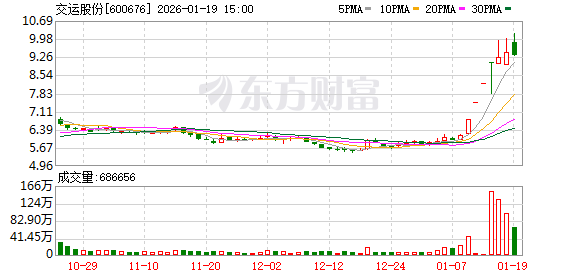
交运股份:公司所属汽车零部件制造分公司为比亚迪、意大利斯特兰提斯、上海通用、长城等国内外知名品牌汽车制造商提供专业配套服务
Zheng Quan Ri Bao· 2026-01-19 13:12
Group 1 - The company, Jiaoyun Co., stated that its automotive parts manufacturing division provides professional supporting services to well-known domestic and international automotive manufacturers such as BYD, Stellantis, Shanghai General Motors, and Great Wall [2] - The specific details of these services are outlined in the company's semi-annual report for 2025, which is available on the Shanghai Stock Exchange website [2]


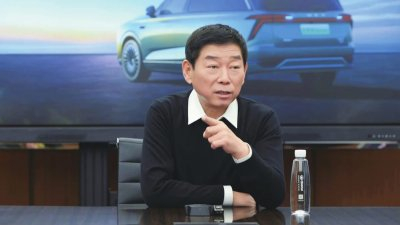
打造高端品牌需要耐得住寂寞
Zhong Guo Jing Ying Bao· 2026-01-19 12:23
Core Viewpoint - The essence of a true high-end brand lies in its spiritual value proposition and the recognition of its values by users, emphasizing trust and responsibility in addressing issues that arise with complex products like automobiles [2][6]. Group 1: Brand Development and Philosophy - Wei Jianjun, the founder and chairman of Great Wall Motors, emphasizes that building a high-end brand requires patience and a commitment to core values, which have remained unchanged over the years [3][5]. - The brand "WEY" is the first high-end automotive brand in China named after its founder's surname, reflecting a commitment to integrity and accountability [3][4]. - The design of the WEY logo draws inspiration from historical elements in Baoding, showcasing pride in the brand's origins [4]. Group 2: Market Position and Challenges - Despite challenges in the past decade, the company remains focused on its high-end positioning, asserting that true high-end brands have yet to emerge in the Chinese automotive market [5][8]. - The company acknowledges that many brands are selling high-end products rather than establishing high-end brand equity, indicating a long journey ahead for brand building [8]. Group 3: Product and Technology - The company believes that a high-end product must be supported by top-notch technology, with a focus on mechanical quality and driving experience [9][12]. - The introduction of the "one car, multiple power" platform aims to adapt to various market needs and energy structures globally, enhancing competitiveness through scale [11][13]. Group 4: User-Centric Approach - The company emphasizes a user-centric philosophy, stating that the essence of automotive development should focus on benefiting users and being socially responsible, rather than merely pursuing luxury [7][10]. - The commitment to safety is highlighted as a core luxury value, with past incidents demonstrating the brand's reliability [6]. Group 5: Organizational Structure and Leadership - The company has invested over 2 billion yuan in establishing a direct sales system to better support its high-end brand, recognizing the limitations of previous distribution channels [9][12]. - Frequent changes in leadership have been noted, with the company acknowledging the pressures faced by CEOs in managing a high-end brand [13][15].