
Bank Of Chongqing(601963)

Search documents
三地同步发力!消费贷新政落地,中小银行助力政策触达“最后一公里”
Xin Lang Cai Jing· 2025-12-19 02:50
Core Viewpoint - The consumer loan interest subsidy policy is being implemented at the local level, with provinces like Sichuan, Chongqing, and Guizhou initiating provincial subsidy programs, marking a further refinement of the national policy [2][10]. Group 1: Policy Implementation - Sichuan, Chongqing, and Guizhou have launched provincial subsidy programs for consumer loans, including local small and medium-sized banks as processing institutions [3][11]. - The subsidy period for Sichuan is from October 1, 2025, to March 31, 2026, while Chongqing's period is from September 1, 2025, to August 31, 2026, and Guizhou's is from September 1, 2025, to December 31, 2025 [3][11]. - The core standard for the subsidy is a 1% annual interest subsidy rate, not exceeding 50% of the loan contract interest rate, consistent with national standards [5][13]. Group 2: Market Impact - The inclusion of local policies is expected to create a structural impact, leading to a policy overlay effect that lowers consumer credit interest rates and stimulates demand [4][12]. - This policy shift breaks the initial trend where national subsidies primarily benefited large national banks, providing local banks with competitive tools and preventing excessive market concentration [5][13]. - The initiative encourages financial institutions to innovate products based on regional consumption characteristics, leading to a more diverse and balanced financial support network for consumption [5][13]. Group 3: Future Outlook - The Ministry of Commerce and other regulatory bodies have emphasized the need for collaboration among financial policies to guide credit funds towards key consumption areas [6][14]. - Experts predict that more provinces, especially economically significant ones, will adopt similar policies, with a focus on green and digital consumption [6][14]. - There is a strong motivation for regions with weak consumption recovery or those looking to enhance local commercial vitality to implement similar measures, creating a synergistic effect between national and local subsidies [6][14]. Group 4: Challenges for Local Banks - Local banks face both opportunities and challenges from this policy, as it provides a short-term growth window but also highlights their limitations in customer base, risk control technology, and product capabilities compared to larger banks [7][15]. - The policy's benefits may be temporary, and local banks must enhance their digital operations and service capabilities to retain customers after the policy period ends [7][15]. - Recommendations for local banks include leveraging policy benefits for rapid digital upgrades, building a "credit + scenario" ecosystem, and strengthening risk control and unique capabilities to avoid dependency on subsidies [7][15].



直线涨停!不到4分钟
Zhong Guo Zheng Quan Bao· 2025-12-18 08:40
Banking Sector - The banking sector experienced a rebound, with Shanghai Bank and Chongqing Rural Commercial Bank both rising over 3% [7][9] - Recent reports indicate that listed banks are expected to see improved revenue and profit growth in 2026 and 2027, driven by narrowing net interest margin pressure, quality-focused credit issuance, and stabilizing fee income growth [9] - The average dividend yield for the banking sector is currently at 5.2%, significantly higher than the 10-year government bond yield, indicating a shift towards a "high dividend + high quality" investment cycle [9][10] Retail Sector - The retail sector showed strength, with Central Plaza and Shanghai Jiubai hitting the daily limit, and New World achieving a rapid surge shortly after market opening [3] - New World is focusing on attracting the "Z generation" consumer group and has plans to launch popular IP exhibitions [3] Commercial Aerospace Sector - The commercial aerospace sector is witnessing a surge, with companies like Star Technology and Shunhao Co. hitting the daily limit [5][11] - Star Technology has secured several orders in the commercial aerospace field and plans to initiate mass production in 2026 to meet the growing demand from private aerospace companies [14] - Recent policy support from the National Space Administration aims to promote high-quality development in the commercial aerospace sector, which is expected to accelerate the implementation of various industry chain segments [14][15]




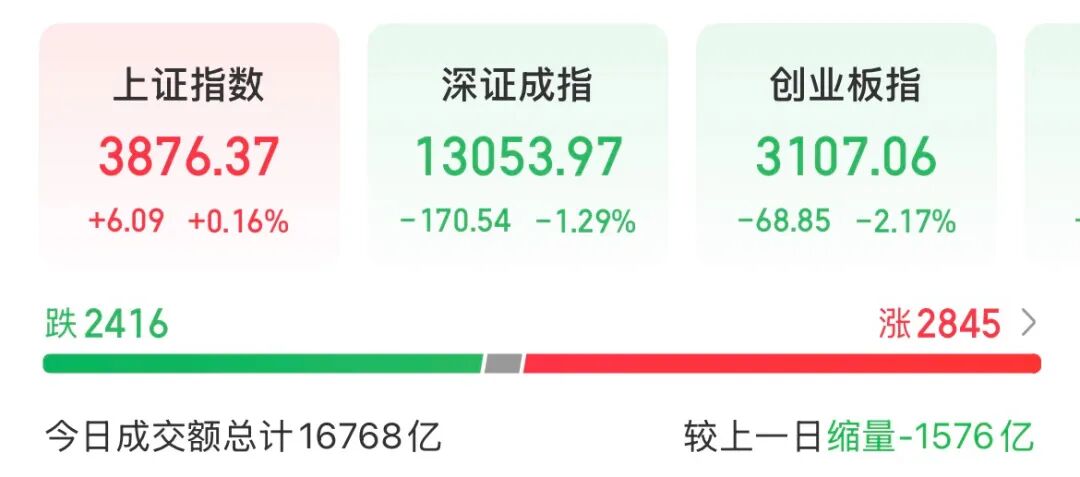
重庆银行涨2.01%,成交额4803.97万元,主力资金净流出133.98万元
Xin Lang Cai Jing· 2025-12-18 06:01
Group 1 - Chongqing Bank's stock price increased by 2.01% on December 18, reaching 11.18 CNY per share, with a market capitalization of 38.846 billion CNY [1] - The bank's stock has risen 26.10% year-to-date, with a 2.47% increase over the last five trading days, a 1.06% decrease over the last 20 days, and a 20.60% increase over the last 60 days [1] - As of September 30, the number of shareholders increased by 6.17% to 36,300, while the average circulating shares per person decreased by 6.01% to 53,243 shares [2] Group 2 - Chongqing Bank reported a revenue of 11.740 billion CNY for the period from January to September 2025, reflecting a year-on-year growth of 10.40%, and a net profit attributable to shareholders of 4.879 billion CNY, up 10.19% year-on-year [2] - The bank's main business segments include corporate banking (75.09% of revenue), retail banking (16.94%), and funding operations (7.72%) [2] - Since its A-share listing, Chongqing Bank has distributed a total of 6.880 billion CNY in dividends, with 4.229 billion CNY distributed over the last three years [3]
A股银行股普涨,建设银行涨超2%
Ge Long Hui· 2025-12-18 05:24
Core Viewpoint - The A-share market has seen a broad increase in bank stocks, indicating positive market sentiment towards the banking sector [1] Group 1: Stock Performance - Suzhou Bank, Xiamen Bank, Shanghai Bank, Hangzhou Bank, Jiangyin Bank, China Construction Bank, and Chongqing Rural Commercial Bank all experienced gains exceeding 2% [1] - Zhangjiagang Bank, Nanjing Bank, Jiangsu Bank, Qilu Bank, Changsha Bank, Qingdao Bank, and Chongqing Bank saw increases close to 2% [1]

11月央行信贷收支表要点解读:存款搬家股市放缓,中小行储蓄回流大行
KAIYUAN SECURITIES· 2025-12-18 01:41
Investment Rating - The industry investment rating is "Overweight" (maintained) [2] Core Insights - The report highlights a slowdown in non-bank deposit growth, indicating a reduced diversion of deposits to the stock market, with large banks experiencing a net inflow of deposits while smaller banks see a decline [5][6] - The report suggests that the upcoming quarter (Q1 2026) will present challenges for banks in terms of asset-liability matching due to the maturity of high-interest deposits and fluctuating deposit growth [7] - The investment strategy emphasizes balancing asset quality and pricing power, with a focus on large state-owned banks and leading comprehensive banks as key investment targets [8] Summary by Sections Deposit Trends - In November, large banks saw a decrease of 83.3 billion yuan in non-bank deposits, reflecting a weakening effect of the stock market on deposit diversion [5] - Non-bank deposit growth remains higher than that of resident fixed deposits, indicating a shift of funds into wealth management products [6] - Smaller banks experienced a year-on-year decrease of 478.9 billion yuan in fixed deposits, while large banks saw an increase of 419.4 billion yuan, suggesting a trend of deposit migration back to larger institutions [6] Credit and Investment Dynamics - Credit demand, particularly in consumer sectors, remains weak, leading to a continued slowdown in lending growth [7] - The report anticipates that banks may increase bond investments to fill year-end balance sheet requirements, especially as high-interest fixed deposits mature [7] Investment Recommendations - The report recommends a focus on large state-owned banks as foundational investments, with specific mentions of Agricultural Bank of China and Industrial and Commercial Bank of China as beneficiaries [8] - Core investments should target leading comprehensive banks like China Merchants Bank and Industrial Bank, with a recommendation for CITIC Bank as a key stock [8] - For more flexible investments, banks such as Jiangsu Bank and Chongqing Bank are highlighted as potential beneficiaries [8]




重庆银行跌0.54%,成交额8081.86万元,近3日主力净流入-346.94万
Xin Lang Cai Jing· 2025-12-17 08:11
Core Viewpoint - Chongqing Bank's stock performance shows a slight decline, with a recent drop of 0.54% and a total market capitalization of 38.08 billion yuan [1] Group 1: Dividend and Financial Support - Chongqing Bank's dividend yields over the past three years were 5.83%, 5.86%, and 4.46% respectively [2] - The bank has launched various financial products to support rural revitalization, including "Rural Revitalization Loans" and "Live Pig Collateral Loans" [2] - The bank aims to enhance credit support for new agricultural entities and strengthen partnerships with government-backed financing institutions [2] Group 2: Shareholding and Market Activity - Chongqing Real Estate Group has acquired a stake in Chongqing Bank, holding 6.53% of the total shares [2] - The bank's main trading activity shows a net outflow of 3.12 million yuan today, with a lack of clear trends in major funds [3][4] Group 3: Technical Analysis - The average trading cost of Chongqing Bank's shares is 9.97 yuan, with the current price approaching a resistance level of 11.01 yuan [5] - If the stock price breaks through the resistance level, it may initiate an upward trend [5] Group 4: Company Overview - Chongqing Bank, established on September 2, 1996, primarily provides corporate and personal banking services, with a revenue composition of 75.09% from corporate banking, 16.94% from personal banking, and 7.72% from funding operations [6] - As of September 30, the number of shareholders increased to 36,300, with an average of 53,243 circulating shares per person [6] - For the period from January to September 2025, the bank reported a revenue of 11.74 billion yuan, a year-on-year increase of 10.40%, and a net profit of 4.88 billion yuan, up 10.19% year-on-year [6] Group 5: Dividend Distribution - Since its A-share listing, Chongqing Bank has distributed a total of 6.88 billion yuan in dividends, with 4.23 billion yuan distributed over the past three years [7]
重庆银行(01963.HK)披露二零二五年季度股息安排,12月16日股价下跌1.36%
Sou Hu Cai Jing· 2025-12-16 10:05
《二零二五年季度股息-股息货币选择表格》 以上内容为证券之星据公开信息整理,由AI算法生成(网信算备310104345710301240019号),不构成 投资建议。 截至2025年12月16日收盘,重庆银行(01963)报收于7.95元,较前一交易日下跌1.36%,该股当日开盘 8.05元,最高8.09元,最低7.93元,成交额达925.29万元。近52周最高8.72元,最低5.32元。 近日,重庆银行发布关于二零二五年季度股息的公告,就截至2025年9月30日止九个月的股息分配发出 股息货币选择表格。本次现金股息为每10股人民币1.684元(含税),合计派发现金股利人民币 585,120,249.06元(含税)。股息分配以2025年9月30日的普通股总股本3,474,585,802股为基数,若A股 可转债转股导致总股本变动,则总分配金额不变,每股分红金额将相应调整。H股股东可选择以人民币 或港币收取股息,其中人民币兑港币的折算汇率采用2025年11月28日中国人民银行公布的中间价,即 1.00港元兑0.90990人民币。登记股东如未提交选择,默认以港币收取股息。选择以人民币收取股息的H 股股东须于2026 ...
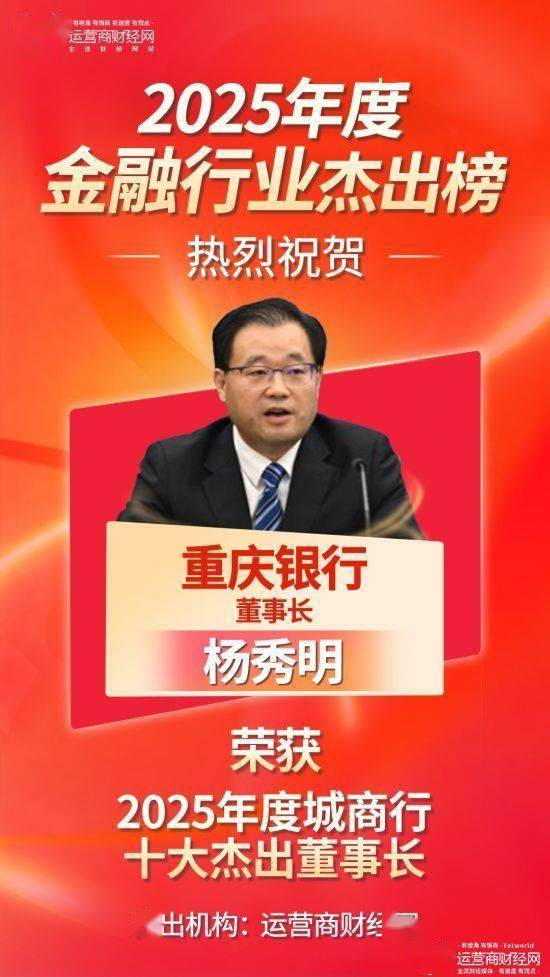
“2025年度城商行十大杰出董事长”榜单公布!重庆银行董事长杨秀明榜上有名
Sou Hu Cai Jing· 2025-12-16 09:59
运营商财经网总编康钊认为,上任以来,杨秀明以其卓越的领导才能、丰富的实践经验和敏锐的市场洞 察力,带领重庆银行在激烈的市场竞争中不断发展壮大。因此,此次上榜实至名归。 运营商财经(官方微信公众号yyscjrd)—— 主流财经网站,一家全面覆盖科技、金融、证券、汽车、 房产、食品、医药、日化、酒业及其他各种消费品网站。 运营商财经网讯 公开信息显示,杨秀明出生于1970年9月,是经济学学士。2024年3月,他正式担任重庆银行董事长、执 行董事,并担任该行的战略与创新委员会主任委员。 基于对金融行业的整体洞察,知名财经媒体运营商财经网独家打造了"2025年度金融行业杰出榜"。该榜 单基于各家金融机构的综合实力,涵盖了银行、保险、证券、基金四大细分领域的杰出高管。 日前,运营商财经网已经公布了"2025年度城商行十大杰出董事长",重庆银行董事长杨秀明榜上有名。 ...
上市银行发中期“红包”了!工行、农行共发近千亿现金红利,多家银行“红包”正在路上
Mei Ri Jing Ji Xin Wen· 2025-12-16 09:39
Core Viewpoint - Major Chinese banks are actively distributing mid-term cash dividends, reflecting strong profitability and capital adequacy, which is expected to enhance shareholder value and market confidence [6][8]. Group 1: Dividend Distribution by Major Banks - On December 15, Industrial and Agricultural Banks announced a total cash dividend of approximately 92.2 billion yuan for the first half of 2025, with A-share dividends amounting to about 76.2 billion yuan [1]. - Industrial Bank distributed a cash dividend of 0.1414 yuan per share, totaling approximately 503.96 billion yuan, with A-share dividends around 381.23 billion yuan [3]. - Agricultural Bank issued a cash dividend of 0.1195 yuan per share, totaling about 418.23 billion yuan, with A-share dividends approximately 381.5 billion yuan [3]. - Other major banks, including China Bank and Construction Bank, have also announced significant cash dividends, contributing to a total of over 200 billion yuan in cash dividends from the six major banks [4]. Group 2: Participation of Other Banks - Several joint-stock banks, such as CITIC Bank and Ping An Bank, have also joined the mid-term dividend distribution, with CITIC Bank distributing 104.61 billion yuan and Ping An Bank distributing 45.80 billion yuan [7]. - New entrants to the mid-term dividend distribution include Industrial Bank, which plans to distribute 119.57 billion yuan, and Ningbo Bank, which will distribute 19.81 billion yuan [7]. - Chongqing Bank plans to distribute 5.85 billion yuan, representing 11.99% of its net profit attributable to ordinary shareholders [7]. Group 3: Market Implications and Analyst Insights - Analysts indicate that the increase in mid-term dividends is a response to regulatory guidance and market demand for high-yield assets, particularly in a low-interest-rate environment [8]. - The trend of early and substantial mid-term dividends reflects the stable profitability of quality banks and their enhanced capacity for dividend distribution [8]. - Mid-term dividends are seen as a strategy to optimize capital structure and improve return on equity (ROE), while also attracting long-term investors [8].


2025年金融机构不良处置提速:多渠道协同筑牢资产质量防线
Jin Rong Jie· 2025-12-16 09:27
Core Insights - The transfer of non-performing loans (NPLs) is gaining momentum, becoming a crucial strategy for financial institutions to mitigate asset risks by 2025 [1][2] - The pace of asset disposal has accelerated significantly in 2025, with both the scale and frequency of disposals showing marked increases [2][4] - Consumer finance institutions are actively participating in the NPL market, contributing to the overall asset disposal efforts [3][4] Group 1: NPL Transfer Activities - The Silver Transfer Center reported nearly 60 NPL transfer announcements within three days, with major banks like China Construction Bank and Postal Savings Bank participating [1] - In the first quarter of 2025, the batch transfer of personal NPLs reached 37.04 billion yuan, a staggering increase of 761.4% year-on-year, with personal consumption loans making up over 70% of this figure [2] - Several banks, including Ping An Bank and Zhongyuan Bank, have initiated significant NPL transfer projects, with outstanding principal and interest amounts reaching 762 million yuan and 522 million yuan respectively [2] Group 2: Market Dynamics and Challenges - The pressure on asset quality is evident, with rising non-performing loan ratios among various banks, such as Chongqing Bank's ratio climbing to 6.23% [4] - The financial environment, characterized by macroeconomic fluctuations, is impacting the repayment capabilities of individuals and businesses, leading to increased NPLs [4] - The Silver Transfer Center's report indicates that the pressure for NPL disposal will persist throughout 2025 [4] Group 3: Regulatory and Technological Support - Regulatory policies are providing robust support for NPL disposal efforts, with calls for increased asset disposal and capital replenishment [5] - Financial institutions are leveraging technology to enhance risk management and improve the efficiency of NPL disposals, with initiatives like "smart disposal" platforms being developed [5][6] - Institutions like Agricultural Bank of China and China Bank are emphasizing digital transformation to strengthen risk control and reduce new NPLs [5]

