
ZBOM(603801)

Search documents
造纸轻工周报:关注关税政策变化、AI眼镜新品催化,家居和内需消费有望边际改善-20260226
Shenwan Hongyuan Securities· 2026-02-26 13:43
行 业 及 产 业 轻工制造 行 业 研 究 / 行 业 点 评 证 券 研 究 报 告 证券分析师 黄莎 A0230522010002 huangsha@swsresearch.com 屠亦婷 A0230512080003 tuyt@swsresearch.com 庞盈盈 A0230522060003 pangyy@swsresearch.com 张海涛 A0230524080003 zhanght@swsresearch.com 魏雨辰 A0230525010001 weiyc@swsresearch.com 联系人 魏雨辰 A0230525010001 weiyc@swsresearch.com 2026 年 02 月 26 日 关注关税政策变化、AI 眼镜新品催 化;家居和内需消费有望边际改善 看好 ——造纸轻工周报 2026/02/09-2026/02/23 本期投资提示: ⚫ 重点提示: 请务必仔细阅读正文之后的各项信息披露与声明 本研究报告仅通过邮件提供给 中庚基金 使用。1 相关研究 - 汇率大幅波动的风险;关税预期波动的风险 ⚫ 1)出口:关税政策变化,海外下游存补库预期,推荐 Alpha ...



2026年中国室内门行业特征、供需及市场规模洞察: 行业整体维持低位运行[图]
Chan Ye Xin Xi Wang· 2026-02-16 01:01
Core Insights - The indoor door industry in China is experiencing a decline in both production and market demand, with a projected production of 96.37 million units and a demand of 91.686 million units in 2025, reflecting a year-on-year decrease of 2.16% in production [10][11] - The market size for indoor doors is expected to be approximately 68.81 billion yuan in 2025, showing a slight decrease compared to previous years [10][11] Industry Overview - Indoor doors are defined as doors installed within residential spaces, categorized into bedroom doors, bathroom doors, and kitchen doors, contrasting with outdoor doors [2][3] - The market has traditionally been dominated by handcrafted wooden doors, but advancements in technology have led to the development of metal composite doors and other varieties [2][3] Industry Characteristics - The indoor door industry is highly correlated with the real estate cycle, with demand reliant on new housing completions and renovations of existing properties [4][5] - The industry faces low entry barriers, resulting in a large number of small manufacturers and low market concentration, leading to significant product homogeneity and intense price competition [4][5] Policy Background - From 2024 to 2025, numerous policies related to indoor doors are being introduced, focusing on environmental regulations, standard upgrades, and incentives for renovation of existing properties [6][7] - Key policies include the release of the "General Technical Requirements for Wooden Doors and Windows" and local subsidies for renovating old housing [6][7] Industry Chain - The upstream of the indoor door industry includes raw material suppliers such as wood, resin, steel, and glass, while the midstream consists of manufacturers like TATA and MengTian, who design and produce the doors [8] - The downstream market is primarily driven by residential and commercial real estate, linking demand closely to housing completions and renovations [8] Current Development Status - The indoor door industry saw steady growth from 2017 to 2021, but has since entered a phase of decline due to a downturn in the real estate market and reduced demand for renovations [10][11] - The industry is currently in a deep adjustment phase, with both production and demand continuing to decrease [10][11] Competitive Landscape - The indoor door market is characterized by increasing competition from home furnishing companies entering the sector, with many small enterprises facing challenges in management and production efficiency [14][15] - The industry struggles with issues such as outdated manufacturing processes, insufficient R&D capabilities, and severe product homogeneity [14][15] Development Trends - The indoor door industry is shifting towards smart home integration, with leading brands introducing smart door products featuring advanced security and monitoring capabilities [17] - There is a growing emphasis on green and low-carbon practices, driven by stricter environmental standards and consumer demand for sustainable products [17]


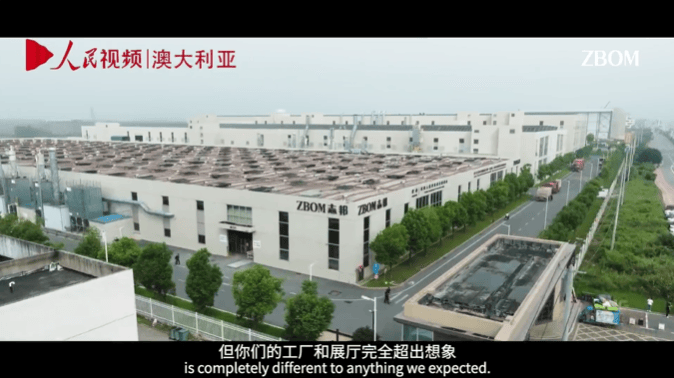
本地共生,价值共赢丨志邦家居以创新模式解锁中国品牌澳洲出海新路径
Sou Hu Cai Jing· 2026-02-10 10:26
Core Viewpoint - The interview with Zhibang Home by the Australian program "Big Vision" highlights the company's localized practices in the Australian market, showcasing how it leverages "advantageous production capacity + local partners" to address the challenges faced by Chinese brands going abroad, achieving deep integration and value co-creation with the Australian market [1] Group 1: Localization Strategy - Zhibang has recognized that "localization is the long-term path for going abroad" since entering the Australian market in 2014, focusing on "local co-existence and value co-creation" as its core philosophy [1] - The company has transformed from being an "outsider" to a "local participant" in the Australian market by breaking down cognitive barriers through comprehensive local strategies in cooperation models, product adaptation, and service implementation [1] Group 2: Cooperation Model - Zhibang employs an innovative cooperation model of "equity binding + deep collaboration," partnering with IJF, a local company with over 60 years of experience in the Australian home furnishing industry, to quickly integrate into the local business ecosystem [2] - This partnership creates a "shared risk and shared profit" community, allowing both companies to collaborate deeply in product development, market promotion, project implementation, and customer service [2] Group 3: Product Adaptation - Zhibang has optimized its products for the Australian market by considering local climate characteristics, living habits, and consumer demands, ensuring that products meet stringent local standards while retaining the efficiency and quality of Chinese manufacturing [4] - The company has developed customized home products that are waterproof, moisture-resistant, and anti-deformation, catering to the Australian market's specific needs, and has received widespread recognition from local developers and families [4] Group 4: Service Implementation - Zhibang has established a localized service system comprising "local design + global manufacturing + Australian installation," addressing industry pain points related to after-sales service and response times [5] - The company has formed a professional design and installation team in Australia, providing tailored design services and ensuring timely and standardized product installation, thereby enhancing customer trust and reputation [5] Group 5: Future Outlook - The "Big Vision" program emphasized that Zhibang's localization practices serve as an excellent model for Chinese brands going abroad, highlighting the importance of not just entering markets but also establishing a local presence [7] - Zhibang plans to continue deepening its localization efforts in Australia, optimizing cooperation models, enhancing product adaptation, and improving service quality, while replicating its successful localization experiences in other mature global markets [7]
志邦家居股份有限公司关于回购股份比例达到2%暨回购股份实施结果的公告
Shang Hai Zheng Quan Bao· 2026-02-03 18:59
Core Viewpoint - The company has successfully completed a share buyback program, acquiring 10,387,610 shares, which represents 2.39% of its total share capital, as part of its strategy for equity incentives and convertible bond conversion [4][5]. Group 1: Buyback Approval and Plan - The company approved a share buyback plan on December 3, 2025, allowing for a total expenditure between RMB 80 million and RMB 110 million, with a maximum buyback price of RMB 14.13 per share [3]. - The buyback is to be executed within 12 months from the board's approval date [3]. Group 2: Buyback Implementation - The first buyback occurred on January 7, 2026, with the company reaching a 1% buyback threshold by January 26, 2026 [4]. - As of February 2, 2026, the total shares repurchased amounted to 10,387,610, with a total expenditure of approximately RMB 99.97 million, at prices ranging from RMB 9.23 to RMB 9.87 per share [4][5]. Group 3: Compliance and Impact - The buyback was conducted in strict accordance with relevant laws and regulations, and the execution aligned with the initially disclosed plan [5]. - The buyback is not expected to significantly impact the company's normal operations or financial status, nor will it alter the distribution of control [5]. Group 4: Share Handling and Rights - The repurchased shares will be stored in a dedicated account and are intended for equity incentives or convertible bond conversion within 36 months [7]. - During the holding period, the repurchased shares will not carry voting rights or rights to dividends and other benefits [7].
志邦家居完成股份回购:耗资近1亿元 回购比例达2.39%
Xin Lang Cai Jing· 2026-02-03 10:29
Core Viewpoint - Zhihong Home has successfully completed its share repurchase plan, acquiring 10.3876 million shares, which accounts for 2.3915% of the total share capital, with a total expenditure of approximately 99.968 million yuan [1][3]. Group 1: Share Repurchase Announcement - On February 3, 2026, Zhihong Home announced that it had completed its share repurchase plan, spending a total of 99.968 million yuan to buy back 10.3876 million shares [1]. - The repurchase price ranged from 9.23 yuan to 9.87 yuan per share [1]. Group 2: Repurchase Plan Overview - The repurchase plan was first disclosed on December 4, 2025, with an implementation period from December 4, 2025, to December 3, 2026 [2]. - The expected repurchase amount was set between 80 million yuan and 110 million yuan, with a maximum repurchase price of 14.13 yuan per share [2]. - The funds from the repurchase are primarily intended for employee stock ownership plans, equity incentives, and the conversion of convertible bonds [2]. Group 3: Implementation Efficiency - The repurchase was executed efficiently, with the first shares bought back on January 7, 2026, and reaching a 1% repurchase ratio by January 26, 2026 [3]. - The total shares repurchased represent 2.3915% of the total share capital of 434,351,397 shares as of February 2, 2026 [3]. Group 4: Share Structure Changes - Following the repurchase, the structure of the company's shares changed slightly, with the repurchased shares held in a dedicated account, accounting for 2.3915% of the total share capital [4]. - The total share capital remained unchanged at 434,351,397 shares [4]. Group 5: Future Plans for Repurchased Shares - The repurchased shares will be used for equity incentives or the conversion of convertible bonds within 36 months of the announcement [5]. - If not fully utilized within this period, the remaining shares will be canceled according to relevant laws and regulations [5]. - The repurchased shares will not have voting rights or other shareholder privileges until used [5].
志邦家居(603801) - 关于回购股份比例达到2%暨回购股份实施结果的公告
2026-02-03 10:16
重要内容提示: | 回购方案首次披露日 | 2025/12/4 | | --- | --- | | 回购方案实施期限 | 2025 年 12 月 4 日~2026 年 12 月 3 日 | | 预计回购金额 | 8,000万元~11,000万元 | | 回购价格上限 | 14.13元/股 | | 回购用途 | □减少注册资本 | | | √用于员工持股计划或股权激励 | | | √用于转换公司可转债 | | | □为维护公司价值及股东权益 | | 实际回购股数 | 10,387,610股 | | 实际回购股数占总股本比例 | 2.3915% | | 实际回购金额 | 99,968,339元 | | 实际回购价格区间 | 9.23元/股~9.87元/股 | 注:上述占总股本比例的总股本为截至 2026 年 2 月 2 日的总股本 434,351,397 股。 一、 回购审批情况和回购方案内容 | 证券代码:603801 | 证券简称:志邦家居 | 公告编号:2026-007 | | --- | --- | --- | | 债券代码:113693 | 债券简称:志邦转债 | | 志邦家居股份有限公司 关于回购股份 ...
志邦家居(603801.SH):已累计回购2.3915%公司股份
Ge Long Hui A P P· 2026-02-03 10:10
Summary of Key Points Core Viewpoint - Zhihong Home (603801.SH) has completed its share repurchase plan as of February 2, 2026, indicating a strategic move to enhance shareholder value through buybacks [1] Group 1: Share Repurchase Details - The company repurchased a total of 10.3876 million shares, which represents 2.3915% of its total share capital [1] - The highest price paid for the repurchased shares was 9.87 yuan per share, while the lowest price was 9.23 yuan per share [1] - The total amount spent on the share repurchase was 99.9683 million yuan, excluding transaction commissions and other fees [1]
29股获推荐,长源东谷目标价涨幅超50%丨券商评级观察
2 1 Shi Ji Jing Ji Bao Dao· 2026-01-28 01:14
Group 1 - The core viewpoint of the article highlights that on January 27, brokerages set target prices for listed companies, with significant increases noted for specific companies [1] - The companies with the highest target price increases include Changyuan Donggu, Hongyuan Green Energy, and Haotaitai, with target price increases of 50.61%, 42.37%, and 30.60% respectively, belonging to the automotive parts, photovoltaic equipment, and home goods industries [1] - A total of 29 listed companies received brokerage recommendations on January 27, with Tonghua Dongbao, Zhibang Home, and Yanjing Beer each receiving one recommendation [1]


志邦家居股份有限公司关于股份回购比例达到1%的进展公告
Shang Hai Zheng Quan Bao· 2026-01-27 19:05
Group 1 - The company has announced the progress of its share repurchase plan, which has reached 1.1196% of the total share capital as of January 26, 2026 [4] - The total number of shares repurchased is 4,862,858, with a total expenditure of approximately RMB 46.22 million, excluding transaction fees [4] - The repurchase price ranged from a minimum of RMB 9.23 per share to a maximum of RMB 9.84 per share [4] Group 2 - The company plans to use its own funds and bank loans for the share repurchase, with a total budget between RMB 80 million and RMB 110 million [3] - The repurchase is intended for employee stock incentives or conversion of convertible bonds [3] - The repurchase period is set to last no more than 12 months from the board's approval date [3]
志邦家居:累计回购4862858股
Zheng Quan Ri Bao Wang· 2026-01-27 13:22
Group 1 - The core announcement is that Zhihong Home (603801) has repurchased a total of 4,862,858 shares through centralized bidding, which represents 1.1196% of the company's total share capital [1]