
Roborock(688169)

Search documents
直击CES|爬楼梯扫地机、具身智能割草机……清洁电器智能大升级
Di Yi Cai Jing· 2026-01-07 09:05
Core Insights - The cleaning appliance industry is actively exploring embodied intelligence, but the realization of true commercial value remains a challenge, with the actual commercialization process dependent on the effectiveness of solving real-world problems [1][7] Group 1: Technological Advancements - Smart cleaning robots showcased at CES 2026 have advanced capabilities, including stair-climbing and robotic arms for tasks like picking up objects [2][3] - The integration of AI algorithms with robotic structures allows for enhanced mobility and cleaning efficiency, enabling robots to navigate complex environments autonomously [2][3] - Companies like Roborock and Dreame have introduced robots that can perform multi-level cleaning, addressing the needs of markets with multi-story homes [2][3] Group 2: Market Trends - The retail sales of Chinese robotic vacuum brands increased by over 50% year-on-year in the first three quarters of 2025, indicating a growing market for innovative cleaning solutions [3] - The introduction of new features and functionalities in cleaning robots is expected to drive market growth and expand applications into areas like health monitoring and elderly assistance [2][3] Group 3: Product Diversification - Companies are extending their product lines beyond indoor cleaning to outdoor applications, including lawn mowing and pool cleaning robots, which utilize advanced technologies for autonomous operation [6][7] - The introduction of intelligent companion robots reflects a trend towards enhancing user experience through emotional interaction and multi-modal perception [7] Group 4: Competitive Landscape - The competition in the global robotic vacuum industry is anticipated to intensify, focusing on AI technology and home ecosystem integration as key differentiators [7] - Companies are adopting varied technological approaches, with some emphasizing new forms, others focusing on functionality improvements, and some on software or hardware enhancements [7]


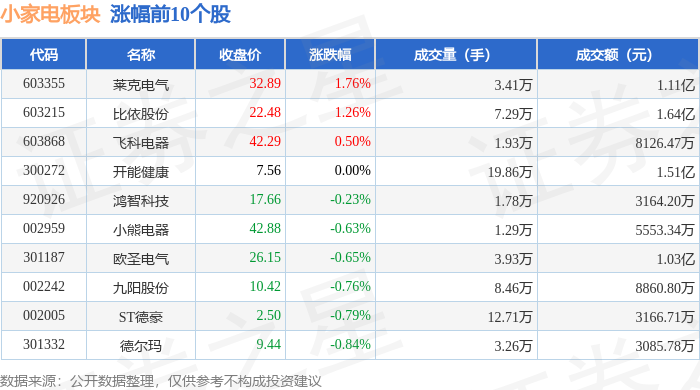
小家电板块1月7日跌1.23%,倍益康领跌,主力资金净流出7691.82万元
Zheng Xing Xing Ye Ri Bao· 2026-01-07 08:58
Group 1 - The small home appliance sector experienced a decline of 1.23% on January 7, with Beiyikang leading the drop [1] - The Shanghai Composite Index closed at 4085.77, up 0.05%, while the Shenzhen Component Index closed at 14030.56, up 0.06% [1] - Key stocks in the small home appliance sector showed mixed performance, with notable gainers including Lek Electric (+1.76%) and Biyi Co. (+1.26%), while Beiyikang fell by 4.71% [2] Group 2 - The small home appliance sector saw a net outflow of 76.92 million yuan from main funds, while retail funds experienced a net inflow of 140 million yuan [2] - Individual stock fund flows indicated that Stone Technology had a net inflow of 18.79 million yuan from main funds, while Beiyikang saw a significant outflow of 75.2 million yuan [3] - The overall market sentiment reflected a cautious approach, with retail investors withdrawing funds from several stocks, including Beiyikang and other small home appliance companies [3]


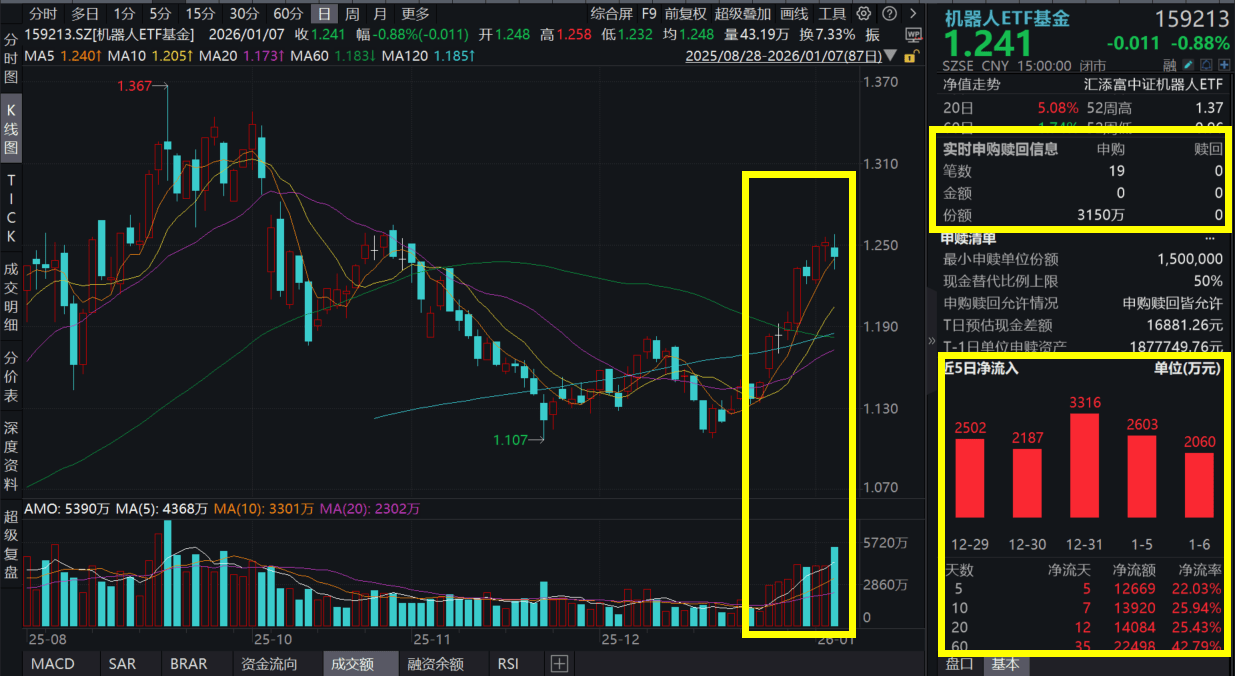
沪指坚韧翻红,喜提14连阳!机器人回调,机器人ETF基金(159213)逆势吸金,连续7日揽金超1.8亿元!石头科技首发爬楼机器人,官宣赴港上市
Sou Hu Cai Jing· 2026-01-07 08:45
Core Viewpoint - The Shanghai Composite Index has achieved a 14-day consecutive rise, setting a new record, while the Robot ETF Fund (159213) experienced a slight decline but attracted significant capital inflow, totaling over 390 million yuan in the last seven days [1][3]. Group 1: Market Performance - The Robot ETF Fund (159213) saw a decline of 0.88% in the afternoon session, despite attracting over 39 million yuan in capital inflow throughout the day, and a total of over 180 million yuan over the past seven days [1]. - The component stocks of the Robot ETF Fund exhibited mixed performance, with Dazhu Laser rising over 3%, while companies like Greening Harmony and Top Group fell over 4% and 2%, respectively [3][4]. Group 2: Industry Developments - The CES 2026 event in Las Vegas highlighted humanoid robots, with NVIDIA's CEO announcing a significant moment for the robotics field, akin to the "ChatGPT moment" [6][7]. - Numerous Chinese companies specializing in embodied intelligence showcased their innovations at CES, aiming for brand exposure and securing overseas orders [7]. - The humanoid robot industry is projected to grow at a compound annual growth rate (CAGR) of 50% or more over the next decade, with the market size expected to approach 3 trillion yuan by 2040 [7][10]. Group 3: Future Outlook - The industry is anticipated to experience a "flywheel effect" by 2026, driven by advancements in application, computing power, and capital investment [10]. - Major contracts have been secured by industry leaders, validating the commercial value of humanoid robots, with significant projects already underway [10]. - The capital market is actively engaging with the humanoid robot sector, accelerating the commercialization process [10].
CES2026年前瞻:家庭场景中的AI智能消费产品加速落地
HTSC· 2026-01-07 05:18
Investment Rating - The report maintains a "Buy" rating for several companies, including Stone Technology, Eufy, Anker Innovation, Ecovacs, Ugreen Technology, and XGIMI, with target prices set for each [9][13]. Core Insights - The report highlights the rapid advancement of AI and robotics technologies in consumer electronics, particularly in smart home devices, cleaning appliances, and wearable technology, indicating a significant investment opportunity in the tech consumer sector for 2026 [1][6]. - The CES 2026 event is identified as a crucial observation point for AI applications in consumer products, with expectations for innovative product launches across various categories [1][6]. Summary by Sections Smart Cleaning Appliances - The robotic vacuum cleaner industry is transitioning into a phase of micro-innovation, with notable product launches such as the G-Rover by Stone Technology, which features dual mechanical legs for enhanced cleaning capabilities [2]. - Other companies like Ecovacs and Chase are also introducing advanced models with improved obstacle avoidance technology and multifunctional capabilities [2]. Garden Robots - The CES showcased numerous new products aimed at garden maintenance, including robotic lawn mowers and pool cleaning robots, with companies like Ninebot and MOVA presenting models that cover various residential and commercial applications [3]. Smart Hardware - The traditional 3C accessories market is experiencing competition, but companies like Ugreen and Anker are carving out niches by innovating and enhancing product offerings, such as the new AI NAS products and security devices [4]. AI Glasses - AI glasses are emerging as a significant wearable technology, with Chinese manufacturers leading the lightweight trend. Notable products include Alibaba's Quark AI Glasses S1 and Rokid's offerings, which feature functionalities like translation and scene guidance [5]. Investment Opportunities - The report emphasizes that AI-driven product innovation will be a key growth driver for tech consumer companies in 2026, with recommendations for investment in companies that are well-positioned to capitalize on these trends [6].



AI与机器人盘前速递丨石头科技推出可爬楼梯的扫地机器人;现代汽车将在美国工厂部署人形机器人
Mei Ri Jing Ji Xin Wen· 2026-01-07 01:04
Market Review - The Huaxia AI ETF (589010) rose by 1.72% on January 6, with notable performances from stocks like Xinghuan Technology-U, which hit a 20% limit up, and other core stocks such as Lanke Technology and Zhongke Xingtou showing significant gains, indicating high elasticity in AI stocks on the Sci-Tech Innovation Board [1] - The ETF's turnover rate surged to 8.49%, with a trading volume exceeding 324 million yuan, reflecting a notable recovery in trading sentiment and recognition of the long-term value in the AI sector [1] - The Robot ETF (562500) increased by 0.39%, demonstrating a strong "V" reversal pattern after an early drop, supported by robust buying at lower levels, with stocks like Ruishun Technology and Green Harmony rising by 5.55% and 4.57% respectively, indicating a positive trend across the industry chain [1] - The total trading amount for the Robot ETF exceeded 1.715 billion yuan, maintaining a high level of trading activity, showcasing ongoing investor interest in the robotics sector [1] Key Developments - Roborock, a Chinese vacuum cleaner manufacturer, showcased the Saros Rover, a home cleaning robot equipped with legs capable of climbing stairs, utilizing AI and multiple motion sensors for navigation [2] - Hyundai Motor Group and Boston Dynamics publicly demonstrated the Atlas robot, with plans to deploy it in their U.S. electric vehicle factory by 2028, and announced a collaboration with Google DeepMind for AI development [2] - Desay SV's AI Cube, a robotic intelligent base, was officially launched, featuring a modular design that allows for flexible integration of various sensors, aimed at reducing development time and costs for clients [2] Institutional Insights - Guohai Securities believes that the rise of electrification and intelligence will lead to the emergence of humanoid robots, opening up broader market opportunities beyond the automotive sector, marking a significant investment opportunity in the humanoid robot industry [3] - The industry is expected to witness rapid product iterations and business collaborations, with a focus on scaling production and commercial applications of humanoid robots, potentially leading to a "ChatGPT moment" for the sector [3]

石头科技推出可爬楼梯的扫地机器人
Ge Long Hui A P P· 2026-01-06 22:40
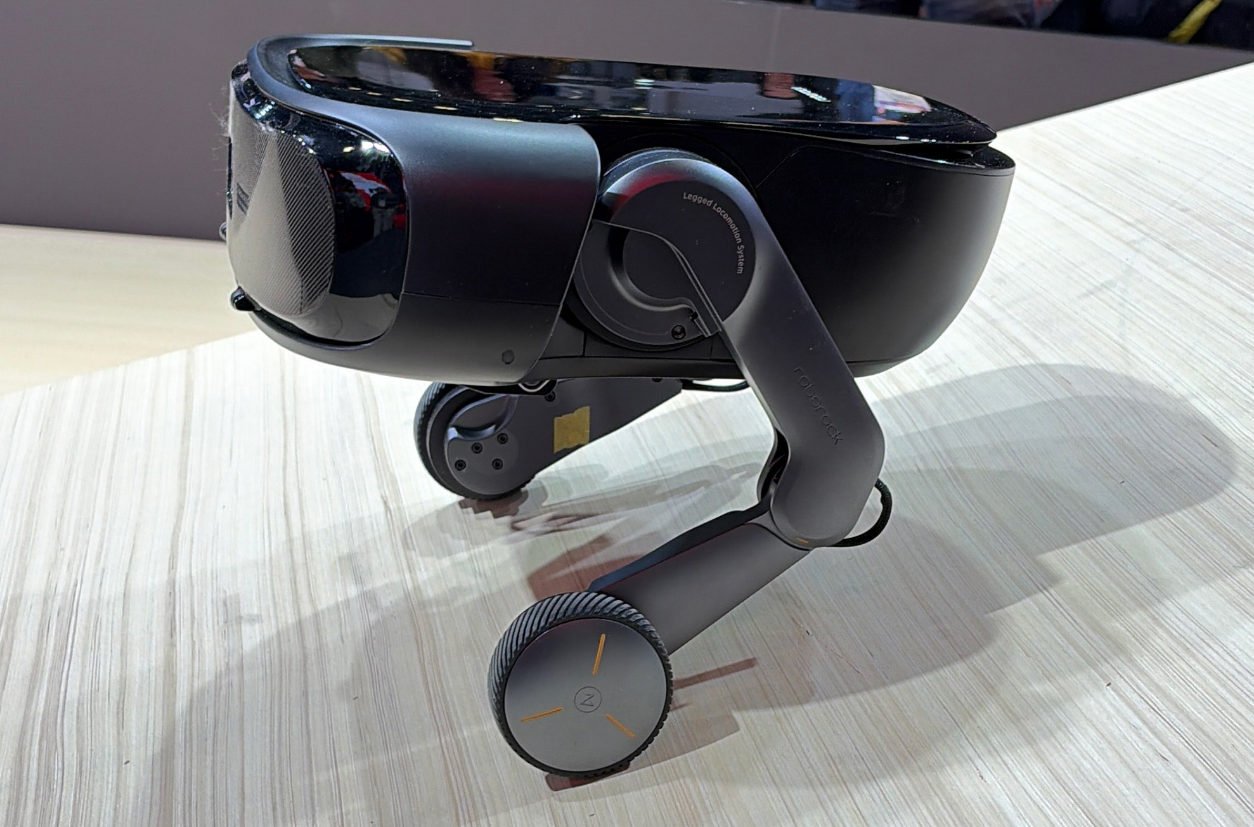
Core Viewpoint - Roborock, a Chinese manufacturer of robotic vacuum cleaners, has introduced a new home robot named Saros Rover, which is capable of climbing stairs and navigating uneven surfaces using advanced technology [1] Company Summary - Roborock showcased the Saros Rover, which features two legs that can independently lift and lower, allowing it to traverse stairs and navigate rough terrain [1] - The robot utilizes artificial intelligence, multiple motion sensors, and 3D spatial information for navigation [1] Product Features - Saros Rover successfully demonstrated its ability to climb several steps, descend slopes, and perform small jumps during a media presentation [1] - The jumping capability may be utilized for descending stairs or avoiding obstacles [1]
石头CES展示双腿扫地机器人:能爬楼能跳,上市日期未定
Hua Er Jie Jian Wen· 2026-01-06 20:47
Group 1 - Stone Technology launched a stair-climbing vacuum robot named Saros Rover at CES, aiming to revitalize its home robotics strategy after a lackluster response to its robotic arm product last year [1][6] - The Saros Rover is the first vacuum cleaner equipped with dual-wheel legs, allowing it to climb stairs, navigate uneven surfaces, and perform sudden stops and slight turns [1][4] - The CES conference focused on robotics technology, but high costs and practicality issues remain significant barriers to widespread adoption [3][5] Group 2 - The Rover utilizes AI, multiple motion sensors, and 3D spatial information for navigation, successfully demonstrating its ability to climb steps and navigate slopes during a media preview [4] - Concerns about the Rover's mobility and battery life persist, as it moves slower when standing on its legs compared to traditional vacuum robots [4][5] - Following the previous unsuccessful launch of the Saros Z70, which received a lukewarm response due to its high price of $2,599 and limited object recognition capabilities, Stone Technology has not yet confirmed a release date for the Rover [6][7]

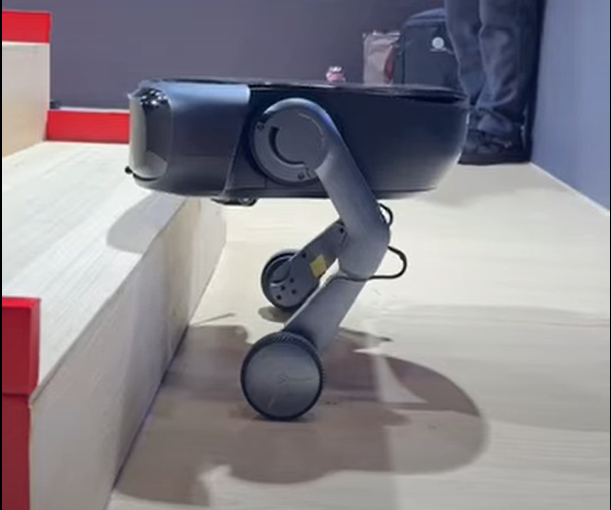
石头科技演示爬楼梯扫地设备
Xin Lang Cai Jing· 2026-01-06 17:10
Core Viewpoint - Roborock, a manufacturer of robotic vacuum cleaners, has unveiled a concept device named Saros Rover, which is a stair-climbing home robot equipped with two "legs" [1] Group 1: Product Features - Saros Rover integrates artificial intelligence (AI), multiple motion sensors, and 3D spatial information for navigation [1] - The robot's legs can independently lift and lower, allowing it to traverse stairs and navigate uneven surfaces [1] Group 2: Market Challenges - The company faces challenges in achieving widespread adoption of home robots, including high costs, the need for improved mobility, and battery life [1]
小家电板块1月6日涨0.99%,倍益康领涨,主力资金净流入8478.15万元
Zheng Xing Xing Ye Ri Bao· 2026-01-06 08:56
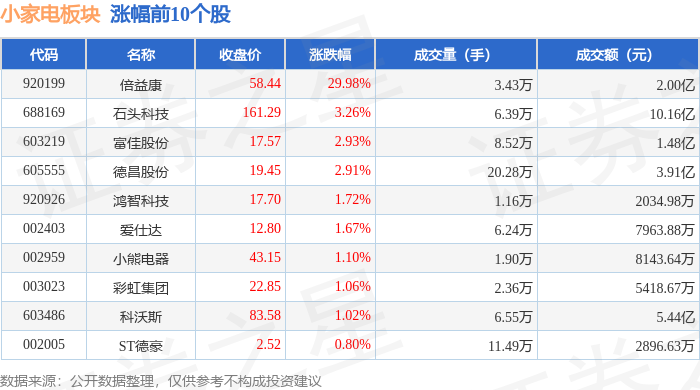
Group 1 - The small home appliance sector increased by 0.99% on January 6, with Beiyikang leading the gains [1] - The Shanghai Composite Index closed at 4083.67, up 1.5%, while the Shenzhen Component Index closed at 14022.55, up 1.4% [1] - Beiyikang's stock price rose by 29.98% to 58.44, with a trading volume of 34,300 lots and a transaction value of 200 million yuan [1] Group 2 - The small home appliance sector saw a net inflow of 84.78 million yuan from main funds, while retail investors experienced a net outflow of 93.87 million yuan [2] - Stone Technology had a main fund net inflow of 12.08%, but retail investors had a net outflow of 4.01% [3] - Beiyikang accounted for 42.55% of the main fund net inflow, indicating strong institutional interest [3]


消息称字节豆包AI眼镜第一代总规划数量约10万台!科创人工智能ETF华夏(589010) 盘中震荡上行,星环科技涨超9%
Mei Ri Jing Ji Xin Wen· 2026-01-06 08:25
Group 1 - The core viewpoint of the news highlights the performance of the Sci-Tech Innovation Artificial Intelligence ETF (589010), which is currently showing a steady upward trend with a 0.28% increase, indicating strong market interest and support near daily moving averages [1] - The ETF's constituent stocks are experiencing a bullish atmosphere, with notable gains from companies such as Xinghuan Technology (over 9% increase) and Lanke Technology (over 3% increase), along with several others rising over 1% [1] - The ETF demonstrates excellent liquidity and trading volume, with a turnover rate exceeding 7%, showcasing its role as an important tool for investing in the AI sector [1] Group 2 - Citic Construction Investment Securities suggests focusing on the application of AI large models in eyewear, which could enhance consumer purchasing desire through new experiences [2] - The report emphasizes the importance of technological breakthroughs in improving user experience, including advancements in full-color Micro-LED, two-dimensional array waveguides, lightweight components, and enhanced battery life, which can lead to more interactive scenarios and applications [2] - The Sci-Tech Innovation Artificial Intelligence ETF closely tracks the Shanghai Stock Exchange Sci-Tech Innovation Board AI Index, covering high-quality enterprises across the entire industry chain, benefiting from high R&D investment and policy support, with a 20% price fluctuation range aiding in capturing the "singularity moment" of the AI industry [2]


