
Daqo Energy(688303)

Search documents
科创新能源ETF(588830)开盘跌3.04%,重仓股晶科能源跌7.14%,阿特斯跌2.76%
Xin Lang Cai Jing· 2026-02-05 01:37
Group 1 - The core viewpoint of the article highlights the performance of the Kexin New Energy ETF (588830), which opened down by 3.04% at 1.689 yuan on February 5 [1] - Major holdings in the Kexin New Energy ETF experienced significant declines, with JinkoSolar down 7.14%, Canadian Solar down 2.76%, and Trina Solar down 4.03% [1] - The ETF's performance benchmark is the Shanghai Stock Exchange Sci-Tech Innovation Board New Energy Index, managed by Penghua Fund Management Co., with a return of 73.85% since its establishment on July 31, 2024, and an 18.90% return over the past month [1] Group 2 - Other notable stock performances within the ETF include Rongbai Technology up 0.10%, Daqo New Energy down 1.90%, Xiamen Tungsten down 1.02%, and Gotion High-Tech down 0.90% [1] - The article emphasizes the volatility in the new energy sector, as indicated by the mixed performance of the ETF's holdings [1]





解密钙钛矿电池:凭何扛起太空算力引擎重任?校企联合攻关+马斯克赋能,光伏核心风口强势回归
Xin Lang Cai Jing· 2026-02-03 12:52
Group 1 - Zairun New Energy focuses on the research and development of perovskite battery core materials and equipment, with a strong emphasis on high-purity and high-stability products suitable for large-scale production [1] - The company has completed multiple pilot tests and its product performance has been validated by third-party authorities [1] - Zairun's high-radiation-resistant perovskite precursor materials enhance battery stability in extreme space environments, positioning the company to become a core supplier in the space photovoltaic supply chain [1] Group 2 - Aotwei is a leading domestic photovoltaic equipment enterprise, with early layouts in perovskite production line equipment and technology covering key processes such as laser etching and thin film deposition [2] - The company's self-developed laser repair equipment significantly improves battery yield and is at the forefront of industry standards [2] - Aotwei's equipment optimizes battery manufacturing processes to meet the stringent requirements of space photovoltaic applications, potentially making it a core supplier in this sector [2] Group 3 - Haiyou New Materials is a core supplier of photovoltaic packaging materials, focusing on the development of POE films and back sheets for perovskite batteries [3] - The company has developed radiation-resistant packaging films that ensure long-term stable operation of perovskite batteries in space environments [3] - As the space photovoltaic market scales, Haiyou is positioned to become a key supplier of packaging materials for perovskite batteries [3] Group 4 - Gaoce Co., Ltd. is a leading domestic company in photovoltaic cutting equipment and silicon wafer processing, actively developing ultra-thin silicon cutting technology for perovskite batteries [4] - The company's ultra-thin silicon wafers, with thicknesses as low as 50μm, meet the lightweight requirements of perovskite batteries [4] - Gaoce's technology supports the stringent demands of space photovoltaic applications, positioning it to become a core supplier of silicon wafers for perovskite batteries [4]


大全能源:主营业务聚焦于高纯多晶硅产品的研发、生产与销售
Zheng Quan Ri Bao Zhi Sheng· 2026-02-03 12:08
Core Viewpoint - The company focuses on the research, production, and sales of high-purity polysilicon products, primarily catering to the large-scale installation demand of ground photovoltaic systems, while also recognizing the potential of space photovoltaic applications as a significant direction for the solar industry [1] Group 1: Business Focus - The company's main business is centered on high-purity polysilicon products [1] - The core matching of the company’s offerings is primarily aligned with the demand for large-scale ground photovoltaic installations [1] Group 2: Space Photovoltaic Potential - Space photovoltaic applications have unique material requirements due to their specific usage scenarios, differing from ground photovoltaic systems [1] - The long-term development value and industrial potential of space photovoltaic technology are seen as promising, with expectations for expanded opportunities in the industry [1] Group 3: Future Exploration - The company will continue to monitor technological breakthroughs, material demand iterations, and the commercialization pace in the space photovoltaic field [1] - If the technological pathways in this sector become clearer, the company will cautiously evaluate and actively explore layout opportunities that align with its strategic development rhythm [1]
大全能源:公司已就2026年度开展期货套期保值业务履行审议程序
Zheng Quan Ri Bao· 2026-02-03 12:05
Group 1 - The core viewpoint of the article is that Daqo Energy plans to engage in futures hedging to mitigate operational risks associated with price fluctuations of finished products and to enhance profitability [1] - The company and its subsidiaries will conduct futures hedging business based on their operational conditions to effectively utilize the hedging mechanism of the futures market [1] - Daqo Energy has completed the review process for its futures hedging business for the year 2026 and has disclosed the relevant announcement regarding this business [1] Group 2 - The company emphasizes the importance of adhering to legal regulations and disclosure requirements in the execution of its futures hedging business [1] - Future developments regarding the hedging business will be disclosed in a timely manner, with all relevant information available on the Shanghai Stock Exchange website [1]
大全能源(688303) - 大全能源关于以集中竞价交易方式回购公司股份的进展公告
2026-02-03 09:31
证券代码:688303 证券简称:大全能源 公告编号:2026-005 新疆大全新能源股份有限公司 2025 年 4 月 21 日,新疆大全新能源股份有限公司(以下简称"公司")召开 第三届董事会第十七次会议,审议通过了《关于以集中竞价交易方式回购公司股 份方案的议案》。同意公司使用自有资金以集中竞价交易方式回购公司股份。本次 回购资金总额不低于人民币 5,000 万元(含)且不超过人民币 10,000 万元(含), 回购的股份将在未来适宜时机全部用于员工持股计划或股权激励,回购价格不超 过人民币 44.00 元/股(含),回购期限为自董事会审议通过本次回购股份方案之 日起不超过 12 个月。 具 体 内 容 详 见 公 司 于 2025 年 4 月 23 日 在 上 海 证 券 交 易 所 网 站 (www.sse.com.cn)披露的《新疆大全新能源股份有限公司关于以集中竞价交易 方式回购公司股份的回购报告书》(公告编号:2025-014)。 二、 回购股份的进展情况 根据《上市公司股份回购规则》《上海证券交易所上市公司自律监管指引第 7 号——回购股份》的相关规定,公司在回购期间,应当在每个月的前 3 ...
大全能源(688303.SH):已累计回购113.57万股公司股份
Ge Long Hui A P P· 2026-02-03 09:27
格隆汇2月3日丨大全能源(688303.SH)公布,截至2026年1月31日,公司通过上海证券交易所交易系统以 集中竞价交易方式累计回购公司股份113.57万股,占公司总股本的比例为0.0529%,回购成交的最高价 为27.18元/股,最低价为18.79元/股,支付的资金总额为人民币2899.49万元(不含印花税、交易佣金等 交易费用)。 ...
大全能源:已累计回购113.57万股公司股份
Ge Long Hui· 2026-02-03 09:21
格隆汇2月3日丨大全能源(688303.SH)公布,截至2026年1月31日,公司通过上海证券交易所交易系统以 集中竞价交易方式累计回购公司股份113.57万股,占公司总股本的比例为0.0529%,回购成交的最高价 为27.18元/股,最低价为18.79元/股,支付的资金总额为人民币2899.49万元(不含印花税、交易佣金等 交易费用)。 ...
大全能源1月29日获融资买入2940.45万元,融资余额6.07亿元
Xin Lang Cai Jing· 2026-01-30 01:40
Group 1 - Daqo Energy's stock price decreased by 0.32% on January 29, with a trading volume of 438 million yuan. The financing buy amount was 29.40 million yuan, while the financing repayment was 45.78 million yuan, resulting in a net financing buy of -16.37 million yuan. The total financing and securities balance reached 608 million yuan as of January 29 [1] - The financing balance of Daqo Energy is 607 million yuan, accounting for 1.12% of the circulating market value, which is below the 50th percentile level over the past year, indicating a low position [1] - On the same day, Daqo Energy had a securities lending repayment of 1,300 shares and a securities lending sell of 837 shares, with a selling amount of 21,100 yuan. The securities lending balance was 975,800 yuan, which is below the 20th percentile level over the past year, also indicating a low position [1] Group 2 - As of September 30, Daqo Energy had 40,000 shareholders, an increase of 14.07% from the previous period. The average circulating shares per person were 53,635, an increase of 240.25% [2] - For the period from January to September 2025, Daqo Energy reported operating revenue of 3.243 billion yuan, a year-on-year decrease of 46.00%. The net profit attributable to shareholders was -1.073 billion yuan, a year-on-year increase of 2.36% [2] - Daqo Energy has distributed a total of 9.743 billion yuan in dividends since its A-share listing, with 8.588 billion yuan distributed over the past three years [2] - As of September 30, 2025, the top ten circulating shareholders included E Fund's SSE STAR 50 ETF, which held 23.2647 million shares, a decrease of 3.3844 million shares from the previous period. Other notable shareholders also saw reductions in their holdings [2]
光伏反内卷攻坚,政企同心方得始终
第一财经· 2026-01-27 13:08
Core Viewpoint - The photovoltaic industry is undergoing a deep reform to combat internal competition, with regulatory measures and policy adjustments reflecting a commitment to high-quality development. However, many companies are still facing significant losses, indicating that this battle is not a short-term fix but a necessary step to resolve structural issues within the industry [2][5]. Industry Performance - Major companies like Tongwei Co., Ltd. and LONGi Green Energy are projected to incur substantial losses in 2025, with estimated net losses of 9 to 10 billion yuan and 6 to 6.5 billion yuan respectively. Other companies such as JA Solar, JinkoSolar, and Trina Solar are also expected to report significant losses, highlighting the severe challenges faced by the industry [2][3]. - The average gross margin for the entire industry is only 3.64%, with many companies trapped in a cycle of "production equals loss" due to oversupply and rising raw material costs [3][4]. Causes of Losses - The industry's performance crisis is primarily attributed to excessive homogenous production capacity and fierce price competition, compounded by soaring raw material costs. The supply of silicon materials is projected to exceed global demand by more than double over the next three years, leading to a significant imbalance [3][4]. - The price of silver, a key material in photovoltaic cells, has surged by 231% in 2025, pushing companies to adopt cost-cutting measures at the expense of technological innovation and quality [4][5]. Recommendations for Improvement - Companies must shift their focus from price competition to technological innovation and quality improvement, investing in advanced battery technologies such as TOPCon, BC, and ABC to enhance efficiency and reduce costs [4][6]. - The industry needs to establish self-regulatory standards to combat unfair competition practices, such as selling below cost and misrepresenting product capabilities, while promoting collaboration among companies to consolidate resources [4][6]. Government Role - Government policies and regulatory actions are crucial for supporting the industry's reform efforts. A unified and clear policy direction is necessary to stabilize market expectations and foster industry consensus [5][6]. - Regulatory bodies should enhance oversight on low-price dumping and set higher energy consumption and environmental standards for mature production stages, while also optimizing bidding rules to prioritize technology and quality over price [5][6]. Future Outlook - The photovoltaic industry is at a critical juncture, with the potential for recovery as companies begin to reduce losses and improve profitability. Analysts suggest that the industry may see a turning point in profitability by early 2026 [6][7]. - A collaborative effort between companies and government is essential to ensure that innovation becomes the cornerstone of industry development, allowing China to transition from a manufacturing hub to a center of innovation in the global energy transformation [7].




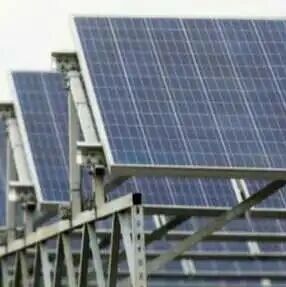
壹快评丨光伏反内卷攻坚,政企同心方得始终
Di Yi Cai Jing· 2026-01-27 04:26
Core Viewpoint - The photovoltaic industry is undergoing a significant transformation towards high-quality development, driven by both internal corporate self-discipline and external government support, as evidenced by recent regulatory measures and policy adjustments aimed at combating price competition and fostering innovation [1][4][7]. Industry Performance - The photovoltaic sector is currently facing severe financial challenges, with major companies like Tongwei Co. and LONGi Green Energy projected to incur substantial losses in 2025, highlighting the industry's struggle with low-price competition and rising material costs [1][2]. - The average gross margin for the industry has plummeted to just 3.64%, leading many companies into a cycle of "production equals loss" [2]. Competitive Landscape - The industry is experiencing an oversupply of homogeneous production capacity, with silicon material capacity exceeding global demand by more than double, resulting in a fierce price war among companies [2][3]. - Companies that previously relied on scale advantages are now also facing revenue declines and negative profits, indicating a widespread crisis across the sector [2]. Material Costs and Innovation - The price of silver, a critical component in photovoltaic cells, has surged by 231% in 2025, pushing companies to adopt cost-reduction technologies such as "less silver" or "silver-free" approaches [3]. - The focus on price competition has led some companies to neglect technological innovation and quality improvement, which are essential for long-term survival [3]. Government Role and Policy Recommendations - Government intervention is crucial for the success of the anti-involution measures, requiring a unified and clear policy direction to stabilize market expectations and foster industry consensus [4][6]. - There is a need for coordinated regulatory efforts across various government departments to effectively combat unfair competition and ensure sustainable industry practices [5][6]. Future Outlook - The current challenges in the photovoltaic industry present an opportunity for transformation, shifting from a focus on quantity to value creation, which is expected to be a long-term process [7]. - Some companies are beginning to reduce losses, and there is optimism that the industry may see a profitability turning point in early 2026 [7].