
HIUV(688680)

Search documents
超4800股上涨
第一财经· 2026-02-03 07:24
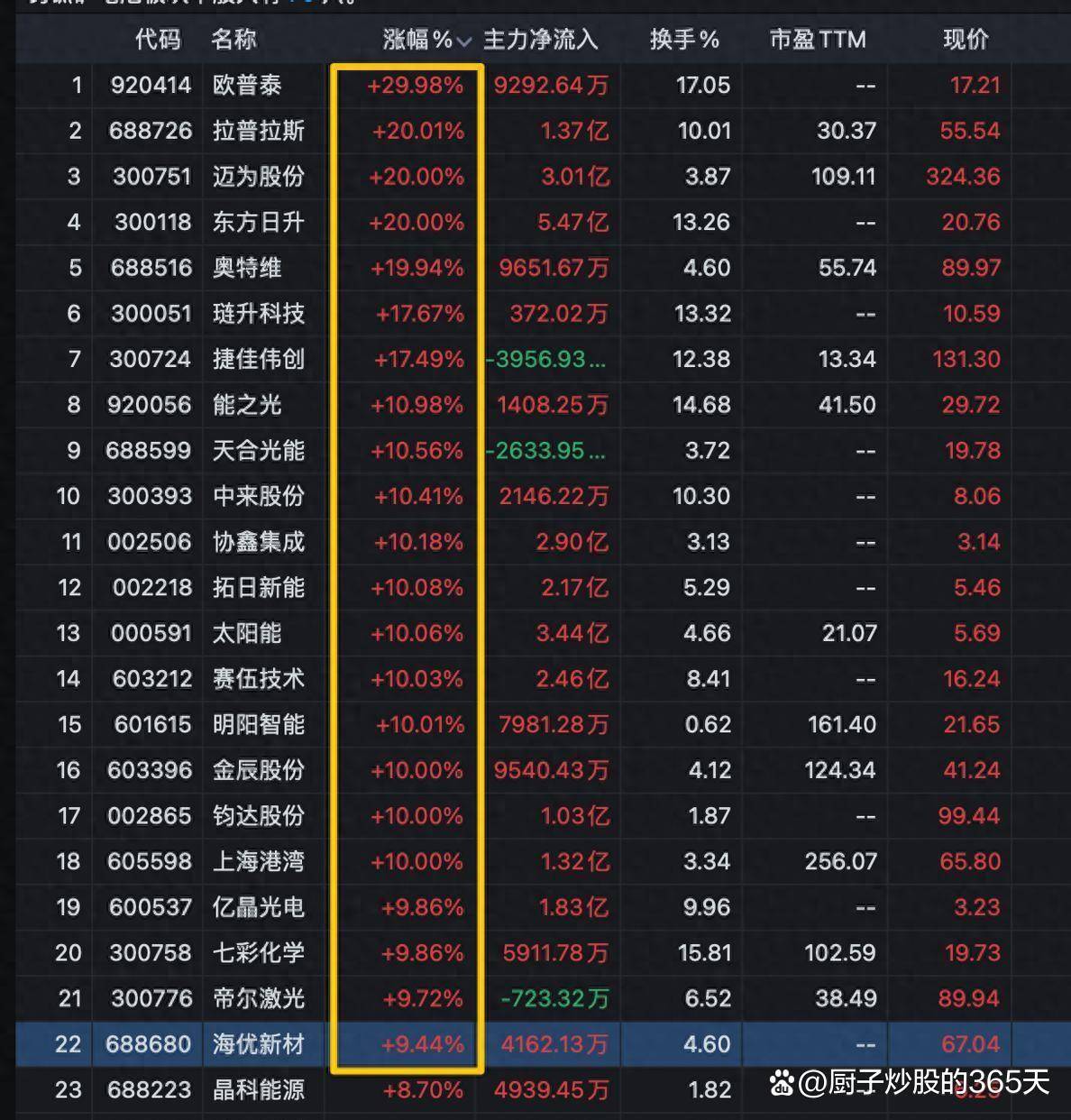
Core Viewpoint - The A-share market experienced a significant upward trend, with major indices showing notable gains, particularly in the photovoltaic and computing hardware sectors [2][3]. Market Performance - The Shanghai Composite Index rose by 1.29% to 4067.74 points, the Shenzhen Component Index increased by 2.19% to 14127.11 points, the ChiNext Index gained 1.86% to 3324.89 points, and the Sci-Tech Innovation Index surged by 2.44% to 1803.14 points [2][3]. - The trading volume in the Shanghai and Shenzhen markets reached 2.54 trillion yuan, a decrease of 40.5 billion yuan compared to the previous trading day, with over 4800 stocks rising [6]. Sector Highlights - The photovoltaic industry chain saw a strong performance, with stocks like Zairun New Energy and Dike Co., Ltd. hitting the daily limit of 20% increase [4][5]. - Computing hardware stocks continued their upward trend, with companies such as Robotec and Tiantong Co., Ltd. also reaching the daily limit [5][6]. Capital Flow - Main capital inflows were observed in the communication, photovoltaic equipment, and national defense sectors, while there were outflows in non-ferrous metals, securities, and semiconductors [8]. - Specific stocks that attracted significant net inflows included Aerospace Development, Huasheng Tiancheng, and Kweichow Moutai, with inflows of 2.031 billion yuan, 1.698 billion yuan, and 1.212 billion yuan respectively [9]. - Conversely, stocks like Zhongji Xuchuang, Blue Ocean Yingshi, and Xinyi Sheng faced net outflows of 1.909 billion yuan, 1.128 billion yuan, and 1.1 billion yuan respectively [10]. Institutional Perspectives - Jin Yuan Securities indicated that the market may face short-term adjustment pressure [11]. - Guotai Junan suggested that the volatility in the precious metals sector presents a buying opportunity [12]. - Huatai Securities noted that the core drivers of the current spring market remain unchanged, and adjustments in indices may provide a window for positioning [13].




海优新材20260202
2026-02-03 02:05
Summary of Haiyou New Materials Conference Call Industry and Company Overview - **Company**: Haiyou New Materials - **Industry**: Space photovoltaic packaging materials and automotive information films - **Market Potential**: The global solar wing market could reach between 1.35 trillion to 3.5 trillion RMB, with the film segment estimated at around 270 billion RMB. Long-term market potential could reach 5 trillion RMB [2][4][12]. Core Insights and Arguments - **Space Photovoltaic Development**: The company is strategically positioned in the space photovoltaic sector, with key products including CPM and POE films. The market is expected to grow significantly as satellite launches increase, with SpaceX's recent application for 1 million satellites indicating a vast potential market [4][5]. - **Dual Growth Strategy**: The company is leveraging both photovoltaic and automotive sectors to create a second growth curve. In the photovoltaic sector, it is optimizing capacity and focusing on core customers, while in the automotive sector, it has entered industrialization and secured orders from major car manufacturers [2][6]. - **Financial Performance**: In the first half of 2026, the company reported revenues of 870 million RMB, a nearly 60% decline year-on-year. Cumulative losses for the first three quarters were approximately 211 million RMB, although losses are narrowing. The company anticipates a turnaround in 2026, with profits expected to exceed 200 million RMB by 2027, corresponding to a valuation of 22 times earnings [7][17]. Additional Important Insights - **Technological Advancements**: The company is focusing on lightweight and efficient solar wing technologies, which have seen a 50% reduction in weight and over 30% improvement in efficiency. These advancements are crucial for applications in low-power to high-power scenarios [10]. - **Market Trends**: The demand for space computing is driving the need for solar energy, with AI's growing computational needs further emphasizing the importance of solar power in space applications [8][9]. - **Automotive Information Films**: The company has made significant progress in the automotive sector, with a diverse product range including PDLC smart dimming films. The market for these films is projected to reach 18 billion RMB by 2030, with a penetration rate of 20% in passenger vehicles [13][15]. - **Future Growth Areas**: The company is also exploring new products in the ground photovoltaic sector and other emerging fields, including high-end architectural smart dimming films and AI/VR applications [16]. Conclusion - **Investment Outlook**: The company is positioned to benefit from the space energy revolution and has a promising outlook for growth in both the space photovoltaic and automotive information film markets. A recommendation rating is given based on the anticipated future growth potential [18].
海优新材:公司始终高度重视光伏太阳能产业的新技术、新发展
Zheng Quan Ri Bao Wang· 2026-01-30 15:14
Core Viewpoint - The company emphasizes the importance of new technologies and developments in the photovoltaic solar energy industry, particularly in the low-orbit satellite energy systems sector [1] Group 1: Industry Insights - The company has conducted two quarters of industry research and analysis, recognizing the significant value and trends in the low-orbit satellite energy systems [1] - The company is exploring a series of space-grade solar wing encapsulation materials in collaboration with relevant parties [1] Group 2: Product Development - The company is currently in the R&D phase for products that meet the unique requirements of space solar wings, which differ from ground photovoltaic products [1] - The company is developing POE modified materials and special encapsulation materials to meet performance requirements such as resistance to space radiation, atomic oxygen corrosion, and adaptability to temperature variations of ±120 degrees [1] - The company aims to establish a complete industrial chain from R&D to testing to actual application, while also exploring potential business channels both domestically and internationally [1]
新材料行业月报:基本金属价格普涨,2025年全国累计发电装机容量同增16%-20260129
Zhongyuan Securities· 2026-01-29 08:42
Investment Rating - The report maintains an "Outperform" rating for the new materials industry [1][8]. Core Insights - The new materials sector outperformed the CSI 300 index in January 2026, with the new materials index rising by 10.54%, surpassing the CSI 300's increase of 1.90% by 8.64 percentage points [8][12]. - Basic metal prices saw a general increase in January 2026, with notable price changes including copper (1.23%), aluminum (2.79%), zinc (4.74%), and tin (34.93%) [8][37]. - Global semiconductor sales continued to grow, with November 2025 figures showing a 29.8% year-on-year increase, marking the 25th consecutive month of growth [8][42]. - The new materials sector is expected to benefit from the ongoing recovery in downstream demand and the push for domestic alternatives, indicating a potential growth cycle ahead [8][21]. Summary by Sections Industry Performance Review - The new materials index showed strong performance in January 2026, ranking 7th among 30 major industry sectors [12][16]. - A total of 170 stocks in the new materials sector were analyzed, with 141 stocks rising and 25 falling in January [17][20]. - The sector's valuation increased, with the new materials index PE (TTM) at 31.72, reflecting a 4.21% month-on-month increase [21][24]. Important Industry Data Tracking - In December 2025, the Consumer Price Index (CPI) rose by 0.2% month-on-month, while the Producer Price Index (PPI) increased by 0.2% [30][31]. - Basic metal prices and inventory changes were tracked, showing significant fluctuations in January 2026 [37][40]. - The export volume of superhard materials increased by 3.39% in December 2025, although the export value saw a slight decline [50][50]. Industry Dynamics - The establishment of the humanoid robot standard committee in Beijing and the introduction of the first group standard for functional diamonds highlight ongoing developments in the new materials sector [2]. - The implementation of the action plan for upgrading the non-ferrous metal industry in Henan province indicates regional efforts to enhance industry standards [2].




海优新材股价涨5.16%,创金合信基金旗下1只基金重仓,持有1万股浮盈赚取3.08万元
Xin Lang Cai Jing· 2026-01-27 05:48
1月27日,海优新材涨5.16%,截至发稿,报62.80元/股,成交2.30亿元,换手率4.63%,总市值52.77亿 元。 创金合信鑫利混合A(008893)成立日期2020年1月17日,最新规模2592.67万。今年以来收益0.46%, 同类排名8101/8861;近一年收益2.82%,同类排名7678/8126;成立以来收益50.64%。 张贺章累计任职时间5年142天,现任基金资产总规模146.69亿元,任职期间最佳基金回报24.02%, 任 职期间最差基金回报2.26%。 资料显示,上海海优威新材料股份有限公司位于中国(上海)自由贸易试验区龙东大道3000号1幢A楼 909A室,成立日期2005年9月22日,上市日期2021年1月22日,公司主营业务涉及特种高分子薄膜研 发、生产和销售。主营业务收入构成为:光伏封装材料行业86.75%,其他(补充)7.34%,其他行业 5.90%。 声明:市场有风险,投资需谨慎。 本文基于第三方数据库自动发布,任何在本文出现的信息(包括但 不限于个股、评论、预测、图表、指标、理论、任何形式的表述等)均只作为参考,不构成个人投资建 议。受限于第三方数据库质量等问题,我 ...
利好来袭!高盛偷偷布局、太空光伏成新主线,22家龙头集体涨停
Sou Hu Cai Jing· 2026-01-23 17:26
Core Viewpoint - The emergence of the "space photovoltaic" concept has led to a significant surge in stock prices for 22 related companies, despite many companies in the terrestrial photovoltaic industry struggling with losses. This reflects a strong market sentiment driven by the rapid development of commercial space ventures [1][18]. Group 1: Market Dynamics - A total of 22 stocks related to space photovoltaic technology reached their daily limit up, indicating a robust market reaction to the potential of this new industry [1][18]. - The market is responding to the anticipated demand for solar panels for satellites, with projections suggesting a market size approaching 200 billion RMB if 10,000 satellites are launched annually [7][22]. Group 2: Technological Advancements - The shift from traditional low-power satellites to high-performance satellites resembling "mini data centers" has drastically increased energy demands, making solar energy the primary power source [6][7]. - New technologies, such as Heterojunction (HJT) and perovskite solar cells, are being explored for space applications, potentially reducing costs significantly compared to traditional gallium arsenide cells [11][13]. Group 3: Policy and Investment Trends - The Chinese government has classified commercial space as a strategic emerging industry, providing policy support that encourages investment in this sector [14][22]. - Major investment firms, including Goldman Sachs, have begun to position themselves in companies involved in space photovoltaic technology, indicating strong institutional interest [19][21]. Group 4: Industry Challenges and Opportunities - The terrestrial photovoltaic industry is facing overcapacity and declining profits, prompting companies to seek new growth avenues, such as space photovoltaic technology [16][17]. - The current market for space photovoltaic is seen as a high-margin opportunity, attracting companies looking to leverage their technological expertise in a new domain [17][22].



光伏行业:太空光伏创造光伏行业新需求
GF SECURITIES· 2026-01-23 15:35
Investment Rating - The industry investment rating is "Buy" [2] Core Insights - The report highlights that SpaceX and Tesla plan to build a total of 200GW of photovoltaic capacity in the U.S. over the next three years, primarily for ground data centers and space AI satellites [6] - The advantages of space computing centers are emphasized, including better convenience and real-time service compared to ground data processing, as well as significant cost reductions in communication infrastructure [6] - The report predicts that global photovoltaic demand will continue to grow, with an expected 580GW of new installations in 2026, representing a year-on-year increase of 6%. The total global photovoltaic demand is projected to reach 645GW, a year-on-year growth of 18.6% [6] Summary by Sections Industry Overview - The report discusses the emergence of new demand in the photovoltaic industry driven by space photovoltaic technology [1] Key Developments - Space photovoltaic technology is being developed in China, with three generations of solar battery technology tailored for different spacecraft, achieving international advanced performance levels [6] - Several domestic companies are accelerating their investments in space photovoltaic technology, including partnerships for the production of combined products [6] Investment Recommendations - The report suggests focusing on companies that have established early advantages in space photovoltaic layouts, such as Junda Co., Oriental Sunrise, JinkoSolar, Longi Green Energy, Foster, and others [6]





耀看光伏第13期:太空光伏:万亿蓝海市场,产业趋势明确
Changjiang Securities· 2026-01-23 02:33
Investment Rating - The report maintains a "Positive" investment rating for the space photovoltaic industry [3]. Core Insights - The space photovoltaic market is projected to reach a trillion-dollar scale, driven by the increasing demand from low Earth orbit (LEO) satellites and advancements in photovoltaic technology [8][41]. - The report highlights the transition from traditional gallium arsenide (GaAs) solar cells to silicon and perovskite technologies, indicating a shift towards cost-effective solutions in space applications [55][64]. Summary by Sections 1. Growth Drivers - The demand for space photovoltaics is significantly driven by communication and computing satellites, with LEO satellites becoming the mainstream development direction due to their lower costs and shorter development cycles [12]. - The Starlink project is expected to generate substantial revenue, with predictions of over 9 million customers by 2025, covering more than 155 countries [17]. 2. Technology Trends - GaAs multi-junction solar cells are currently the mainstream technology for space applications, achieving efficiencies over 30% [45]. - The report anticipates that silicon will become the next-generation technology, while perovskite is expected to emerge as the ultimate solution due to its high power-to-weight ratio and lower production costs [64]. 3. Material Innovations - The satellite power system consists of three main components: power generation units (solar wings), energy storage units (lithium-ion batteries), and control units [71]. - Flexible solar wings are gaining traction, with advancements in materials leading to the development of ultra-thin glass (UTG) and polyimide (PI) films for better performance in harsh space environments [81][84]. 4. Market Potential - The report estimates that the market space for low Earth orbit satellite photovoltaic systems could reach 275 billion yuan, while the market for space computing could exceed 1 trillion yuan by 2030 [41]. - The anticipated peak in satellite launches from 2030 to 2035 is expected to further drive the demand for space photovoltaics, with projections indicating over 18,000 satellites launched annually [23]. 5. Competitive Landscape - The report outlines the competitive landscape, highlighting key players in the space photovoltaic sector and their respective advancements in technology and materials [88].

光伏龙头企业“亏损潮”延续,专家:2026年三四月份有望迎来拐点
Hua Xia Shi Bao· 2026-01-22 09:35
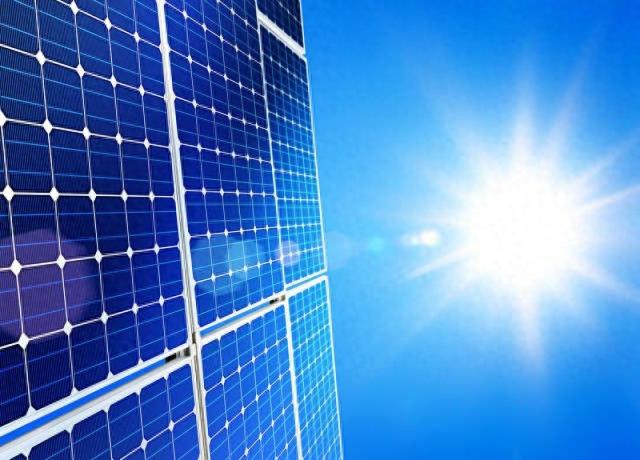
Core Viewpoint - The photovoltaic industry is experiencing significant losses across all major segments, with a call for recovery and improvement in profitability by 2026, focusing on asset management and pricing power [2][11]. Group 1: Industry Performance - The photovoltaic sector is in a "dark moment," with all major segments, including silicon materials, wafers, cells, and modules, reporting losses [2]. - The overall performance of the industry is characterized by high inventory and weak demand, despite some signs of recovery in silicon material prices [3]. - The integrated companies face significant pressure, with a notable decline in profitability due to rising costs of key materials like silver paste [3][6]. Group 2: Company-Specific Insights - Daqo New Energy forecasts a net loss of 1 to 1.3 billion yuan for 2025, but with a reduced loss margin of 52.17% to 63.21% year-on-year due to improved operational efficiency [3]. - Longi Green Energy expects a net loss of 6 to 6.5 billion yuan, a reduction of over 2 billion yuan compared to the previous year, driven by increased production efficiency [5]. - Junda Co. anticipates a net loss of 1.5 to 1.2 billion yuan, significantly higher than the previous year's loss of 590 million yuan, citing supply-demand imbalance and price transmission issues [4]. Group 3: Component and Equipment Sector - Companies focusing on Bifacial (BC) modules, such as Aiko Solar, are seeing a significant reduction in losses, with expected losses narrowing from 5.319 billion yuan to between 1.9 billion and 1.2 billion yuan [5]. - The equipment sector, represented by Aotai Technology, is also facing declines, with expected revenue dropping by 26.71% to 30.50% year-on-year [8]. - Silver paste manufacturer Dike Co. is projected to shift from profit to loss, with expected losses of 200 to 300 million yuan due to rising silver prices [9]. Group 4: Future Outlook - The industry is still in a phase of "deleveraging and capacity reduction," but there are signs of recovery in upstream segments, with discussions about potential profitability improvements in 2026 [11][12]. - Aiko Solar reports that its ABC module sales volume is expected to double, indicating a positive trend despite overall losses [12]. - Analysts predict that the industry may see a shift from supply-demand pricing to cost-based pricing by early 2026, potentially improving profit margins significantly [12].


光伏设备板块震荡走高
Di Yi Cai Jing· 2026-01-22 04:44
Group 1 - JunDa Co., Ltd. reached the daily limit increase in stock price [1] - GoodWe Technologies saw a rise of over 10% in its stock price [1] - Other companies such as Maiwei Co., LianSheng Technology, Tianyi New Materials, Haiyou New Materials, and Dongfang Rises also experienced stock price increases [1]
