
ZTE(000063)

Search documents
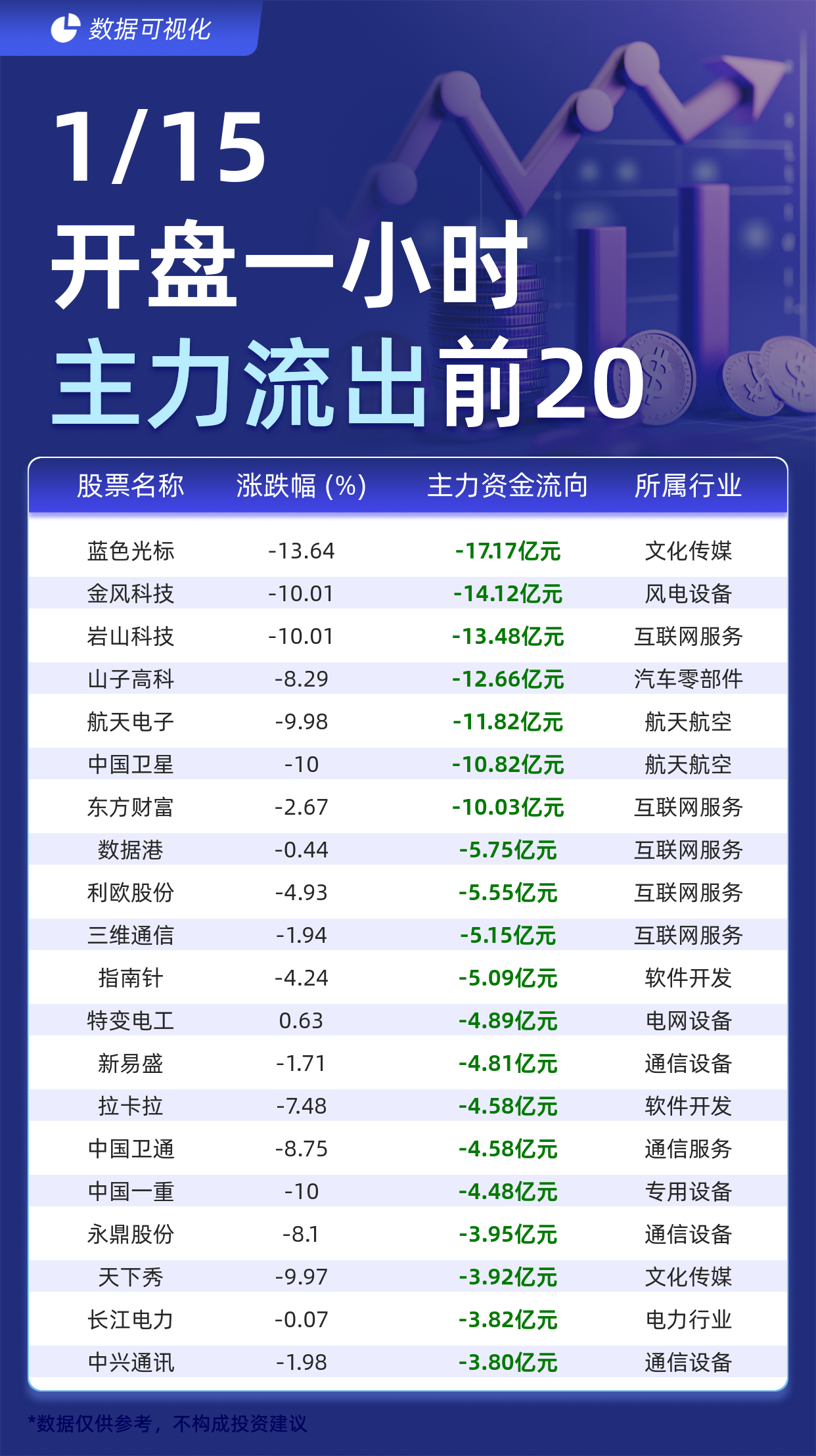
主力个股资金流出前20:蓝色光标流出17.17亿元、金风科技流出14.12亿元


Jin Rong Jie· 2026-01-15 02:47
Group 1 - The main stocks with significant capital outflows include BlueFocus (-1.717 billion), Goldwind (-1.412 billion), and Yanshan Technology (-1.348 billion) [1] - The sectors affected by the capital outflows include cultural transmission, wind power equipment, and internet services [2][3] - The largest percentage drop in stock prices was observed in BlueFocus (-13.64%) and Goldwind (-10.01%) [2] Group 2 - Other notable stocks with capital outflows include Aerospace Electronics (-1.182 billion), China Satellite (-1.082 billion), and Dongfang Fortune (-1.003 billion) [1] - The telecommunications sector also saw significant outflows, with companies like ZTE (-0.380 billion) and China Satcom (-0.458 billion) experiencing declines [3] - The overall trend indicates a bearish sentiment in the market, particularly affecting technology and aerospace sectors [2][3]

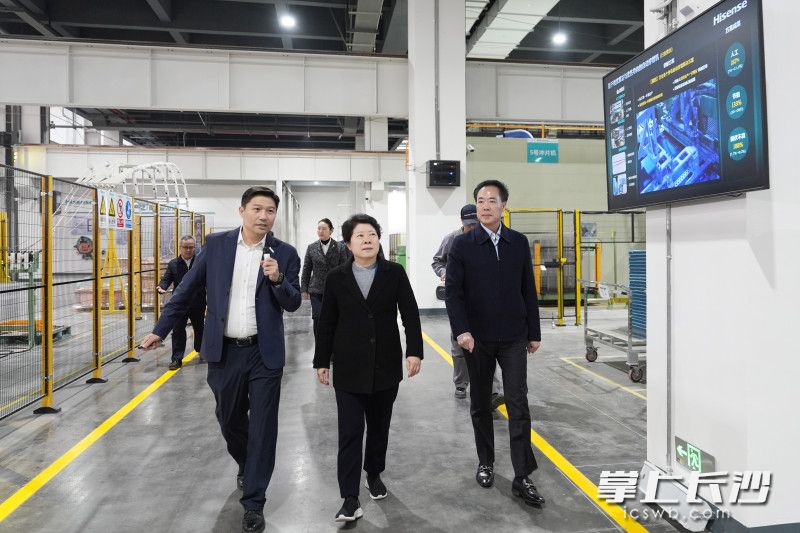
吴桂英调研民营经济发展情况
Chang Sha Wan Bao· 2026-01-14 11:58
Group 1 - The core message emphasizes the importance of promoting the healthy and high-quality development of the private economy in Changsha, aligning with Xi Jinping's important discourse on private economic development and optimizing the business environment [1] - The government aims to provide proactive services and precise support to alleviate difficulties faced by private enterprises, thereby enhancing their capabilities and fostering a better business environment [1] Group 2 - During the visit to the Ningxiang Economic Development Zone, the focus was on the Hisense (Changsha) Appliance Industrial Park, which recently commenced production of its commercial air conditioning smart manufacturing base, encouraging enterprises to enhance their core business and lead the industry [4] - The Huazhong Technology Group is engaged in the research and development of new biological materials, medical devices, and 3D printing applications, with an emphasis on talent development and R&D investment to seize development opportunities in cutting-edge fields [4] Group 3 - In the Xiangjiang New Area, the visit included companies like Shengxiang Biotechnology, Anker Innovation, and ZTE Communications, highlighting the importance of building industrial ecosystems and expanding international markets [7] - Anker Innovation is encouraged to continue expanding its global market presence and enhancing brand and technological innovation, focusing on smart electricity, home automation, and audio-visual products [7] - ZTE Communications is urged to leverage its R&D advantages to integrate deeply with local industrial and supply chains, continuously shaping new competitive advantages [7] Group 4 - The government is committed to establishing a new type of government-business relationship that is both friendly and clear, ensuring that the needs of enterprises are accurately understood and addressed with tailored services [7] - There is a focus on supporting enterprises in R&D innovation, talent acquisition, and market expansion, while ensuring effective policy implementation and a regulatory environment that fosters investment and development [7]



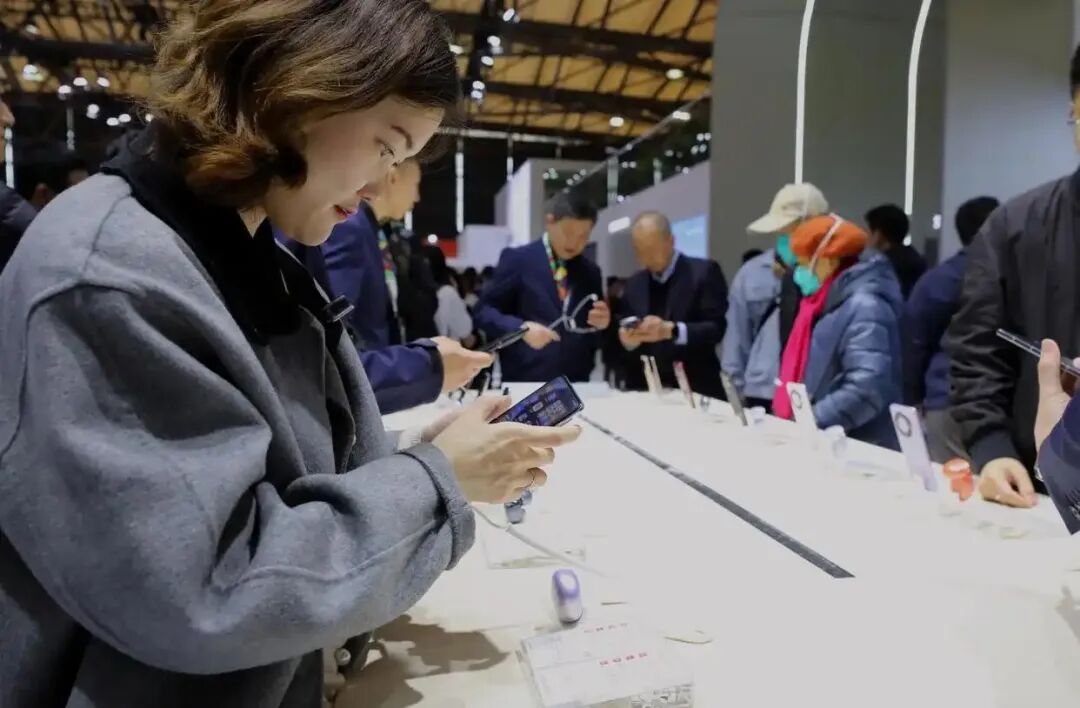
热议背后,一场生态重构的序幕悄然拉开……
Xin Lang Cai Jing· 2026-01-13 11:33
Core Insights - The article discusses the launch of the "Doubao AI Phone" by ByteDance and ZTE, which has generated significant buzz in the tech industry, with the first batch of 30,000 units selling out instantly and second-hand prices reaching 30,000 yuan [3][13][18] - The introduction of system-level AI in smartphones represents a fundamental shift from traditional app-based AI functionalities to an integrated AI infrastructure that can manage tasks across multiple applications [4][16][19] - This shift is causing tension between the new AI phone and existing application ecosystems, as it challenges the control and distribution of user data and commercial value within the current structure [6][16][19] Group 1: Transition from Functionality to Infrastructure - The distinction between "system-level AI" and traditional smartphone AI functionalities is clarified, emphasizing that traditional AI is confined to specific applications, while system-level AI integrates deeply into the operating system [4][14] - System-level AI allows for cross-application data retrieval and resource coordination, fundamentally changing user interaction with smartphones [5][15] - The introduction of AI agents as integral components of the operating system enhances the capabilities of AI, enabling it to perform complex tasks autonomously [5][15] Group 2: Impact on Traditional Application Ecosystem - The emergence of system-level AI is poised to disrupt the existing power dynamics among app stores, super apps, and operating systems, potentially diminishing the necessity of traditional applications [6][16] - Users may no longer need to interact with multiple apps for a single task, as the AI assistant can manage these interactions seamlessly in the background [6][16] - This convenience poses a structural threat to existing application distribution and user engagement strategies, prompting some applications to implement restrictions to protect their user base [7][16] Group 3: Ethical and Security Concerns - The ability of AI assistants to mimic human actions raises significant security concerns, as existing risk management systems may struggle to differentiate between user and agent behaviors [7][17] - The need for system-level AI to access extensive user data raises questions about data sovereignty and privacy, necessitating improvements in current solutions like localized model inference and differential privacy [7][17] - Ethical issues surrounding AI decision-making transparency and accountability are highlighted as urgent areas for development [7][17] Group 4: Future of Ecosystem Reconstruction - The ongoing conflict between traditional rules and new productivity models indicates a necessary evolution in the tech landscape, as the current risk management frameworks are based on outdated assumptions [8][18] - The rapid sell-out of the Doubao AI Phone and its market response suggest a growing acceptance of this technological evolution, indicating that ecosystem reconstruction is imperative [8][18] - The future will likely see a coexistence of system-level AI phones and existing applications, leading to a restructured value system across technology, business, and regulatory dimensions [9][19]
港交所消息:1月7日,瑞银集团持有的中兴通讯H股空头头寸从4.00%增至5.65%
Xin Lang Cai Jing· 2026-01-13 09:51
Group 1 - UBS Group's short position in ZTE Corporation's H-shares increased from 4.00% to 5.65% as of January 7 [1]
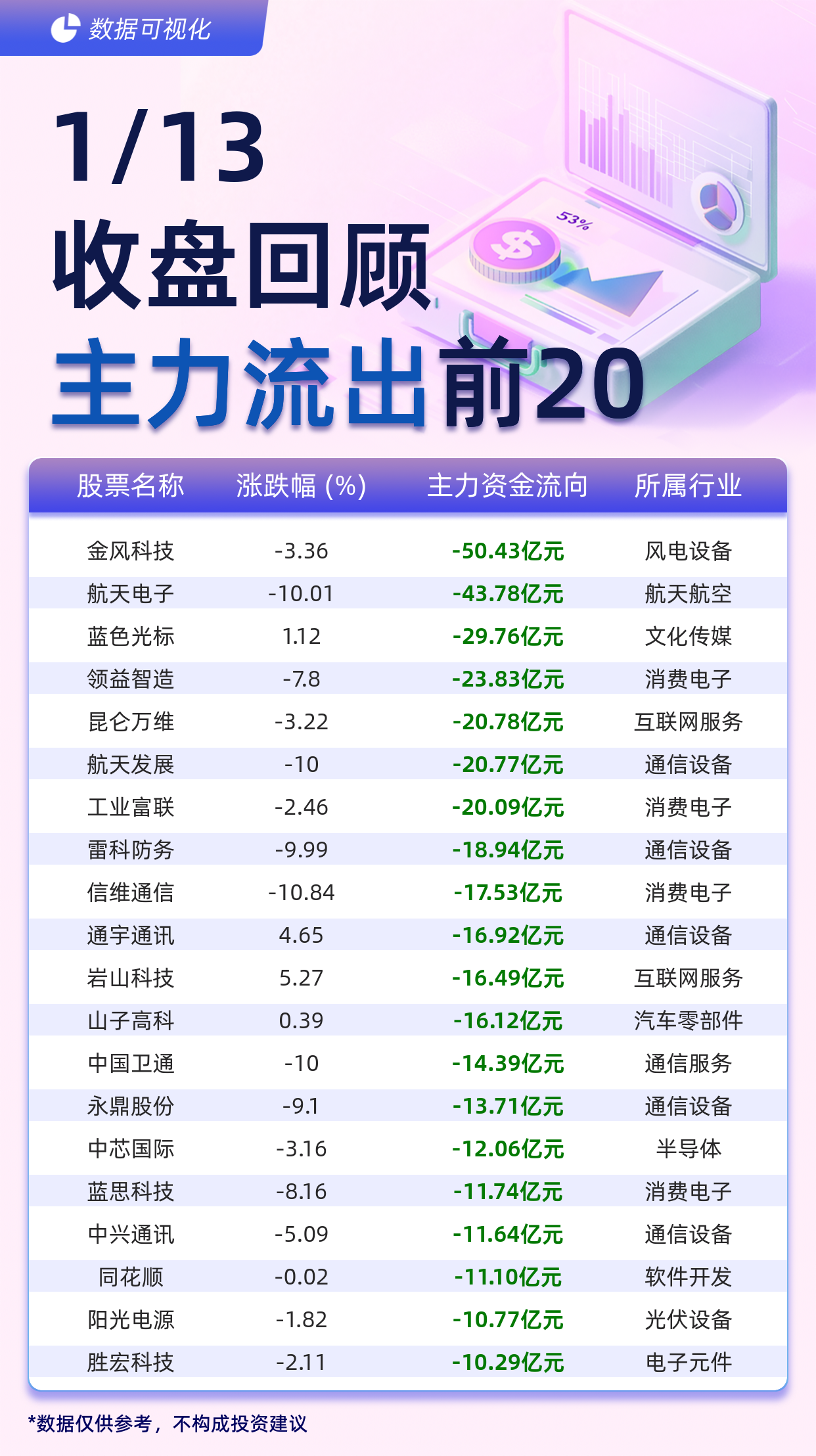
主力个股资金流出前20:金风科技流出50.43亿元、航天电子流出43.78亿元
Jin Rong Jie· 2026-01-13 07:33
Core Viewpoint - The data indicates significant outflows of capital from various stocks, with notable declines in share prices across multiple sectors, particularly in aerospace, communication, and consumer electronics. Group 1: Major Stock Outflows - The stock with the highest capital outflow is Goldwind Technology, with an outflow of 5.043 billion yuan and a price drop of 3.36% [1][2] - Aerospace Electronics experienced a capital outflow of 4.378 billion yuan, with a significant price decline of 10.01% [1][2] - BlueFocus Media saw an outflow of 2.976 billion yuan, but its share price increased by 1.12% [1][2] Group 2: Sector Performance - The wind power equipment sector, represented by Goldwind Technology, is facing challenges with a notable capital outflow [2] - The aerospace sector, particularly Aerospace Electronics and Aerospace Development, is experiencing substantial capital withdrawals, indicating potential investor concerns [1][2] - The consumer electronics sector, including Industrial Fulian and Xunwei Communication, is also seeing significant outflows, reflecting broader market trends [1][3] Group 3: Additional Notable Stocks - Other companies with significant capital outflows include Kunlun Wanwei (2.078 billion yuan), Raytheon Defense (1.894 billion yuan), and China Satcom (1.439 billion yuan), all of which are in the communication and internet service sectors [1][3] - Semiconductor company SMIC reported an outflow of 1.206 billion yuan, indicating investor caution in the semiconductor industry [1][3] - The photovoltaic equipment sector, represented by Sunshine Power, also faced an outflow of 1.077 billion yuan, highlighting challenges in renewable energy investments [1][3]



中兴通讯股价跌5.04%,长江资管旗下1只基金重仓,持有6.5万股浮亏损失13.91万元
Xin Lang Cai Jing· 2026-01-13 06:53
Group 1 - ZTE Corporation's stock fell by 5.04% on January 13, closing at 40.30 CNY per share, with a trading volume of 7.954 billion CNY and a turnover rate of 4.80%, resulting in a total market capitalization of 192.776 billion CNY [1] - The company, founded on November 11, 1997, and listed on November 18, 1997, is based in Shenzhen, Guangdong Province, and primarily engages in the investment and sale of electronic and communication equipment components [1] - ZTE's main business revenue composition includes 49.00% from carrier networks, 26.91% from government and enterprise business, and 24.09% from consumer business [1] Group 2 - Changjiang Asset Management has one fund heavily invested in ZTE Corporation, specifically the Changjiang Xuri Mixed A Fund (021015), which held 65,000 shares in the third quarter, unchanged from the previous period, accounting for 3.44% of the fund's net value [2] - The estimated floating loss for the fund today is approximately 139,100 CNY [2] - The Changjiang Xuri Mixed A Fund was established on July 24, 2024, with a latest scale of 83.833 million CNY, and has achieved a year-to-date return of 5.42%, ranking 3148 out of 8836 in its category [2]
中兴通讯股价跌5.04%,永赢基金旗下1只基金重仓,持有90.92万股浮亏损失194.57万元
Xin Lang Cai Jing· 2026-01-13 06:53
Group 1 - ZTE Corporation's stock fell by 5.04% on January 13, closing at 40.30 CNY per share, with a trading volume of 7.954 billion CNY and a turnover rate of 4.80%, resulting in a total market capitalization of 192.776 billion CNY [1] - ZTE Corporation, established on November 11, 1997, and listed on November 18, 1997, is located in Nanshan District, Shenzhen, Guangdong Province. The company's main business includes investment in industrial ventures and sales of electronic and communication equipment components [1] - The revenue composition of ZTE Corporation is as follows: 49.00% from carrier networks, 26.91% from government and enterprise business, and 24.09% from consumer business [1] Group 2 - According to data from the top ten holdings of funds, Yongying Fund has one fund heavily invested in ZTE Corporation. The Satellite ETF (159206) increased its holdings by 827,800 shares in the third quarter, bringing the total to 909,200 shares, which accounts for 3.48% of the fund's net value, making it the sixth-largest holding [2] - The Satellite ETF (159206) was established on March 6, 2025, with a latest scale of 1.193 billion CNY and has achieved a year-to-date return of 31.13%, ranking 6th out of 5,517 in its category. Since its inception, it has returned 120.02% [2] - The fund manager of the Satellite ETF (159206) is Liu Tingyu, who has been in the position for 2 years and 154 days. The total asset scale of the fund is 21.354 billion CNY, with the best return during his tenure being 119.5% and the worst being -1.14% [2]
王有莉参赞陪同驻牙买加大使王锦峰走访中兴通讯牙买加有限公司
Shang Wu Bu Wang Zhan· 2026-01-13 03:59
Group 1 - The ambassador Wang Jinpeng praised the achievements of ZTE Jamaica Limited over the past year and encouraged the company to actively participate in post-disaster reconstruction in Jamaica, expanding practical cooperation in the field of communication technology [2] - The ambassador emphasized the importance of legal compliance in business operations, urging the company to fulfill its social responsibilities, enhance risk prevention, and improve emergency plans to ensure safety during the Spring Festival [2] - The company expressed gratitude for the embassy's support and guidance, committing to operate in accordance with the law and actively expand its business to contribute to the development of the China-Jamaica strategic partnership [4]

2025年1-11月中国光电子器件产量为17318.1亿只(片、套) 累计增长9.7%
Chan Ye Xin Xi Wang· 2026-01-13 03:03
Core Viewpoint - The report highlights the growth trajectory of China's optoelectronic device industry, projecting significant production increases and market potential from 2025 to 2032 [1] Group 1: Industry Overview - In November 2025, China's optoelectronic device production is expected to reach 164.5 billion units, reflecting a year-on-year growth of 9.1% [1] - Cumulatively, from January to November 2025, the total production of optoelectronic devices in China is projected to be 1,731.81 billion units, marking a cumulative growth of 9.7% [1] Group 2: Market Research - The report titled "2026-2032 China Optoelectronic Device Industry Market Survey and Future Trend Forecast" was published by Zhiyan Consulting, a leading industry consulting firm in China [1] - Zhiyan Consulting has over a decade of experience in industry research, providing comprehensive reports and tailored services to support investment decisions [1]




中兴通讯:截至2026年1月9日股东总数为624136户
Zheng Quan Ri Bao· 2026-01-12 13:43
Core Viewpoint - ZTE Corporation reported that as of January 9, 2026, the total number of shareholders is 624,136, with 623,851 being A-shareholders and 285 being H-shareholders, which includes 284 registered shareholders and one representative of non-registered shareholders [1]. Group 1 - The total number of shareholders for ZTE Corporation is 624,136 [1] - A-shareholders account for 623,851 of the total [1] - H-shareholders consist of 285, including 284 registered shareholders and one representative [1]