
Zhujiang Brewery(002461)

Search documents
食品饮料周观点:育儿补贴政策落地,推新积极挖掘增量-20250803
GOLDEN SUN SECURITIES· 2025-08-03 10:36
Investment Rating - The report maintains an "Increase" rating for the food and beverage industry, indicating a positive outlook for the sector [5]. Core Insights - The implementation of the childcare subsidy policy is expected to stimulate growth in the food and beverage sector, particularly benefiting the infant formula and dairy product markets [4]. - The report highlights three main investment themes in the liquor segment: strong leading brands, sustained regional advantages, and recovery-driven elastic stocks [1][2]. - In the beer and beverage segment, Budweiser faces sales pressure but is seeing price recovery, while the sugary tea category is gaining market share during peak seasons [3]. Summary by Sections Liquor Industry - Leading brands such as Moutai, Wuliangye, and Luzhou Laojiao dominate the global rankings, with Moutai valued at $58.4 billion, maintaining its position as the most valuable liquor brand globally [2]. - The liquor sector is transitioning from scale growth to high-quality development, with a focus on brand strength and market positioning [2]. Beer and Beverage Sector - Budweiser's Q2 2025 results show a revenue decline of 3.9% and a profit drop of 31.1%, with a notable 6.2% decrease in sales volume [3]. - The sugary tea segment is experiencing a resurgence, with brands like Kang Shifu and Uni-President maintaining leading positions, and sales of Yuanqi Forest's iced tea growing by 53.9% year-on-year [3]. Food Sector - The national childcare subsidy program, effective from January 1, 2025, is projected to enhance birth rates and subsequently increase demand for dairy products [4]. - New product launches by companies like Qiaqia and Ximai are aimed at expanding market presence and tapping into health-oriented consumer trends [4][7].



酒业密集人事调整,折射出怎样的行业困局?
Sou Hu Cai Jing· 2025-08-03 09:34
Core Viewpoint - The liquor industry is undergoing unprecedented executive changes across various segments, reflecting deep-seated challenges and transformation pains amid multiple pressures such as declining performance, high inventory, and weak consumer demand [1][4]. Group 1: Executive Changes - The trend of executive turnover in the liquor industry, which began in 2024, has expanded beyond just the liquor segment to include beer and yellow wine [3]. - Notable changes in the liquor sector include the resignation of Yanghe's chairman Zhang Liandong and the appointment of Gu Yu as his successor, as well as similar transitions in other companies like Jinzhongzi and Guizhou Moutai [3]. - In the beer industry, significant leadership changes occurred with the resignation of China Resources Beer chairman Hou Xiaohai and the retirement of Zhujiang Beer chairman Wang Zhibin, leading to new appointments [3]. Group 2: Industry Challenges - The liquor industry's executive changes are indicative of a deep transformation driven by pressures from consumption shifts, intensified competition, and policy adjustments [5]. - The slowing macroeconomic growth has led to decreased consumer spending power and willingness, significantly impacting liquor products as discretionary items [5]. - The younger generation's changing consumption attitudes are influencing liquor consumption, prompting companies to seek younger management to tap into this market [5]. Group 3: Strategic Adjustments - The introduction of the "new alcohol ban" policy in May has created additional pressure on the industry, despite its limited direct impact on actual sales [5]. - The decline in government consumption from 40% in 2011 to approximately 5% in 2023 has further affected market confidence, leading to a drop in high-end liquor wholesale prices [5]. - Companies are increasingly focusing on differentiated competition and precise market segmentation to survive, developing product lines tailored to various consumption scenarios such as banquets, gifts, personal use, and collections [6].






中国消费品7月价格报告:多数白酒批价回归平稳,液奶与啤酒折扣降低
Haitong Securities International· 2025-08-01 13:32
Investment Rating - The report assigns an "Outperform" rating to multiple companies in the consumer staples sector, including Guizhou Moutai, Wuliangye, Luzhou Laojiao, and others [1]. Core Insights - The report highlights that most baijiu wholesale prices have stabilized, with specific price changes noted for various brands. For instance, the price of Feitian Moutai (case) is 1915 yuan, down by 35 yuan from the previous month, and down 665 yuan year-on-year [3][9]. - Discounts on liquid milk and beer have decreased compared to previous months, indicating a shift in pricing strategies within the consumer goods market [5][22]. Summary by Sections Baijiu Pricing - Guizhou Moutai's prices for different products have shown a decline, with Feitian Moutai (case) at 1915 yuan, down 35 yuan month-on-month and 665 yuan year-on-year [3][9]. - Wuliangye's eighth-generation price is 930 yuan, stable compared to last month and unchanged year-on-year [4][9]. - Luzhou Laojiao's Guojiao 1573 remains at 860 yuan, unchanged from last month and down 40 yuan year-on-year [4][9]. Consumer Goods Discounts - The average discount rate for liquid milk has decreased to 79.1% from 73.8% at the end of June, while the median discount rate increased to 80.3% [5][22]. - Beer discounts have also seen a slight increase, with average and median rates at 83.6% and 87.0%, respectively, compared to 81.1% and 84.6% in late June [5][22]. - Discounts for infant formula and instant foods have remained stable, with average rates at 93.0% and 94.3%, respectively [7][22].



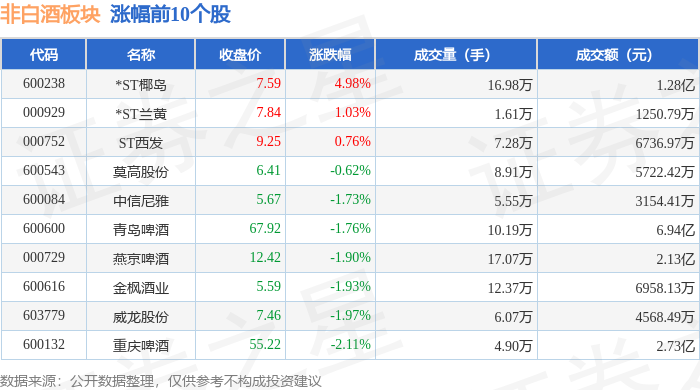
非白酒板块8月1日涨0.06%,*ST兰黄领涨,主力资金净流出5053.65万元
Zheng Xing Xing Ye Ri Bao· 2025-08-01 08:27
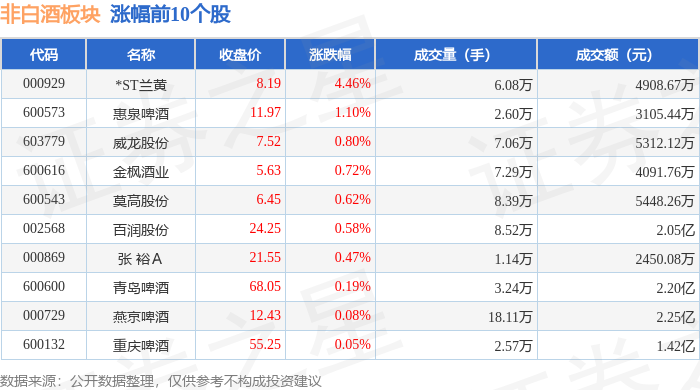
Market Overview - On August 1, the non-liquor sector rose by 0.06% compared to the previous trading day, with *ST Lanhua leading the gains [1] - The Shanghai Composite Index closed at 3559.95, down 0.37%, while the Shenzhen Component Index closed at 10991.32, down 0.17% [1] Stock Performance - The top-performing stock in the non-liquor sector was *ST Lanhua, which closed at 8.19 with a gain of 4.46% [1] - Other notable stocks included Huichuan Beer at 11.97 (+1.10%), Weilong Co. at 7.52 (+0.80%), and Jin Feng Wine at 5.63 (+0.72%) [1] Trading Volume and Value - The trading volume for *ST Lanhua was 60,800 shares, with a transaction value of approximately 49.09 million yuan [1] - The total net outflow of main funds in the non-liquor sector was 50.54 million yuan, while retail funds saw a net inflow of 19.91 million yuan [2] Fund Flow Analysis - The main fund inflow for *ST Lanhua was 3.99 million yuan, accounting for 8.13% of its trading volume [3] - In contrast, the main fund outflow for ST Xifa was 2.99 million yuan, representing a 6.78% decrease [3] - The overall fund flow indicates a mixed sentiment among institutional and retail investors in the non-liquor sector [2][3]


过度依赖华南市场、25亿募资未有效利用,珠江啤酒新帅上任即承压
Sou Hu Cai Jing· 2025-07-31 17:04
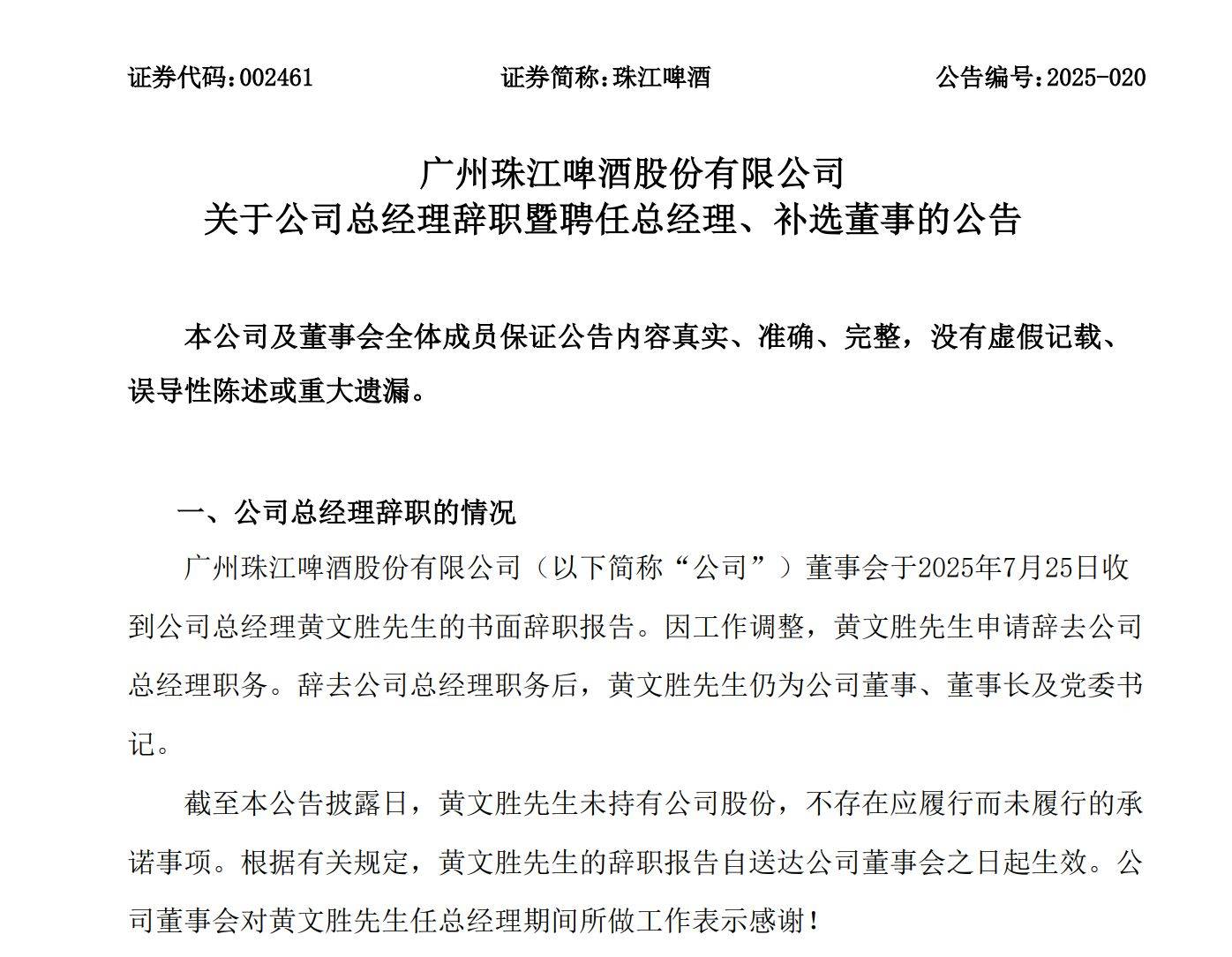
Core Viewpoint - The recent leadership changes at Zhujiang Brewery highlight the company's struggles with over-reliance on the South China market and ineffective utilization of the 2.5 billion yuan raised in funding, amidst a declining beer industry and increasing competition [1][11]. Company Overview - Zhujiang Brewery has announced a change in general manager, with Zhang Yong taking over from Huang Wensheng, who served for only about a month [6][8]. - The company has a significant dependency on the South China market, with approximately 95.81% of its revenue coming from this region, amounting to around 5.49 billion yuan in 2024 [10][12]. - The revenue from non-South China markets has decreased by 10.37% year-on-year in 2024, indicating challenges in expanding beyond its primary market [11]. Financial Performance - As of the end of 2024, Zhujiang Brewery's fixed assets reached approximately 3.216 billion yuan, up nearly 8% from the beginning of the year [13]. - The company has faced issues with project delays and adjustments in the use of raised funds, with a remaining balance of about 2.599 billion yuan as of December 31, 2024 [16]. - Interest income accounted for 23.95% of the net profit in 2024, raising concerns about the company's true profitability as this support may diminish with lower interest rates [17]. Market Challenges - The beer industry is expected to see a slight decline in overall production by 0.6% in 2024, intensifying competition among breweries [1]. - Major competitors, such as China Resources Beer, are increasing their presence in the South China market, further squeezing Zhujiang Brewery's market share [10][11]. - Analysts express concerns that frequent leadership changes may disrupt strategic continuity and affect the company's ability to execute its national expansion plans [9][11].
非白酒板块7月31日跌1.91%,珠江啤酒领跌,主力资金净流出1.54亿元
Zheng Xing Xing Ye Ri Bao· 2025-07-31 08:37
证券之星消息,7月31日非白酒板块较上一交易日下跌1.91%,珠江啤酒领跌。当日上证指数报收于 3573.21,下跌1.18%。深证成指报收于11009.77,下跌1.73%。非白酒板块个股涨跌见下表: 从资金流向上来看,当日非白酒板块主力资金净流出1.54亿元,游资资金净流入5485.75万元,散户资金 净流入9921.96万元。非白酒板块个股资金流向见下表: | 代码 | 名称 | 主力净流入(元) | 主力净占比 游资净流入(元) | | 游资净占比 散户净流入(元) | | 散户净占比 | | --- | --- | --- | --- | --- | --- | --- | --- | | 600238 | *ST椰岛 | -1354.79万 | 10.58% | -145.40万 | -1.14% | -1209.39万 | -9.45% | | 600543 | [草高股份 | 1097.78万 | 19.18% | -565.25万 | -9.88% | -532.53万 | -9.31% | | 600084 | 中信尼雅 | 472.35万 | 14.97% | -111.08万 | -3 ...
十五运会和残特奥会签约7类赞助,22家特许生产企业获授牌
2 1 Shi Ji Jing Ji Bao Dao· 2025-07-30 14:06
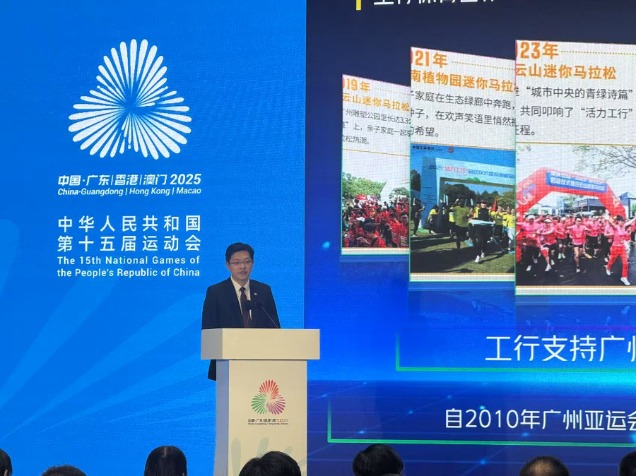
Core Insights - The 15th National Games and the 12th National Paralympic Games have successfully signed sponsorship agreements with various companies, covering seven sponsorship categories, indicating strong corporate support for the events [1][3] - As of June 30, over 1 million anti-counterfeiting labels have been issued for licensed products related to the events, with a total merchandise value exceeding 79.4 million yuan, reflecting a growing market interest [1][3] Sponsorship and Partnerships - Major sponsors such as China Southern Airlines and Industrial and Commercial Bank of China have announced their cooperation plans, showcasing their professional strengths to support the events [3] - Sponsorship agreements have been signed with companies including Industrial and Commercial Bank of China, Shenzhen JingTian, Chow Tai Fook, Zhujiang Beer, Liby, and Wang Lao Ji for the National Games, and with brands like Peak Sports and Traffic Bank for the Paralympic Games [3] Licensed Products and Market Development - A total of 31 licensed production companies and 38 licensed retail companies showcased 1,170 licensed products featuring the mascots "Xi Yang Yang" and "Le Rong Rong," covering 14 categories including cultural products, clothing, and daily necessities [3] - The licensed products have been issued over 1 million anti-counterfeiting labels, covering 11 major categories and 518 varieties, with a merchandise value exceeding 79.4 million yuan, indicating a robust market response [3] - Currently, 271 licensed retail stores have been established across 15 cities in Guangdong and key areas outside the province, enhancing public access to purchase channels [3]


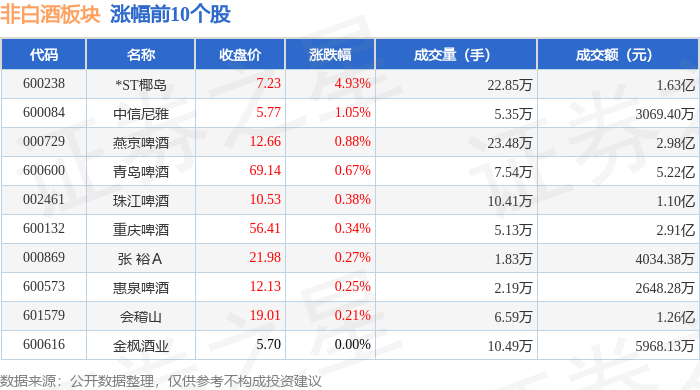
非白酒板块7月30日涨0.43%,*ST椰岛领涨,主力资金净流出7649.92万元
Zheng Xing Xing Ye Ri Bao· 2025-07-30 08:26
从资金流向上来看,当日非白酒板块主力资金净流出7649.92万元,游资资金净流出6309.61万元,散户资 金净流入1.4亿元。非白酒板块个股资金流向见下表: | 代码 | 名称 | 主力净流入(元) | 主力净占比 游资净流入 (元) | | 游资净占比 散户净流入 (元) | | 散户净占比 | | --- | --- | --- | --- | --- | --- | --- | --- | | 600238 | *ST椰岛 | 1211.33万 | 7.45% | -543.30万 | -3.34% | -668.03万 | -4.11% | | 600543 | 莫高股份 | 126.70万 | 2.46% | 142.10万 | 2.76% | -268.80万 | -5.22% | | 601579 | 会稽山 | 114.55万 | 0.91% | -151.38万 | -1.20% | - 36.83万 | 0.29% | | 002461 | 珠江啤酒 | 87.87万 | 0.80% | -821.37万 | -7.49% | 733.50万 | 6.69% | | 000752 | S ...


珠江啤酒的全国化为何“雷声大雨点小”?
Sou Hu Cai Jing· 2025-07-30 03:08
Core Viewpoint - The recent leadership changes at Zhujiang Beer have drawn significant attention, with the new team facing the challenge of expanding the company's national presence amidst a highly competitive market [3][7]. Company Overview - Zhujiang Beer has a strong foundation in the Guangdong market, holding a dominant position with high brand recognition and consumer loyalty, but it is heavily reliant on this single market [3]. - In 2024, Zhujiang Beer reported revenue of approximately 5.49 billion yuan from the South China region, representing a year-on-year growth of 7.45%, which accounted for 95.81% of total revenue [3]. - Revenue from other regions was about 240 million yuan, showing a decline of 10.37% year-on-year, making up only 4.19% of total revenue, indicating an increasing dependency on the Guangdong market [3]. National Expansion Challenges - Despite having proposed a nationalization strategy for over two decades, Zhujiang Beer has struggled to make significant progress, facing intense competition from both foreign and domestic beer giants [4]. - The company's efforts to establish production bases in regions like Hunan, Hebei, and Guangxi have not yielded satisfactory sales results, with weak local channels hindering market penetration [4]. Channel Development Issues - Zhujiang Beer has been promoting the nationwide rollout of raw beer experience stores, which align with the trend of shifting beer consumption towards non-on-premise channels, but operational challenges have emerged [5]. - Managing franchise stores poses difficulties in ensuring compliance with product and pricing regulations, and the high transportation and cold chain costs required for raw beer may compress profit margins [5]. Leadership and Future Outlook - The new leadership team, consisting of Huang Wensheng and Zhang Yong, brings extensive experience, with Huang having led the launch of several high-end products and the raw beer experience store model [7]. - The upcoming third-quarter results will serve as a critical test for the new leadership, as they must devise effective strategies to enhance the company's competitiveness in the national market [7]. Industry Context - The beer industry is currently in a phase of stock competition, with limited market growth and increasing rivalry among major players [8]. - Leading companies like China Resources Snow Beer, Tsingtao Brewery, and Anheuser-Busch InBev leverage their scale, brand, and distribution advantages to solidify their market positions [8]. - Zhujiang Beer faces significant challenges in competing for market share due to its relatively smaller scale and resource limitations, necessitating continuous innovation to meet diverse consumer demands [8].
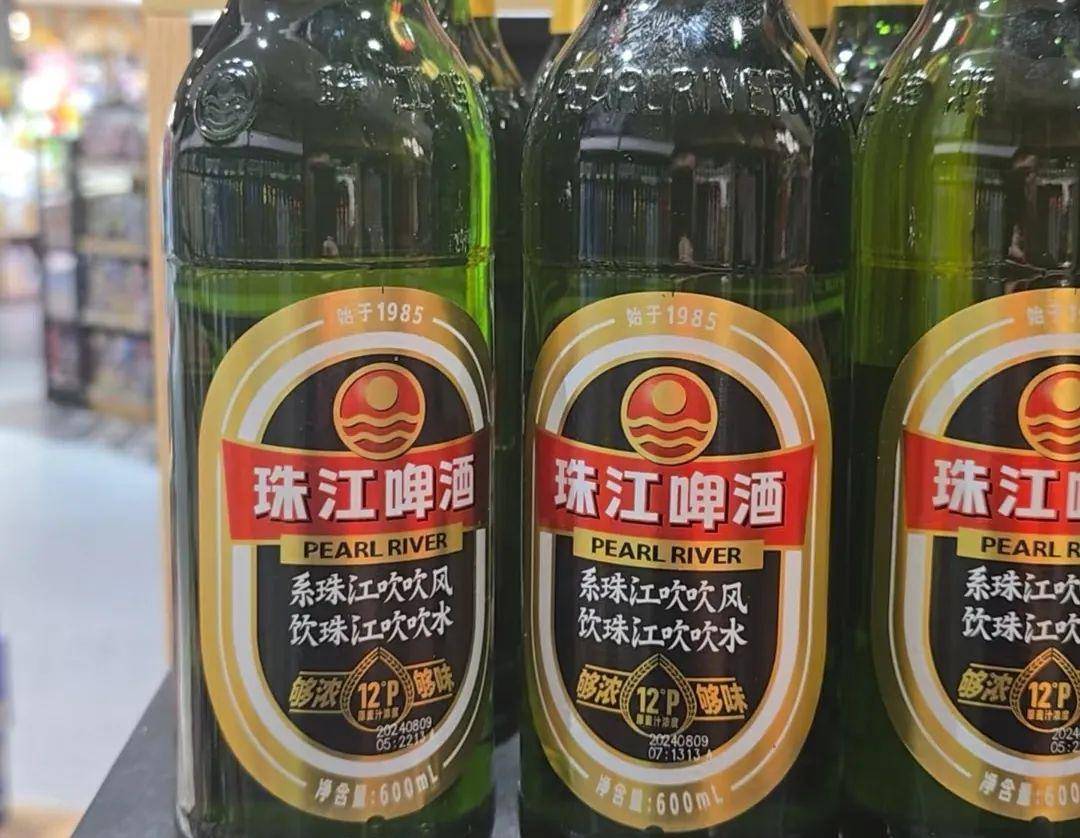
珠江啤酒高层变动,“华南王”何去何从
Guo Ji Jin Rong Bao· 2025-07-29 23:47
Core Viewpoint - Huang Wensheng resigned as General Manager of Zhujiang Beer after one month of being appointed Chairman, but will continue to serve as a director, chairman, and party secretary of the company [1] Group 1: Leadership Changes - Huang Wensheng, who joined Zhujiang Beer in 2020, has a background primarily in telecommunications and smart equipment, which he leveraged to address challenges in the beer industry [1] - Following the retirement of Wang Zhibin, who served as Chairman, Huang Wensheng was promoted to Chairman, and Zhang Yong, the current Deputy Secretary of the Party Committee, was appointed as the new General Manager [2] Group 2: Business Strategy and Performance - Huang Wensheng focused on product innovation, channel expansion, and cost reduction during his tenure, launching several high-end products and establishing raw beer experience stores [2] - Zhujiang Beer achieved record revenue and net profit in 2024, with revenue increasing by 6.56% to 5.731 billion yuan and net profit rising by 29.1% to 831 million yuan [2] - The company’s revenue from the South China region accounted for approximately 95% of total revenue, with a compound annual growth rate (CAGR) of 8.1% from 2020 to 2024 [5] Group 3: National Expansion Challenges - The national expansion strategy initiated by previous leadership has faced challenges, with Zhujiang Beer struggling to penetrate markets outside South China [4] - Despite attempts at national expansion from 2010 to 2013, the company has seen limited success due to the competitive landscape and the need for significant investment [5]