
Hongqi Chain(002697)

Search documents
甜心皮皮被指模仿蜜雪,平价茶饮陷同质化竞争
Ge Long Hui· 2025-12-19 23:53
Core Viewpoint - The brand "Sweet Heart Pipi" has rapidly emerged in the tea beverage industry, attracting significant investment and expanding aggressively, raising questions about its sustainability and potential risks in a highly competitive market [1] Group 1: Experience Replication and Risk Avoidance - The core team of Sweet Heart Pipi consists mainly of veterans from established brands like Mixue Ice City and Bawang Tea, providing a significant advantage in understanding chain expansion [1] - The brand strategically avoids niche products requiring long-term market education, focusing instead on proven categories like "ice cream + tea" and fresh fruit tea, with prices set in the affordable range of 3-11 yuan [1] - By leveraging established product categories, Sweet Heart Pipi aims to reduce trial and error costs and quickly replicate a profitable single-store model [1] Group 2: Supply Chain Concerns Behind Affordability - The claim of affordability is not a sustainable competitive advantage; the ability to maintain profitability while being cheap is crucial [2] - Sweet Heart Pipi's supply chain lacks the scale and stability compared to giants like Mixue Ice City, which has established a global raw material base and cold chain network over the years [2] - To support its ambitious goal of thousands of stores, Sweet Heart Pipi must invest heavily in long-term supply chain development, which poses a challenge amid fluctuating raw material prices and regional supply stability [2] Group 3: Hidden Risks of Aggressive Expansion - The aggressive expansion strategy may lead to internal competition among franchisees, potentially harming individual store profitability [3] - Rapid growth could dilute the quality of operational support, supervision, and training from headquarters, affecting store survival rates and brand reputation [3] - The success of the first store in Dali, a tourist city, does not guarantee the same model will work in diverse community markets with varying consumer power [3] Group 4: Structural Opportunities and Harsh Realities in the Industry - The rise of Sweet Heart Pipi reflects two realities in the tea beverage industry: the growth of lower-tier markets and overseas expansion as new engines of growth [4] - Lower-tier cities contribute over 60% of market growth, while Southeast Asia shows significant growth potential for brand expansion [4] - The industry faces challenges of homogenization and competition from established brands like Mixue Ice City, which possess supply chain advantages and strong consumer recognition [5] Group 5: Long-Term Viability After Rapid Growth - Sweet Heart Pipi's rapid rise is a result of capital, experience, and market opportunities, demonstrating that new brands can carve out a niche even in a saturated market [6] - However, the tea beverage industry is a long-term race, requiring not just speed but also supply chain endurance, management precision, brand differentiation, and store health [6]

龙头六连板!这个板块反转了?
Ge Long Hui· 2025-12-18 10:58
Core Viewpoint - The retail sector in the A-share market has shown signs of recovery after a prolonged period of decline, driven by recent favorable policies and a shift in consumer behavior towards increased domestic demand [6][9][30]. Group 1: Market Performance - The leading retail company, Yonghui Supermarket, has seen its stock price drop nearly 70% since April 2020, prior to the recent market rally [1]. - Other retail companies, such as Dongbai Group, have also experienced stagnant performance, with many retail stocks recently showing significant gains, including multiple trading halts due to price increases [3][9]. Group 2: Policy Support - Recent government policies emphasize the importance of domestic demand and consumer spending, with the central economic work conference prioritizing the construction of a strong domestic market [7]. - The National Development and Reform Commission has reiterated its commitment to expanding domestic demand and enhancing consumer capacity, indicating a clear intention to boost consumption [7][8]. Group 3: Economic Indicators - In the first nine months of 2025, the value added by wholesale and retail industries grew by 5.6%, maintaining a stable GDP contribution of 10.3% [11]. - Retail sales increased by 4.6%, with physical retail formats like convenience stores and supermarkets showing growth [12][13]. Group 4: Industry Challenges - The retail industry has faced unprecedented challenges, particularly from e-commerce, which has permanently shifted consumer behavior towards online shopping [18]. - Traditional retailers are experiencing rising operational costs, which are squeezing profit margins, leading to significant performance disparities among companies [18][20]. Group 5: Transformation and New Trends - The retail sector is undergoing a transformation from a focus on scale expansion to high-quality development, emphasizing customer experience over mere product sales [20][28]. - New retail formats are emerging, with companies like Hema and discount stores expanding rapidly, indicating a shift in competitive dynamics within the industry [25][27]. Group 6: Future Outlook - Despite recent positive signals, the retail sector's fundamental challenges remain, with ongoing adjustments and potential for further differentiation among companies based on their ability to adapt [30].



龙头六连板!这个板块反转了?
格隆汇APP· 2025-12-18 10:12
Core Viewpoint - The retail sector in A-shares has been underperforming for several years, but recent policy support and market enthusiasm may signal a potential turnaround for the industry [2][6][8]. Group 1: Market Conditions and Policy Support - The retail sector has seen a collective uptick recently, driven by a series of favorable policies aimed at boosting domestic consumption [6][8]. - The Central Economic Work Conference prioritized "domestic demand" as a key task, emphasizing the need to enhance consumer willingness and capacity [9][10]. - The Ministry of Commerce has redefined the retail sector's role as a crucial component in building a complete domestic demand system [11][12]. - Upcoming policies are expected to stimulate consumption, particularly in service-oriented sectors [10][13]. Group 2: Economic Indicators - From January to September 2025, the value added by wholesale and retail industries grew by 5.6%, maintaining a stable GDP contribution of 10.3% [15]. - Retail sales increased by 4.6%, with physical retail formats like convenience stores and supermarkets showing growth [16][17]. - The approaching Spring Festival is anticipated to further boost offline retail activities, contributing to a positive market sentiment [18]. Group 3: Market Behavior and Valuation - Consumer stocks have shown signs of recovery, with valuations at historically low levels; for instance, the food and beverage sector's latest P/E ratio is 20.36, at a percentile of 7.05% [19][20]. - The prolonged period of low valuations has created a technical rebound demand in the retail sector [21][22]. Group 4: Industry Challenges and Transformations - The retail industry has faced unprecedented challenges, particularly from e-commerce, which has permanently shifted consumer behavior towards online shopping [24][25][28]. - Traditional retailers are experiencing rising operational costs, which are squeezing profit margins [29]. - Performance disparities among retail companies are evident, with some struggling to adapt while others, like Bubu Gao, have seen significant revenue growth due to successful transformations [32][36]. Group 5: New Business Models and Innovations - The retail landscape is evolving, with a shift from mere product sales to enhancing customer experiences [38][39]. - Companies are increasingly focusing on operational efficiency and cost control, with strategies like closing underperforming stores and optimizing organizational structures [42][43]. - New retail formats, such as discount stores and instant retail, are emerging, intensifying competition within the sector [45][46]. Group 6: Future Outlook - The retail sector is at a crossroads, with the potential for recovery tempered by ongoing challenges from e-commerce and changing consumer behaviors [58][62]. - While leading companies may benefit from valuation rebounds, those unable to adapt may face continued difficulties [63].

推出200%甜度的蜜雪,能如愿拿捏美国老吃家吗
3 6 Ke· 2025-12-17 11:27
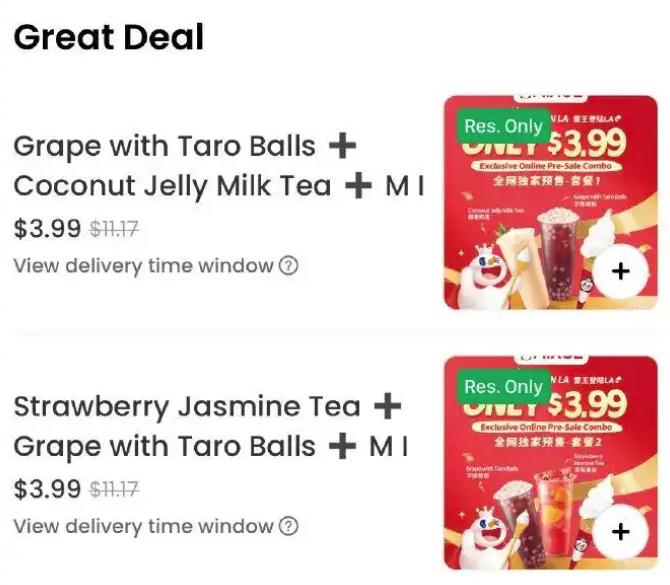
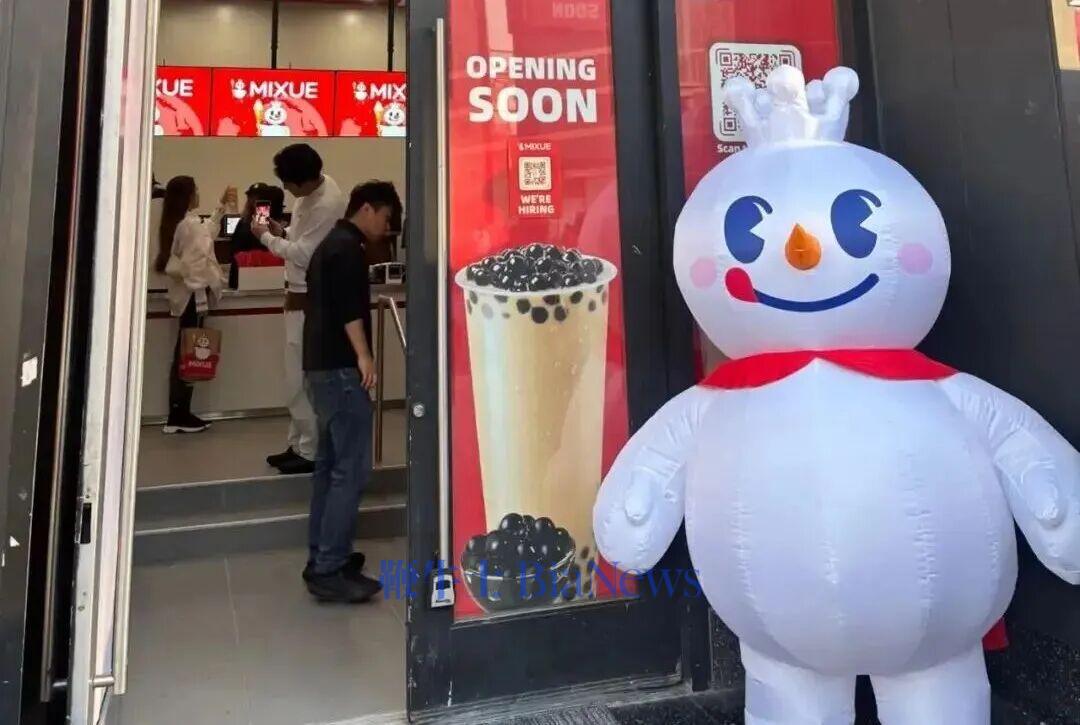
为什么这届网友只是一看菜单,就觉得蜜雪冰城出海美国大概率稳了? 蜜雪才是正宗的北美老吃家 据媒体报道,近期除有网友发帖分享了蜜雪冰城好莱坞门店的照片外,当地华人也向记者表示虽然最终的开店时间待定,但雪王人偶等前期宣传物料、工 作人员却均已就位。 另在外卖APP上,我们可以看到美版蜜雪目前的套餐售价为3.99美元(内含两杯奶茶或果茶,外加一个冰淇淋)。只不过,和国内奶茶"正常糖、七分 糖、五分糖、三分糖、不额外加糖"的菜单选项相比,美版蜜雪还新增了"120%糖、150%糖、200%糖"这三个新选择。 联系到当地的市场背景,不难看出蜜雪冰城走的还是经典战术。即先在大学附近派发饮料、多渠道展开宣传、提供优惠活动,以此在年轻人当中培养忠实 消费群体。随后尝试重启供应链优势,借规模化发展深度抢占现制饮品市场。 而这一细节,也让蜜雪冰城本轮出海迎来了网友们的一致看好。 这一套组合拳虽然看似老套,但胜在稳健、具有可复制性。毕竟蜜雪正是靠着下沉市场、强供应体系在国内站稳了脚跟,随后啃下了新加坡、泰国、韩 国、澳大利亚等国家和地区。本次远赴美国,只要能保证产品质量、性价比标签,那么大量对价格敏感的消费者、对新鲜事物接受度较强的 ...
蜜雪冰城生怕美国人吃到一点甜头啊
半佛仙人· 2025-12-17 10:22
Core Viewpoint - The article humorously critiques the sweetness levels of beverages and desserts in the U.S. compared to China, suggesting that American consumers have a much higher tolerance for sugar and sweetness than their Chinese counterparts [2][3]. Group 1: Sweetness Comparison - The article highlights that while Chinese beverage chains like Mixue Ice City offer varying sweetness levels (e.g., 30%, 50%, 70%), in the U.S., options can reach up to 200% sweetness, indicating a cultural difference in sugar consumption [2][3]. - It emphasizes that American consumers often prefer extremely sweet products, with examples such as Nutella being consumed directly from the jar and ice cream served in large quantities [3][4]. Group 2: Cultural Observations - The author notes that American snacks and desserts are often much sweeter and richer than those in China, with references to various products like Snickers and Häagen-Dazs being consumed in larger portions [4][5]. - The article describes the American eating habits as indulgent, with people consuming high-calorie foods like pizza and multi-layered cakes, leading to a humorous exaggeration of their health implications [5][6]. Group 3: Business Implications - The article suggests that Chinese brands like Mixue Ice City could capitalize on the American market by increasing their sweetness levels significantly, proposing a starting point of 200% sweetness to cater to local tastes [6][7]. - It humorously proposes that if Mixue Ice City were to adapt its offerings for the U.S. market, it should focus on maximizing sugar content to appeal to American consumers' preferences [6].

23.13亿元主力资金今日撤离商贸零售板块
Zheng Quan Shi Bao Wang· 2025-12-17 09:47
Market Overview - The Shanghai Composite Index rose by 1.19% on December 17, with 28 out of the 31 sectors experiencing gains, led by the communication and non-ferrous metals sectors, which increased by 5.07% and 3.03% respectively [1] - The retail sector saw a modest increase of 0.18%, while the agriculture, forestry, animal husbandry, and fishery, defense, and coal sectors faced declines of 0.54%, 0.20%, and 0.11% respectively [1] Capital Flow - The net inflow of capital in the two markets reached 9.51 billion yuan, with 16 sectors experiencing net inflows. The communication sector led with a net inflow of 6.449 billion yuan, coinciding with its 5.07% increase [1] - The electronics sector followed with a daily increase of 2.48% and a net inflow of 6.340 billion yuan [1] - Conversely, 15 sectors experienced net outflows, with the defense sector leading at a net outflow of 4.870 billion yuan, followed by the retail sector with a net outflow of 2.313 billion yuan [1] Retail Sector Analysis - The retail sector's overall performance included 97 stocks, with 56 stocks rising and 38 stocks declining. Four stocks hit the daily limit up [2] - Notably, the stock "Bubugao" saw a net inflow of 488 million yuan, while "Nanjing Shanglv" and "Cuiwei Shares" followed with net inflows of 159 million yuan and 144 million yuan respectively [2] - The stocks with the highest net outflows included "Yonghui Superstores" at 1.951 billion yuan, "Hongqi Chain" at 334 million yuan, and "China Duty Free" at 290 million yuan [2] Key Stocks in Retail Sector - "Yonghui Superstores" decreased by 3.24% with a turnover rate of 18.96% and a net outflow of approximately 1.951 billion yuan [2] - "Hongqi Chain" increased by 2.63% with a turnover rate of 35.14% and a net outflow of approximately 334 million yuan [2] - "China Duty Free" saw a slight decrease of 0.47% with a turnover rate of 1.71% and a net outflow of approximately 290 million yuan [2]

蜜雪冰城美国首店试运营,最高可选200%糖度
Di Yi Cai Jing· 2025-12-17 07:29
Core Insights - The article discusses the recent opening of a "MIXUE" store in Hollywood, Los Angeles, which is currently in a trial operation phase and has begun promotional activities [6][13]. Group 1: Store Operations - The MIXUE store is located on Hollywood Boulevard, directly across from the Chinese Theatre, in a bustling area [6]. - The store has initiated a pre-sale and promotional activities, including the distribution of free drinks by the "Snow King" mascot at various locations to attract customers [6][9]. - During the trial operation, customers can sing the theme song to receive free ice cream [6]. Group 2: Product Offerings - The American version of MIXUE features a similar design to its Chinese counterpart, with transparent plastic bottles and a red-themed cap, but the branding is in English [8]. - Online pre-sale options are available, with two packages priced at $3.99 (approximately 28 RMB), including two drinks and ice cream, and new users can purchase for as low as $1.17 (approximately 8.2 RMB) [9]. - The drink options include various flavors, and customers can choose from a range of sugar levels, including options exceeding the standard sweetness [10]. Group 3: Expansion Plans - MIXUE is simultaneously advancing its store openings in New York and Mexico, indicating a broader international expansion strategy [13].
蜜雪冰城卖早餐,打工人「嫌贵」?
3 6 Ke· 2025-12-17 02:51
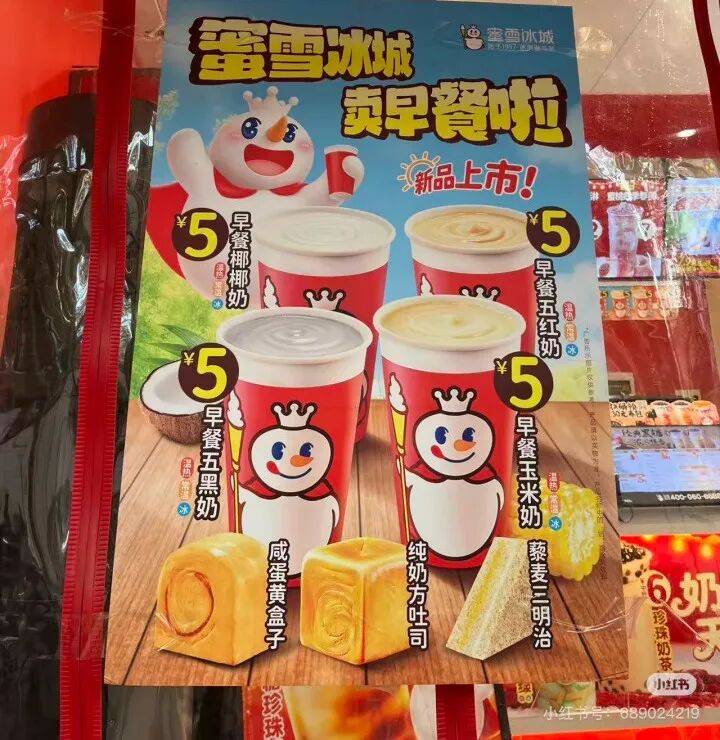
蜜雪冰城,开始卖早餐了。 本以为凭借雪王的"抠门美学",这波操作能让大家痛哭流涕喊一声"义父救我",万万没想到,第一批冲锋的勇士吃完却纷纷摇头。这回,雪王的马屁算是 拍到了马蹄子上—— 不仅没被夸,反而被狠狠嫌弃了。 说实话,这也怪不得大家挑剔。毕竟在雪王入局之前,手握9块9巨款的打工人,在早餐界那简直就是"渣男"心态,每天都活得像皇帝翻牌子: 今天宠幸麦当劳的吉士蛋,明天临幸肯德基的帕尼尼,后天还有瑞幸库迪为了抢夺咱们的芳心大打出手。 面对这群早就被宠坏了的"早餐贵族",初来乍到的雪王,显然还是太年轻了。 连锁早餐,进入9块9「混战时代」? 在见过蜜雪冰城早餐套餐之前,多数网友都觉得:雪王这步棋走得稳、准、狠,称得上当代商界诸葛亮。 海报里的蜜雪早餐,依旧保持性价比优势。 套餐内包含四款含乳饮品,搭配2块9的袋装面包,可以把早餐预算控制在7块9以内。 图源:小红书用户@小野君 但吃过蜜雪冰城早餐后,大众的期待开始飞速落空。 蜜雪早餐目前只在大连、西安、南宁、杭州四座城市做业务试点,根据第一批食客的反馈: 蜜雪早餐依然便宜,但选品缺乏诚意。 新出的4款饮品无法自定义甜度,每一份都是全甜。 图源:小红书用户@小 ...
红旗连锁成交额创2025年4月25日以来新高
Zheng Quan Shi Bao Wang· 2025-12-17 02:12
数据宝统计,截至09:39,红旗连锁成交额13.02亿元,创2025年4月25日以来新高。最新股价上涨 1.31%,换手率15.62%。上一交易日该股全天成交额为10.48亿元。 据天眼查APP显示,成都红旗连锁股份有限公司成立于2000年06月22日,注册资本136000万人民币。 (数据宝) (文章来源:证券时报网) ...
零售消费概念板块持续活跃 红旗连锁等多股涨停
Sou Hu Cai Jing· 2025-12-16 15:41
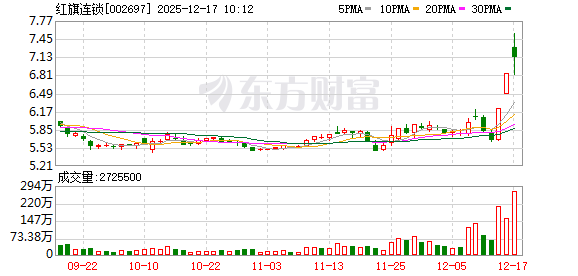
Group 1 - The retail consumption sector is actively rising, with stocks such as Hongqi Chain Store, Yonghui Supermarket, Baida Group, and Central Mall hitting the daily limit [1] - Other stocks like Jiajia Yue, Chongqing Department Store, Wangfujing, Maoye Commercial, Tianhong Shares, and Sanjiang Shopping are also experiencing gains [1] - According to the National Bureau of Statistics, the cumulative growth rate of China's total retail sales of consumer goods this year is better than last year, with a total retail sales of 43.898 billion yuan in November, showing a year-on-year growth of 1.3% [2]


