Hongqi Chain(002697)

Search documents
巴菲特时代过去了,在恶劣的竞争中,必须找到商业模式的这“三个问题”
3 6 Ke· 2025-11-17 02:54
Core Insights - The article discusses the importance of understanding business models in the context of investment analysis, particularly in the A-share market, emphasizing the need to adapt beyond traditional frameworks like those of Warren Buffett [1] Group 1: Business Models in the Tea Beverage Industry - The two tea brands, Mixue Ice Cream and Nayuki, operate under fundamentally different business models, with Mixue focusing on low-cost products and profitability, while Nayuki has reported significant losses despite high revenue [2][3] - Nayuki's business model is centered around a direct sales approach, prioritizing store locations and customer experience, which has led to operational challenges and losses [3] - In contrast, Mixue's franchise model relies on providing raw materials and support to franchisees, allowing for easier scalability and profitability [4][6] Group 2: Efficiency and Cost Management - Mixue achieves cost efficiency through lower material costs and economies of scale, allowing it to maintain competitive pricing and profitability [8][9] - The franchise model of Mixue is particularly suited to the Chinese market, leveraging a vast pool of potential franchisees who seek stable business opportunities [4][6] - The operational strategy of Gu Ming, another tea brand, focuses on supply chain efficiency, ensuring rapid delivery and fresh ingredients, which enhances its competitive edge in lower-tier markets [10] Group 3: Live Streaming E-commerce Models - The article outlines two primary business models in live streaming e-commerce: brand self-broadcasting and MCN (Multi-Channel Network) models, each with distinct core resources and key operations [11][13] - The self-broadcasting model emphasizes long-term operations and customer loyalty, while the MCN model relies on leveraging popular influencers for sales [13][14] - The challenges faced by traditional live streaming models highlight the need for companies to innovate and adapt their business strategies to maintain competitiveness [14][24] Group 4: Evolution of Oriental Selection - Oriental Selection has transitioned to a self-built supply chain model, integrating cultural elements with agricultural products to create a unique market position [18][20] - The company's shift towards self-operated products and direct supply chain management has resulted in significant revenue growth and improved profit margins [21][22] - Despite challenges following the departure of a key influencer, the company continues to pursue its strategic goals, focusing on building a sustainable business model [19][24]



从茶饮到潮玩 中国文创产品走红海外市场
Xin Hua Wang· 2025-11-16 05:53
Group 1: Chinese New Tea Beverage Industry - Chinese new tea beverage brands like Bawang Chaji, Mixue Ice City, Nayuki, and Heytea are expanding internationally, particularly in Malaysia, by combining cultural elements with their products to enhance their appeal [2][3] - The Malaysian market is witnessing a significant increase in the market share of Chinese tea brands, which are transitioning from passive followers to active participants in the global market, showcasing strong cultural attraction [2] - The incorporation of Chinese visual elements such as characters and traditional patterns into brand identity enhances brand recognition and consumer loyalty, reflecting cultural confidence and creativity of Chinese enterprises in overseas markets [3] Group 2: Chinese Television Dramas - Chinese historical dramas like "Journey to the West," "Empresses in the Palace," and "Nirvana in Fire" have gained immense popularity in Vietnam, with viewers discussing plots and characters passionately [4][5] - The cultural values portrayed in these dramas resonate deeply with Vietnamese audiences, fostering a better understanding of Chinese history and traditions [5] - The ongoing cultural exchanges between China and Vietnam are strengthening the ties between the two nations, enhancing mutual understanding and friendship [5] Group 3: Chinese Trendy Toy Industry - Chinese trendy toy brands such as Pop Mart are rapidly expanding in the UK, with plans to open additional stores, reflecting a growing market presence [6] - The sales of blind boxes from Chinese brand Miniso are increasing significantly, with a reported 63% growth in the past year in the UK [6] - Trendy toys are increasingly incorporating Chinese cultural elements, with brands like 52TOYS achieving success in Thailand by creating culturally inspired products that resonate with local consumers [6][7] - The success of these brands highlights the potential of Chinese creative products in the global market, showcasing the ability to connect emotionally with consumers [7]


在勇哥直播间看人创业,成了打工人的新乐子
虎嗅APP· 2025-11-16 03:09
Core Viewpoint - The article discusses the phenomenon of young entrepreneurs in China who, despite facing significant financial risks, are determined to start their own businesses, often leading to failure and debt. It highlights the common pitfalls and the influence of fast-track recruitment companies that exploit these aspiring entrepreneurs [5][101]. Group 1: Entrepreneurial Trends - A new wave of entrepreneurs is emerging, willing to incur substantial debt to open businesses, particularly in the food and beverage sector, such as tea and burger shops [5][11]. - Many entrepreneurs are drawn to the idea of starting their own businesses without conducting proper market research, leading to poor decision-making and financial losses [16][17]. - The article illustrates various entrepreneurial archetypes, including those who rely on loans and leverage to start their businesses, often resulting in significant debt [16][34]. Group 2: Common Pitfalls - Entrepreneurs frequently fall victim to fast-track recruitment companies that promise easy success but often lead to financial ruin [101][105]. - Many aspiring business owners lack basic business acumen, such as understanding market demand and competition, which contributes to their failures [17][94]. - The article provides examples of individuals who invested heavily in franchises without proper due diligence, leading to rapid financial losses [20][24][88]. Group 3: Case Studies - A case study highlights a woman who lost 900,000 yuan in just six days after opening a poorly chosen franchise, illustrating the risks of blind entrepreneurship [20][24]. - Another example features a man who invested 100,000 yuan in a lavishly designed tea shop but faced daily losses due to poor location and competition from established brands [34][36]. - The article also discusses a woman who opened a juice shop next to a popular brand, believing her product would attract customers despite the overwhelming competition [70][79]. Group 4: Market Dynamics - The article emphasizes the saturation of the food and beverage market, particularly in the tea and coffee segments, where established brands dominate and new entrants struggle to survive [111][105]. - It notes that many entrepreneurs are misled by the allure of trendy brands and fail to recognize the realities of market competition [89][120]. - The influence of social media and fast-track recruitment companies exacerbates the issue, as they promote unrealistic success stories that entice individuals to invest without proper understanding [120][121].

红旗连锁:商投投资受让股份成控股股东,持续督导期届满
Xin Lang Cai Jing· 2025-11-13 07:53
Core Points - The company Hongqi Chain announced a share transfer agreement on December 20, 2023, where Shangtou Investment will acquire 230 million shares, representing 16.91% of the total share capital [1] - Shareholders Cao Shiru and Cao Zengjun will relinquish voting rights for 282 million shares, accounting for 20.72% [1] - The transfer of shares will be completed on November 11, 2024, resulting in Shangtou Investment becoming the controlling shareholder and the actual controller being the Sichuan Provincial State-owned Assets Supervision and Administration Commission [1] - During the continuous supervision period, the acquirer and the company will operate in accordance with the law, and the acquirer will fulfill commitments and subsequent plans without providing guarantees or loans to the acquirer or its affiliates [1] - The company appointed Tan Liu as the secretary of the board on September 24, 2025, with the continuous supervision period ending on November 11, 2025 [1]
红旗连锁(002697) - 华西证券股份有限公司关于成都红旗连锁股份有限公司详式权益变动报告书之2025年第三季度持续督导意见暨持续督导总结报告
2025-11-13 07:46
华西证券股份有限公司 关于 成都红旗连锁股份有限公司 详式权益变动报告书 之 2025 年第三季度持续督导意见 暨 声 明 2023 年 12 月 20 日,商投投资与曹世如女士及其一致行动人曹曾俊先生签 署了《四川商投投资有限责任公司与曹世如及曹曾俊关于成都红旗连锁股份有限 公司之股份转让协议》《表决权放弃协议》《业绩承诺协议》。曹世如女士、曹 曾俊先生拟通过协议转让的方式将持有的合计 93,925,000 股红旗连锁股份(其中 曹世如女士转让 81,855,000 股,曹曾俊先生转让 12,070,000 股)及其所对应的股 东权利、权益转让给商投投资,合计转让股份占公司总股本的 6.91%,在上述股 份转让完成后,曹世如、曹曾俊承诺在弃权期限内放弃其合计所持红旗连锁剩余 的 281,775,000 股股份(占公司总股本的 20.72%)的表决权;同日,永辉超市与 商投投资签署了《四川商投投资有限责任公司与永辉超市股份有限公司关于成都 红旗连锁股份有限公司之股份转让协议》,永辉超市拟通过协议转让的方式将持 有的 136,000,000 股红旗连锁股份及其所对应的股东权利、权益转让给商投投资, 占公司总股本 ...
汉堡王中国易主:CPE源峰斥资3.5亿美元拿下83%股权
Guan Cha Zhe Wang· 2025-11-11 12:09
Core Insights - The recent establishment of a joint venture "Burger King China" between CPE Yuanfeng and RBI Group marks a significant shift in the ownership structure of Burger King's operations in China, with CPE Yuanfeng acquiring approximately 83% control [1][2] - CPE Yuanfeng will inject $350 million (approximately 2.5 billion RMB) into the joint venture to support expansion, marketing, menu innovation, and operational improvements [1] - The joint venture aims to increase the number of Burger King outlets in China from around 1,250 to over 4,000 by 2035, representing more than a twofold increase [3] Company Background - Burger King entered the Chinese market in 2005 and has undergone several ownership changes, with RBI acquiring full control in 2025 before this latest transaction [2] - CPE Yuanfeng has extensive investment experience in the consumer services sector, with a total investment of approximately 10 billion RMB in various well-known brands [2] Market Context - The expansion plan for Burger King China comes amid challenges, as the brand currently lags behind competitors like KFC and McDonald's, which have over 12,000 and nearly 8,000 outlets in China, respectively [3][4] - The trend of foreign restaurant brands in China shifting to local capital partnerships is evident, as seen with Starbucks recently selling 60% of its Chinese operations to a local investor [3]




红旗连锁:截至10月31日股东总数64083户
Zheng Quan Ri Bao· 2025-11-10 09:37
Group 1 - The company, Hongqi Chain, stated that as of October 31, 2025, the total number of shareholders is expected to be 64,083 [2]
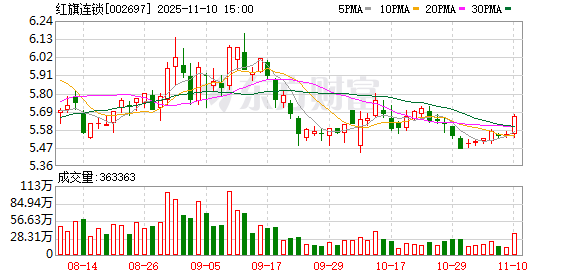
红旗连锁涨2.16%,成交额1.49亿元,主力资金净流入1664.60万元
Xin Lang Zheng Quan· 2025-11-10 05:51
Core Viewpoint - Hongqi Chain's stock price has shown fluctuations, with a recent increase of 2.16%, while the company faces a decline in revenue and profit year-on-year [1][2]. Group 1: Stock Performance - As of November 10, Hongqi Chain's stock price reached 5.67 CNY per share, with a trading volume of 1.49 billion CNY and a market capitalization of 77.11 billion CNY [1]. - The stock has decreased by 2.16% year-to-date, but has increased by 2.90% over the last five trading days [1]. - The stock's trading activity shows a net inflow of 16.64 million CNY from main funds, with significant buying and selling from large orders [1]. Group 2: Financial Performance - For the period from January to September 2025, Hongqi Chain reported a revenue of 7.108 billion CNY, a year-on-year decrease of 8.48%, and a net profit of 383 million CNY, down 1.89% year-on-year [2]. - Since its A-share listing, the company has distributed a total of 1.562 billion CNY in dividends, with 926 million CNY distributed in the last three years [3]. Group 3: Shareholder Information - As of October 20, 2025, the number of shareholders for Hongqi Chain is 64,400, a decrease of 1.58% from the previous period [2]. - The average number of circulating shares per shareholder is 17,786, an increase of 1.60% [2]. - The largest circulating shareholder, Hong Kong Central Clearing Limited, holds 35.2285 million shares, a decrease of 19.9774 million shares from the previous period [3].
新十年,重新定义 | 5万字解读2025年中国餐饮全品类、全球餐饮认知及三大趋势
3 6 Ke· 2025-11-09 09:16
Core Viewpoint - The report highlights the evolution of the Chinese restaurant industry over the past decade, emphasizing the shift towards chain operations and capital investment, while also outlining future trends and opportunities for growth in the sector [4][6][9]. Industry Overview - The chain rate of the Chinese restaurant industry has reached 23%, with revenue approximately 6.4 trillion RMB and nearly 9 million stores [4][6]. - The past decade has been characterized as the "chain era," marked by significant capital investment and the emergence of influential associations like the China Chain Store & Franchise Association [4][6][8]. Future Trends - The report anticipates that the chain rate will rise to 25% in 2025 and potentially reach 28% by 2026 [14]. - Key trends identified for the next decade include the evolution of chains, the globalization of Chinese cuisine, and a focus on cost reduction while maintaining quality [10][12][14]. Restaurant Categories Hot Pot - The number of hot pot restaurants in China is approximately 528,298, with a net increase of 62,000 stores [17][18]. - Haidilao has initiated the "Pomegranate Plan," which aims to empower new brands using its supply chain and operational capabilities, resulting in significant revenue growth [18][19]. Barbecue - The barbecue segment has around 413,682 operating stores, with a net increase of 16,029 [33]. - Brands like "Very Long Ago" and "Guan's Chicken Wings" exemplify different operational philosophies, focusing on quality and customer relationships [36][39]. Regional Cuisines - Hunan cuisine is experiencing a transformation into a national favorite, with brands like "Fei Chef" emphasizing fresh ingredients and healthy cooking methods [70][76]. - Sichuan cuisine faces challenges in scaling due to reliance on franchising and a lack of standardized operations, which hinders brand strength [79][84]. Cantonese Cuisine - Cantonese cuisine is expanding both nationally and globally, with brands like "Dian Dou De" successfully adapting their offerings to attract a broader audience [93][94]. - The focus on fresh supply chains and innovative dining experiences is driving growth in this segment [95][96]. Jiangsu-Zhejiang Cuisine - Jiangsu-Zhejiang cuisine, known for its delicacy and refinement, has around 110,463 operating stores, with a focus on cultural experiences and high-quality ingredients [104][106]. - The global appeal of dishes like soup dumplings is highlighted as a key opportunity for international expansion [108].




在“四叶草”里河南深度链接世界
He Nan Ri Bao· 2025-11-06 23:26
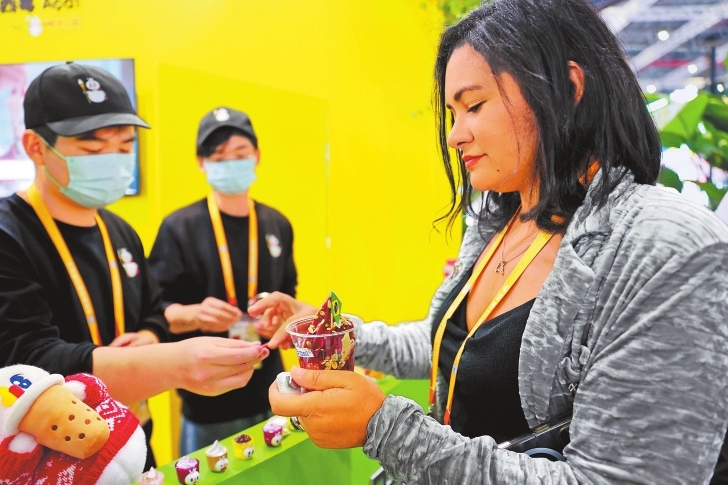
Core Insights - The 8th China International Import Expo (CIIE) opened in Shanghai, showcasing 461 new products from global enterprises, highlighting China's vast market appeal [1] - The event serves as a significant platform for Henan to connect with global resources, with local trade delegations actively seeking cooperation opportunities [1] Group 1: Trade and Business Opportunities - A foreign trade service platform signed a $4 million procurement order with an Indian company, indicating the expo's role in facilitating quality raw material sourcing [2] - Companies from Henan are exploring new consumer markets and upgrading their product lines, reflecting a clear path of industrial transformation [2] - The presence of Fortune 500 companies at the expo provides local businesses with insights into industry trends and opportunities for product diversification [2] Group 2: International Collaboration - The Brazilian pavilion attracted significant attention, with local brands like Mixue Ice Cream showcasing unique products, enhancing cross-border partnerships [3][4] - Brazilian officials emphasized the strong partnership with Henan, viewing it as a reliable consumer and collaborator in the market [5] - Multinational companies are increasingly investing in Henan, with Metro AG planning to expand its supply chain in the region to distribute quality consumer goods nationwide [5] Group 3: Growth and Development - The expo has seen a continuous increase in participation, with Henan's trade delegations achieving substantial results, including a long-term exhibition space for local products [6] - The collaboration between Henan and the Yangtze River Delta region has led to the signing of projects worth over 10 billion yuan, showcasing the region's growing economic ties [6] - The CIIE has become a platform for Henan to not only procure but also showcase its products, marking a significant evolution in its approach to international trade [6]