
Hongqi Chain(002697)

Search documents
狂砸3亿!蜜雪冰城收购利润107万福鹿家,和蜜雪利润差4000倍图啥
Sou Hu Cai Jing· 2025-11-06 13:05
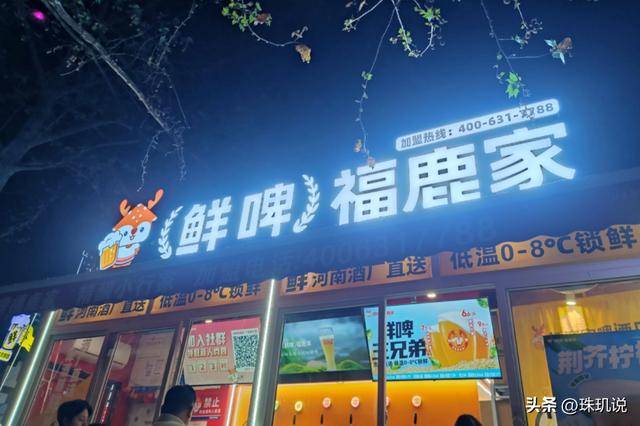
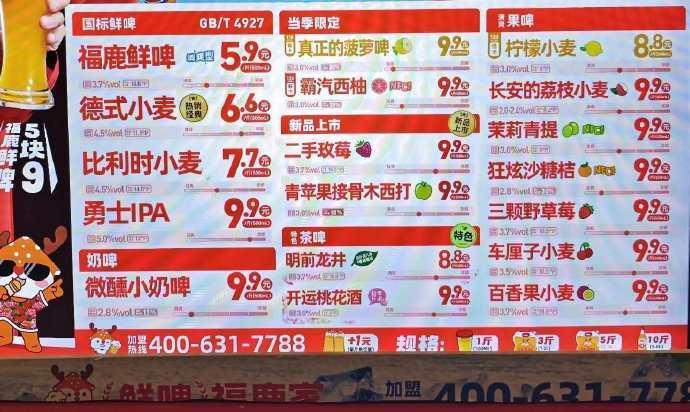
Core Viewpoint - The article discusses the strategic move of Mixue Ice City to enter the beer market by acquiring a lesser-known craft beer brand, Fulu Family, as a response to the slowing growth in the milk tea industry [3][25]. Industry Analysis - The growth rate of the new tea beverage market is projected to decline from 44.3% in 2023 to 12.4% by 2025, prompting major brands to close stores and indicating a market ceiling [3]. - The craft beer market in China is expected to approach 100 billion by 2025, with an annual growth rate exceeding 30%, potentially surpassing 200 billion by 2030 [5]. Company Strategy - Mixue Ice City invested 285.6 million to increase its stake in Fulu Family to 53%, indicating a calculated move to diversify its revenue streams [5]. - The relationship between Mixue and Fulu Family is strengthened by personal ties, as the CEO of Mixue is married to the actual controller of Fulu Family, which reduces the risks associated with cross-industry ventures [7]. Fulu Family's Business Model - Fulu Family transitioned from a convenience store to a craft beer brand in 2022, rapidly expanding to 1,200 stores within three years by adopting a low-barrier franchise model [10]. - The initial investment to open a Fulu Family store is only 60,000, significantly lower than the 210,000 required for a Mixue store, making it attractive for small entrepreneurs [12]. - Fulu Family's pricing strategy positions its craft beer between 5.9 to 10 yuan, making it accessible and appealing to a broader audience [12]. Target Market - Fulu Family targets young women aged 18-35 with lower alcohol content and sweeter flavors, avoiding direct competition with traditional beer brands [14]. Supply Chain Advantage - Fulu Family benefits from Mixue's cold chain logistics, reducing spoilage rates from the industry average of 8% to below 3%, enhancing product freshness and distribution capabilities [16]. Challenges Ahead - Despite rapid expansion, Fulu Family's profitability remains low, with a projected net profit of only 1.07 million in 2024 compared to Mixue's 4.45 billion, indicating a need for a sustainable profit model [17]. - The consumption scenarios for beer are more limited compared to milk tea, which could restrict sales volume [19]. - Fulu Family lacks the delivery advantages that propelled the milk tea market, leading to higher marketing costs and slower consumer recognition [21]. Long-term Vision - Mixue's acquisition of Fulu Family aims to create a comprehensive beverage ecosystem, offering coffee in the morning, milk tea at noon, and beer in the evening [23]. - The success of this strategy will depend on Fulu Family's ability to innovate and build its brand, as consumer expectations for beer differ significantly from those for milk tea [23].


中国消费品企业大举进入巴西市场
日经中文网· 2025-11-06 02:26
Core Insights - Chinese consumer brands are increasingly entering the Brazilian market, with a focus on low prices and high performance, as exemplified by companies like Mixue Ice City, BYD, Meituan, and Didi [2][6][10] - The Brazilian market is seen as a promising emerging market due to its large population of over 200 million and a growing middle class with strong consumption desires [6][10] Group 1: Mixue Ice City - Mixue Ice City has signed a memorandum with the Brazilian government to create approximately 25,000 jobs and plans to invest 3.2 billion reais (about 4.235 billion yuan) by 2030 [4] - The company aims to open its first store in São Paulo by the end of 2025, with preparations underway in a shopping center [4] - Mixue Ice City has grown to over 47,500 stores globally, surpassing McDonald's in scale, and is now targeting Brazil as a new market [2] Group 2: Other Chinese Brands - Meituan's overseas brand "Keeta" is set to invest 5.6 billion reais in the next five years, starting its services in the suburbs of São Paulo [5] - Didi is rapidly expanding its food delivery service in Brazil, planning to invest 2 billion reais, which is double its original plan, by 2026 [6] - The increasing presence of Chinese brands in Brazil is supported by the strengthening political ties between China and Brazil, which enhances the investment environment [6][10] Group 3: Consumer Perception - A survey in Brazil revealed that over 60% of respondents prefer Chinese products in the mobile and personal computer sectors, surpassing the preference for American products [9] - BYD has significantly increased its market share in Brazil, accounting for about 70% of the electric vehicle sales, reflecting a shift in consumer perception towards Chinese technology [9] - The perception of Chinese brands as offering "low prices and high performance" is becoming more entrenched among Brazilian consumers [9]


果啤火了,他们都想成为年轻人的微醺首选
3 6 Ke· 2025-11-05 10:40
Core Insights - The investment by Xuewang in Fulu Family signifies a renewed interest in the craft beer and fruit-flavored beer market, which is gaining traction among younger consumers [1][2][20] - The acquisition involves Xuewang obtaining a 53% stake in Fulu Family for approximately RMB 297 million, expanding its portfolio into the fresh beer sector [2][3] - The trend of "light drinking" is becoming mainstream, with over 80% of young people preferring lighter alcoholic beverages, indicating a shift in consumer preferences [20][22] Market Dynamics - Fulu Family has become the leading brand in China for fresh beer chain stores by store count, highlighting the competitive landscape in this segment [3] - The entry of various brands into the fruit beer market, such as Guozi Shule and Xinling, reflects a broader trend of diversification and innovation in alcoholic beverages [5][15] - The fruit beer market is projected to grow significantly, with global market size expected to reach USD 318.6 billion by 2024 and approximately USD 435.7 billion by 2030, indicating a robust growth trajectory [18] Consumer Behavior - Young consumers are redefining their relationship with alcohol, focusing more on emotional experiences and taste rather than alcohol content [23][26] - The appeal of fruit beer lies in its ability to be consumed in various social settings, including daytime events, making it more accessible and relatable to younger audiences [24][25] - The pricing strategy for fruit beer, typically ranging from RMB 5 to 10 per can, positions it competitively against other non-alcoholic beverages, facilitating broader market penetration [25] Cultural Shift - The cultural narrative around drinking is shifting from "drinking to socialize" to "drinking for personal enjoyment," with fruit beer symbolizing a more relaxed and enjoyable drinking experience [26][27] - Fruit beer is becoming a symbol of a lifestyle that emphasizes relaxation and social media sharing, appealing to the younger demographic's desire for visually appealing and enjoyable products [27] Future Considerations - While fruit beer is positioned as an evolution of the previous "sweet liquor" trend, it benefits from a more stable production and supply chain, reducing the risk of rapid decline seen in past trends [28][29] - The increasing number of brands entering the fruit beer market may lead to potential homogenization, necessitating continuous innovation to maintain distinctiveness [28][29]
超市“调改”步入深水区
Bei Jing Shang Bao· 2025-11-03 16:24
Core Insights - The supermarket industry is experiencing revenue growth pressure and a divergence in profitability among listed companies, with a need for refined operations and differentiated competition to find breakthroughs [1][3] Revenue Performance - Supermarkets are entering a "stock competition" phase, facing stagnant or declining revenue growth, with significant divergence in net profit performance among companies [3] - Yonghui Supermarket reported a cumulative revenue of 42.434 billion yuan for the first three quarters, a year-on-year decline of 22.21%, with Q3 revenue at 12.486 billion yuan, down 25.55%, and a net loss of 469 million yuan [3] - Zhongbai Group also saw revenue decline, with 6.552 billion yuan for the first three quarters, down 19.41%, and a net loss of 580 million yuan [3] - Hongqi Lianchained reported revenue of 7.108 billion yuan, down 8.48%, but achieved a net profit of 383 million yuan, with a net profit margin increase of 7.21% [3] - Bubu Gao's revenue was 3.194 billion yuan, ranking fifth in the industry with a net profit of 238 million yuan [3] - Sanjiang Shopping reported revenue of 2.988 billion yuan and a net profit of 114 million yuan [3] Industry Transformation - The industry is undergoing a collective transformation with various new models emerging, such as "Fat Donglai model adjustment" and "24-hour cloud service" by Hongqi Lianchained, indicating a shift towards differentiated products and innovative business formats [4][5] - Yonghui Supermarket has completed adjustments in 222 stores, resulting in an average customer flow increase of 80% and over 60% of stores surpassing their highest profitability in the past five years [4] - Bubu Gao's store adjustments have led to increased sales and improved employee benefits, achieving a 90% alignment with the Fat Donglai model [4] E-commerce and Digitalization - Walmart China reported a significant 96% increase in e-commerce net sales in Q3, with Sam's Club membership exceeding 4 million [5] - The transformation in the supermarket industry is systemic, with major players like Wumart also advancing deep transformations [5] - The focus on self-owned brand development, fresh direct sourcing, and regional specialty products is emphasized as a strategy for profit growth [6] Market Demand Response - The core of the transformation lies in enhancing product strength and optimizing supply chains, with companies increasingly relying on operational efficiency and innovative business models [6] - The emergence of membership stores, hard discount stores, and community stores reflects a response to market demand for segmentation [6] - Digital channels such as e-commerce, live streaming, and instant delivery are becoming standard configurations for supermarket operations, with examples from Walmart China and Hongqi Lianchained [6]


超市三季报:行业步入转型深水区 注重细分与差异化运营
Bei Jing Shang Bao· 2025-11-03 10:45
Core Insights - The supermarket industry is experiencing revenue growth pressure and a divergence in profitability among companies as they navigate a phase of deep adjustment and transformation [1][3] - Companies are focusing on refined operations and differentiated competition to find breakthroughs in a challenging market environment [1] Revenue Performance - The supermarket sector has entered a "stock competition" phase, with many companies facing stagnant or declining revenue [3] - Yonghui Supermarket reported a cumulative revenue of 42.434 billion yuan for the first three quarters, a year-on-year decline of 22.21%, with a net loss of 469 million yuan [3] - Zhongbai Group's revenue also decreased, with a total of 6.552 billion yuan, down 19.41%, and a net loss of 580 million yuan [3] - Hongqi Chain's revenue was 7.108 billion yuan, down 8.48%, but it achieved a net profit of 383 million yuan, with a net profit margin increase of 7.21% [3] - Bubu Gao's revenue was 3.194 billion yuan, ranking fifth in the industry, with a net profit of 238 million yuan [3] - Sanjiang Shopping reported revenue of 2.988 billion yuan and a net profit of 114 million yuan [3] Industry Transformation - Various new operational models are emerging, indicating a collective transformation within the industry, focusing on differentiated products, experiential scenarios, and innovative business formats [4][5] - Yonghui Supermarket has completed the transformation of 222 stores under the "Fat Donglai model," resulting in an average customer flow increase of 80% and over 60% of stores exceeding their highest profitability in the past five years [4] - Bubu Gao has completed its "Store Transformation 1.0," improving sales and employee benefits, with a product structure alignment of 90% with the Fat Donglai model [4] - Hongqi Chain is expanding its 24-hour cloud service stores to 300 by the end of the year, enhancing product offerings through live broadcasts and joint product development [4] Strategic Focus - Companies are emphasizing the development of private labels, direct sourcing of fresh products, and regional specialty items to enhance profitability [6] - The emergence of membership stores, hard discount stores, cloud warehouses, and community stores reflects a trend towards smaller, specialized formats [6] - Digital channels such as e-commerce, live streaming, and community operations are becoming standard in supermarket operations, with Walmart China reporting a 96% increase in e-commerce net sales [6] - The future of the retail market is expected to be diverse and differentiated, requiring supermarkets to continuously explore new business models and technological applications to adapt to changing consumer demands [6]
5元鲜啤搅翻酒类市场!蜜雪冰城凭啥让茅台慌神、啤酒巨头犯愁?
Sou Hu Cai Jing· 2025-10-30 11:35
Core Insights - The liquor market is currently facing challenges, with traditional liquor brands struggling to connect with younger consumers while beer companies grapple with cost and pricing issues [1][3][5] - The entry of Mixue Ice City into the beer market with low-priced fresh beer is reshaping consumer expectations and market dynamics [7][13][15] Industry Challenges - Traditional liquor consumption has shifted from social bonding to a preference for personal enjoyment, leading to a decline in white liquor sales among younger demographics [3][5] - Beer companies are caught in a dilemma of needing to lower prices to attract customers while facing thin profit margins [5][11] Mixue Ice City's Strategy - Mixue Ice City has successfully leveraged its resources and understanding of consumer needs to introduce fresh beer at a competitive price of 5 yuan, revitalizing the market [7][9][11] - The company has established a robust supply chain and logistics network, allowing for efficient distribution of fresh beer alongside its existing beverage offerings [9][11] Market Disruption - The introduction of low-priced fresh beer is not only altering beer pricing but also changing overall consumer purchasing logic, as Mixue Ice City expands its product offerings to include snacks and other complementary items [13][15][17] - The company's approach emphasizes value for money, appealing to consumers who prioritize cost-effectiveness over brand prestige [15][17] Future Implications - The success of Mixue Ice City may signal a broader shift in consumer behavior across various industries, challenging brands that rely on traditional marketing and high pricing strategies [17] - The potential for further market disruption exists, as Mixue Ice City plans to expand its presence and possibly lower prices even further, impacting the pricing strategies of established beer brands [15][17]

红旗连锁:截至2025年10月20日公司股东总数64369户
Zheng Quan Ri Bao Wang· 2025-10-30 10:17
Core Viewpoint - Hongqi Chain (002697) announced on October 30 that as of October 20, 2025, the total number of shareholders is expected to reach 64,369 [1] Summary by Category - Company Information - Hongqi Chain's total number of shareholders is projected to be 64,369 by October 20, 2025 [1]
红旗连锁:公司24小时云值守服务,计划年底前扩充至300家
Zheng Quan Ri Bao Wang· 2025-10-30 10:17
Core Viewpoint - Hongqi Chain (002697) is enhancing its 24-hour cloud service, aiming to expand to 300 locations by the end of the year, while focusing on internal value and sustainable development amidst market fluctuations [1] Group 1 - The company plans to expand its 24-hour cloud service to 300 locations by the end of the year [1] - Stock price fluctuations are influenced by various factors including market environment and macroeconomic conditions [1] - The company is committed to enhancing its internal value and sustainable development capabilities [1] Group 2 - The company will strengthen market communication while maintaining its market value [1]
红旗连锁:公司将根据股东回报规划的要求,结合年度经营情况制定年度分红方案
Zheng Quan Ri Bao Wang· 2025-10-30 08:09
Core Viewpoint - Hongqi Chain (002697) stated on October 30 that it will formulate an annual dividend plan based on shareholder return requirements and annual operating conditions [1] Group 1 - The company is committed to aligning its annual dividend plan with shareholder return strategies [1] - The annual dividend plan will be influenced by the company's operational performance for the year [1]
红旗连锁(002697):门店调整优化推进,数字化驱动增效
Shenwan Hongyuan Securities· 2025-10-30 06:22
Investment Rating - The investment rating for the company is "Buy" (maintained) [6] Core Insights - The company reported a total revenue of 7.108 billion yuan for the first three quarters of 2025, a year-on-year decrease of 8.48%. The net profit attributable to the parent company was 383 million yuan, down 1.89% year-on-year [6] - The company is optimizing its store structure by closing underperforming stores, which has led to a short-term decline in sales but improved operational quality of remaining stores [6] - The company is focusing on digital transformation and operational efficiency, aiming to enhance service quality and product competitiveness through various initiatives [6] - The long-term outlook remains positive due to the company's differentiated strategy and strong market presence in Chengdu and surrounding areas [6] Financial Data and Profit Forecast - Total revenue forecast for 2025 is 10.158 billion yuan, with a year-on-year growth rate of 0.3% [5] - The net profit attributable to the parent company is projected to be 532 million yuan for 2025, reflecting a year-on-year increase of 2.1% [5] - The company maintains a gross profit margin of approximately 29% for the forecasted years [5] - The return on equity (ROE) is expected to be around 10.9% for 2025 [5]