CCTC(300408)

Search documents
三环集团股价涨14.85%,鹏扬基金旗下1只基金重仓,持有40.88万股浮盈赚取344.62万元
Xin Lang Cai Jing· 2026-02-24 01:56
2月24日,三环集团涨14.85%,截至发稿,报65.20元/股,成交3.21亿元,换手率0.26%,总市值1249.56 亿元。 章宏帆累计任职时间128天,现任基金资产总规模5.23亿元,任职期间最佳基金回报17.28%, 任职期间 最差基金回报16.98%。 声明:市场有风险,投资需谨慎。 本文基于第三方数据库自动发布,不代表新浪财经观点,任何在本 文出现的信息均只作为参考,不构成个人投资建议。如有出入请以实际公告为准。如有疑问,请联系 biz@staff.sina.com.cn。 责任编辑:小浪快报 鹏扬数字经济先锋混合A(012456)成立日期2021年9月7日,最新规模3.75亿。今年以来收益12.03%, 同类排名943/8994;近一年收益51.11%,同类排名1488/8199;成立以来收益9.87%。 鹏扬数字经济先锋混合A(012456)基金经理为张勋、章宏帆。 截至发稿,张勋累计任职时间11年99天,现任基金资产总规模87.43亿元,任职期间最佳基金回报 159.74%, 任职期间最差基金回报-39.01%。 资料显示,潮州三环(集团)股份有限公司位于广东省潮州市凤塘三环工业城内综合楼 ...

税务部门推介合规纳税典型案例,这些上市公司入选
Zhong Guo Zheng Quan Bao· 2026-02-12 08:33
Core Viewpoint - The article highlights the importance of tax compliance in various industries, showcasing exemplary cases from advanced manufacturing, electronic information, and ice and snow industries to guide businesses in enhancing their tax compliance awareness and practices [1][9]. Advanced Manufacturing Industry - Five advanced manufacturing companies, including Tongkun Co., Wangli Security, Huafeng Chemical, Crystal Optoelectronics, and Sanhua Intelligent Control, were recognized for their tax compliance practices, all maintaining an A-level tax credit rating for several consecutive years [3]. - Tongkun Co. established a dedicated tax management department in 2018 to oversee tax affairs across the group, implementing internal compliance guidelines and ensuring tax compliance in major decisions, with an average annual tax payment of approximately 360 million yuan from 2023 to 2025 [3]. - Wangli Security integrated tax compliance into contract review processes, ensuring that tax obligations are clearly defined in contracts, which led to the successful modification of a contract with an overseas institution to clarify tax responsibilities [4]. - Sanhua Intelligent Control developed a digital system to enhance invoice review efficiency, integrating 298 audit standards to ensure compliance across all financial documents, with a projected tax payment of 370 million yuan in 2025 [6]. - Huafeng Chemical created dual compliance defenses through digital means, including a supplier management system and real-time monitoring of business operations, with a tax payment exceeding 90 million yuan in 2025 [7]. Electronic Information Industry - The Guangdong Provincial Taxation Bureau published typical tax compliance cases from the electronic information sector, including companies like Fangbang Co., Desay SV, and Aohai Technology, which have implemented various compliance measures [1]. Ice and Snow Industry - The Jilin Provincial Taxation Bureau released tax compliance cases from the ice and snow industry, including Changbai Mountain, which provided tax compliance guidance to its subsidiaries and improved financial management through an integrated information system, resulting in a total tax payment of 53.07 million yuan in 2025 [10]. - The article emphasizes the growing importance of integrity and compliance management in the expanding ice and snow tourism market, with companies adopting proactive measures to ensure accurate tax reporting and compliance [10][11].


AI需求激增 片式多层陶瓷电容器接棒内存上涨
Zhong Guo Zheng Quan Bao· 2026-02-09 23:42
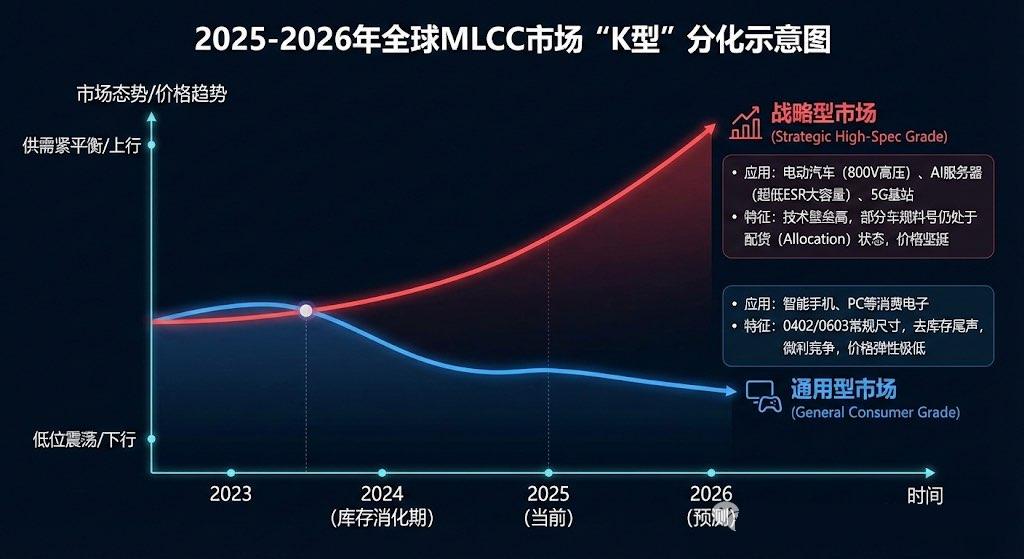
Core Viewpoint - The demand for MLCCs is surging due to the AI boom, leading to significant price increases and a positive market response, particularly for high-end products [1][2][5] Group 1: Price Trends and Market Response - Korean MLCC spot prices have risen nearly 20%, with expectations for continued increases in the short term [1][2] - Major MLCC manufacturers like Samsung Electro-Mechanics have seen stock prices rise significantly, with increases of over 11% this year [2] - The revenue of Samsung Electro-Mechanics reached a record high in Q4 2025, with a 22% year-on-year growth in its components division, which includes high-voltage and high-capacity MLCCs [3] Group 2: Supply and Demand Dynamics - The explosive growth in AI server demand is driving the need for high-end MLCCs, which are essential for stabilizing power supply and filtering interference signals in electronic devices [2][6] - High-end MLCCs are in short supply, with manufacturers like Murata Manufacturing and Samsung Electro-Mechanics operating at over 80% capacity [2] - AI servers require 3 times more MLCCs than standard servers, leading to a significant increase in demand [2][6] Group 3: Competitive Landscape - The top five global MLCC manufacturers, including Murata, Samsung Electro-Mechanics, and Taiyo Yuden, hold over 80% of the market share [4] - Chinese manufacturers have established a relative advantage in the mid-to-low-end MLCC market but are lagging in high-end product development [4] - Domestic companies like Sanhua Group and Fenghua Advanced Technology are accelerating their entry into the high-end market, focusing on sectors such as 5G, AI servers, and automotive electronics [4] Group 4: Industry Outlook and Segmentation - The MLCC industry is currently in an upward cycle, with a historical cycle lasting about 4 to 5 years [5] - The demand for high-end MLCCs is expected to explode due to AI applications, while traditional consumer electronics are facing a downturn [6] - The market for AI servers is projected to grow at an annual rate of 30%, with the MLCC market for AI servers expected to reach 3.3 times its 2025 size by 2030 [6][7]


AI需求激增 MLCC接棒内存上涨
Zhong Guo Zheng Quan Bao· 2026-02-09 20:25
Core Viewpoint - The price surge in the component supply chain, particularly for Multi-Layer Ceramic Capacitors (MLCC), is driven by the explosive growth in AI server demand, with expectations for continued price increases in the short term [1][2]. Group 1: Price Trends and Market Response - MLCC prices in South Korea have risen nearly 20%, with expectations for further increases [1]. - Capital markets have reacted positively, with significant stock price increases for leading MLCC companies such as Samsung Electro-Mechanics, which has risen over 11% this year, and other A-share companies like Fenghua Advanced Technology and Sanhua Group [1][2]. - The MLCC industry is expected to experience a bifurcation by 2026, with high-end product demand likely to surge due to the AI boom, while mid-to-low-end products face challenges from weak demand and rising costs [1][4]. Group 2: Demand Drivers and Production Capacity - The demand for high-end MLCCs is driven by AI servers, which require three times more MLCCs than standard servers, leading to supply constraints [2]. - Major manufacturers like Murata Manufacturing, Samsung Electro-Mechanics, and Taiyo Yuden are operating at over 80% capacity, with Murata expected to see a 20% to 25% increase in high-end MLCC orders in the first quarter [2][3]. - Samsung Electro-Mechanics reported record revenue in Q4 2025, with a 22% year-on-year increase in revenue from high-voltage and high-capacity MLCCs [2]. Group 3: Competitive Landscape and Domestic Market Position - The global MLCC market is dominated by major players, with the top five manufacturers, including Murata, Samsung, and Taiyo Yuden, holding over 80% market share [3]. - Chinese manufacturers have established a relative advantage in the mid-to-low-end MLCC market but are accelerating efforts to penetrate the high-end market [3]. - Companies like Sanhua Group and Fenghua Advanced Technology are focusing on high-end applications such as 5G communication, AI servers, and automotive electronics, with successful integration into supply chains of major manufacturers like BYD [3]. Group 4: Industry Outlook and Cyclical Trends - The MLCC industry is currently in an upward cycle, with a typical cycle lasting about 4 to 5 years, supported by demand from automotive electronics and AI servers [3][4]. - The industry is expected to experience significant differentiation, with high-end MLCC demand surging due to AI applications, while traditional consumer electronics face declining demand [4]. - The market for AI servers is projected to grow at an annual rate of 30%, with the MLCC market for AI servers expected to reach 3.3 times its 2025 size by 2030 [4][5].
被动元件,涨涨涨
3 6 Ke· 2026-02-09 01:13
Core Viewpoint - The recent price hikes in passive components, led by major players like Yageo and Walsin, indicate a significant shift in the market driven by supply-demand imbalances and rising raw material costs, particularly in high-end sectors like AI and electric vehicles [1][4][19]. Group 1: Price Adjustments - Yageo announced a price increase of 15%-20% for certain resistor products starting February 1, marking its third price adjustment in a short period [1]. - Walsin and Panasonic also announced price hikes of around 20% and 15%-30% respectively for various passive components, reflecting a broader trend among major manufacturers [1][2]. - Smaller manufacturers in China, such as Fenghua Advanced Technology and Shunluo Electronics, have also followed suit with price adjustments ranging from 5%-30% across multiple product categories [2][3]. Group 2: Supply Chain Dynamics - The passive component market is experiencing supply tightness, with lead times extending and some distributors pausing quotes due to uncertainty in price adjustments [3][4]. - Rising costs of raw materials, particularly precious metals like silver and palladium, have significantly increased production costs for passive components, with estimates suggesting a 20%-30% rise in production costs [5][6]. - Capacity constraints are exacerbated by major manufacturers shifting focus to high-end products, leading to a structural shortage in the mid-range market [7][8]. Group 3: Demand Drivers - The demand for passive components is being driven by the rapid growth of AI and electric vehicles, with AI servers requiring significantly more MLCCs than traditional servers [10][11]. - The automotive sector is also a major growth area, with electric vehicles using up to three times more passive components compared to traditional vehicles, creating a favorable environment for price increases [11][12]. - The overall market for passive components in China is projected to grow from 1237.65 billion yuan in 2023 to 2583.59 billion yuan by 2030, with a compound annual growth rate of 11.09% [13]. Group 4: Market Structure Changes - The current price hikes reflect a structural change in the passive components market, with high-end products experiencing significant demand while traditional consumer electronics face challenges [15][19]. - Domestic manufacturers in China are beginning to capture more market share, particularly in high-end segments, as they improve their technology and production capabilities [19][20]. - The geopolitical landscape and supply chain diversification are providing opportunities for Chinese manufacturers to enter high-end markets, as global players face capacity and delivery challenges [19][24]. Group 5: Future Outlook - The passive components market is expected to continue evolving, with AI and automotive electronics driving demand for high-value products [25][26]. - Companies need to focus on high-capacity, miniaturized, and reliable products to meet the changing market demands and maintain competitiveness [25][26]. - Collaboration across the supply chain will be crucial for manufacturers to overcome technical challenges and align with market needs [25][26].

被动元件,涨涨涨!
半导体行业观察· 2026-02-08 03:29
Core Viewpoint - The recent price hikes in passive components, driven by supply-demand imbalances and rising raw material costs, indicate a significant transformation in the market dynamics of the passive components industry [6][9][12]. Price Adjustments - Yageo announced a price increase of 15%-20% for certain resistor products starting February 1, reflecting its position as a market leader with an 18% global market share [2]. - Other companies, including Walsin Technology and Panasonic, have also announced price hikes for various passive components, with increases ranging from 15% to 30% [2][3]. - The price adjustments are widespread, with many small and medium-sized manufacturers in China also raising prices by 5%-20% across multiple product categories [3]. Supply Chain Dynamics - The price increases are primarily driven by rising costs of raw materials such as silver, copper, and aluminum, which have seen significant price surges, with silver prices increasing over 140% in 2025 [7][9]. - The production costs for passive components have risen by 20%-30% due to these raw material price increases, prompting manufacturers to pass on costs to customers [7][9]. - Capacity constraints are exacerbating the situation, as many Japanese manufacturers have shifted focus to high-end products, reducing supply in the mid-to-low-end market [8][9]. Demand Drivers - The demand for passive components is being driven by the rapid growth of AI and electric vehicle markets, with AI server motherboards requiring significantly more MLCCs than traditional servers [10][11]. - The demand for passive components in electric vehicles is also increasing, with the number of MLCCs used per vehicle rising dramatically compared to traditional vehicles [10][11]. - The overall market for passive components in China is projected to grow from 1237.65 billion yuan in 2023 to 2583.59 billion yuan by 2030, with a compound annual growth rate of 11.09% [12]. Market Structure Changes - The current price hikes reflect a structural change in the passive components market, with high-end products for AI servers and electric vehicles experiencing significant demand while traditional consumer electronics face challenges [14][17]. - Domestic manufacturers are beginning to capture more market share, with companies like Walsin Technology and Sunlord Electronics seeing increased orders and expanding their production capabilities [18][19]. - The shift towards high-end products presents opportunities for domestic manufacturers to enter the supply chains of larger companies, especially as global manufacturers face capacity and delivery challenges [22][23].
算力需求强劲,关注CPO等新技术演进
Orient Securities· 2026-02-07 09:53
Investment Rating - The report maintains a "Positive" investment rating for the electronic industry, indicating an expectation of returns stronger than the market benchmark by over 5% [5]. Core Insights - Strong demand for computing power driven by AI applications is expected to continue, with significant investments from major cloud providers [8]. - The hardware supply-demand imbalance is spreading across various sectors, leading to price increases [8]. - New technologies such as CPO (Co-Packaged Optics) are anticipated to create additional demand [8]. Summary by Sections Investment Recommendations and Targets - Key investment targets include: - Semiconductor manufacturing: SMIC (688981, Buy), Hua Hong Semiconductor (01347, Buy) - Testing and packaging: Changdian Technology (600584, Buy), Tongfu Microelectronics (002156, Buy), and others [9]. - Server storage: Lianqi Technology (688008, Buy) - CPUs: Haiguang Information (688041, Buy), Longxin Technology (688047, Not Rated), and others [9]. - Passive components: Sanhua Group (300408, Buy), Fenghua Advanced Technology (000636, Not Rated) [9]. - Server manufacturing: Industrial Fulian (601138, Buy), Huaqin Technology (603296, Buy) [9]. - Analog and power chips: Naxin Micro (688052, Buy), Sierui Technology (688536, Not Rated), and others [9]. - Semiconductor equipment: Zhongwei Company (688012, Buy), Northern Huachuang (002371, Buy), and others [9]. - Optical devices/chips: Zhishang Technology (301486, Not Rated), Tianfu Communication (300394, Not Rated), and others [9]. AI Applications and Edge Computing - Key targets in edge AI applications include: - AI main control chips: Amlogic (688099, Buy), Hengxuan Technology (688608, Buy) - Edge storage: Zhaoyi Innovation (603986, Buy), Bawei Storage (688525, Buy) [10]. - Terminal manufacturers: Hikvision (002415, Buy), Luxshare Precision (002475, Buy), BYD Electronics (00285, Not Rated), and others [10]. - Core components for AI edge: Huanxu Electronics (601231, Buy), Sunny Optical Technology (02382, Buy), and others [10].




一“纤”难求 光纤行业迎来强周期
Mei Ri Shang Bao· 2026-02-04 22:16
Core Viewpoint - The optical fiber and cable industry is experiencing a significant upturn, driven by increased demand from AI data centers and a global supply-demand imbalance, leading to substantial price increases and stock performance in related companies [1][4]. Industry Summary - The optical fiber market has seen a continuous rise in demand, with prices for G.652.D single-mode optical fibers in China reaching over 35 yuan per core kilometer, marking a 75% increase in January alone [1][4]. - A global trend is observed where optical fiber prices are rising sharply, with the Chinese market leading the way, and some manufacturers quoting prices as high as 50 yuan per core kilometer [4]. - The CRU China Optical Fiber and Cable Index (FOCI) has rebounded by 10.8%, indicating a shift from contraction to expansion in the market [4]. - The industry is entering a prolonged period of prosperity, driven by technological upgrades and the explosive growth of AI data centers, which is expected to sustain tight supply for 2-3 years due to the long production cycle of key materials [4][6]. Company Summary - Hangzhou Electric (杭电股份) has seen its stock price rise significantly, with a cumulative increase of 32.97% over three consecutive trading days, prompting the company to issue a risk warning due to potential irrational market speculation [2][3]. - The company reported a negative rolling price-to-earnings ratio of -33.93, significantly higher than the industry average of 24.23, indicating potential volatility in stock trading [2]. - Other companies in the optical fiber sector, such as Longfly Fiber and Hengtong Optic-Electric, have also experienced substantial stock price increases, with Longfly Fiber issuing a risk warning after its stock price deviated significantly from the norm [3][4].




三环集团控股子公司10亿元项目环评获原则同意
Mei Ri Jing Ji Xin Wen· 2026-02-04 10:13
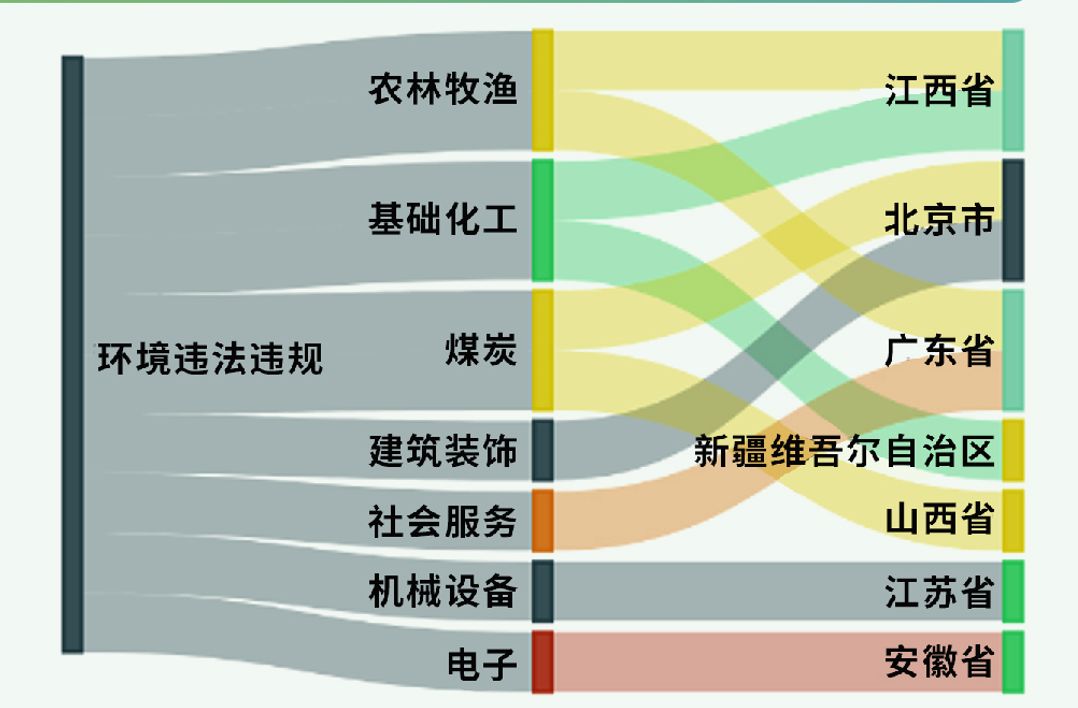
Group 1 - The core point of the news is that Suzhou SanHuan Technology Co., a subsidiary of SanHuan Group, has received preliminary approval for its environmental assessment for a research and manufacturing headquarters project in East China, with a total investment of 1 billion yuan [1] - The "A-share Green Report" project aims to enhance transparency in environmental information of listed companies, utilizing authoritative environmental regulatory data from 31 provinces and 337 cities to monitor and analyze the environmental performance of companies [1] - The latest A-share Green Weekly Report indicated that 10 listed companies have recently exposed environmental risks [1] Group 2 - SanHuan Group primarily engages in the production and sales of electronic ceramic components and their basic materials [3] - The company's market capitalization is approximately 101.57 billion yuan, with projected revenues of 7.38 billion yuan for 2023 and 6.51 billion yuan for 2024 [4] - The net profit attributable to the parent company is expected to be 19.87 billion yuan for 2023 and 21.00 billion yuan for 2024, with a net asset return rate of 11.50% [4]
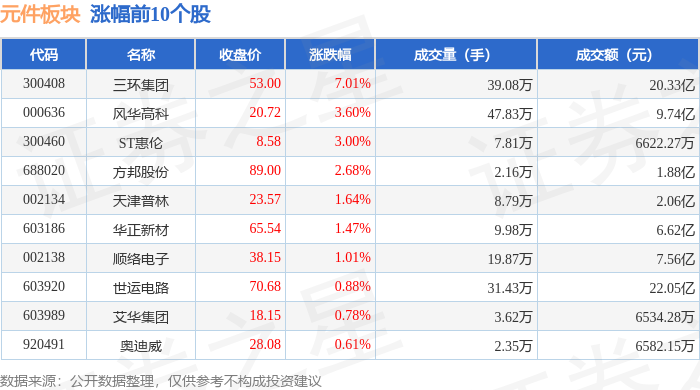
元件板块2月4日跌1.67%,商络电子领跌,主力资金净流出39.67亿元
Zheng Xing Xing Ye Ri Bao· 2026-02-04 08:49
Market Overview - The component sector experienced a decline of 1.67% on February 4, with Shunluo Electronics leading the drop [1] - The Shanghai Composite Index closed at 4102.2, up 0.85%, while the Shenzhen Component Index closed at 14156.27, up 0.21% [1] Top Performers - SanHuan Group (300408) saw a significant increase of 7.01%, closing at 53.00 with a trading volume of 390,800 shares and a turnover of 2.033 billion [1] - Fenghua Advanced Technology (000636) rose by 3.60%, closing at 20.72 with a trading volume of 478,300 shares and a turnover of 974 million [1] - ST Huilun (300460) increased by 3.00%, closing at 8.58 with a trading volume of 78,100 shares and a turnover of 66.22 million [1] Underperformers - Shunluo Electronics (300975) led the decline with a drop of 8.67%, closing at 15.60 with a trading volume of 1,001,400 shares and a turnover of 1.573 billion [2] - Dongshan Precision (002384) fell by 5.30%, closing at 72.94 with a trading volume of 520,000 shares and a turnover of 3.799 billion [2] - GaoHua Technology (688539) decreased by 4.77%, closing at 46.10 with a trading volume of 63,500 shares and a turnover of 295 million [2] Capital Flow - The component sector saw a net outflow of 3.967 billion from main funds, while retail investors contributed a net inflow of 2.781 billion [2] - The net inflow from speculative funds was 1.186 billion [2] Individual Stock Capital Flow - SanHuan Group (300408) had a main fund net inflow of 92.74 million, accounting for 4.56% of its trading volume [3] - Huazheng New Materials (603186) experienced a main fund net inflow of 61.94 million, representing 9.35% of its trading volume [3] - Fenghua Advanced Technology (000636) had a main fund net inflow of 49.36 million, making up 5.07% of its trading volume [3]