
Lens(300433)

Search documents
2025年全球人形机器人行业竞争分析 中国领跑硬件与集成端【组图】
Qian Zhan Wang· 2026-02-10 07:12
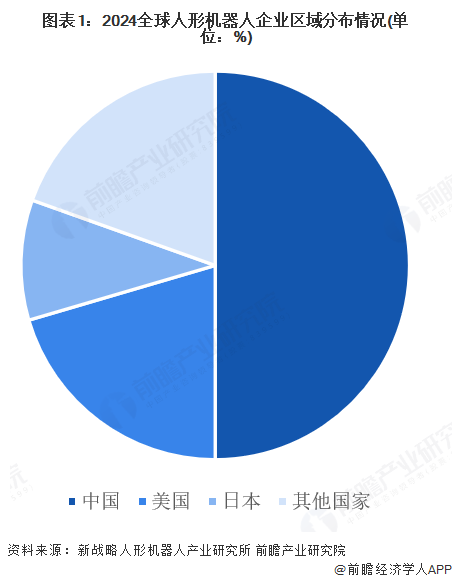
Core Insights - The global humanoid robot industry is predominantly led by China, which houses over 110 companies, accounting for more than 50% of the total 220 humanoid robot manufacturers worldwide [1] - China excels in hardware and integration segments, while the US leads in the "brain" segment, focusing on AI models and software [4][5] - China has filed approximately five times more humanoid robot patents than the US, with a total of 7,705 patents, indicating a strong emphasis on innovation and technology development [6] - The competition among China, the US, and Japan in the humanoid robot industry is characterized by distinct strategies and market focuses [9] Industry Overview - Major listed companies in China's humanoid robot sector include Huichuan Technology, Sanhua Intelligent Control, Lens Technology, Hengli Hydraulic, Top Group, Linying Intelligent Manufacturing, Zoomlion Heavy Industry, and Jinli Permanent Magnet [1] - The global humanoid robot industry is expected to reach a market size of 861 billion yuan by 2027, with China aiming for a fully controllable supply chain and over 70% localization of core components [9][11] Competitive Landscape - Chinese companies like Zhiyuan Robotics and UTree Technology are rapidly advancing in mass production and cost control, while US firms like Boston Dynamics and Tesla focus on core technology breakthroughs [11][12] - The strategic direction for Chinese firms includes low-cost strategies to expand into consumer and industrial markets, while US companies are investing heavily in AI and technology development [11] - Japan's approach is centered on precision manufacturing and specialized components, targeting healthcare and industrial applications [9][11] Patent and Innovation - China leads in humanoid robot patent applications, with 7,705 patents compared to the US's 1,561 and Japan's 1,102, showcasing its dominance in core technology areas [6] - The focus of Chinese patents includes body structure, intelligent perception, and drive control, indicating a comprehensive approach to technology development [6] Market Projections - By 2027, the humanoid robot market is projected to achieve significant growth, with China aiming for a market scale of 861 billion yuan and the US targeting over 40% of the global market share [9][11]




汇丰环球投资管理(香港)有限公司减持蓝思科技18.06万股 每股作价约29.70港元
Zhi Tong Cai Jing· 2026-02-09 11:33
Group 1 - HSBC Global Asset Management (Hong Kong) Limited reduced its stake in Lens Technology (300433) by 180,600 shares at a price of HKD 29.7012 per share, totaling approximately HKD 5.364 million [1] - After the reduction, HSBC's latest holding is 18.04 million shares, representing a holding percentage of 5.98% [1]
汇丰环球投资管理(香港)有限公司减持蓝思科技(06613)18.06万股 每股作价约29.70港元

智通财经网· 2026-02-09 11:33
Group 1 - The core point of the article is that HSBC Global Asset Management (Hong Kong) Limited has reduced its stake in Lens Technology (06613) by selling 180,600 shares at a price of HKD 29.7012 per share, totaling approximately HKD 5.364 million [1] - After the reduction, HSBC's latest shareholding in Lens Technology stands at 18.04 million shares, representing a holding percentage of 5.98% [1]
全球航天强国加码太空光伏!卫星组网驱动产业化提速,海内外共振拉升产业估值中枢
Xin Lang Cai Jing· 2026-02-09 10:09
Core Viewpoint - The articles highlight the growing interest and investment in space photovoltaic technology among various companies in China, indicating a significant potential for growth in this sector by 2026 as commercialization accelerates. Group 1: Company Overview - Xizi Clean Energy (002534) is a leading clean energy equipment manufacturer in China, focusing on high-performance perovskite photovoltaic technology and aiming to become a core supplier of materials for space photovoltaics by 2026 [1][24]. - Shanghai Port Construction (605598) is a major infrastructure company that is expanding into space photovoltaic systems, leveraging its engineering capabilities to support commercial space projects [2][25]. - TuoRi New Energy (002218) has a long-standing presence in the photovoltaic industry and is optimizing its space photovoltaic products, expecting to increase market share by 2026 [3][26]. - Mingyang Smart Energy (601615) is acquiring technology to enhance its capabilities in space solar cell development, aiming to integrate its wind and solar energy expertise [4][28]. - Woge Optoelectronics (603773) specializes in flexible solar wing materials for satellites, with a focus on high-temperature resistant films, anticipating significant growth in the space photovoltaic sector [5][29]. Group 2: Growth Outlook - Companies are expected to benefit from the rapid commercialization of space photovoltaics, with projections indicating substantial growth opportunities by 2026 [1][2][3][4][5]. - The synergy between commercial aerospace and space photovoltaic industries is anticipated to drive rapid business growth for companies like Shanghai Port Construction and Mingyang Smart Energy [2][4]. - The demand for flexible solar wings and high-efficiency photovoltaic materials is expected to surge, positioning companies like Woge Optoelectronics and TuoRi New Energy as key players in the market [3][5]. Group 3: Technological Advancements - Companies are focusing on developing materials that can withstand extreme space conditions, such as high-performance perovskite and flexible solar films, which are crucial for the success of space photovoltaic applications [1][5][6]. - The integration of advanced technologies, such as N-type solar cells and high-efficiency components, is being prioritized by firms like Junda Co. (002865) and Sanan Optoelectronics (600703) to enhance their competitive edge in the space photovoltaic market [6][10][35]. - The ongoing research and development efforts in high-efficiency solar technologies are expected to yield breakthroughs that will facilitate the commercialization of space photovoltaic solutions by 2026 [3][4][5][6].



算力需求强劲,关注CPO等新技术演进
Orient Securities· 2026-02-07 09:53
Investment Rating - The report maintains a "Positive" investment rating for the electronic industry, indicating an expectation of returns stronger than the market benchmark by over 5% [5]. Core Insights - Strong demand for computing power driven by AI applications is expected to continue, with significant investments from major cloud providers [8]. - The hardware supply-demand imbalance is spreading across various sectors, leading to price increases [8]. - New technologies such as CPO (Co-Packaged Optics) are anticipated to create additional demand [8]. Summary by Sections Investment Recommendations and Targets - Key investment targets include: - Semiconductor manufacturing: SMIC (688981, Buy), Hua Hong Semiconductor (01347, Buy) - Testing and packaging: Changdian Technology (600584, Buy), Tongfu Microelectronics (002156, Buy), and others [9]. - Server storage: Lianqi Technology (688008, Buy) - CPUs: Haiguang Information (688041, Buy), Longxin Technology (688047, Not Rated), and others [9]. - Passive components: Sanhua Group (300408, Buy), Fenghua Advanced Technology (000636, Not Rated) [9]. - Server manufacturing: Industrial Fulian (601138, Buy), Huaqin Technology (603296, Buy) [9]. - Analog and power chips: Naxin Micro (688052, Buy), Sierui Technology (688536, Not Rated), and others [9]. - Semiconductor equipment: Zhongwei Company (688012, Buy), Northern Huachuang (002371, Buy), and others [9]. - Optical devices/chips: Zhishang Technology (301486, Not Rated), Tianfu Communication (300394, Not Rated), and others [9]. AI Applications and Edge Computing - Key targets in edge AI applications include: - AI main control chips: Amlogic (688099, Buy), Hengxuan Technology (688608, Buy) - Edge storage: Zhaoyi Innovation (603986, Buy), Bawei Storage (688525, Buy) [10]. - Terminal manufacturers: Hikvision (002415, Buy), Luxshare Precision (002475, Buy), BYD Electronics (00285, Not Rated), and others [10]. - Core components for AI edge: Huanxu Electronics (601231, Buy), Sunny Optical Technology (02382, Buy), and others [10].





蓝思科技跌4.11% 爱建证券在其年内高点喊买入
Zhong Guo Jing Ji Wang· 2026-02-05 09:40
Core Viewpoint - Lens Technology (300433.SZ) experienced a stock price decline of 4.11%, closing at 35.44 yuan on February 5 [1]. Group 1: Stock Performance - On January 12, Lens Technology's stock reached an intraday high of 43.44 yuan, marking the highest point of the year [2]. - The recent decline in stock price indicates a significant drop from its peak earlier in the month [1][2]. Group 2: Analyst Insights - Xu Liang, an analyst from Aijian Securities, maintained a "Buy" rating and profit forecast for Lens Technology in a report published on January 12, highlighting the company's advancements in cutting-edge applications ahead of CES 2026 [2].
蓝思科技(300433) - 关于提前归还部分临时补充流动资金的闲置募集资金的公告
2026-02-04 10:02
1 / 1 蓝思科技股份有限公司(以下简称"公司")于 2026 年 1 月 12 日召开第五 届董事会第十次会议,审议通过了《关于使用部分闲置募集资金暂时补充流动资 金的议案》,同意公司使用不超过人民币 9 亿元的暂时闲置募集资金临时补充流 动资金,使用期限自本次董事会审议通过之日起不超过 12 个月,即本次补充流 动资金到期日为 2027 年 1 月 11 日。具体内容详见公司于 2026 年 1 月 13 日在巨 潮资讯网(http://www.cninfo.com.cn)等符合中国证监会规定条件的媒体上发布 的《关于使用部分闲置募集资金暂时补充流动资金的公告》。 近日,公司提前归还了 5,000 万元临时补充流动资金的募集资金至募集资金 专项账户,并就上述归还事项通知了公司保荐机构和保荐代表人。剩余 8.5 亿元 临时补充流动资金的暂时闲置募集资金将在到期前足额归还,届时公司将及时履 行信息披露义务。 特此公告。 蓝思科技股份有限公司董事会 二○二六年二月四日 证券代码:300433 证券简称:蓝思科技 公告编号:临 2026-011 蓝思科技股份有限公司 关于提前归还部分临时补充流动资金的闲置募集资 ...
蓝思科技(300433.SZ):累计回购740.96万股,金额超2.14亿元
Ge Long Hui· 2026-02-04 04:07
Summary of Key Points Core Viewpoint - Lens Technology (300433.SZ) announced a share buyback program, successfully repurchasing a total of 7,409,607 shares, which represents 0.15% of the company's current A-share total capital [1] Group 1: Buyback Details - The buyback was conducted through a dedicated repurchase securities account using a centralized bidding method [1] - The highest transaction price during the buyback was 30.24 CNY per share, while the lowest was 22.50 CNY per share [1] - The total amount paid for the repurchased shares was 214,823,659.63 CNY, excluding transaction fees [1]
蓝思科技跌2.01%,成交额14.68亿元,主力资金净流出1.57亿元
Xin Lang Cai Jing· 2026-02-04 03:34
Core Viewpoint - Lens Technology experienced a stock price decline of 2.01% on February 4, with a current price of 36.61 CNY per share and a market capitalization of 193.46 billion CNY [1] Group 1: Stock Performance - Year-to-date, Lens Technology's stock price has increased by 20.94%, but it has decreased by 3.45% over the last five trading days [1] - Over the past 20 days, the stock price has risen by 7.64%, and it has increased by 22.65% over the last 60 days [1] Group 2: Financial Data - For the period from January to September 2025, Lens Technology reported a revenue of 53.663 billion CNY, representing a year-on-year growth of 16.08% [2] - The net profit attributable to shareholders for the same period was 2.843 billion CNY, showing a year-on-year increase of 19.91% [2] Group 3: Shareholder Information - As of September 30, 2025, the number of shareholders for Lens Technology was 159,900, an increase of 8.17% from the previous period [2] - The average number of circulating shares per shareholder decreased by 7.52% to 31,070 shares [2] Group 4: Dividends and Institutional Holdings - Lens Technology has distributed a total of 9.993 billion CNY in dividends since its A-share listing, with 4.980 billion CNY distributed in the last three years [3] - As of September 30, 2025, the top ten circulating shareholders included Hong Kong Central Clearing Limited and E Fund's various ETFs, with notable changes in their holdings [3]
国内外AI年报分析展望




2026-02-04 02:27
Summary of the Conference Call on AI Annual Report Analysis Industry Overview - The conference focused on the analysis and outlook of AI annual reports, particularly in the TMT (Technology, Media, and Telecommunications) sector, with a specific emphasis on domestic and international AI companies [1][2][4]. Key Points and Arguments General Market Sentiment - The period from October 31 to March is characterized as a performance vacuum, where the focus is on thematic investments rather than immediate earnings results [2][3]. - The spring market is expected to see a resurgence, with significant activity anticipated around March [3][4]. North American Companies - North American companies, particularly those involved in AI and cloud computing, have reported earnings that exceeded expectations, indicating strong capital expenditure in AI [4][6]. - Companies like Microsoft and Meta have shown robust spending on AI infrastructure, reflecting a positive outlook for the sector [4][6]. - Despite some domestic companies underperforming, their stock prices have rebounded, suggesting that market sentiment is more focused on thematic trends rather than immediate earnings [5][6]. Domestic AI Companies - Domestic AI companies are experiencing a supply-demand imbalance, with strong demand for AI-related products and services, despite some companies reporting earnings below expectations [6][7]. - The industry is characterized by a shortage of materials and components, which is driving prices up and creating a favorable environment for growth [6][7][10]. Future Growth Projections - There is a consensus that the growth trajectory for AI companies will continue to be strong, with expectations for significant growth in 2026 and beyond [8][9]. - Many companies are currently undervalued, trading at price-to-earnings (P/E) ratios between 15x to 20x, which presents a potential investment opportunity [8][9]. Specific Company Insights - Companies like Wan, Tianfu Communication, and others are highlighted for their potential despite recent earnings misses, as the overall industry outlook remains positive [4][6][7]. - The demand for GPUs and AI chips is expected to remain high, with domestic companies like Cambrian facing challenges but still showing potential for recovery [9][10]. Application and Innovation - The conference emphasized the importance of AI applications, particularly in gaming and media, with companies like Tencent and ByteDance leading the charge [14][15]. - The emergence of AI-driven applications is seen as a significant growth area, with expectations for increased investment and innovation in this space [14][15]. Regulatory and Market Concerns - There are concerns regarding potential regulatory impacts on the gaming industry, but these are largely viewed as unfounded and not likely to affect the overall market significantly [15][16]. - The market is currently experiencing volatility, but analysts suggest that this presents buying opportunities for fundamentally strong companies [21][22]. Additional Important Insights - The conference highlighted the importance of monitoring capital expenditure trends among major tech companies, as this will influence the demand for AI infrastructure and services [36][37]. - The potential for new technologies, such as diamond-based cooling materials for semiconductors, was discussed as a future growth area [24][25]. - Analysts recommend focusing on companies with strong fundamentals and growth potential, particularly in the AI and semiconductor sectors, as the market continues to evolve [22][23][39].