Dynanonic(300769)

Search documents
德方纳米-2026 年业务展望电话会要点
2026-01-09 05:13
Summary of Shenzhen Dynanonic 2026 Business Outlook Call Company Overview - **Company**: Shenzhen Dynanonic (300769.SZ) - **Date of Call**: January 8, 2026 - **Attendee**: Ms. He Yanyan, Board Secretary Key Takeaways Industry and Market Dynamics - **Processing Fee Increase**: The company has successfully negotiated an increase in processing fees for most clients starting January 2026, applicable to both normal and high-end products. Management expects this fee structure to be maintained at least through the first half of 2026 [2][3]. Product Insights - **High Compaction LFP Cathode**: - The high compaction density LFP cathode (4th generation) constituted 30-40% of total LFP cathode shipments in 2025, with expectations to rise to approximately 50% in 2026. - The majority of this shipment is for EV batteries, with large ESS battery cells also beginning to utilize this product. A supply shortage is anticipated due to limited producers capable of manufacturing this technology [3]. - **LFP Cathode Breakdown**: - In 2025, LFP cathodes for ESS batteries accounted for over 60% of total shipments. For 2026, management expects this to remain around 60% for ESS batteries and 40-50% for EV batteries [4]. - **Lithium Supplement Enhancer Product**: - This product targets high-end ESS batteries with long life cycles, fast-charging EV batteries, and semi-solid state batteries. Shipment is projected to reach thousands of tons in 2026, compared to hundreds of tons in 2025 [5]. Capacity and Production - **Current Capacity**: - Total completed LFP cathode capacity stands at 450ktpa, with an operating capacity of approximately 370ktpa as of year-end 2025. The company plans to commence operations of an additional 80ktpa capacity in Q1 2026. Construction of new capacity takes 12-15 months if land is not ready, and 9-12 months if it is [6]. Financial Metrics - **Market Capitalization**: Approximately Rmb12,718 million (US$1,818 million) [8]. - **Current Share Price**: Rmb45.390 with a target price of Rmb43.100, indicating an expected total return of -5.0% [8]. Risk Assessment - **High Risk Rating**: The stock is assigned a high risk rating, although it is believed that the company is at the trough of the cycle, with expectations for improvement in the competitive landscape by 2025. - **Potential Upside Risks**: - Higher than expected LFP cathode shipments - Better than expected unit gross profit for LFP cathodes - Lower than expected expenses [12]. - **Potential Downside Risks**: - Lower than expected LFP cathode shipments - Worse than expected unit gross profit for LFP cathodes - Higher than expected expenses [13]. Additional Insights - **Lithium Inventory**: The company maintains a low and safe inventory level with a current exposure of 2-3 weeks [10]. - **Valuation Methodology**: The forward EV/EBITDA multiple of 17.7x for 2026E is used for valuation, based on global cathode material peers' average multiple [11]. This summary encapsulates the critical insights from the 2026 Business Outlook Call for Shenzhen Dynanonic, highlighting the company's strategic direction, product developments, market positioning, and financial outlook.

2025年磷酸铁锂市场盘点:名义产能653万吨,总产量增长61.5%,月产量突破40万吨
鑫椤储能· 2026-01-08 06:31
Core Viewpoint - The production of lithium iron phosphate (LFP) is projected to reach 3.915 million tons by 2025, representing a year-on-year growth of 61.5% [1] Monthly Production Trends - In 2025, LFP production is expected to show a steady increase throughout the year, with monthly outputs of 200,000 to 300,000 tons from January to May, 300,000 to 400,000 tons from June to October, and exceeding 400,000 tons in November and December [3] Capacity Analysis - By the end of 2025, nominal LFP production capacity is expected to reach 6.53 million tons, an increase of 950,000 tons from 5.58 million tons at the end of 2024. However, significant idle capacity exists due to high costs, outdated equipment, lack of technology, and insufficient funding [5] - The nominal production capacity of companies capable of mass production will total 5.7235 million tons, up 742,500 tons from 4.981 million tons in 2024 [5] Company Market Share - Hunan Youneng leads the market with approximately 30% share, while other companies hold less than 10%. The second tier includes Wanrun New Energy, Defang Nano, Fulian Shenghua, Youshan Technology, Longpan Lithium Source, and Guoxuan High-Tech, each with market shares between 5% and 10% [8] - The third tier consists of Taifeng Xianxing, Anda Technology, GCL-Poly Energy, Dingsheng Technology, Jintang Times, Rongtong High-Tech, Wanhu Chemical, and Sichuan Langsheng, each with market shares exceeding 2% [8] Production Growth Rates - Among the top 20 companies, Zhongchu Innovation's 100,000-ton production line is expected to fully release in 2025, with a staggering growth rate of 1578%. Other companies like Bangpu Recycling and Wanhu Chemical also show growth rates exceeding 200%, while Anda Technology, GCL-Poly Energy, and Fulian Shenghua exceed 100% [9] Process Technology - The phosphate iron process accounts for 82.1% of production, followed by ferrous oxalate, ferric nitrate, iron red, and hydrothermal methods. The latter three processes have the potential to transition from niche to mainstream as they have already achieved mass production of high-pressure solid products [11]




碳酸锂涨停,铁锂提价,六氟停产
高工锂电· 2026-01-06 10:47
Group 1 - The core viewpoint of the article highlights the recent price increase of lithium iron phosphate (LFP) and the underlying uncertainties in the supply chain, particularly regarding the transmission of lithium carbonate prices to battery manufacturers [2][3] - Two LFP companies confirmed price hikes for downstream customers, with one company indicating an increase of approximately 1500 to 2000 yuan/ton for major clients, while most other customers accepted a processing fee increase of 1000 yuan/ton [2] - The article discusses the significant fluctuations in lithium carbonate futures, with the main contract closing at 137,940 yuan/ton on January 6, indicating a need for better alignment between upstream procurement and downstream pricing mechanisms [3][4] Group 2 - The term "point pricing" has become prevalent in negotiations, where a pricing window is established for both parties to agree on a specific point in time to set the price based on futures contracts [4][5] - Material companies are pushing for a higher proportion of customer-supplied lithium carbonate and shifting the pricing anchor from spot prices to futures-linked pricing to mitigate risks associated with price fluctuations [5] - Recent announcements from major companies indicate a simultaneous trend of production cuts and expansions, with several LFP manufacturers announcing reductions in production while also planning significant capacity expansions [9][10] Group 3 - Tianqi Lithium announced a reduction in its planned production of electrolyte and battery recycling projects due to changes in market conditions, adjusting its total investment to not exceed 600 million yuan [6][7] - The article notes that while short-term supply constraints and maintenance are occurring, there are also long-term capacity expansion plans in the pipeline, indicating a complex market dynamic [8] - The simultaneous occurrence of production cuts and expansion plans raises questions about whether price increases can translate into profit recovery, emphasizing the importance of navigating price risks and ensuring that processing fees are elevated before new capacities come online [11][12]


德方纳米(300769.SZ):公司目前不触及ST情形
Ge Long Hui· 2026-01-06 06:59
格隆汇1月6日丨德方纳米(300769.SZ)在投资者互动平台表示,公司目前不触及ST情形。 ...
反内卷升级!磷酸铁锂5大上市公司减产检修
起点锂电· 2025-12-31 07:30
2025年锂电行业增长明显,尤其是磷酸铁锂电池出货量持续攀升,市场份额加速上提,在此趋势下,电池企业多传业绩捷报。但作为主要角 色的磷酸铁锂材料厂家,出现截然相反的情况,出货量上升的同时,业绩表现不如人意。 以上述5家企业为例,2025年前三季度,仅湖南裕能一家实现盈利,另外4家企业均处于亏损状态。好的一面是这些企业均大幅减亏,但要实 现真正的盈利可能还需要时间。 反内卷趋势下,上游企业挺价意愿强烈,减产检修企业持续增加!截至目前,磷酸铁锂行业TOP10, 已有半数企业官宣 减产检修计划, 检 修时间预计维持一个月。 具体来看,12月25日,湖南裕能与万润新能先后发布公告,宣布将对部分产线进行为期约一个月的减产检修,预计减少产量分别为1.5-3.5 万吨、0.5-2万吨。 市场认为,业绩表现与市场景气"脱轨"有多个原因。一是2020年开始的扩产潮,启动了铁锂产能过剩的情绪,导致磷酸铁锂材料提不起价; 二是市场竞争升级的情况下,部分企业低价抢市场,议价权移位,电池厂成为主导。 12月26日,德方纳米和安达科技再发年度检修计划,德方纳米未公布具体减产数量,安达科技预计减产0.3-0.5万吨。 三是原材料价格回升的 ...

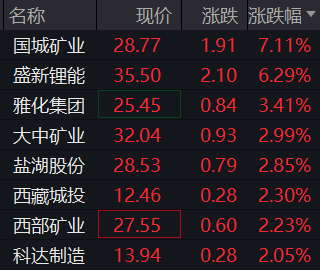
锂矿概念爆发!磷酸铁锂厂商掀减产潮,国城矿业暴涨7%,盛新锂能涨超6%
Jin Rong Jie· 2025-12-31 01:51
Group 1 - Lithium mining sector shows strong performance with companies like Guocheng Mining up over 7% and Shengxin Lithium Energy up over 6% [1][2] - Several companies including Longpan Technology and Hunan Youneng have announced production cuts, with reductions expected to impact output by 3,000 to 35,000 tons [3] - Tianqi Lithium announced a change in its spot trading settlement price, now referencing Mysteel battery-grade lithium salt prices or the main contract price of lithium carbonate futures [3] Group 2 - The lithium mining industry is expected to benefit from rising lithium salt prices and increased demand from energy storage and new energy vehicles, leading to improved profitability [4] - The positive outlook for lithium battery cathode materials is driven by reduced supply from phosphate lithium manufacturers and growing demand from downstream sectors [4] - The energy storage battery sector is anticipated to see performance growth as lithium prices stabilize and demand for storage projects accelerates [4]

德方纳米(300769.SZ):公司在泰国没有生产基地
Ge Long Hui· 2025-12-31 01:40
财经频道更多独家策划、专家专栏,免费查阅>> 责任编辑:栎树 格隆汇12月31日丨德方纳米(300769.SZ)在投资者互动平台表示,公司在泰国没有生产基地。 ...
德方纳米:在泰国没有生产基地
Mei Ri Jing Ji Xin Wen· 2025-12-31 01:32
每经AI快讯,有投资者在投资者互动平台提问:网上说德方纳米在泰国有建设基地,并且该项目预计 于2025年底投产,年产能达10万吨,请问公司在泰国有生产基地吗? 德方纳米(300769.SZ)12月31日在投资者互动平台表示,公司在泰国没有生产基地。 (文章来源:每日经济新闻) ...
锂价翻倍、LFP 集中停产、电池厂加注钠电 锂电产业链博弈“三重门”
高工锂电· 2025-12-30 10:55
Core Viewpoint - The lithium battery industry is undergoing significant changes in pricing mechanisms, production adjustments, and technological advancements, with key players like Tianqi Lithium leading the way in redefining pricing structures and production strategies [3][8][41]. Pricing Restructuring - Lithium carbonate prices have surged, with the benchmark price exceeding 120,000 yuan/ton by December 30, marking a more than 30% increase from the beginning of the month and doubling from the year's low of under 60,000 yuan/ton [5][6]. - Tianqi Lithium announced a shift in its pricing model starting January 1, 2026, moving from a single pricing reference to a dual structure based on either the Mysteel index or the futures contract price, allowing customers to choose [9][10][12]. Production Adjustments - Major players in the lithium iron phosphate sector, including Hunan Youneng and Wanrun New Energy, have announced production cuts due to high operational loads and maintenance needs, with total reductions estimated between 30,000 to 70,000 tons, representing 7% to 17% of the domestic output in January [17][19][20]. - The industry is experiencing a shift from total price negotiations to discussions around processing fees, with leading companies seeking to raise processing fees by 2,000 to 3,000 yuan/ton to offset rising raw material costs [24][22]. Technological Developments - Sodium-ion batteries are gaining attention, with companies like CATL aiming for large-scale applications by 2026, focusing on energy storage and commercial vehicles [35][39]. - The economic viability of sodium-ion batteries is becoming more favorable as they do not require lithium carbonate or copper, providing a cost advantage in a high-price environment [38][39]. Market Dynamics - The lithium battery supply chain is attempting to redefine profit and risk boundaries in anticipation of a "tight balance" in 2026, with various strategies being employed across different segments of the industry [43][44]. - The overall net profit margin for lithium battery companies is around 9%, with upstream resources maintaining higher profitability while many midstream and downstream companies face tighter cash flows [42].



1月锂电排产“踩刹车”,但国补续期预期升温
高工锂电· 2025-12-30 10:55
Group 1 - The core viewpoint of the article highlights a convergence of supply-side adjustments and demand-side support in the lithium battery and new energy vehicle industry as it enters 2026, with a notable reduction in production and an extension of government subsidies for vehicle trade-ins [1][7][9] Group 2 - In January 2026, the production of lithium batteries in China is estimated to be around 210 GWh, reflecting a month-on-month decline of over 4%, while global production is expected to be approximately 220 GWh, down more than 6% [2] - Major battery manufacturers in mainland China are planning a production decrease of about 7% in January 2026, with some companies reducing output by nearly 10%, which is worse than previous optimistic expectations of a low single-digit adjustment [2][3] - The decline in production is attributed to seasonal factors and negotiations with upstream suppliers rather than a systemic deterioration in end-demand [3] Group 3 - Leading companies in the cathode material sector, such as Hunan Youneng and Wanrun New Energy, have announced production cuts or maintenance starting January 1, 2026, with reductions in phosphate cathode products expected to range from 3,000 to 35,000 tons [4][5] - The companies involved in these maintenance announcements hold a significant market share, and the rationale provided focuses on the need for safety and quality assurance, although market interpretations lean towards price factors [5][6] Group 4 - The government has confirmed the continuation of subsidies for vehicle trade-ins in 2026, emphasizing a more precise and structured approach to support [7][9] - Data from the Ministry of Commerce indicates that trade-in programs led to over 2.5 trillion yuan in sales from January to November 2025, with over 11.2 million vehicles traded in, significantly boosting the automotive market [8] Group 5 - The expected changes in subsidy structures may lead to a redistribution of support, favoring high-end electric vehicles while potentially reducing subsidies for lower-priced models, accelerating structural differentiation in the automotive market [10][12] - The adjustments in subsidy mechanisms are anticipated to impact the competitiveness of different vehicle types, pushing manufacturers to invest more in technology and efficiency [13] Group 6 - The interplay between reduced production in January and the continuation of government subsidies is not merely a simple balancing act but reflects a complex reallocation of risks and rewards across the industry under high costs and low profits [14]