BILIBILI(BILI)

Search documents
蔡明春晚节目弹幕啊最多
Xin Lang Cai Jing· 2026-02-18 01:54
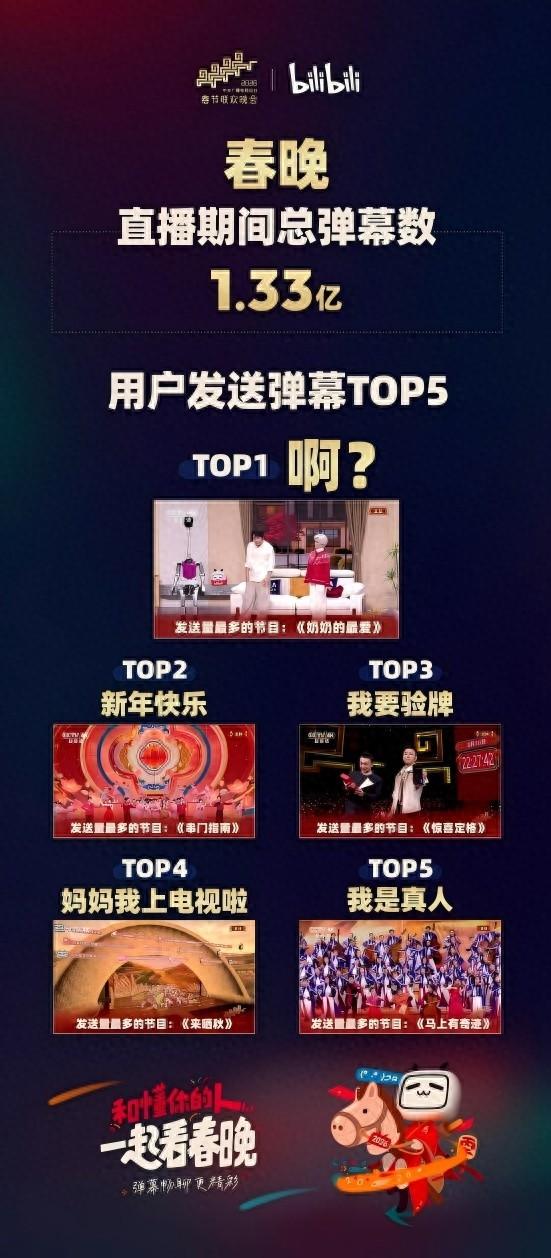
Group 1 - The core point of the article highlights Bilibili's (referred to as "B站") significant role as the exclusive bullet screen video platform for the Spring Festival Gala, showcasing its growing popularity among younger audiences [1] - During the live broadcast on February 16, Bilibili recorded a total of 133 million bullet comments, averaging 7,700 comments per second, indicating high engagement levels [1] - The top five bullet comments included phrases such as "Ah?", "Happy New Year", "I want to verify", "Mom, I'm on TV", and "I am a real person", with the comment "Ah?" being particularly associated with the performance by Cai Ming and Wang Tianfang [1] Group 2 - This event marks the second collaboration between Bilibili and the main Spring Festival Gala, reinforcing Bilibili's position as a key platform for cultural events among the youth during the New Year's Eve celebration [1]

抽象整活还得是B站
Xin Lang Cai Jing· 2026-02-17 23:50
Core Viewpoint - Bilibili (B站) has successfully revitalized the traditional Chinese New Year atmosphere through its unique programming, attracting a significant viewership and engagement from younger audiences [1] Group 1: Programming Highlights - The Bilibili Spring Festival Gala emphasizes "reviving the New Year flavor," featuring a blend of traditional and modern elements without relying on celebrity hype [1] - The creative integration of old artists with contemporary internet language and humor has resonated well with the younger demographic, enhancing the festive experience [1] - The performance "Network Feast" by veteran artist Feng Keng and his disciples showcases a mix of nostalgia and modern slang, bridging generational gaps [1] Group 2: Unique Features - Bilibili's programming style is characterized by its creativity and spontaneity, often leading to unexpected and humorous moments that align with the platform's identity [1] - The collaboration between traditional acrobatics and New Year dinner themes in the performance "New Year's Day Feast Ranking" exemplifies innovative content creation, captivating the audience [1] - The informal and interactive atmosphere of the gala, marked by humor and audience engagement, contributes to its distinct "fringe feel," making it a true representation of Bilibili's culture [1]
B站春晚直播弹幕总数达1.33亿,年轻人发送“啊?”最多
Xin Lang Cai Jing· 2026-02-17 23:49
来源:北京日报客户端 2月17日,哔哩哔哩(以下简称"B站")发布马年春晚直播相关数据。 B站作为马年总台春晚的独家弹幕视频平台,2月16日春晚直播期间,B站弹幕总数达1.33亿,平均每秒 发送7700条。发送数量排名前五的弹幕分别是:"啊?""新年快乐""我要验牌""妈妈我上电视了""我是真 人"。其中,"啊?"主要集中在蔡明、王天放表演的节目《奶奶的最爱》。这是B站与总台春晚的二次合 作,上B站发弹幕看春晚,已经成为年轻人在除夕夜的重要仪式。 ...

P/E Ratio Insights for Bilibili - Bilibili (NASDAQ:BILI)
Benzinga· 2026-02-17 18:00
Core Viewpoint - Bilibili Inc. stock is currently priced at $30.61, reflecting a slight decrease of 0.07% in the current market session, but has seen a significant increase of 50.42% over the past year, raising questions about its valuation despite current performance concerns [1] Group 1: Stock Performance - The stock price of Bilibili Inc. is $30.61, with a decrease of 0.07% in the current session [1] - Over the past month, Bilibili's stock has increased by 1.02% [1] - In the past year, the stock has surged by 50.42% [1] Group 2: P/E Ratio Analysis - The P/E ratio of Bilibili is 117.5, which is significantly higher than the industry average P/E ratio of 20.79 for the Interactive Media & Services sector [2][3] - A higher P/E ratio suggests that investors expect better future performance from Bilibili compared to its industry peers, but it may also indicate that the stock is overvalued [2][3] - The elevated P/E ratio could reflect investor optimism regarding future dividends and performance [2]
B站春晚直播弹幕达1.33亿,“啊?”成为年轻人发送最多的弹幕
Xin Lang Cai Jing· 2026-02-17 14:37
2月17日,哔哩哔哩(以下简称"B站")发布马年春晚直播相关数据。B站作为马年总台春晚的独家弹幕 视频平台,2月16日春晚直播期间,B站弹幕总数达1.33亿,平均每秒发送7700条。发送数量排名前五的 弹幕分别是:"啊?""新年快乐""我要验牌""妈妈我上电视了""我是真人"。其中,"啊?"主要集中在蔡 明、王天放表演的节目《奶奶的最爱》。这是B站与总台春晚的二次合作,上B站发弹幕看春晚,已经 成为年轻人在除夕夜的重要仪式。(智通财经记者 范佳来) ...
史上最强机器人阵容登台,2026总台春晚合作盘点:29家品牌覆盖AI到潮玩;豆包暂停视频通话功能;智谱:全网寻找“算力合伙人”丨邦早报
创业邦· 2026-02-17 01:06
Group 1 - The 2026 Spring Festival Gala has announced partnerships with 29 brands, covering various fields including AI technology, robotics, transportation, and consumer goods [3][4] - A record number of six robotics brands, including Magic Atom and Galaxy General, will showcase at the gala, marking the largest robot lineup in the event's history [3][4] - The gala will feature new media collaborations with platforms like Xiaohongshu and Douyin, with Bilibili serving as the exclusive bullet screen video platform [3][4] Group 2 - OpenAI's CEO announced that Peter Steinberger, the creator of OpenClaw, will join OpenAI to advance the development of next-generation personal intelligent agents [5] - Zhipu AI reported a surge in demand for GLM-5, leading to service delays, and has initiated a "computing power partner" recruitment plan to enhance service capacity [6] - Douyin's vice president stated that the 2026 Spring Festival Gala will be the first public project to deeply utilize the domestic AI video generation model Seedance 2.0 [6] Group 3 - The 2026 Spring Festival Gala has seen a significant increase in robot-related searches, with a 300% rise in search volume and a 460% increase in customer inquiries on JD.com [23] - The gala's robot-themed promotions led to a rapid sell-out of various robots, including high-value models like the GALBOT G1, which sold for nearly 630,000 yuan [23]






“问豆包认孙子” AI春晚秀出新高潮 大厂打响新年跑“马”圈地第一战
智通财经网· 2026-02-16 23:41
Core Viewpoint - The 2026 Spring Festival Gala showcased significant AI marketing efforts from major tech companies, highlighting the integration of AI into entertainment and user interaction, with a focus on enhancing audience engagement through innovative technologies [1][3][10]. Group 1: AI Integration in Spring Festival Gala - The gala featured AI elements prominently, with the "Doubao" application playing a central role in various performances and interactions, demonstrating the capabilities of AI in enhancing live events [1][3]. - Doubao's technology supported multiple aspects of the gala, including stage art creation, intelligent robot interactions, and real-time audience engagement through features like live subtitles [3][5][10]. - The gala's use of AI technologies, such as the Seedance 2.0 model, allowed for high-quality visual presentations and complex artistic expressions, showcasing the potential of generative AI in creative fields [4][5]. Group 2: Major Tech Companies' Marketing Strategies - Major companies like ByteDance, Tencent, Alibaba, Baidu, Meituan, and JD.com engaged in extensive marketing campaigns during the Spring Festival, utilizing AI to enhance user experiences and drive engagement [1][6][10]. - Tencent initiated a significant marketing campaign with a 1 billion yuan red envelope giveaway, aiming to replicate the success of previous promotional strategies [6][10]. - Alibaba's "one sentence to order milk tea" campaign achieved rapid success, reflecting the effectiveness of AI in facilitating consumer transactions during the festive season [7][10]. Group 3: Future of AI Applications - The competition among tech giants in the AI space is expected to accelerate, with a focus on applications that deliver clear business value and enhance user experiences [10][11]. - Companies are exploring long-term value in their marketing strategies, aiming to integrate AI into daily life and consumer habits [10][11]. - The ongoing AI flow battle is seen as a critical first step in establishing a competitive landscape for AI applications leading up to 2026 [11].




中概股全线走低、美股全线大跌,有色金属、半导体芯片、苹果重挫
Sou Hu Cai Jing· 2026-02-14 04:30
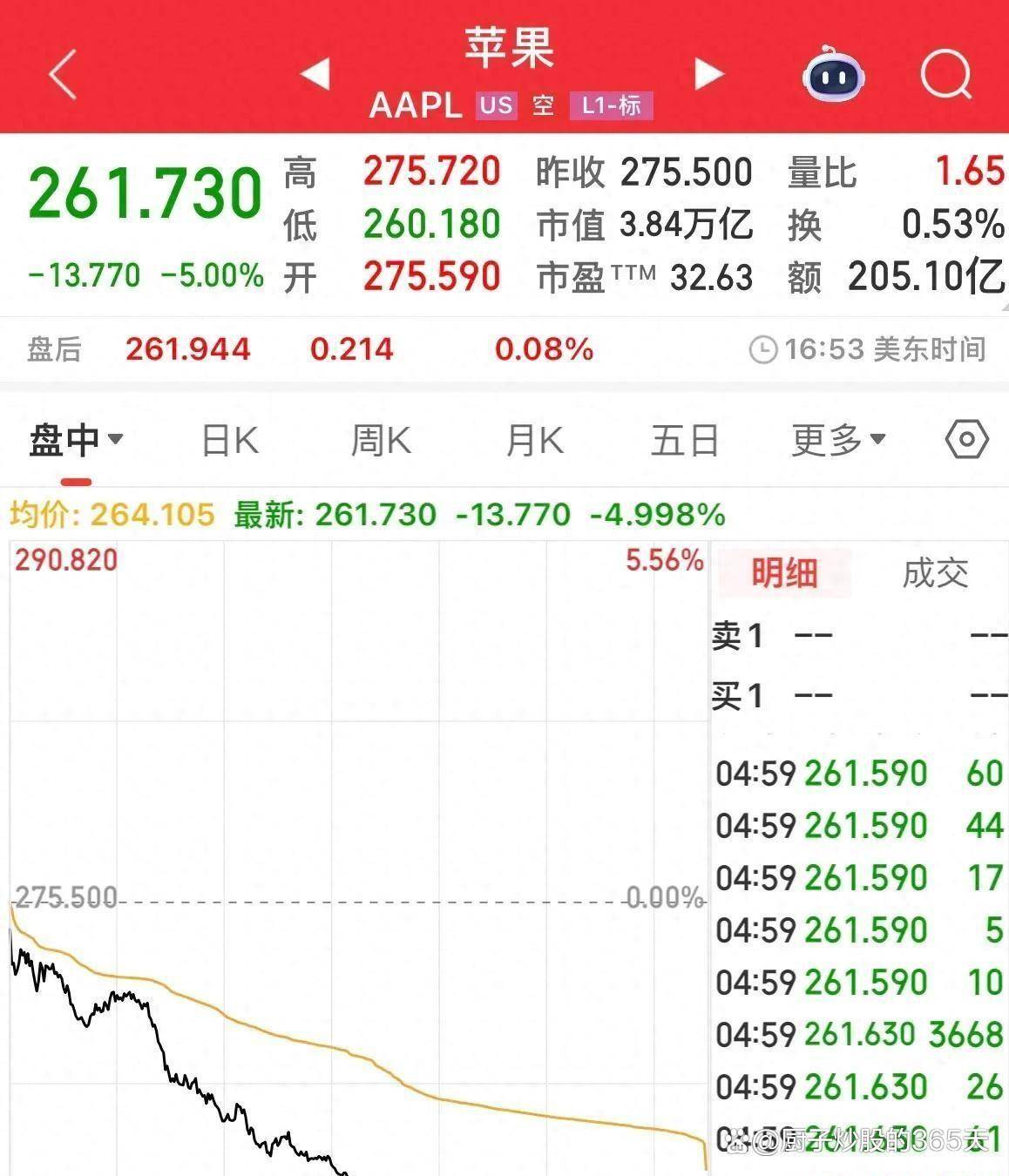
Market Overview - The US stock market experienced a significant decline, with the Dow Jones Industrial Average dropping 669.42 points (1.34%) to close at 49,451.98 points, the Nasdaq Composite falling 469.32 points (2.03%) to 22,597.15 points, and the S&P 500 decreasing by 108.71 points (1.57%) to 6,832.76 points [1][2][3] Market Sentiment - Over 4,100 stocks declined, indicating widespread market panic as investors rushed to sell assets, particularly in the tech and growth sectors. The VIX index surged, reflecting heightened risk aversion [2][3] Sector Performance - The sell-off affected nearly all sectors, with notable declines in precious metals and semiconductor stocks. The precious metals sector saw significant drops, with gold futures down 3.08% and silver futures plummeting 10.62% [4][5][6][8] - The Philadelphia Semiconductor Index fell by 2.5%, with individual stocks like AEHR Test Systems down 17.58% and Intel down over 3% [8][10] Major Companies - Apple Inc. experienced a substantial drop of 5.00%, resulting in a market cap loss of over $120 billion, attributed partly to regulatory concerns [12] - Other major tech companies also faced declines, with Tesla down 1.62%, Amazon down 2.20%, and Meta Platforms down nearly 3% [12] Financial Sector - Bank stocks fell across the board, with JPMorgan Chase down over 2%, Goldman Sachs down over 4%, and Citigroup down over 5%, driven by concerns over AI disrupting traditional wealth management [13][14] Economic Indicators - Recent economic data, including a drop in initial jobless claims and lower-than-expected existing home sales, contributed to market anxiety about potential economic overheating and prolonged high interest rates [24][25][26] Global Market Impact - The sell-off in the US markets had a ripple effect on global markets, with European indices also closing lower after initially opening higher, indicating a widespread sentiment of fear [18][19][20] AI Concerns - The market's decline was exacerbated by fears regarding the disruptive impact of AI technologies on various industries, leading to significant stock price drops in sectors perceived to be at risk [21][22][30] Storage Chip Sector - In contrast to the overall market trend, storage chip stocks saw gains, with companies like SanDisk and Seagate Technology rising significantly, reflecting a belief that AI's growth will increase demand for data storage [29]


晚间暴雷!黄金、白银、原油、美股全线崩盘,42只中概集体下跌
Sou Hu Cai Jing· 2026-02-14 04:22
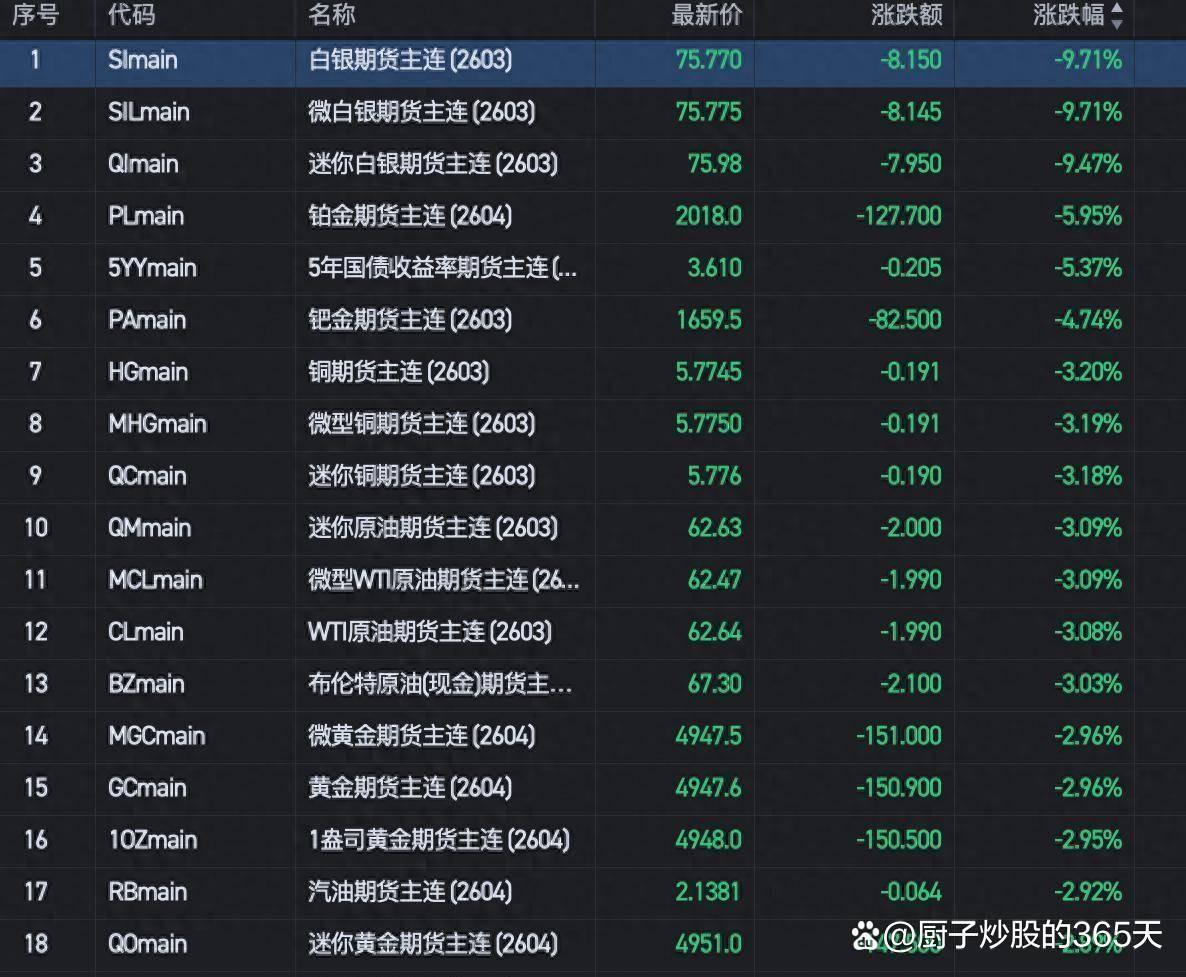
Market Overview - On February 13, 2026, a significant asset sell-off occurred in global financial markets, particularly impacting U.S. stock indices. The Dow Jones Industrial Average fell by 669.42 points (1.34%) to close at 49,451.98, while the Nasdaq Composite Index dropped 469.32 points (2.03%) to 22,597.15. The S&P 500 Index also declined by 108.71 points (1.57%) to 6,832.76 [1]. Commodity Market Impact - The sell-off extended to the commodity markets, with gold and silver experiencing substantial declines. COMEX gold futures fell by 3.08% to $4,941.4 per ounce, while COMEX silver futures plummeted by 10.62% to $75.01 per ounce [2][3]. Technology Sector Reaction - Major technology companies were severely affected, with Apple’s stock price dropping by 5%, resulting in a market value loss of over $120 billion (approximately 800 billion RMB). Other tech giants like Microsoft, Amazon, Tesla, Meta, and Nvidia also saw significant declines [3][4]. Chinese Concept Stocks - The Nasdaq Golden Dragon China Index, which includes many Chinese concept stocks, fell by 3% on the same day, indicating a collective sell-off in this sector. Over 40 Chinese concept stocks experienced substantial declines, with Tencent Music down 10.57% and Alibaba down 3.40% [3][4][6]. Employment Data Influence - The catalyst for this market turmoil was a strong U.S. employment report released on February 11, showing a non-farm payroll increase of 130,000 in January, significantly above the expected 70,000. This led to a shift in market expectations regarding Federal Reserve interest rate cuts, with the probability of a March rate cut dropping from 19.6% to 6% [5][6]. Capital Expenditure Concerns - Major tech companies announced aggressive capital expenditure plans for 2026, with Alphabet projecting $175 billion to $185 billion and Amazon estimating $200 billion, both nearly doubling their 2025 expenditures. This raised investor concerns about the return on such investments, especially as many companies reported record profits but saw stock price declines [10][11]. Market Sentiment and Volatility - The market's fear and volatility increased sharply, with the VIX index rising significantly. The sell-off was exacerbated by algorithm-driven trading, which triggered stop-loss orders and led to extreme price movements [15][16][17]. Global Market Impact - The financial turmoil that began in Wall Street quickly spread to global markets, with Asian and European stock markets opening lower in response to the U.S. declines [18].



美股三大指数周线齐跌
财联社· 2026-02-14 00:39
Market Overview - The three major indices showed mixed performance, with the Dow Jones up 0.10% to 49,500.93 points, the S&P 500 up 0.05% to 6,836.17 points, and the Nasdaq down 0.22% to 22,546.67 points [3] - All three indices recorded weekly declines, with the S&P 500 down 1.4%, the Dow down 1.2%, and the Nasdaq down 2.1% [3] Economic Indicators - The U.S. Bureau of Labor Statistics reported that the January CPI rose 2.4% year-over-year and 0.2% month-over-month, both below market expectations [3] - The core CPI, excluding volatile food and energy prices, increased by 2.5% year-over-year and 0.3% month-over-month, aligning with market expectations [3] - Phil Blancato, Chief Market Strategist at Osaic, indicated that this data could pave the way for interest rate cuts and inflation control if the trend continues [3] Sector Performance - Concerns over AI disruption led to market sell-offs, affecting various sectors including software, real estate, trucking, and financial services [6] - Financial stocks such as Charles Schwab and Morgan Stanley fell by 10.8% and 4.9%, respectively, while software company Workday dropped 11% and commercial real estate firm CBRE fell 16% [6] - The media sector was also impacted, with Disney down approximately 3% and Netflix down 6% [7] Technology Stocks - Major tech stocks mostly declined, with Nvidia down 2.21%, Apple down 2.27%, Microsoft down 0.13%, Google down 1.06%, and Amazon down 0.41% [7] - Tesla saw a slight increase of 0.09%, while Oracle rose by 2.34% and Netflix increased by 1.33% [7] Chinese Stocks - The Nasdaq Golden Dragon China Index fell by 0.10%, with Alibaba down 1.89%, JD.com down 1.38%, and Pinduoduo up 0.06% [7] - NIO remained flat, while Xpeng rose by 1.36% and Li Auto fell by 1.81% [7]