Ford Motor(F)

Search documents
随着中国品牌进入步伐加快,福特探索合资路径
Xin Lang Cai Jing· 2026-02-17 16:08
福特汽车 (F) 与相关官员讨论了允许其在美国与中国电动汽车公司建立合作伙伴关系的事宜。与此 同时,通用汽车 (GM) 表示反对,而经销商利西亚汽车 (LAD) 则指出,销售新的中国品牌汽车面 临美国特许经营法规方面的障碍。 责任编辑:张俊 SF065 福特汽车 (F) 与相关官员讨论了允许其在美国与中国电动汽车公司建立合作伙伴关系的事宜。与此 同时,通用汽车 (GM) 表示反对,而经销商利西亚汽车 (LAD) 则指出,销售新的中国品牌汽车面 临美国特许经营法规方面的障碍。 责任编辑:张俊 SF065 ...


Ford to follow Tesla Cybertruck with electrical tech in new EV pickup
CNBC· 2026-02-17 16:00
Core Viewpoint - Ford Motor is investing $5 billion in its next generation of all-electric vehicles, incorporating a 48-volt electrical architecture that was first commercialized by Tesla in 2023 [2][4]. Group 1: New Technology Implementation - The automotive industry has traditionally used a 12-volt system, which has led to issues and recalls for many electric vehicles (EVs). The new 48-volt architecture utilizes the EV's high-voltage battery to power accessories, improving efficiency and reducing wiring weight [3][4]. - The 48-volt system enhances electrical bandwidth and can be converted to 12 volts as needed through new electronic control units (ECUs) [4][14]. - Ford's new EVs will be based on a "Universal Electric Vehicle" (UEV) platform, aiming for cost parity with gas-powered vehicles through technological advancements [5][7]. Group 2: Competitive Strategy - Ford's CEO, Jim Farley, emphasized the company's commitment to competing against Tesla and expanding Chinese brands, referring to this initiative as a "Model T moment" for Ford [6]. - The new EVs are expected to reduce parts by 20%, fasteners by 25%, and assembly time by 15%, representing a significant shift in Ford's vehicle design and manufacturing processes [8][18]. Group 3: Market Context and Challenges - Despite a slowdown in U.S. EV sales, which peaked at 10.3% of the new vehicle market in September and dropped to an estimated 5.8% in the fourth quarter, Ford believes that its new pricing strategy will drive greater EV adoption [9][10]. - Ford announced $19.5 billion in write-downs related to a pullback in EV plans but remains committed to investing in its UEV platform through 2027 [12]. Group 4: Manufacturing Innovations - Ford is adopting gigacasting technology, which allows for the production of larger vehicle components, reducing the number of parts from 146 to just two for the new pickup [17][18]. - The new aluminum castings for the upcoming EV are reported to be over 27% lighter than those used in Tesla's Model Y, contributing to overall cost reductions in EV production [18].



Israel's ZIM workers ramp up strike in protest over Hapag-Lloyd takeover
Reuters· 2026-02-17 15:59
Core Viewpoint - Workers at ZIM Integrated Shipping Services have escalated their strike to demand job security guarantees following Hapag-Lloyd's announcement of its intention to acquire the Israeli shipping company [1] Group 1: Company Actions - ZIM Integrated Shipping Services workers halted all work on Tuesday as part of their strike efforts [1] - The strike is a response to Hapag-Lloyd's acquisition plans, indicating concerns over job security among ZIM employees [1] Group 2: Industry Context - The acquisition of ZIM by Hapag-Lloyd reflects ongoing consolidation trends within the shipping industry [1] - The strike highlights the potential impact of mergers and acquisitions on workforce stability in the shipping sector [1]
Why Ford Motor Company (F) is a Top Value Stock for the Long-Term
ZACKS· 2026-02-17 15:40
Core Insights - Zacks Premium offers tools for investors to enhance their stock market strategies, including daily updates, research reports, and stock screens [1][2] Zacks Style Scores - Zacks Style Scores provide a rating system for stocks based on value, growth, and momentum, helping investors identify securities likely to outperform the market in the short term [2][3] - Stocks are rated from A to F, with A indicating the highest potential for outperformance [3] Value Score - The Value Style Score focuses on identifying undervalued stocks using financial ratios such as P/E, PEG, and Price/Sales [3] Growth Score - The Growth Style Score assesses a company's financial health and future growth potential by analyzing earnings, sales, and cash flow [4] Momentum Score - The Momentum Style Score evaluates stocks based on price trends and earnings estimate changes, aiding investors in capitalizing on market momentum [5] VGM Score - The VGM Score combines Value, Growth, and Momentum scores, providing a comprehensive indicator for stock selection [6] Zacks Rank - The Zacks Rank is a proprietary model that uses earnings estimate revisions to identify stocks with high potential, with 1 (Strong Buy) stocks historically yielding an average annual return of +23.86% since 1988 [7][9] - There are over 800 stocks rated 1 or 2, making it essential for investors to utilize Style Scores to refine their selections [8] Stock Highlight: Ford Motor Company - Ford is rated 2 (Buy) on the Zacks Rank and has a VGM Score of A, indicating strong investment potential [11] - The company has a forward P/E ratio of 9.28, making it attractive to value investors [11] - Recent earnings estimates for fiscal 2026 have been revised upward, with the consensus estimate increasing by $0.10 to $1.52 per share, and an average earnings surprise of +1.2% [12]
New Strong Buy Stocks for February 17th
ZACKS· 2026-02-17 07:56
Group 1 - TTM Technologies, Inc. (TTMI) has seen a 12.9% increase in the Zacks Consensus Estimate for its current year earnings over the last 60 days [1] - Advanced Energy Industries, Inc. (AEIS) has experienced a 9.5% increase in the Zacks Consensus Estimate for its current year earnings over the last 60 days [2] - Deluxe Corporation (DLX) has reported an 11.1% increase in the Zacks Consensus Estimate for its current year earnings over the last 60 days [2] - Ford Motor Company (F) has seen a 7% increase in the Zacks Consensus Estimate for its current year earnings over the last 60 days [3] - Simmons First National Corporation (SFNC) has experienced a 5.2% increase in the Zacks Consensus Estimate for its current year earnings over the last 60 days [3]





F or FSS: Which Is the Better Value Stock Right Now?
ZACKS· 2026-02-16 17:40
Core Viewpoint - Investors are evaluating Ford Motor Company (F) and Federal Signal (FSS) to determine which stock offers better value opportunities at present [1] Valuation Metrics - Ford has a Zacks Rank of 1 (Strong Buy) while Federal Signal has a Zacks Rank of 2 (Buy), indicating that Ford's earnings estimate revisions are more favorable [3] - Ford's forward P/E ratio is 9.28, significantly lower than Federal Signal's forward P/E of 26.24, suggesting Ford may be undervalued [5] - The PEG ratio for Ford is 0.34, while Federal Signal's PEG ratio is 1.87, indicating Ford's expected earnings growth is more attractive relative to its price [5] - Ford's P/B ratio stands at 1.56 compared to Federal Signal's P/B of 5.54, further supporting Ford's valuation advantage [6] Earnings Outlook - Ford is experiencing an improving earnings outlook, which enhances its attractiveness in the Zacks Rank model [7]


EU Banking M&A Hits Post-Crisis High as US Automakers Brace for Chinese Competition
Stock Market News· 2026-02-16 05:38
Banking Industry - The European financial landscape is experiencing its most rapid consolidation in nearly two decades, highlighted by Nuveen's £9.9 billion takeover of Schroders, marking the end of the British firm's 222 years of independence [2] - Analysts at RBC Capital downgraded Schroders to Sector Perform from Outperform, raising the target price to 610p, indicating limited remaining upside as shares trade near the implied deal value [2] - EU banking M&A has surged to its highest level since the 2008 financial crisis, with February 2026 deal volume surpassing $60 billion [9] Automotive Industry - American automotive giants, including Ford and General Motors, are concerned about the rapid expansion of Chinese EV manufacturers like BYD and Geely, which are exploring joint ventures to produce cars domestically in the U.S. [4] - Ford CEO Jim Farley expressed mixed feelings about the efficiency of Chinese manufacturing, particularly after Xiaomi's EV success, warning that U.S. manufacturers must adopt similar techniques or face potential bankruptcies [5] Gold Market - The price of gold has reached unprecedented heights, recently exceeding $5,066 per ounce, driven by a "flight to safety" amid geopolitical instability [6] - The surge in gold prices has created challenges for the security industry, as the total value of bullion in vaults now exceeds the maximum limits of their insurance policies [7] Defense Industry - Germany is shifting its €108 billion defense budget towards high-tech autonomous systems and AI, responding to internal pressure to move away from traditional military investments [10] - The German government has approved a record €82.7 billion regular defense budget for 2026, with a focus on increasing funding for defense technology, including AI-powered drones [10] Legal and Regulatory Issues - The founders of Turkish delivery firm Getir have filed a $700 million lawsuit against Mubadala, alleging a breach of agreement during the restructuring of the company's assets [11] - The UK government is advancing plans to ban social media for teenagers under 16, aiming to address mental health concerns, which has drawn criticism from tech platforms [12]


EV Market Hits Speed Bump: China Sales Slide 20%, US Sees Worst Month Since 2022
Yahoo Finance· 2026-02-15 20:32
Global EV Sales Overview - Global electric vehicle sales in January 2026 reached 1.2 million units, marking a 3% decrease year-over-year and a 44% drop from December 2025 [2] - The decline in sales is largely attributed to a significant downturn in the Chinese market, which is the largest EV market globally [1][4] Regional Performance - North America faced a challenging start to 2026, with EV sales dropping 33% year-over-year, marking the lowest monthly sales since early 2022 due to the expiration of federal EV tax credits [3][7] - In contrast, Europe demonstrated resilience with over 320,000 EVs sold in January, a 24% increase year-over-year despite a 33% decline from December [6] China's Market Dynamics - In China, EV sales fell 20% year-over-year and 55% from December, driven by new policies including a 5% purchase tax on EVs and changes to trade-in schemes [4] - The policy changes have contributed to a more market-driven environment for China's EV sector in 2026, following a challenging year for Tesla in 2025 [5] Emerging Markets - Outside major regions, EV sales nearly doubled in countries like South Korea, Brazil, and Thailand, indicating growth potential in these markets [6]

“福特找白宫:拉中企来美国合资造车吧”
Guan Cha Zhe Wang· 2026-02-15 04:39
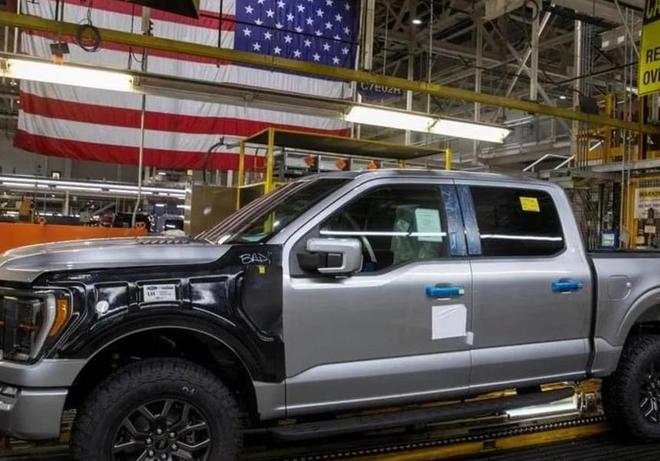
Core Viewpoint - Discussions are ongoing between Ford's CEO Jim Farley and senior officials from the Trump administration regarding a potential framework that would allow Chinese automakers to establish manufacturing plants in the U.S. while providing protections for domestic companies [1][4]. Group 1: Discussions and Framework - The talks involve the possibility of Chinese automakers forming joint ventures with U.S. companies, where U.S. firms would hold majority stakes, allowing for shared profits and technology [1][3]. - These discussions are described as informal and preliminary, with no decisions made yet [1][4]. - Ford emphasized the need to protect the domestic market from the impact of Chinese-made vehicles during discussions with the Trump administration [1]. Group 2: Market Context and Implications - The potential acceptance of Chinese investment in U.S. manufacturing mirrors historical requirements where Western automakers had to partner with Chinese firms to enter the Chinese market [3]. - The discussions come at a time when Chinese automakers are increasingly entering markets in Europe, Mexico, and South America, posing competitive challenges to Western manufacturers [4]. - If Chinese automakers successfully establish a foothold in the U.S., it could significantly impact domestic manufacturers, their supply chains, and consumers [4]. Group 3: Industry Reactions and Competitive Landscape - There are divisions within the Trump administration regarding the potential for such investment agreements, with some officials expressing concerns about opposition in Washington [4]. - General Motors has reportedly opposed the entry of Chinese manufacturers into the U.S. market, fearing loss of market share and negative impacts on North American suppliers [6]. - Ford's CEO has warned that low-cost, high-tech vehicles from China could pose a "survival threat" to U.S. automakers, while also seeking collaboration with Chinese firms to enhance Ford's own electric vehicle offerings [6][7].
“福特CEO找白宫官员讨论:拉中企来美国合资造车吧”
Guan Cha Zhe Wang· 2026-02-15 04:38
Core Viewpoint - Discussions are ongoing between Ford's CEO Jim Farley and senior officials from the Trump administration regarding a potential framework that would allow Chinese automakers to establish manufacturing plants in the U.S. while providing protections for domestic companies [1][3]. Group 1: Discussions and Framework - The talks involve the possibility of Chinese automakers forming joint ventures with U.S. companies, where the U.S. partners would hold majority stakes, allowing for shared profits and technology [1][3]. - These discussions are described as informal and preliminary, with no decisions made yet [1][3]. - Ford emphasized the need to protect the domestic market from the impact of Chinese-manufactured vehicles, citing privacy and national security concerns [1]. Group 2: Market Context and Implications - The potential entry of Chinese automakers into the U.S. market is seen as a significant turning point that could impact American manufacturers, their supply chains, and consumers [4]. - Chinese automakers have been rapidly gaining market share in Europe, Mexico, and South America with low-cost models equipped with advanced electric vehicle batteries and infotainment systems [4]. - Trump's recent comments suggest a willingness to allow Chinese manufacturers into the U.S. if they create jobs for Americans, which surprised U.S. automakers who believed trade barriers would protect them [6]. Group 3: Competitive Landscape - General Motors has expressed opposition to the entry of Chinese companies into the U.S. market, fearing loss of market share and potential negative impacts on North American suppliers [6]. - Farley has warned that low-cost, high-tech vehicles from China pose a "survival threat" to U.S. automakers, while Ford remains open to collaboration with Chinese companies [6]. - Ford is actively seeking partnerships with Chinese automakers and battery manufacturers to enhance its own electric vehicle offerings, planning to launch a low-cost electric vehicle by 2027 to compete with BYD [6][4]. Group 4: Potential Collaborations - Recent reports indicate that Ford is considering a joint venture with Xiaomi for vehicle production in the U.S., although both companies have denied this [7]. - Ford has expanded its partnership with Chinese battery giant CATL to include manufacturing fixed power sources for utilities and data centers, in addition to electric vehicle battery units [6].