
Ford Motor(F)

Search documents
F or FSS: Which Is the Better Value Stock Right Now?
ZACKS· 2026-02-16 17:40
Core Viewpoint - Investors are evaluating Ford Motor Company (F) and Federal Signal (FSS) to determine which stock offers better value opportunities at present [1] Valuation Metrics - Ford has a Zacks Rank of 1 (Strong Buy) while Federal Signal has a Zacks Rank of 2 (Buy), indicating that Ford's earnings estimate revisions are more favorable [3] - Ford's forward P/E ratio is 9.28, significantly lower than Federal Signal's forward P/E of 26.24, suggesting Ford may be undervalued [5] - The PEG ratio for Ford is 0.34, while Federal Signal's PEG ratio is 1.87, indicating Ford's expected earnings growth is more attractive relative to its price [5] - Ford's P/B ratio stands at 1.56 compared to Federal Signal's P/B of 5.54, further supporting Ford's valuation advantage [6] Earnings Outlook - Ford is experiencing an improving earnings outlook, which enhances its attractiveness in the Zacks Rank model [7]




EU Banking M&A Hits Post-Crisis High as US Automakers Brace for Chinese Competition
Stock Market News· 2026-02-16 05:38
Banking Industry - The European financial landscape is experiencing its most rapid consolidation in nearly two decades, highlighted by Nuveen's £9.9 billion takeover of Schroders, marking the end of the British firm's 222 years of independence [2] - Analysts at RBC Capital downgraded Schroders to Sector Perform from Outperform, raising the target price to 610p, indicating limited remaining upside as shares trade near the implied deal value [2] - EU banking M&A has surged to its highest level since the 2008 financial crisis, with February 2026 deal volume surpassing $60 billion [9] Automotive Industry - American automotive giants, including Ford and General Motors, are concerned about the rapid expansion of Chinese EV manufacturers like BYD and Geely, which are exploring joint ventures to produce cars domestically in the U.S. [4] - Ford CEO Jim Farley expressed mixed feelings about the efficiency of Chinese manufacturing, particularly after Xiaomi's EV success, warning that U.S. manufacturers must adopt similar techniques or face potential bankruptcies [5] Gold Market - The price of gold has reached unprecedented heights, recently exceeding $5,066 per ounce, driven by a "flight to safety" amid geopolitical instability [6] - The surge in gold prices has created challenges for the security industry, as the total value of bullion in vaults now exceeds the maximum limits of their insurance policies [7] Defense Industry - Germany is shifting its €108 billion defense budget towards high-tech autonomous systems and AI, responding to internal pressure to move away from traditional military investments [10] - The German government has approved a record €82.7 billion regular defense budget for 2026, with a focus on increasing funding for defense technology, including AI-powered drones [10] Legal and Regulatory Issues - The founders of Turkish delivery firm Getir have filed a $700 million lawsuit against Mubadala, alleging a breach of agreement during the restructuring of the company's assets [11] - The UK government is advancing plans to ban social media for teenagers under 16, aiming to address mental health concerns, which has drawn criticism from tech platforms [12]



EV Market Hits Speed Bump: China Sales Slide 20%, US Sees Worst Month Since 2022
Yahoo Finance· 2026-02-15 20:32
Global EV Sales Overview - Global electric vehicle sales in January 2026 reached 1.2 million units, marking a 3% decrease year-over-year and a 44% drop from December 2025 [2] - The decline in sales is largely attributed to a significant downturn in the Chinese market, which is the largest EV market globally [1][4] Regional Performance - North America faced a challenging start to 2026, with EV sales dropping 33% year-over-year, marking the lowest monthly sales since early 2022 due to the expiration of federal EV tax credits [3][7] - In contrast, Europe demonstrated resilience with over 320,000 EVs sold in January, a 24% increase year-over-year despite a 33% decline from December [6] China's Market Dynamics - In China, EV sales fell 20% year-over-year and 55% from December, driven by new policies including a 5% purchase tax on EVs and changes to trade-in schemes [4] - The policy changes have contributed to a more market-driven environment for China's EV sector in 2026, following a challenging year for Tesla in 2025 [5] Emerging Markets - Outside major regions, EV sales nearly doubled in countries like South Korea, Brazil, and Thailand, indicating growth potential in these markets [6]

“福特找白宫:拉中企来美国合资造车吧”
Guan Cha Zhe Wang· 2026-02-15 04:39
Core Viewpoint - Discussions are ongoing between Ford's CEO Jim Farley and senior officials from the Trump administration regarding a potential framework that would allow Chinese automakers to establish manufacturing plants in the U.S. while providing protections for domestic companies [1][4]. Group 1: Discussions and Framework - The talks involve the possibility of Chinese automakers forming joint ventures with U.S. companies, where U.S. firms would hold majority stakes, allowing for shared profits and technology [1][3]. - These discussions are described as informal and preliminary, with no decisions made yet [1][4]. - Ford emphasized the need to protect the domestic market from the impact of Chinese-made vehicles during discussions with the Trump administration [1]. Group 2: Market Context and Implications - The potential acceptance of Chinese investment in U.S. manufacturing mirrors historical requirements where Western automakers had to partner with Chinese firms to enter the Chinese market [3]. - The discussions come at a time when Chinese automakers are increasingly entering markets in Europe, Mexico, and South America, posing competitive challenges to Western manufacturers [4]. - If Chinese automakers successfully establish a foothold in the U.S., it could significantly impact domestic manufacturers, their supply chains, and consumers [4]. Group 3: Industry Reactions and Competitive Landscape - There are divisions within the Trump administration regarding the potential for such investment agreements, with some officials expressing concerns about opposition in Washington [4]. - General Motors has reportedly opposed the entry of Chinese manufacturers into the U.S. market, fearing loss of market share and negative impacts on North American suppliers [6]. - Ford's CEO has warned that low-cost, high-tech vehicles from China could pose a "survival threat" to U.S. automakers, while also seeking collaboration with Chinese firms to enhance Ford's own electric vehicle offerings [6][7].
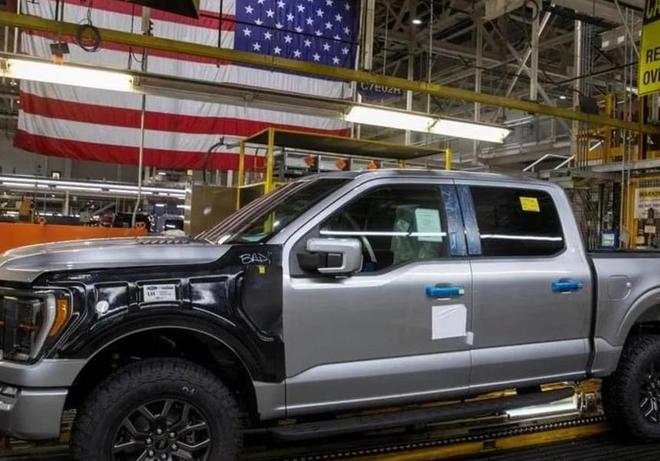
“福特CEO找白宫官员讨论:拉中企来美国合资造车吧”
Guan Cha Zhe Wang· 2026-02-15 04:38
Core Viewpoint - Discussions are ongoing between Ford's CEO Jim Farley and senior officials from the Trump administration regarding a potential framework that would allow Chinese automakers to establish manufacturing plants in the U.S. while providing protections for domestic companies [1][3]. Group 1: Discussions and Framework - The talks involve the possibility of Chinese automakers forming joint ventures with U.S. companies, where the U.S. partners would hold majority stakes, allowing for shared profits and technology [1][3]. - These discussions are described as informal and preliminary, with no decisions made yet [1][3]. - Ford emphasized the need to protect the domestic market from the impact of Chinese-manufactured vehicles, citing privacy and national security concerns [1]. Group 2: Market Context and Implications - The potential entry of Chinese automakers into the U.S. market is seen as a significant turning point that could impact American manufacturers, their supply chains, and consumers [4]. - Chinese automakers have been rapidly gaining market share in Europe, Mexico, and South America with low-cost models equipped with advanced electric vehicle batteries and infotainment systems [4]. - Trump's recent comments suggest a willingness to allow Chinese manufacturers into the U.S. if they create jobs for Americans, which surprised U.S. automakers who believed trade barriers would protect them [6]. Group 3: Competitive Landscape - General Motors has expressed opposition to the entry of Chinese companies into the U.S. market, fearing loss of market share and potential negative impacts on North American suppliers [6]. - Farley has warned that low-cost, high-tech vehicles from China pose a "survival threat" to U.S. automakers, while Ford remains open to collaboration with Chinese companies [6]. - Ford is actively seeking partnerships with Chinese automakers and battery manufacturers to enhance its own electric vehicle offerings, planning to launch a low-cost electric vehicle by 2027 to compete with BYD [6][4]. Group 4: Potential Collaborations - Recent reports indicate that Ford is considering a joint venture with Xiaomi for vehicle production in the U.S., although both companies have denied this [7]. - Ford has expanded its partnership with Chinese battery giant CATL to include manufacturing fixed power sources for utilities and data centers, in addition to electric vehicle battery units [6].
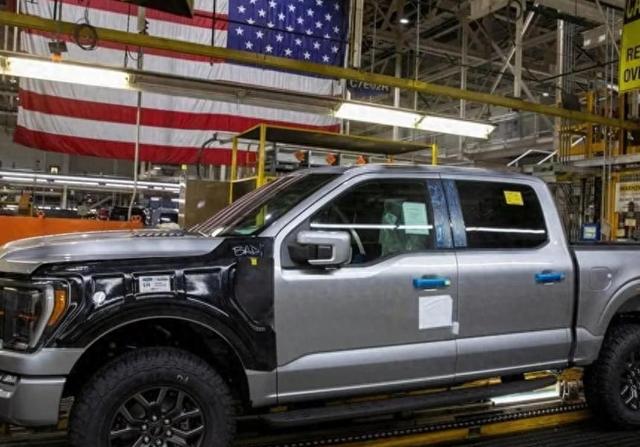
The Real Reason Investors Should Be Excited for Ford's China Negotiations
Yahoo Finance· 2026-02-14 19:25
Core Viewpoint - The automotive industry, particularly Ford's operations in Europe, faces significant challenges but has a strategic plan that could lead to a turnaround, which investors may be overlooking [1]. Group 1: Challenges Faced by Ford - Ford's business in Europe has been under pressure due to weak passenger vehicle demand and slower-than-expected electric vehicle (EV) adoption [2]. - The company faces new competition from affordable and advanced Chinese EV makers, threatening its market share and profitability [2]. - Ford's profitability in Europe has fluctuated, with previous restructuring efforts only temporarily restoring profitability before facing new challenges [3]. Group 2: Turnaround Strategy - Ford's turnaround plan consists of three main strategies: focusing on the higher-margin Ford Pro commercial vehicle division, refreshing its passenger vehicle lineup with distinct designs and options, and improving scale and cost efficiencies [4]. - The company aims to enhance its operational footprint to achieve better cost management [4]. Group 3: Potential Developments - A significant potential development is the sharing of intellectual property with Chinese manufacturers, which could help Ford learn how to produce vehicles more efficiently [5][6]. - This approach may lead to healthier operations for legacy automakers like Ford, as they adapt to competitive pressures [6].
车企“比惨大会”召开!全是特朗普惹的祸?
电动车公社· 2026-02-14 16:05
Core Insights - The global automotive landscape is undergoing significant changes due to the rise of new energy vehicles, with Chinese automakers emerging as top competitors while traditional giants face strategic transformation challenges [1][2]. Group 1: Tesla - Tesla's 2025 financial report shows total revenue of $94.827 billion, a 3% year-over-year decline, marking the first revenue drop in its history [7]. - The company delivered 1.636 million vehicles in 2025, an 8.6% decrease from 2024, leading to a 10% drop in automotive revenue, which constitutes over 70% of total income [9]. - Despite record revenue from energy generation and storage, Tesla's overall revenue decline remains unmitigated [10]. - R&D investment surged by 41% to $6.411 billion, focusing on autonomous driving and humanoid robots, indicating a shift in strategic priorities [14]. Group 2: General Motors - General Motors reported 2025 revenue of $185 billion, down 1.3%, with net profit falling 55.1% to $2.697 billion due to a $7.9 billion charge for strategic restructuring [17][19]. - The company maintains strong cash flow of $10.6 billion despite the profit drop, attributed to one-time restructuring costs and market adjustments [20]. - GM's outlook for 2026 is optimistic, expecting net profit between $10.3 billion and $11.7 billion, supported by a solid market position in the U.S. and new product launches in China [24]. Group 3: Ford - Ford's 2025 revenue reached $187.3 billion, a 1% increase, but it reported a net loss of $8.2 billion, primarily due to a $19.5 billion charge related to electric vehicle restructuring [26][30]. - The company faces challenges similar to GM, with traditional vehicles performing well while electric vehicle strategies require adjustment [32]. Group 4: Hyundai - Hyundai's 2025 revenue was 186.3 trillion KRW (approximately 888.7 billion RMB), a 6.3% increase, but operating profit fell 19.5% to 11.47 trillion KRW [34]. - The decline in profit is largely due to increased tariffs on exports to the U.S., despite a reduction in tariffs effective November 2025 [38]. - The company is also navigating the transition to electric vehicles, which requires adjustments to its product lineup [39]. Group 5: Volvo - Volvo's 2025 revenue was 357.3 billion SEK (approximately 278.8 billion RMB), down 11%, with operating profit plummeting 99% [42]. - The decline is attributed to tariffs, weak demand, and price pressures, prompting a cost-cutting plan involving layoffs [45]. - Despite challenges, Volvo's electric vehicle offerings are performing well, particularly in the Chinese market [48]. Group 6: Great Wall Motors - Great Wall Motors reported 2025 revenue of 222.79 billion RMB, a 10.19% increase, but net profit fell 21.71% to 9.912 billion RMB [52]. - The company achieved record sales of 1.3237 million vehicles, indicating strong growth despite profit declines due to increased investments in new technologies and marketing [54]. - The focus on electric vehicle development, particularly through its premium brand WEY, is expected to enhance growth potential [56]. Group 7: GAC Group - GAC Group's 2025 sales fell 14.06% to 1.72 million vehicles, with a projected loss of 8-9 billion RMB [58]. - The decline is linked to poor performance in traditional fuel vehicles and slower growth in its electric vehicle segment [59]. - The company is pursuing deep collaborations with local suppliers to accelerate its electrification strategy [60]. Group 8: Toyota - Toyota's revenue for the first three quarters of the 2026 fiscal year was 38.09 trillion JPY (approximately 1.72 trillion RMB), a 6.8% increase, but net profit dropped 26.1% to 3.03 trillion JPY [63]. - The profit decline is primarily due to the impact of U.S. tariff policies, despite a 10.5% profit increase in the Chinese market [66][68]. - Toyota is implementing a company-wide plan to reduce its breakeven point and improve operational efficiency [71].




From 'slippery slope' to 'existential threat,' auto CEOs sound alarm on Chinese competition
Yahoo Finance· 2026-02-14 15:30
Core Viewpoint - Chinese automakers are perceived as a significant threat to the survival of Western automakers, particularly in the U.S. auto industry, unless domestic production is adequately protected [1]. Group 1: Industry Concerns - The Alliance for Automotive Innovation (AAI) emphasizes the need for Congress to uphold the Biden-era restrictions on importing certain technologies and vehicles from China to safeguard U.S. manufacturers [2]. - Rivian's CEO RJ Scaringe highlights that the competitive advantage of Chinese automakers stems from a lower capital cost structure, often subsidized by the government, and significantly cheaper labor costs, which are about 20% to 25% of U.S. levels [3]. - Current tariffs help to equalize costs for U.S. manufacturers, but this protection may not last indefinitely [4]. Group 2: Market Dynamics - Ford's CEO Jim Farley notes that while Chinese competitors are not yet prominent in the U.S., they are gaining significant traction globally, particularly in Europe, where they captured approximately 6.1% of the auto market in the previous year, marking a 99% increase from 2024 [7]. - Despite existing tariffs of 35.3% on Chinese electric vehicles entering the EU, the market presence of Chinese automakers continues to grow, indicating their rising influence [7]. - Farley has previously described Chinese-made vehicles as an "existential threat" to U.S. automakers due to advancements in technology and a labor infrastructure that supports low-cost manufacturing [8].

The Art of the Pivot: Tariffs, Fusion Power, and the Market’s Emotional Support President
Stock Market News· 2026-02-14 06:00
Market Overview - The S&P 500 decreased by 1.4% and the DOW by 1.1%, marking the worst week of 2026, with the tech-heavy NASDAQ down 2.3% due to policy chaos from the administration [1] - The market is experiencing volatility as the administration's tariff policies shift, impacting investor sentiment and market stability [1][11] Tariff Policy Changes - The Trump administration is considering rolling back steel and aluminum tariffs due to inflation concerns, which have moderated to 2.4% in January after a year of price fluctuations caused by these tariffs [2][3] - Shares of United States Steel Corp (X) fell by 3.4% and Alcoa (AA) by 2.8% in pre-market trading as renewed foreign competition becomes a possibility [2] Deregulation Efforts - The administration repealed the EPA's "Endangerment Finding," which was crucial for regulating greenhouse gases, benefiting the traditional energy sector but creating confusion for the auto industry [6][7] - Ford (F) and General Motors (GM) saw modest gains of 0.5% and 0.2% respectively, but the long-term implications of this deregulation remain uncertain as global markets move towards electric vehicles [6][8] Trade Deals and Global Relations - Recent trade announcements include a new framework with India, tariff reductions with Taiwan, and a deal with the U.K., but market reactions have been muted due to skepticism about the effectiveness of these frameworks [9][10] - The iShares MSCI Taiwan ETF saw a small increase of 0.9%, but concerns about a potential visit to China by the President may limit market optimism [10] Conclusion on Market Sentiment - The major indices are down, with the S&P 500 experiencing a 2.1% decline for the week, reflecting market uncertainty regarding the administration's policy changes [11] - Investors are left questioning the logic behind rolling back tariffs to combat inflation that the tariffs themselves helped create, highlighting the unpredictable nature of current market conditions [12]




Ford CEO, Trump Officials Discussed China-US Carmaking JVs
Yahoo Finance· 2026-02-14 02:55
Core Viewpoint - Ford is engaging in discussions with the Trump administration regarding a potential framework for Chinese automakers to enter the U.S. market while ensuring protection for domestic companies [6][7]. Group 1: Discussions and Framework - Ford's CEO Jim Farley discussed the possibility of Chinese carmakers partnering with U.S. companies through joint ventures, where American firms would hold a controlling stake [5][6]. - The discussions were informal and preliminary, with no decisions made yet [4][7]. - The idea of joint ventures was seen as a way to protect American interests amid increasing competition from Chinese automakers [7] Group 2: Market Dynamics and Competition - Chinese automakers are gaining market share in regions like Europe, Mexico, and South America, leveraging lower-cost models and advanced technology [10]. - The entry of Chinese competitors into the U.S. market could have significant implications for domestic automakers and their supply chains [9]. - General Motors has expressed opposition to allowing Chinese automakers into the U.S. market, citing concerns over market share and supply chain impacts [12][13]. Group 3: Strategic Partnerships - Ford has been exploring partnerships with Chinese companies, including discussions with BYD for battery supply and a potential manufacturing partnership with Geely in Europe [14]. - Ford is also expanding its licensing agreement with CATL to include manufacturing stationary power sources [14]. - Farley has emphasized the need for Ford to learn from Chinese companies while developing competitive low-cost electric vehicles [13].