
IBM(IBM)

Search documents
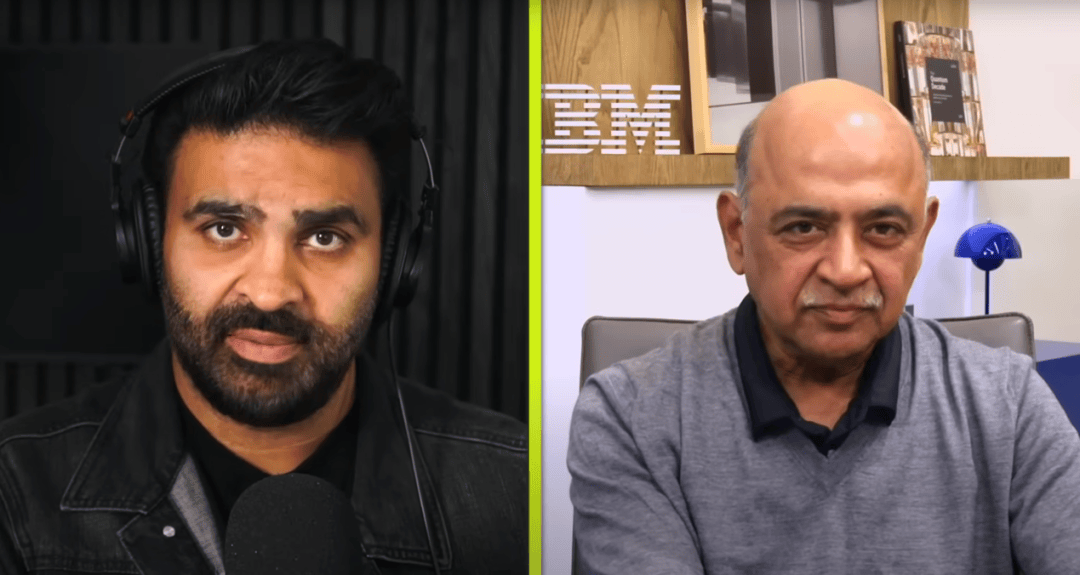
“可能性大概0到1%”:IBM CEO给AGI泼冷水,断言AI数据中心投资无法获得回报
Sou Hu Cai Jing· 2025-12-03 14:40
Core Viewpoint - The debate over whether AI data center investments are overheated is intensifying in Wall Street and Silicon Valley, with significant capital expenditure plans announced by major tech companies, raising concerns about potential returns on these investments [1][2]. Group 1: Investment Plans - Major tech companies have announced substantial investments in data centers: Meta plans to invest over $600 billion over the next three years, Microsoft $80 billion by 2025, Google $75 billion, and Apple $500 billion over four years, potentially pushing global data center and AI infrastructure investments to over $5 trillion in the next five years [1]. - IBM's CEO Arvind Krishna expressed skepticism about the returns on these investments, stating that the current infrastructure costs make it impossible to achieve returns on the promised multi-trillion dollar investments [2][4]. Group 2: Cost Analysis - Krishna calculated that filling a 1 gigawatt data center costs approximately $80 billion, leading to a total capital expenditure of about $8 trillion if tech companies pursue a total capacity of 100 gigawatts [4]. - He emphasized that this level of investment would require around $800 billion in profits just to cover interest payments, not accounting for depreciation of equipment, particularly AI chips that have a rapid obsolescence rate [4]. Group 3: Comparison to Past Bubbles - Krishna compared the current AI investment frenzy to the internet bubble of the early 2000s, noting that while fiber optics had long-term utility, AI hardware like GPUs has a much shorter lifespan, necessitating expensive updates every five years [5]. - He acknowledged that while some infrastructure can last, the rapid pace of technological advancement in AI hardware raises questions about the sustainability of current investments [5]. Group 4: AGI Potential - Krishna expressed a low probability (0 to 1%) that current technology can achieve Artificial General Intelligence (AGI), contrasting sharply with optimistic statements from other tech leaders [6][8]. - He believes that achieving AGI will require significant advancements beyond current large language models (LLMs) and emphasizes the need for integrating hard knowledge with AI technologies [8]. Group 5: IBM's Strategic Focus - IBM has chosen not to compete in the consumer AI market, focusing instead on enterprise solutions, where it can leverage its long-standing reputation for data protection and reliability [9]. - The company is actively hiring while others in the tech sector are laying off employees, as it aims to enhance productivity through AI tools [9]. Group 6: Quantum Computing Outlook - Krishna predicts that quantum computing could reach practical scale within three to five years, with an estimated market value of $400 billion to $700 billion annually [9]. - He provided a probabilistic timeline for when quantum computing might deliver significant commercial value, suggesting a higher likelihood of breakthroughs within four to five years [10]. Group 7: Industry Perspectives - Krishna's views reflect a broader skepticism within the tech industry regarding the disconnect between current investment levels and realistic return expectations, while still acknowledging the transformative potential of AI for enterprise productivity [11]. - The ongoing debate highlights differing beliefs about the future of AI and AGI, with some companies betting heavily on becoming market leaders through substantial investments [12].


财经早报:多只大牛股提示风险 美国上市规则将迎大松绑丨2025年12月2日
Xin Lang Zheng Quan· 2025-12-03 00:10
Group 1 - The construction of a financial powerhouse is essential for achieving a modern socialist strong nation, as finance is a crucial component of national economic strength and competitiveness [3] - The relationship between building a financial powerhouse and achieving socialist modernization is one of local serving the overall goal, emphasizing that a strong financial system is necessary for the modernization process [3] Group 2 - Multiple stocks have been flagged for trading risks due to significant short-term price increases, indicating potential irrational speculation [4][26] - External institutions like Morgan Stanley and UBS are optimistic about the A-share market, predicting an earnings growth rate of 8% for 2026, driven by improved nominal GDP growth and policy support [5][6] - The A-share market is expected to see further valuation increases due to macro policies, accelerated earnings growth, and sustained inflows of long-term capital [6] Group 3 - IBM's CEO expressed skepticism about the current data center construction trend, stating that the high costs make it unlikely for tech giants to achieve returns on such investments [14] - The company estimates that building a 1 GW data center requires an investment of approximately $80 billion [14] Group 4 - The stock of Chen'an Technology will resume trading after a change in its controlling shareholder to a state-owned entity, which is expected to enhance collaboration and support [15] - The stock of *ST Zhengping will resume trading after a significant price increase, which raised concerns about trading risks [16] Group 5 - The Ningbo Port expects a 10.8% year-on-year increase in container throughput for November 2025, indicating growth in shipping activities [30] - Yutong Bus reported a production increase of 11.21% and sales increase of 8.62% in November 2025, reflecting positive trends in the bus manufacturing sector [31]



The $8 Trillion AI Mirage: IBM Says The Math Just Doesn't Work
Benzinga· 2025-12-02 20:59
Core Viewpoint - The AI supercycle may face significant financial challenges as the costs of building AI data centers are extraordinarily high, potentially leading to unsustainable capital expenditures and questioning the profitability of such investments [2][4][9]. Group 1: Capital Expenditure Insights - IBM's CEO Arvind Krishna indicated that constructing a 1-gigawatt AI data center costs approximately $80 billion, leading to an estimated total capital spending of around $8 trillion across the industry due to nearly 100 gigawatts of announced hyperscale capacity [2]. - Companies would require about $800 billion in profit just to service the interest on this scale of investment, suggesting a bleak outlook for returns [2][4]. Group 2: Industry Spending Behavior - Major tech companies like Amazon, Microsoft, Alphabet, and Meta are investing heavily in AI infrastructure, with spending appearing to be driven by competitive pressures rather than profitability [3][6]. - The current investor sentiment is characterized by fear of missing out (FOMO), which may lead to irrational spending patterns that do not align with fundamental economic realities [7]. Group 3: Financial Viability Concerns - There are growing concerns that the economics of AI infrastructure do not support the ambitious spending plans, with enterprises yet to demonstrate that generative AI can deliver a return on investment at scale [5][8]. - If the first hyperscaler slows down spending, it could prompt a broader reassessment of the profitability of AI infrastructure, revealing that much of the current build-out is based on narrative rather than sound economics [7][8].
IBM CEO:以现有成本建设AI数据中心“几乎不可能回本”
Sou Hu Cai Jing· 2025-12-02 11:24
Core Insights - The CEO of IBM, Arvind Krishna, expressed concerns about the economic feasibility of large capital expenditures in data center construction and operation, particularly in the context of pursuing Artificial General Intelligence (AGI) [1][3] - Krishna estimated that a 1 GW data center requires approximately $80 billion in investment, and if a single company plans to build 20 to 30 GW data centers, the capital expenditure could reach around $1.5 trillion [3] - The total global commitment related to AGI construction could approach 100 GW, corresponding to an investment of about $800 billion, with interest costs necessitating around $80 billion in profits to cover [3] Industry Context - Krishna indicated that the depreciation cycle of AI chips is a critical factor, as current data center chips typically need to be depreciated over five years, complicating long-term returns [3] - In light of the growing discussions around AGI, Krishna assessed the probability of achieving AGI through existing technological paths as between 0% and 1% [4] - Despite skepticism regarding the rapid development of AGI, Krishna acknowledged the value of current AI tools in enhancing enterprise productivity, suggesting that these technologies could unlock "trillions of dollars" in efficiency gains [4] - He proposed that future advancements in AGI may require a combination of hard knowledge systems and large models, although he remains cautious about the likelihood of success [4]

Can IBM's Tie-Up With Cisco for Quantum Network Aid Its Shares?
ZACKS· 2025-12-01 16:41
Core Insights - IBM has partnered with Cisco to create a fault-tolerant quantum computing network by 2030, aiming to establish a quantum computing Internet that connects various quantum technologies [1][7] - IBM will develop a quantum networking unit (QNU) to link quantum computers to a quantum processing unit (QPU), while Cisco will create a high-speed software protocol for dynamic network reconfiguration [2][3] - The collaboration is expected to enhance the scalability of quantum networks, facilitating technological innovations in the quantum ecosystem [3] IBM's Quantum Computing Focus - IBM has previously partnered with AMD to develop scalable, open-source platforms for quantum-centric supercomputing, enhancing algorithm complexity in quantum hardware [4] - Recent updates to IBM's Qiskit software platform have improved accuracy by 24% at the scale of over 100 qubits, providing developers with enhanced control [5] Financial Performance - IBM's stock has increased by 35.7% over the past year, outperforming Amazon (10.7%) and Microsoft (14.1%), although the industry as a whole grew by 61.2% [6] - Earnings estimates for IBM for 2025 have risen by 7.1% to $11.39, and for 2026 by 8.8% to $12.23, indicating positive investor sentiment [8] Challenges and Strategic Adjustments - Despite growth in hybrid cloud and AI, IBM faces intense competition from AWS and Microsoft Azure, leading to margin pressures and declining profitability [10] - The company is implementing significant job cuts, with many positions being relocated to India to reduce operating costs [11][13] - High operating costs and competition are hindering IBM's growth, although the company maintains a focus on quantum computing and AI to drive value [15][16]


[DowJonesToday]Dow Jones Advances on Black Friday Optimism
Stock Market News· 2025-11-28 21:09
Market Overview - The Dow Jones Industrial Average closed higher on November 28, 2025, gaining 289.30 points (0.61%) in a shortened Black Friday trading session, reflecting strong optimism around the holiday retail season [1] - Dow Futures also showed positive sentiment, rising 253.00 points (0.5327%) [1] - The primary narrative driving the market was robust consumer spending expectations during the Black Friday shopping period [1] Key Performers - JPMorgan Chase (JPM) led the gains among Dow components with an increase of 1.77% [2] - Other notable performers included IBM (1.74%), Amazon (1.72%), Walmart (1.37%), and Microsoft (1.33%), all contributing to the positive sentiment around holiday sales [2] Underperformers - Nvidia (NVDA) was the biggest laggard, declining by 2.04%, potentially due to profit-taking or sector rotation [3] - Other notable declines included Travelers Companies (TRV) down 0.56%, Johnson & Johnson (JNJ) down 0.31%, and McDonald's (MCD) down 0.13% [3] - Despite these individual declines, overall market sentiment remained positive, extending a week of gains for major indexes [3]




[DowJonesToday]Dow Jones Rises on Black Friday Amid Rate Cut Optimism
Stock Market News· 2025-11-28 19:09
Market Overview - The Dow Jones Industrial Average increased by 289.30 points (0.61%) and Dow Futures rose by 253.00 points (0.5327%), indicating strong market momentum driven by optimism regarding potential Federal Reserve interest rate cuts and robust economic data [1] Key Stock Performances - JPMorgan Chase (JPM) led the gains with a rise of +1.77%, followed by IBM (IBM) at +1.74%, and Amazon (AMZN) at +1.72%, reflecting positive sentiment in the retail sector as the holiday shopping season begins [2] - Walmart (WMT) and Microsoft (MSFT) also contributed positively, gaining +1.37% and +1.33% respectively [2] Declining Stocks - Nvidia (NVDA) was the most significant loser, down -2.04%, indicating potential profit-taking or company-specific issues within the tech sector [3] - Other notable decliners included Travelers Companies (TRV) at -0.56% and Johnson & Johnson (JNJ) at -0.31% [3] Trading Session Context - The market operated on a shortened schedule due to the holiday weekend, which may have influenced trading volumes and stock movements [3]

Kyndryl Wins Wall Street Support As 'Triple A' Plan Fixes Profits After IBM Split: Analyst
Benzinga· 2025-11-28 18:09
Core Viewpoint - Kyndryl Holdings, Inc is experiencing positive momentum following its transformation from IBM, with a Buy rating initiated by Guggenheim analyst Jonathan Lee, who has set a price target of $30 [1][2]. Group 1: Company Strategy and Performance - Kyndryl has implemented a "Triple A" framework focusing on Alliances, Advanced Delivery, and Accounts, which has improved contract-signing quality and operational automation [2][3]. - The company is transitioning from legacy IBM-related deals to partnerships with hyperscalers and technology vendors, enhancing its offerings in consulting, cloud-enabled managed services, cybersecurity, and data and AI solutions [3][4]. - Kyndryl aims to triple cash flow, double pretax earnings, and achieve single-digit revenue growth by 2028, with early results showing adjusted EBITDA margins increasing from 12% in 2022 to 16.7% in 2025 [4]. Group 2: Market Position and Growth Potential - Despite revenue pressures from traditional data centers, growth in cloud-based services is anticipated to offset declines, positioning Kyndryl favorably in the expanding IT infrastructure services market, projected to grow from $900 billion to $1.2 trillion by 2029 [5]. - Kyndryl's focus on contract economics has led to the exit or repricing of lower-quality engagements, thereby strengthening its portfolio and expanding margins [4][5]. Group 3: Financial Projections - Analyst Jonathan Lee projects third-quarter revenue of $3.93 billion and adjusted EPS of $0.85 for Kyndryl [6].


[DowJonesToday]Dow Jones Advances on Black Friday Amid Rate Cut Optimism
Stock Market News· 2025-11-28 17:09
Market Overview - The Dow Jones Industrial Average rose by 315.72 points or 0.6657% to 47742.84 during a shortened Black Friday trading session, driven by optimism for a potential Federal Reserve interest rate cut in December and stronger-than-expected economic data [1] - Despite a temporary technical outage at CME Group that halted futures trading, the overall market sentiment remained positive [1] Sector Performance - Financial institutions and technology firms led the gains in the Dow, with notable performances from JPMorgan Chase (up 1.91% to $313.58), Salesforce (up 1.79% to $232.12), and Goldman Sachs (up 1.66% to $829.545) [2] - Other significant gainers included Amazon (up 1.55% to $232.77) and IBM (up 1.42% to $307.623) [2] Decliners - Nvidia was among the biggest losers, down 1.81% to $176.9551, followed by Johnson & Johnson (down 1.36% to $204.7473) and Amgen (down 0.62% to $342.53) [3] - Additional stocks in negative territory included Apple (down 0.39% to $276.53) and Merck (down 0.27% to $104.47) [3]


