
L'Oreal(LRLCY)

Search documents
今年超50个美妆品牌成“弃子”
3 6 Ke· 2025-12-10 00:24
Core Insights - The cosmetics industry is experiencing a significant downturn, with many brands being sold or shut down rather than achieving sales success during promotional events [1][22] - Over 50 beauty brands have been categorized as "abandoned" this year, with notable examples including L'Oréal, Estée Lauder, and Unilever [1][5] - The trend indicates a shift from large-scale brand coverage to a focus on optimizing brand portfolios among international beauty giants [8][13] Brand Sales and Closures - International beauty giants have sold over 30 brands this year, including Unilever's sale of the high-end skincare brand CeraVe and Kering's sale of its beauty division to L'Oréal for €4 billion (approximately ¥331.96 billion) [3][5] - The majority of these "abandoned" brands were acquired at high valuations between 2014 and 2020, with some, like Avon, being sold for $3.7 billion (approximately ¥263.45 billion) after struggling to perform [6][7] - In 2025 alone, 16 international brands have been shut down due to operational difficulties and strategic misalignment, with L'Oréal closing three brands [14][18] Reasons for Brand Abandonment - The primary reasons for brand sales include the need for international beauty companies to streamline operations and focus on profitable segments, as seen with Unilever's efforts to make CeraVe profitable [7][18] - Many brands are facing challenges such as declining performance, increased marketing costs, and the inability to adapt to market demands, leading to closures [21][27] - The trend of brand closures is not limited to international brands; domestic brands are also facing similar pressures, with eight brands shutting down in 2025 due to strategic adjustments and profit pressures [23][26] Market Trends and Future Outlook - The industry is witnessing a shift towards strategic restructuring and value rediscovery rather than mere expansion, indicating a potential ongoing consolidation phase [13][32] - The focus is now on leveraging technology and innovation to create competitive advantages, with companies encouraged to find niche markets and enhance product offerings [31][32] - The ongoing challenges suggest that the beauty industry will continue to experience a wave of brand eliminations, with survival dependent on strategic adaptability and resource management [22][32]



欧莱雅的进击
Xin Lang Cai Jing· 2025-12-09 15:50
来源:滚动播报 (来源:北京商报) 收购、投资,欧莱雅正在用一切可行的办法扩大版图,抢占市场份额。近日,欧莱雅官方发布消息称, 从由EQT牵头的财团手中收购高德美额外10%的股权。在更早的10月,欧莱雅刚刚斥资40亿欧元拿下开 云集团多个奢侈品品牌美妆授权;11月,欧莱雅再投国产护肤品牌LAN兰……这背后或许是欧莱雅正 在面临的增长放缓现实情况。 增资高德美 此次交易完成后,欧莱雅对高德美的持股比例将增至20%。早在2024年底,欧莱雅收购了高德美10%的 股权。欧莱雅官方披露的信息中,并没有透露此次增持的具体金额。不过欧莱雅方面透露,鉴于投资增 加,高德美董事会将考虑从2026年年度股东大会起,提名2名来自欧莱雅的非独立董事候选人,以取代 由EQT领导的财团。 高德美是一家专业的皮肤科学公司,专注于护肤品和医美赛道。2024年3月,高德美在瑞士证券交易所 正式敲钟上市。目前,高德美的业务领域包括注射美学、皮肤护理和皮肤治疗三个板块,旗下品牌组合 包括瑞蓝、吉适、Azzalure等注射美学品牌,丝塔芙和Alastin等日常护肤品牌,以及Soolantra、 Epiduo、达芙文等皮肤治疗品牌,公司业务遍及约9 ...
欧莱雅的“进击”
Bei Jing Shang Bao· 2025-12-09 13:12
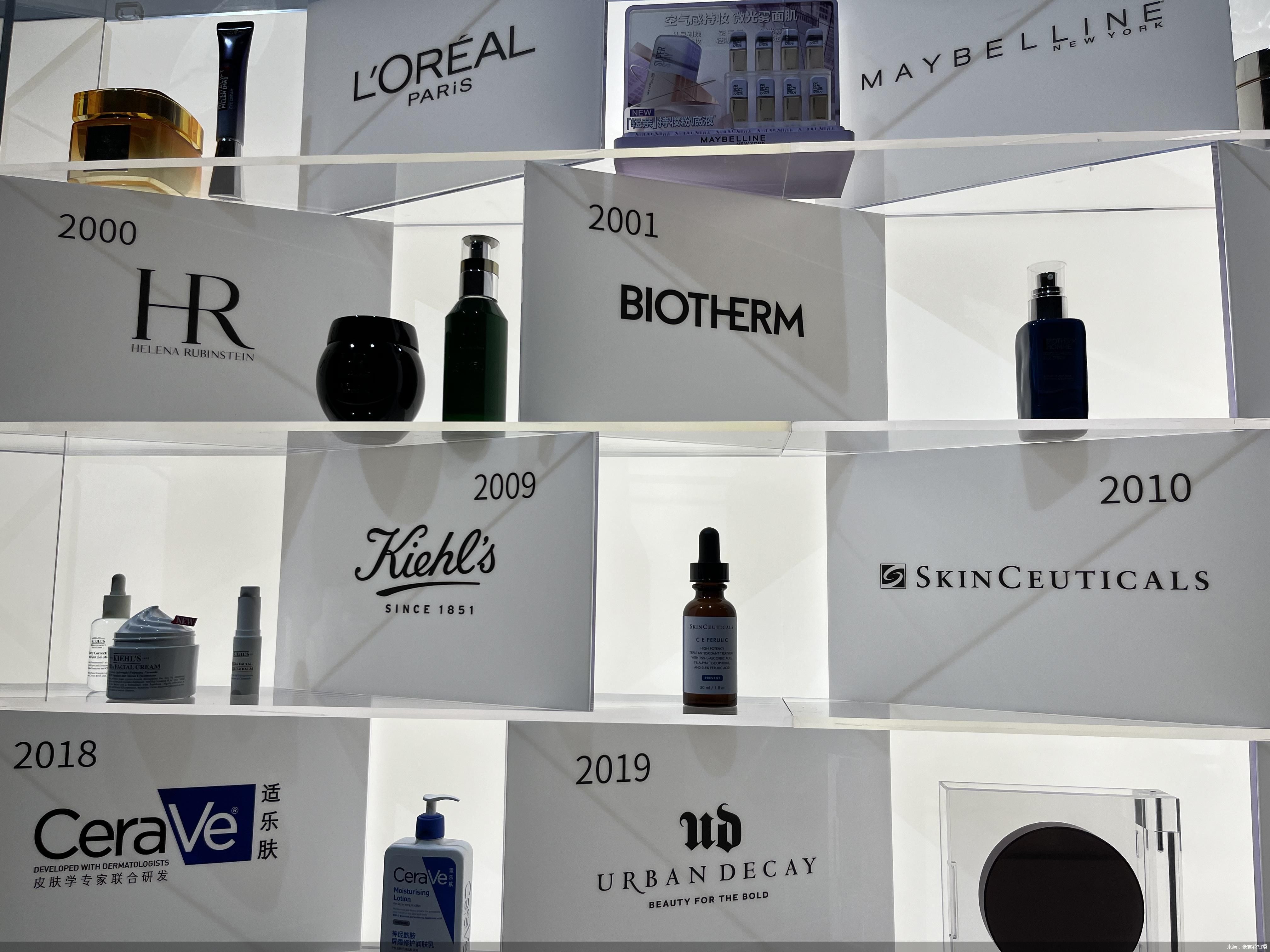
FLEER CA 本 20 HELENA RUBINSTEIN 增资高德美 收购、投资,欧莱雅正在用一切可行的办法扩大版图,抢占市场份额。近日,欧莱雅官方发布消息称,从由EQT牵头的财团手中收购高德美额外10%的股 权。在更早的10月,欧莱雅刚刚斥资40亿欧元拿下开云集团多个奢侈品品牌美妆授权;11月,欧莱雅再投国产护肤品牌LAN兰……这背后或许是欧莱雅正 在面临的增长放缓现实情况。 此次交易完成后,欧莱雅对高德美的持股比例将增至20%。早在2024年底,欧莱雅收购了高德美10%的股权。欧莱雅官方披露的信息中,并没有透露此次增 持的具体金额。不过欧莱雅方面透露,鉴于投资增加,高德美董事会将考虑从2026年年度股东大会起,提名2名来自欧莱雅的非独立董事候选人,以取代由 EQT领导的财团。 欧莱雅看中的不只是医美赛道。近年来,欧莱雅正在构建足够涵盖高奢、大众、护肤、美发等全场景的美妆体系。不论是对医美赛道的势在必得,还是对高 奢美妆的加持,以及对中国更具发展潜力的护肤品牌的投资,都在推动欧莱雅向更丰富的阵容、更完整的版图挺进。 今年10月,欧莱雅宣布与开云集团在高端美容与健康领域建立长期战略合作关系,涉及收购Cr ...
L’Oréal to raise stake in Galderma to 20%
Yahoo Finance· 2025-12-09 09:52
Core Viewpoint - L'Oréal Groupe is set to acquire an additional 10% stake in Galderma Group, raising its total ownership to 20%, with the transaction expected to complete in the first quarter of 2026, pending regulatory approvals [1][2]. Group 1: Acquisition Details - The additional shares will be purchased from a consortium led by EQT, including Sunshine SwissCo, Abu Dhabi Investment Authority (ADIA), and Auba Investment [1]. - Financial terms of the deal have not been disclosed [1]. - The acquisition will be financed through L'Oréal's existing cash resources and credit facilities [2]. Group 2: Strategic Intent - L'Oréal's CEO emphasized that aesthetics is a key area for growth adjacent to their core beauty business, and the initial investment in Galderma has been successful [2]. - Following the deal, Galderma's board will consider nominating two non-independent board candidates from L'Oréal for the 2026 Annual General Meeting [3]. Group 3: Future Collaboration - The two companies plan to explore new joint scientific research initiatives to expand their existing collaboration [4]. - Galderma's CEO expressed satisfaction with L'Oréal's increased investment, indicating confidence in future value creation [4]. - Galderma operates in 90 countries and is listed on the SIX Swiss Exchange [5].
L’Oréal Is Increasing Stake in Galderma to 20 Percent
Yahoo Finance· 2025-12-08 09:48
Core Insights - L'Oréal has acquired an additional 10 percent stake in Galderma Group AG, increasing its total ownership to 20 percent, emphasizing its commitment to the aesthetics sector [1][2] - The acquisition was made from a consortium led by EQT and is expected to close by the first quarter of 2026 [3] - L'Oréal plans to support Galderma's strategy and independence while exploring synergies between injectable and topical dermatological treatments [4][5] Transaction Details - The transaction will be executed through an off-market block trade, dissolving the previous shareholder agreement with Sunshine SwissCo GmbH [3] - Funding for the acquisition will come from L'Oréal's available cash and credit lines [3] Strategic Intent - L'Oréal views aesthetics as a key area adjacent to its core beauty business and aims to solidify its partnership with Galderma, which has been successful since the initial investment in 2024 [2][4] - The partnership will leverage Galderma's expertise in dermatological solutions and L'Oréal's knowledge in skin biology and diagnostic tools [5] Governance Changes - Following the increased stake, Galderma's board will consider appointing two non-independent board candidates from L'Oréal, replacing the EQT-led consortium starting from the 2026 annual general meeting [6]
X @Bloomberg
Bloomberg· 2025-12-08 06:58
L’Oréal is doubling its stake in Galderma to 20%, buying shares from EQT-led investors as it deepens its push into skincare drugs https://t.co/d6WcvIZ6IV ...
L'Oreal increases stake in Galderma to 20%
Reuters· 2025-12-08 06:26
Core Viewpoint - L'Oreal has increased its stake in Galderma to 20% by acquiring an additional 10% stake in the dermatology firm [1] Company Summary - L'Oreal, a French cosmetics group, has made a strategic investment in Galderma, a dermatology company, by purchasing a further 10% stake [1] - This acquisition raises L'Oreal's total ownership in Galderma to 20%, indicating a strong commitment to expanding its presence in the dermatology sector [1] Industry Summary - The move reflects a growing trend in the cosmetics industry where companies are diversifying their portfolios to include dermatological products, which are increasingly in demand [1]
欧莱雅中国研发和创新中心扬帆20年:本土实验室正孵化产业公共属性的迭代引擎
Cai Jing Wang· 2025-12-05 13:37
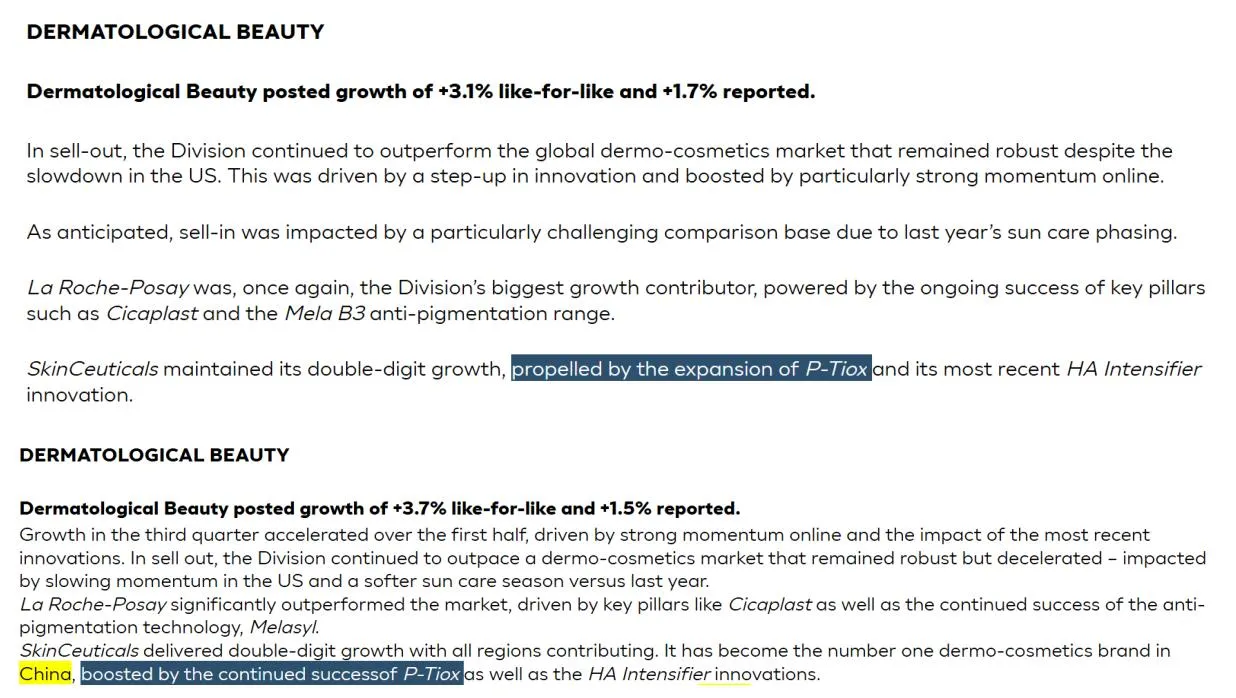
Core Insights - L'Oréal's China R&D and Innovation Center is driving global beauty giant's performance through localized product innovations tailored for Chinese consumers [1][2] - The center has evolved into a key pillar in L'Oréal's global R&D landscape, emphasizing collaboration with local scientific institutions and startups to enhance innovation capabilities [4][5] Group 1: Product Innovations - Customized products such as a jasmine-scented cream and a lip gloss inspired by local culinary flavors are examples of L'Oréal's localized approach [1] - The "P-TIOX" peptide serum, developed by the Chinese R&D team, has been highlighted as a major contributor to sustained double-digit growth for the brand [2] Group 2: R&D Achievements - Over the past 20 years, L'Oréal's China R&D has conducted approximately 35 large-scale foundational research projects, involving over 100,000 Chinese consumers annually [7] - In 2024, the center is set to publicly file 372 patents, with 81 of those being inventions from the Chinese R&D team [7] Group 3: Collaborations and Investments - L'Oréal has engaged in strategic investments in local biotech firms, such as "Unnamed Light," to co-develop innovative bioactive ingredients and promote sustainable production methods [10][11] - The establishment of the "Academician Workstation" in collaboration with Shanghai Jiao Tong University marks a significant milestone in L'Oréal's commitment to local scientific advancement [9] Group 4: Market Strategy - L'Oréal's investment strategy includes backing emerging local brands like LANlan, which aligns with the company's long-term vision of investing in the future of the Chinese market [15][16] - The company aims to leverage its R&D capabilities to support the commercialization of innovative products and enhance the overall beauty ecosystem in China [12][16]
美妆巨头的“加减法”
Xin Lang Cai Jing· 2025-12-05 05:29
Core Insights - The global beauty industry is transitioning from a "big and comprehensive" era characterized by aggressive acquisitions to a "precise and focused" era that emphasizes core competencies and deepens competitive advantages [1][2] Group 1: Industry Trends - Major beauty companies are increasingly engaging in "subtraction" by divesting brands that do not fit their core strategies or have underperformed, such as Estée Lauder's evaluation of selling Dr.Jart+ and Unilever's sale of Kate Somerville [6][7] - The traditional growth model of rapid acquisitions and global expansion is becoming ineffective as companies face challenges in adapting regional brands to a global framework, leading to a focus on divesting non-core and high-risk businesses [10][13] Group 2: Strategic Shifts - Companies are now prioritizing depth over breadth, moving from a focus on scale to optimizing their structural capabilities in response to changing market dynamics [13][16] - The rise of online channels and the diversification of aesthetic standards have made the previous models of global brand replication less viable, prompting companies to rethink their strategies [16][17] Group 3: Future Opportunities - Beauty giants are investing in high-barrier sectors such as high-efficacy skincare and medical aesthetics, as seen with L'Oréal's acquisition of Medik8, to align with consumer demand for scientifically-backed products [17][20] - The luxury beauty segment is becoming a competitive battleground, with significant acquisitions like Kering's sale of its beauty business to L'Oréal, indicating a shift towards integrating luxury with beauty [20][23] Group 4: New Growth Models - Companies are focusing on building capabilities rather than merely acquiring brands, emphasizing the importance of adaptable and innovative operational models that can thrive in diverse markets [26][27] - The emphasis is on creating a portfolio of capabilities that can operate across cultures and categories, rather than relying solely on a single successful product [26][27] Group 5: Implications for Chinese Brands - The experiences of global giants provide a framework for Chinese brands to develop localized strategies that resonate with diverse cultural markets, moving away from a one-size-fits-all approach [28][31] - Chinese brands are encouraged to establish a clear brand core, develop cultural translation capabilities, and create agile supply chains to effectively compete in the global market [31][34][37]
国际资本按下中国投资新按钮:开云、欧莱雅从“收购”转向“播种”
Yang Zi Wan Bao Wang· 2025-12-03 11:40
Core Insights - Global luxury and beauty giants are shifting their investment strategies in China from direct acquisitions to minority stake investments and strategic partnerships, marking a new investment era focused on local brand ecosystems [1][2][5] Group 1: Investment Strategies - Kering Group's investment in "宝兰" represents a strategic move to discover emerging brands, particularly those rooted in Chinese cultural narratives, as part of its new investment department "Dream House" [2] - L'Oréal's investment strategy in China emphasizes a "light asset, heavy ecosystem" approach, focusing on local high-end brands with Eastern aesthetic narratives [2][3] - L'Oréal has established two new investment funds to systematically invest in beauty-related enterprises, indicating a clear and broad investment map in the Chinese market [3] Group 2: Market Dynamics - The high-end gold jewelry market in China, represented by "宝兰," is gaining traction among international investors due to its cultural significance and luxury attributes, appealing to high-net-worth consumers [4] - The market for traditional Chinese gold jewelry has proven to be a lucrative investment avenue, with companies like "老铺黄金" seeing stock price increases of over 15 times since their IPO, reflecting strong market demand [4] Group 3: Collaborative Models - The new investment model of "investing instead of buying" is reshaping the relationship between international giants and local brands, fostering mutual empowerment rather than simple capital acquisition [5] - For international companies like Kering and L'Oréal, investing in culturally rooted brands like "宝兰" and "LAN兰" provides insights into the preferences of a new generation of Chinese consumers, allowing for efficient market testing and strategic positioning [6] - This collaboration allows local brands to maintain cultural and operational autonomy while benefiting from the global resources of international firms, enhancing brand credibility and international visibility [6]