
Rio Tinto(RIO)

Search documents
Rio Tinto executive team change
Businesswire· 2026-02-12 07:05
Executive Team Change - Isabelle Deschamps, Chief Legal, Governance & Corporate Affairs Officer, will leave Rio Tinto in 2026 after five years in her role to pursue new opportunities [1] - Deschamps will remain in her position until at least mid-2026 to ensure continuity during the succession process [1] - CEO Simon Trott acknowledged Deschamps' contributions in strengthening governance and supporting business development [1] No Intention to Bid Statement - Rio Tinto has confirmed it is no longer considering a merger or business combination with Glencore plc, as it could not reach an agreement that would deliver value to shareholders [1] Joint Acquisition for Low-Carbon Aluminium - Rio Tinto and Aluminum Corporation of China Limited (Chalco) have entered into a joint venture to acquire Votorantim's 68.596% controlling shareholding in Companhia Brasileira de Alumínio (CBA) [1] - The transaction will be structured with Rio Tinto owning 33% and Chalco 67% of the joint venture [1] - The acquisition price is set at R$10.50 per share in CBA, representing a premium [1] Fourth Quarter 2025 Production Results - Rio Tinto reported exceptional production performance in the fourth quarter of 2025, achieving record quarterly iron ore production in the Pilbara [1] - The company noted a strong recovery from extreme weather interruptions earlier in the year [1]



Rio Tinto Surges 36.7% in 3 Months: Should You Buy the Stock Now?
ZACKS· 2026-02-11 16:16
Core Viewpoint - Rio Tinto Group (RIO) has demonstrated strong stock performance, with shares increasing by 36.7% over the past three months, significantly outperforming both the industry and the S&P 500 [1][9]. Stock Performance - RIO shares closed at $97.24, nearing its 52-week high of $98.60 and well above its 52-week low of $51.67, indicating solid upward momentum [3]. - The stock is trading above both its 50-day and 200-day moving averages, reflecting confidence in the company's long-term prospects [3]. Production and Growth - The company has boosted copper output by 11% in 2025, achieving a total production of 883 kilotonne (kt), which is an increase of 11% year-over-year [9][12]. - RIO's first copper production at the Johnson Camp mine in Arizona, utilizing proprietary Nuton technology, marks a significant milestone for cleaner and more efficient copper recovery [11]. - The Johnson Camp project aims for approximately 30,000 tons of refined copper over a four-year demonstration period, with a focus on low carbon emissions [12]. - Iron ore shipments from the Pilbara facility rose by 7% year-over-year, while aluminum production increased by 2% in the same period [13]. Strategic Partnerships and Projects - In January 2026, RIO and Aluminum Corporation of China Limited (Chalco) formed a joint venture to acquire a controlling stake in Brazilian aluminum company CBA, enhancing RIO's green aluminum footprint [14]. - The Rhodes Ridge joint venture has approved a $191 million feasibility study to develop a major undeveloped iron ore deposit in Western Australia, targeting an initial production of 40-50 million tons annually [15]. Challenges and Market Position - Despite solid performance, RIO faced challenges such as weather-related disruptions affecting iron ore volumes and planned maintenance reducing copper output [16]. - The company operates in a competitive market with major players like BHP Group and TMC [16]. Financial Outlook - The Zacks Consensus Estimate for RIO's bottom line for 2026 has increased by 6.4% in the past 60 days, indicating positive market sentiment [19]. - RIO is trading at a forward price-to-earnings ratio of 12.84X, below the industry average of 16.31X, suggesting potential undervaluation [21]. Conclusion - Steady progress in growth projects, higher copper output, and advancements in iron ore and aluminum operations position RIO for sustained growth, making it an attractive opportunity for investors [22].
CNBC's UK Exchange newsletter: Compass shifts its trading to dollars — and it might not be the last
CNBC· 2026-02-11 06:47
Company Overview - Compass is a leading global contract caterer, serving 5.5 billion meals annually across more than 25 countries, and is recognized as a well-managed business [2] - The company derives approximately 75% of its revenues in U.S. dollars, highlighting its international operations [4] Currency Change Announcement - Compass announced it will change the currency of its share trading from sterling to U.S. dollars effective April 1, 2024, to align its trading currency with its reporting currency, thereby reducing foreign exchange volatility [1] - This move is part of a broader trend among British companies, with many now reporting in currencies other than sterling [8] Industry Context - The change in trading currency follows a recent adjustment in FTSE Russell's membership rules, allowing companies trading in dollars or euros to be considered for inclusion in the FTSE U.K. Index Series [5] - Other major companies, such as InterContinental Hotels Group, have also adopted this practice, indicating a shift in how British firms operate in global markets [6] Historical Perspective - The trend of companies reporting in foreign currencies is not new, with major firms like HSBC, AstraZeneca, and Shell having transitioned to dollar reporting in recent years [8][11] - Historically, Avis Europe was an early adopter of non-sterling reporting, having faced challenges in the past when attempting to report in the European Currency Unit [9][10] Market Reactions - The announcement from Compass has sparked discussions about the potential for more U.K. companies to follow suit and possibly list on the New York Stock Exchange, reflecting a growing trend of British firms seeking to align with global financial practices [4][13]

7000亿学费!力拓间谍案真相:我们被自己人卖了多久?
Sou Hu Cai Jing· 2026-02-10 05:52
Core Insights - The article discusses a significant espionage case involving the Australian mining company Rio Tinto, where insider information about China's steel industry was leaked, leading to substantial financial losses for Chinese steel companies [1][3][5]. Group 1: Espionage Details - The espionage activities lasted for six years, resulting in over 700 billion RMB in additional costs for China's steel industry due to inflated iron ore prices [3][5]. - The key figure in this case, Hu Shitai, was a former Chinese national who became a pivotal person in Rio Tinto's iron ore business in China, using unethical methods to gather sensitive information [3][5]. - Hu Shitai's actions included bribing small steel companies to gain access to low-priced long-term import quotas, which contributed to his wealth and reputation as a trade hero in Australia [3][5]. Group 2: Economic Impact - The financial impact of the espionage was equivalent to about one-tenth of Australia's GDP at the time, and the total increase in international iron ore prices was nearly 400% during the six years of espionage [3][5]. - The losses incurred by Chinese steel companies were more than double their total profits over two years, indicating a severe economic strain on the industry [3][5]. Group 3: Legal and Regulatory Response - Following the exposure of the espionage, Hu Shitai was sentenced to ten years in prison for bribery and infringement of commercial secrets, but the industry and national reflection on the incident continued [5][6]. - The case highlighted the need for stronger legal frameworks and security measures to protect sensitive commercial data, leading to improvements in laws related to espionage and commercial secrets in China [6]. Group 4: Strategic Recommendations - The article emphasizes the importance of economic security as a component of national security, suggesting that core commercial data is as critical as traditional political and military secrets [6]. - It advocates for continuous upgrades to the security awareness of individuals in key positions within companies and research institutions to prevent future espionage incidents [6]. - The need for strategic autonomy in key industries is underscored, with recommendations for enhancing domestic supply chains and investing in international resource channels to reduce dependency on foreign entities [6].

广发期货:2025年四大矿山铁矿石产销表现分化
Qi Huo Ri Bao· 2026-02-10 00:48
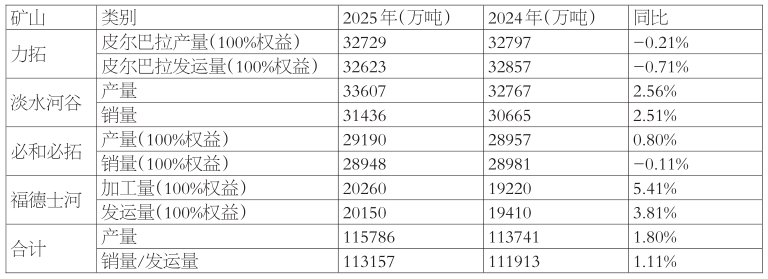
Core Viewpoint - The iron ore market in 2025 is characterized by a gradual easing of fundamentals and a deep adjustment in the supply structure, with significant differentiation in the performance of the four major mining companies [1] Group 1: Overall Market Performance - The total iron ore production of the four major mining companies in 2025 is projected to be 1.158 billion tons, an increase of 1.80% year-on-year, while total sales are expected to reach 1.133 billion tons, up 1.11% year-on-year [12] - Key events such as Australian cyclone disasters, the commissioning of the Guinea Simandou project, and negotiations over iron ore prices have significantly impacted the short-term supply adjustments and long-term capacity planning of these companies [1] Group 2: Rio Tinto Performance - In 2025, Rio Tinto's iron ore production and sales both declined, with Pilbara production at 327 million tons, down 0.21%, and sales at 326 million tons, down 0.71% [2] - The decline in production and sales was primarily due to extreme weather conditions in Western Australia during the first quarter, which led to significant disruptions [2][3] - Despite the challenges, production rebounded in subsequent quarters, with a record high of 896.7 million tons in the fourth quarter, reflecting strong operational health and favorable weather conditions [3][4] Group 3: Vale Performance - Vale's iron ore production in 2025 reached 336 million tons, a year-on-year increase of 2.56%, while sales were 314 million tons, up 2.51% [6] - The first quarter saw a significant drop in production due to various operational challenges, but production rebounded in the second quarter, driven by strong output from the Brucutu plant and record production from the S11D mine [7] - Vale has optimized its product mix to prioritize medium-grade products, while reducing sales of pelletized iron ore, aligning with market demand [8] Group 4: BHP Performance - BHP's iron ore production increased by 0.80% to 292 million tons in 2025, while sales slightly decreased by 0.11% to 289 million tons [9] - The company achieved record production and sales in the first half of the 2026 fiscal year, driven by improved supply chain efficiency and operational performance [9][10] - BHP is currently negotiating annual contract terms with China Mineral Resources Group, which significantly impacts its sales strategy, as China accounts for over 60% of its iron ore sales [11] Group 5: Fortescue Performance - Fortescue's iron ore production in 2025 was 203 million tons, a year-on-year increase of 5.41%, with sales reaching 202 million tons, up 3.81% [13] - The company attributed its strong performance to effective weather management and ongoing operational efficiency improvements [13] - Fortescue is actively exploring new iron ore resources and projects, including the Belinga iron ore project in Gabon, which is expected to have a production capacity of 30 million tons per year [15] Group 6: Future Outlook - The four major mining companies have raised their annual performance guidance for 2026, expecting continued steady growth in iron ore production and sales [16] - The supply landscape is expected to become more relaxed with the gradual release of capacities from new projects, while demand from China's steel sector is projected to decline [16][17] - The industry is undergoing significant structural adjustments, with companies diversifying their resource portfolios and optimizing product mixes to adapt to changing market dynamics [17]


铜铝周报:铜铝高位振荡,节前谨慎对待-20260209
Zhong Yuan Qi Huo· 2026-02-09 11:14
1. Report Industry Investment Rating No relevant content provided. 2. Core Viewpoints of the Report - The mid - term bullish logic for copper, aluminum, and alumina remains unchanged. However, recently, market funds have become less enthusiastic, and prices may remain in an adjustment phase before the Spring Festival. Attention should be paid to the pressure brought by continuously rising inventories. For alumina, its fundamentals maintain an oversupply pattern, and a rebound requires new market drivers [4]. 3. Summary According to the Directory 3.1 Market Review 3.1.1 Weekly Market Review - Copper: The average price of 1 copper in the Yangtze River Color Market decreased from 104,640 yuan/ton on January 30, 2026, to 100,100 yuan/ton on February 6, 2026. The futures closing price of the main CU contract dropped from 103,680 yuan/ton to 100,100 yuan/ton. LME copper total inventory increased from 174,975 tons to 183,275 tons [8]. - Aluminum: The average price of A00 aluminum in the Yangtze River Color Market decreased from 24,640 yuan/ton to 23,110 yuan/ton. The futures closing price of the main AL contract fell from 24,560 yuan/ton to 23,315 yuan/ton. LME aluminum total inventory decreased from 495,725 tons to 490,975 tons [8]. - Alumina: The spot price index remained unchanged at 2,646 yuan/ton. The futures closing price of the main A0 contract increased from 2,768 yuan/ton to 2,824 yuan/ton [8]. 3.1.2 Weekly News Review - On February 5, Rio Tinto Group announced the abandonment of merger negotiations with Glencore, causing a world - class mining integration plan worth over $200 billion to end without result [11]. - On February 5, Canadian miner Capstone Copper's largest union at the Mantoverde copper - gold mine in Chile approved a new three - year labor contract, ending a strike that lasted over a month [11]. - On February 6, LME's deliverable copper inventory reached an 11 - month high [11]. - On February 9, the upper - limit price fluctuation range and trading margin ratio of copper, aluminum, and other futures contracts will be adjusted [11]. 3.2 Macroeconomic Analysis - On February 5, the European Central Bank kept its three key interest rates unchanged, in line with market expectations. About 85% of surveyed economists believe that interest rates will remain unchanged before 2026 [13]. - Upcoming macro - economic data announcements include China's January M2, M0, M1 money supply year - on - year, social financing scale increment, and new RMB loans; China's January CPI and PPI year - on - year; and the US January unemployment rate, non - farm payrolls change, and CPI year - on - year [14]. 3.3 Non - ferrous Market Analysis 3.3.1 Copper - **Spot Market**: As of February 5, SMM's national mainstream copper inventory increased by 4.03% week - on - week, and the total inventory increased by 62,700 tons year - on - year [30]. - **Futures Market**: Data shows the historical trends of Shanghai copper futures, options, and international copper futures positions [20]. - **Overseas Market**: Data presents the historical trends of LME copper inventory [26]. - **Market Inventory**: Data shows the historical trends of Shanghai bonded area copper inventory, SHFE copper inventory, LME copper inventory, and COMEX copper inventory [26]. - **Downstream Consumption**: From January 30 to February 5, the operating rate of domestic major refined copper rod enterprises was 69.07%, a decrease of 0.47 percentage points week - on - week. Due to the copper price limit - down triggering downstream purchasing, orders in the enameled wire and cable industries soared. It is expected that the operating rate of refined copper rod enterprises will decrease by 13.67 percentage points to 55.4% this week [30]. 3.3.2 Aluminum - **Domestic Market**: Data shows the historical trends of electrolytic aluminum spot inventory and 6063 aluminum rod inventory [32]. - **Futures Market**: Data presents the historical trends of aluminum futures, options, alumina futures, and alumina options positions [35]. - **Overseas Market**: Data shows the historical trends of LME aluminum total inventory [38]. - **Downstream Operating Rate**: As of February 5, the operating rate of domestic aluminum downstream processing leading enterprises was 57.9%, a decrease of 1.5 percentage points. Different sub - industries showed different trends [40]. - **Recycled Aluminum Alloy**: As of February 5, the SMM ADC12 quotation decreased by 750 yuan/ton week - on - week. Before the Spring Festival, demand and supply will contract simultaneously, and prices are expected to remain in a high - level oscillation with a slightly downward center of gravity [43]. - **Cost and Profit**: Data shows the historical trends of electrolytic aluminum cost, profit, and the relationship with the prices of alumina, pre - baked anodes, and thermal coal [47]. 3.3.3 Alumina - **Spot Market**: No specific content other than data sources is provided [51]. - **Futures Market**: No specific content is provided. - **Market Supply and Demand**: As of February 5, China's alumina production capacity was 113.9 million tons, the operating capacity was 91.5 million tons, and the operating rate was 76.15%. The demand for alumina did not change significantly [56]. - **Cost and Profit**: As of the week of February 6, the domestic alumina industry cost was 2,821.55 yuan/ton, and the average industry profit was - 178.66 yuan/ton [57].

2000亿矿业“世纪联姻”告吹
Xin Lang Cai Jing· 2026-02-09 01:01
Core Viewpoint - Rio Tinto's termination of merger talks with Glencore highlights valuation disagreements and management control issues, reflecting the challenges faced by traditional mining companies amid global energy transition [1][2]. Group 1: Merger Negotiation Breakdown - The merger discussions between Rio Tinto and Glencore date back to before the 2008 financial crisis, with previous attempts in 2014 and 2024 also failing [1]. - Key issues leading to the breakdown include Glencore's high valuation demands, insisting on a 40% stake post-merger, and claiming its copper business is undervalued [2]. - Discrepancies in copper asset valuation between the two companies amount to several billion dollars, complicating negotiations [2]. Group 2: Management Control Disputes - Rio Tinto aimed to retain the chairman and CEO positions post-merger without offering sufficient premium compensation, which Glencore opposed, citing a lack of control premium [2]. - The strong stance from Rio Tinto is linked to its new CEO Simon Trott's aggressive expansion strategy focused on copper [2]. Group 3: Industry Context and Trends - The failed merger reflects broader trends in the mining industry, where companies are increasingly pursuing mergers to secure copper resources amid rising demand from electric vehicles and renewable energy [4]. - The International Copper Study Group predicts a global copper shortfall of 4.7 million tons by 2030, with new mine development taking 10-15 years, making mergers a viable growth strategy [4]. - If the merger had succeeded, Rio Tinto's copper production would have doubled to 2.3 million tons per year, surpassing Codelco as the largest copper producer [4]. Group 4: Industry Consolidation and Challenges - The breakup of the merger underscores the fierce competition among mining giants for industry dominance, with recent examples of mergers like BHP's acquisition of Anglo American assets [5]. - Smaller mining companies face a challenging environment, with a projected increase in mining transaction values by 2025, leading to a trend where they may either be acquired or marginalized [5]. Group 5: Future Outlook - Despite the merger's failure, the competition for copper resources among mining giants is expected to continue, with forecasts predicting copper prices could exceed $12,000 per ton by 2026 [6]. - Future mergers may focus on smaller, high-potential mining assets or involve partnerships and technology sharing to mitigate risks associated with valuation disagreements [6]. - The failure of this merger highlights the strategic contradictions faced by traditional mining companies in rapidly evolving energy markets, indicating that the quest for consolidation is far from over [6].
7000亿学费!力拓间谍案真相:我们被“自己人”卖了多久?
Sou Hu Cai Jing· 2026-02-08 13:29
2009年7月,上海市国家安全局突击检查了矿业巨头力拓在上海的办公室。在当时的驻华首席代表胡士泰的电脑里,办案人员发现了让人后背发凉的东西: 那就是国内数十家大中型钢铁企业近乎绝密的商业数据。从详细的采购计划、原料库存,到每月的产量销量,全部都写的一清二楚。 有人痛心地说,要论对中国钢铁生产的了解深度,恐怕连当时的行业主管部门,都比不上这个胡士泰! 那么这个胡士泰是什么人?他原是中国籍,后加入澳大利亚籍,成了力拓在中国铁矿石业务的核心人物。他可没闲着,一边用各种手段刺探中国钢厂的谈判 底线和行业机密,另一边还"两头吃",收受一些小钢企的贿赂,帮他们搞到更便宜的长协矿进口配额。几年下来,他个人捞得盆满钵满,仅价值过亿的别墅 就不止一两栋。而在澳大利亚那边,他一度被一些人捧为"贸易英雄"。 你敢相信吗?在十多年前的一场关键商业谈判当中,咱们这边的底牌,竟然被对手摸得是一清二楚。你家库里到底还剩下多少粮,下个月想买多少,你的成 本线到底在哪里?人家都了如指掌。为此我们被别人拿捏得死死的,在长达6年的时间我们足足多付了7000亿的学费!而在这当中起到关键作用的人,竟然 是我们的内鬼。 首先,那些能左右一个支柱行业成本 ...
铁矿石周度报告-20260208
Guo Tai Jun An Qi Huo· 2026-02-08 10:10
1. Report Industry Investment Rating - Not provided in the document 2. Core Viewpoints - The steel mill's winter storage replenishment is nearing completion, demand expectations are weakening, and iron ore prices are under pressure [3] - Mainstream and non - mainstream iron ore shipments are both rising, and with the faster arrival of floating cargoes, the supply of iron ore has significantly increased [5] - Hot metal production has remained stable, with little fluctuation in rigid demand, but the steel mill's winter storage replenishment is nearing completion, leading to weaker demand expectations [5] - In a situation of both increasing supply and demand, the faster arrival of floating cargoes has caused the iron ore port inventory to continue to rise [5] 3. Summary by Relevant Catalogs 3.1 Iron Ore Price Spreads - Last Friday, the spot price of PB powder was 761 (-29) yuan/ton, and the price of the 05 contract was 760.5 (-31) yuan/ton [10] - The basis of the 05 contract was 33 (+1) yuan/ton; the spread between the 05 - 09 contracts was 18 (-1) yuan/ton [10] - The prices of various types of imported ores and iron concentrates in Rizhao Port have declined this week compared to last week [12] 3.2 Iron Ore Supply - The supply of mainstream and non - mainstream iron ore remains at a high level, and the cumulative year - on - year difference is significantly higher than that of last year [14][16] - The four major mines maintain normal shipping levels [18] - The domestic iron ore production is stable [29] 3.3 Iron Ore Demand - The steel mill's replenishment is nearing completion, and demand expectations are weakening [31][32] - There are differences in the demand for different iron ore varieties [34] - Scrap steel has a substitution effect on iron ore [36] 3.4 Iron Ore Inventory - The faster arrival of floating cargoes has led to increased supply and rapid inventory accumulation [38] - The inventory of Australian iron ore has increased significantly [39] 3.5 Iron Ore Cost - Rising oil prices have led to an increase in shipping costs [41]
Dow surges above 50,000 for the first time as US stocks regain mojo
The Economic Times· 2026-02-07 01:40
Market Overview - The Dow Jones Industrial Average surged above 50,000 points for the first time, closing at 50,115.67, up more than 1,200 points or 2.5 percent, reflecting a broadening market and confidence in growth stories [2][13] - The index has shown steady growth over the past two and a half years, with notable exceptions during specific political events [8][13] Company News - Amazon was the biggest loser on the Dow, falling 5.6 percent after announcing a $200 billion capital spending plan for AI capabilities in 2026, raising concerns about potential returns on such massive investments [5][13] - Other companies like Caterpillar, 3M, JPMorgan Chase, Goldman Sachs, Amgen, and Nvidia saw gains of at least four percent, indicating positive market sentiment towards their performance [5][13] - Stellantis shares plunged over 24 percent after announcing a €22 billion ($26 billion) write-down due to misjudging the shift to electric vehicles, with shares down around 80 percent over the past two years [9][13] - Rio Tinto's shares finished flat after dropping merger talks with Glencore, which would have created a $260 billion mining firm, while Glencore's stock climbed 1.5 percent [10][13] - Toyota's shares increased by two percent after raising profit and sales forecasts for the current fiscal year despite US tariffs [11][13] Investment Insights - Analysts suggest that the massive investments in AI by companies like Amazon will benefit infrastructure, banking, and other sectors, indicating a ripple effect across the market [5][6] - Confidence in earnings growth is noted, with expectations that equity investors will be rewarded, although volatility is anticipated [6][13]


