
TSMC(TSM)

Search documents
U.S. Marijuana Stocks to Watch as the Industry Enters 2026
Marijuana Stocks | Cannabis Investments And News. Roots Of A Budding Industry.™· 2026-02-03 15:00
Industry Overview - The U.S. cannabis sector is evolving in early 2026, presenting both risks and opportunities for investors [1] - Regulatory uncertainty has shifted focus towards efficiency, balance sheet repair, and selective growth among operators [1][2] - Potential federal reforms could significantly reshape industry valuations, prompting investors to be more selective [1][2] Investment Focus - Traders are prioritizing companies with established market positions, improving cash flow, and scalable infrastructure [2] - Multi-state operators are expected to benefit from future regulatory changes, including federal tax treatment and banking access [2] Market Volatility - The cannabis market remains volatile, necessitating disciplined risk management [3] - Many stocks are trading below previous highs, creating opportunities for patient investors [3] - Weaker operators may face challenges if capital markets remain tight, emphasizing the importance of company selection [3] February 2026 Outlook - February 2026 is anticipated to be significant for the sector, influenced by earnings updates, regulatory news, and market sentiment [4] - Investors are looking for stocks that combine scale, brand strength, and improved financial discipline [4] Featured Companies AYR Wellness Inc. (AYRWF) - AYR Wellness is a vertically integrated operator with a growing national footprint, primarily in Florida and other states [6][8] - The company focuses on operational control across the supply chain, allowing adjustments based on market demand [9] - Recent restructuring efforts aim to strengthen liquidity and reduce financial strain, with a focus on cost control and cash flow trends [10][11] Cresco Labs Inc. (CRLBF) - Cresco Labs is a well-established multi-state operator with a strong presence in both medical and adult-use markets [12][14] - The company emphasizes brand consistency and consumer trust, with a dual approach of retail and wholesale operations [15] - Financially, Cresco generates high revenue totals, focusing on improving adjusted EBITDA and operating cash flow [16][17] Glass House Brands Inc. (GLASF) - Glass House Brands operates with a strong focus on California, utilizing large greenhouse facilities for cost-efficient production [18][20] - The company emphasizes operational efficiency and quality control through vertical integration [21] - Financial performance has been uneven due to market challenges, but increased production volumes and potential regulatory improvements could support future growth [22][23]



TSM Stock Closes Higher After Key Trading Signal
Benzinga· 2026-02-03 14:24
Group 1 - The article discusses the significance of order flow analytics in understanding real-time buying and selling trends, which helps traders make informed decisions based on market sentiment and price behavior [4] - TSM's stock performance is highlighted, showing a price of $337.15 at the time of the Power Inflow signal, with an intraday high reaching $344.20, reflecting a 2.09% increase [5]
半导体设备板块高开高走,指数涨超3%,关注半导体设备ETF易方达(159558)等产品投资机会
Sou Hu Cai Jing· 2026-02-03 11:22
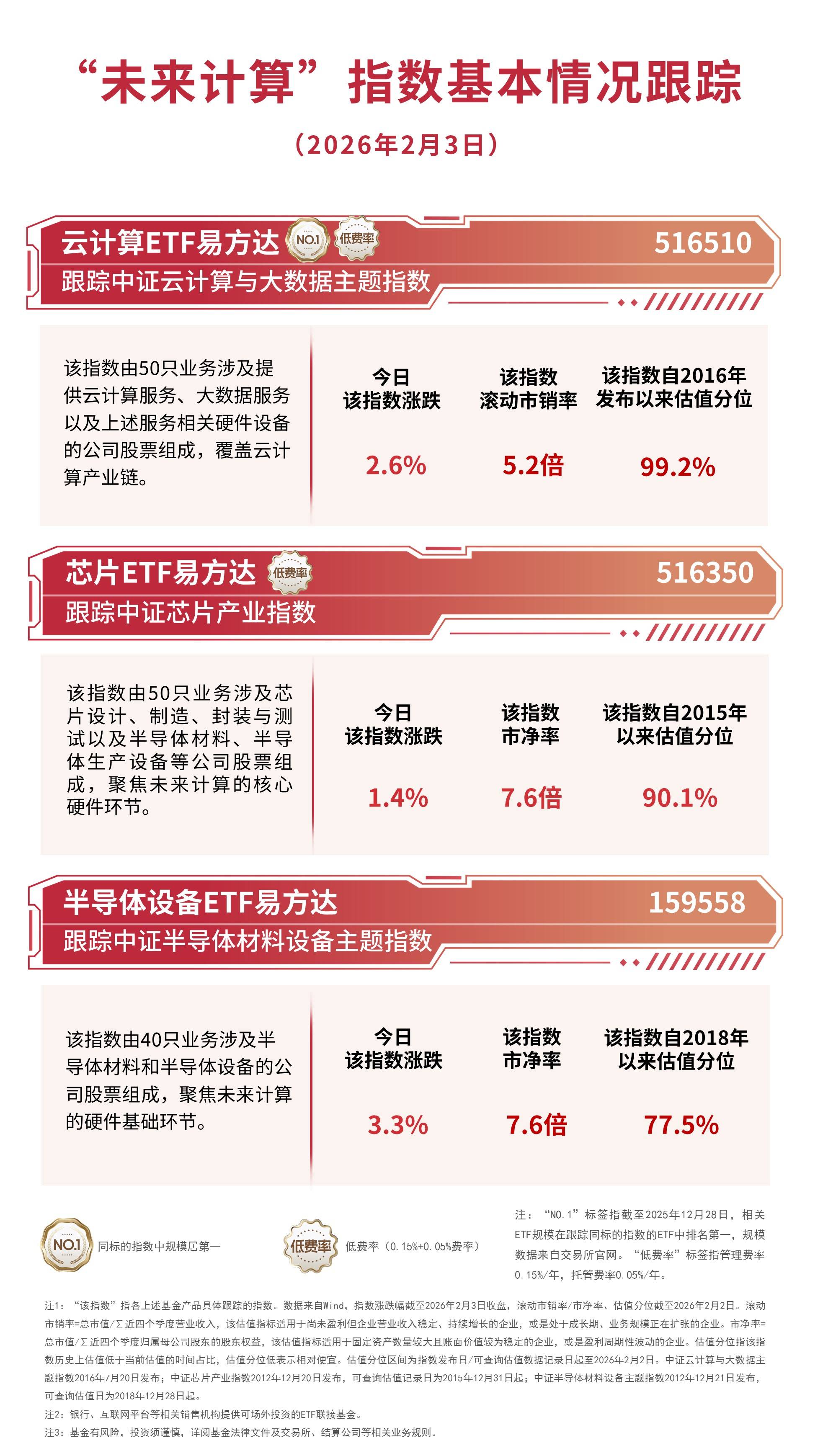
Group 1 - The core index of semiconductor materials and equipment rose by 3.3%, while the cloud computing and big data index increased by 2.6%, and the chip industry index grew by 1.4% [1] - The semiconductor equipment ETF managed by E Fund attracted approximately 3 billion yuan in the last month, indicating strong investor interest [1] - China Galaxy Securities noted that the semiconductor equipment sector is performing positively this month, driven by sustained AI computing demand, an upward cycle in storage chips, and the penetration of advanced packaging technology [1] Group 2 - The semiconductor equipment market is expected to continue growing, with a strong outlook for 2026 [1] - TSMC anticipates capital expenditures of $52 billion to $56 billion in 2026, a significant increase from $40.9 billion in 2025, highlighting further market opportunities in semiconductor equipment [1]
SpaceX收购xAI,特斯拉股价涨了;黄金重回4900美元,白银日内涨超10%;美股三大期指齐涨;优步重启澳门叫车业务【美股盘前】
Mei Ri Jing Ji Xin Wen· 2026-02-03 11:01
Group 1 - Dow futures rose by 0.05%, S&P 500 futures increased by 0.22%, and Nasdaq futures gained 0.51% [1] - Intel's stock rose by 2.27% following a partnership with SoftBank's SaiMemory to develop next-generation memory technology, aiming for prototype production by the end of FY2027 and commercialization in FY2029 [2] - Tesla's stock increased by 1.16% after SpaceX announced the acquisition of xAI, with a total valuation of $1.25 trillion for the new entity [3] Group 2 - Apple's stock fell by 0.93% as it plans to use TSMC's 2nm N2 process for its M6 chip, focusing on architecture upgrades rather than adopting the newer N2P process [4] - Waymo completed a $16 billion funding round, raising its valuation to $126 billion, with plans to expand its autonomous taxi fleet to several international cities [5] Group 3 - AES's stock rose by 6.99% as BlackRock's GIP and EQT are reportedly collaborating to bid for the company, which provides renewable energy services to major tech firms [6] - Uber's stock increased by 0.89% as it announced the restart of its ride-hailing service in Macau, offering various language options and luxury car services [7] Group 4 - Palantir's stock surged by 10.92% after reporting Q4 earnings of $0.25 per share, exceeding expectations, with revenue of $1.41 billion, a 70% year-over-year increase [8] - Tesla launched a new all-wheel-drive version of the Model Y in the U.S. at a price of $41,990, approximately $5,000 lower than the previous base model [9] - Spot gold prices rose nearly 6% to over $4,900 per ounce, while silver prices increased by over 10% [10]




电子行业周报(2026、1、26-2、1):AI算力需求爆发,带动半导体设备、存储赛道景气度上行-20260203
Shanghai Aijian Securities· 2026-02-03 10:41
Investment Rating - The report rates the electronic industry as "stronger than the market" due to the increasing demand for AI computing power, which is driving the semiconductor equipment and storage sectors upward [5][38]. Core Insights - The demand for AI computing power is surging, positively impacting the semiconductor equipment and storage sectors, leading to an optimistic outlook for these industries [5][24]. - ASML reported a steady growth in 2025, with a net sales of €32.7 billion, a 16% year-on-year increase, and a net profit of €9.6 billion [24][25]. - Samsung Electronics and SK Hynix are benefiting from the tight supply and rising prices of storage chips, with Samsung's operating profit in Q4 2025 increasing by 209% year-on-year [25][29]. Summary by Sections Industry Performance - The SW electronic industry index decreased by 2.51%, ranking 19th out of 31, while the Shanghai and Shenzhen 300 index increased by 0.08% [5][8]. - The top five performing stocks in the SW electronic industry included Zhongwei Semiconductor (+36.57%) and Puran Co. (+35.79%) [15][16]. Company Financials - ASML's Q4 2025 net sales reached €9.7 billion with a gross margin of 52.2%, and the company expects Q1 2026 net sales between €8.2 billion and €8.9 billion [24][25]. - Samsung Electronics reported Q4 2025 revenue of 93.8 trillion KRW, a 24% year-on-year increase, with an operating profit of 20.1 trillion KRW [25][28]. - SK Hynix achieved a revenue of 97.15 trillion KRW in 2025, with a Q4 revenue of 32.83 trillion KRW [29][30]. Market Dynamics - The semiconductor storage market is experiencing significant price increases, with DRAM contract prices expected to rise by 55%-60% in Q1 2026 [33]. - Samsung plans to increase NAND Flash prices by 100% in Q1 2026, reflecting the current imbalance in the semiconductor storage market [33].


先进封装龙头积极抢滩布局,产业进入“扩产+提价”新阶段 | 投研报告
Zhong Guo Neng Yuan Wang· 2026-02-03 09:50
Core Insights - The semiconductor industry is experiencing a surge in demand for AI chips, leading to price increases of 5-20% by companies like ASE, while Taiwanese firms such as Powertech and Nan Ya are also raising prices by up to 30% due to full order books and near-capacity production [1][3] - TSMC has significantly raised its capital expenditure guidance for 2026 to between $52 billion and $56 billion, a 36.9% increase from 2025, with 10-20% allocated to advanced packaging and testing [2] - The demand for advanced packaging is expected to grow, with major companies like Changdian Technology and Tongfu Microelectronics actively expanding their production capacities to meet this demand [2][3] Industry Developments - The semiconductor packaging industry is seeing structural demand growth, particularly for AI and storage chips, which is tightening the capacity for standard storage chip packaging [3] - Rising prices of raw materials such as gold, silver, and copper are contributing to increased packaging costs, prompting packaging companies to raise prices to maintain profitability [3] - Companies are focusing on high-margin businesses and optimizing product structures in response to the favorable market conditions [3] Investment Recommendations - Investors are advised to focus on domestic companies actively investing in high-end advanced packaging, such as Changdian Technology and Tongfu Microelectronics, as well as the IPO progress of Shenghe Microelectronics [4] - Beneficiary stocks include Yongxi Electronics, Huatian Technology, Shenzhen Technology, and Huicheng Co., among others [4] - Equipment and materials beneficiaries include companies like Changchuan Technology, Jingzhida, and ASMPT, which are positioned to gain from the industry's growth [4]


台积电,还能走多远
新财富· 2026-02-03 08:06
Core Viewpoint - TSMC expresses strong confidence in the long-term demand for AI, emphasizing that current capacity constraints are internal rather than external, and is determined to face competition head-on [2][3]. Group 1: Investment and Growth Plans - TSMC plans a capital expenditure of $56 billion for 2026, with 70%-80% allocated to advanced processes and 10%-20% to advanced packaging, significantly exceeding the $100 billion spent over the past three years [4]. - The company expects its revenue to reach $122 billion in 2025, a 36% year-on-year increase, driven by high demand for advanced process technologies [4]. - Advanced process technologies contributed 77% of total wafer revenue, with 3nm, 5nm, and 7nm processes accounting for 28%, 35%, and 14% respectively in Q4 [5]. Group 2: Profitability and Cost Pressures - TSMC's gross margin for 2026 is projected to be influenced by high capacity utilization and improved manufacturing efficiency, but may face a 2%-3% dilution from overseas expansions [7][10]. - The introduction of 2nm technology is expected to begin mass production in late 2026, which may dilute gross margins by approximately 1% [8]. - TSMC's advanced process roadmap includes the rollout of 2nm and enhanced N2P technologies, which are crucial for maintaining its market position [8]. Group 3: Competitive Landscape - TSMC remains confident in its ability to maintain its market position despite competition from Intel, which is also advancing its 2nm technology [14][15]. - The upcoming three years (2026-2028) will be critical for both TSMC and Intel as they compete in the advanced process technology space [17]. - TSMC's long-standing focus on foundry services and deep customer relationships provide a significant competitive advantage over Intel, which is still establishing its external foundry capabilities [16][23]. Group 4: Geopolitical and Market Dynamics - TSMC's global expansion strategy, including facilities in the US, Japan, and Germany, aims to mitigate geopolitical risks while addressing local production demands [10][26]. - The semiconductor industry is becoming a focal point of national strategy, with both TSMC and Intel navigating the complexities of local production and supply chain security [26][27]. - The global wafer market is expected to grow significantly from 2023 to 2026, driven by structural demand, marking a super cycle rather than a typical recovery [27].

台积电2nm产能已被预订一空,科创半导体ETF(588170)和半导体设备ETF华夏(562590)直线拉升
Mei Ri Jing Ji Xin Wen· 2026-02-03 06:57
Group 1 - The Shanghai Stock Exchange's Sci-Tech Innovation Board semiconductor materials and equipment index rose by 1.96%, with notable gains from stocks such as Oulain New Materials (up 7.67%) and Xingfu Electronics (up 6.94%) [1] - The CSI semiconductor materials and equipment index increased by 2.22%, with Longchuan Technology rising by 6.19% and Huafeng Measurement Control by 5.96% [1] - The Sci-Tech semiconductor ETF (588170) saw a price increase of 2.00%, reaching 1.74 yuan, while the semiconductor equipment ETF (Huaxia, 562590) rose by 2.29%, with a latest price of 1.88 yuan [1] Group 2 - The Sci-Tech semiconductor ETF experienced a significant inflow of funds, totaling 6.16 billion yuan over four days, with a peak single-day inflow of 3.43 billion yuan [2] - In the last ten trading days, there were net inflows on eight days, accumulating to 2.08 billion yuan, with an average daily inflow of 20.81 million yuan [2] - TSMC's 2nm capacity has been fully booked by global tech giants, with AMD planning to produce 2nm CPUs starting in 2026, and Google and AWS expected to adopt this technology in 2027 [2] Group 3 - The Sci-Tech semiconductor ETF and its linked funds track the semiconductor materials and equipment index, focusing on companies in semiconductor equipment (60%) and materials (25%) [3] - The semiconductor equipment ETF (Huaxia) also emphasizes semiconductor equipment (63%) and materials (24%), targeting the upstream semiconductor sector [3] - The semiconductor equipment and materials industry is crucial for domestic substitution, benefiting from low domestic replacement rates and high ceilings for domestic alternatives [3]

AI人工智能ETF(512930)盘中成交1.82亿,台积电2nm产能已被预订一空
Xin Lang Cai Jing· 2026-02-03 06:08
Group 1 - The core viewpoint of the news highlights the performance of the AI sector, with the Zhongzheng AI Theme Index showing a slight increase of 0.04% and specific stocks like Chipone and Huaguan rising significantly [1] - The AI Artificial Intelligence ETF experienced a minor decline of 0.35%, with a latest price of 2.31 yuan and a trading volume of 1.82 billion yuan during the session [1] - TSMC's 2nm production capacity has been fully booked by global tech giants, with AMD planning to start production in 2026, while Google and AWS are expected to adopt this technology in 2027 [1] Group 2 - According to Dongfang Securities, the demand for high-performance storage devices is surging due to the rapid expansion of AI inference application scenarios, with Enterprise SSD prices expected to increase by 53-58% in Q1 2026, marking a historical high for quarterly growth [2] - Server DRAM contract prices are projected to rise by 90-95%, the highest increase on record, indicating a shift from structural to global storage shortages driven by AI [2] - The Zhongzheng AI Theme Index includes 50 listed companies involved in providing resources, technology, and application support for AI, reflecting the overall performance of AI-related securities [2] Group 3 - The AI Artificial Intelligence ETF closely tracks the Zhongzheng AI Theme Index, which is composed of companies that support AI development [3]
高盛表示DRAM合约价格不跌反升;台积电2nm产能已被预订一空
Mei Ri Jing Ji Xin Wen· 2026-02-03 02:21
Market Performance - The Shanghai Composite Index fell by 2.48% to close at 4015.75 points, while the Shenzhen Component Index dropped by 2.69% to 14128.87 points, and the ChiNext Index decreased by 2.46% to 3264.11 points [1] - The Kweichow Moutai Semiconductor ETF (588170) declined by 5.49%, and the Huaxia Semiconductor Equipment ETF (562590) fell by 5.02% [1] - In contrast, the overnight U.S. market saw the Dow Jones Industrial Average rise by 1.05%, the Nasdaq Composite increase by 0.56%, and the S&P 500 gain 0.54% [1] Industry Insights - Goldman Sachs indicated that despite fluctuations in the spot market, DRAM contract prices are expected to rise significantly, with global storage supply-demand imbalance worsening in Q1, leading to increased forecasts for DRAM and NAND products [2] - TSMC's 2nm capacity has been fully booked by global tech giants, with AMD planning to produce 2nm CPUs starting in 2026, and Google and AWS expected to adopt this technology in Q3 and Q4 of 2027, respectively [2] - PRAM's recent institutional research highlighted that the overall capacity of NOR Flash is linked, with high-value large-capacity products experiencing early price increases due to supply shortages and demand stimulation, leading to a gradual price increase for medium and small-capacity products [2] Company Performance - According to Citic Securities, the global wafer foundry industry remains robust due to the rapid growth in AI computing demand, with TSMC's revenue expected to reach NT$1.05 trillion in Q4 2025, marking a 20.45% year-on-year increase and setting a quarterly record [3] - TSMC's annual revenue is projected to grow by 31.60% to NT$3.81 trillion, indicating significant growth potential compared to mainland China's wafer foundry companies [3] - The Kweichow Moutai Semiconductor ETF (588170) and its linked funds focus on semiconductor equipment and materials, benefiting from the AI revolution and domestic substitution trends in the semiconductor industry [3]