TSMC(TSM)

Search documents
The AI Boom Is Real, And Taiwan Is Cashing The Checks
Yahoo Finance· 2026-02-14 22:31
Economic Growth Outlook - Taiwan raised its 2026 economic growth forecast, now expecting GDP to expand by 7.71% this year, significantly higher than the previous estimate of 3.54% [4] - The Directorate General of Budget, Accounting and Statistics indicated that further upward revisions are possible due to strong demand for AI-driven exports [5] AI-Driven Exports - Taiwan's exports surged approximately 70% in January, marking the fastest growth in 16 years, driven by increasing global demand for AI-related hardware [2] - Taiwan Semiconductor Manufacturing Co. (TSMC) remains a key player, reporting a 37% increase in January revenue and plans to increase spending in 2026 as major tech companies ramp up AI investments [3][4] Semiconductor Industry - TSMC is crucial to Taiwan's economy and is the world's leading contract chipmaker, significantly influencing the country's stock index [2] - Taiwan projects a 22.22% increase in exports for 2026, reflecting strong demand in the semiconductor sector [6] Nvidia's Expansion - Nvidia is establishing a significant presence in Taiwan with plans to build a headquarters in Taipei, which includes a 50-year lease for the Beitou-Shilin Technology Park site [8] - The project is expected to involve an investment of over 40 billion New Taiwanese dollars (approximately $1.3 billion) and create over 10,000 jobs, further solidifying Taiwan's role in the global AI and semiconductor landscape [9]


The 5 Best Artificial Intelligence (AI) Stocks to Buy for February
The Motley Fool· 2026-02-14 10:00
Core Insights - A recent sell-off in the market has created unique buying opportunities, particularly in the artificial intelligence (AI) sector, which remains a focal point for investors [1] - The demand for AI technology continues to drive significant investment opportunities, especially in companies that provide essential hardware and cloud services [1] Group 1: AI Hardware Providers - Nvidia and Broadcom are major beneficiaries of AI spending, as they produce computing equipment crucial for AI data centers, leading to strong growth prospects [4][7] - Nvidia's GPUs are the industry standard for AI computing, and the company maintains a competitive edge with its technology stack [6] - Broadcom collaborates with AI hyperscalers to design custom AI chips, enhancing its position in the market [6][7] Group 2: Semiconductor Manufacturing - Taiwan Semiconductor (TSMC) plays a vital role in the AI ecosystem by fabricating logic chips for Nvidia and Broadcom, as well as other tech companies [8] - TSMC's advancements in 2-nanometer chip technology promise reduced power consumption, which is beneficial as AI data centers expand [10] Group 3: Cloud Computing Providers - Alphabet and Microsoft, despite recent stock sell-offs, are key players in the cloud computing industry, investing heavily to expand their AI capabilities [11] - Both companies are experiencing significant revenue growth in their cloud services, with Microsoft Azure revenue increasing by 39% and Google Cloud by 48% in their latest quarters [14] - The ongoing demand for cloud computing services supports the rationale for AI capital investment spending [12][14]




3 Stocks That Will Be Worth $3 Trillion or More in 3 Years
The Motley Fool· 2026-02-14 05:00
Core Viewpoint - The $3 trillion market cap club is expected to expand significantly in the coming years, with three companies likely to reach this milestone within three years [1]. Company Summaries Amazon (AMZN) - Currently valued at $2.4 trillion, Amazon needs to achieve an 8% growth rate over the next three years to reach a $3 trillion market cap [4]. - Amazon has consistently grown its revenue above double digits for the past four years, with its cloud computing service, AWS, showing a 24% revenue growth in Q4, indicating strong business performance [10]. - The acceleration of AI spending is expected to further enhance Amazon's growth potential, making it a strong candidate to reach the $3 trillion mark [10]. Taiwan Semiconductor (TSM) - Taiwan Semiconductor has a current market cap of $1.72 trillion and requires a compounded annual growth rate (CAGR) of 20% to reach $3 trillion in three years [5]. - The company is integral to the AI sector, with expectations of AI chip revenue growing at nearly 60% CAGR, while overall company growth is projected at nearly 25% from 2024 to 2029, surpassing the required growth threshold [11][12]. Broadcom (AVGO) - Broadcom currently has a market cap of $1.47 trillion and needs a CAGR of 27% to achieve a $3 trillion valuation in three years [5]. - The company is focusing on custom AI chips, which are expected to drive significant revenue growth, with plans to double AI segment revenue year over year by Q1 2026 [13]. - Broadcom's growth strategy involves designing chips tailored to specific workloads, which is gaining popularity among AI hyperscalers, positioning the company for rapid growth [13].


中概股全线走低、美股全线大跌,有色金属、半导体芯片、苹果重挫
Sou Hu Cai Jing· 2026-02-14 04:30
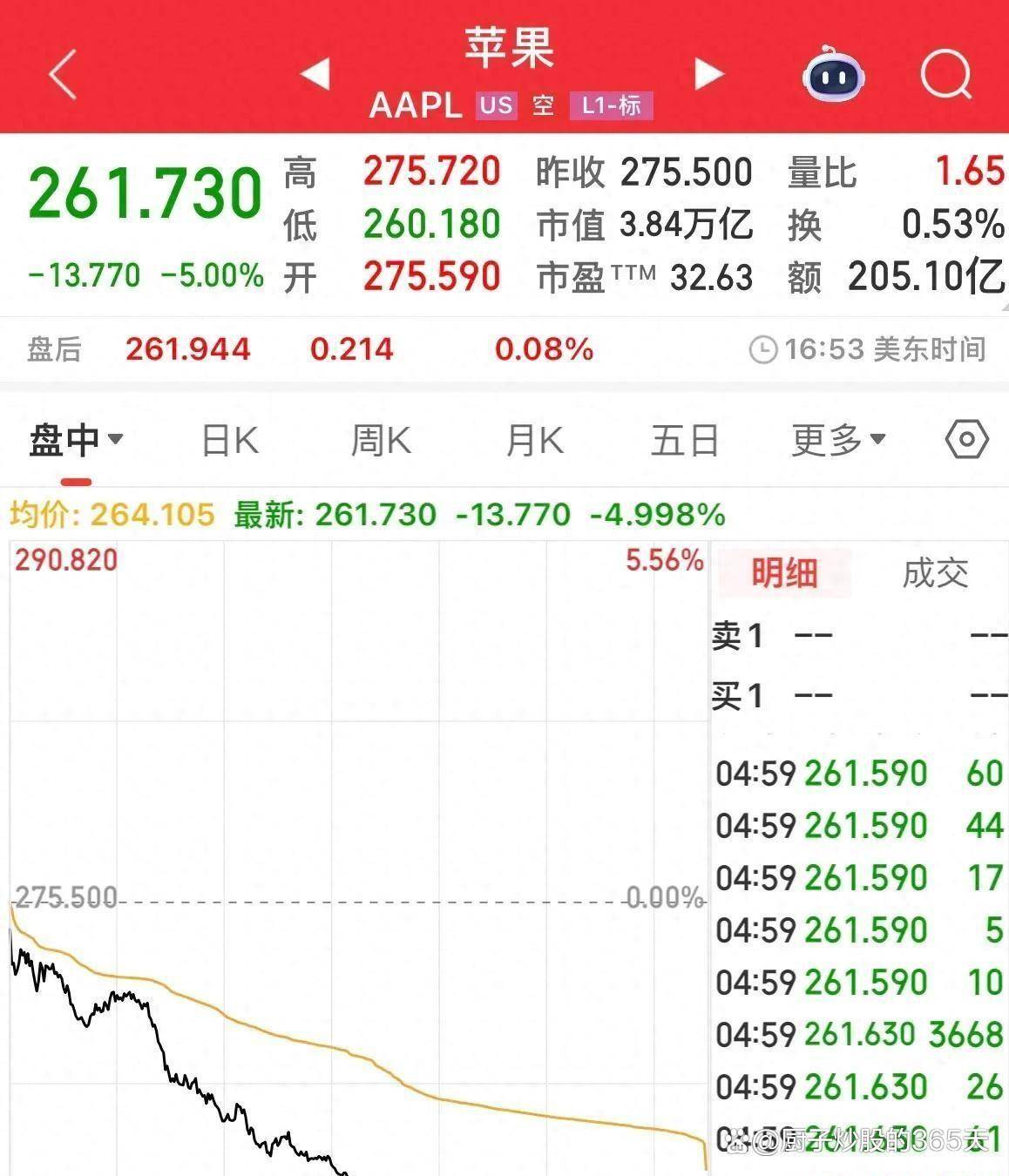
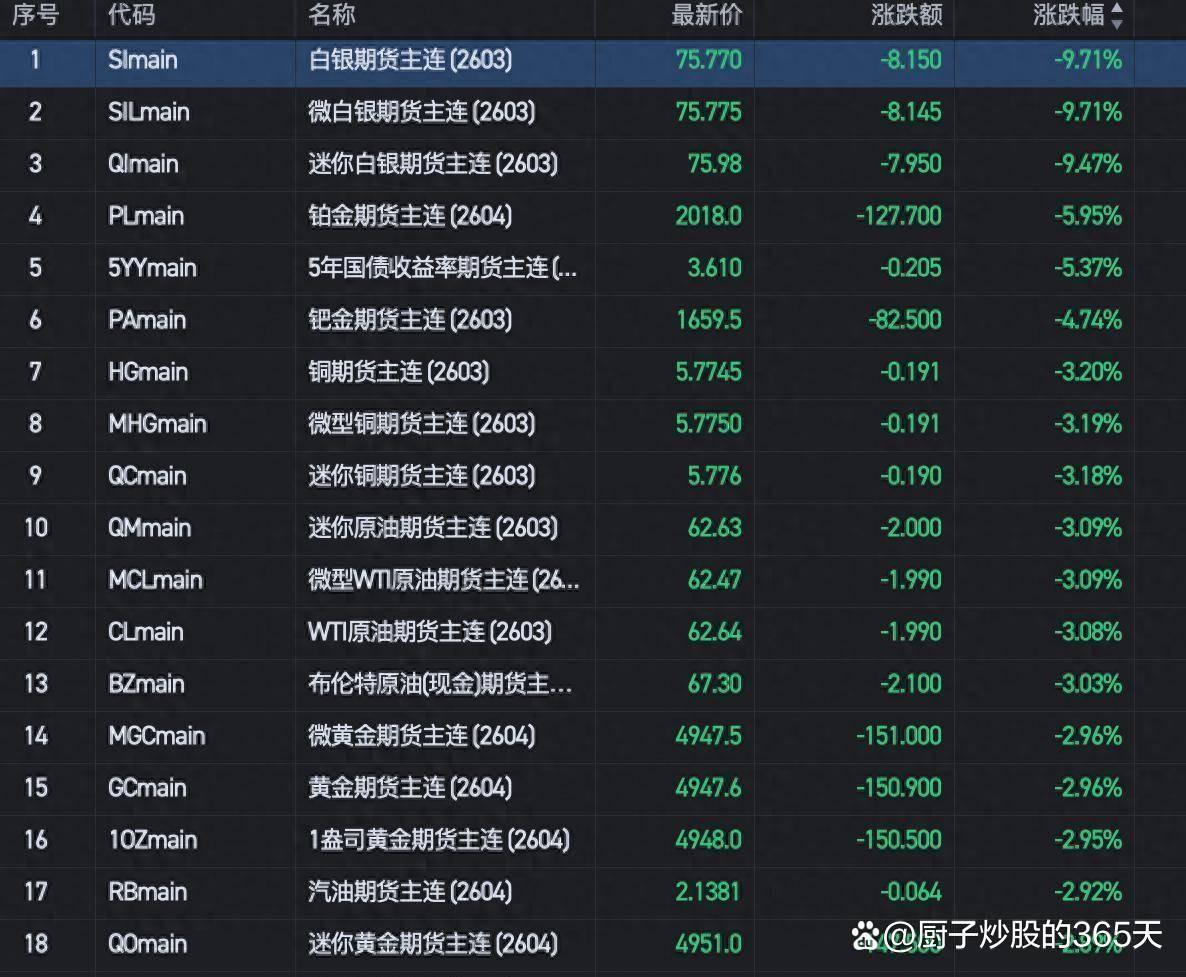
Market Overview - The US stock market experienced a significant decline, with the Dow Jones Industrial Average dropping 669.42 points (1.34%) to close at 49,451.98 points, the Nasdaq Composite falling 469.32 points (2.03%) to 22,597.15 points, and the S&P 500 decreasing by 108.71 points (1.57%) to 6,832.76 points [1][2][3] Market Sentiment - Over 4,100 stocks declined, indicating widespread market panic as investors rushed to sell assets, particularly in the tech and growth sectors. The VIX index surged, reflecting heightened risk aversion [2][3] Sector Performance - The sell-off affected nearly all sectors, with notable declines in precious metals and semiconductor stocks. The precious metals sector saw significant drops, with gold futures down 3.08% and silver futures plummeting 10.62% [4][5][6][8] - The Philadelphia Semiconductor Index fell by 2.5%, with individual stocks like AEHR Test Systems down 17.58% and Intel down over 3% [8][10] Major Companies - Apple Inc. experienced a substantial drop of 5.00%, resulting in a market cap loss of over $120 billion, attributed partly to regulatory concerns [12] - Other major tech companies also faced declines, with Tesla down 1.62%, Amazon down 2.20%, and Meta Platforms down nearly 3% [12] Financial Sector - Bank stocks fell across the board, with JPMorgan Chase down over 2%, Goldman Sachs down over 4%, and Citigroup down over 5%, driven by concerns over AI disrupting traditional wealth management [13][14] Economic Indicators - Recent economic data, including a drop in initial jobless claims and lower-than-expected existing home sales, contributed to market anxiety about potential economic overheating and prolonged high interest rates [24][25][26] Global Market Impact - The sell-off in the US markets had a ripple effect on global markets, with European indices also closing lower after initially opening higher, indicating a widespread sentiment of fear [18][19][20] AI Concerns - The market's decline was exacerbated by fears regarding the disruptive impact of AI technologies on various industries, leading to significant stock price drops in sectors perceived to be at risk [21][22][30] Storage Chip Sector - In contrast to the overall market trend, storage chip stocks saw gains, with companies like SanDisk and Seagate Technology rising significantly, reflecting a belief that AI's growth will increase demand for data storage [29]


晚间暴雷!黄金、白银、原油、美股全线崩盘,42只中概集体下跌
Sou Hu Cai Jing· 2026-02-14 04:22
Market Overview - On February 13, 2026, a significant asset sell-off occurred in global financial markets, particularly impacting U.S. stock indices. The Dow Jones Industrial Average fell by 669.42 points (1.34%) to close at 49,451.98, while the Nasdaq Composite Index dropped 469.32 points (2.03%) to 22,597.15. The S&P 500 Index also declined by 108.71 points (1.57%) to 6,832.76 [1]. Commodity Market Impact - The sell-off extended to the commodity markets, with gold and silver experiencing substantial declines. COMEX gold futures fell by 3.08% to $4,941.4 per ounce, while COMEX silver futures plummeted by 10.62% to $75.01 per ounce [2][3]. Technology Sector Reaction - Major technology companies were severely affected, with Apple’s stock price dropping by 5%, resulting in a market value loss of over $120 billion (approximately 800 billion RMB). Other tech giants like Microsoft, Amazon, Tesla, Meta, and Nvidia also saw significant declines [3][4]. Chinese Concept Stocks - The Nasdaq Golden Dragon China Index, which includes many Chinese concept stocks, fell by 3% on the same day, indicating a collective sell-off in this sector. Over 40 Chinese concept stocks experienced substantial declines, with Tencent Music down 10.57% and Alibaba down 3.40% [3][4][6]. Employment Data Influence - The catalyst for this market turmoil was a strong U.S. employment report released on February 11, showing a non-farm payroll increase of 130,000 in January, significantly above the expected 70,000. This led to a shift in market expectations regarding Federal Reserve interest rate cuts, with the probability of a March rate cut dropping from 19.6% to 6% [5][6]. Capital Expenditure Concerns - Major tech companies announced aggressive capital expenditure plans for 2026, with Alphabet projecting $175 billion to $185 billion and Amazon estimating $200 billion, both nearly doubling their 2025 expenditures. This raised investor concerns about the return on such investments, especially as many companies reported record profits but saw stock price declines [10][11]. Market Sentiment and Volatility - The market's fear and volatility increased sharply, with the VIX index rising significantly. The sell-off was exacerbated by algorithm-driven trading, which triggered stop-loss orders and led to extreme price movements [15][16][17]. Global Market Impact - The financial turmoil that began in Wall Street quickly spread to global markets, with Asian and European stock markets opening lower in response to the U.S. declines [18].


近50家芯片大厂最新业绩:谁在赚钱,谁还在复苏?
芯世相· 2026-02-14 04:07
Core Viewpoint - The semiconductor industry is expected to recover in 2025, with significant revenue growth driven by rising storage prices and increasing demand from data centers, leading to improved performance for major chip manufacturers [3][4]. Group 1: Semiconductor Sales and Growth - Global semiconductor sales are projected to reach $791.7 billion in 2025, a 25.6% increase from $630.5 billion in 2024, with further growth expected towards $1 trillion in 2026 [3]. - The recovery is attributed to strong demand from emerging technologies such as AI, IoT, 6G, and autonomous driving [3]. Group 2: Chip Design and IDM - Texas Instruments (TI) is expected to achieve approximately $17.68 billion in revenue for 2025, reflecting a 13% year-over-year growth, with significant contributions from industrial and automotive sectors [6]. - STMicroelectronics (ST) anticipates a revenue decline of 11% to around $11.8 billion, with Q4 showing slight improvement driven by personal electronics [8]. - NXP's revenue is projected at $12.27 billion, down 3%, with automotive and industrial sectors remaining stable [10]. - Renesas reported a revenue drop of 2% to 1.3212 trillion yen, marking its first loss in six years due to significant impairment losses [12]. - Microchip Technology expects growth in both year-over-year and quarter-over-quarter sales, with a projected revenue of $1.186 billion for Q3 2026 [12]. - Qorvo's revenue exceeded expectations at $993 million, with an 8.4% year-over-year increase [12]. - Infineon's revenue is projected at €14.662 billion, down 2%, but with strong demand in AI driving growth [14]. Group 3: Memory Chips - Samsung's revenue is expected to reach 333.6059 trillion won (approximately $233.8 billion), a 10.9% increase, with the semiconductor division achieving 130.1 trillion won in revenue [29]. - SK Hynix anticipates a record revenue of 97.15 trillion won (approximately $681.6 billion), a 47% increase year-over-year [31]. - Micron's revenue is projected to rise from $25.11 billion to $37.38 billion, with HBM chip capacity sold out for 2026 [33]. - GigaDevice expects a revenue increase of approximately 25% to 9.203 billion yuan [35]. Group 4: Wafer Foundry - TSMC's revenue is projected to reach approximately 3.8 trillion new Taiwan dollars (around $122.42 billion), a 31.6% increase, with advanced processes contributing significantly [47]. - UMC expects a slight revenue increase of 2.3% to 237.55 billion new Taiwan dollars, with a focus on mature process technologies [49]. - SMIC anticipates a record revenue of $9.3268 billion, a 16.2% increase, with improved profitability driven by increased wafer sales [51]. Group 5: Testing and Packaging - ASE Group's revenue is expected to reach 645.388 billion new Taiwan dollars, an 8.4% increase, with advanced packaging services contributing significantly [57]. - Amkor's revenue is projected at $6.71 billion, a 6% increase, with strong performance in advanced packaging and computing business [59]. Group 6: Equipment - ASML's total net sales are expected to reach €32.667 billion, a 15.6% increase, with a record order backlog reflecting strong demand for AI-related technologies [61]. - Lam Research anticipates a record year with significant growth driven by advanced process technologies [63]. Group 7: Distribution - WPG Holdings expects a revenue of 999.12 billion new Taiwan dollars, a 13.4% increase, driven by AI and high-performance computing demand [66]. - WPG's revenue is projected to exceed 1 trillion new Taiwan dollars, marking a significant milestone [68].



台积电给大陆最先进的,是16纳米。扭过头,塞到日本手里的,却是3纳米。就在我们制裁日本的节骨眼上,台积电董事长人直接飞过去了,跟对方坐在一张桌上,聊的不是别的,就是怎么把日本的工厂,变成最顶尖的3纳米芯片生产线。2026年2月5日,台积电董事长魏哲家出现在了东京。在他的公文包里,原本那...
Sou Hu Cai Jing· 2026-02-14 00:50
台积电给大陆最先进的,是16纳米。扭过头,塞到日本手里的,却是3纳米。就在我们制裁日本的节骨眼上,台积电董事长人直 接飞过去了,跟对方坐在一张桌上,聊的不是别的,就是怎么把日本的工厂,变成最顶尖的3纳米芯片生产线。 2026年2月5日,台积电董事长魏哲家出现在了东京。在他的公文包里,原本那份关于熊本二厂的规划图纸已经被悄悄替换。之 前的蓝图上写着"6至12纳米",那是成熟制程的舒适区。而此刻摆在日本高层面前的新方案,赫然印着"3纳米"。 这是一次极为反常的空降。要知道,此时的中日关系正因为制裁风波处于冰点,中国对日本的稀有金属管控还在持续加码。 按常理,商人这时候该做的是"避嫌",魏哲家却选择了"梭哈"。他不仅人到了,还把原本122亿美元的投资预算,直接划掉,改 写成了170亿美元。 这一笔多出来的48亿美元,买的不只是设备,是入场券。坐在他对面的日本官员显然早就准备好了筹码。 日本政府承诺的补贴金额,从最初的几千亿一路飙升,最终定格在惊人的1万亿日元以上,其中仅首批到账的就有7320亿日元。 索尼、丰田的高管们围坐在侧,像盯着猎物一样盯着那份协议。对他们来说,这不仅仅是一座工厂,这是日本半导体"失去三十 年 ...

Maverick Capital Ltd.四季度建仓做多谷歌C、应用材料




Ge Long Hui A P P· 2026-02-13 22:56
Core Insights - Maverick Capital Ltd. established long positions in Google C, Applied Materials, Boston Scientific, Visa, and Camden Property during the fourth quarter [1] - The firm increased its holdings in TSMC, NVIDIA, GFL Environment, and Carvana [1] - Maverick Capital completely exited positions in Kenvue, US Bancorp, AMD, Danaher, and Insmed [1] - The company reduced its stakes in Nubank, Disney, Merit Medical, Acadia Health, and Sherwin-Williams [1] - The firm maintains significant positions in NVIDIA, Microsoft, Amazon, TSMC, and Google C [1]
台积电2026年2月动态:财务新高、产能扩张与AI业务展望
Jing Ji Guan Cha Wang· 2026-02-13 21:23
业绩经营情况 2025年合并营收达1222.15亿美元,税后净利551.19亿美元,每股盈余2.13美元。 经济观察网基于最新公告和市场信息,截至2026年2月,台积电(TSM)有以下值得关注的事件动态。所 有信息均来源于公开披露,聚焦于公司运营、财务及战略进展。 近期事件 董事会决议与人事晋升 台积电于2026年2月9日至10日在日本熊本召开董事会,通过八大议案,包括核准2025年财报、股利分 配、资本预算及人事晋升。其中,8位高级管理人员晋升为副总裁或高级副总裁,涉及运营、研发等核 心部门,可能为下一代领导层接班做准备。 2nm制程按计划于2025年第四季度末量产,2026年将加速推进;AI处理器业务预计2024-2029年复合增 长率达50%以上。 公司强调当前产能瓶颈在于晶圆供应,而非电力限制。 2026年1月合并营收为新台币4,012.55亿元(约合127亿美元),同比增长36.8%,创单月历史新高。 2026年第一季度营收指引为348亿至358亿美元,同比增长38%,毛利率预计63%-65%。 公司状况 2026年股东常会定于6月4日在新竹召开,将讨论年度报告及议案。 项目进展 2026年资本支出 ...
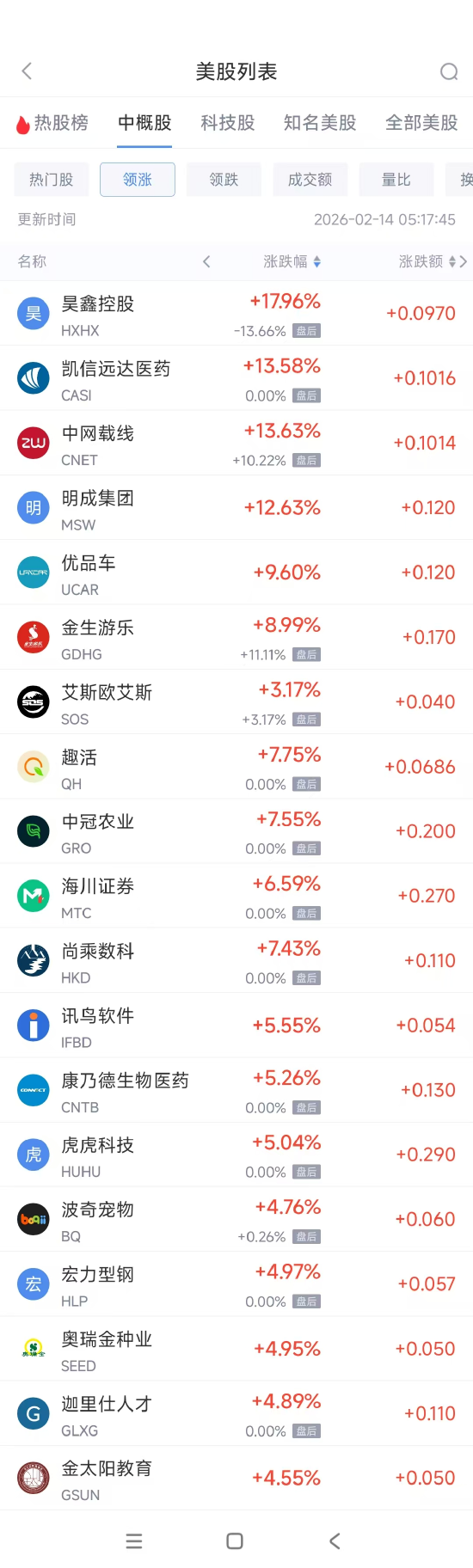
2月14日热门中概股涨跌不一 阿里巴巴跌2.05%,腾讯音乐涨4.52%
Xin Lang Cai Jing· 2026-02-13 21:21
Core Viewpoint - The performance of Chinese concept stocks varied on February 14, with the Nasdaq China Golden Dragon Index (HXC) closing down by 0.1% [1][7]. Group 1: Stock Performance - Among the rising stocks, Pinduoduo increased by 0.06%, NetEase by 2.06%, and Tencent Music by 4.52% [1][7]. - Among the declining stocks, Alibaba fell by 2.05%, JD.com by 1.38%, and Ideal Auto by 1.81% [1][7]. - The US stock market closed mixed on Friday, with the Dow Jones gaining 48.95 points (0.10%) and the Nasdaq dropping 50.48 points (0.22%) [1][7]. Group 2: Market Trends - All three major US stock indices recorded declines for the week, with the Dow down 1.23%, Nasdaq down 2.1%, and S&P 500 down 1.39% [1][7]. - The market continues to assess the impact of artificial intelligence development on industries such as logistics, real estate, and software [1][7]. - The US core CPI for January reached a nearly five-year low [1][7].