TSMC(TSM)

Search documents
AI Spending Is Set to Boom Over the Next Five Years. Here Are 3 Stocks That Will Lead the Way.
The Motley Fool· 2026-02-02 04:30
Core Insights - AI spending is rapidly increasing, particularly in the computing sector, with companies investing heavily to expand their computing capabilities [1] - Companies selling computing equipment are expected to thrive, presenting strong investment opportunities in the AI sector [2] Company Summaries Taiwan Semiconductor Manufacturing (TSMC) - TSMC is the world's largest chip foundry, crucial for AI computing, producing logic chips for nearly all AI devices [3][4] - The company plans to invest between $52 billion and $56 billion to increase production capacities, anticipating a nearly 60% compound annual growth rate (CAGR) in AI chip revenue from 2024 to 2029 [6][7] - Current market cap is $1.7 trillion, with a gross margin of 59.02% and a dividend yield of 0.93% [6] Nvidia - Nvidia is a leading name in AI, known for its GPUs that dominate AI data centers, with a market cap of $4.6 trillion and a gross margin of 70.05% [8][10] - Analysts project a 52% revenue growth for Nvidia in FY 2027, with global data center capital expenditures expected to rise to $3 trillion to $4 trillion annually by 2030 [10] Broadcom - Broadcom is focusing on designing application-specific integrated circuits (ASICs) for AI workloads, which can provide better performance at lower costs compared to general-purpose GPUs [11][13] - The company expects revenue from AI semiconductors to double in Q1, indicating strong momentum in the AI sector [13]


全球半导体龙头业绩启示-苹果-ASML-Hynix-三星-Advantest-DISCO
2026-02-02 02:22
Summary of Key Points from Conference Call Records Industry Overview - The global semiconductor industry is expected to approach $1 trillion by 2026, with significant growth in the storage sector. The hardware segment is projected to outperform the software segment, with raw materials, storage, and semiconductor equipment showing strong performance, while consumer electronics brands are expected to be the most affected, with Apple being relatively less impacted [1][4]. Smartphone Market - Global smartphone shipments are forecasted to decline by 6.7% in 2026, with Apple and Samsung remaining stable, while Chinese brands are expected to drop by 14% due to storage shortages affecting brands like Huawei, Honor, Xiaomi, OPPO, and vivo [1][9]. Capital Expenditure Trends - Microsoft and Meta are projected to increase their capital expenditures significantly in 2026, with Meta's spending rising from $70 billion to $120 billion, and Microsoft also showing over 40% growth. However, internet companies are only expected to see a 15% revenue increase, leading to tighter cash flows [1][10]. ASML and Equipment Market - ASML reported a record high in EUV order revenue, with over 100% year-on-year growth, driven by major clients like TSMC and storage manufacturers concerned about supply shortages [1][11]. Lam Research predicts a WFE market growth of over 20% in 2026, significantly higher than the 10% forecast by SEMI, driven by TSMC's 2nm transition and DRAM manufacturers' shift from HBM3 to HBM4 [1][13]. Company-Specific Insights - **Apple**: The company reported strong performance with iPhone 17 demand exceeding supply, and a 23% quarter-on-quarter revenue increase. However, concerns remain regarding storage shortages and SOC supply issues, which may impact margins [2][8]. - **Samsung**: The company saw a significant improvement in operating profit, with a rise from 14% to 21%. The semiconductor division's profit doubled to 16 trillion KRW, primarily due to DRAM and NAND price increases [1][17]. - **Hynix**: The company is expected to launch a new storage product, HBF, in late 2026, which will enhance AI inference capabilities. Hynix has a leading advantage in HBM technology [1][3][18]. - **Intel**: The target price for Intel has been raised to $71.5 based on significant advancements in process technology and successful execution of the IDM 2.0 strategy, attracting investments from both government and private sectors [1][23]. Market Valuation Changes - The valuation method for the storage industry has shifted from PB to PE, reflecting market recognition of stable profitability and growth potential for companies like Micron and Hynix. Hynix is currently valued at 9.4 times PE, with its target price raised based on strong financial performance [1][19]. HBM Technology Impact - The development of HBM technology is significantly impacting the storage market, enhancing performance and addressing heat issues. Samsung is leading in HBM4 technology, while Micron is also advancing its HBM4E plans to meet future demand [1][20]. Supply and Demand Dynamics - The global DRAM market is dominated by Micron, Samsung, and Hynix, with limited new capacity expansion expected, leading to a tight supply situation. The NAND market is similarly constrained, with major players controlling pricing and capacity [1][21]. Investment Recommendations - Hynix is identified as a preferred investment target due to its technological advantages, particularly in HBM technology, while Micron is also performing well but is slightly less favorable in comparison [1][22]. This summary encapsulates the critical insights and projections from the conference call records, providing a comprehensive overview of the semiconductor industry and key players.


台积电2nm,被疯抢
半导体行业观察· 2026-02-02 01:33
Core Viewpoint - The global AI and HPC chip competition has officially entered the 2nm era, with TSMC initiating a "preparation mode" for advanced process technology [2] Group 1: 2nm Process Development - TSMC's 2nm (N2) process represents a significant shift from FinFET to GAAFET architecture, with strong demand from clients exceeding expectations [2] - Major clients for the 2nm process include Apple and Qualcomm, with general-purpose GPUs and ASICs expected to ramp up production starting next year [2][3] - TSMC's N2 family is projected to have a larger scale and longer lifecycle than the 3nm process, with mass production expected to ramp up in 2026 [3] Group 2: Advanced Packaging Technologies - TSMC is simultaneously upgrading its advanced packaging systems to meet the demands of AI chips, which are moving towards multi-chiplet and large package sizes [3] - The company is expected to increase its CoWoS monthly capacity by over 70% this year, while also validating next-generation technologies like CoWoP and CPO [3] - The ability to produce high-yield large system-level packages is critical for the semiconductor ecosystem's resilience [3]
Artificial Intelligence (AI) Could Deliver Another Decade of Growth. This Stock Is a Prime Candidate to Be a Winner.
The Motley Fool· 2026-02-01 20:30
Core Insights - The artificial intelligence (AI) sector is poised for significant growth, with predictions of AI data center spending increasing from approximately $500 billion to $1.4 trillion by 2030, primarily driven by demand for graphics processing units (GPUs) and application-specific integrated circuits (ASICs) [2] Company Overview - Taiwan Semiconductor Manufacturing Company (TSMC) is well-positioned to capitalize on the AI boom, being a leading manufacturer of both GPUs and ASICs, and maintaining strong relationships with top AI chip designers like Nvidia and Broadcom [3][4] Market Position - TSMC holds a near monopoly in advanced chip manufacturing, with competitors like Intel and Samsung struggling to produce advanced logic chips at scale. This dominance provides TSMC with strong pricing power, allowing for a four-year schedule of price hikes [6] Growth Projections - TSMC anticipates its AI revenue to grow at a compound annual growth rate (CAGR) in the mid- to high-50% range until 2029. The company has significantly increased its capital expenditure budget for 2023 to between $52 billion and $56 billion, up from less than $41 billion in 2025, to meet rising demand [7] Valuation Metrics - TSMC's stock is currently trading at a forward price-to-earnings (P/E) ratio of 24 based on 2026 estimates, and a forward price/earnings-to-growth (PEG) ratio of 0.7, indicating it is reasonably valued for long-term investment in the AI sector [8]
Miss Out on Nvidia? Two More Innovative AI Chip Stocks Hiding in Plain Sight
Investor Place· 2026-02-01 17:00
Core Insights - Nvidia has experienced significant changes in demand due to the rise of AI, particularly with the launch of ChatGPT, leading to a shift in its customer base from PC gamers to data centers that require high computing power [2][4] - The pricing of Nvidia's chips has surged, with the latest GB200 Blackwell Superchip priced at up to $70,000, resulting in operating margins increasing to 62% from pre-ChatGPT levels [3][5] - Analysts project Nvidia's profits could triple by 2028, potentially increasing its justified share value to around $250 [5] Nvidia's Market Position - Nvidia's stock has risen dramatically, but it is considered expensive with only a 32% upside to fair value from current levels [5] - The company has a history of volatility, having fallen at least 50% in 13 of the 26 years since going public [2] Competitors and Alternatives - Broadcom is recognized as a leader in custom AI accelerator chips, but its stock has also risen significantly, limiting future gains [7][8] - Marvell Technology is highlighted as a competitor with substantial upside potential, trading at a lower price-to-sales ratio compared to Broadcom, with projections of a 76% upside [9][10] Semiconductor Industry Dynamics - Taiwan Semiconductor Manufacturing Co. (TSMC) is a key player in the semiconductor industry, producing advanced chips for major companies like Nvidia and Apple [14] - TSMC has a monopoly on 4-nanometer chip production, achieving high yields compared to competitors like Samsung [16][17] - TSMC's revenue is expected to grow in the mid-20% range annually, with AI revenues projected to increase by 50% annually [18] Government Investment and Future Trends - The U.S. government is heavily investing in semiconductor technology, with TSMC receiving significant grants and loans for domestic chip manufacturing [21] - There is a focus on six core sectors for future government funding, including semiconductors, as part of a broader strategy to maintain technological leadership [22][24]

Afraid the AI Boom Is Overheated? This Infrastructure Play Is Your Safety Net.
The Motley Fool· 2026-02-01 15:45
Core Viewpoint - The current AI boom represents a significant technological turning point, comparable to the introduction of the internet, but skepticism exists regarding current valuations in the market [1][2]. Company Overview - Taiwan Semiconductor Manufacturing Company (TSMC) is a crucial player in the AI supply chain, manufacturing chips for various tech companies that rely on its efficiency and scale [2][4]. - TSMC holds a virtual monopoly on advanced AI chip manufacturing, making it the most trusted partner for tech companies [4]. Financial Performance - TSMC achieved its best year ever in 2025, generating $122 billion in revenue, which reflects a nearly 36% year-over-year increase [7]. - The company has a market capitalization of $1.7 trillion, with a gross margin of 59.02% and a dividend yield of 0.93% [6]. Industry Context - The demand for AI-related revenue has positively impacted TSMC's earnings, but the company is positioned to thrive even if the AI boom slows down or turns out to be a bubble [6][9]. - Major companies such as Apple, Nvidia, Tesla, and Broadcom depend on TSMC for their chip manufacturing needs, indicating a strong reliance on TSMC within the tech hardware sector [6][9].
指数研究|全球主要指数估值跟踪0201(实战版)
Xin Lang Cai Jing· 2026-02-01 15:13
文/定龙骑牛 徒步滚雪球 编审/王小鱼 (3)中国资产最佳对冲:A股更多反映"全球制造业周期"和"国内财政杠杆",而纳指反映"全球科技创新周期"。两者驱动力来源完全不同。在配置模型 中,两者的相关性极低,是真正的有效多样化。 1.2 走势与展望: 当前美股市场机会与风险并存,整体风险较前期有所上升,但核心投资逻辑尚未被破坏。 以后美股相关的讨论,或加急的更新,都用这个账号发布! 为方便复盘及大家伙儿分散投资风险,我会定期跟踪美股科技的估值情况。如无特别说明,本文使用PE-TTM(滚动市盈率)数据均来自iFind。 一、纳指100 1.1 配置必要性: 结合第一性原理看清资产收益的本质。纳指100的配置价值在于三个底层驱动力: (1)全要素生产率的收割机:经济增长的本质是劳动力、资本和生产率的提升。纳指100代表了当前人类社会全要素生产率(TFP)提升的最高水平。投 资纳指100,本质上是在做多"技术取代人力"和"算法驱动增长"的必然趋势。 (2)全球资本的"高质量回笼":在全球不确定性增加的背景下,资金倾向于流向拥有最强自由现金流的企业。纳指100成分股多为垄断型科技巨头,它们 不仅赚钱多,还通过巨额股份回购 ...


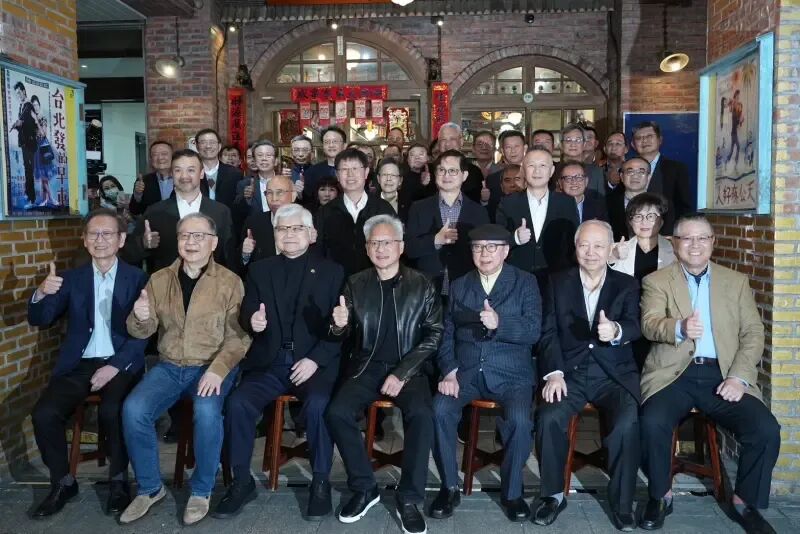
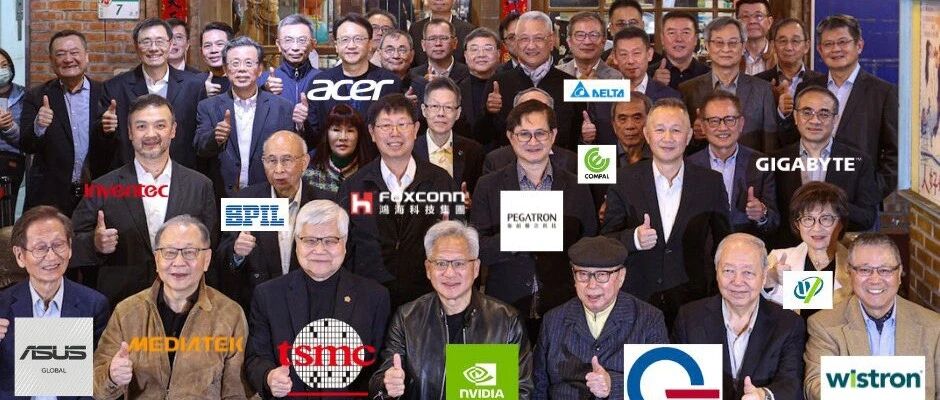
黄仁勋台湾宴40位大佬
是说芯语· 2026-02-01 10:33
Core Viewpoint - The article highlights the significance of the "兆元宴" hosted by NVIDIA CEO Jensen Huang, which gathered key decision-makers from Taiwan's AI supply chain, indicating a strong focus on collaboration and potential market impacts in the AI sector [1]. Group 1: Event Overview - The "兆元宴" took place in Taipei, featuring prominent figures from Taiwan's AI industry, including leaders from TSMC, MediaTek, ASUS, Quanta, and Foxconn, showcasing the importance of these partnerships in the AI supply chain [1][3]. - The event is seen as a potential catalyst for stock performance among participating companies, with historical data indicating significant stock price increases for companies involved in the previous year's event [1]. Group 2: Stock Performance Insights - According to Yahoo Finance, among the 20 listed companies that participated in last year's "兆元宴," Delta Electronics saw the highest stock price increase of 270%, followed by Xinxing at 166% and Yidong at 147%, while TSMC's stock rose by 111%, with an average increase of approximately 34% across the 20 companies [1].


3 AI Stocks to Buy in 2026 and Hold Forever
The Motley Fool· 2026-02-01 05:00
Core Viewpoint - The article emphasizes the long-term impact of artificial intelligence (AI) on the market and identifies three stocks—Alphabet, Microsoft, and Taiwan Semiconductor Manufacturing—as strong investment opportunities for the future [1][2]. Group 1: Alphabet - Alphabet has regained its position as a leading player in the AI sector, with its Gemini generative AI model being one of the best available [3]. - The company possesses unique advantages, such as access to personal information, which allows Gemini to create tailored experiences for users, a feature that competitors cannot replicate [3][5]. - Alphabet's substantial resources enable it to sustain operations at a loss longer than smaller competitors, positioning it to dominate the market in the future [5][6]. Group 2: Microsoft - Microsoft adopts a partnership approach in the AI landscape, holding a significant stake in OpenAI and providing access to multiple AI models through its Azure cloud platform [7]. - This neutrality in AI model selection has contributed to Azure's rapid growth compared to its competitors [7][9]. - Microsoft is viewed as a solid investment in the AI sector, with its strategy likely to yield gradual gains as AI adoption increases [9]. Group 3: Taiwan Semiconductor Manufacturing - Taiwan Semiconductor is crucial for AI technology, as it manufactures chips that power major computing players like Nvidia, which only designs chips [10]. - Despite concerns about the longevity of AI computing capacity, the short lifespan of GPUs (typically one to three years) suggests ongoing demand for chips, ensuring a steady market for Taiwan Semiconductor [12]. - The company is still in the early stages of benefiting from AI growth, with many announced data centers not expected to become operational until several years later, making it a compelling long-term investment [13].


全台最豪合影诞生!黄仁勋 C 位
Xin Lang Cai Jing· 2026-02-01 03:51
除了黄仁勋坐在照片第一排正中央,黄仁勋右手边坐着台积电董事长魏哲家、联发科执行长蔡力行、华硕董事长 施崇棠,左手边则坐着广达董事长林百里、广达副董事长梁次震、纬创董事长林宪铭,鸿海董事长刘扬伟以及和 硕董事长童子贤则站在第二排、黄仁勋正后方。 全台AI 产业链的核心人物一次框进同一个画面,从芯片、服务器、零组件到系统整合,市场也关注兆元宴可能会 带动哪些公司表现。 根据《Yahoo股市》盘点20档去年参与兆元宴的上市公司到2026年1月30日,股价上涨最多的为台达电270%,欣兴 166%、宜鼎147%,权王台积电也多达111%,而20档平均上涨约34%。 照片中具体名单如下: 跟黄仁勋同坐第一排的,包括华硕(董事长施崇棠、联发科副董事长蔡力行、台积电董事长魏哲家、广达董事长 林百里、副董事长梁次震、纬创董事长林宪铭,业界戏称是礼让70岁或是头发已白德高望重的供应链大老优先入 座。 来源:EETOP 昨晚,英伟达CEO黄仁勋在台北「砖窑」宴请供应链伙伴,兆元宴(台湾用语,兆相当于万亿)正式开席前,现场 就先拍下一张大合照,镜头里是台湾地区甚至全球AI供应链的关键决策者,可说是全台最有钱的一张照片。 第二排之后 ...