
Wells Fargo(WFC)

Search documents
美国银行业“矛头”指向特朗普
Di Yi Cai Jing Zi Xun· 2026-01-15 02:05
Core Viewpoint - The U.S. banking sector is experiencing strong growth in net interest income and trading activities, yet stock prices are declining due to concerns over President Trump's credit card policy and skepticism regarding the government's lawsuit against Federal Reserve Chairman Jerome Powell [2]. Group 1: Loan Demand and Economic Resilience - Analysts from S&P Global Market Intelligence express optimism for the banking industry's growth momentum through 2026, estimating a significant increase in overall loan volume by 5.3% year-on-year by the end of 2025 [3]. - Despite the Trump administration's tariffs, the U.S. economy and consumers show resilience, partly due to the AI industry boom and the Federal Reserve's interest rate cuts, with expectations of two more rate cuts this year [3]. - Bank of America reports an 8% year-on-year increase in average loan volume, with net interest income reaching a record high of $15.9 billion, indicating positive signals for both the banking sector and the overall economy [3]. - JPMorgan Chase's loan volume increased by 9% year-on-year in Q4, with CEO Jamie Dimon expressing optimism about the economic outlook for the next six to twelve months [3]. Group 2: Credit Card Rate Cap Concerns - The banking sector faces potential growth challenges amid rising geopolitical tensions and policy uncertainties, particularly regarding President Trump's unexpected proposal to cap credit card interest rates at 10% [5]. - Bank executives worry that setting a cap on credit card rates could lead to tighter credit availability, negatively impacting economic growth [6]. - Bank of America CEO Brian Moynihan warns that a cap on credit card rates could restrict access to credit for those who need it most [6]. - Citigroup CFO Mark Mason notes that the lack of specific implementation details makes it premature to assess the potential impact of the rate cap policy [6]. Group 3: Defending Federal Reserve Independence - Following the investigation into Federal Reserve Chairman Powell by the Trump administration, many in the banking sector advocate for the Fed's independence, citing potential economic uncertainties from political interference [7]. - JPMorgan CEO Dimon warns that political meddling in the Fed's decisions could raise market inflation expectations and lead to higher interest rates in the long run [7]. - Bank of America and Citigroup executives emphasize the critical importance of the Fed's independence for the U.S. economy [8].


美国大行亮眼财报背后:消费者储蓄投资双增长,低收入群体逾期率攀升现隐忧
Zhi Tong Cai Jing· 2026-01-15 00:44
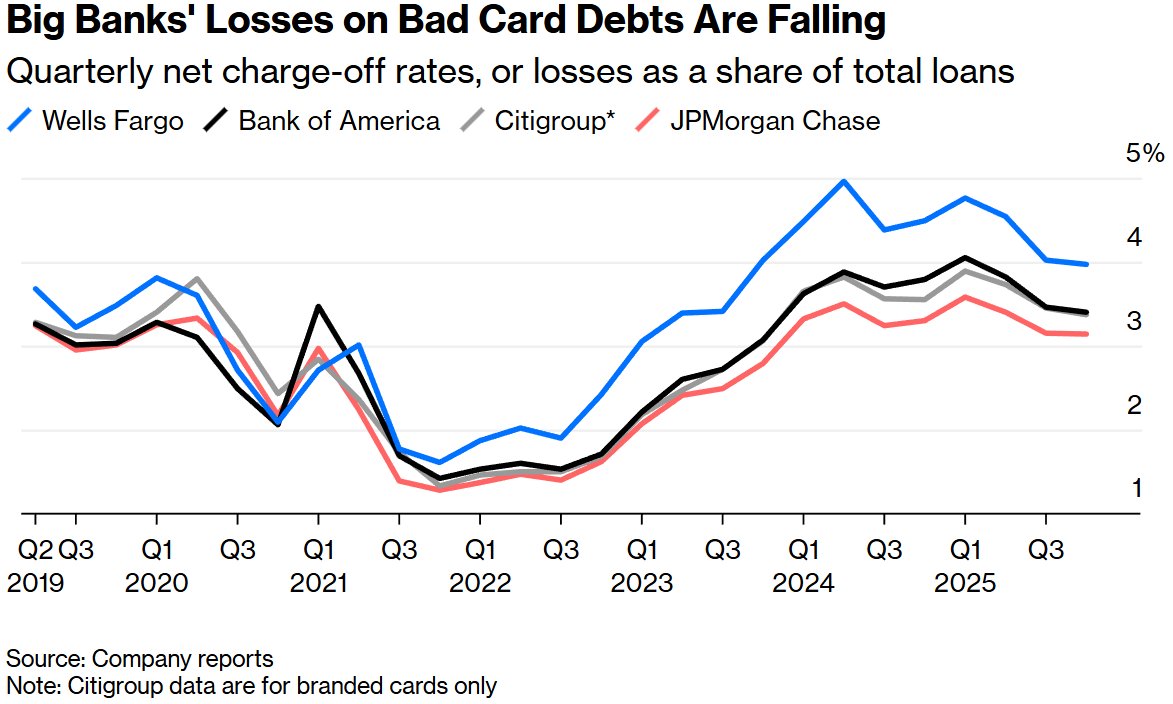
Core Viewpoint - Despite the affordability crisis faced by many Americans, large banks in the U.S. are not experiencing significant pressure, with consumer spending increasing and credit card delinquency rates declining [1][5]. Group 1: Economic Outlook - Major banks, including Bank of America, Citigroup, JPMorgan Chase, and Wells Fargo, reported strong economic outlooks for at least 2026, indicating resilience among households and small businesses [1]. - JPMorgan's CEO Jamie Dimon noted a positive outlook for the next 6 to 12 months, highlighting that consumers have money and job availability remains despite a slightly weak job market [1]. - Bank of America's CFO Alastair Borthwick stated that consumers are in an "excellent state," with no signs of increased borrowing or reduced savings to maintain living standards [1]. Group 2: Consumer Spending and Retail Sales - Consumer spending continues to rise, aligning with economic growth, supported by strong retail sales data for November, which showed the most robust growth since July due to a rebound in auto purchases and holiday shopping [2]. - Wells Fargo's CEO Charlie Scharf mentioned that alternative early indicators, such as unemployment benefits and direct deposit amounts, do not show significant trend changes, indicating stability [2]. Group 3: Credit Card Performance - Large banks are experiencing a decline in credit card bad debt losses, with delinquency rates not worsening and actual bad debt losses expected to decrease by 2025 [5]. - Despite rising delinquency rates among lower-income borrowers, major banks are not feeling the impact significantly, and smaller banks may reveal more consumer pressure in upcoming reports [5][6]. Group 4: Policy Implications - Proposed policies targeting high credit card interest rates and rental properties by President Trump are opposed by major banks, as they could harm profitability and restrict credit access for high-risk borrowers [5]. - JPMorgan has expressed a strong stance against such potential policies, indicating readiness to take legal action if necessary [5].
Why Wells Fargo Stock Slumped by Almost 5% on Wednesday
Yahoo Finance· 2026-01-15 00:10
Key Points The prominent bank unveiled its fourth quarter of 2025 results. These were mixed, as the company beat on earnings but whiffed on revenue. 10 stocks we like better than Wells Fargo › Bank earnings season is upon us, and one of the so-called Big Four lenders published its fourth quarter of 2025 results on Wednesday morning. Wells Fargo (NYSE: WFC) posted mixed results, and investors were concerned enough about the bank's performance to sell out of its stock. The company's shares closed the ...
华尔街见闻早餐FM-Radio | 2026年1月15日
Sou Hu Cai Jing· 2026-01-14 23:24
Market Overview - The three major US stock indices experienced their first consecutive declines since 2026, with the Nasdaq dropping by 1%, marking its largest decline in nearly a month. The tech sector dragged down the market, with all "Big Tech" companies, including Microsoft, Amazon, and Meta, falling over 2% [1] - Despite better-than-expected Q4 earnings, Bank of America and Citigroup saw declines of nearly 4% and over 3%, respectively, while Wells Fargo, with weaker profits, dropped over 4% [1] - Chinese stocks, particularly Trip.com, fell by 17% [1] - US and UK government bond prices rose, with the 10-year UK bond yield hitting a 13-month low and the 10-year US bond yield reaching a one-week low [1] - The US dollar index fell after nearing a four-week high, while the Japanese yen rebounded after warnings from Japan's finance minister about potential market intervention [1] - Cryptocurrency prices continued to rise, with Bitcoin surging nearly 4% to break $97,000, reaching a nearly two-month high [1] - Precious metals saw significant gains, with gold and silver hitting historical highs, and copper and tin also reaching record levels [1] Key News - China's foreign trade accelerated in December, with exports in USD terms increasing by 6.6% year-on-year and imports rising by 5.7%. Steel exports reached a record high, and rare earth exports surged by 32% year-on-year [3][19] - The Shanghai and Shenzhen stock exchanges raised the minimum margin requirement for financing from 80% to 100%, aimed at reducing market leverage [3][20] - The US Supreme Court failed to make a ruling on Trump's tariff policy, maintaining the Nasdaq's 1% decline [4] - US retail sales unexpectedly rose by 0.6% in November, driven by strong automotive and holiday spending [4][22] - The US PPI rose to 3% year-on-year in November, with energy costs being a significant factor [4][22] - The Federal Reserve's Beige Book indicated overall economic improvement, with most regions reporting stable employment levels and moderate price increases [5][23] Company Developments - Alibaba announced a product launch event for its AI application, "Qianwen," scheduled for January 15, aiming to enhance its capabilities in various life scenarios [9][40] - Baidu is considering upgrading its secondary listing in Hong Kong to a "dual primary listing" to attract mainland capital [32] - 澜起科技 plans to raise $900 million through an IPO in Hong Kong, driven by AI infrastructure demand, with a valuation of $22 billion [32] Industry Trends - The semiconductor industry is witnessing significant developments, with a focus on flexible electronics and intelligent sensing technologies [38] - The AI sector is rapidly evolving, with Alibaba's Qianwen app expected to integrate various services, enhancing its operational capabilities [39] - The automotive industry is advancing towards high-level autonomous driving applications, with plans for large-scale implementation by 2027 [40]



新浪财经隔夜要闻大事汇总:2026年1月15日
Xin Lang Cai Jing· 2026-01-14 23:21
Market - US stock market experienced a decline for the second consecutive day, with the Dow, Nasdaq, and S&P 500 all falling, primarily driven by poor performance in technology stocks, particularly chip stocks like Nvidia, which dropped due to export restrictions [2] - Bank stocks also struggled, with Wells Fargo's revenue falling short of expectations, while Bank of America and Citigroup exceeded expectations but could not support the high market levels. The banking sector faced additional pressure from Trump's call for credit card interest rate reforms [2] - Despite strong PPI and retail sales data, the market remained low due to concerns over the independence of the Federal Reserve and rising geopolitical risks, particularly related to Iran [2] Company - Tesla announced it will stop selling its Full Self-Driving (FSD) software at a fixed price and will instead offer it as a monthly subscription service starting at $99, leading to a 1.79% drop in its stock price [3][33] - Cerebras secured a significant contract with OpenAI worth over $10 billion, committing to provide 750 MW of computing power by 2028, which will help reduce its reliance on a single customer [32] - Wells Fargo reported profits below expectations, with a significant $612 million spent on severance costs, leading to its stock experiencing the largest intraday drop in six months [40] - Bank of America reported a 23% increase in stock trading revenue to $2.02 billion, exceeding analyst expectations, but concerns over costs led to a 5% drop in its stock price [41] - Boeing announced it received 1,173 net orders in 2025, surpassing Airbus, although its stock fell 1.7% in early trading [42]



Wells Fargo CFO: Don't See Credit Trends Deteriorating
Yahoo Finance· 2026-01-14 23:12
Mike Santomassimo, Wells Fargo CFO, says the bank saw strong loan momentum this quarter. He tells Romaine Bostick and David Gura on "The Close" that the president's proposal would pull credit at a critical time, reducing access for consumers across the credit card spectrum. ...
Wells Fargo & Company (NYSE:WFC) Earnings Report Highlights
Financial Modeling Prep· 2026-01-14 23:00
Core Viewpoint - Wells Fargo reported earnings that fell short of expectations, with a slight increase in year-over-year earnings per share but challenges in net interest margin and non-performing assets [1][2][3]. Financial Performance - The company disclosed an earnings per share (EPS) of $1.62, adjusted EPS of $1.76, and revenue of $21.29 billion, missing forecasts of $1.66 EPS and $21.65 billion in revenue [1]. - Net income for the quarter was reported at $5.36 billion, an increase from $5.08 billion in the previous year, with a potential adjusted net income of $5.8 billion excluding severance charges [4]. - The net interest income (NII) increased by 4% year-over-year to $12.33 billion, although the net interest margin contracted by 10 basis points to 2.6%, below the expected 2.7% [2][5]. Operational Challenges - The company faced a 7.1% year-over-year increase in non-performing assets, which negatively impacted overall results [3]. - Wells Fargo managed to reduce expenses by 1%, but the efficiency ratio worsened to 64%, exceeding the predicted 62.7% [3][5]. - The bank incurred $612 million in severance expenses due to workforce reductions affecting approximately 5,600 employees [3]. Growth Metrics - Average loans reached $955.8 billion, and average deposits hit $1.38 trillion, indicating growth in these key areas [4].

Bank Execs Say Trump's Credit-Card Interest Rate Idea Is Bad for Consumers—and Business
Investopedia· 2026-01-14 23:00
Core Viewpoint - Major banks oppose President Trump's proposal to cap credit card interest rates at 10%, arguing it could limit consumer access to credit and negatively impact economic growth [1][4]. Group 1: Financial Impact on Banks - Profits in the credit card segment are four times the banking industry average, with lenders earning interest on $1.23 trillion in outstanding U.S. credit card debt at an average annual interest rate of 21% [2]. - Executives from major banks, including JPMorgan Chase and Citigroup, expressed concerns that a cap on interest rates would severely restrict access to credit for consumers, particularly those who need it most, potentially leading to negative consequences for the economy [5]. Group 2: Market Reactions - Shares of major financial service firms declined following the announcement of the proposed interest rate cap, indicating investor concern over the potential impact on profitability [4]. - Some analysts view the drop in share prices as a potential buying opportunity for investors [4]. Group 3: Shift in Consumer Behavior - Experts suggest that if an interest rate cap is enacted, consumers may shift their focus to other financial products, such as personal loans, which could benefit companies like LendingTree [3][5]. - The proposed cap could disrupt the credit card rewards and points system, leading to broader changes in consumer behavior and spending patterns [3].



Stock Market Today, Jan. 14: Nvidia Leads Tech Losses as Investors Cool on AI
Yahoo Finance· 2026-01-14 22:31
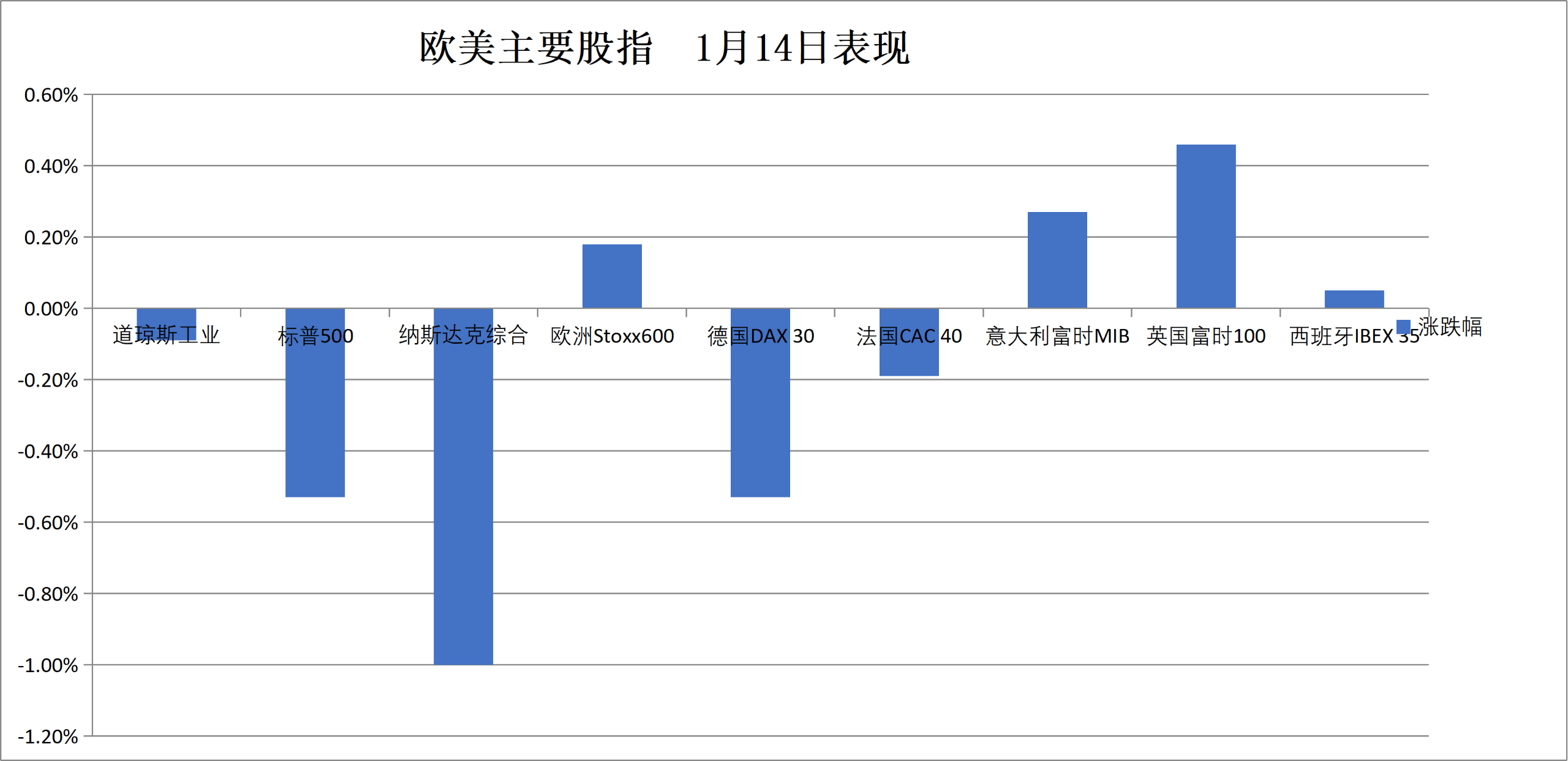
Market Performance - The S&P 500 fell 0.53% to 6,926.60, failing to hold the 7,000 mark [1] - The Nasdaq Composite slid 1.00% to 23,471.75, driven by weakness in tech stocks [1] - The Dow Jones Industrial Average edged down 0.09% to 49,149.63 in a risk-off session [1] Company-Specific Movements - Nvidia dropped 1.44% to $183.14, while Microsoft decreased by 2.40% to $459.38, contributing to the tech sector's decline [2] - Wells Fargo experienced a decline due to mixed earnings and regulatory concerns [2] - Exxon Mobil outperformed the market after its CEO labeled Venezuela as "uninvestable" [2] Investor Sentiment - Investors withdrew from tech and AI stocks, leading to the Nasdaq's largest decline in a month, amid fears of overvaluation and geopolitical shifts [3] - Despite strong earnings from Bank of America, bank stocks fell due to concerns over potential caps on credit card rates affecting revenue [3] - Wells Fargo missed revenue estimates, further impacting investor confidence [3] Economic and Regulatory Factors - Uncertainty regarding Federal Reserve independence has increased, influenced by a Department of Justice investigation into budget overruns [4] - Recent inflation data was lower than expected, raising questions about the pace of future rate cuts and reducing appetite for riskier investments [4] - Gold and silver prices are rising due to increased demand for safe-haven assets [4]

Big Banks’ Bad Day: Bank of America, Wells Fargo, Citi Sink Most in Months
Barrons· 2026-01-14 21:42
CONCLUDED 1 day ago Big Banks' Bad Day: Bank of America, Wells Fargo, Citi Sink Most in Months By Rebecca Ungarino Shares of some of the largest U.S. banks logged their steepest declines in several months after the lenders reported fourth-quarter earnings that fell short of investors' high expectations. Investors found things to like about the reports from Citigroup, Bank of America, and Wells Fargo, such as solid measures of credit quality and positive commentary from executives across the three firms abou ...